










In This Article (8 sections)
EU Digital Fairness Act Scope, AI Relationship Bots, and Addictive Design Controls
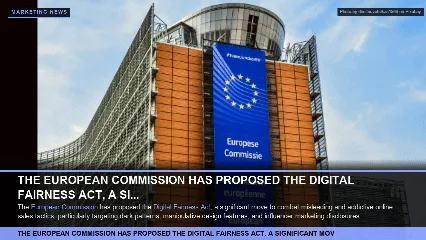
The European Commission published its Digital Fairness Act proposals on 11 November 2026, setting out a broader overhaul of unfair business-to-consumer commercial practices across apps, games, shopping services, subscriptions, and digital services. The initiative focuses on whether consumers can make meaningful choices when businesses control the interface, timing, presentation, and personalisation of an offer. It addresses addictive design, misleading pricing, influencer promotions, unfair personalisation, and digital contracts while building on the Commission’s 2024 Digital Fairness Fitness Check. That earlier review concluded that existing consumer protections remained necessary but identified challenges created by newer digital practices. The proposal therefore expands scrutiny beyond what businesses disclose in terms and conditions to the way the entire consumer experience is designed.
The package contains several related but distinct measures. The Digital Fairness Act would replace the Unfair Commercial Practices Directive with a directly applicable regulation, while a separate simplification directive would make targeted changes to consumer protection requirements. A reform of the Consumer Protection Cooperation framework would strengthen cross-border enforcement and give the Commission additional powers in qualifying large-scale cases. The substantive rules and enforcement rules therefore perform different functions. A prohibition on a particular design practice and the mechanism used to investigate or sanction it should not be treated as the same legal provision.
The headline attention around AI relationship bots needs an important qualification. The proposal does not establish a general ban on AI companions or relationship-oriented chatbots. Article 17 instead includes relationship-simulating features among the mechanisms consumers could disable when digital products are designed, or foreseeably operate, to encourage excessive or compulsive use. The concern is persistent engagement pressure created through simulated interpersonal relationships, including repeated invitations to continue interacting with an automated system. The relevant question is therefore how the relationship simulation is used to influence continued engagement rather than whether companionship itself is lawful.
The consumer protection concern arises when emotional attachment becomes part of a commercial retention strategy. An automated service can appear attentive, affectionate, or dependent while the provider benefits from longer sessions, repeat visits, or paid upgrades. A hypothetical chatbot that suggests a relationship is weakening immediately before presenting a paid feature would raise a different issue from a friendly conversational exchange that does not pressure the user to remain. The problem would involve the surrounding commercial design and whether it undermines meaningful choice. Transparency that a character is artificial helps users understand the nature of the interaction, but it does not by itself address repeated emotional pressure to keep using or purchasing from the service.
The proposal therefore distinguishes ordinary enjoyment from manipulation. Long conversations alone do not establish consumer harm, and the use of relationship-like language would not automatically make a service unfair. The stronger question is how the product responds when the user tries to leave, reduce engagement, or decline a purchase. A useful assessment would consider whether the service respects boundaries, whether users can disable persistent prompts, and whether its commercial design makes disengagement unnecessarily difficult. The eventual legal outcome would depend on the final legislation and how the specific service operates.
The same addictive-design framework extends beyond AI companions. The Commission identified infinite scrolling, autoplay, streaks, and engagement penalties among the features consumers should be able to control where they contribute to excessive or compulsive use. The approach for covered adult use is based largely on providing meaningful choice rather than banning these functions outright. A user could therefore retain features they value while disabling mechanisms that make continued engagement the default. The practical effectiveness of such controls would depend on whether they are understandable, accessible, and durable after activation.
A meaningful control should change the actual user experience rather than merely exist as an obscure setting. Someone might choose to keep messages from friends while disabling unrelated prompts to return, retain manually selected video playback while turning off autoplay, or continue using an AI companion while suppressing persistent relationship-based invitations. These are illustrative implementations rather than interfaces mandated by the proposal. Their usefulness would depend on whether users can understand what each option changes and whether equivalent pressure immediately reappears through another channel. The underlying policy objective is to make disengagement a genuine choice rather than a technically possible but practically difficult action.
Infinite scrolling illustrates why the Commission is focusing on interaction design. A traditional endpoint creates a natural moment when the user can decide whether to continue, while an endless feed makes more content immediately available without requiring a fresh decision. Autoplay presents a similar issue because the viewer chooses the first item while the service chooses what starts next. The proposal does not assume that every automatic transition is harmful or that every consumer wants it disabled. Instead, the concern is whether users can meaningfully regain control over continuation.
Gaming engagement mechanics raise similar questions. The Commission’s presentation referred to streaks and engagement penalties that can pressure users to return at specific times or with particular frequency. A player who enjoys missions but feels compelled to log in every day to avoid losing a lengthy reward sequence may experience a system that increasingly dictates attendance rather than merely rewarding participation. That differs from normal gameplay consequences such as losing a match or failing a challenge. The policy concern is commercial pressure linked to absence from the service, not every form of loss or progression.

Dark Patterns, Subscriptions, Pricing, Personalisation, and Children’s Protection
The Digital Fairness Act also targets dark patterns that distort consumer decisions through deception, confusion, or pressure. The proposal’s annex identifies practices such as implying consent to additional purchases, presenting refusal as the wrong choice, and creating the false impression that only the prominently displayed option is available. These rules focus on how choices are presented rather than banning persuasive design or promotion generally. A checkout could become problematic if an optional purchase is made to appear unavoidable or if declining an offer is hidden behind misleading language. The issue is whether the interface interferes with informed and voluntary choice.
False scarcity claims are another concern. A message suggesting that stock is almost gone can create urgency and influence how quickly someone buys. If that urgency is fabricated, the consumer is making a decision based on misleading information rather than the product’s true availability. This shows why consumer fairness is partly a product design responsibility rather than only a legal drafting exercise. Reviewing terms and conditions would not reveal everything users experience during checkout, renewal, cancellation, or return visits.
Subscription rules form another major part of the proposal. The draft would require a reminder before a free trial ends and express consent before paid continuation begins. It would also require an accessible online termination function where traders offer contracts through an online interface. The objective is to make both the decision to keep paying and the ability to stop paying more visible. A subscription should not rely on the consumer forgetting that a trial is ending or being unable to locate a cancellation route.
Renewal reminders would vary according to contract duration. For qualifying continuous-supply contracts lasting at least six months, the proposed reminder window runs from one month to fourteen days before automatic renewal. Shorter contracts have separate provisions, so the proposal should not be described as requiring the same reminder before every monthly payment. A useful notice would explain what is continuing, when renewal occurs, how much it will cost, and how termination works. The intention is to make recurring commitments easier to understand before another payment or renewal takes effect.
An online cancellation function would not necessarily eliminate every contractual commitment immediately or without cost. The underlying rights and agreed terms would still matter. The practical change is that consumers would receive a clearer route to exercise termination rights instead of having to search through an obscure process after deciding to leave. This reflects the broader principle running through the proposal: declining, cancelling, and exiting should remain intelligible choices rather than being deliberately harder than signing up or buying.
The proposal also addresses unfair personalisation in advertising and pricing. Its advertising provisions restrict profiling-based targeting using sensitive personal data or data about consumers known with reasonable certainty to be minors. Its pricing provisions target profiling-based prices that are reasonably likely to harm minors or people known to be vulnerable. These rules distinguish beneficial personalisation from exploitation. Recommending a genre someone enjoys is conceptually different from using knowledge about their vulnerability to increase commercial pressure around a purchase.
Personalised pricing should also be distinguished from dynamic pricing. A price that changes for everyone according to demand is different from one chosen because of an individual’s personal profile. Both may raise transparency issues, but they involve different practices and different questions about fairness. A hypothetical system that detects signs of financial distress and then makes an expensive commitment appear unusually urgent would illustrate the type of concern the proposal is designed to examine. Establishing an infringement would still require evidence about the consumer, the profiling decision, and the commercial outcome.
Children receive additional protection throughout the package. The Commission’s November announcement describes proposed restrictions on gambling-like spending mechanisms for minors, including pay-to-win and pay-to-progress features, alongside concerns about unfair personalisation and influencer practices. The Digital Fairness Act also sits beside the separately proposed EU KIDS Act, published in September 2026, which focuses on risky digital services and AI systems used by minors. The two initiatives address related but different problems. One concerns commercial fairness within consumer interactions, while the other focuses more broadly on age-appropriate digital services and access conditions.
These distinctions matter because a child can encounter commercial pressure within a service that is otherwise permitted. A parent may approve access to a game without intending to approve every spending mechanism inside it. Likewise, an age-appropriate service can still contain manipulative purchase prompts or engagement systems. Account eligibility, persuasive design, advertising, and purchasing are therefore connected but separate issues. The final interaction between the Digital Fairness Act and the EU KIDS Act will depend on legislative negotiations and the scope of the adopted texts.

Enforcement, 6% Fines, Cross-Border Businesses, and the Relationship with Existing EU Rules
The proposed 6% fine comes from the accompanying reform of the Consumer Protection Cooperation framework rather than directly from the substantive addictive-design provisions. The reform would allow the European Commission to investigate and sanction qualifying large-scale infringements that have a major cross-border impact. The maximum penalty would be up to 6% of a trader’s worldwide annual turnover, not its profit or only the revenue associated with the feature under investigation. For illustration, 6% of €1 billion in annual worldwide turnover is €60 million. That example shows the possible scale of the maximum but does not predict the outcome of any particular investigation.
The proposed direct Commission enforcement route would apply only under specified conditions. It concerns relevant widespread infringements affecting at least two-thirds of EU member states and representing at least two-thirds of the Union’s population. Micro, small, and medium-sized enterprises would be excluded from that particular Commission mechanism. This does not mean smaller businesses would be generally exempt from consumer protection law. National authorities and the wider enforcement framework would continue to matter.
The distinction between a maximum sanction and an automatic charge is essential. A headline percentage says little about what an individual case would produce without considering the legal obligation involved, the facts of the infringement, procedural rights, and the final enforcement decision. A company would not simply incur a 6% fine because its service contains an AI feature, autoplay, a subscription, or personalised pricing. Enforcement would depend on the actual conduct and whether it breaches the adopted law. The proposal therefore creates potential enforcement power rather than a fixed penalty schedule for particular product features.
The package applies to commercial activities directed at consumers rather than to a list of named technology companies. Relevant businesses could include subscription providers, online retailers, game publishers, ticket sellers, AI service operators, and other consumer-facing services depending on their conduct. Being active in one of these sectors does not itself establish an infringement. The useful starting point for a compliance review is the actual customer journey: who controls the checkout, notifications, cancellation path, pricing, and interaction design, and which legal entity offers the service.
Non-EU companies are also within the proposal’s scope when targeting consumers in the Union. The enforcement proposal includes an EU representative requirement for relevant non-EU traders so that authorities can obtain cooperation even when the responsible business is established elsewhere. This reflects the cross-border nature of digital services and online commerce. A product offered from outside Europe can still affect EU consumers and therefore become subject to applicable consumer protection rules. The existence of an AI system or foreign headquarters does not remove that responsibility.
The Digital Fairness Act would also operate alongside existing EU laws rather than replacing every other digital regulation. The Digital Services Act already governs intermediary services and platforms in areas including advertising transparency, interface design, and protection of minors. The proposed Digital Fairness Act would focus more directly on commercial fairness between businesses and consumers. Their scopes overlap in some areas but are not identical. Determining which rules apply requires looking at the service, provider, conduct, and legal context.
The AI Act introduces another separate layer. Its transparency requirements include helping people understand when they are directly interacting with an AI system. That disclosure answers a different question from whether the commercial design surrounding the interaction is fair. An AI companion could therefore be transparent about being automated while still raising consumer protection concerns if it uses relationship-based pressure to prolong engagement or influence purchases. Compliance with one framework would not automatically settle obligations under another.
This is particularly important when discussing AI companions because multiple legal questions can exist at once. One rule may concern disclosure that the user is communicating with AI, another may address manipulative interface design, and platform rules may govern the surrounding service. It would be misleading to assume that every provision of the Digital Fairness Act, Digital Services Act, and AI Act applies to every chatbot. The proposal expressly aims to complement existing legislation, making the boundaries between the different instruments an important part of implementation.

Legislative Timeline, Business Impact, and What the Proposal Could Mean for Consumers
As of 12 November 2026, the Digital Fairness Act remains proposed legislation rather than a set of obligations already applying to every business. The European Parliament and Council must examine, negotiate, and agree on the text. They can amend the substantive provisions, exceptions, enforcement arrangements, and implementation details before final adoption. The current proposal therefore establishes the Commission’s policy direction but not the final legal outcome. Businesses and consumers should distinguish the published draft from rules that are already enforceable.
The Commission’s draft provides for entry into force twenty days after publication in the Official Journal and application twelve months after entry into force. Those periods would begin only after final legislation is adopted and officially published. The twelve-month application period does not start from the November 2026 proposal announcement. This distinction avoids the common mistake of treating a legislative proposal as though a fixed compliance countdown has already begun. The next meaningful milestones will be the negotiating positions of Parliament and Council, agreement on a final text, and official publication.
For consumers, the proposal could create more practical control over how digital services attempt to keep them engaged or paying. Users could gain clearer ways to disable certain engagement mechanisms, receive more useful subscription reminders, cancel contracts more easily, and resist manipulative interface design. These protections are designed around the broader interaction rather than merely requiring additional disclosures. A service can technically provide accurate information while still making the consumer’s real choice confusing or difficult. The proposal attempts to address that gap.
For businesses, the challenge would be to examine the complete customer journey rather than treating consumer protection as a matter for legal notices alone. Product teams may need to review how they present refusal, how they handle return prompts, whether autoplay and infinite feeds can be meaningfully disabled, how cancellation works, and how personalisation interacts with vulnerable users. AI services would need to consider not just what the model says, but how the surrounding product is designed to encourage continued use or purchases. Compliance would therefore involve design, engineering, marketing, legal, and product decisions.
The relationship-bot provisions illustrate that broader shift clearly. The proposal does not assume that simulated companionship is inherently harmful, nor does it prohibit consumers from choosing to spend time with conversational AI. Its concern is whether the product turns emotional attachment into a mechanism for persistent or coercive engagement. The design question becomes whether users can keep the interactions they value while turning off pressure to continue. That distinction keeps the focus on commercial manipulation rather than the existence of relationship-oriented AI itself.
The same reasoning applies to infinite scrolling, autoplay, gaming streaks, personalised offers, and subscription renewals. None of these mechanisms is automatically unlawful simply because it exists. The question is how it affects consumer autonomy, whether meaningful choices remain available, and whether the interface makes refusal or departure unnecessarily difficult. Implementation quality will therefore matter more than the presence of a nominal toggle or disclosure. An inaccessible control or a cancellation function hidden behind additional pressure could fail to deliver the intended protection.
The broader significance of the Digital Fairness Act proposal is that it treats digital consumer protection as an experience-design issue as well as an information problem. Businesses increasingly shape not only what users are told, but when they are prompted, which options are emphasized, how easy it is to stop, and how personal information influences commercial decisions. The proposal seeks to place those choices under greater scrutiny. Whether it ultimately succeeds will depend on the final legislative text, the clarity of enforcement, and how effectively businesses translate the rules into real consumer experiences.

Frequently Asked Questions (FAQs)
- Is the EU Digital Fairness Act already law?
No. The European Commission published its Digital Fairness Act proposal on 11 November 2026, but that publication begins the legislative process rather than completing it. The European Parliament and Council still need to examine, negotiate, and agree on the text before it can become final legislation. Lawmakers may also amend the proposed obligations, exemptions, enforcement rules, and implementation timetable during that process. As of 12 November 2026, businesses are therefore not yet subject to the draft exactly as published. The current proposal shows the Commission’s intended direction, but the final legal requirements could still change. - Does the proposal ban AI girlfriends, boyfriends or companions?
No. The proposal does not create a blanket prohibition on AI companion or relationship-oriented services. Its relevant provisions focus on features that simulate interpersonal relationships in ways that encourage excessive or compulsive engagement. The concern is not that users form an emotional connection with an automated system, but that a business may use that connection to pressure them to keep interacting or spending. Covered services could therefore be required to provide meaningful controls for disabling certain engagement mechanisms. The final legal effect will depend on the wording adopted after negotiations and on how a particular service actually behaves. - Would users have to prove they are addicted before using the controls?
No. The proposal is framed around how the product is designed or how it can reasonably be expected to affect users, rather than requiring each person to prove a medical or psychological diagnosis. A consumer would not need to establish that they are clinically addicted before being allowed to turn off a covered engagement feature. The focus is on mechanisms that encourage excessive or compulsive use, such as persistent prompts, relationship-based pressure, or other design techniques that make disengagement harder. This makes the control part of the product’s consumer-protection design rather than an individual treatment measure. The exact scope of those controls would still depend on the final adopted legislation. - Would infinite scrolling disappear from every app?
No. The proposal does not require every adult-facing service to remove infinite scrolling or autoplay entirely. Instead, the Commission’s approach is to give consumers meaningful ways to disable covered engagement mechanisms where they are used in ways that encourage excessive or compulsive use. A service could potentially keep an infinite feed while also providing an effective option to stop automatic continuation. The quality of that control would matter because a hidden or confusing toggle would provide little practical protection. The proposal is therefore aimed more at restoring user choice than imposing a universal ban on the feature itself. - Would every breach receive a fine equal to 6% of revenue?
No. The 6% figure is a proposed maximum, not a standard penalty automatically applied to every violation. It comes from the accompanying Consumer Protection Cooperation reform and would apply only under qualifying large-scale enforcement circumstances. The percentage refers to worldwide annual turnover, but the actual penalty would depend on the legal basis, the seriousness of the infringement, the facts of the case, procedural requirements, and the final enforcement decision. Smaller or more limited breaches could therefore produce different outcomes. The headline figure mainly shows the potential scale of enforcement available in serious cross-border cases. - Could a business outside Europe be affected?
Yes. A company does not have to be headquartered in the EU to fall within the proposed framework if it targets consumers in the European Union. The enforcement reform also includes a proposed requirement for certain non-EU traders to appoint an EU representative, making it easier for authorities to obtain cooperation. This reflects the fact that many digital services operate globally while selling subscriptions, games, AI products, or other services to European consumers. A foreign company would therefore need to consider how its EU-facing consumer journey complies with the final rules. Location outside Europe would not automatically remove responsibility. - Are daily gaming rewards automatically prohibited?
No. The proposal does not treat every daily reward, streak, or participation bonus as automatically unlawful. The concern is with systems that pressure users to return frequently in ways that can encourage excessive or compulsive engagement. A reward that simply recognises regular participation may be different from a system that imposes substantial penalties or loss of accumulated progress for missing a session. The design, frequency, consequences, and overall pressure placed on the player would all matter. Individual systems would therefore need to be assessed against the final rules rather than judged solely by the fact that they offer daily rewards. - Would a free trial automatically become a paid subscription?
The proposal is designed to prevent that from happening without a clearer decision from the consumer. It would require a reminder before the free trial ends and express consent before the service moves into paid continuation. That means businesses would not be able to rely solely on a consumer forgetting that the trial period is about to expire. The goal is to make the transition from free use to a recurring financial commitment visible and deliberate. The proposal also supports easier cancellation through an accessible online termination process. Together, those measures are intended to reduce unwanted recurring subscriptions. - Is all personalised advertising covered by a new ban?
No. The proposal does not establish a general prohibition on every advertisement or recommendation tailored to user interests. Its restrictions focus on particular profiling practices, especially those involving minors, sensitive personal information, or vulnerable consumers. Personalisation that helps someone discover products or content they genuinely prefer is not automatically treated the same as personalisation designed to exploit vulnerability. The legal concern depends on the type of data used, the person affected, and the commercial effect of the targeting. Describing the proposal as a blanket ban on personalised advertising would therefore overstate its scope. - Has the EU confirmed a Digital Fairness Act start date?
No final start date has been confirmed because the legislation has not yet been adopted. The Commission’s draft proposes that the final law would enter into force twenty days after publication in the Official Journal and begin applying twelve months later. However, those periods would only start after Parliament and Council agree on a final text and it is formally published. Lawmakers can also change the timetable during negotiations. The November 11, 2026 proposal date therefore does not begin a fixed twelve-month compliance countdown.

Conclusion
The EU Digital Fairness Act proposal would move consumer protection closer to the actual decisions people make inside apps, games, online shops, subscription services, and AI products. Its treatment of relationship-simulating prompts reflects the idea that commercial pressure can appear inside a conversation just as easily as at a checkout. The central question is whether users remain able to decide when to continue, when to spend, and when to leave without being pushed by manipulative design. That makes interface behavior, timing, and emotional pressure part of the fairness assessment rather than treating disclosure alone as sufficient. The proposal therefore broadens the focus from what businesses say to how their products shape consumer choices in practice.
Its significance will depend heavily on implementation. A clear cancellation function, an effective control for addictive engagement features, and a transparent renewal reminder can make consumer choices easier to understand and exercise. Those protections would lose much of their value if confusing design simply reappeared elsewhere in the experience. A toggle that is difficult to find, a cancellation process that introduces new pressure, or a reminder that obscures the real cost would undermine the purpose of the rules. The practical standard is whether users can act on their preferences without unnecessary friction or manipulation.
The same principle applies to AI companions, infinite scrolling, autoplay, gaming streaks, personalisation, and free trials. None of these features is automatically harmful simply because it exists. The concern is how each one influences user behavior, whether meaningful alternatives remain available, and whether commercial incentives begin to override informed choice. Final compliance questions will therefore depend on the actual design of each service rather than broad labels such as AI, gaming, or subscription. Product teams will need to examine the entire customer journey instead of relying only on legal notices.
The proposed 6% maximum penalty also signals a stronger enforcement ambition for qualifying large-scale cross-border cases. However, it remains a proposed ceiling within a specific enforcement mechanism rather than an automatic fine for every breach. As of November 12, 2026, the confirmed development is the publication of a legislative package, not the completion of the lawmaking process. The final obligations, enforcement powers, exemptions, and application dates still depend on negotiations between the European Parliament and Council. The real impact of the Digital Fairness Act will become clearer only when the final text is adopted and businesses begin translating its principles into everyday digital experiences.
Sources and Citations
- European Commission, “Digital Fairness Act,” November 11, 2026. The Commission’s official overview confirms that the Digital Fairness Act is part of a broader Consumer Package and targets problems including dark patterns, addictive design, unfair personalisation, misleading pricing, subscription renewals, cancellation difficulties, and unwanted free-trial conversions. It also links the proposal, annexes, impact assessment, factsheet, and related Consumer Protection Cooperation reform. European Commission
European Commission: Digital Fairness Act - European Commission, “Proposal for a Digital Fairness Act,” COM(2026) 1100 final, November 11, 2026. This is the primary legal text. It proposes replacing the Unfair Commercial Practices Directive with a directly applicable regulation and introduces rules addressing dark patterns, addictive design, unfair personalisation, influencer marketing, pricing practices, and contract fairness. The proposal also explains how the DFA is intended to complement the DSA, AI Act, GDPR, and proposed EU KIDS Act. European Commission
Proposal for a Digital Fairness Act, COM(2026) 1100 final - European Commission, “Annexes to the Proposal for a Digital Fairness Act,” November 11, 2026. The annexes accompany COM(2026) 1100 and contain the proposed lists and categories of commercial practices treated as unfair, including manipulative interface techniques and related consumer-protection provisions. European Commission
Annexes to the Digital Fairness Act Proposal - European Commission, “Consumer Protection Cooperation Regulation,” November 2026 update. The Commission’s CPC page confirms the proposed November 11 revision would strengthen cross-border enforcement, accelerate cooperation between national authorities, give the Commission direct investigative and sanctioning powers in qualifying very large-scale cases, and allow fines of up to 6% of a trader’s worldwide annual turnover. It also proposes an EU representative requirement for relevant non-EU traders. European Commission
Consumer Protection Cooperation Regulation - European Commission, “Proposal for the Revision of the CPC Regulation,” COM(2026) 1120 final, November 11, 2026. The Commission identifies this proposal as the enforcement counterpart to the Digital Fairness Act. It establishes the proposed direct Commission enforcement mechanism for certain large-scale cross-border infringements and the maximum 6% worldwide-turnover penalty. European Commission
European Commission CPC Regulation Revision page - European Commission, “Consumer Protection for the Digital Age,” November 2026. The official Consumer Package factsheet explains the Commission’s two-part approach of stronger substantive consumer rules through the DFA and stronger enforcement through the CPC reform. It highlights online manipulation, consumer choice, digital fairness, and an estimated €13.7 billion per year in potential consumer benefits. European Commission
Consumer Protection for the Digital Age factsheet - European Commission, Press Conference by Henna Virkkunen and Michael McGrath, November 11, 2026. The Commission’s audiovisual record covers the presentation of the Digital Fairness Act and the accompanying consumer-enforcement initiative. The package presentation discusses the Commission’s concern with manipulative and addictive online design and explains the relationship between new consumer rules and stronger enforcement. Audiovisual Service
Digital Fairness Act press conference - European Commission, “Commission strengthens consumer protection laws, making them fit for the digital age,” November 11, 2026. The Commission’s official press release announces the DFA and CPC revision together, describing them as a major update to EU consumer protection. It confirms the focus on unfair digital commercial practices and stronger Commission powers to investigate and fine traders in significant cross-border cases. European Commission
Commission strengthens consumer protection laws - European Commission Representation in Cyprus, November 11, 2026, “Commission Strengthens Consumer Protection Laws, Making Them Fit for the Digital Age.” This Commission-hosted regional publication summarizes the same package, including the DFA, the CPC reform, stronger enforcement powers, and protection of consumers and minors in digital services. cyprus.representation.ec.europa.eu
European Commission Representation in Cyprus overview - 2EU, November 11, 2026, “Commission Proposes Rules Against Online Manipulation and Fines of Up to 6% of Global Turnover in Major Cases.” 2EU provides a detailed secondary summary of the published proposals. It covers addictive-design controls, autoplay and infinite scrolling, free-trial consent, subscription reminders, online cancellation, gaming protections for minors, personalised pricing, non-EU traders, and the proposed 6% worldwide-turnover maximum in qualifying CPC cases. 2eu.brussels
2EU: Commission proposes rules against online manipulation - European Commission, “Questions and Answers on the Consumer Package,” November 11, 2026. The Commission’s Q&A explains the objectives of the DFA, how it converts the existing Unfair Commercial Practices Directive into a regulation, and how the consumer package is intended to create clearer and more harmonised rules across the EU. European Commission
Questions and Answers on the Consumer Package - European Commission, “Digital Services Act: Questions and Answers.” This official source explains that the DSA regulates intermediary services and online platforms, including advertising transparency, dark patterns, protection of minors, and restrictions on certain targeted advertising. It is useful for distinguishing the DSA’s platform-focused obligations from the DFA’s broader business-to-consumer commercial-fairness rules. Digital Strategy
Digital Services Act: Questions and Answers - European Commission, July 20, 2026, “Commission publishes guidelines on transparency obligations for providers and deployers of certain AI systems.” The Commission explains that Article 50 AI Act transparency duties require providers of interactive AI systems to ensure users are informed when they are directly interacting with AI. Those duties began applying on August 2, 2026. This supports the distinction between AI-transparency obligations and separate DFA concerns about manipulative commercial design. Digital Strategy
AI Act transparency obligations guidelines - European Commission, September 17, 2026, “Proposal for EU KIDS Act: EU Keeping Internet Digital Spaces Accountable and Trustworthy.” The official proposal focuses on protection of minors from risky digital services and AI systems and introduces age-appropriateness and online-safety requirements. The DFA proposal explicitly presents itself as complementary to the KIDS Act rather than a replacement for it. Digital Strategy
Proposal for the EU KIDS Act
Recommendations
- Where Winds Meet, Official Imperial Palace Gameplay Trailer Explained: Release Date, Story, Combat Details & Everything We Know
- Diablo 4 3Rd Anniversary Event: Goblins, Massive XP Boost, Free Cosmetics, and Full June 2–9 Celebration Guide
- IO Interactive and Build A Rocket Boy End MindsEye Partnership as Hitman Crossover DLC Is Canceled
- All Anomalies in Animal Hospital Guide: Every Roblox Anomaly Explained
- Every Release Date from Every Event at Summer Game Fest 2026
- First Gameplay Trailer of Silent Hill: Townfall: It’s a First-Person Game and Everything We Know (2026)
- Best New Anime to Watch Right Now: Spring 2026 Picks
- Switch 2 Software Update Adds “Handheld Mode Boost” for Old Games – Performance Upgrade Explained
- We Build LEGO Winnie the Pooh: A 100th Anniversary Set Worth the Hype for Disney and LEGO Fans
- Echoes of Aincrad: Complete Guide to Growth Points (Best Stat Builds & Leveling Tips)



































































































