











In Fire Emblem: Fortune’s Weave, players manage more than battles, with a substantial life simulation layer that can strengthen the army and add more depth to the story between encounters. Dagsion, the capital and main hub, serves as the center for exploration, recruiting, training, shopping and other activities. Making good use of this downtime can improve character growth, unlock useful rewards and make later battles easier.
One of the most important activities is building Support relationships between characters. Spending time with allies, talking to them, giving gifts or pairing them during missions can increase Support levels, which traditionally provide stat bonuses and may unlock powerful combination abilities. Developing these bonds also gives players more character interactions and story moments, making Support progression useful both mechanically and narratively.
Another priority is completing Heroic Deeds. These achievement style objectives reward Renown, which can be exchanged for useful perks and benefits that carry across different paths. Keeping track of Heroic Deeds while progressing through the campaign gives players an additional source of rewards without requiring them to focus only on battles.
Training activities are also valuable. Players can participate in post battle trials and arena matches to earn experience, improve units and obtain equipment. Dagsion offers additional services such as shops for purchasing or upgrading gear and inns that can provide recovery and mild experience benefits. The blacksmith is especially important for improving weapons, helping units remain competitive as enemy strength increases.
Exploration should not be ignored either. Moving around Dagsion can reveal useful activities, merchants and interactions, while traveling across the world map may lead to skirmishes, treasures and other opportunities to strengthen the army. Each character’s special abilities can also make certain areas or rewards accessible, giving players another reason to explore with different units rather than relying on the same group constantly.
Players should also spend time with Eshmel’s pale raven companion. Feeding and interacting with the raven can provide unique benefits, making it another useful part of the game’s downtime systems. Together, Support relationships, Heroic Deeds, training, shopping, weapon upgrades, exploration and companion interactions form the core of what players should focus on outside combat.
Balancing these activities is more effective than relying on only one system. Building relationships improves team synergy, Heroic Deeds provide Renown, training develops weaker units, shopping and blacksmith upgrades strengthen equipment, and exploration can uncover additional resources and opportunities. Using Dagsion and the wider world efficiently between battles will help create stronger units and make progression through the campaign smoother.

In This Article (6 sections)
How Support Levels, Meals, and Character Relationships Work in Fire Emblem Fortune’s Weave
Fire Emblem: Fortune’s Weave appears to retain the series’ familiar Support system, where stronger relationships between characters provide both narrative interactions and advantages in battle. Developing these bonds in Fire Emblem: Fortune’s Weave can improve how effectively units fight together through benefits such as stronger cooperative attacks, better evasion or other tactical bonuses, while also unlocking additional conversations and story scenes. Support progress in Fire Emblem: Fortune’s Weave can be built during downtime through activities such as talking with characters in Dagsion, spending time together at inns, sharing meals, completing joint activities and deploying compatible units together during missions.
One of the simplest ways to increase Support levels in Fire Emblem: Fortune’s Weave is to speak with characters whenever new conversations become available. Some interactions may include dialogue choices that improve affinity when players choose responses suited to the character. Characters can also be paired during activities or spend time together at inns, giving players another way to develop relationships outside combat. Support Events in Fire Emblem: Fortune’s Weave may become available after certain requirements are met, including characters fighting alongside one another or completing important story moments together.
Battle participation can contribute as well in Fire Emblem: Fortune’s Weave. Keeping allies close to one another, using cooperative actions and repeatedly deploying the same pair can help strengthen their relationship over time. However, players should avoid concentrating exclusively on one or two pairings. Rotating different characters through battles, training sessions and free time activities in Fire Emblem: Fortune’s Weave helps create a broader Support network across the army, potentially providing more useful combinations and story scenes later in the campaign.
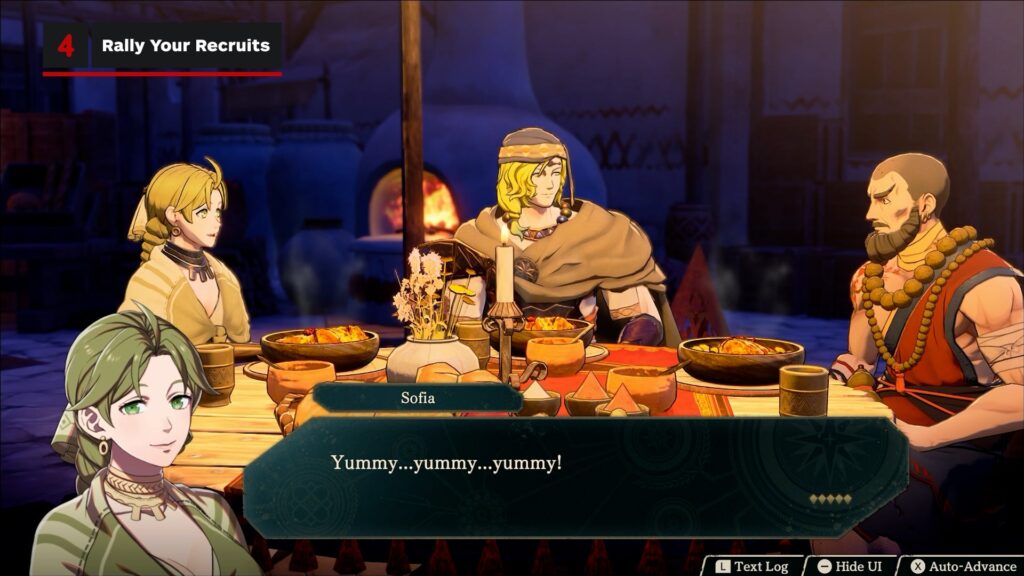
Meals are another useful part of relationship building in Fire Emblem: Fortune’s Weave. Characters appear to have individual food preferences, and serving meals they enjoy can provide additional affinity while sometimes triggering unique dialogue. Players may need to learn these preferences through conversations, experimentation or clues provided by the characters themselves. If someone mentions liking a particular dish, serving that food during a later meal in Fire Emblem: Fortune’s Weave can make downtime more productive.
Shared meals can therefore serve several purposes at once in Fire Emblem: Fortune’s Weave. They can strengthen Support relationships, provide minor recovery or experience benefits and give players opportunities to learn more about individual characters. Better dishes or special recipes may provide stronger bonuses, making ingredients and food purchased around Dagsion useful resources rather than simple background items in Fire Emblem: Fortune’s Weave.
The most effective approach in Fire Emblem: Fortune’s Weave is to combine these systems instead of relying on one method. Players can talk to characters during free time, arrange shared meals, rotate different pairs through activities and deploy those same units together in battle. Paying attention to individual preferences while regularly changing which characters spend time together should create steady Support growth across the roster and make the army more effective as the Fire Emblem: Fortune’s Weave campaign progresses.
How Arena Training, Heroic Deeds and Renown Rewards Strengthen Your Army
The Arena provides another important way to improve characters between major story battles in Fire Emblem: Fortune’s Weave. Units can participate in training matches against mock opponents to earn experience and additional rewards without relying entirely on campaign encounters. Arena victories in Fire Emblem: Fortune’s Weave can provide experience, gold, crafting materials and potentially valuable equipment, making the activity particularly useful for characters who have fallen behind the rest of the army.
Entry conditions may depend on a unit’s level or statistics, while opponents can scale according to the strength of the characters participating. This allows weaker units to gain experience while preventing powerful characters from simply overwhelming every encounter without resistance. Arena sessions in Fire Emblem: Fortune’s Weave are therefore useful during longer periods of downtime or near the end of chapters when players want to strengthen specific units before moving into more difficult battles.
The Arena can also help players collect materials required for equipment upgrades or other progression systems in Fire Emblem: Fortune’s Weave. Repeated victories may provide crafting components and access to rarer rewards, allowing training to contribute to more than character levels alone. Players using permadeath settings should still approach these fights carefully if losses can carry consequences, particularly when sending weaker characters into difficult matches.
Alongside training, players can earn Renown by completing Heroic Deeds, which function as achievement style objectives covering different parts of Fire Emblem: Fortune’s Weave. These tasks can include defeating certain numbers of enemies, completing chapters under particular conditions, repairing equipment, finishing quests or reaching broader progression milestones. Each completed objective contributes Renown crystals that can later be exchanged for permanent or wide reaching benefits.
Players who want to earn Renown quickly in Fire Emblem: Fortune’s Weave should regularly check the Heroic Deeds list and work toward several objectives at the same time. Instead of waiting for achievements to complete naturally, players can deliberately target easier milestones while progressing through battles and side content. Replaying manageable encounters, completing optional quests and pursuing objectives that overlap with normal character training can provide a steady supply of Renown without requiring completely separate grinding sessions.
Renown can then be exchanged for Redemption Perks at locations such as the Vault of the Obelisk or the Pale Raven base in Dagsion. These rewards provide broader progression benefits in Fire Emblem: Fortune’s Weave that can affect multiple characters or story paths rather than improving only one unit. Possible perks include additional experience gains, lower shop prices, improved crafting material drops, useful stat bonuses or other advantages that make future progression more efficient.
Because stronger Redemption Perks cost more Renown, players should prioritize upgrades that match their immediate goals in Fire Emblem: Fortune’s Weave. Someone trying to raise underleveled characters may benefit most from experience bonuses, while players focused on equipment improvements may prefer increased material drops or market discounts. Looking at Heroic Deed requirements and available rewards together can help determine which objectives are worth pursuing first.
Arena training and Renown progression work particularly well when combined in Fire Emblem: Fortune’s Weave. Arena battles improve individual units and provide resources, while Heroic Deeds reward broader accomplishments with benefits that can strengthen the entire army. By using downtime to train weaker characters, complete achievement objectives and invest Renown into useful perks, players can steadily improve both individual units and their overall campaign progression in Fire Emblem: Fortune’s Weave.

How to Upgrade Weapons and Recruit Characters in Fire Emblem Fortune’s Weave
Weapon upgrades in Fire Emblem: Fortune’s Weave are handled primarily through the blacksmith in Dagsion, where players in Fire Emblem: Fortune’s Weave can repair, forge and improve weapons using materials collected from battles, exploration and shops. Each weapon has durability, so keeping important equipment repaired is essential in Fire Emblem: Fortune’s Weave, especially before major story missions. Upgrading generally requires the base weapon along with specific materials, duplicate weapons or other resources, while the blacksmith may also charge gold depending on the service in Fire Emblem: Fortune’s Weave.
A good approach in Fire Emblem: Fortune’s Weave is to avoid investing heavily in every weapon you obtain. Instead, collect multiple copies of strong equipment from exploration, treasure chests, vendors and battle rewards, then concentrate your materials on weapons used by your most important units. Rare materials such as crests, monster parts, ancient relics or other special resources can unlock stronger upgrades in Fire Emblem: Fortune’s Weave, particularly for magical or legendary weapons. Some of these materials may only appear in difficult dungeons or later parts of the campaign, so conserving them for valuable equipment is usually more efficient than spending them immediately.
Character proficiencies can also influence forging in Fire Emblem: Fortune’s Weave. Heroes with strong crafting or forging abilities may reduce upgrade costs or improve the results of blacksmith work, making them useful when managing expensive equipment. Players should regularly check Dagsion’s shops and vendors in Fire Emblem: Fortune’s Weave because new materials and upgrade components may become available as the story progresses. Collecting everything available after battles and during exploration will help ensure the forge always has enough resources for important improvements.
Legendary weapons in Fire Emblem: Fortune’s Weave should generally be treated as long term investments. Reaching their strongest forms can require increasingly rare materials, so upgrading every weapon equally may leave the army without enough resources when more valuable equipment becomes available. Planning which characters will use particular weapons and focusing materials on those units is one of the best ways to keep the army well equipped without wasting limited resources in Fire Emblem: Fortune’s Weave.
Recruitment works differently in Fire Emblem: Fortune’s Weave because characters join only after specific conditions are met rather than automatically becoming available. Potential recruits can appear in Dagsion, during exploration or after certain battles, and their requirements may depend on the current protagonist, story route, Renown level, completed quests, gifts or dialogue decisions. Some characters may also require another specific unit to be present before their recruitment event can occur in Fire Emblem: Fortune’s Weave.
Theodora has a particularly useful exploration ability in Fire Emblem: Fortune’s Weave that allows her to recruit soldiers or influence wandering troops into joining the army. Other recruitment opportunities may appear through taverns, shops, side quests or battles in which an enemy or neutral character becomes available afterward. Since these opportunities can be tied to story progression, players should check Dagsion and the world map frequently between missions in Fire Emblem: Fortune’s Weave instead of assuming recruits will remain available indefinitely.
The best strategy in Fire Emblem: Fortune’s Weave is to recruit characters as soon as their requirements are met. Even if a new unit does not immediately fit the current battle strategy, they can still be useful for side missions, specialized roles or future chapters. Increasing Support with existing allies can also help trigger recruitment opportunities when certain characters influence potential recruits in Fire Emblem: Fortune’s Weave.
Each hero route in Fire Emblem: Fortune’s Weave can contain different recruitment opportunities, and the same character may be recruitable across separate paths because those routes represent distinct timelines. However, recruiting multiple versions does not create permanent duplicates once those timelines converge. Players should therefore focus on securing at least one version of every unique recruit in Fire Emblem: Fortune’s Weave rather than attempting to create duplicate copies of the same unit.
Dagsion Activities and World Map Exploration in Fire Emblem Fortune’s Weave
Dagsion serves as the main hub between chapters and provides far more than basic shopping. Players can use training areas to practice combat skills, challenge instructors or officers and earn additional rewards. The Vault of the Obelisk allows Renown to be spent on useful perks and may also contain special trials, while barracks and other castle facilities give units opportunities to rest, interact and potentially increase bond levels.
Guilds and similar organizations can provide smaller quests that reward equipment, stat boosting items or other resources. Inns and taverns restore HP while also supporting relationship development, particularly when characters receive meals they enjoy. Players should also check the Notice Board regularly because it can reveal side quests, patrol requests and other activities that might otherwise be missed.
Because time in Dagsion can be limited, choosing activities based on immediate priorities is important. A player preparing for a difficult story battle may want to concentrate on weapon upgrades and training, while someone developing Support relationships may benefit more from meals and conversations. If Renown is the priority, Heroic Deeds, special trials or related activities may deserve more attention. Treating downtime as a limited resource encourages players to decide which areas of the army need the most improvement before moving forward.
The world map expands those options beyond Dagsion. Players can send parties into the wider continent to discover random skirmishes, treasure caches, outposts, traveling vendors and rare dungeons. These activities provide experience, equipment, crafting materials and additional opportunities to strengthen the army without advancing the main story immediately.
Each Flame Lord has a different exploration ability that makes certain characters more useful in specific situations. Cai can tame and ride mounts, helping the party travel farther or reach hidden routes. Dietrich can scout ahead to expose ambushes and reveal bonus encounters. Theodora can recruit wandering mercenaries and soldiers, while Leda can perform at inns and settlements to earn additional rewards.
Using these abilities intelligently can make exploration considerably more productive. Dietrich’s scouting can reduce the risk of unexpected encounters, while Theodora may turn an ordinary journey into a recruitment opportunity. Leda can gain additional rewards in settlements, and Cai’s mobility can help reach areas other characters might not access as easily.
World map skirmishes are also useful for experience and materials, making them a natural complement to Dagsion’s training systems. Vendors and treasure caches can supply weapon upgrade components, while limited time events and rare dungeons may contain equipment that cannot be found through normal story missions. Players should therefore explore regularly rather than treating the world map as optional travel between major objectives.
Together, Dagsion and world map exploration form the backbone of progression outside combat. The hub provides structured activities such as training, shopping, recruitment and Renown spending, while the world map offers resources, additional battles, hidden locations and character specific opportunities. Using both efficiently ensures that the army continues gaining equipment, allies and experience even when the main campaign is temporarily paused.

Frequently Asked Questions[FAQs]
- What are the best activities to do when not in combat?
The most valuable activities are building Support relationships, completing Heroic Deeds for Renown, training in the Arena, upgrading equipment and exploring the world map. Time in Dagsion should also be used for conversations, meals, shopping and other character interactions. Balancing these systems helps improve both individual units and the army as a whole, so it is better to spread your downtime across several activities instead of focusing on only one. - How do Support levels work in Fortune’s Weave?
Support levels increase when characters spend time together through conversations, shared meals, training or joint activities. Fighting near one another in battle can also contribute to their relationship. Higher Support ranks can unlock combat bonuses, additional abilities and new story scenes, so regularly rotating character pairings is useful for building a wider network of strong relationships across the roster. - What are Heroic Deeds and Renown?
Heroic Deeds are achievement style objectives that reward players for completing different milestones, such as defeating enemies, forging equipment or progressing through side content. Finishing these objectives grants Renown crystals, which can be exchanged for Redemption Perks. These perks provide broader benefits such as extra experience, lower shop prices or improved rewards, making Renown an important form of long term progression. - How do I feed characters the right meals?
Pay attention to dialogue and character interactions because they can hint at what foods each unit prefers. Serving a favorite meal can provide stronger Support gains than giving a character something they do not particularly enjoy. If a character repeatedly comments positively about a certain type of food, prioritize that dish when possible. Meals can also provide recovery or small progression benefits, so they are useful even beyond relationship building. - When should I use the Arena?
The Arena is most useful during downtime when you need to raise weaker units, earn extra experience or gather resources before a difficult story mission. It is especially helpful after major chapters when some characters may have fallen behind the main group. Players using Classic mode should still be cautious if Arena losses can have permanent consequences, while Casual mode may provide more room to experiment with different units. - How can I get lots of Renown quickly?
Regularly check the Heroic Deeds list and try to complete several objectives at the same time. Repeating easier battles can help with enemy defeat milestones, while forging weapons, exploring dungeons and completing side quests may satisfy additional requirements. The fastest progress usually comes from combining these goals with normal gameplay instead of grinding one objective in isolation. - Where is the best place to upgrade weapons?
The blacksmith in Dagsion is the main location for weapon repairs, forging and upgrades. Bring the required materials, duplicate weapons or other resources collected from battles, treasure and exploration. Rather than improving every weapon you find, it is usually more efficient to invest heavily in the equipment used by your strongest or most important units, especially when rare upgrade materials are limited. - How do I recruit characters?
Recruitable characters can appear in Dagsion, during world map exploration or after certain battles. Some may join after a specific dialogue choice, side quest, story event or Renown requirement is completed. Recruitment opportunities can also depend on which character or story path you are using, so it is a good idea to check for new conversations between missions and recruit available characters as soon as their conditions are met. - What can I do in Dagsion besides shopping?
Dagsion functions as the main hub for many progression systems. You can train units, improve relationships, visit inns, participate in sparring activities, complete small quests and use facilities tied to Renown and other rewards. Special locations such as the Obelisk Vault and interactions with Eshmel’s pale raven add even more reasons to explore the city regularly instead of treating it as a simple marketplace. - Any beginner tips for long-term success?
Use multiple save slots, train more than just your strongest characters and make regular use of optional battles and world map activities. Rotate units together to improve Support levels, collect materials whenever possible and spend Renown on perks that match your current needs. Keeping weapon upgrades, recruitment, exploration and relationship building balanced will make later chapters much easier and prevent your roster from becoming too dependent on only a few units.
sources and citations
- Fortune’s Weave Wikipedia / overview
Fortune’s Weave — Wikipedia - Renown, recruitment, and free-time systems
Fortune’s Weave — Getting Started Guide - World-map activities and character abilities
Fortune’s Weave — Guide: Routes, Combat, and Exploration - Free-time, Renown, recruitment, and preparation
Fortune’s Weave — Between-Match Preparation Guide
Recommendations
- All 13 Christopher Nolan Movies Ranked from Worst to Best, Including the Odyssey
- Customizable Godot Toon Shader with Patterns for Godot 4
- Love Death and Robots on Netflix: Everything You Need to Know About the Groundbreaking Animated Anthology Series
- Pokémon Pokopia Limited-Time Pokémon Trick Works Without Changing Switch 2 Settings
- Star Wars Zero Company Final Trailer Arrives Before August 27 Launch
- No Man’s Sky Launches the Swarm Update: Massive Hive of Glass “Death Star” Construct Arrives in 6.4 Update
- Tides of Annihilation China Previews Praise Combat and Production Values
- Sony Confirms PS2 Games Coming to PlayStation Plus Classics Catalog: Full Details, Release Windows, and What Subscribers Can Expect
- How to Convert Mesh to Hair in Blender Using Geometry Nodes: A Step-by-Step Guide
- The Pokémon Company Is Actively Recruiting PhD Holders With Backgrounds in Ecology to Work in Tokyo (HRMOS Job Posting Breakdown)



































































































