








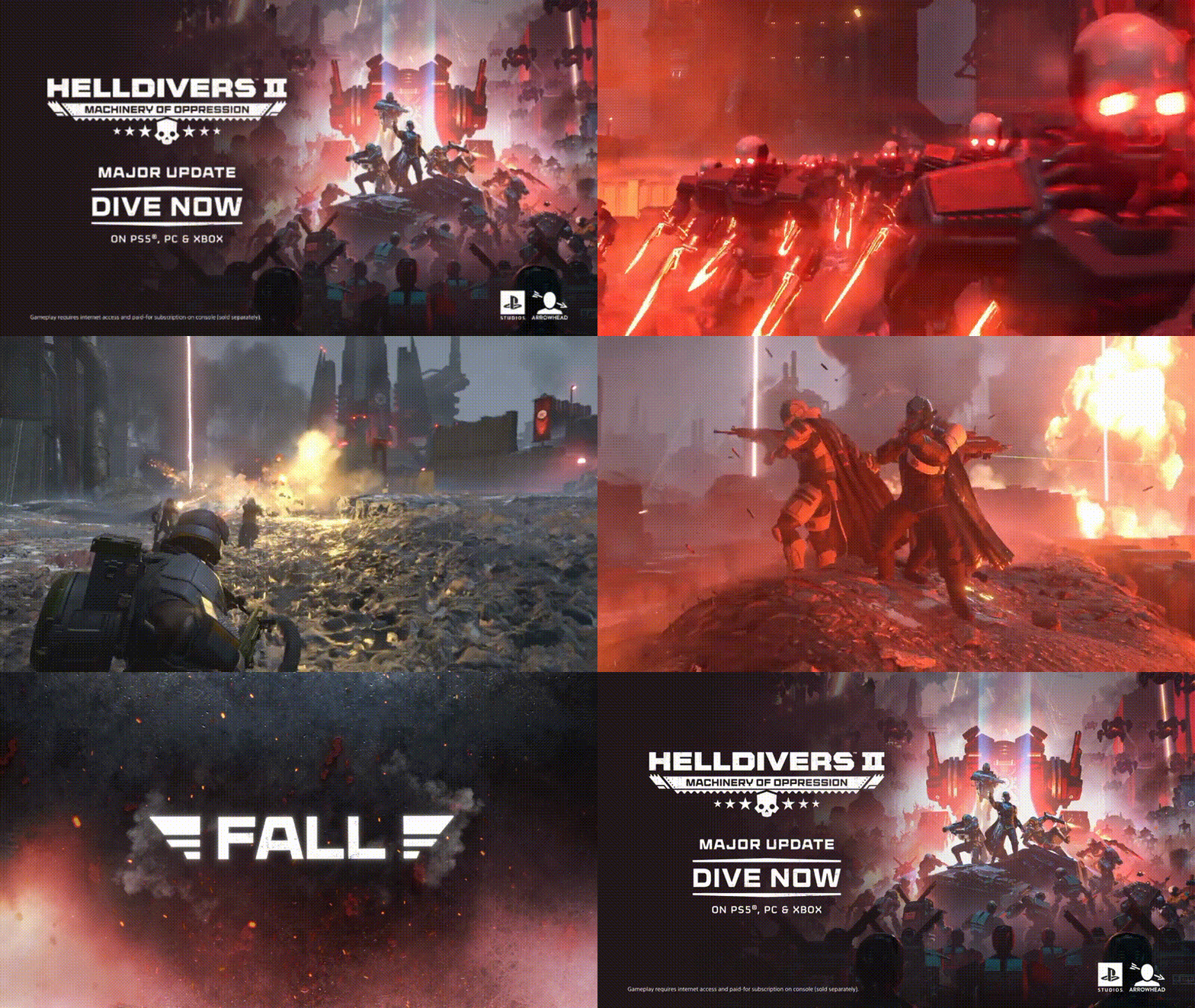
In This Article (9 sections)
Helldivers 2 Patch Overview: Upscaling Support and Performance Improvements
The latest Helldivers 2 patch introduces a major technical overhaul focused on performance optimization, visual scalability, and input responsiveness. Widely discussed as the “Optimizing Liberty” patch, the update brings long-requested upscaling technologies, improved frame pacing, and system-level latency reductions aimed at making gameplay smoother across PC and consoles.
At its core, the patch is designed to address performance bottlenecks that have affected large-scale combat scenarios. With hundreds of enemies, particle effects, and environmental destruction occurring simultaneously, previous versions of Helldivers 2 often experienced frame drops and input lag spikes. The new update targets these issues through modern rendering techniques, including advanced upscaling pipelines and GPU scheduling improvements.
One of the most significant additions is expanded support for modern AI-driven upscaling technologies, including NVIDIA DLSS, with rumored forward compatibility toward DLSS 4-class features, and AMD FSR 4-style enhancements. DLSS-based systems use AI reconstruction to render frames at a lower internal resolution and upscale them intelligently, preserving visual clarity while boosting performance. In Helldivers 2, this translates into higher frame rates without sacrificing detail during chaotic battlefield conditions.
FSR-based upscaling performs a similar function but remains hardware-agnostic, allowing AMD, Intel, and even older NVIDIA GPUs to benefit. The integration of both systems ensures broader accessibility, especially for mid-range PC players who previously struggled with performance dips during large enemy encounters.
These technologies are particularly effective in Helldivers 2 because of its fast-moving camera, dense particle effects, and constant environmental motion. Players can expect a more stable experience during high-intensity missions, especially in co-op sessions where network synchronization and frame consistency are critical.

Helldivers 2 Upscaling, Latency Reduction, and Visual Performance Improvements
Upscaling in Helldivers 2 is not just about performance gains; it also improves perceived visual quality. By rendering frames at a lower resolution and reconstructing them in real time, the game reduces GPU load while maintaining sharp textures and stable edges. In practice, this allows players to run higher graphical settings without sacrificing smoothness, even during Terminid swarm events or Automaton-heavy operations.
The benefits of the new upscaling implementation include:
- Higher average frame rates during combat-heavy missions
- Reduced GPU strain during orbital strikes and explosions
- Improved image stability in motion-heavy scenes
- Better performance on lower-end and mid-tier hardware
Input latency has also been a major focus of this update, with support for technologies such as NVIDIA Reflex and AMD Anti-Lag-style systems. These features reduce the time between player input and on-screen response by optimizing the rendering pipeline. In a fast-paced shooter like Helldivers 2, even milliseconds of delay can affect aiming, dodging, and stratagem deployment.
With latency reduction enabled, weapon response feels more immediate, stratagem inputs trigger faster, camera movement feels tighter, and competitive co-op play becomes more precise. This is especially important in high-difficulty missions, where reaction time is critical for survival.
The update also enhances Variable Rate Shading and dynamic resolution systems. Variable Rate Shading allows the game to allocate GPU resources more efficiently by reducing shading detail in less visually important areas of the screen while maintaining full quality where it matters most. Dynamic resolution scaling adjusts the internal rendering resolution in real time based on performance load.
Together, these systems help:
- Maintain stable FPS during combat spikes
- Reduce unnecessary GPU workload
- Preserve visual clarity where it matters most
- Smooth out performance dips during large-scale effects
These improvements are particularly effective in Helldivers 2 because of its constant battlefield chaos, dense enemy encounters, heavy particle effects, and large-scale explosions.

What the Helldivers 2 “Optimizing Liberty” Patch Changes Across PC, PS5, and Xbox
The “Optimizing Liberty” patch is more than a standard performance update; it is a foundational optimization pass designed to improve current gameplay while preparing the game for future content scalability. The update targets both raw performance and long-term stability as Helldivers 2 continues to expand with new enemy types, missions, and biome systems.
Key internal changes include:
- Improved GPU scheduling for multi-core systems
- Reduced CPU overhead in enemy AI processing
- Optimized particle rendering pipelines
- Better memory streaming for large maps
- Enhanced network synchronization in co-op sessions
The update also delivers platform-specific improvements across PC and consoles. On PC, players receive expanded support for upscaling technologies, better frame rate scaling on RTX and Radeon GPUs, and improved multithreading performance. On PS5, the patch enhances dynamic resolution scaling, stabilizes performance mode, and reduces stutter during asset streaming. On Xbox, the update improves shader compilation, frame pacing consistency, and memory-related slowdowns.
Across all platforms, the patch prioritizes smoother gameplay during large-scale encounters, where previous versions struggled the most. In practical terms, Helldivers 2 is noticeably smoother after the update, particularly in demanding missions with heavy enemy density. Players can expect more consistent frame pacing, reduced stuttering during explosions, improved aiming responsiveness, and better overall visual stability.
While some hardware configurations may still require fine-tuning, the overall gameplay experience is significantly improved. The patch is especially beneficial for mid-range systems that previously hovered around unstable frame rates.

Helldivers 2 Upscaler Comparison and PC Optimization Guide
Different upscaling technologies in Helldivers 2 offer varying benefits depending on the player’s hardware. DLSS, FSR, and XeSS all improve performance by rendering at a lower internal resolution and reconstructing the image, but each option has different strengths.
DLSS, available on NVIDIA RTX GPUs, tends to deliver the best overall image reconstruction quality. It offers strong performance gains, superior motion handling, and the sharpest visual output in Helldivers 2, especially during fast-moving combat and particle-heavy encounters.
FSR, AMD’s hardware-agnostic upscaling solution, provides broad compatibility across AMD, Intel, and older NVIDIA GPUs. It delivers good performance improvements, although image quality may appear slightly softer than DLSS in some scenarios. Its biggest advantage is accessibility across a wide range of hardware setups.
XeSS, Intel’s upscaling technology, offers a balanced mix of performance and image quality. It works especially well on Intel Arc GPUs and select supported hardware, making it a competitive alternative for mid-range systems.
To maximize performance after the update, PC players can adjust several settings based on their hardware capabilities:
- Enable DLSS, FSR, or XeSS depending on GPU support.
- Activate NVIDIA Reflex or an equivalent low-latency mode.
- Lower volumetric fog for additional FPS gains.
- Adjust shadow quality in CPU-heavy scenarios.
- Use dynamic resolution scaling on unstable systems.
These settings allow players to balance visual quality and performance more effectively. In general, DLSS provides the strongest visual output, FSR offers the broadest compatibility, and XeSS serves as a capable middle-ground option for supported systems.

Helldivers 2 Patch Stability, Frame Rate Improvements, and Community Response
Frame rate stability is one of the most noticeable improvements in the latest Helldivers 2 technical patch. The combination of upscaling, CPU optimization, rendering pipeline improvements, and stability fixes results in a more predictable and responsive gameplay experience across all major platforms.
Players have reported several improvements, including:
- Higher minimum FPS during combat
- Fewer drops during orbital strikes
- More consistent performance in co-op sessions
- Improved frame pacing on all major platforms
The patch also introduces a wide range of improvements beyond upscaling and latency reduction. These include fixed shader compilation stutters, improved enemy AI performance scaling, reduced memory leaks in long sessions, enhanced visual consistency in fog and particle-heavy environments, and improved network synchronization during extraction sequences. Together, these changes contribute to a more stable and polished overall experience, particularly during extended play sessions.
On next-generation console configurations, particularly advanced PS5-class hardware, the update introduces support for console-specific upscaling solutions similar to PSSR-style reconstruction systems. These enhancements aim to improve resolution stability in performance mode, enhance anti-aliasing quality, reduce frame pacing inconsistencies, and boost overall visual fidelity without sacrificing performance. This ensures that console players receive improvements comparable to PC upscaling technologies.
Community response to the update has been largely positive, with players highlighting smoother gameplay and improved responsiveness. Common feedback includes noticeably reduced stuttering, better performance during swarm encounters, improved co-op stability, and enhanced visual sharpness with upscaling enabled. Some players have requested further refinements for ultra-low-end hardware, but overall sentiment reflects strong approval of the optimization direction.
Overall, this update is considered a foundational stability patch designed to support future content expansions. The key takeaways are that Helldivers 2 is now more scalable across hardware tiers, performance is more consistent in high-density combat, input responsiveness is significantly improved, and visual systems are better optimized for modern GPUs. This positions the game for smoother long-term growth as new updates and missions are introduced.

Frequently Asked Questions (FAQs)
- What does the Helldivers 2 patch improve most?
The patch mainly focuses on improving overall performance, upscaling support, and input latency. This means the game should feel smoother, respond faster to player actions, and run better on a wider range of hardware. Players are most likely to notice more stable frame rates and fewer performance dips during intense combat. - Does Helldivers 2 support DLSS now?
Yes, expanded DLSS-style upscaling support is included for compatible GPUs. This helps improve performance by rendering the game at a lower internal resolution and then using upscaling technology to produce a sharper final image. Players with supported NVIDIA graphics cards should see better frame rates without a major loss in visual quality. - Is FSR available in Helldivers 2?
Yes, AMD FSR-style upscaling is supported, which makes the update useful for a broader range of players. Unlike DLSS, FSR is generally compatible with more GPUs, including many AMD and some non-AMD cards. This gives more players the option to boost performance while keeping the game visually clear. - Does the update fix lag issues?
Yes, the update includes latency reduction improvements that help make controls feel more responsive. This is especially important in Helldivers 2, where aiming, dodging, and reacting quickly can make a big difference during missions. While it may not remove every network-related issue, it should reduce input delay and improve overall responsiveness. - Is PS5 performance improved?
Yes, PS5 performance is improved through better dynamic resolution scaling and overall stability adjustments. This means the game can better manage demanding scenes by adjusting resolution when needed to maintain smoother gameplay. Players should notice fewer frame drops, especially during large battles with many enemies and effects on screen. - Does the patch increase FPS?
Yes, most players should experience higher or more stable frame rates after the patch. The improvements come from better optimization, upscaling options, and reduced GPU workload in certain scenes. Results may vary depending on hardware, settings, and mission intensity, but the update is designed to make gameplay smoother overall. - What is Variable Rate Shading in Helldivers 2?
Variable Rate Shading, or VRS, is a graphics technique that helps optimize GPU performance. It works by reducing shading detail in less noticeable parts of the image while keeping important areas sharp. In Helldivers 2, this can help improve performance during chaotic moments without making the game look significantly worse. - Which upscaler is best?
DLSS usually offers the best visual quality and image reconstruction, especially on supported NVIDIA RTX GPUs. FSR, however, has broader compatibility and can benefit players using AMD GPUs or older hardware. The best choice depends on your system, but DLSS is generally preferred for image quality, while FSR is better for wider support. - Does the patch improve co-op stability?
Yes, the patch improves co-op stability through better network synchronization and frame pacing. This should help reduce stutters, desync issues, and uneven performance during online missions. Since Helldivers 2 relies heavily on teamwork, these improvements can make multiplayer sessions feel more consistent and reliable. - Is the game more stable after the update?
Yes, the game should be more stable thanks to crash reduction, memory improvements, and performance fixes. These changes help prevent sudden shutdowns, freezing, and instability during longer play sessions. While no patch can guarantee a completely issue-free experience, this update should make Helldivers 2 more reliable overall.
Conclusion
The Helldivers 2 performance update represents a major step forward in optimization, introducing modern upscaling technologies, latency reduction systems, and deep engine-level improvements. These changes significantly enhance gameplay smoothness, responsiveness, and visual fidelity across PC and consoles, ensuring a more stable and scalable experience for future updates.
Sources and Citations
- Arrowhead Game Studios Official Website
https://arrowheadgamestudios.com - NVIDIA DLSS Technology Overview
https://www.nvidia.com/en-us/geforce/technologies/dlss/ - AMD FidelityFX Super Resolution Overview
https://www.amd.com/en/technologies/fidelityfx-super-resolutionl
Recommended
- Warner Bros. Discovery Is Rebuilding Its Video Game Pipeline After a Significant 2025
- Sony Reveals Big PlayStation Showcase for June Featuring Deep-Dive into Marvel’s Wolverine and Summer Game Fest Lineup
- Call of Duty: Black Ops 7 Earns $30,000 for Every Negative Review on Steam, Report Claims
- No Man’s Sky Launches the Swarm Update: Massive Hive of Glass “Death Star” Construct Arrives in 6.4 Update
- Ray Gunn: Sam Rockwell, Scarlett Johansson and Tom Waits Join Brad Bird’s Animated Sci-Fi Noir Film – Cast, Plot, Release Date & Everything We Know
- All Alan Wake Doll Locations and Puzzle Solutions in Phasmophobia
- Ballistic Moon, the Developer Behind the “Until Dawn” Remake, Has Shut Down: What Happened to the Studio and the Future of the Game
- Star Fox Price Confirms It’s the Second Nintendo‑Published Switch 2 Title Sold Cheaper Digitally in the US (Digital vs Physical Explained)
- $70 Games Are Riskier Than Ever as Cheaper Games Dominate on Steam (What the Data Says in 2025–2026)



































































































