








In This Article (8 sections)
Humankind 2’S Historical Identity, Cultural Progression, and First Tales
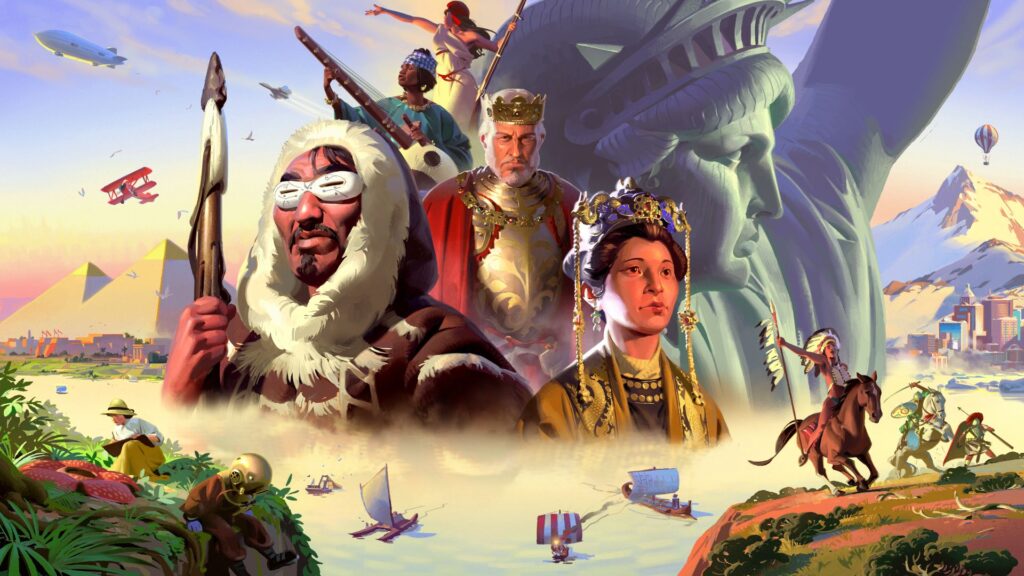
Humankind 2 is Amplitude Studios’ upcoming historical turn-based strategy sequel, with a campaign spanning ancient societies through the Modern Age. Its first gameplay preview on October 15, 2026, focused on how a civilization’s identity can develop through geography, cultural inheritance, neighboring peoples, and changing environmental conditions. The presentation followed the opening stages of a campaign rather than attempting to demonstrate every system or an entire finished game. That makes it most useful as evidence of design direction rather than proof of long-term balance, replayability, or performance. The central question behind the sequel is how an empire can change dramatically over time while still retaining a recognizable history.
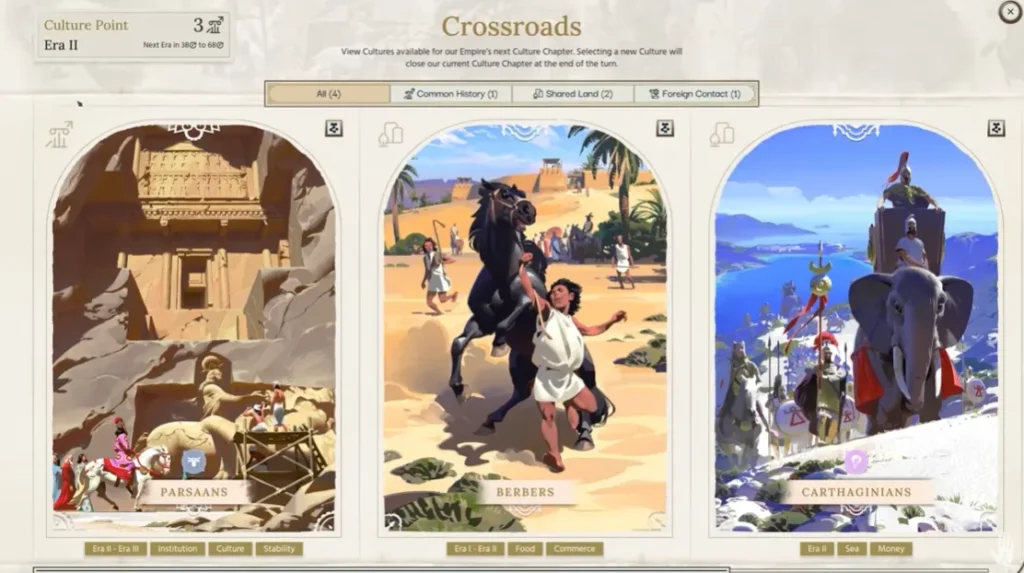
The clearest change from the original Humankind concerns culture selection in Historical Mode. Amplitude says unrestricted switching received criticism because it could weaken immersion and make civilizations harder to recognize across eras. Humankind 2 instead connects available cultures to Common History, Shared Land, or Foreign Contact, making cultural eligibility more dependent on what the player has already done. Following a historical connection may provide one route, controlling territory associated with another people may provide another, and relationships with foreign civilizations can potentially create additional possibilities. Amplitude also says that routes involving shared territory or outside relationships may require greater investment than following an existing historical connection.
This framework changes cultural progression from a largely immediate choice into something players may need to prepare for. Exploration, diplomacy, settlement, and territorial expansion can potentially influence what options become available later. That gives earlier actions greater strategic weight because a player interested in a particular future culture may need to create the conditions that make it accessible. However, the introductory presentation does not establish that every diplomatic action, border, or settlement automatically unlocks a culture. The system will depend heavily on how clearly the game explains eligibility, progress toward requirements, and what actions can change the available choices.
Historical Mode uses an Earth map with approximately 20 starting locations, giving geography an immediate role in the identity of each civilization. Amplitude says more than 30 historians worldwide contributed to its historical development work, while the opening presentation concentrated specifically on this mode and left other modes for later explanation. Familiar geography can help players interpret opportunities because a river valley, coastline, mountain corridor, or isolated inland position naturally suggests different strategic possibilities. The challenge is preventing recognizable locations from producing the same optimal opening every time. Replayability will depend on whether neighboring civilizations, cultural choices, environmental pressures, and development decisions create enough variation within those familiar regions.
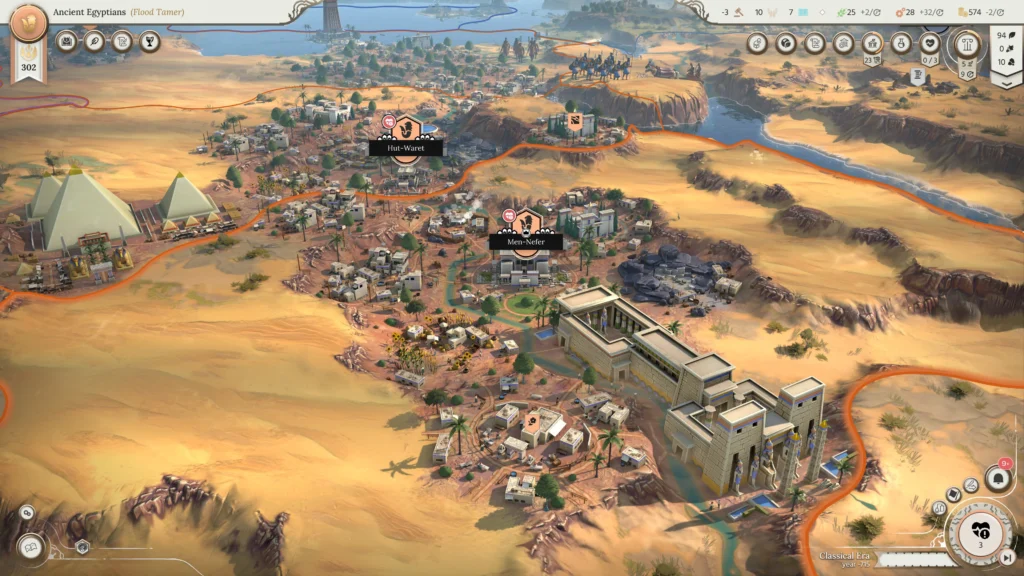
First Tales provide another layer of continuity by functioning as founding myths associated with starting positions. They influence the opening of a civilization, contribute to its long-term identity, and provide access to at least one culture. The gameplay overview demonstrated the Flood Tamer First Tale along the Nile in connection with Ancient Egypt, while an October 22 official example introduced the Great Haruspex and its relationship with the Etruscans. These stories can give players and rival civilizations a persistent identity even as institutions, customs, and territorial ambitions change across the campaign. Their long-term effectiveness will depend on whether they create meaningful possibilities without making later choices feel predetermined.
The distinction between mythology and literal historical evidence also matters to how First Tales function. A founding story can explain how a society understands itself without requiring the game to treat every element of that story as objective historical fact. This approach can give a civilization a recognizable narrative foundation while allowing the campaign itself to develop unpredictably. It may also make rival empires easier to follow because their later identities remain connected to an understandable origin. The important design question is how strongly those beginnings shape later play without restricting the freedom that makes a historical sandbox interesting.
Amplitude has confirmed 70 cultures, each with a progression tree built around Customs and culminating in a Legacy Trait choice. The number provides considerable breadth, but the practical value of those cultures will depend on whether they genuinely create different priorities, vulnerabilities, and development patterns. Progression trees can make the timing of bonuses important because an early advantage may shape an empire for centuries, while a stronger late benefit may require investment or accepting short-term weakness. Intermediate decisions therefore matter as much as the final reward. A progression tree offers more strategic depth when players adjust it to their actual campaign instead of following one universally superior route every time.
Customs represent development within a culture, while Legacy Traits provide a way for part of that culture to persist afterward. This creates decisions with different time horizons because the most useful immediate choice may not be the one that provides the strongest long-term inheritance. A civilization facing a vulnerable frontier might value an immediate military advantage, while another preparing for expansion might prefer an economic benefit whose usefulness grows over time. The introductory overview does not yet establish every opportunity cost, whether progress can be redirected, or how later cultures interact with previously inherited traits. The strongest version of the system would make a civilization’s later capabilities visibly reflect the choices that shaped its earlier development.
Players are also allowed to keep the same culture across eras rather than being forced to adopt a new one. Amplitude specifically states that a civilization can remain Ancient Egyptian for the rest of the game, while also allowing a new culture to be adopted once per era with some flexibility over when the change occurs. This introduces an important balance between continuity and transformation. Staying with an established culture could reward specialization and preserve a coherent identity, while switching could provide a response to new circumstances or ambitions. Neither option should become consistently superior if the choice is intended to remain strategically meaningful.
Timing flexibility could make those transitions more interesting because strategic problems rarely align neatly with era boundaries. A player may prefer to finish a military campaign, complete an economic investment, or wait for diplomatic conditions to change before adopting a new culture. However, the existence of flexible timing does not reveal the final costs, restrictions, or opportunity losses associated with postponing a transition. Those details will determine how much practical freedom the player actually has. The larger goal appears to be making cultural change feel connected to the history of an empire rather than like a sequence of unrelated selections.
Cultural Exchange, Biomes, Climate Change, Cities, and Empire Development
Humankind 2 also allows civilizations in Humankind 2 to learn from other cultures without completely replacing their own identity. The first Humankind 2 gameplay overview illustrates this through an Egyptian civilization reaching northern polar territory and learning to use dog sleds from the Thule. This Humankind 2 example separates practical knowledge from total cultural adoption, allowing a civilization to respond to new conditions without abandoning the broader identity it has developed in Humankind 2.
The strategic possibilities in Humankind 2 are significant because neighboring peoples may become valuable for what they know rather than only for their land, resources, or military strength. A smaller civilization could therefore remain relevant through knowledge or cultural exchange even when it is not a major territorial rival in Humankind 2.
The introductory Humankind 2 material does not establish the complete requirements for adopting Customs from other cultures or whether every cultural benefit can be transferred. Discovering another people and satisfying the conditions required to acquire one of their practices in Humankind 2 may be separate stages. The Humankind 2 system will need limits if different cultures are supposed to retain distinctive identities rather than gradually accumulating the same collection of advantages. Exchange in Humankind 2 is most interesting when it creates meaningful combinations while preserving the differences that make cultural choices matter. More extensive Humankind 2 demonstrations will be needed to show how diplomacy, proximity, territory, and other relationships influence that process.
Environmental adaptation is another major part of Humankind 2’s design. Amplitude identifies eight biomes in Humankind 2 and says that settling within them can unlock biome-specific Adaptations, with early examples emphasizing difficult polar regions and desert environments. This means expansion in Humankind 2 involves more than locating land with strong immediate yields because unfamiliar terrain may require additional knowledge or preparation before it becomes fully useful. A civilization in Humankind 2 can potentially possess territory before being able to exploit it effectively. That distinction gives environmental conditions a larger role in deciding where and when expansion is worthwhile in Humankind 2.
Humankind 2’s Adaptations could also create different development patterns within the same empire. A settlement in a desert may require priorities that make little sense for a city in a temperate region, while a polar settlement may need capabilities that would be unnecessary elsewhere in Humankind 2. This could discourage treating every city as an interchangeable production center. However, the introductory Humankind 2 presentation does not provide the complete biome list, every adaptation requirement, or the rate at which those capabilities become available. The quality of the Humankind 2 system will depend on whether adaptation creates interesting decisions or simply forces players to wait until a required bonus becomes available.
Official Humankind 2 material also describes climate changes that can reshape the strategic map, while the Humankind 2 gameplay overview says many resources are limited and must be managed carefully. Together, those Humankind 2 systems suggest that a strong position may not remain permanently strong. A region that supports an important part of an empire’s economy could become less dependable if environmental conditions change or key resources become harder to access in Humankind 2. That makes resilience potentially valuable alongside maximum short-term efficiency. A diversified empire in Humankind 2 may produce less immediate output than a highly concentrated one while retaining more options when circumstances change.
The precise Humankind 2 mechanics remain important because limited resources can function in very different ways. A finite deposit, a resource with restricted availability, and a resource whose accessibility changes over time would each create different strategic pressures in Humankind 2. The overview does not establish that every Humankind 2 resource follows the same model. Likewise, environmental change in Humankind 2 becomes more strategic when players receive enough information to recognize risks and choose among responses. If changes arrive without useful warning or counterplay, they may feel arbitrary rather than like consequences the player could reasonably plan around in Humankind 2.
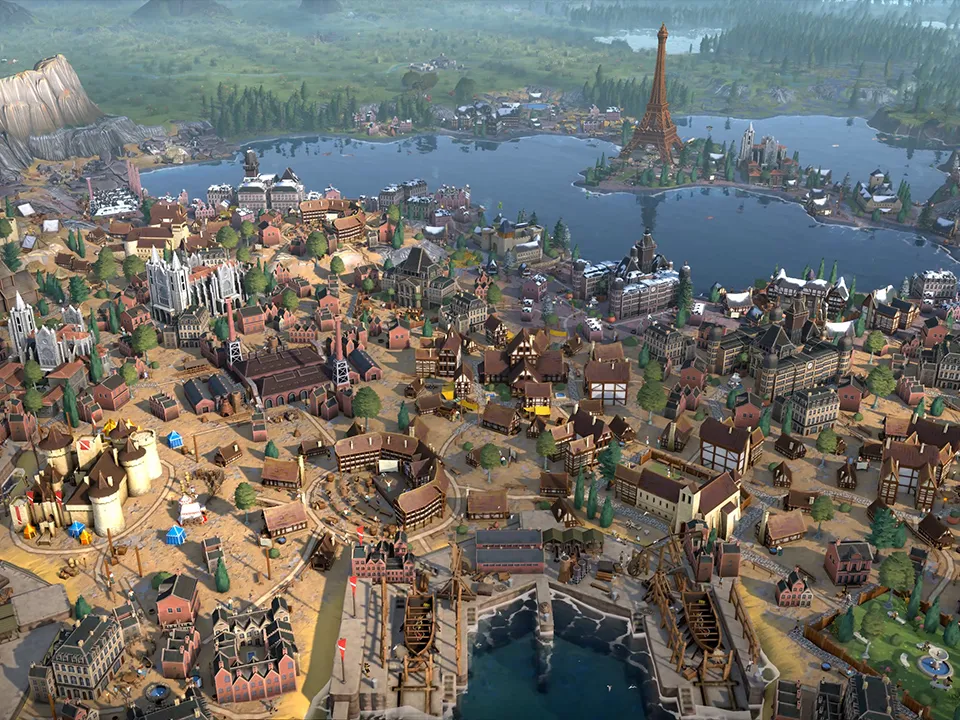
City building remains part of Humankind 2’s broader empire-management structure. Official Humankind 2 material confirms city founding, technological development, alliances, armies, six eras of progression, and battles that occur directly on the world map. Terrain, positioning, army composition, and long-term planning are all identified as relevant to Humankind 2 military engagements. The most interesting question is how closely civilian and military development interact with Humankind 2’s new cultural and environmental systems. A city’s importance in Humankind 2 can extend beyond raw production when its location affects defense, access, future cultural eligibility, environmental adaptation, or relationships with nearby peoples.
Different cities within one Humankind 2 empire may consequently require different priorities. An inland production center, an exposed frontier settlement, and a coastal trading position can contribute to the same civilization while solving very different strategic problems in Humankind 2. Cultural development may further influence which locations are valuable, while environmental pressure can change the usefulness of territory over time in Humankind 2. Exact district efficiencies, construction sequences, and city-management rules have not yet been fully demonstrated. More useful future Humankind 2 examples would show difficult tradeoffs between infrastructure, security, cultural development, and environmental preparation instead of presenting only uninterrupted expansion.
Humankind 2 warfare requires similar caution because saying that terrain and positioning matter does not establish how well those systems are balanced or how effectively artificial intelligence understands them. An early Humankind 2 demonstration can show that the intended mechanics exist without proving that campaigns remain challenging after dozens or hundreds of turns. The most revealing Humankind 2 tests will involve situations where civilian and military objectives conflict. A player forced to choose between strengthening infrastructure, preparing for environmental change, and defending an exposed border would reveal more about Humankind 2’s strategic depth than a sequence where every objective can be satisfied simultaneously. City building in Humankind 2 becomes more meaningful when expansion creates responsibilities alongside new capabilities.
What the First Gameplay Reveal Shows About Humankind 2 and What Still Needs Testing
Amplitude announced the October 15, 2026 presentation as the first gameplay reveal following Humankind 2’s August unveiling. The studio also promoted its Insiders Program alongside that presentation, connecting the public demonstration with an ongoing effort to gather feedback before release. The overview focused primarily on the opening of a civilization rather than attempting to summarize an entire campaign. That is useful because the early game reveals how efficiently a strategy title teaches players to read the environment, establish priorities, and understand the consequences of their first decisions. It also limits what can reasonably be concluded about the complete experience.
An engaging opening does not prove that later empire management remains manageable. A compelling early cultural choice does not establish that all 70 cultures are equally viable or strategically distinct. Likewise, a clear example of environmental pressure does not show how often climate systems become decisive over a complete campaign. The reveal should therefore be treated as evidence of the sequel’s design philosophy rather than as a substitute for long-term play. Balance, pacing, artificial intelligence, replayability, and late-game performance remain areas that require broader testing.
One of the strongest ideas demonstrated so far is the attempt to connect cultural progression to previous actions. Historical Mode gives players more reasons to consider what exploration, diplomacy, territory, and cultural exchange may make possible later. That could make long-term planning more important than in a system where every culture simply becomes available at the same transition point. However, stronger restrictions place greater pressure on interface clarity. Players need to understand why an option is available, why another is unavailable, and what actions could change the situation before an important decision window has already passed.
The same principle applies to progression through Customs and Legacy Traits. It is not enough for a tree to contain many bonuses if one sequence is clearly superior regardless of the surrounding campaign. Strategic depth comes from adapting decisions to circumstances, accepting opportunity costs, and making choices that change what becomes possible later. The October 22 Southern Europe example involving the Etruscans, Romans, Goths, and Byzantines illustrates historical connections without claiming to show every possible route or a mandatory progression. The finished game will need enough alternative paths for those historical relationships to inspire strategy without becoming predetermined scripts.
The ability to remain with the same culture across multiple eras will be particularly important to test. If retaining a culture offers too few benefits, players may technically have the option while feeling compelled to switch anyway. If continuity is too efficient, then much of the 70-culture roster risks becoming strategically secondary. Timing flexibility adds another variable because players can choose when within an era to make a transition. The balance of those incentives will determine whether cultural continuity feels like a legitimate strategic path rather than a novelty option.
Geography introduces similar concerns. The Earth map’s roughly 20 starting locations can give campaigns recognizable historical context and immediately understandable terrain, but familiar geography can also create predictable openings. A river valley may repeatedly encourage the same development pattern unless neighboring relationships, culture eligibility, climate pressure, and resource conditions generate meaningful variation. Starting positions also do not need identical advantages, but they do need credible paths toward success. Difficult regions can be rewarding when their challenges produce distinctive decisions rather than simply placing the player at a permanent efficiency disadvantage.
Environmental systems will require longer campaigns to evaluate properly. Climate change and limited resources are most interesting when players can anticipate problems and prepare several viable responses. A changing environment can transform a previously successful economic plan and force an empire to adapt rather than repeat an established routine indefinitely. However, the difference between a strategic pressure and arbitrary punishment depends on information, timing, and available counterplay. The first gameplay overview establishes the ambition but cannot yet demonstrate the complete balance of those systems.
The October presentation therefore offers a useful framework for evaluating later reveals. The important questions are increasingly about interaction rather than feature count. Do cultural decisions change how settlements develop? Do environmental adaptations influence diplomacy or expansion? Can a civilization recover from an earlier strategic commitment that becomes less useful under new conditions? The answers to those questions will determine whether Humankind 2’s individual ideas combine into a coherent historical strategy game.
Humankind 2 Insiders Program, Release Window, Steam Availability, and PC Requirements
Amplitude’s Insiders Program provides one route for testing these systems before release. The application requirements include an Amplifiers account, the ability to communicate comfortably in English, and active participation through Discord or Amplifiers. Applicants are instructed to use an email address matching their Amplifiers account, while selected participants receive dedicated community access and a one-time Steam key for the testing build. The program is intended to gather feedback while the game remains in development rather than function as a finished commercial release. That distinction matters because mechanics, balance, presentation, and technical behavior may continue changing during testing.
The October 20 deadline applied specifically to consideration for the first testing wave. Amplitude announced on October 21 that those first-wave invitations had been sent and also said that applications would remain available for later waves as participation expanded beyond the initial smaller group. As of October 23, the first-wave deadline is therefore already past. Prospective participants should rely on the latest official program information for later opportunities rather than treating the original deadline as an ongoing application date. Continued testing should provide substantially more useful evidence about long-term strategy than the opening gameplay presentation alone.
Feedback from these tests can address more than bugs. Strategy systems often behave differently after many turns because cultural, economic, military, and environmental mechanics begin reinforcing one another in ways that are difficult to evaluate from isolated demonstrations. Useful feedback identifies the conditions surrounding a problem, including the player’s position, available choices, and why a decision felt ineffective or unclear. This makes it easier to distinguish a genuinely unbalanced mechanic from a difficult but intentional tradeoff. It also helps identify communication problems where a restriction may be reasonable but poorly explained.
Humankind 2 is currently planned for PC in 2027 and has a Steam page available for wishlisting. The listing does not specify a release month or exact day. That means the announced information should be described as a 2027 release window rather than converted into a more precise date. The game remains under development, so public testing and additional presentations are likely to provide a clearer picture of its readiness before launch. Until then, the first reveal establishes its direction more confidently than its final scope or balance.
The current Steam minimum specifications list Windows 10 64-bit, an Intel Core i5-4430 or AMD FX-8350 processor, 8 GB of RAM, a GeForce GTX 960 with 4 GB or Radeon RX 5500 XT with 8 GB, DirectX 11, and 20 GB of available storage. Recommended specifications list Windows 11 64-bit, an Intel Core i7-6700 or Ryzen 5 1500X, 12 GB of RAM, a GeForce GTX 1070 with 8 GB or Radeon RX 5700 XT with 8 GB, DirectX 12, and the same 20 GB storage requirement. These specifications describe the current Steam listing rather than independently tested performance targets. They should not be interpreted as guarantees of a particular frame rate, turn-processing speed, or late-game experience.
Performance evaluation is especially important for a historical strategy game because demands can change substantially over the course of a campaign. An opening settlement with a small number of units and interactions may place very different demands on a system from a late-game empire spanning multiple regions with numerous armies, cities, relationships, and environmental calculations. Visual performance is only one part of that experience because turn processing, responsiveness, and interface behavior also matter. The published hardware requirements do not answer those questions on their own. Broader public testing and launch reviews will provide stronger evidence about how the game behaves under demanding conditions.
For now, Humankind 2’s strongest confirmed direction is the attempt to make history feel cumulative rather than interchangeable. First Tales establish beginnings, culture eligibility reflects previous actions, Customs and Legacy Traits carry development forward, environmental adaptations connect civilization to geography, and climate pressure can challenge assumptions about permanent success. The first gameplay presentation shows how these systems are intended to fit together without proving that every combination already works equally well.
The 2027 launch window gives Amplitude additional time to test those relationships with its Insiders community. The eventual success of the sequel will depend on whether players can look back across a full campaign and understand not only what their civilization became, but how their own earlier decisions caused it to develop that way.
Frequently Asked Questions (FAQs)
- What is Humankind 2?
Humankind 2 is Amplitude Studios’ upcoming historical turn-based strategy sequel. It focuses on guiding a civilization across different eras while managing settlements, cultural development, diplomacy, warfare, and environmental pressures. The sequel places greater emphasis on making a civilization’s identity feel connected to its earlier history rather than changing cultures without a clear relationship to previous decisions. Systems such as First Tales, culture eligibility, Customs, Legacy Traits, and environmental Adaptations are intended to help create that continuity. The game is still in development, so the first gameplay presentation shows its direction rather than the complete final experience. - When was Humankind 2’s first gameplay preview released?
The first official gameplay overview was published on October 15, 2026. It focused mainly on the opening stages of a campaign and introduced several of the sequel’s core ideas, including Historical Mode, cultural progression, First Tales, and environmental development. Because the demonstration concentrated on the early game, it cannot establish how well every system performs across an entire campaign. Questions about late-game balance, artificial intelligence, replayability, and long-term empire management still require more testing. The preview is therefore best understood as an introduction to the sequel’s design principles rather than a complete review of all its systems. - How many cultures are in Humankind 2?
Amplitude’s gameplay overview specifies 70 cultures. Each culture has its own progression tree of Customs, with development eventually leading to a Legacy Trait choice that can contribute to the civilization’s longer-term identity. The size of the roster provides considerable potential variety, but the number alone does not prove that every culture will feel equally distinct in practice. Their real strategic value will depend on whether they encourage different priorities, strengths, vulnerabilities, and responses to changing campaign conditions. Extended play will be needed to determine how meaningful those differences remain across multiple eras. - Can players keep one culture throughout a campaign?
Yes. Amplitude explicitly states that players can remain with the same culture, using Ancient Egypt as an example of a civilization that could continue throughout the entire campaign. The game also allows players to adopt a new culture once per era, with some flexibility over when that transition occurs. This means changing culture is an option rather than an automatic requirement at every era boundary. Staying with one culture may support continuity and specialization, while switching could help an empire respond to new circumstances or pursue different opportunities. The final balance will determine whether both approaches remain genuinely competitive choices. - What are First Tales?
First Tales are founding narratives connected to the starting locations used in Historical Mode. They help establish how a civilization understands its origins and provide an enduring point of identity as the empire changes over time. The Flood Tamer example is associated with a Nile start and Ancient Egypt, while the Great Haruspex example connects another origin story with the Etruscans. First Tales can also help provide access to at least one early culture. Their purpose is therefore both narrative and mechanical, giving a civilization a recognizable beginning without requiring every later decision to follow a fixed historical path. - Does Historical Mode use a real Earth map?
Yes. Historical Mode uses an Earth map with approximately 20 starting locations. Familiar geography gives players recognizable strategic conditions, such as river valleys, coastlines, mountain corridors, or more isolated inland positions. These environments can influence settlement priorities, expansion routes, neighboring relationships, and later cultural opportunities. However, recognizable geography does not mean every campaign will necessarily play the same way because diplomacy, development choices, environmental pressures, and cultural eligibility can create different circumstances. Amplitude reserved discussion of other game modes for later presentations. - Can civilizations learn from other cultures without switching?
Yes. Humankind 2 allows civilizations to adopt useful Customs from other peoples without completely replacing their existing cultural identity. The gameplay overview illustrates this with an Egyptian civilization reaching northern polar territory and learning to use dog sleds from the Thule. This separates practical knowledge from full cultural adoption, meaning foreign relationships can potentially provide benefits beyond conquest or territorial expansion. However, the complete requirements for acquiring another culture’s Customs have not yet been fully explained. It is therefore clear that cultural exchange exists, but the exact limits, costs, and eligibility rules still need further clarification. - How important is the environment?
The environment is intended to play a substantial role in Humankind 2. Amplitude has described eight biomes, biome-specific Adaptations, changing climate conditions, and limited resources that can influence how cities and economies develop. This means controlling territory may not be enough because difficult environments can require additional preparation or specialized knowledge before they become fully useful. Climate changes could also alter the value of previously successful regions and force players to adjust established plans. The practical importance of these systems will ultimately depend on how clearly changes are communicated and whether players have several meaningful ways to respond. - Is the Insiders Program the same as buying Early Access?
No. The Insiders Program is a selective testing initiative rather than a normal Early Access purchase. Applicants must meet Amplitude’s participation requirements, and submitting an application does not guarantee selection. Chosen participants receive access to a testing build and dedicated community spaces so they can provide feedback while development continues. That access should not be treated as ownership of the final retail version of Humankind 2. The program is primarily intended to help Amplitude evaluate systems, balance, usability, and other development issues before release. - Does Humankind 2 have an exact release date?
No. Humankind 2 currently has a confirmed release window of 2027, but no specific month or day has been announced in the material reviewed for this article. The Steam page is available for wishlisting and lists current PC requirements, but that does not narrow the launch timing further. Because development and testing are still ongoing, assigning a more precise date would be speculative. The safest description is therefore that Humankind 2 is planned for PC in 2027, with the exact launch date still to be announced.
Conclusion
Humankind 2’s first gameplay preview presents a clear goal: allowing civilizations to evolve across history without making their earlier identity feel disposable. Its strongest potential lies in how cultural progression, geography, foreign contact, environmental adaptation, and long-term development interact rather than in the size of any single feature list. Systems such as First Tales, culture eligibility, Customs, Legacy Traits, and changing environmental pressures could make earlier decisions matter much later in a campaign, provided their requirements and consequences remain understandable.
The major unanswered questions concern balance, replayability, late-game management, and whether players have meaningful alternatives when circumstances disrupt their plans. With a 2027 release window and testing already underway, the October reveal establishes a promising direction while leaving the full campaign experience and long-term strategic depth to be demonstrated.
Sources and Citations
- Source: Amplitude Studios, “Humankind 2 Revealed,” August 25, 2026. Official announcement introducing the sequel and outlining its historical strategy direction, cultural journeys, and development plans.
Citation: Humankind 2 Revealed - Source: Amplitude Studios, “Gameplay Reveal on October 15th,” October 10, 2026. Official announcement scheduling the first gameplay reveal and sharing its broadcast time.
Citation: Gameplay Reveal on October 15th - Source: Amplitude Studios, “HUMANKIND 2 Gameplay Overview | The Path through History,” October 15, 2026. Official gameplay overview explaining Historical Mode, culture eligibility, cultural continuity, and how historical connections influence progression.
Citation: The Path through History - Source: Amplitude Studios, official gameplay press release distributed through Games Press, October 15, 2026. Additional official details about the gameplay reveal, historical strategy systems, and the sequel’s design direction.
Citation: HUMANKIND 2 Unveils Its First Gameplay Walkthrough - Source: Amplitude Studios, “Culture Journey: Southern Europe,” October 22, 2026. Official example of how First Tales and historical cultural connections can shape a civilization’s journey across eras.
Citation: Culture Journey: Southern Europe - Source: Amplitude Studios, “Shaping the Future of HUMANKIND 2 | Join the Insiders Program,” October 8, 2026. Official information about applying to the Insiders Program, participant requirements, and how selected players can access the test build and provide feedback.
Citation: Join the Insiders Program - Source: Amplitude Studios, “Insiders Wave 1: Invitations are out!,” October 21, 2026. Official confirmation that the first invitations were sent and that additional participant waves are planned.
Citation: Insiders Wave 1: Invitations are out! - Source: Steam, “HUMANKIND 2” store listing, checked October 23, 2026. Official store listing for the PC release, including the release window, platform availability, and system requirements.
Citation: HUMANKIND 2 on Steam
Recommendations
- Devil May Cry’s Dante – Complete Character Guide and Breakdown
- Ubisoft Loses 1.3 Billion Explained
- Eight Games Leaving Xbox Game Pass at the End of July 2026
- New Avatar Aang Movie Trailer Looks Great After Major Leak: Release Date, Story, Cast, And Fan Reaction
- Helldivers 2 Dev Promises Action and Better Communication After “Painful” Reddit AMA Criticism
- Assassin’s Creed Valhalla Headlines April’s Humble Choice Collection: Full Game List, Value Breakdown & Is It Worth It?
- Dune: Awakening Official ‘The Water Wars’ DLC Launch Trailer Explained: Release Date, New Content, Story Details, and Everything We Know
- Vampire Survivors Spinoff Vampire Crawlers Is Coming to PC and Consoles: Release Date, Gameplay, Demo, and Platforms
- Grow a Garden 2: How to Make and Join Guilds – Complete Guild Guide, Invites, Rewards & Tips
- Clair Obscur: Expedition 33 – Sales Milestones, Developer Insights, and Community Reactions



































































































