






In This Article (9 sections)
India’s $25 Billion Deep Tech Funding Plan Explained
India is increasing its support for deep technology as policymakers, investors and technology companies seek to reduce the country’s dependence on foreign frontier technologies. The figure attracting international attention is about $25 billion in potential deep tech investment capacity. It was described by Rajat Tandon, president of the Indian Venture and Alternative Capital Association, in reporting published by CNBC in late September 2026. Tandon said India had invested about $11.6 billion in deep tech over the previous decade but could now assemble roughly $25 billion through government backed financing, private venture capital and private equity participation, along with additional capital.
The important distinction is that India has not simply announced a single $25 billion government fund for startups. The central government’s formal flagship mechanism is the Research, Development and Innovation Fund, or RDIF, under the Anusandhan National Research Foundation. It has an approved corpus of ₹1 lakh crore over six years and is designed to attract additional private investment into research intensive sectors. Rajat Tandon said about $11 billion in government backed capital could be accompanied by matching venture capital and private equity money, plus another $3 billion to $4 billion, producing approximately $25 billion that could become available for deep tech investment.
The formal public policy anchor is therefore India’s Research, Development and Innovation Scheme and Research, Development and Innovation Fund, rather than a government programme officially called the “$25 Billion Deep Tech Fund.” The RDI Scheme was approved by the Union Cabinet on July 1, 2025 and launched on November 3, 2025. Its official ₹1 lakh crore corpus is spread across six years, with a mandate covering areas such as artificial intelligence, quantum technology, robotics, space, biotechnology, health technologies, the digital economy, energy security and other strategically important sectors.
The wider push also goes beyond conventional startup venture capital. India is simultaneously expanding semiconductor policy, artificial intelligence infrastructure, quantum research, commercial space investment and defence innovation. Taken together, these programmes represent a broader effort to strengthen domestic capability in technologies increasingly viewed as important to economic security, industrial competitiveness and strategic autonomy.
This distinction is essential when interpreting the $25 billion headline. The ₹1 lakh crore RDI corpus is an authorised government mechanism, while the $25 billion figure is a broader projection of potential public and private capital that could become deployable if the intended process of attracting matching private investment succeeds. In other words, the headline reflects a combined financing ambition rather than a standalone government programme with a $25 billion budget.

Why India Is Investing More in Deep Technology and How Its Funding Strategy Works
India’s motivation for increasing deep technology investment combines economic opportunity with strategic vulnerability. Artificial intelligence systems, advanced semiconductors, quantum technologies, drones, space infrastructure and sophisticated manufacturing increasingly shape productivity as well as military and civilian capabilities. The government’s Research, Development and Innovation framework explicitly lists economic security, strategic purpose, technological self reliance and national autonomy among its objectives. The geopolitical dimension has also become more prominent, with investors arguing that India cannot assume uninterrupted access to every strategically important foreign technology. U.S. export controls and India’s complicated technology relationship with China have strengthened the case for domestic intellectual property, local manufacturing and sovereign technological capability.
At the same time, India already has a large software and engineering talent base but has historically struggled to mobilise comparable amounts of patient capital for companies whose products may require years of scientific development, hardware testing, regulatory approval or industrial validation. The new funding architecture is intended to bridge the gap between research, prototype development and large scale commercial deployment.
The core of that strategy is a two tier financing model under the Research, Development and Innovation Fund. The Department of Science and Technology acts as the nodal ministry, while a special purpose fund under the Anusandhan National Research Foundation serves as the first level custodian of public money. Capital is then deployed through second level fund managers that can include alternative investment funds, development finance institutions, non banking financial companies, focused research organisations and other approved entities.
The financing structure differs from a conventional research grant programme. The RDIF can provide low interest, long term and typically unsecured loans, equity financing in appropriate startup cases and contributions to deep tech funds of funds. The scheme generally does not operate as a grant programme. Financing ordinarily covers up to 50% of an assessed project cost, leaving the project promoter to provide the remainder from its own resources or commercial sources, although strategic exceptions can be approved.
The purpose is to magnify the impact of government capital rather than have the state fund every rupee of a project directly. Public money is used to reduce financing risk and encourage private investors to participate, which is central to how an official ₹1 lakh crore scheme can help support an investment pool much larger than direct government spending alone.
India is also using several financing channels rather than relying on a single government venture fund. Approved second level fund managers under RDIF can provide long duration loans, make equity investments and support deep tech funds of funds, allowing alternative investment funds and development finance institutions to act as intermediaries between the government corpus and individual companies. This model is designed for a common deep tech problem: a startup may own promising intellectual property but lack conventional collateral, predictable cash flow or an immediate market. Low cost, long term financing can be better suited to multi year technology development than short duration commercial credit.
Implementation remains important, however. By July 29, 2026, the Indian government said ₹1,000 crore each had been sanctioned through the RDI framework to the Technology Development Board and Biotechnology Industry Research Assistance Council. The Technology Development Board had approved 22 projects involving ₹2,192 crore of RDI support against combined project costs of ₹4,744 crore. On September 30, 2026, the Indian Express reported that one part of the flagship deep tech programme had temporarily stopped taking applications while awaiting additional fund flows. More than 300 companies had reportedly applied, while 22 companies had been offered financing in an initial round, illustrating the difference that can emerge between large headline allocations and the speed at which capital is actually deployed.
How India Plans to Compete With the US and China and Build Its Deep Tech Startup Ecosystem
India is not attempting to reproduce every part of the United States and Chinese technology ecosystems immediately. Its strategy is more selective, focusing on strategically important areas where India already has talent, domestic demand, engineering capability or a credible route to manufacturing scale. The RDI Fund explicitly prioritises artificial intelligence, quantum technology, robotics, space, biotechnology, digital technologies, energy transition and other strategic sectors. This approach combines broader financing mechanisms with dedicated government missions, including a semiconductor programme, the ₹10,371.92 crore IndiaAI Mission, the ₹6,003.65 crore National Quantum Mission and a ₹1,000 crore venture capital fund for the private space sector.
The competitive objective is therefore better understood as reducing dependence in strategically important technological layers rather than overtaking the United States or China in total technology expenditure in the near term. That distinction is especially important because India begins from a much lower research and development spending base. Indian policy discussions have generally placed gross R&D expenditure at about 0.6% to 0.7% of GDP, while comparable international datasets place China in the mid 2% range and the United States above 3% in recent reporting years. Exact comparisons require caution because the latest observations do not always come from the same calendar year, but the broad gap remains substantial.
The difference also extends beyond government budgets. The RDI Scheme was designed partly to increase the share of industrial research and development funded and performed by private companies. Its stated objectives include encouraging private sector involvement in advanced research and increasing investment in technologies relevant to economic security and global competitiveness. Closing the R&D intensity gap with the United States and China would require sustained increases over many years, so the ₹1 lakh crore RDI corpus and reported $25 billion public and private investment ambition are better viewed as mechanisms for changing India’s long term trajectory rather than evidence that the funding gap has already disappeared.
India’s deep tech startup ecosystem in 2026 is larger and better financed than it was several years ago, but it remains much smaller than the US market. The CNBC report cited an IVCA survey indicating that nine out of ten surveyed investment funds were deploying capital into deep tech startups, while the sector attracted nearly $3 billion in 2025, described as a record for India. The same report contrasted that amount with roughly $136 billion raised in the United States, showing the scale of the remaining capital gap.
There are also signs of deeper institutional participation. Members of the India Deep Tech Alliance had collectively deployed roughly ₹2,170 crore across 56 startups by September 2026, including companies working in artificial intelligence, quantum technologies, energy, biotechnology, space and other strategic areas. Specialist private funds are emerging as well. In September 2026, an IIT Madras linked deep tech fund announced a ₹450 crore first close toward a targeted ₹1,000 crore fund focused on areas including defence, space, semiconductors, artificial intelligence infrastructure, manufacturing and health technology.
The ecosystem is therefore moving beyond consumer internet and software only startup models toward companies built around intellectual property, engineering, scientific research, specialised hardware and long development cycles. Those characteristics typically demand larger and more patient pools of capital, which is why India’s deep tech strategy depends not only on government funding but also on attracting sustained private investment into sectors that can take years to reach commercial scale.

India Semiconductor, AI, Quantum, Space and Defence Investment Plans
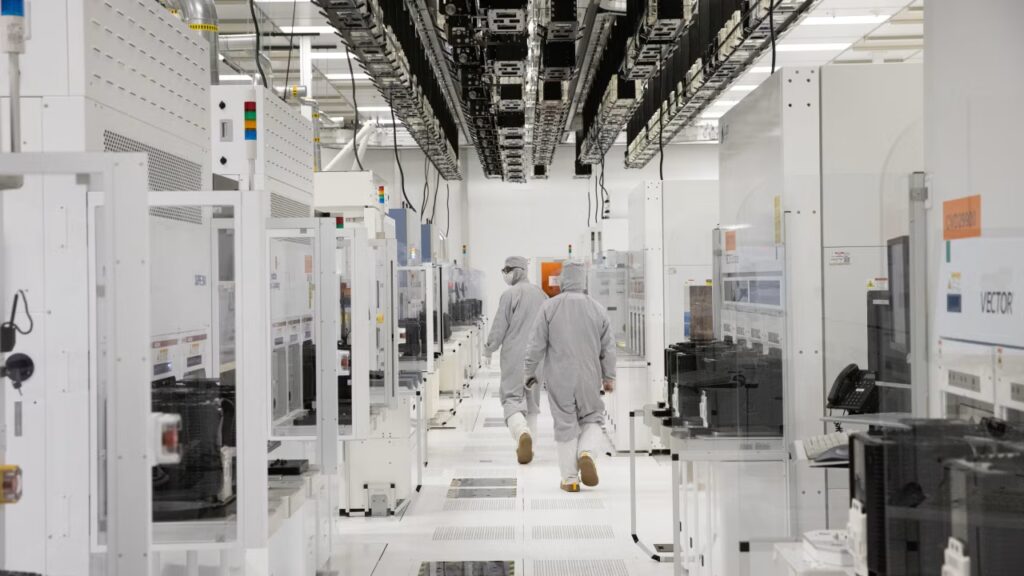
Semiconductors are central to India’s deep tech strategy because chips underpin artificial intelligence systems, telecommunications, automobiles, defence electronics, industrial equipment and almost every advanced digital platform. India Semiconductor Mission policy initially focused heavily on fabrication and packaging capacity, while its newer phase is expanding attention to equipment, materials, chip design, intellectual property and the wider supply chain.
At SEMICON India 2026, Electronics and IT Minister Ashwini Vaishnaw said the government had received $11 billion to $12 billion in proposed investments associated with the next phase of the semiconductor initiative. According to the Indian Express, proposals covered equipment, materials, gases, chemicals and substrates and were expected to develop over the following two to three years, subject to corporate approvals and project execution. This diversification matters because a strategy centred only on fabs would still leave India dependent on foreign machinery, chemicals, substrates, intellectual property and design tools.
Artificial intelligence is another major pillar. The IndiaAI Mission, approved in March 2024 with an outlay of ₹10,371.92 crore over five years, covers computing infrastructure, datasets, indigenous AI development, startup financing, skills, applications and safe and trusted AI. Compute access is particularly important because frontier AI development requires expensive accelerators and large data centre infrastructure. India has pursued shared compute capacity while also attracting major private infrastructure commitments.
In 2026, Amazon announced an additional $13 billion in investment in India through 2030 for cloud and AI infrastructure, while Microsoft and Google had also announced multibillion dollar commitments. The broader deep tech programme can complement IndiaAI by supporting companies developing infrastructure, models, industrial applications and other enabling technologies, with the RDIF identifying AI applications in agriculture, health and education among its priority areas.
India’s challenge in AI is therefore broader than creating more startups. It also needs compute access, domestic models, semiconductor capability, data infrastructure, research talent and commercial customers if it wants to build a more sovereign AI ecosystem. That same research and commercialisation approach extends to quantum technology through the National Quantum Mission, approved in April 2023 with a budget of ₹6,003.65 crore covering 2023 to 2031. The programme targets quantum computing, communications, sensing and metrology, along with quantum materials and devices.
The National Quantum Mission aims to develop intermediate scale quantum computers with 50 to 1,000 physical qubits using technologies including superconducting and photonic platforms. It also targets secure long distance quantum communications, quantum sensing technologies, atomic clocks and specialised materials and devices. Four thematic hubs have been established at or around IISc Bengaluru, IIT Madras, IIT Bombay and IIT Delhi, supported by a broader network of institutions and researchers. The programme also includes support for entrepreneurship and startups, while the RDI Fund creates another potential financing channel because quantum technology is explicitly identified as a priority deep tech area.
Space and defence technology follow a similar pattern of moving advanced research toward a wider private commercial ecosystem. IN SPACe was created to promote, enable, authorise and supervise private space activities while helping non government entities gain access to infrastructure and opportunities that were historically centred on ISRO. In November 2025, IN SPACe and SIDBI Venture Capital signed an agreement to operationalise a ₹1,000 crore venture capital fund for the Indian space sector. IN SPACe has also supported technology transfers, private launch and satellite companies, seed programmes and public private space projects.
Defence technology is developing along related lines. By 2026, India was directing more defence research and development activity toward startups, private companies and universities, with initiatives focused on areas such as artificial intelligence, drones, robotics and advanced materials. Reporting on the 2026 to 2027 defence R&D allocation said 25% of the relevant budget was being opened to private industry, startups and academia, while hundreds of startups had participated in the iDEX innovation ecosystem.
Space and defence are particularly important to the deep tech push because they involve long development cycles, specialised hardware, demanding testing and customers willing to support technologies that may have few immediate commercial alternatives. Government procurement and patient financing can therefore be especially important for helping startups survive long enough to scale.
Why Private Investment Matters and the Challenges Facing India’s Deep Tech Startups
Private investment is essential because even ₹1 lakh crore in public capital is not enough to recreate the research, manufacturing and startup financing ecosystems of the United States and China. India has therefore structured the RDI programme around co investment rather than expecting the state to fund every project entirely. Under ordinary rules, RDIF financing is capped at 50% of the assessed project cost, meaning promoters must provide the remainder through their own resources or other commercial financing. Equity investments and fund of funds structures can also use government capital to attract institutional investors.
One of India’s weaknesses is the availability of large domestic growth investments. Rajat Tandon told CNBC that only a small proportion of Indian investors are currently able to provide investments above $10 million, arguing that high net worth individuals and family offices need to participate more actively. This matters because scientific and hardware focused startups often become more capital intensive just as their technology begins to work. A semiconductor prototype, launch system, quantum device or advanced manufacturing process may require substantially more money to reach commercial production than it took to produce an initial demonstration. Public seed support without follow on private capital can therefore result in successful experiments that never become sustainable companies.
Capital is not the only problem. India’s record deep tech startup funding in 2025 remained far below the US investment levels cited by IVCA, while many investors accustomed to software companies expect faster revenue growth and shorter exit timelines than complex scientific or hardware businesses can realistically deliver. Deep tech firms can require years of engineering, validation, manufacturing preparation and regulatory work before reaching commercial scale, making patient financing particularly important.
Implementation is another challenge. The RDI Scheme has a very large headline corpus, but the Indian Express reported on September 30, 2026 that a funding channel operated through the Technology Development Board had paused new applications while awaiting additional money. Only a fraction of the full six year corpus had reached projects at that stage, showing that announcing capital and actually deploying it can be very different stages of the process.
India also needs stronger links between universities, laboratories, industrial customers and investors. Quantum hubs, semiconductor initiatives, IN SPACe programmes and specialist deep tech funds show movement in that direction, but turning strong scientific research into globally competitive products requires technology transfer capability, manufacturing facilities, testing infrastructure, skilled workers and predictable procurement. Finally, the competitive environment itself continues to move quickly. The United States and China are investing heavily while AI chips, frontier models, quantum systems and advanced manufacturing technologies continue to evolve, meaning India has to improve its own capabilities while its largest competitors are advancing at the same time.
Frequently Asked Questions[FAQs]
- Is India actually spending $25 billion of government money on deep-tech startups?
No. The $25 billion figure reported in September 2026 refers to the broader pool of capital that could become available when government backed financing is combined with matching venture capital, private equity and additional investment. The formal government RDI Scheme itself has an approved corpus of ₹1 lakh crore over six years, so the larger $25 billion figure should be understood as a public and private investment ambition rather than a single government allocation. - What is India’s Research, Development and Innovation Fund?
RDIF is a special purpose financing initiative operating under the Anusandhan National Research Foundation and the Department of Science and Technology. It was approved in July 2025 and launched in November 2025 to encourage more private research, development and commercialisation in strategic and emerging sectors. Its structure is designed to use government capital to reduce investment risk and attract additional private money into long term technology projects. - Which technologies qualify for India’s deep-tech push?
The RDI framework covers a broad range of strategically important technologies, including artificial intelligence, quantum technologies, robotics, space, biotechnology, digital technologies, health technologies and energy transition. Separate national programmes also support semiconductors, defence technology and other advanced industries, creating a wider funding ecosystem rather than concentrating resources in only one sector. - How much does India spend on R&D compared with the US and China?
India’s overall research and development intensity remains around 0.6% to 0.7% of GDP in recent domestic policy discussions, which is materially below recent international levels for China and the United States. China has generally been in the mid 2% range, while the United States has been above 3% in recent reporting years. These comparisons should still be treated carefully because the latest available figures for each country may come from different calendar years. - How much is India investing in artificial intelligence?
The dedicated IndiaAI Mission has a government outlay of ₹10,371.92 crore over five years. That programme supports areas such as computing infrastructure, datasets, indigenous AI development, startup financing, skills and trusted AI. Separate private investments from major technology companies in cloud and AI infrastructure add substantially more capital to the country’s wider AI ecosystem. - How much money is allocated to India’s National Quantum Mission?
The National Quantum Mission has an approved budget of ₹6,003.65 crore for the period from 2023 to 2031. It supports quantum computing, secure communications, sensing, metrology, materials and devices, while also encouraging research networks and startup development. The programme aims to move quantum technologies beyond laboratory research toward systems that can eventually have practical and commercial uses. - Is India funding private space startups?
Yes. IN SPACe and SIDBI Venture Capital signed an agreement in November 2025 to operationalise a ₹1,000 crore venture capital fund for India’s private space sector. This sits alongside other initiatives supporting technology transfers, private launch companies, satellite businesses and wider commercial participation in activities that were previously dominated by state institutions. - How does the RDI Fund provide money to companies?
The scheme works through approved second level fund managers rather than simply distributing grants directly to every company. Financing can include low interest long term loans, equity investments for selected startups and contributions to deep tech funds of funds. In normal circumstances, RDIF financing can cover up to 50% of an assessed project cost, with the remaining amount coming from the company or other commercial investors. - What is the biggest risk to India’s $25 billion deep-tech ambition?
The most immediate risks are slow capital deployment, insufficient follow on private investment and the long development periods required by advanced technologies. Semiconductor, quantum, space and scientific startups can require years of testing and large amounts of capital before reaching commercial scale. A September 2026 report that one RDI linked funding channel had temporarily paused new applications also shows why execution and actual fund disbursement will matter as much as headline commitments. - Can India overtake the US and China in deep technology?
The current funding programme alone is unlikely to erase the much larger overall research and investment gaps with the United States and China in the near term. India’s strategy is more targeted, focusing on building stronger domestic capabilities in selected areas such as AI, semiconductors, quantum technology, space and advanced manufacturing. Its progress will depend on whether public funding successfully attracts sustained private investment, manufacturing capacity, research talent and commercial demand over many years.

Conclusion
India’s reported $25 billion deep-tech push marks an important shift in the country’s technology strategy, but understanding the number correctly is essential. It is not a single $25 billion government fund. The foundation is the government’s ₹1 lakh crore Research, Development and Innovation Scheme, supplemented by private investment, fund-manager participation and additional capital that industry representatives believe could collectively create approximately $25 billion in deployable deep-tech financing.
The broader strategy is already visible across multiple industries. The IndiaAI Mission is financing compute, models and startups; the National Quantum Mission is constructing research and commercialisation infrastructure; India Semiconductor Mission is expanding from fabrication toward a wider chip supply chain; IN-SPACe is bringing venture capital and private companies into the space industry; and defence policy is increasing the role of startups and private R&D.
The central challenge is execution. India still spends a much smaller share of GDP on R&D than the leading technology powers, and deep-tech companies require long-term capital that can survive years of research, testing, manufacturing development and uncertain commercialisation. Evidence from the first year of RDI implementation shows both substantial corporate demand and bottlenecks in moving authorised funds into projects.
India therefore does not close the technology gap with the United States and China simply by announcing a large pool of capital. The more consequential test will be whether that capital creates durable intellectual property, manufacturing capacity, commercially viable companies and strategic technologies that India can deploy independently. If the RDI architecture succeeds in mobilising domestic institutional investors alongside government financing, the initiative could represent a lasting change in India’s innovation model: from an economy best known for technology services and software talent to one with a considerably larger role in the creation, financing and manufacture of frontier technologies.
Sources and Citations
- CNBC, Deep Technology Investment Report, September 29, 2026 : Priyanka Salve’s report examines the proposed $25 billion investment pool, combining public funding with anticipated private capital. It includes venture industry commentary on financing Indian technology startups and reducing dependence on overseas technology. Direct CNBC access was blocked, so the article’s contents were checked through its attributed aVenture republication. aVenture
Citation: India Readies $25 Billion for Deep Tech Investment as U.S. and China Race Ahead. (CNBC) - aVenture News, CNBC Report Republication : Accessible reproduction identifying CNBC Tech as the original source and Priyanka Salve as the author. It explains the reported combination of approximately $11 billion in government funding, matching private investment and additional capital behind the headline total. This is another presentation of CNBC’s reporting, not an independently sourced confirmation or a government funding announcement. aVenture
Citation: CNBC’s India Deep Technology Investment Report on aVenture. (aVenture) - Anusandhan National Research Foundation, Official RDI Fund Portal : Dedicated government website confirming the Research, Development and Innovation scheme’s ₹1 lakh crore outlay over six years, Cabinet approval on July 1, 2025 and formal launch on November 3, 2025. It outlines priority sectors, support for private enterprises and the fund’s objectives. This specific portal replaces the broader ANRF proposal management homepage supplied. rdifund.anrf.gov.in
Citation: Research, Development and Innovation Fund. (ANRF) - Department of Science and Technology, RDI Scheme and Implementation Guidance : Official departmental reference for the scheme, supplemented by the dedicated fund portal’s implementation guidelines, application documents and frequently asked questions. The portal identifies the financial intermediaries eligible to apply for funding and explains the programme’s priorities. These resources support descriptions of the delivery framework rather than claims that all announced funding has already reached individual companies. Department of Science and Technology
Citation: Research, Development and Innovation Cell and Official RDI Fund Guidance. (Department of Science and Technology) - Press Information Bureau, RDI Implementation Update, July 29, 2026 : Official parliamentary reply reporting 22 approved Technology Development Board projects involving ₹2,192 crore in RDI support, while separately identifying ₹500 crore disbursed to the board in March. It also confirms that the scheme provides loans, equity and related instruments rather than grants. These distinctions prevent project approvals from being confused with completed disbursements. Press Information Bureau
Citation: Parliament Question: Loans and Financial Assistance Under the RDI Scheme. (Press Information Bureau) - Press Information Bureau, IndiaAI Mission Approval, March 7, 2024 : Official Cabinet announcement establishing the IndiaAI Mission’s ₹10,371.92 crore budget and its plans for computing infrastructure, domestic AI models, datasets, skills, startup financing and safe AI development. It provides the original policy framework and approved funding figure, rather than evidence that the full allocation has already been spent or every target achieved. Press Information Bureau
Citation: Cabinet Approves Ambitious IndiaAI Mission to Strengthen the AI Innovation Ecosystem. (Press Information Bureau) - IndiaAI, Official Mission Website : Official mission portal outlining seven pillars intended to broaden access to computing, improve data quality and support responsible, inclusive AI development. It provides a central reference for the programme’s objectives and activities, while the Cabinet announcement above supplies the formally approved scope and budget. The site’s indexed overview was available, but direct access was restricted during verification. indiaai.gov.in
Citation: IndiaAI Mission Official Website. (IndiaAI) - Department of Science and Technology, National Quantum Mission : Official programme reference covering quantum computing, communication, sensing, metrology and materials research. The accompanying February 4, 2026 parliamentary update confirms the ₹6,003.65 crore allocation over eight years and the establishment of four thematic hubs. That accessible update supplements the supplied DST page, whose detailed content did not load during verification. Press Information Bureau
Citation: National Quantum Mission and Official Implementation Update, February 4, 2026. (Department of Science and Technology) - IN-SPACe, Official Website and Institutional Overview : Official resources explaining the agency’s role in promoting, authorising and supervising private participation in India’s space sector. ISRO’s overview describes support for launch vehicles, satellites, space services and access to public infrastructure. This establishes the agency’s responsibilities and relationship with private companies, rather than independently confirming a particular startup’s funding or investment approval. ISRO
Citation: IN-SPACe Official Website and ISRO’s IN-SPACe Overview. (IN-SPACe) - Department of Space, Official Department and ISRO Headquarters Information : Official institutional page explaining the department’s responsibility for developing and applying space science and technology. It outlines launch vehicles, satellite communications, remote sensing and space research, while linking to relevant agencies and research institutions. This working page replaces the unavailable address supplied and provides organisational background for India’s space technology policies. ISRO
Citation: Department of Space and ISRO Headquarters. (ISRO) - SIDBI Venture Capital, Official Website and Company Profile : Company information identifying SIDBI Venture Capital as an investment management subsidiary of SIDBI, with experience supporting startups, technology businesses and smaller enterprises. Its official profile describes the organisation’s investment approach and history. The company controlled LinkedIn page provides an accessible supplement because the supplied corporate website could not be retrieved during verification. LinkedIn
Citation: SIDBI Venture Capital Official Website and Official Company Profile. (SIDBI Venture Capital) - The Indian Express, Semicon India Investment Proposals, Updated September 18, 2026 : Soumyarendra Barik’s report records Ashwini Vaishnaw’s statement that Semicon 2.0 had attracted approximately $11 billion to $12 billion in proposals across equipment, materials, gases, chemicals and substrates. The investments were expected over the following two to three years, with company approvals still relevant. These are proposed investments, not expenditure already completed. The Indian Express
Citation: Semicon 2.0 Draws Up to $12 Billion in Investment Proposals. (The Indian Express) - The Indian Express, RDI Funding Delay Report, September 30, 2026 : Amitabh Sinha’s report examines the Technology Development Board’s decision to stop inviting new applications while awaiting funds for further offers. It distinguishes the board’s stated administrative reasons from information supplied by the newspaper’s sources about funding delays. This documents an implementation pause, rather than announcing the permanent cancellation of the entire RDI scheme. The Indian Express
Citation: Funds Awaited, Government Showpiece Deep Tech Initiative Hits Pause. (The Indian Express) - World Bank, Research and Development Expenditure as a Percentage of GDP : Official World Development Indicators series providing country comparisons and historical data on research and development spending relative to economic output, using UNESCO Institute for Statistics data. It supports comparisons of research intensity rather than announced investment packages. Any quoted country figures should retain their observation years, since the latest available data can differ between countries. World Bank Open Data
Citation: Research and Development Expenditure, Percentage of GDP. (World Bank Open Data)
Recommendations
- New God of War Game Just Shadow Dropped: See Kratos as a Spartan Warrior in Surprise 2D Action Game Sons of Sparta
- Scale the Depths Release Date Confirmed for Q2 2026
- Starsand Island is leaving early access on August 18
- Former PlayStation Boss Shawn Layden Plans to Revive AA Games
- Witchspire Achievement Guide: All Achievements and Fastest 100% Completion Tips
- Age of Empires Mobile: PC Edition: Everything to Know About the Mobile RTS Coming to PC
- Sales of the “Pirated” Survival Game “Windrose” Have Surpassed 500,000 Copies: What the 48-Hour Steam Milestone Really Means
- Citizen Sleeper 2: Starward Vector Review – Exploring the Narrative, Dice-Based Gameplay, and Sci-Fi Universe
- MASTERS OF THE UNIVERSE Official Trailer Breakdown and Everything We Know So Far About the 2026 He-Man Movie
- Capcom Showcase March 2026: Start Time, Where to Watch the Capcom Spotlight, and What to Expect (Pragmata, Monster Hunter Stories 3, Mega Man, Street Fighter 6)



































































































