








In This Article (7 sections)
Industrial Next BMW Partnership: AI Factory Robots and Automotive Manufacturing Evaluation
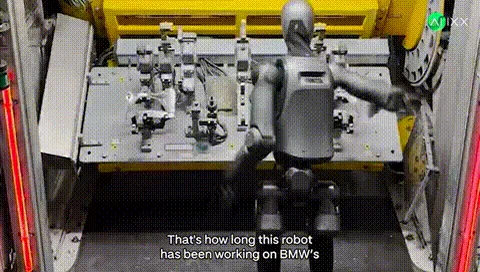
Industrial Next has announced a collaboration with the BMW Group Technology Office to evaluate its AI powered dexterous manipulation technology for automotive manufacturing. The San Francisco robotics startup revealed the agreement during TechCrunch Disrupt on October 13, 2026, marking an important opportunity to demonstrate how reconfigurable robotic systems could improve manufacturing flexibility. Its technology combines artificial intelligence, machine vision, simulation and robotic hardware to perform complex assembly operations without requiring extensive manual programming for every product variation.
The announcement represents a technology evaluation rather than a confirmed commercial deployment. BMW has not announced a purchase agreement, installation across its factories or production contract involving the startup. Neither company has disclosed the evaluation’s duration, location, number of robotic work cells or requirements for advancing into vehicle production. The collaboration therefore provides an opportunity to assess the technology’s industrial potential rather than confirmation that the startup’s robots are already manufacturing BMW vehicles.
The BMW Group Technology Office specializes in exploring emerging technologies that could eventually support the company’s operations. BMW established its Silicon Valley technology office in Mountain View, California, in 1998 to investigate innovations and develop relationships with technology companies. Its work focuses on evaluating new ideas and identifying practical applications within the automotive industry.
This makes the startup’s technology relevant to BMW’s broader manufacturing strategy. The BMW iFACTORY concept emphasizes artificial intelligence, digitalization, production efficiency and flexibility. Reconfigurable robotic systems could support these objectives by helping manufacturers adapt equipment to changing vehicle designs and assembly requirements. However, the evaluation has not yet established whether the technology meets BMW’s production standards.
Industrial Next was founded in November 2021 by Lukas Pankau and Allen Pan, who brought experience from Tesla and other autonomous technology companies. Pankau, the company’s CEO and cofounder, previously worked on electrical architecture and autonomous systems at Tesla and Waymo. Pan, identified as CEO Asia and cofounder, has experience in manufacturing automation at Tesla and autonomous systems at General Motors. Reporting also connects him with autonomous technology company Neolix.
Their experience influenced the company’s approach to factory automation. Both founders recognized that advances in artificial intelligence and autonomous systems were progressing rapidly while many manufacturing processes still depended on rigid robotic programming. They established the company to develop industrial work cells that could learn new tasks through simulation and demonstration instead of requiring extensive programming whenever products or processes changed.
The startup focuses on creating integrated robotic stations rather than general purpose robots designed to move freely throughout an entire factory. Its systems combine robotic manipulators, sensors, visual perception and AI models capable of interpreting manufacturing tasks and generating appropriate movements.
The company describes this approach as AI defined manufacturing, where robotic stations can adapt to new products and production requirements through software and learning rather than complete mechanical redesign.
The technology is particularly relevant to manufacturing activities involving flexible materials, small connectors and components that do not always appear in identical positions. Conventional robots can perform repetitive tasks efficiently when conditions remain predictable, but variations in component alignment or material behavior may require additional programming and adjustments.
The startup aims to reduce these limitations by allowing its robotic systems to interpret their surroundings and adapt movements according to the task. Its technology combines visual perception, task information and robot motion, creating a system intended to handle changing conditions more effectively than fixed automation programs.
The BMW evaluation could help determine whether this approach can transfer from electronics manufacturing into automotive applications. However, the specific vehicle components or assembly processes BMW intends to evaluate have not been publicly identified.
The partnership therefore represents an important opportunity for Industrial Next to demonstrate its technology in a demanding industrial environment. Automotive manufacturers require reliable equipment capable of operating continuously, maintaining consistent quality and integrating with existing production systems. Whether the startup can meet those requirements will determine the significance of the collaboration beyond its initial announcement.

How Industrial Next Reconfigurable AI Robots Work, Training Methods and Manufacturing Performance
Industrial Next develops modular robotic work cells designed to perform precise manufacturing operations while adapting to changes in products, component positions and production requirements. Its approach combines foundation models, machine vision, simulation and demonstration based learning to reduce dependence on conventional robotic programming.
The company’s foundation models connect three essential elements of robotic operation: visual perception, task context and physical movement. Visual perception helps the system identify components and understand their positions. Task context provides information about the intended manufacturing operation, while motion control converts that information into robotic actions.
This approach is particularly useful for tasks where slight variations can affect performance. For example, inserting a small connector may require the robot to recognize its actual position and adjust its movement accordingly. A conventional robotic system might depend on tightly controlled fixtures and predetermined coordinates, while a learned manipulation system can potentially respond to variations detected through its sensors.
Simulation plays a central role in Industrial Next’s training process. The company has developed a simulation environment intended to reproduce the physical behavior of components and robotic movements with high accuracy. Robots can practice tasks virtually before transferring learned capabilities to real equipment, reducing the need to perform every training attempt on an active production line.
Simulation also allows developers to expose robotic systems to different scenarios, including changes in component positions, orientations and physical properties. However, translating virtual performance into reliable physical operation remains challenging because real environments introduce friction, material variation, sensor errors and mechanical wear that simulations may not reproduce perfectly.
Industrial Next also uses demonstration based learning to teach new manufacturing tasks. Rather than manually programming every movement, engineers can provide examples of the desired operation and use training methods to develop appropriate robotic behavior. The company has not publicly detailed every demonstration technique used, so its approach should not be assumed to rely exclusively on teleoperation, hand guidance or any particular training method.
The company’s reconfigurable work cells are designed to be modular, allowing manufacturers to adapt or redeploy them across different product lines. This could be valuable in industries where product designs change frequently and conventional automation requires substantial engineering work whenever a new model enters production.
Industrial Next claims that some manufacturing changes that previously required weeks can be completed in minutes. It separately states that new tasks can be learned or retooled in hours. These figures describe different types of adjustments and should not be interpreted as a guarantee that every unfamiliar manufacturing operation can be fully implemented within minutes.
Physical equipment may still require modifications to grippers, fixtures, safety systems and material handling arrangements. AI can reduce programming requirements, but complete factory changeovers may involve additional engineering and validation.
Industrial Next’s most detailed publicly described applications involve electronics and smartphone manufacturing, where delicate components can be difficult to manipulate consistently.
Examples of its manufacturing operations include:
- Flexible cable handling: Manipulating cables that bend or change position during assembly.
- Connector insertion: Positioning small connectors and related components with high precision.
- Protective film removal: Removing films from camera components, buttons and other delicate surfaces.
- Product variation handling: Adapting robotic movements when component positions or product designs change.
- Assembly automation: Performing repetitive manufacturing operations while maintaining precise control.
TechCrunch reported that Industrial Next workstations are involved in manufacturing a popular smartphone, although the associated brand and contract manufacturer were not identified. Industrial Next also describes a robotic cell operating continuously on the main production line of a major electronics manufacturer.
The company’s website identifies Compal Electronics among organizations associated with deployments, pilots or investment relationships. However, the available information does not establish the exact nature of every listed relationship.
Industrial Next publishes performance claims of more than 99.9% match accuracy and first pass task completion, alongside a cycle time below 3.3 seconds for a highlighted production application. The company also describes the station as operating continuously and completing its assigned operation faster than a human worker.
Separately, Pankau told TechCrunch that a protective film application achieved 100% accuracy while operating at or above human speed. He also claimed that the system maintained its performance after being transferred to another phone model and a different production line.
These figures are company reported results rather than independently verified BMW evaluation outcomes. Industrial Next has not publicly provided complete testing methodologies, sample sizes or long term performance records sufficient to establish whether the same results would apply across every manufacturing task.
Nevertheless, the reported performance illustrates the company’s central ambition: creating industrial robots that combine high speed, precision and flexibility without requiring extensive reprogramming whenever products change.
For manufacturers, the potential benefits extend beyond reduced programming time. Flexible robotic systems could shorten production changeovers, reduce engineering costs and make automation more practical for products with frequent design updates.
The ability to maintain performance across different product variations is particularly important. Traditional automation can require new fixtures, movement sequences and exception handling rules whenever components change. Industrial Next aims to reduce these requirements by allowing its models to interpret the actual manufacturing environment and adjust movements accordingly.
However, consistent industrial performance requires more than successful demonstrations. Manufacturers must establish that robotic systems maintain acceptable defect rates, predictable cycle times and reliable operation over thousands or millions of production cycles.
Changes in lighting, component tolerances, sensor performance, tooling conditions and material properties can affect robotic behavior. Systems must therefore detect unexpected conditions, recover safely from errors and provide maintenance teams with understandable information when problems occur.
The BMW evaluation could provide an opportunity to investigate these challenges under automotive manufacturing requirements, although no public results have been announced.

Industrial Next BMW Robotics Evaluation: Production Challenges, Commercial Potential and Future Plans
Industrial Next’s collaboration with BMW highlights growing interest in using artificial intelligence to make industrial automation more adaptable. Automotive manufacturers regularly introduce new models, components and production configurations, creating demand for equipment capable of handling variation without extensive redesign.
Traditional industrial robotics remains highly effective for repetitive operations, but changing products can require significant engineering. Industrial Next aims to reduce this burden by creating robotic work cells that can acquire new skills and adapt to different tasks through AI training.
The company’s technology could be particularly useful for precision assembly operations where components require careful positioning, flexible handling or adjustments based on visual feedback. However, its ability to meet automotive production requirements remains under evaluation.
BMW’s involvement does not currently represent a confirmed factory rollout. The BMW Group Technology Office is assessing Industrial Next’s dexterous manipulation approach, and neither company has announced commercial purchasing commitments or specific production installations.
A successful transition from evaluation to commercial deployment would likely require evidence across several areas:
- Operational reliability: Consistent performance during extended manufacturing cycles.
- Production speed: Ability to meet required cycle times without interrupting surrounding equipment.
- Quality control: Low defect rates and predictable task completion.
- Safety: Appropriate safeguards for workers, equipment and surrounding production processes.
- System integration: Compatibility with factory software, automation equipment and production monitoring systems.
- Maintenance: Practical procedures for diagnosing failures and replacing worn components.
- Economic value: Sufficient productivity improvements to justify installation and operating costs.
One of the biggest technical challenges is maintaining flexibility without sacrificing predictability. AI systems are valuable because they can respond to variation, but industrial production requires consistent results. Manufacturers need clear operating limits and reliable ways to recognize situations where human intervention becomes necessary.
Simulation accuracy also remains important. A robotic policy that performs well in virtual training must continue functioning under real manufacturing conditions. Differences in friction, component flexibility, mechanical tolerances and equipment wear can create difficulties that are not fully represented during simulation.
Scaling the technology introduces additional challenges. A robotic station performing successfully in one electronics factory does not automatically demonstrate that hundreds of identical systems can operate reliably across multiple automotive plants. Each deployment may require adjustments to tooling, safety arrangements, production software and quality procedures.
Industrial Next must also demonstrate that its flexibility delivers meaningful economic advantages. Reducing programming time may help manufacturers respond more quickly to product changes, but the complete cost of equipment, maintenance, training and process validation still determines commercial value.
Its published accuracy and cycle time figures provide an indication of the performance the company claims to have achieved in selected applications. However, broader independent testing would be necessary to establish whether similar results can be maintained across different industries and production environments.
The BMW evaluation is therefore significant because it gives Industrial Next an opportunity to demonstrate its capabilities beyond its existing electronics applications. Automotive manufacturing involves demanding production schedules, strict quality requirements and complex equipment integration, making it an important environment for assessing whether adaptable AI robotics can become commercially practical.
The collaboration also reflects a broader shift toward integrating artificial intelligence into manufacturing equipment. Rather than relying entirely on fixed programming, companies are exploring robotic systems capable of interpreting visual information, learning new operations and adapting to changing conditions.
Industrial Next’s long term success will depend on converting its technical claims into repeatable industrial performance. The company must show that its robotic work cells can maintain precision, operate safely and reduce manufacturing costs while adapting to different production tasks.
For BMW, the evaluation offers an opportunity to investigate whether AI powered dexterous manipulation could support future manufacturing flexibility. For Industrial Next, it provides a connection with a major automotive manufacturer and an opportunity to demonstrate that its technology can meet more demanding industrial requirements.
As of October 14, 2026, the partnership remains an evaluation without confirmed deployment plans. Future developments, including successful production pilots, commercial agreements or installations, would provide stronger evidence of the technology’s practical value.
Ultimately, the collaboration represents a step in Industrial Next’s effort to make factory robotics more adaptable. Its combination of simulation, AI models and modular robotic work cells offers a potential alternative to rigid automation, but widespread adoption will depend on demonstrated reliability, economic viability and successful integration into real manufacturing operations.

Frequently Asked Questions (FAQs)
- Has BMW deployed Industrial Next robots in its factories?
No. As of October 14, 2026, BMW has not announced a production deployment of Industrial Next robots. The confirmed collaboration involves an evaluation by the BMW Group Technology Office of the company’s AI powered dexterous manipulation technology. No manufacturing site, number of robotic work cells or commercial rollout schedule has been publicly disclosed. - What is BMW evaluating from Industrial Next?
BMW is evaluating Industrial Next’s AI powered dexterous manipulation technology for manufacturing applications. The system combines robotic work cells, machine vision, foundation models and simulation based training to perform precise assembly tasks. The evaluation may help determine whether this technology can satisfy automotive manufacturing requirements, although the specific operations being tested have not been announced. - Who founded Industrial Next?
Industrial Next was founded in November 2021 by Lukas Pankau and Allen Pan. Pankau previously worked at Tesla and Waymo, while Pan has experience in advanced manufacturing automation at Tesla and autonomous systems at General Motors. Their backgrounds influenced the company’s focus on applying artificial intelligence and autonomous systems technology to industrial manufacturing. - What makes Industrial Next robots reconfigurable?
Industrial Next’s robots use modular work cells combined with AI models that learn manufacturing tasks through simulation and demonstration. This approach can reduce the need for manually programmed movements when products or component configurations change. However, some physical adjustments to tooling, fixtures and safety systems may still be necessary when introducing new manufacturing operations. - Does Industrial Next claim robots can be retooled in minutes?
Yes. Industrial Next claims that certain production changes previously requiring weeks can be completed in minutes. However, the company separately states that learning or retooling completely new tasks can take hours. The actual time depends on the complexity of the operation, the similarity to previously learned tasks and any necessary physical modifications or safety validation. - What accuracy does Industrial Next claim?
Industrial Next publishes a performance figure exceeding 99.9% match accuracy and first pass task completion for a highlighted production application. Cofounder Lukas Pankau has separately claimed 100% accuracy for a protective film operation. These figures describe selected company reported results and have not been independently confirmed through BMW’s evaluation. - What cycle time does Industrial Next publish?
The company’s website reports a cycle time below 3.3 seconds for one of its production applications. Industrial Next describes the robotic station as operating continuously on a manufacturing line and performing the task faster than a human worker. However, this measurement applies to the highlighted application and should not be assumed for every operation or robotic configuration. - What manufacturing sector already uses Industrial Next technology?
Electronics manufacturing provides the clearest publicly described examples of Industrial Next’s technology in operation. Reported applications include smartphone production tasks such as flexible cable handling, connector positioning and protective film removal. The company has described work cells operating on production lines, although complete customer and deployment details have not been publicly disclosed. - Why does Industrial Next use simulation?
Simulation allows Industrial Next to train robotic systems on manufacturing tasks without performing every trial on physical equipment. Virtual environments can expose robots to different component positions, material behaviors and operating conditions while reducing the cost of unsuccessful attempts. The company aims to transfer these learned capabilities into real manufacturing, although differences between simulation and physical environments remain an engineering challenge. - What would make the BMW evaluation commercially significant?
The evaluation would become more commercially significant if BMW advanced from research testing to a production pilot, purchasing agreement or repeated factory deployment. Such developments would indicate that Industrial Next’s technology had demonstrated sufficient reliability, precision, safety and economic value for automotive manufacturing. No such deployment or commercial agreement was confirmed in the October 13, 2026 announcement.

Conclusion
Industrial Next’s collaboration with the BMW Group Technology Office represents an important development for the robotics startup as it seeks to make factory automation more flexible through artificial intelligence. Announced on October 13, 2026, the evaluation focuses on the company’s AI powered dexterous manipulation technology, which combines foundation models, machine vision, simulation and modular robotic work cells. The goal is to help manufacturers adapt robotic equipment to changing products and production requirements without relying entirely on rigid programming.
The company’s experience in electronics manufacturing provides evidence of its potential. Industrial Next reports more than 99.9% first pass accuracy, cycle times below 3.3 seconds and substantially faster reconfiguration for selected production applications. Its founders have also described successful smartphone manufacturing operations involving delicate cables, connectors and protective films. These results suggest that adaptable robotics could address manufacturing tasks that conventional automation struggles to perform consistently. However, the performance figures remain company reported claims rather than independently verified BMW results.
The BMW evaluation offers an opportunity to determine whether Industrial Next can reproduce those capabilities under the demanding conditions of automotive manufacturing. Vehicle production requires reliable equipment, consistent quality, predictable operating speeds and practical maintenance procedures. BMW’s technology offices specialize in investigating emerging technologies, making the collaboration strategically important without establishing that the company has approved a commercial deployment.
Several challenges remain, including maintaining accuracy across different product configurations, transferring skills learned through simulation into physical production and ensuring that robotic systems operate safely over extended periods. Industrial Next must also demonstrate that faster programming and reconfiguration can translate into meaningful reductions in overall manufacturing costs and downtime.
Ultimately, the BMW partnership represents a technology evaluation rather than a confirmed factory rollout. If Industrial Next can maintain its reported electronics manufacturing performance across automotive applications while demonstrating reliable and economical production, its approach could help manufacturers develop more adaptable automation systems. As of October 14, 2026, however, the commercial potential remains under evaluation, with no confirmed BMW production contract or deployment schedule.
Sources and Citations
- TechCrunch, October 13, 2026 : Reports Industrial Next’s claims about faster factory reconfiguration and its announced technology evaluation with BMW. TechCrunch
Citation: Industrial Next’s Robotics Plans. (TechCrunch) - Industrial Next, Official Website : Official company overview describing modular robotic workstations taught through simulation and demonstration, with models connecting visual information, task context and robot motion. It also publishes accuracy and cycle time claims for a production installation and explains how workstations can be reconfigured for different products. These are manufacturer supplied capabilities and performance figures rather than independent benchmarks. Industrial Next
Citation: Industrial Next: AI Driven Factory Automation. (Industrial Next) - Industrial Next, Official Team Profiles : Company biographies identifying cofounders Lukas Pankau and Allen Pan and describing their experience in manufacturing automation and autonomous systems. The page also introduces Gilwoo Lee’s responsibilities in model development, inference optimisation and engineering. This provides the company’s account of its leadership and technical background, separate from evidence about the performance of individual factory installations. Industrial Next
Citation: Industrial Next: Team and Development Background. (Industrial Next) - BMW Group, Global Technology Offices and Software Hubs : Official overview explaining how BMW’s technology offices identify emerging technologies, develop prototypes and collaborate with startups, universities and research organisations. It distinguishes this exploratory work from the implementation responsibilities of its software hubs. This provides context for understanding technology evaluation and proof of concept projects without treating them as confirmation of widespread factory deployment. BMW Group
Citation: BMW Group Technology Offices and Software Hubs. (BMW Group) - BMW Group, Technology Office USA Anniversary Retrospective, December 8, 2023 : Official retrospective tracing the office’s opening in Silicon Valley in 1998 and its move from Palo Alto to Mountain View in 2011. It highlights contributions to mobile device integration, digital vehicle keys and mixed reality research. These examples establish the office’s development history and collaborative role, rather than documenting the later Industrial Next announcement. BMW Group
Citation: 25 Years of BMW Group Technology Office USA. (BMW Group) - BMW Group PressClub, Technology Office Anniversary Announcement, December 2023 : Official press release describing the anniversary event, the BMW Vision Neue Klasse concept’s North American debut and demonstrations involving mixed reality, voice assistants and digital keys. It also explains the office’s international research connections and collaboration with BMW i Ventures, providing additional background on how BMW explores technologies and works with external partners. BMW Group PressClub
Citation: BMW Group Technology Office USA Celebrates 25 Years in Silicon Valley. (BMW Group PressClub) - BMW Group, Innovation Network and Technology Evaluation : Official innovation overview covering artificial intelligence, automated driving, connected vehicles and research partnerships. Its innovation network section explains how technology scouting, startup collaboration and testing help move ideas into products, services and production processes. This supplies broader strategic context, but does not independently confirm Industrial Next’s performance claims or the commercial terms of a partnership. BMW Group
Citation: BMW Group Innovation and Technology Development. (BMW Group) - BMW Group, iFACTORY Production Strategy, April 29, 2022 : Original announcement explaining the company’s manufacturing strategy through efficiency and flexibility, environmental performance and digital technology. It discusses artificial intelligence, data analysis, virtual planning and workforce training as parts of the transition toward electric vehicle production. This establishes the strategy’s earlier foundations rather than presenting factory digitalisation as a programme first introduced with Industrial Next. BMW Group PressClub
Citation: BMW iFACTORY: Master Plan for the Production of the Future. (BMW Group PressClub) - BMW Group, Munich Plant Transformation, April 2026 : Official production report describing digitally connected assembly, automated quality checks, smart transport robots and redesigned parts logistics. It records the planned August 2026 start of BMW i3 production and the transition to exclusively electric vehicle production from 2027. The announcement documents BMW’s wider factory modernisation, not evidence that Industrial Next supplied the systems described. BMW Group PressClub
Citation: The New BMW Group Plant Munich: More Efficient, More Flexible and More Digital for Neue Klasse Production. (BMW Group PressClub)
Recommendations
- Culdcept Begins: Best Element Combinations, Deck Builds, and Synergies
- How to Get a Growbed in Subnautica 2: Location, Unlock Method & Farming Guide
- BitSummit 2026 Breaks Attendance Record with 68,208 Visitors (+17% Growth): Full Breakdown of Japan’s Biggest Indie Game Festival Surge
- Thief Designer Says Immersive Sim Audience Is Too Small for AAA Games
- Pokemon Champions: the Beginner’s Guide to Competitive Pokemon Battles
- Xbox Elite Series 3 Controller Leak Reveals 7 Major Upgrades
- Steam Breaks Record With 43.5 Million Concurrent Users on October 11, 2026
- The Best SSDs for PS5 in 2026: Top NVMe M.2 Picks That Meet Sony’s Requirements
- Call of Duty 2026 Xbox Game Pass Rumor: Will Microsoft Skip a Day-One Release?
- Demon Lord: Just a Block Essential Tips and Tricks, Complete Beginner and Advanced Guide to Builds, Combat Strategy, and Progression



































































































