









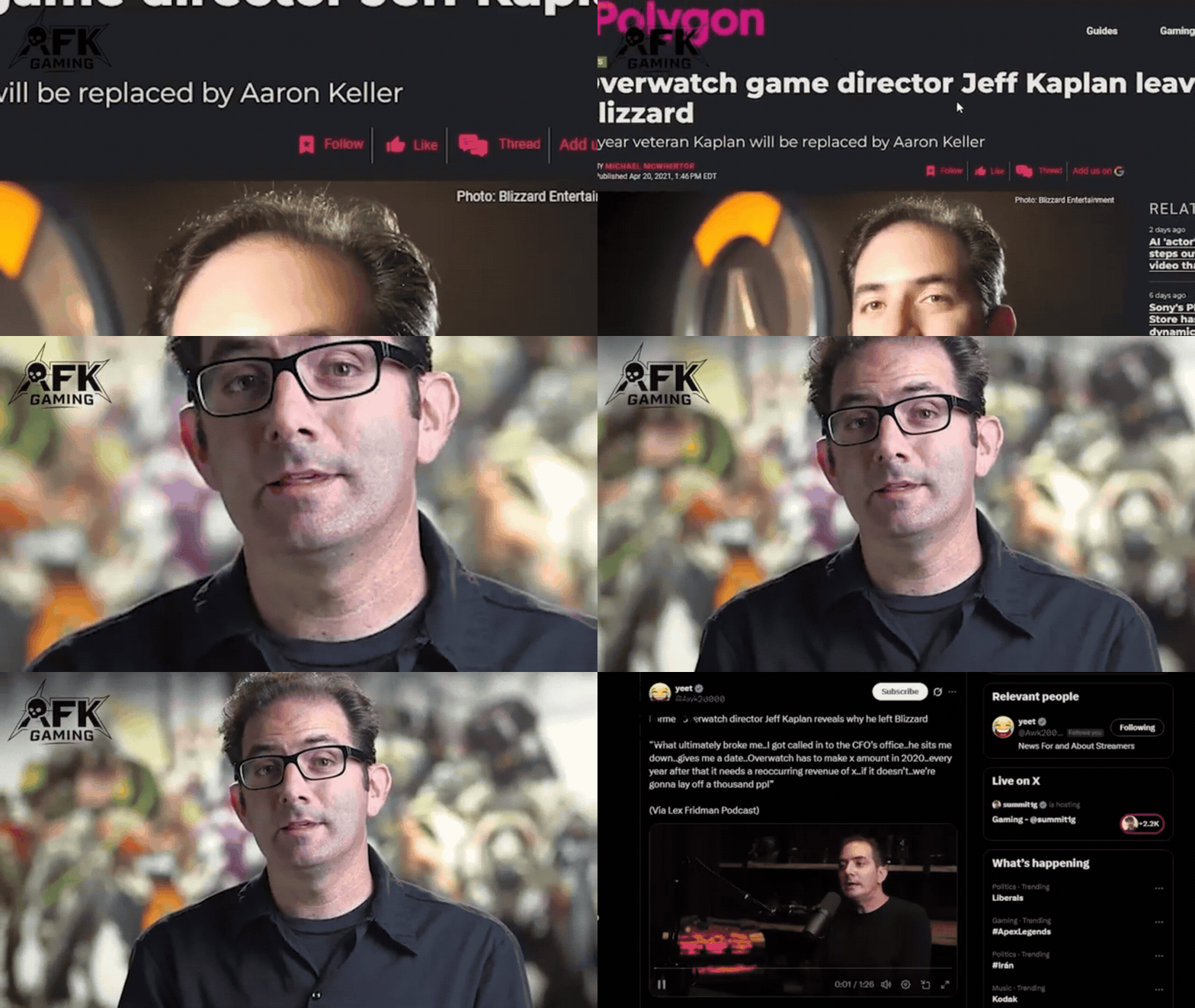
The departure of Jeff Kaplan from Blizzard Entertainment in April 2021 marked the end of a 19-year tenure. While he initially remained silent, his 2026 interview on the Lex Fridman Podcast and subsequent remarks have clarified that his exit was the result of a long-standing conflict between creative integrity and aggressive corporate monetization.
Why did Jeff Kaplan leave Blizzard in 2021
The primary driver for Kaplan’s resignation was a shift in Blizzard’s culture toward prioritizing “ever higher profits” over the player experience. Following the merger with Activision, Kaplan observed a move away from the developer-driven “it’s ready when it’s ready” philosophy toward a focus on rapid monetization. The tension peaked when corporate leadership began treating the game as a recurring revenue engine rather than a passion project.
Jeff Kaplan explains his Blizzard exit in the Lex Fridman interview
In early 2026, Kaplan used the Lex Fridman Podcast to detail the internal struggles at Blizzard. He revealed that:
- The Overwatch team’s original vision for frequent content updates and story events was derailed by the corporate focus on profitability.
- Resources were diverted from core gameplay to support the Overwatch League (OWL), which Kaplan described as an “albatross” that burdened development.
- Executives made unrealistic promises to investors, claiming OWL would rival the NFL, and then pressured the development team to make up for financial shortfalls when those promises failed.
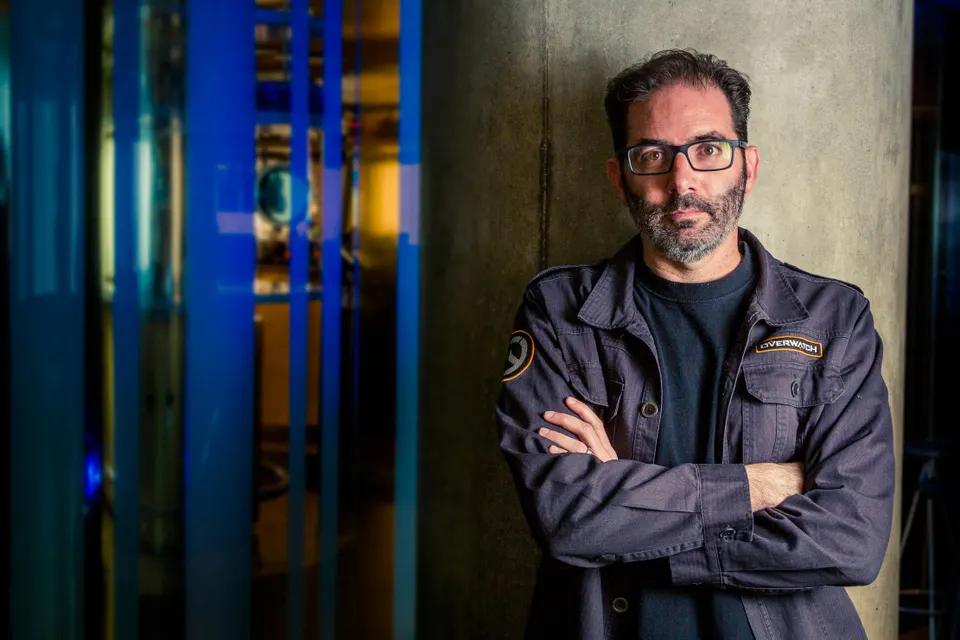
Jeff Kaplan quote about “make lots of money really fast” at Blizzard
Kaplan summarized the changing mentality at the company with the quote: “There was too much focus on ‘let’s make lots of money really fast.’” This summarized the shift toward immediate monetization schemes. Kaplan noted that once grand plans for OWL events fizzled, the company looked at Overwatch’s previous earnings and prioritized “what else can we sell?” over cultivating the game’s longevity.
What Jeff Kaplan said about Activision Blizzard profit pressure on Overwatch
Kaplan detailed a “pressure-cooker” environment where Activision Blizzard mandated that Overwatch hit specific, hefty revenue targets.
- Management demanded that the game become a perpetual money-printing service.
- Development resources were shifted toward “esports monetization opportunities,” such as team-branded skins and spectator features, rather than new maps or heroes.
- Kaplan described the team as “treading water,” unable to innovate creatively while fulfilling business directives.

Jeff Kaplan “biggest f**k you moment” and what triggered it
Kaplan identified a specific encounter with a high-ranking financial executive as the final straw. During a meeting in late 2019 or early 2020:
- The executive delivered an ultimatum: Overwatch had to earn a massive, specific amount of money by a set deadline.
- The executive explicitly stated that if the targets were not met, Blizzard would lay off 1,000 employees, telling Kaplan, “that’s going to be on you.”
- Kaplan described this as the “biggest fk you moment” of his career, as it used the livelihoods of his colleagues as leverage to force financial performance.
Jeff Kaplan claims Blizzard execs tied Overwatch revenue targets to layoffs
Kaplan’s claim that layoffs were tied to revenue benchmarks reflects a shift in Blizzard’s historical stability.
- As game director, Kaplan was made personally accountable for the jobs of 1,000 staff members based on arbitrary profit goals.
- This tactic mirrored a 2019 incident where Activision Blizzard laid off 800 employees despite record revenues.
- Kaplan found this approach toxic and a betrayal of the collaborative spirit Blizzard once championed, making his position at the company untenable.

What Jeff Kaplan said about the Overwatch League hurting development priorities
While OWL was ambitious, Kaplan argued it siphoned resources away from the community.
- Instead of adding heroes and story events, the team spent years developing spectator modes, replay systems, and Twitch integrations to serve professional broadcasts.
- The team had to answer to “billionaire investors” who purchased franchise slots for $20 million, shifting the priority from player satisfaction to fulfilling contractual obligations to owners.
- Normal content development stalled because in-game events had to be scheduled around a global league.
Overwatch League investor promises and how they affected Overwatch content
Blizzard’s leadership “sold the Brooklyn Bridge” to investors, promising a league more popular than the NFL. When the local home-stand model and viewership failed to meet these lofty expectations:
- Monetization Focus: Content was created based on its potential for direct sale (like team skins) rather than narrative or gameplay value.
- Delayed Content: Story-driven updates were deprioritized to focus on features that could justify the league’s expenses to sponsors.
- External Oversight: Investors and franchise owners began expressing opinions on game balance and features, further diluting the core development team’s control over the roadmap.
In conclusion, Jeff Kaplan’s departure reveals that Activision Blizzard’s leadership, at least in that era, was overly aggressive, profit-obsessed, and at times disconnected from both its creators and its community. It highlights issues of corporate culture where the pursuit of money overshadowed the company’s founding principles of quality and player focus. It also underscores the importance of leadership understanding the game industry’s unique needs – creativity, community trust, and developer morale – none of which can be sacrificed without eventual consequences. Kaplan’s story is a clear message that even the strongest franchises and the most dedicated developers can be driven away by poor leadership decisions.

Frequently Asked Questions (FAQs)
- When did Jeff Kaplan leave Blizzard?
Jeff Kaplan resigned in April 2021, ending a 19-year career. His departure was announced on April 20, 2021, approximately two years prior to the release of Overwatch 2. - Why did Jeff Kaplan leave Blizzard Entertainment?
Kaplan’s exit was driven by frustration with corporate pressure and shifting priorities at Activision Blizzard. He stated that leadership focused excessively on rapid profit and imposed extreme revenue targets. A definitive breaking point occurred when an executive tied the game’s financial performance to potential staff layoffs. - What was the “biggest fk you moment” Kaplan experienced at Blizzard?
Kaplan identified a meeting with a financial executive as the low point of his career. He was told that Overwatch must hit massive revenue targets by 2020/2021 or 1,000 employees would be laid off, with the executive explicitly stating the blame would rest on Kaplan. - How did the Overwatch League influence Jeff Kaplan’s decision to leave?
The Overwatch League (OWL) was a major factor, as it diverted resources away from core game development. When grand promises made to investors failed to materialize, management pressured the team to increase in-game monetization. Kaplan described OWL as an “albatross” that skewed development priorities. - What did Jeff Kaplan mean by “too much focus on ‘let’s make lots of money really fast’”?
This referred to a corporate mindset focused on immediate monetization rather than organic growth. This approach involved aggressive revenue goals and prioritizing microtransactions over long-term player enjoyment, which Kaplan felt contradicted Blizzard’s original philosophy. - Who took over Overwatch after Jeff Kaplan left?
Aaron Keller, a Blizzard veteran involved with Overwatch since its inception, replaced Kaplan as Game Director in April 2021. He has since led the team through the launch of Overwatch 2. - Did Overwatch 2 change after Kaplan’s departure?
Yes. The game pivoted from Kaplan’s vision of a robust PvE “Hero Mode” to a focus on a free-to-play PvP model. Following his exit, the flagship PvE mode was canceled in 2023, and the game shifted toward seasonal updates, Battle Passes, and an in-game shop. - What is Jeff Kaplan doing now (after leaving Blizzard)?
Kaplan co-founded a new studio called Kintsugiyama. In 2026, he announced their first project, The Legend of California, a multiplayer action-survival game published by Dreamhaven. - What does Jeff Kaplan’s exit say about Blizzard’s leadership and culture?
His departure is viewed as evidence of a shift from a developer-driven, player-centric culture to one focused on corporate profit. Kaplan’s comments on “corporate mismanagement” suggest that business objectives frequently clashed with the creative values of the development teams. - How did Activision Blizzard respond to Kaplan’s revelations?
There was no formal press release, but Blizzard President Mike Ybarra clarified on social media that the CFO mentioned in Kaplan’s story was not Dennis Durkin. While the company has been sensitive to the claims, there has been no direct rebuttal of Kaplan’s account.

Conclusion
Jeff Kaplan’s candid discussion of why he left Blizzard provides a rare window into the internal struggles of a once-legendary game studio under corporate pressure. Kaplan’s story is not just about one man’s departure – it encapsulates a clash between creative vision and corporate mandates. From an overzealous bet on the Overwatch League that diverted development resources, to Activision Blizzard’s relentless drive for “recurring revenue” that culminated in an outrageous ultimatum, Kaplan’s experiences reveal how Blizzard’s culture shifted from “gameplay first” to “profit first.” The result was a disillusioned development team and the loss of one of Blizzard’s most respected leaders.
In retrospect, Kaplan’s exit in 2021 was a warning sign. In the years that followed, Overwatch 2 launched in a changed form, the promised PvE content was cut, and the Overwatch League collapsed – outcomes that echo the issues Kaplan had flagged. Meanwhile, Blizzard’s parent company faced broader reckonings, and leadership changes became inevitable. Kaplan’s departure and revelations have only reinforced the perception that Activision Blizzard’s top brass lost sight of the values that once made Blizzard games great.
Yet, there’s a silver lining. Jeff Kaplan’s passion for game development endures. His emergence with a new studio and game, supported by fellow Blizzard alums, suggests that the creative spirit will find a way to thrive, even outside the big corporate structure. And within Blizzard, acknowledging these past mistakes could lead to reforms that re-align the company with its original ethos under new ownership.
For fans and industry watchers, Kaplan’s story serves as both a cautionary tale and a hopeful note. It warns of the dangers when corporate ambitions overshadow the magic of game-making. At the same time, it reminds us that talented developers like Kaplan carry the torch of that magic wherever they go. In the end, the reasons Jeff Kaplan left Blizzard spotlight the importance of balancing profit with principle – a lesson Activision Blizzard (and indeed the entire industry) would do well to heed moving forward.
Sources and Citations
- Blizzard News – “New Leadership for Overwatch” (April 2021)
New Leadership for Overwatch – Blizzard News - BlenderArtists Forum – “PixelHair for Blender” (Yelzkizi, 2023)
PixelHair – Blender Library – Works in Progress and Feedback – Blender Artists Community - ArtStation – Yelzkizi’s Portfolio (PixelHair & Bantu Knots)
ArtStation – Yelzkizi (Yelizar) - Blizzard Watch – Jeff Kaplan’s Departure Context (2021)
Jeff Kaplan is leaving Blizzard, Aaron Keller taking over as Overwatch Director
Recommended
- Oscars 2026: Everything You Should Know (98th Academy Awards Date, Host, Nominees, and How to Watch)
- The Director Of The Next Resident Evil Movie Has Already Beaten Requiem Twice – What It Means for the Film
- Developers With Foreign Legal Entities May Be Allowed to Include Games in the Russian Software Registry: Requirements, VAT Benefits, and What Changes in 2026
- Real-Time Hair for AAA Games: Full Tutorial and Workflow Using ZBrush, Maya, Blender, and MarmosetReal-Time Hair for AAA Games: Full Tutorial and Workflow Using ZBrush, Maya, Blender, and Marmoset
- AdonisFX 2.0 Brings Full Support for Houdini: Features, Pricing, and Workflow Benefits
- How to Add Texture to a 3D Model in Blender: A Step-by-Step Guide to Creating Stunning Materials
- How to Export Metahuman to Maya and Back: Complete Workflow for Unreal Engine and Autodesk Maya
- Venom Animated Movie From Final Destination: What Fans Mean, Rumors Explained, and What Could Actually Happen
- How to Create Realistic Hair Using the New Hair Tools, Geometry Nodes, and Hair Curves in Blender
- Realistic Character Creation Process in Blender: Step-by-Step Workflow for Artists