







In This Article (8 sections)
Lost in Art Overview, Story Premise, and 2026 Release Window
Lost in Art is an upcoming single-player, narrative-driven supernatural puzzle adventure developed by Stone Hippo in collaboration with The New Art Gallery Walsall and digital arts organization The Space. The game transforms a real English art gallery into a dark, distorted labyrinth, combining cinematic fixed-camera exploration, environmental puzzles, psychological horror, stealth, and real works from the gallery’s Garman Ryan Collection.
Rather than centering its experience on weapons or conventional combat, Lost in Art asks players to examine their surroundings, interpret visual clues, interact with artwork, collect useful objects, and avoid an Entity made from living paint. It is inspired by classic survival-horror games but places greater emphasis on exploration, observation, puzzles, environmental storytelling, and stealth than on fighting enemies, using a stylized 3D presentation influenced by graphic novels and fixed cinematic camera angles that frame Leah as she explores a corrupted version of The New Art Gallery Walsall.
The story begins when Leah secretly enters a closed exhibition to see an artwork rumored to be cursed, only to discover that the gallery has changed: the visitors have disappeared, the electrical lights are unusable, and the world outside the windows has been replaced by endless darkness. Leah must navigate the altered building, investigate the cursed artwork, discover what happened to its creator, and find a way back to reality.
The official description classifies Lost in Art as both an adventure game and a free-to-play release, with principal systems including item collection, clue-following, artwork-based interactions, adjustable puzzle difficulty, stealth encounters, multiple endings, secrets, and unlockable content, while fully animated and voiced scenes develop the story alongside environmental details found throughout the gallery.
The complete Lost in Art release date has not been announced beyond a broad 2026 window; as of June 18, 2026, the Steam page continues to show “2026” without identifying a month, quarter, or specific day, so any more precise date not confirmed by Stone Hippo, The New Art Gallery Walsall, The Space, or Steam should be treated as speculation.
The playable demo launched during the June 2026 edition of Steam Next Fest, with Walsall Council announcing that it would become available during the event beginning June 15 and Steam’s developer search records listing the demo’s release on June 15, 2026. The council also stated that the free demo would remain downloadable after launch rather than being restricted exclusively to the festival period. The lack of a final date does not mean Lost in Art has been delayed; it only means the developers have not publicly committed to a more precise launch schedule, making the safest current answer that the full game is planned for 2026 and the demo is already available.

Lost in Art Platforms, Free-to-Play Status, and Demo Download
Lost in Art is currently confirmed for Windows PC through Steam. The official minimum specifications name Windows 10 as the required operating system, while Steam’s database information identifies Windows as the supported system, and no native macOS or Linux edition has been announced. There are also no confirmed PlayStation 5, Xbox Series X|S, Nintendo Switch, or other console versions, which does not rule out future ports but means players should not assume they are in development until one of the official project partners announces them.
The Steam listing currently supports English for the interface, full voice audio, and subtitles, while other localized languages have not been confirmed. Steam metadata also indicates controller support, although the publicly displayed store information remains subject to change before the full release. Lost in Art is listed on Steam as both an adventure game and a free-to-play title, and Steam database information also identifies the game as free on the store, while Walsall Council has confirmed that the demo can be downloaded and played without charge.
No premium edition, paid expansion, subscription, in-game purchase system, or other monetization model has been announced, so the free-to-play classification confirms that access to the main game is presently intended to be free, but it does not reveal whether optional purchases could be added later. Claims about microtransactions or paid content would therefore be unsupported unless Stone Hippo or the publishers provide further details.
The project has received support from The Space and Arts Council England using funding from the National Lottery, which helps explain how a free cultural game can incorporate a detailed recreation of a public gallery and artworks from its collection, although the complete production and distribution arrangements have not been publicly itemized. To download the Lost in Art demo, open the Steam desktop application or visit the Steam store, search for the exact title “Lost in Art,” select the listing developed by Stone Hippo and published by New Art Gallery Walsall and The Space CIC, and choose the “Download Demo” option.
After signing in to a Steam account, Steam will provide the normal installation prompts. Players should check the title carefully because another unrelated game called Lost in Art: A Miniature Realm also has a Steam page and demo; the Stone Hippo game features Leah, a cursed exhibition, a dark recreation of The New Art Gallery Walsall, and a living-paint Entity, while the other title is a colorful historical adventure created by Archaic Game Studio.
The Lost in Art demo is currently a Windows PC download, and because an exact public storage requirement for the demo is not displayed in the main game specifications, players should not assume that it requires the full game’s listed 20 GB; Steam will show the applicable download and installation size before the process is completed.
Lost in Art Gameplay, Leah, and the New Art Gallery Walsall Setting
Lost in Art gameplay revolves around exploring interconnected gallery spaces, collecting objects, following clues, examining real and fictional details, and solving puzzles that require visual interpretation. The official description promises puzzles and mechanics designed to reward creative, unconventional thinking rather than simply asking players to find codes or match keys with doors. Classic survival horror influences the presentation through fixed cinematic camera angles that control what the player can see as Leah moves through the environment, creating uncertainty around corners and beyond the edges of each frame.
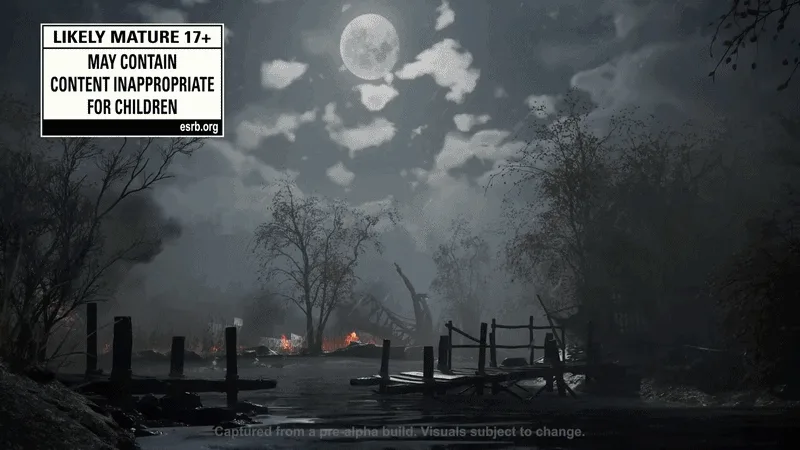
Leah has a flashlight, but the gallery’s normal lighting does not function, making darkness an important part of both navigation and suspense, while the visual style combines three-dimensional environments with a graphic novel-inspired appearance rather than strict photographic realism. Lost in Art does not appear to use a traditional combat system, and the official description explicitly states that Leah cannot fight the hostile presence stalking her; survival depends on hiding, remaining calm, moving carefully, using stealth, understanding the environment, and finding ways to employ the artwork itself against the threat.
Difficulty settings extend beyond conventional enemy strength, with optional riddle settings that can substantially change puzzles and their solutions, suggesting that selecting a difficulty level may alter how players reason through the gallery rather than simply reducing the number of steps required. Threat settings can also make dangerous encounters more severe or disable hostile threats entirely, allowing players to concentrate on exploration, artwork, narrative, and puzzles. The experience includes multiple endings, hidden secrets, and unlockable material, indicating that a single playthrough may not reveal every narrative outcome or optional discovery, while the soundtrack is described as atmospheric, doom-laced rock with elements of 1980s nostalgia, reinforcing the connection between Lost in Art and older fixed-camera horror adventures.
Leah is the playable protagonist, introduced in official story material as someone who sneaks into a closed exhibition to see an allegedly cursed artwork. The Steam description jokingly connects her visit with avoiding “double maths,” suggesting a school-related context, but the developers have not publicly confirmed her age, surname, family history, or complete personal background. After entering the exhibition, Leah becomes trapped in an otherworldly version of the building where there are no visitors, ordinary exits no longer offer an obvious escape, the lights have failed, and the windows reveal only darkness.
Her immediate objective is survival, but the larger story requires her to uncover the truth about the cursed work and the artist who created it. The official Steam page asks why the mysterious artist is so interested in Leah, establishing that her involvement may not be accidental and that she might have been selected, connected to the artist, or drawn into the gallery for a reason that has not yet been disclosed. Because multiple endings are planned, the discoveries made and decisions taken during the game may affect how Leah’s relationship with the gallery, the artist, and the curse is ultimately resolved.
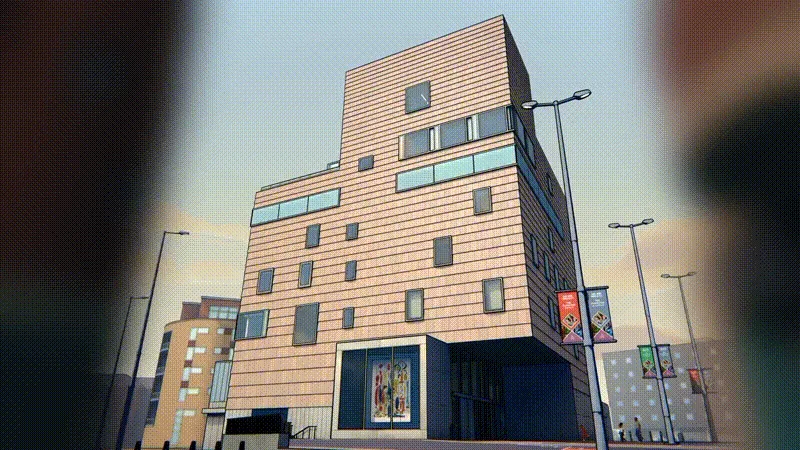
Lost in Art is set inside a supernatural recreation of The New Art Gallery Walsall in England’s West Midlands, with the developers building a recognizable digital version of the real gallery while altering it into a surreal environment where familiar rooms, corridors, exhibitions, and artworks can behave in impossible ways. The actual New Art Gallery Walsall opened in February 2000 and was designed by architects Peter St John and Adam Caruso, with architecture that uses concrete, Douglas fir, terracotta tiles, stainless steel, exposed structural elements, and leather details referencing Walsall’s traditional leather industry. These distinctive materials and spaces give Lost in Art a more specific identity than a fictional generic museum could offer.
Works from the Garman Ryan Collection are incorporated into the game’s puzzles and narrative; the collection was formed by Kathleen Garman and Sally Ryan, donated to the people of Walsall in 1973, contains 365 works, and includes art connected with figures such as Jacob Epstein, Lucian Freud, Amedeo Modigliani, John Constable, Edgar Degas, Pablo Picasso, J. M. W. Turner, Henri Matisse, and Vincent van Gogh. Not every work appearing in Lost in Art has been publicly catalogued, but the collection is intended to be an active part of the experience rather than static background decoration.

The Cursed Artwork, Living-Paint Entity, and Leah’s Mysterious Power
The cursed artwork is the object Leah enters the closed exhibition to see, and it appears to be the catalyst for her entrapment. It is linked to the transformation of the gallery, the disappearance of ordinary visitors, the darkness beyond the windows, the living-paint Entity, and the unknown artist at the center of the mystery. Its title, appearance, medium, creator, history, and exact supernatural properties have not been publicly revealed, and official information does not confirm whether the cursed artwork is based on a genuine work from the Garman Ryan Collection, a fictional creation produced specifically for the game, or a supernatural reinterpretation of an existing piece.
The project’s wording distinguishes between the cursed artwork and the real artworks integrated into gameplay, which may indicate that the cursed object is fictional, but this remains an inference rather than a confirmed fact. What is confirmed is that Leah must uncover both the secret of the artwork and the identity or motives of the artist responsible before the curse traps her permanently.
The creature pursuing Leah is officially described as a hostile presence or Entity made from living paint, and it stalks the gallery as the game’s primary survival threat. Stone Hippo has not revealed whether it is an independent monster, a manifestation of the curse, a transformed person, an extension of the mysterious artist, or something created by one of the artworks.
Leah cannot defeat the Entity through direct combat, so players must avoid detection, hide, use stealth, and manipulate the environment or artwork to remain ahead of it, making observation and route planning more important than ammunition or weapon upgrades. Players who want a more intense horror experience can increase the danger posed by threats, while those primarily interested in puzzles, story, the gallery, or real artwork can disable hostile encounters.
The Entity is therefore central to Lost in Art’s default atmosphere, but confronting it is not mandatory for every selected play style. Leah also acquires or discovers a supernatural ability that helps her interact with the altered gallery. Official information says the power allows players to experience real artworks from the collection in a new way and that it will be useful for solving puzzles and surviving encounters with the living-paint Entity. T
he complete operating rules have not been disclosed: there is no confirmed public name for the ability, and the developers have not described an energy meter, cooldown, upgrade tree, activation cost, or exact control input, so it would be inaccurate to present any of those systems as established features. Based on the official description, the safest interpretation is that the power changes how Leah perceives or interacts with art, allowing displayed works to become functional parts of puzzles and defensive situations.
The phrase “use the artwork itself” suggests that paintings, sculptures, or visual elements may offer ways to alter the environment or evade the Entity, an interpretation supported by the published feature descriptions, though the precise mechanics and story explanation are being preserved as part of the mystery.
Psychological Horror Focus, Development Team, and PC Requirements
Lost in Art is officially described on Steam as a narrative psychological puzzle adventure, and its store tags include psychological horror, supernatural horror, and survival horror. Its horror is created through isolation, distorted architecture, environmental uncertainty, darkness, fixed camera angles, an invulnerable pursuer, and the possibility that apparently passive artworks are observing the player. However, it is not structured solely as a conventional survival-horror game: combat is absent, while puzzles, exploration, narrative, visual interpretation, and real art are central to progression.
Lost in Art is therefore best understood as a psychological puzzle adventure presented through the visual and mechanical language of classic survival horror. The ability to disable threats is also significant, as players can experience the unsettling story and altered gallery without being repeatedly pursued. This does not remove the game’s supernatural themes, darkness, or psychological tension, but it allows the intensity of its active danger to be adjusted. Lost in Art is developed by Stone Hippo, and Walsall Council identifies Walsall-based game developer Daniel Turner as a principal creative collaborator working with The New Art Gallery Walsall and The Space.
The official Steam page names New Art Gallery Walsall and The Space CIC as the publishers. The New Art Gallery Walsall contributes the real-world building, institutional knowledge, collection access, and cultural context, while The Space is a digital arts organization involved in the project’s production and publication. Support has also come from Arts Council England through National Lottery funding. This collaboration makes Lost in Art more than a horror game that happens to use a museum setting; it is also a digital interpretation of an existing public gallery and its collection.
Walsall Council has described the project as a way to bring together visual art, digital technology, local creative talent, and new audiences who may not otherwise encounter the gallery. The published minimum Lost in Art PC system requirements specify Windows 10, an Intel Core i5-8300H processor or equivalent, 8 GB of RAM, an NVIDIA GeForce GTX 1050 or AMD Radeon RX 580 graphics card or equivalent, and 20 GB of available storage. Recommended specifications have not been published, and the current requirements should be treated as pre-release information because optimization work can change processor, graphics, memory, or storage expectations before launch.
The listed graphics hardware places Lost in Art within reach of many older gaming PCs, but an “equivalent” component does not guarantee identical performance in every configuration, since resolution, graphics settings, drivers, processor age, storage type, and background applications can all affect the final experience. Players should recheck the official Steam requirements near the full release date rather than relying permanently on an early specification.

Frequently Asked Questions (FAQs)
- What is the exact Lost in Art release date?
The exact date has not been announced. The official Steam page gives Lost in Art a planned release window of 2026, but it does not currently confirm a specific month, quarter, or day. Until Stone Hippo, The New Art Gallery Walsall, The Space, or Steam provides a more precise date, any specific release day should be treated as unconfirmed. - Is the Lost in Art demo free?
Yes. The Lost in Art demo can be downloaded and played for free through Steam. Walsall Council also stated that the demo would remain available following its Steam Next Fest launch, rather than being limited only to the festival period. - When did the Lost in Art demo launch?
The demo launched on June 15, 2026, alongside the June 2026 Steam Next Fest period. Walsall Council announced the demo for that event, and Steam’s developer search records also list June 15, 2026 as the demo’s release date. - Will Lost in Art be released on consoles?
No console version has been announced. Windows PC through Steam is the only currently confirmed platform, and there are no official PlayStation 5, Xbox Series X|S, Nintendo Switch, or other console editions at this time. - Is Lost in Art a multiplayer game?
No. The Steam page identifies Lost in Art as a single-player experience. No cooperative, competitive, or other multiplayer mode has been announced. - Can Leah fight the living-paint Entity?
No. Official information says there is no fighting the creature directly. Leah must survive by hiding, using stealth, understanding the environment, remaining calm, and employing artwork or her mysterious ability to escape danger. - Can the monster be disabled?
Yes. Lost in Art includes threat options that can make hostile encounters more dangerous or disable them entirely. This allows players who are more interested in puzzles, exploration, artwork, and story to experience the game without being repeatedly pursued. - Does Lost in Art contain real artwork?
Yes. Works from The New Art Gallery Walsall’s Garman Ryan Collection are integrated into puzzles and gameplay. The complete list of included works has not yet been published, but the collection is intended to function as part of the experience rather than simply background decoration. - Does Lost in Art have multiple endings?
Yes. The developers have confirmed multiple endings, secrets, and unlockable content. Exactly how those endings are selected has not been explained, but the presence of multiple outcomes suggests that one playthrough may not reveal everything. - Is Lost in Art the same as Lost in Art: A Miniature Realm?
No. Lost in Art is Stone Hippo’s supernatural 3D gallery adventure set in a distorted version of The New Art Gallery Walsall, while Lost in Art: A Miniature Realm is a separate historical puzzle game by Archaic Game Studio based on Eastern miniature artwork.

Conclusion
Lost in Art stands out because it combines an authentic cultural location with the visual language of classic survival horror. The game’s faithful recreation of The New Art Gallery Walsall is not merely scenery. Its rooms, architecture, and artworks are integrated into puzzles, environmental storytelling, supernatural mechanics, and encounters with a living-paint Entity.
The confirmed Lost in Art gameplay features include fixed cinematic camera angles, a flashlight, item collection, clue-based exploration, adjustable riddles, stealth, multiple endings, voiced scenes, secrets, and a mysterious power connected to real artwork. Combat is not part of Leah’s solution; survival depends on observation, creative reasoning, hiding, and learning how the transformed gallery operates.
The full Lost in Art release date remains limited to 2026, and Windows PC is the only confirmed platform. The main game is currently classified as free to play, while its free Steam demo has been available since June 15, 2026. Important mysteries remain intentionally unanswered, including the identity of the artist, the nature of the cursed artwork, the origin of the Entity, the reason Leah was targeted, and the complete rules governing her supernatural ability. Those unresolved questions form the foundation of the game’s story rather than gaps that should be filled with speculation.
Sources and Citations
- Official Lost in Art Steam Page
- Walsall Council – Lost in Art Announcement (June 8, 2026)
- The New Art Gallery Walsall – Building Architecture History
- The New Art Gallery Walsall – Collections Library (Garman Ryan Collection)
- The New Art Gallery Walsall – How the Collection Came to Walsall
- The New Art Gallery Walsall – Garman Ryan Collection Overview
- Lost in Art: A Miniature Realm Steam Page
- Archaic Game Studio – Lost in Art: A Miniature Realm Official Site
- SteamDB – Lost in Art (Stone Hippo)
- SteamDB – Lost in Art: A Miniature Realm
Recommendations
- Apex Review: Woman () vs. Man () vs. Nature — Survival Thriller (2026)
- Five Nights At Epstein’s: The Viral “Five Nights at Freddy’s”-Style Game “Sweeping the Country” Explained
- Until Dawn 2 First Look: Two-Minute Trailer Breakdown for a Game Where Everyone Can Die
- Free Tool Lets You Render OpenVDB Natively in Nuke With VDBRender
- Can I add motion blur to a Blender camera?
- Resident Evil Code: Veronica Will Feature Sequences Modified from the Original (What Changes and Why)
- Roblox introduces mandatory age-gated account tiers: Roblox Kids vs Roblox Select and what changes in 2026
- YouTube Now Lets You Hide Shorts: How to Turn Off the Shorts Feed With the 0-Minute Limit
- TimeSplitters Developers Are Working on Roguelike Version of Scrabble: Beyond Words Release Date, Demo, and Gameplay Details
- Giving Your Game Away on Steam: How Graveyard Keeper’s Free Giveaway Generated $250,000+ in DLC Sales in Days



































































































