










In This Article (9 sections)
All Animon Types and Elemental Matchups in LumenTale: Memories of Trey
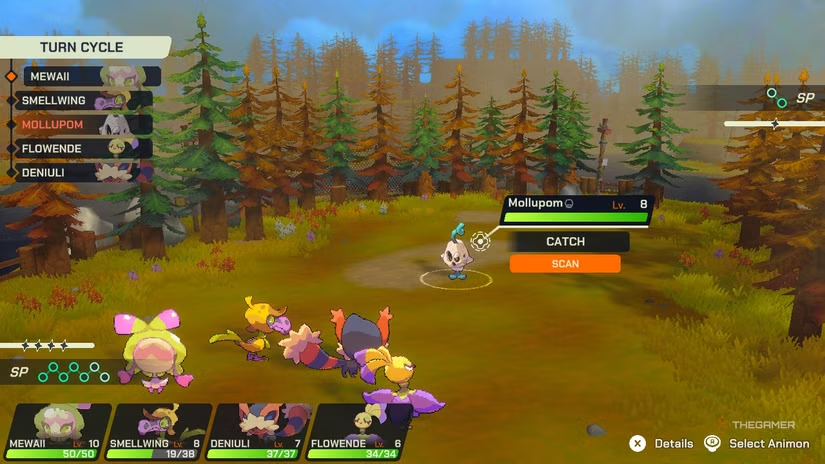
LumenTale: Memories of Trey centres on collecting, training, and battling creatures known as Animon. Like many monster-taming RPGs, it uses a type system that determines combat effectiveness, team composition, and long-term strategy. Animon types represent each creature’s elemental affinity, nature, or combat identity. Although individual Animon possess unique abilities, statistics, and traits, their type strongly influences how much damage they deal and receive during battle. Some specialize in aggressive elemental attacks, while others serve as tanks, healers, controllers, or hybrid units.
The currently known Animon types include:
- Fire
- Water
- Nature
- Earth
- Wind
- Electric
- Light
- Shadow
- Ice
- Metal
- Special classifications introduced later in the game
Each type has a distinct combat role and interacts differently with opposing elements. The system follows a strengths-and-weaknesses structure in which damage changes according to elemental compatibility. Attacking an enemy with a favourable type increases damage, while using an ineffective element reduces the attack’s impact. For example, Fire attacks may perform well against Nature Animon but struggle against Water types. Electric Animon may be effective against Water opponents while facing difficulties against Earth-based defenders.
Elemental interactions can also affect status conditions, resistances, passive traits, and special abilities. Some Animon receive bonuses when fighting particular elements, while others possess traits that reduce or compensate for their natural weaknesses. This prevents the system from depending entirely on simple type advantages and encourages players to consider each creature’s complete ability set when building a team.
Understanding the type ecosystem is essential because the game rewards preparation rather than brute-force progression. Relying only on the strongest available Animon can become ineffective against enemies with advantageous elemental matchups. As the campaign progresses, opposing teams become increasingly specialized, requiring players to predict weaknesses, select complementary Animon, and adjust their strategies for more demanding encounters.

Best Animon Types for Beginners, Type Strengths, and Balanced Team Building
Beginners should prioritize versatile Animon types that provide reliable offensive options without becoming ineffective in too many situations. Water types are often beginner-friendly because they usually combine balanced attack and defence, remain useful across many areas, and rarely suffer from severe matchup disadvantages. Nature types are another strong option because many provide healing, status effects, and survivability tools that help players recover from mistakes. Electric types offer straightforward offensive power, with their speed and burst damage making early encounters easier for players still learning advanced mechanics. Light types are also valuable because they frequently combine support abilities with respectable combat effectiveness. Rather than depending entirely on one element, new players should build a small core team covering several common matchups.
Understanding elemental relationships is essential for choosing attacks, switching Animon safely, and preparing for specialised enemy teams. The general type strengths and weaknesses include:
- Fire: Performs well against Nature and Ice but struggles against Water and Earth.
- Water: Effective against Fire and Earth but vulnerable to Electric and Nature.
- Nature: Counters Water and Earth but faces difficulties against Fire and Ice.
- Electric: Strong against Water and Wind but struggles against Earth.
- Earth: Resists Electric attacks and counters Metal but remains vulnerable to Water and Nature.
- Wind: Performs well against slower Earth-based opponents but can struggle against Electric users.
- Ice: Strong against Nature and Wind but vulnerable to Fire and Metal.
- Metal: Resists several damage types and performs well against Ice but may struggle against Fire and Earth.
- Light: Typically counters Shadow opponents while also offering useful support abilities.
- Shadow: Generally counters Light users and often provides unusual utility effects.
- Special or legendary types: Introduce additional interactions that may not follow the standard elemental chart.
A balanced Animon team should combine offensive pressure, defensive stability, support abilities, and broad elemental coverage. One effective structure includes a primary attacker, a secondary damage dealer, a defensive tank, a support unit, and two flexible utility Animon. A Water attacker paired with an Electric damage dealer provides strong coverage against many common opponents, while a Nature support unit adds healing and long-term sustain. Including a Metal or Earth defender improves durability and gives the team a dependable option when switching against dangerous attacks.
Team diversity becomes increasingly important in later chapters, where enemy formations use more specialised elements, status effects, and coordinated strategies. A varied roster gives players answers to unfavourable matchups and prevents the entire team from being defeated by one countering element. The strongest approach is therefore not to search for a single dominant type, but to build a group whose strengths cover one another’s weaknesses.
Best Offensive and Defensive Animon Types and How Attributes Affect Their Roles
The most effective Animon teams in LumenTale: Memories of Trey balance offensive pressure with defensive stability and support. Several types naturally excel as attackers because of their speed, damage scaling, elemental abilities, or access to critical hits and status effects:
- Fire Animon: Specialize in explosive damage, powerful area attacks, and damage-over-time effects that continuously pressure enemy teams.
- Electric Animon: Excel as fast attackers capable of acting early and eliminating vulnerable opponents before they can respond.
- Shadow Animon: Often rely on critical hits, debuffs, and burst-damage abilities designed to weaken or quickly defeat priority targets.
- Ice Animon: Combine strong offensive attacks with control effects that can restrict enemy actions while dealing significant damage.
- Light Animon: Provide respectable damage alongside supportive utility, allowing them to remain valuable throughout longer battles.
Players building offensive teams should consider more than raw attack power. Speed determines whether an attacker can act before an opponent, damage scaling affects how well abilities improve over time, and elemental coverage ensures the team can respond to several types rather than being stopped by one defensive matchup.
Defensive teams depend on durability, healing, mitigation, cleansing, and disruption rather than health alone. The strongest defensive and support types commonly include:
- Earth Animon: Serve as durable front-line protectors with high defensive potential and abilities that help them withstand powerful attacks.
- Metal Animon: Provide strong resistances and defensive passive effects, making them effective at absorbing damage and protecting teammates.
- Nature Animon: Frequently function as healers and sustain specialists whose abilities extend the team’s survival during long encounters.
- Light Animon: Work well as hybrid support units by providing healing, buffs, cleansing effects, and defensive enhancements.
Successful defensive teams rarely rely entirely on one highly durable creature. They combine damage mitigation with healing, status removal, buffs, and enemy disruption, allowing the entire group to survive while gradually weakening the opposing team.
Animon types determine elemental strengths, weaknesses, and general combat identities, but attributes decide how effectively each creature performs its intended role. Attack-focused attributes increase physical damage regardless of type, while defence and health improve survivability and allow tanks to withstand stronger attacks. Speed influences turn order and is particularly important for Electric and Shadow attackers that depend on striking before their opponents. Special attack and special defence affect elemental abilities, magical damage, and resistance to similar attacks.
A favourable elemental matchup does not automatically guarantee success if the Animon has weak attributes or an unsuitable ability set. Similarly, superior attributes can sometimes help a creature overcome a minor type disadvantage. Evaluating type compatibility and attributes together gives players a more accurate understanding of each Animon’s offensive, defensive, and supportive potential.

Dual-Type and Special Animon Matchups for Early and Late Game Battles
Some Animon possess dual-type identities that combine the characteristics of two elemental categories. A Fire-Wind Animon, for example, may gain offensive advantages, abilities, and move options from both elements while also inheriting weaknesses associated with each type. This flexibility can make dual-type creatures especially useful because they offer broader move pools and can respond effectively to more matchups than single-type Animon. However, dual typing can also create serious vulnerabilities. When both elements share or compound a weakness, the Animon may take significantly greater damage from certain attacks. Players must therefore evaluate every strength, resistance, and weakness before adding a dual-type creature to their team.
Special classifications commonly appear among rare, legendary, or story-related Animon and may follow interaction rules that differ from the standard elemental chart. These creatures can introduce unusual resistances, abilities, or matchup conditions that require more careful preparation. Mastering dual-type and special-type interactions is one of the most advanced parts of team building because players must consider several offensive and defensive relationships at the same time rather than relying on one straightforward elemental advantage.
Early-game battles usually feature basic elemental creatures designed to teach players the central matchup system. Enemy teams are generally less diverse during the opening chapters, making elemental weaknesses easier to identify and exploit:
- Fire Animon perform particularly well in Nature-heavy areas.
- Water Animon counter many early Fire enemies while providing reliable survivability.
- Electric Animon can overwhelm early Water opponents through speed and offensive pressure.
- Balanced teams make it easier to switch when an enemy resists the player’s primary attacker.
The early game should be used to learn elemental fundamentals instead of relying entirely on higher levels or one powerful creature. Players who practise recognising favourable matchups during these chapters will be better prepared for the more complicated combinations introduced later.
Late-game battles feature advanced abilities, dual-type opponents, specialised roles, and more carefully constructed enemy teams. Light and Shadow matchups become increasingly important because many elite enemies and story bosses use these elements. Metal defenders also gain value through their durability and resistance profiles, while balanced Water and Nature cores remain useful for healing, support, and sustained survival. Electric attackers continue to provide strong offensive pressure but may need defensive support against powerful counters.
Successful late-game teams must prepare for several elemental threats rather than building around one preferred matchup. Flexible move coverage, durable defenders, reliable support Animon, and carefully selected dual types become increasingly important as enemy formations grow more specialised. Understanding how types, attributes, abilities, and overlapping weaknesses interact allows players to adapt their strategy instead of being defeated by an unexpected counter.

Animon Team Synergies, Common Matchup Mistakes, and Rare Type Locations
Strong teams in LumenTale: Memories of Trey are built around synergy rather than the individual power of each Animon. A Nature healer paired with an Earth tank creates a durable defensive foundation, while adding a Fire attacker provides the offensive pressure needed to exploit common weaknesses. Electric attackers also work well alongside Water units because the two types cover different threats while maintaining reliable overall damage. Light support Animon can strengthen offensive teammates through healing and buffs, while Shadow attackers benefit from allies that apply status effects or reduce enemy defences. The best strategies combine broad elemental coverage with complementary abilities that reinforce each Animon’s role.
Useful type combinations include:
- Nature and Earth: Healing and durability create a strong defensive core.
- Fire and defensive support: High damage is supported by protection and recovery.
- Electric and Water: Provides effective offensive coverage against several common elements.
- Light and offensive attackers: Buffs, healing, and cleansing help damage dealers remain active.
- Shadow and status-focused allies: Debuffs and reduced enemy defences create opportunities for burst damage.
One of the most common team-building mistakes is relying exclusively on favourite Animon without considering their elemental weaknesses. Players may also select too many creatures that share the same vulnerability, allowing one opposing type to threaten the entire team. Another frequent error is focusing only on damage dealers and underestimating the importance of healing, buffs, defensive abilities, and status removal. Even powerful attackers can collapse during difficult battles when they lack support or a reliable defensive switch-in.
Dual-type interactions must also be considered carefully. Evaluating only one element can cause players to overlook a secondary weakness or compounded vulnerability. Successful trainers regularly review their team composition, check upcoming enemy types, and adjust their roster before major battles. A balanced team should have answers to several elemental threats rather than depending on one strategy that becomes ineffective when countered.
Rare Animon types are generally encountered later in the game or hidden within specialised locations. Light and Shadow Animon often appear in story-critical areas, ancient ruins, and unique challenge zones, while Metal types may be found in industrial regions, abandoned facilities, or high-level exploration areas. Special and legendary classifications usually require players to complete quests, defeat powerful bosses, or uncover hidden secrets.
Some rare Animon may only appear under particular environmental conditions or during limited in-game events. Thorough exploration is therefore essential, as players who investigate optional routes, hidden areas, ruins, and unusual locations are more likely to discover powerful creatures with uncommon type combinations and abilities.

Frequently Asked Questions (FAQs)
- What is an Animon type?
An Animon type is an elemental classification that determines a creature’s strengths, weaknesses, resistances, and general role in battle. Types such as Fire, Water, Nature, Electric, Light, and Shadow influence how much damage an Animon deals or receives when facing different opponents. - Why are types important in LumenTale?
Types directly influence damage calculations and many strategic decisions during battles. Choosing an element that is effective against an opponent can significantly increase damage, while using an unfavorable type may reduce an attack’s effectiveness. Understanding matchups also helps players decide when to switch Animon and which creatures to include in a team. - Can one type beat every other type?
No. Every standard type has strengths and weaknesses designed to prevent one element from dominating every encounter. Fire may perform well against Nature and Ice, for example, but struggle against Water and Earth. This structure encourages players to build varied teams instead of depending on a single type. - What is a dual-type Animon?
A dual-type Animon possesses two elemental identities at the same time. This can give it access to broader move coverage, additional resistances, and advantages against more opponents. However, dual typing can also introduce extra weaknesses or make the Animon especially vulnerable when both types share the same counter. - Which type is best for beginners?
Water, Nature, and Electric types are generally among the easiest for new players to use effectively. Water Animon tend to offer balanced offense and defense, Nature types frequently provide healing and survivability, and Electric Animon use speed and strong burst damage to simplify many early encounters. - Are Light and Shadow types rare?
Light and Shadow Animon are usually less common than standard elements such as Fire, Water, or Nature. They often appear in later chapters, ancient ruins, story-critical areas, or special challenge zones. Their opposing matchup and unusual utility abilities can make them particularly valuable in advanced battles. - Do attributes matter more than types?
Both systems are important and serve different purposes. Types determine elemental advantages, weaknesses, and resistances, while attributes such as Attack, Defense, Health, Speed, Special Attack, and Special Defense determine how effectively an Animon performs. A favorable matchup is helpful, but weak attributes can still limit a creature’s performance. - Can type disadvantages be overcome?
Yes. Strong attributes, useful passive traits, carefully selected abilities, and support from teammates can sometimes compensate for an unfavorable matchup. Healing, defensive buffs, status effects, and resistance abilities may allow an Animon to survive or defeat an opponent that would normally have the elemental advantage. - Are legendary Animon tied to specific types?
Many legendary Animon possess rare, special, dual, or unique elemental classifications connected to their lore and abilities. Some may follow the standard matchup chart, while others can introduce unusual resistances or interaction rules. Their rarity does not automatically make them unbeatable, so players must still consider team synergy and opposing elements. - How often should I change my team composition?
Players should review their team whenever they enter a new region, approach a major boss, or begin encountering unfamiliar elemental combinations. Regular adjustments help prevent shared weaknesses and ensure that the team has suitable attackers, defenders, and support units for the challenges ahead.

Conclusion
Animon types form the foundation of combat strategy in LumenTale: Memories of Trey. Understanding elemental strengths, weaknesses, attributes, and team synergies allows players to progress more efficiently and tackle increasingly difficult encounters. While powerful individual Animon can carry battles early on, long-term success depends on mastering the type system and building flexible teams capable of adapting to every challenge. Whether players prefer aggressive Fire attackers, durable Earth defenders, supportive Nature healers, or versatile Light and Shadow specialists, understanding how each type functions is essential for becoming a top trainer in LumenTale.
Sources and Citations
- LumenTale Memories of Trey Official Steam Page
https://store.steampowered.com/app/2261430/LumenTale_Memories_of_Trey/ - LumenTale Memories of Trey Official Game Website
https://www.beehivegamestudios.com/lumentale/ - Beehive Studios Official Website
https://www.beehivegamestudios.com/ - LumenTale Memories of Trey Official Kickstarter Campaign
https://www.kickstarter.com/projects/1295959192/lumentale-memories-of-trey - LumenTale Memories of Trey Steam Community Hub
https://steamcommunity.com/app/2261430 - LumenTale Memories of Trey Steam Community Discussions
https://steamcommunity.com/app/2261430/discussions/ - LumenTale Memories of Trey Steam News and Developer Updates
https://store.steampowered.com/news/app/2261430 - LumenTale Memories of Trey Steam Guides
https://steamcommunity.com/app/2261430/guides/ - LumenTale Memories of Trey Official YouTube Search and Gameplay Footage
https://www.youtube.com/results?search_query=LumenTale+Memories+of+Trey+Beehive+Studios - LumenTale Memories of Trey Community Discussions
https://www.reddit.com/search/?q=LumenTale%20Memories%20of%20Trey
Recommendations
- South Park Sets September 2026 Release Date for Return to Comedy Central: Everything You Need to Know About the New Season
- The Four Best Handheld Gaming PCs Right Now: Performance, Battery Life, and Value Compared
- Howler 2026.5 Adds 3D Landscape Generator Fractal Garden: Procedural Low-Poly Terrain, Biomes, and Exports
- What Is Nvidia Omniverse? A Complete Guide to the Future of Collaborative 3D Creation
- Jacksepticeye Co-Produces Bloodborne Animated Movie: Everything We Know About Sony’s R-Rated Animated Adaptation
- Tomodachi Life: Living the Dream Was In Development For Almost A Decade (9 Year Timeline Explained)
- A Hacker Has Allegedly Stolen Employee Data From Nintendo
- Call of Duty: Black Ops 7, Official Season 4 Story Cinematic Trailer Explained: Everything We Know, Plot Details, Release Info, and Key Theories
- Baldur’s Gate 3 Astarion and Lae’zel actors join Wizards of the Coast’s official D&D campaign (Dungeon Masters)
- Unreal’s New GAMEPLAY CAMERA System (UE5.5+): Gameplay Cameras Plugin Guide to Camera Assets, Camera Rigs, Directors, and Transitions



































































































