




In This Article (16 sections)
The Mandalorian and Grogu VFX Breakdown: Image Engine’s Creature Work, Gatori and the Giant Frog
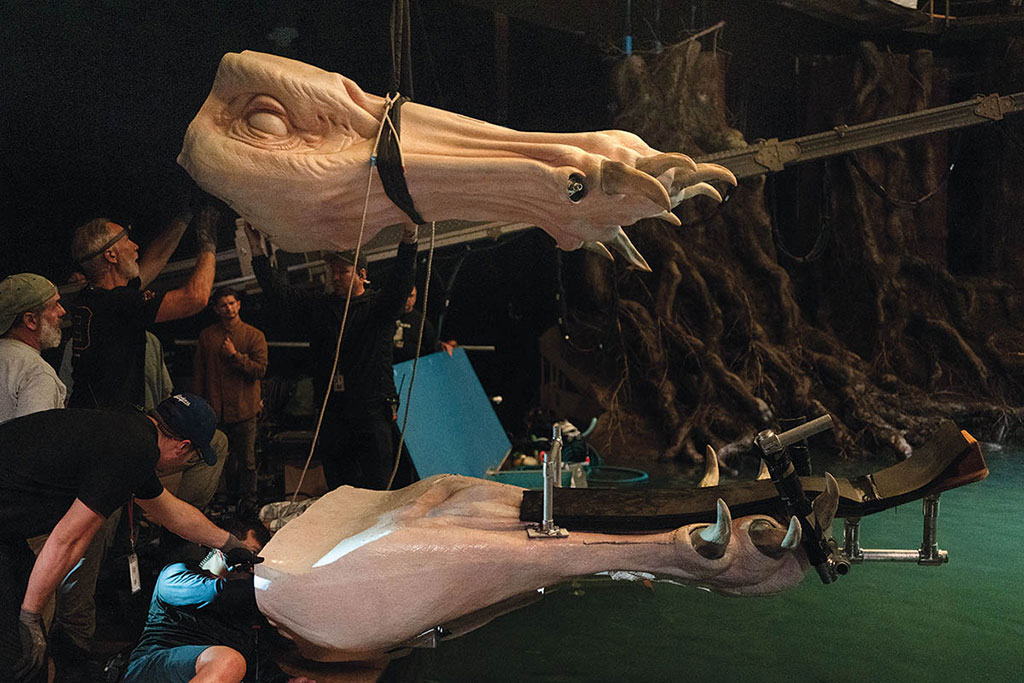
The Mandalorian and Grogu VFX breakdown highlights the creature work behind two memorable inhabitants of the Star Wars galaxy: Gatori the fisherman and the giant alien frog that briefly swallows Grogu. Both characters demonstrate different aspects of digital performance. Gatori requires subtle expressions and believable interactions with his surroundings, while the frog relies on convincing animation, physical scale and exaggerated movement to make its unusual encounter with Grogu entertaining.
Image Engine delivered 154 visual effects shots for The Mandalorian and Grogu, covering digital characters, environments and action sequences. The studio’s official project page identifies John Knoll as production VFX supervisor and Abby Keller as production VFX producer. Robin Hackl supervised Image Engine’s work, while Emilie Ancet served as the studio’s VFX producer. These 154 shots represent Image Engine’s contribution rather than the film’s complete visual effects total, and the studio has not specified how many involved Gatori, the frog or other individual sequences.
Creature work requires more than creating a detailed digital model. Artists must ensure that movement, lighting, shadows and physical interactions remain consistent with the surrounding photography. Even a convincing character can appear disconnected from its environment if these elements do not work together. Coverage of Image Engine’s breakdown reel, including CG Channel’s October 26, 2026 report, identifies Gatori and the giant frog as featured computer generated characters. However, the published coverage does not provide a complete technical explanation of their creation, leaving individual modeling, animation, rigging and compositing methods unconfirmed.
Gatori’s Subtle Character Performance
Gatori is a reptilian fisherman who inhabits the marshes of Nal Hutta. The official Star Wars Databank describes him as a quiet character familiar with the surrounding wilderness, whose personality differs from creatures primarily designed to threaten or attack other characters. His performance depends on restrained expressions, deliberate movements and believable interactions with physical objects. Unlike the giant frog, whose most memorable action involves swallowing Grogu, Gatori communicates personality through ordinary behavior.
Jon Favreau’s director’s commentary, discussed by StarWars.com, provides specific information about how the production achieved this performance. Stephen McKinley Henderson supplied Gatori’s voice, while Misty Rosas contributed to the character’s physical performance. In a scene where Gatori prepares a poultice, Dawn Dininger performed the practical hands, while a digital face was combined with a real set and prop. This demonstrates how several performers and production techniques can contribute to a single character, with practical elements providing physical interaction and digital work supporting the required facial appearance and expressions.
For the illusion to work, Gatori’s facial movements must remain consistent with his hand gestures, body position and surroundings. Small changes in attention, pauses and restrained reactions can communicate personality without exaggerated animation. However, the documented combination of practical and digital techniques specifically concerns the poultice scene and does not establish that every appearance of Gatori was created through an identical process.
Animating the Giant Frog Encounter
The giant alien frog presents a different animation challenge because its main sequence involves a sudden and exaggerated physical interaction. The creature swallows Grogu before eventually spitting him out, creating a moment that requires clear staging, believable movement and carefully coordinated reactions. Although the action is unusual, viewers must still understand the position of both characters, how the frog reaches Grogu and what happens during the encounter.
Successful animation communicates these events through several recognizable stages:
- Anticipation: The creature’s movement prepares viewers for the sudden action.
- Acceleration: The frog’s movement establishes the speed and force of the encounter.
- Physical contact: The animation makes the interaction between the frog and Grogu understandable.
- Swallowing movement: The creature’s mouth and body must visually support the exaggerated action.
- Reaction and aftermath: Grogu’s eventual release provides a clear conclusion to the sequence.
These stages do not require equal screen time. A brief pause before sudden movement can strengthen the action, while the timing of Grogu’s release influences whether the moment feels humorous or threatening. The animation must also remain consistent with the camera’s perspective, framing and surrounding environment. Incorrect positioning or poorly coordinated movement could weaken the impression that both characters occupy the same physical space. The available production information does not explain precisely which elements were practical or digital throughout the encounter, but the sequence demonstrates the importance of readable action and convincing physical relationships.
Grogu’s Practical and Digital Integration
Grogu presents an additional challenge because his recognizable appearance and movements must remain consistent across practical puppetry and digital augmentation. A May 2026 StarWars.com feature explains that Legacy Effects’ practical puppet remains central to his performance, with digital visual effects extending the movements and expressions available to the character. Multiple puppeteers coordinate their contributions to create a unified performance.
This combination becomes especially important when Grogu interacts with larger digital creatures. Their movements must respond to his size, position and reactions without making the characters appear separately staged. Several elements help establish convincing interactions:
- Eyelines: Characters must appear to look toward each other at the correct height and position.
- Reaction timing: Grogu’s movements must respond naturally to the creature’s actions.
- Physical scale: The relative sizes of characters must remain consistent across camera angles.
- Contact and movement: Interactions should communicate understandable physical relationships.
- Lighting and shadows: Both characters must appear to occupy the same environment.
A digital creature that looks past Grogu or reacts too early can weaken the emotional connection between them. Incorrect spacing or inconsistent lighting can also make their interaction appear artificial. The objective is to preserve Grogu’s established physical identity while allowing the surrounding action to extend beyond what practical puppetry alone could achieve.
Gatori and the giant frog ultimately demonstrate contrasting approaches to digital character performance. Gatori’s personality emerges through controlled behavior, subtle facial expressions and practical interactions, while the frog depends on stronger movement, changing body shapes and the timing of an exaggerated encounter. Despite their differences, both characters serve the same storytelling purpose: helping audiences understand their behavior without becoming distracted by the techniques used to create them.

How Image Engine Uses Creature Modeling, Rigging, Animation, Lighting and Compositing
Creating convincing digital creatures involves several interconnected production processes. Modeling establishes the character’s form, rigging provides movement controls, animation develops performance, and texturing and shading determine how surfaces respond to light. Lighting and compositing then help integrate the finished creature into its environment. Although the publicly available Mandalorian and Grogu breakdown does not identify every software package, rigging method or rendering configuration used by Image Engine, established visual effects techniques provide useful context for understanding the artistic and technical challenges involved.
Creature modeling begins with the character’s overall shape and proportions. Before small wrinkles, scales and other surface details become important, a creature must have a recognizable silhouette and anatomy capable of supporting its intended movements. Gatori’s design must accommodate facial communication and everyday physical activity, while the giant frog’s proportions need to support exaggerated mouth and body movements.
Digital creature models typically require attention to different levels of detail:
- Large forms: Establish the creature’s identity, body proportions and recognizable silhouette.
- Medium forms: Define anatomical structures, folds and features that support movement.
- Fine details: Add wrinkles, scales and small surface irregularities visible in closer shots.
Different techniques can represent these details. Displacement changes rendered geometry, while bump mapping creates the appearance of smaller surface irregularities without producing the same geometric changes. Blender’s documentation describes these general approaches and how they may be combined, although this does not confirm that Image Engine used Blender. The appropriate level of detail depends on the camera, since features affecting the silhouette may require geometric changes while smaller imperfections can often be represented through shading. Excessive detail does not necessarily improve realism if the creature’s anatomy and surfaces become less convincing during movement.
Rigging Controls for Creature Deformation
Rigging provides the controls that allow animators to pose and deform digital characters. Common components include skeletons, skin binding, deformers and constraints, as described in Autodesk’s character animation documentation. For Gatori, a facial rig must support expressions without distorting recognizable proportions, requiring coordinated mouth movements, cheek deformation and eye positioning. The giant frog presents different requirements because its mouth and body must accommodate a large swallowing action without appearing to stretch unnaturally.
A useful rig allows animators to achieve the required poses while maintaining believable anatomy. Additional controls may provide flexibility, but technical complexity is valuable only when it improves the intended performance. These principles explain the general role of rigging in digital creature animation rather than establishing the specific structures Image Engine developed for Gatori or the frog.
Animation communicates a creature’s apparent weight through acceleration, balance, direction changes, stopping and the movement of individual body parts. A large creature can move quickly while still appearing heavy if its actions communicate a believable source of force. Softer areas of the body may also continue moving after the main action stops, reinforcing the impression of mass. Personality depends on timing as well as physical movement, since a character that immediately reacts to every disturbance communicates a different temperament from one that pauses before responding.
Image Engine’s earlier work on Fantastic Beasts provides a documented comparison. Its Graphorn case study describes how artists studied several real animals to achieve a combination of substantial weight and agile movement. This demonstrates an approach used on that production rather than confirming the references used for Gatori or the frog. For Gatori, animation must preserve his calm characterization through small pauses and controlled gestures, while the frog relies more heavily on sudden acceleration, large body movements and believable physical contact. Both performances require physical credibility and recognizable character intentions.
Texture Shading and Surface Response
Textures and shading determine how a creature’s skin or other materials respond to light. Color alone cannot communicate whether a surface appears dry, damp, soft, thick or uneven. Roughness influences reflections, with sharper highlights suggesting smoother surfaces and broader reflections indicating rougher materials. Autodesk’s Arnold documentation explains how roughness maps affect highlights and environmental reflections. Subsurface scattering is another established rendering concept used to represent light travelling beneath surfaces such as skin, with its appearance influenced by material properties and scale.
For digital creatures, these properties must remain consistent with the design. Thick folds, thin membranes and exposed surfaces may require different responses to lighting, while random surface complexity can make an asset visually busy without improving realism. Convincing materials depend on variation that supports anatomy and environment. However, the specific texture maps, shaders and rendering settings used for Gatori and the frog have not been documented in the reviewed production information.
Lighting helps establish whether a digital character belongs within a photographed scene. Its direction, intensity, color, reflections and shadows must remain consistent with the surrounding environment. A creature can match the overall brightness of a shot but still appear artificial if its highlights suggest an incorrect light source or its shadows behave differently from nearby objects. Lighting must also preserve readability, ensuring that expressions, mouth movements and important contact points remain visible without appearing disconnected from the scene.
Image Engine discussed this balance in its Mandalorian Season 2 case study. During the Mother Spider sequence, the team adjusted illumination and parts of the icy environment to keep the creature readable while maintaining the surrounding atmosphere. That earlier production illustrates a challenge relevant to Gatori and the frog, although the specific lighting techniques used in the newer sequences have not been confirmed.
Compositing Photographed and Rendered Elements
Compositing combines photographed footage and rendered elements into a unified final image. This requires consistent shadows, focus, image texture, contrast and relationships between foreground and background objects. A digital creature may look convincing in isolation but appear disconnected if its edges, reflections or movement do not match the photography.
Motion blur is particularly important during fast actions such as the frog’s interaction with Grogu. A sharply rendered creature moving through a shot containing substantial photographic blur can appear detached from its surroundings. Foundry’s documentation describes methods for creating motion blur, including rendering samples across the shutter interval and using motion vectors during compositing. These are general approaches rather than confirmed settings used by Image Engine.
Compositing must also remain consistent across moving frames. A convincing shadow in one image is insufficient if it becomes detached during animation, while clean edges must remain stable as the creature changes position. Physical contact presents another challenge because characters touching objects or interacting with other creatures create expectations about movement, resistance and spatial relationships.
For example, a large creature landing beside Grogu should appear to respond to the ground rather than stopping without a convincing transfer of force. The characters’ relative sizes must also remain understandable as camera angles change. Animation establishes the interaction, deformation supports the apparent physical response, and lighting and compositing make that relationship convincing within the photographed environment.
Image Engine had extensive experience with The Mandalorian before contributing to the feature film. Its documented work across the television series includes:
- The Mandalorian Season 1: 441 visual effects shots involving environments, set extensions, creatures, droids and digital doubles.
- The Mandalorian Season 2: 516 shots across all eight episodes, including creature and environment work.
- The Mandalorian Season 3: 687 shots across six episodes, featuring planetary environments, alien cyborgs and other digital elements.
These figures demonstrate Image Engine’s established involvement in the franchise, although they do not prove that particular assets, tools or methods were transferred directly into The Mandalorian and Grogu. Repeated work within the same fictional universe can help artists maintain consistency in how creatures, environments and practical performances appear together.
John Knoll on Preserving Star Wars Style
John Knoll also discussed the film’s visual effects approach with Industrial Light & Magic, explaining the importance of preserving the familiar handcrafted qualities of the television series while adapting the production for theatrical presentation. His account describes practical and digital techniques being selected according to the requirements of individual sequences. For Image Engine, the challenge was therefore not simply producing detailed creatures but ensuring that their appearance and behavior remained consistent with the established Star Wars visual style.

What the Mandalorian and Grogu VFX Breakdown Reveals About Creature Realism and Production Techniques
The Mandalorian and Grogu VFX breakdown demonstrates how creature performances depend on the relationship between technical execution and storytelling. Gatori and the giant frog present different challenges, but both require convincing movement, recognizable physical characteristics and integration with the surrounding environment. Gatori highlights restrained character performance and the combination of practical and digital elements, while the giant frog emphasizes exaggerated animation, physical scale and the difficulty of making an impossible interaction with Grogu understandable.
Their differences illustrate why creature realism cannot be measured solely through surface detail. An elaborate digital model will not necessarily appear convincing if its movement, lighting or interactions fail to support the scene. Image Engine’s work provides an opportunity to examine how these elements contribute to the final result without assuming that every production technique has been publicly documented.
Image Engine released its breakdown reel under the title The Mandalorian & Grogu | Breakdown Reel | Image Engine VFX. Befores & Afters also featured the studio’s work on October 25, 2026. The reel provides a visual reference for examining the featured sequences, while Image Engine’s official project page documents its broader contribution to the film.
Watching the finished sequences before studying the breakdown can help establish how the effects support the intended performance. A closer examination can then focus on character movement, silhouette, physical interactions and integration with the surrounding photography. A facial expression may depend on subtle deformation, while a large creature action may rely more heavily on timing, weight and spatial clarity. However, the breakdown should not be confused with a complete technical production report, since it does not establish every software package, asset specification, animation method or rendering setting involved.
Complementary Creature Examples and Broader Lessons
The two sequences provide complementary examples for artists studying digital creature animation. Gatori demonstrates how subtle movement and practical interactions can establish personality, while the giant frog provides an opportunity to examine exaggerated action and the challenge of making a large creature interact convincingly with a much smaller character.
Several broader lessons emerge from these sequences:
- Performance comes before surface detail: A creature’s actions and intentions should remain understandable even before final textures and shading are considered.
- Physical scale must remain consistent: Movement, camera perspective and contact help establish a creature’s apparent size and weight.
- Subtle timing communicates personality: Small pauses, changes in attention and restrained gestures can make a digital character feel individual.
- Practical and digital techniques can complement each other: Gatori’s documented combination of practical hands, physical props and a digital face demonstrates how different methods can contribute to one performance.
- Lighting and compositing support the illusion: Shadows, reflections, focus and motion blur must remain consistent with the photographed environment.
- Technical complexity should serve the scene: Detailed rigs, complex models and advanced rendering are useful when they improve performance or visual clarity.
Artists studying these sequences can begin by evaluating whether the creatures’ movements and intentions are understandable before examining how modeling, shading and compositing support those performances. A close shot may depend on subtle facial deformation and convincing material response, while a wider action sequence may communicate primarily through silhouette, timing and physical contact. The strongest visual effects work allows these components to function together without drawing unnecessary attention to the production techniques.
Although Image Engine has documented its contribution to the film, the available production coverage does not provide a complete technical account of Gatori and the giant frog. Several details remain unconfirmed:
- The exact modeling software used for the characters.
- The specific rigging systems developed for facial and body movements.
- Whether animation used captured reference, procedural methods, manual techniques or a combination.
- The resolution and structure of individual creature assets.
- The rendering software and detailed shader configurations.
- The precise division between practical and digital elements throughout the frog encounter.
- The number of shots allocated to each featured character.
General technical documentation from Autodesk, Blender, Arnold and Foundry explains how digital character production works, but it should not be interpreted as confirmation that Image Engine used those particular applications or settings. The documented information establishes that Image Engine contributed 154 visual effects shots and that Gatori and the giant frog were among the featured creatures. Star Wars production commentary also confirms specific practical and digital techniques used for Gatori and Grogu.
These details provide a foundation for understanding the work without relying on unsupported assumptions about the studio’s internal pipeline. The appeal of Gatori and the giant frog comes from their distinct contributions to the film’s storytelling. One communicates personality through calm behavior and physical interaction, while the other creates an exaggerated encounter involving Grogu. Both demonstrate how digital creatures can support the established visual identity of Star Wars when their performances remain grounded in believable movement and consistent environments.
Image Engine’s Franchise Continuity and Final Takeaways
Image Engine’s involvement also reflects its continuing relationship with The Mandalorian franchise. Its previous television work provides relevant production experience, while the feature film introduces further opportunities for creature animation and theatrical visual effects. Ultimately, the breakdown highlights the importance of coordinating modeling, rigging, animation, lighting, compositing and practical production techniques. A convincing digital creature depends not simply on how detailed it appears, but on whether audiences understand its actions, recognize its personality and believe that it occupies the same world as the surrounding characters.
Frequently Asked Questions (FAQs)
- How many VFX shots did Image Engine deliver for The Mandalorian and Grogu?
Image Engine officially confirmed that it delivered 154 visual effects shots for The Mandalorian and Grogu. Its work covered digital characters, environments and action sequences, including creature effects involving Gatori and the giant frog. However, the figure represents Image Engine’s contribution rather than the film’s complete visual effects total. The studio has not publicly provided a detailed breakdown showing how many shots were assigned to each character or sequence. - Who is Gatori in The Mandalorian and Grogu?
Gatori is a reptilian fisherman who lives in the marshes of Nal Hutta. According to the official Star Wars Databank, he is a quiet inhabitant familiar with the surrounding wilderness who prefers a relatively peaceful existence despite its dangers. His character differs from more aggressive alien creatures because his personality is communicated through restrained behavior and everyday activities. Stephen McKinley Henderson provides his voice, while Misty Rosas contributed to his physical performance. - Is Gatori entirely computer generated?
Not in every documented scene. Jon Favreau’s director’s commentary confirms that Gatori’s appearance combines practical and digital techniques during a sequence in which he prepares a poultice. Dawn Dininger performed the practical hands, while the production used a digital face alongside a physical set and prop. This combination allowed different elements to contribute to one believable character. However, the available information does not establish whether the same production method was used throughout all of Gatori’s appearances. - What happens in the giant frog sequence?
The giant alien frog swallows Grogu before eventually spitting him out. The encounter is one of the creature sequences highlighted in Image Engine’s visual effects breakdown. Its exaggerated action requires believable movement, consistent physical scale and clear interactions between the characters. The timing of the frog’s movements and Grogu’s reactions helps make the event understandable and entertaining. However, the available production information does not explain precisely how every practical and digital element was created. - Is Grogu a puppet or a digital character?
Grogu is portrayed through a combination of practical puppetry and digital visual effects. Legacy Effects’ animatronic puppet remains central to the character’s performance, with several puppeteers coordinating movements and expressions. Digital effects extend the character’s capabilities when a particular action requires movements that practical puppetry cannot easily achieve. This approach helps preserve Grogu’s recognizable appearance and personality while allowing more complex interactions with digital creatures and environments. - Which software did Image Engine use for Gatori and the frog?
The publicly available production information does not identify a verified list of software used specifically to create Gatori and the giant frog. Digital creature production commonly involves specialized tools for modeling, rigging, animation, texturing, rendering and compositing, but the breakdown does not confirm which applications Image Engine selected. References to software such as Blender, Autodesk tools or Foundry applications explain general production techniques rather than establishing the studio’s actual workflow for these characters. - Why does rigging matter for an alien character?
Rigging provides the controls that allow animators to move and deform a digital character while maintaining its recognizable proportions. For an expressive alien such as Gatori, a suitable rig helps coordinate facial movements, including the eyes, mouth and cheeks. For a larger creature such as the frog, rigging must support substantial body movement and deformation. Effective rigs allow artists to create convincing performances without unwanted stretching or distortion, making them essential to believable creature animation. - What makes a large digital creature feel heavy?
A large digital creature communicates weight through acceleration, balance, changes in direction, stopping and physical contact with its environment. Its movements should suggest a believable source of force, while softer body parts may continue moving after the main action stops. Consistent scale, appropriate timing and interactions with surrounding objects also reinforce the impression of mass. Detailed textures alone cannot make a creature feel heavy if its movement lacks convincing physical behavior. - Did Image Engine work on the Mandalorian television series?
Yes. Image Engine contributed visual effects to all three released seasons of The Mandalorian before working on the feature film. The studio delivered 441 shots for Season 1, 516 shots for Season 2 and 687 shots for Season 3. Its assignments included environments, creatures, droids, digital doubles and other effects. This history demonstrates substantial experience with the franchise’s visual style, although it does not confirm that individual assets or technical methods were reused in the film. - Does the breakdown explain the complete production pipeline?
No. Image Engine’s breakdown highlights selected visual effects contributions, including Gatori and the giant frog, but it does not provide a complete technical explanation of the production pipeline. Specific information about modeling software, rig structures, animation techniques, rendering settings and individual asset specifications remains unconfirmed. The available material is most useful for understanding the visible creature work and its contribution to the scenes, rather than reconstructing every internal production process.

Conclusion
The Mandalorian and Grogu VFX breakdown highlights two distinct approaches to digital creature performance. Gatori demonstrates how subtle expressions, restrained behavior and practical performance can combine with digital effects to create a believable character. The giant frog emphasizes physical scale, animation timing and convincing interactions with Grogu, showing how exaggerated action can remain visually consistent with its surroundings.
Both sequences demonstrate the importance of coordination between visual effects departments. Modeling establishes the creature’s structure, rigging and animation bring it to life, while shading, lighting and compositing integrate the performance into the photographed environment. The confirmed production details also show that practical and digital techniques can complement each other within a single shot rather than functioning as separate approaches.
For VFX artists, the central lesson is that technical complexity should support storytelling. Convincing creatures depend not only on detailed models and realistic materials but also on consistent movement, understandable interactions and recognizable personalities. Image Engine’s work demonstrates how these elements combine to make digital characters feel physically and emotionally present within the Star Wars universe.
Sources and Citations
- Image Engine, The Mandalorian and Grogu : Confirms the studio’s contribution of 154 visual effects shots involving characters, environments and action sequences. It also identifies the production and studio supervisors, providing a primary reference for Image Engine’s role in the film.
The Mandalorian & Grogu - Image Engine, Official Breakdown Reel : Presents the studio’s official visual effects breakdown for the film, published through its ImageEngineVFX YouTube channel. The reel provides a visual companion to the studio’s written production information and the work discussed in subsequent coverage.
The Mandalorian & Grogu | Breakdown Reel | Image Engine VFX - CG Channel, October 26, 2026 : Highlights Image Engine’s 154 visual effects shots and identifies Gatori and the giant frog encounter featured in its breakdown. It provides brief editorial context for the studio’s creature, environment and action work.
See Image Engine’s Breakdown for The Mandalorian and Grogu - Befores & Afters, October 25, 2026 : Presents Image Engine’s official breakdown reel as part of the publication’s visual effects coverage. The short post centers on the embedded video, providing a dated reference with brief accompanying commentary about the studio’s work.
Watch Image Engine’s VFX Breakdown for ‘The Mandalorian & Grogu’ - StarWars.com, Gatori Databank : Official character profile places Gatori in the marshes of Nal Hutta, where dangerous wildlife and unexpected visitors disrupt his quiet life. It supplies story context for identifying the character and understanding his surrounding environment.
Gatori | Star Wars Databank - StarWars.com, October 15, 2026 : Highlights how Gatori’s practical hand performance was combined with a digital face in the poultice scene. Jon Favreau’s commentary also identifies the voice, physical performance and puppetry contributors who helped bring the character to life.
Behind the Scenes of Star Wars: The Mandalorian and Grogu with Jon Favreau’s Director’s Commentary - StarWars.com, May 28, 2026 : Explains how Legacy Effects’ animatronic puppet and puppeteers work alongside ILM’s digital augmentation to create Grogu. It discusses the practical performance, coordination on set and expanded movement required for the film.
A Closer Look at Grogu: Star of Star Wars: The Mandalorian and Grogu - Industrial Light & Magic, July 6, 2026 : Features John Knoll’s account of adapting the series’ visual effects for theatrical and IMAX presentation. It discusses preserving its handcrafted appearance through a combination of practical miniatures, puppetry and digital effects.
Something Old, Something New: John Knoll on the Visual Effects of ‘Star Wars: The Mandalorian and Grogu’ - Image Engine, The Mandalorian Season 1 : Documents 441 visual effects shots across multiple episodes, including digital environments, set extensions, creatures, droids and digital doubles. It establishes the studio’s earlier involvement in the series and links to a detailed production case study.
The Mandalorian: Season 1 - Image Engine, The Mandalorian Season 2 : Confirms 516 visual effects shots across all eight episodes, including arachnid creatures, digital stormtroopers, a prison droid and Imperial environments. The page also provides supervisory credits and links to further coverage of the studio’s work.
The Mandalorian: Season 2
Recommended
- Release Date for Long-Awaited Sci-Fi Horror Directive 8020: What to Expect, Trailer Reactions, and Everything We Know
- Backrooms on HBO Max: September 2026 Release Date and How to Watch
- Capcom is Reportedly Not Interested in Remaking Resident Evil 5 and 6
- Persona 6 Releasing in 2027 Can’t Be Ruled Out Yet: What the Teaser and Insiders Suggest
- Lollipop Chainsaw at TGS 2026: SEGA Lineup and Back2Back Reveal
- Materialize, Free Tool For Creating PBR Materials From Photos: Download, Workflow, and Texture Map Guide
- Hot Wheels: Infinite Rush Preview: It’s All About Exploring an Open World Toy Box
- Dragon’s Dogma 2: Dark Arisen Coming to Switch 2 on October 9, Full Release Details, New Region, and Expansion Breakdown
- Dropsy Game Guide: Story, Gameplay, Walkthrough, Characters, and Ending
- Pokémon Pokopia Bubbly Basin DLC Release: Date, New Pokémon, and Everything You Need to Know
- Low-Budget Repairs Is Out: 1990s Polish Renovation Sim Explained
- EA Sports FC 27 Top-Rated Player List: Official Ratings
- EA Sets a New $8 Billion Sales Record Just Months After Laying Off Battlefield 6 Developers: FY26 Net Bookings Explained and What It Means Next
- Toph Beifong Actor Speaks Out on Avatar Leak What Fans Need to Know About the Controversy
- Wafer 3D Texture Painting App Arrives on Windows and MacOS: Stylized Texturing Tool Expands Beyond IPad



































































































