

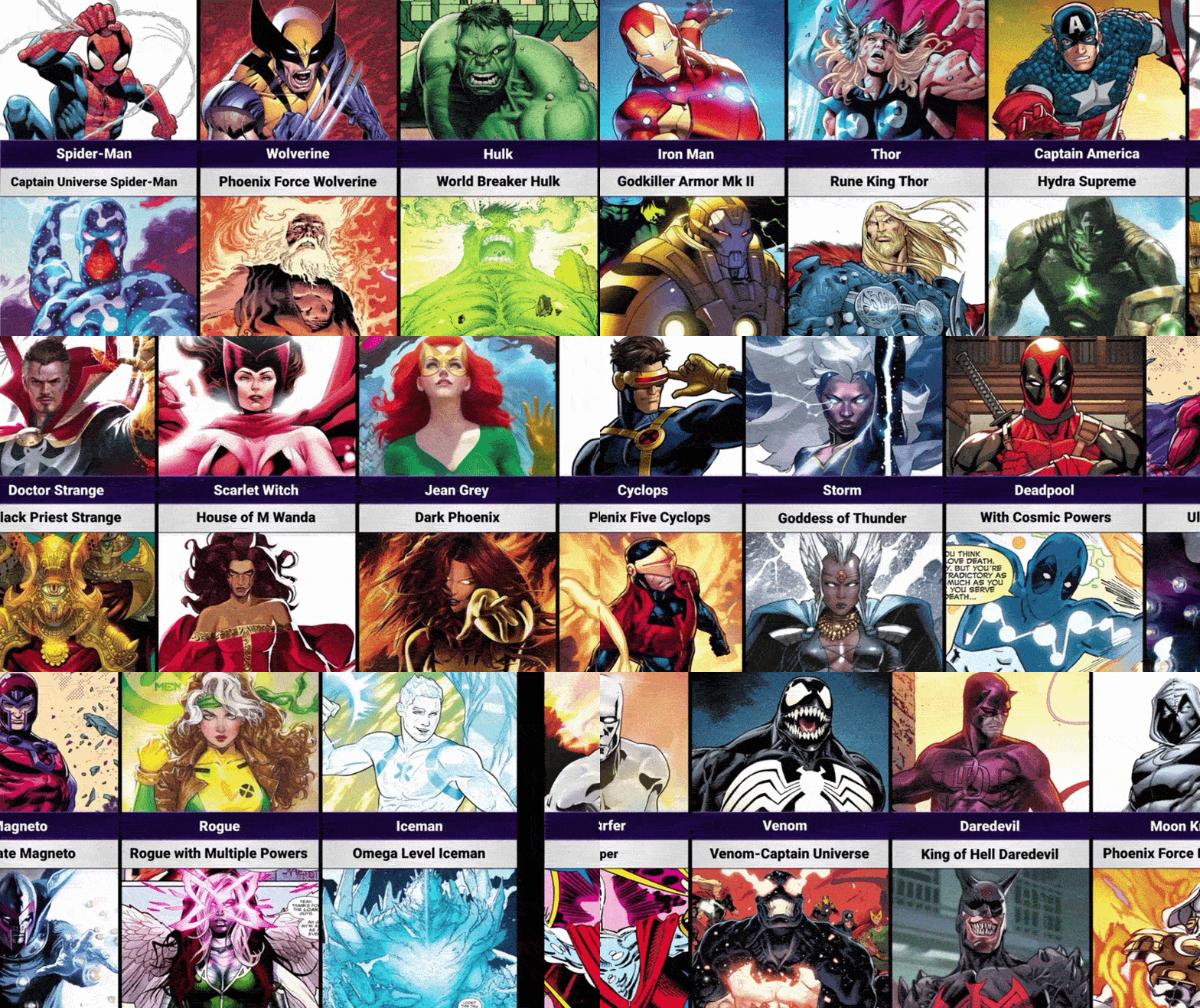
“Evil versions” of Marvel heroes are one of the most reliable ways Marvel Comics tests its characters’ values under pressure: rewrite a life, invert a moral compass, weaponize a costume that feeds on emotion, or drop a familiar hero into a world where the rules are different. The result can be anything from a temporary fall-from-grace to a full, alternate-reality career in villainy—sometimes with consequences that reshape whole continuities and timelines.
What Are Evil Versions of Marvel Heroes (alternate Timelines and Corrupted Variants)?
In Marvel storytelling, “evil versions” generally fit three overlapping categories: alternate-reality counterparts, corrupted variants, and identity replacements. Alternate-reality counterparts come from other worlds in the Marvel Multiverse—distinct continuities with their own histories, rules, and turning points. Marvel itself frames the Multiverse as “countless timelines and worlds,” with many event series spawning or spotlighting entire alternate settings.
Corrupted variants are the “same” hero (or a closely related version) whose moral centre collapses because of an external force: reality manipulation, cosmic possession, a technological addiction curve, or a magical inversion. Two canonical examples sit at the centre of modern Marvel discussions: the moral “inversion” premise of Avengers & X-Men: AXIS and the reality rewrite driving Secret Empire.
Identity replacements are the most psychologically potent: a clone, doppelganger, imposter, or villain wearing a hero’s symbol. In these stories, the “evil version” does not always have to be the original hero; it can be someone exploiting the public trust that the hero’s brand represents—an idea that becomes essential when discussing teams like the Dark Avengers.
A practical rule of thumb: if the story asks “What if the same symbol meant the opposite?”, it is probably an evil-variant story—whether it arrives via Multiverse, corruption, or replacement.
How Marvel “evil Hero” Storylines Work (mind Control, Swaps, and Moral Corruption Tropes)
Marvel revisits “evil hero” stories because they are modular: the same hero can be pushed into darkness through different mechanisms, each revealing a different fault line. The most common mechanisms (and the canonical stories that exemplify them) include:
- Moral inversion and alignment swaps. Avengers & X-Men: AXIS explicitly sells the concept that “Marvel’s greatest heroes have turned on their moral axis,” with the story built around heroes becoming villainous (and some villains becoming heroic) under a powerful spell.
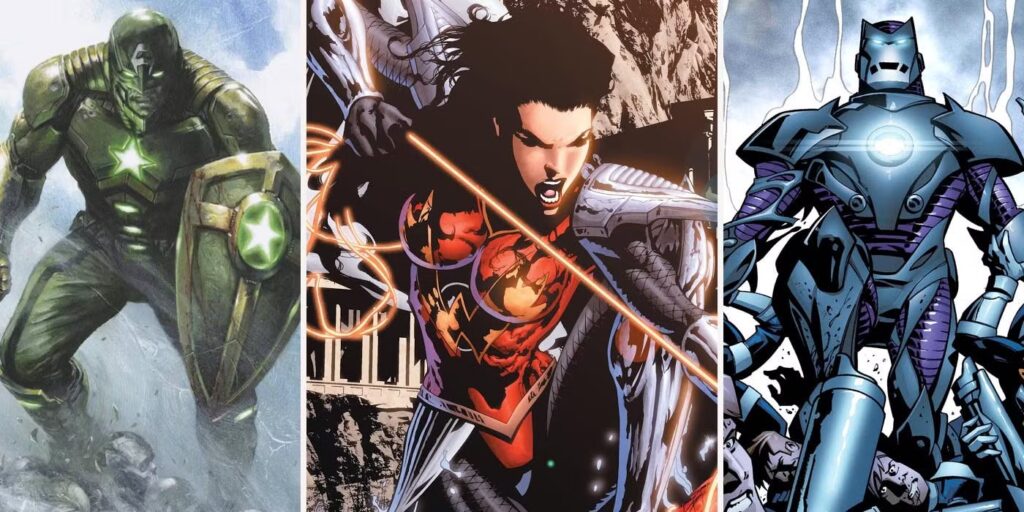
- Reality rewriting and retroactive corruption. Secret Empire hinges on a sentient Cosmic Cube entity rewriting reality so that a version of Captain America is aligned with Hydra—turning a symbol of virtue into the leader of a fascistic takeover. Marvel’s own Hydra overview emphasises that this “version” of Steve Rogers had his past rewritten and took the role of Hydra Supreme.
- Psychological and biological influence (symbiotes). The black suit saga shows corruption as a slow behavioural drift: Marvel’s own history of the suit describes an “attitude adjustment,” with the symbiote feeding off Spider-Man and changing his demeanour. This is not “mind control” in a single panel—more like an escalating feedback loop between a host’s stress and the suit’s hunger.
- Clones and identity fractures. Clone narratives push heroes towards darker extremes by destabilising identity: Ben Reilly is explicitly described by Marvel as an exact clone created to be a foil, then forced to forge his own path. Clone stories become a natural gateway to “evil versions” because the clone can be written as the hero’s worst anxieties made flesh.
Across all these tropes, the point is rarely “heroes are secretly evil.” The point is to stress-test the hero’s reason for being good—by altering memory, incentives, biology, or identity until heroism becomes harder than villainy.
Marvel Heroes Who Became Villains (when the Hero Crosses the Line)
Marvel distinguishes between heroes who are corrupted and heroes who choose the line-crossing—often blending the two. Several modern “hero-to-villain” pivots are explicitly documented by Marvel as turning points in character history, frequently tied to major events.
One model is event-driven alignment shift, where an external force changes a hero’s value system. Marvel highlights AXIS as an inversion event that switches alignments, and it specifically identifies Tony Stark as a case where “bad Tony” liked the new persona enough to ensure he did not revert—making him both hero and villain of his own story in Superior Iron Man.
Another model is power corruption, where a hero’s capacity becomes a threat. Marvel’s Dark Phoenix reading guide frames it plainly: telepath Jean Grey gains vast power, and “that power has corrupted her absolutely,” forcing the X-Men into an existential moral decision.
A third model is possession-with-accountability, where the story records a catastrophic act but continues to treat the hero as responsible for recovery. Marvel’s own explainer on Cyclops notes that, while possessed by the Phoenix, he killed Professor X—a concrete crossing of a line that still shapes his subsequent choices.
Finally, Marvel also uses reality-scale collateral as a villain threshold. Its House of M event guide presents Scarlet Witch as “out of control,” with the fate of the entire world in her hands, positioning her as the central threat that Avengers and X-Men must address together.
Across these cases, “became a villain” often means one of two things: either the hero adopts villain methods (coercion, domination, mass harm) for a cause, or the hero’s identity is rewritten so thoroughly that the heroic self has been displaced.
Hydra Supreme Captain America Explained (Secret Empire Captain America)
The Captain America “Hydra Supreme” arc is a modern template for how to create an evil counterpart without simply declaring the original hero corrupt. The Secret Empire event is built on a sentient Cosmic Cube entity—Kobik—rewriting reality so that a version of Captain America is a Hydra sleeper agent, rising into leadership and then openly revealing his allegiance as Hydra Supreme.
Marvel’s official Hydra overview provides an explicit “how it happened” summary: it was “revealed that a version of Steve Rogers…had been a secret agent for Hydra,” but the twist is that “his past was rewritten,” and the story ends with Hydra Cap defeated by the true, original Captain America and Hydra’s Secret Empire collapsing.
That framing matters. In narrative terms, Hydra Supreme works like a stolen life story rather than a simple heel turn: the public, allies, and even enemies respond to the symbol of Captain America, while the plot’s engine is the dissonance between what the symbol meant and what it is now used to justify. Marvel’s own Secret Empire reading guide leans into this premise: Captain America has “been living a lie,” using the trust earned over years to reshape the world in Hydra’s image—forcing the broader hero community to confront “one of their own.”
From an “evil version” perspective, Hydra Supreme is powerful because it combines three tropes at once: reality rewrite, political takeover, and symbol inversion. The audience is not just watching a villain win fights; they are watching a villain weaponise legitimacy.
Superior Iron Man Meaning and Why Tony Stark Turned Villain
“Superior Iron Man” is not just an “evil armour” era—it is Marvel deliberately exploring what happens when Tony Stark’s worst instincts become the point rather than the problem. Marvel’s Avengers & X-Men: AXIS guide defines the central conceit as heroes turning “on their moral axis,” with inverted morality as the storyline’s hook.
Marvel’s own summary of major heel turns makes the chain of events explicit: AXIS inverted several characters; this “made them switch alignments”; and “bad Tony” ensured that he did not revert, therefore becoming both hero and villain within Superior Iron Man.
The Superior Iron Man (2014) issue #1 solicitation on Marvel.com positions the series as “spinning out of AXIS” and frames the story’s moral question in market terms: “How much would you pay for perfection, beauty? immortality?” It also states that the AXIS effect has changed Iron Man, and now he will change the world “at a terrible cost.”
On the technical side, Marvel’s “Top 10 Armors” feature explicitly connects the era’s armour design to symbiote-inspired tech and reiterates that Superior Iron Man is the book where Tony’s personality is “skewed” after the inversion spell used in AXIS.
Taken together, Marvel’s own materials support a clear definition of “Superior Iron Man” as an “evil version” mechanism: it is not a new character so much as a moral operating system update—the same genius and resources, but with empathy and restraint removed from the decision-making loop.
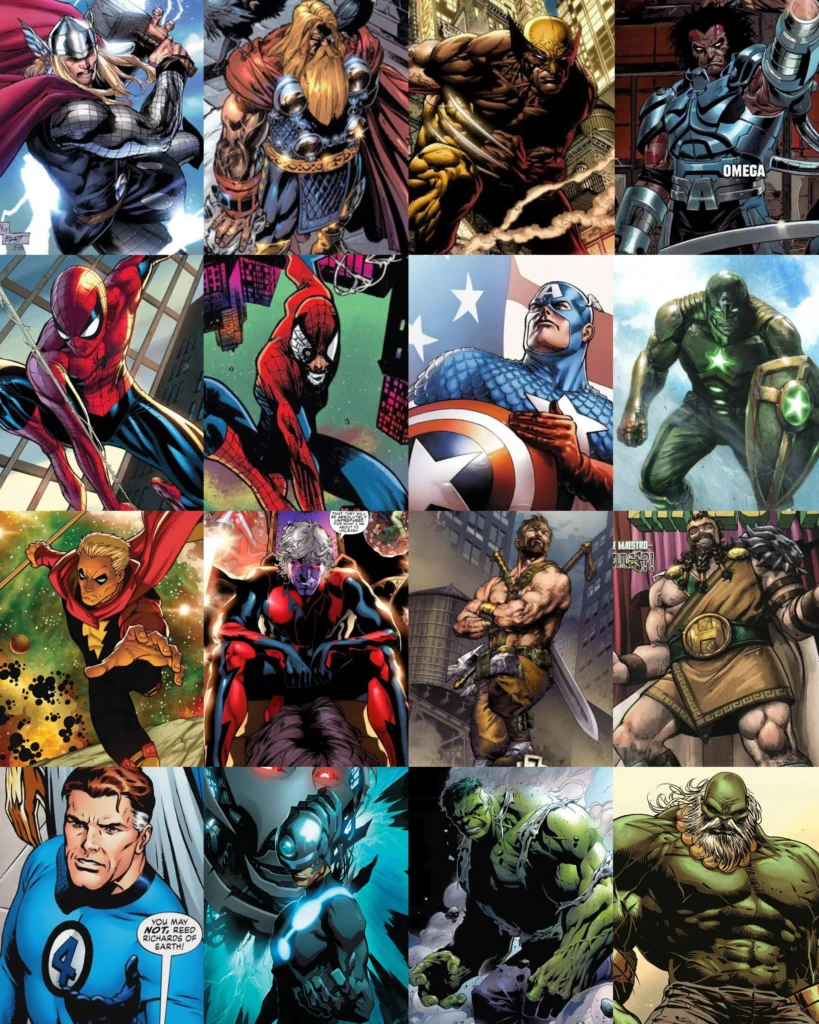
Evil Thor Multiverse Counterpart (Avengers vs Dark Thor Story)
Not every “dark Thor” story uses the Multiverse, but Marvel has a standout example of a Thor-shaped evil counterpart that functions like an alternate: Ragnarok, a cyborg clone of Thor. In Marvel’s own “Other Thors” feature, Ragnarok is described as a cyborg clone who caused trouble for Captain America’s resistance force during Civil War and later served as one of Norman Osborn’s Dark Avengers.
Marvel’s recap of the biggest moments in Civil War identifies the key “dark counterpart” beat: the “Thor” on the battlefield was not the real God of Thunder, but a clone, which malfunctioned and killed the anti-registration hero Goliath.
Marvel also corroborates the outcome on its character page for Bill Foster: he joined Captain America’s side against the Superhuman Registration Act and was killed “by a clone of the thunder god Thor” during a clash with Iron Man’s pro-registration forces.
As an “evil Thor multiverse counterpart” concept, Ragnarok delivers three things that a simple “evil Thor” rarely does:
It preserves the visual and power-language of Thor while removing the moral identity that makes Thor heroic, turning “Thor-ness” into a weapon that can be deployed without conscience.
It changes how other heroes interpret symbols: the presence of a Thor-like figure on the “wrong side” intensifies the moral chaos of Civil War and shows how quickly trust collapses once heroic icons become unreliable.
It feeds directly into “evil Avengers” storytelling because Ragnarok is explicitly linked by Marvel to the Dark Avengers era as part of Osborn’s counterfeit-hero project.
Gorr the God Butcher vs Thor (why Thor’s Enemies Feel Like Evil Reflections)
Some Thor villains work as direct inversions of Thor’s identity: they do not just want to defeat a god; they want to invalidate the idea of gods. Gorr the God Butcher is presented by Marvel as a being who vows to kill all deities across the cosmos, enabled by his bond with the All-Black—the first symbiote and “most ancient evil.”
Marvel’s Thor: God of Thunder series page frames the core mystery as gods vanishing across time, with Thor pursuing the trail of blood and confronting the “God Butcher,” a storyline designed to pit Thor’s mythic role against the idea that gods deserve to die.
This is why Gorr often feels like an evil reflection: Thor is a god who aspires (sometimes imperfectly) to protect; Gorr is a mortal who becomes a god-killer to punish divine neglect. Marvel’s own reading-order recap of Jason Aaron’s Thor saga explicitly describes Gorr as a figure who wanted mortals to depend on themselves rather than gods who betrayed him—turning the theme into a philosophical mirror rather than a simple grudge match.
Gorr’s reflection effect deepens through symbiote mythology. Marvel’s “Who Is Knull?” explainer notes that Thor: God of Thunder (2012) #6 includes the first glimpse of Knull and links the All-Black symbiote blade to Gorr—connecting Thor’s god-mythology to the cosmic abyss that births symbiotes.
The arc therefore functions as a layered “dark counterpart” story: Thor versus Gorr is hero versus villain, god versus god-killer, but also light-and-legacy versus a primordial darkness that reinterprets “divinity” as predation.
Spider-Carnage (Ben Reilly) Origin and Why Spider-Man Becomes Evil
Spider-Carnage is a precise example of how Marvel uses two separate identity engines—clones and symbiotes—to produce a credible “evil Spider-Man” without rewriting Peter Parker as inherently villainous. Marvel’s biography for Ben Reilly presents him as an exact clone of Spider-Man created as a ploy to destroy the wall-crawler, who nevertheless becomes a legitimate hero under his own identity.
The “Spider-Carnage” transformation is then situated by Marvel within a “many hosts” framework for Carnage. The official Marvel trade paperback Spider-Man: The Many Hosts of Carnage highlights that Carnage bonds with multiple hosts, explicitly stating that John Jameson succumbs until Ben Reilly offers “a more tempting meal,” becoming Spider-Carnage. Marvel’s collection listing also shows the storyline’s inclusion of Amazing Spider-Man (1963) #410 among the collected issues—placing Spider-Carnage in a specific canonical Spider-Man publication context.
Why does Spider-Man “become evil” here? Because Spider-Carnage is not “Spider-Man deciding to be a monster.” It is the Carnage symbiote—a particularly murderous offshoot of the symbiote mythos—paired with a host whose life is already psychologically burdened by cloning, displacement, and questions of “realness.” Marvel’s character overview describes the Carnage symbiote as Venom’s offspring that bonds with the homicidal Cletus Kasady and takes on his bloodthirsty ways, establishing the baseline that this symbiote’s influence is geared towards killing.
Structurally, Spider-Carnage is the “evil Spider-Man” who emerges when Spider-Man’s symbolic agility and responsibility is fused to Carnage’s appetite for chaos. It is a dark mirror where the shape of heroism remains, but the moral content is replaced.
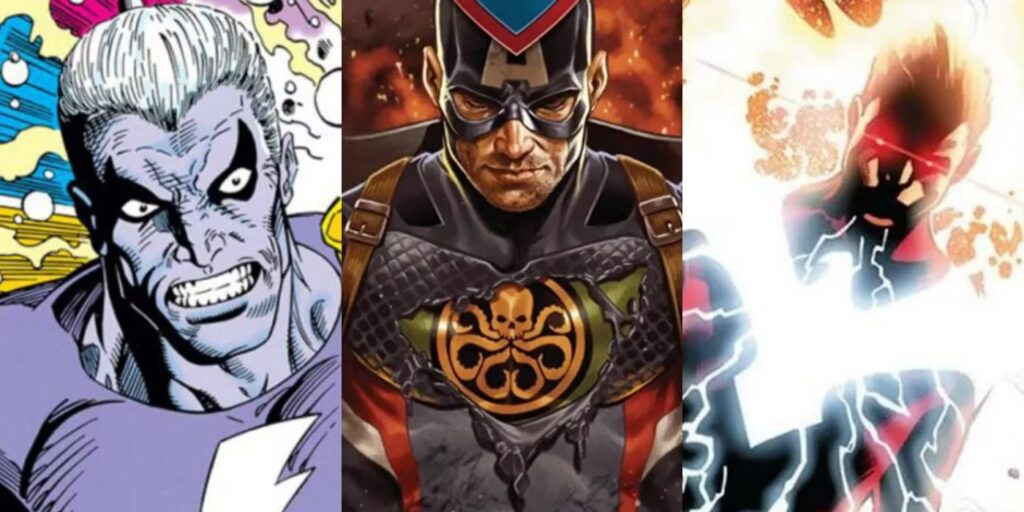
Symbiote Spider-Man vs Venom (how the Suit Changes Peter Parker)
The symbiote era shows that Spider-Man does not have to “turn villain” to be pushed into darker behaviour. Marvel’s own “Every Marvel Symbiote” explainer states that, in publication history, Venom is the original symbiote: it debuted in Amazing Spider-Man (1963) #252 as a new costume Spider-Man received during Secret Wars (1984), before Peter learned the suit was an alien that had bonded with him.
Marvel’s black suit history gives the key behavioural link: the suit revealed itself to be an alien symbiote, “fed off Spidey,” and “changed his demeanor,” mapping the suit’s influence onto Spider-Man’s emotional temperature rather than simply giving him stronger powers.
Marvel’s separate black suit explainer anchors the origin moment more specifically: Spider-Man donned the black symbiote costume during Secret Wars (1984) #8.
The showdown logic of “Symbiote Spider-Man vs Venom” hinges on separation. Once Spider-Man rejects the symbiote, Marvel summarises that it bonds to his rival Eddie Brock, and the two become Venom—a villain (later antihero) shaped by shared resentment and shared history with Spider-Man.
So the “suit changes Peter Parker” story is best understood as a three-stage corruption arc: (1) the suit amplifies performance; (2) it alters mood and behaviour; (3) the rejected symbiote finds a host whose anger aligns with its own sense of betrayal, creating Venom as a living consequence of Spider-Man’s boundary-setting.
Marvel Symbiotes List (Venom, Carnage, Knull and More)
Marvel’s symbiote mythos is now big enough that “evil versions” of heroes can appear simply by answering one question: “Who is wearing the symbiote today?” Marvel’s own symbiote rundown provides a curated list and an origin spine that links many major symbiote stories together—from Spider-Man’s black suit to modern cosmic “King in Black” lore.
Key symbiotes and symbiote-adjacent myth figures repeatedly tied to “dark counterpart” stories include:
- Carnage, described by Marvel as Venom’s most notorious offspring that bonds with Cletus Kasady and takes on his murderous traits—often representing the “no brakes” version of symbiote influence.
- Knull, framed by Marvel as the “God of Symbiotes,” whose first full debut is identified by Marvel as taking place in Venom (2018) #4, where he reveals his backstory and positions himself as a cosmic darkness opposed by “light” embodied by heroes like Thor.
- The symbiote collective itself—often conceptualised as a broader group whose history intersects with Thor—where Marvel’s teams page highlights mythology in which Thor severs Knull’s connection with his creations, leaving symbiotes to seek hosts and absorb “notions of honor, nobility and light,” directly tying host morality to symbiote development.
The symbiotes list matters for “evil hero” research because symbiotes provide a scalable explanation for corruption: a host can remain recognisable while the symbiote pushes behaviour, power expression, and moral decisions into darker territory—creating variants that are simultaneously familiar and threatening.
Dark Avengers Roster (evil Avengers Team Lineup and Story)
The Dark Avengers are Marvel’s most literal answer to “evil versions of Avengers”: not merely heroes turned bad, but villains performing heroism while wearing the Avengers brand. Marvel states that after Norman Osborn killed the Skrull Queen in Secret Invasion (2008), the US government entrusted him with H.A.M.M.E.R. (the agency replacing S.H.I.E.L.D.), and with the super hero community labelled enemies of the state, he introduced his own Avengers in Dark Avengers (2009) #1.
Marvel’s description of the core concept is unusually explicit: Osborn led the team as Iron Patriot, and the lineup included villains pretending to be established heroes like Spider-Man and Hawkeye—a counterfeit hero project built to exploit public trust and narrative visibility.
Marvel also provides a compact roster snapshot on its Avengers history page: during his “Dark Reign,” Osborn formed a team including Venom, Moonstone, Daken, and Bullseye, as well as Ares and Sentry—blending criminals in masks with overtly dangerous “heavy hitters.”
The actual “what happened to them” arc completes the mirror: Marvel notes the true Avengers defeated their dark counterparts during Siege (2009) after the attack on Asgard, with the Dark Avengers disbanding and many members arrested.
In other words, the Dark Avengers story is not only a team book; it is a case study in how evil variants work at institution scale. They are not just darker personalities—they are a darker public policy for heroism: coercive, image-driven, and structurally dishonest.
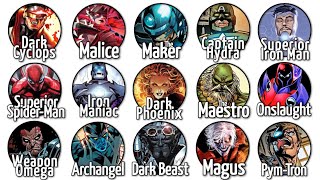
Masters of Evil vs Avengers (Marvel’s “evil Counterpart” Team)
If the Dark Avengers are “evil Avengers by branding,” the Masters of Evil are the older “evil Avengers by opposition.” Marvel’s own history feature confirms that when Baron Zemo learned Captain America survived World War II, he formed the very first Masters of Evil in Avengers (1963) #6 because he needed a team to counter Captain America’s new allies. Marvel also specifies the initial roster as Iron Man villains such as Radioactive Man, Black Knight, and Melter, later supplemented by Thor’s enemies Enchantress and Executioner.
That origin explains why the team so often feels like the Avengers’ “evil counterpart”: it is designed as a line-item counterdraft to the Avengers roster logic—recruiting villains who, at minimum, can target individual Avengers, and at maximum, can overwhelm the Avengers as a coordinated unit.
Marvel’s Masters of Evil history also documents how the “counterpart” idea scales over time. One of the most famous escalations is the “Avengers Mansion Under Siege” era: Marvel describes Helmut Zemo assembling the largest Masters of Evil roster yet in Avengers (1963) #273, following surveillance and executing an attack that takes Jarvis hostage and leaves the mansion in ruins, with the conflict concluding by Avengers (1963) #277.
The long feud also intersects with modern evil-variant events. Marvel explicitly notes that during Secret Empire (2017), a Hydra variant of Captain America created by Kobik seized control of the United States, and Zemo and the Masters of Evil joined broader efforts to quell resistance—showing that the Masters of Evil concept adapts to new “evil hero” regimes.
So, “Masters of Evil vs Avengers” is less a single storyline than a reusable structure: whenever the Avengers represent unity, the Masters of Evil represent the argument that unity can be countered by coalition and cruelty.
Evil Versions of Avengers Ranked (most Dangerous Alternate Avengers)
Ranking “evil Avengers” depends on a consistent definition. For threat-based SEO rankings, the most defensible approach is to combine: (1) scale of harm (local, national, global, multiversal), (2) capacity (powers, resources, influence), (3) durability (how hard the threat is to undo), and (4) symbolic damage (how much trust in heroism itself is destroyed).
Using that framework, the following list ranks some of the most dangerous “evil Avengers” concepts that are either Avengers themselves, Avengers icons turned dark, or villains explicitly constructed to mimic Avengers roles:
- Hydra Supreme Captain America — A reality-rewritten Captain America leading a Hydra takeover weaponises trust at global scale, with the Secret Empire framing explicitly built around one of the world’s greatest heroes reshaping the world in Hydra’s image.
- Dark Avengers as an institution — Osborn’s Dark Avengers are dangerous because they industrialise counterfeit heroism: villains pretending to be heroes under government sanction, undermining legitimacy until the true Avengers must fight the “brand” itself.
- Ragnarok (Thor clone) — A Thor-shaped weapon that kills a major hero in Civil War, later linked by Marvel to the Dark Avengers era, demonstrating how a counterfeit god can destabilise hero alliances and raise the body count instantly.
- Superior Iron Man — A Tony Stark whose morality is inverted and who chooses not to revert turns “saving the world” into a monetised, coercive project, with Marvel positioning the era as Tony changing the world at “a terrible cost.”
- Venom-as-Avengers-symbol (Dark Avengers mimicry) — Marvel’s Dark Avengers concept explicitly includes villains pretending to be Spider-Man and Hawkeye, turning iconic Avengers-adjacent symbols into cover for lethal behaviour.
- Masters of Evil at “siege” scale — When scaled up to operations like the assault on Avengers Mansion, the Masters of Evil become less a brawl and more a coordinated campaign against the Avengers’ infrastructure and civilian-facing stability.
- Scarlet Witch as an event-level threat — When Marvel frames Wanda as “out of control” with the fate of the world in her hands (House of M), the threat is less about villain identity and more about reality-scale consequences that heroes must contain.
This ranking deliberately weights institutional capture and reality manipulation higher than single-combat power. Marvel’s most enduring “evil Avengers” stories are those where the Avengers’ social function—trust, coordination, legitimacy—becomes the battlefield.
Most Powerful Evil Versions of Marvel Superheroes (stronger than the Originals?)
In Marvel, “evil versions” are often written as stronger because they remove restraints. However, “stronger” can mean different things: raw power, freedom to use it, or access to cosmic mechanisms that the original hero would refuse on principle.
Several cases show how Marvel formalises this power jump:
Dark Phoenix — Marvel’s reading guide describes Jean Grey’s power as beyond comprehension and “corrupted…absolutely,” a framing that positions the “evil version” as an existential-level escalation rather than a minor villain phase.
Knull — Marvel describes Knull as the God of Symbiotes, an abyssal being at cosmic scale, and identifies his modern emergence in Venom (2018) #4, where his backstory and ambition to rule in darkness are established. While not a “hero version,” Knull is pivotal because symbiote-based corruptions often trace back to him, turning local corruption arcs into cosmic ones.
The Maker — Marvel explicitly frames the Ultimate Universe version of Mister Fantastic as becoming the Maker after psychological collapse, driven mad by the discovery his reality would be eradicated, and forming a scientific movement to remake the world. This is a true “evil counterpart” whose intellect becomes a weapon of reconstruction rather than exploration.
Gorr empowered by All-Black — Marvel states that Gorr’s crusade is enabled by bonding with the All-Black, the first symbiote, connecting his threat level to ancient evil rather than personal strength. This kind of empowerment is a classic “evil reflection” upgrade: the villain becomes what the hero fights against, amplified by mythic artefacts.
The core pattern is consistent: Marvel tends to make evil variants “stronger” not by changing what a hero can do, but by changing what they are willing to do—or by tying them to larger systems (Cosmic Cubes, symbiote gods, Phoenix-level forces) that unlock bigger consequences.

Marvel Multiverse Alternate Versions of Heroes (best Comic Storylines to Read First)
For readers looking for the most accessible “alternate versions” that emphasise corrupted or inverted hero dynamics, Marvel’s own guides point to several foundational entry routes:
- Age of Apocalypse — Marvel’s complete event guide frames this as a timeline where Charles Xavier is dead and the world is ruled by Apocalypse, with Magneto leading resistance; it is a premier example of an alternate reality where familiar heroes have radically altered lives and moral contexts.
- Marvel Zombies — Marvel’s guide defines this as a dystopian world overrun by undead hordes, explicitly stating that even Earth’s heroes are not safe, making it a straightforward “corrupted hero” universe hook.
- Spider-Verse — Marvel’s complete event guide presents a multiversal crisis where someone hunts Spider-people across realities, forcing “every Spider-Man ever” to unite; it is a high-utility browse of alternate Spider identities and worlds.
- Old Man Logan — Marvel provides a reading order for the storyline, making it an easy “alternate future” gateway that often sits alongside discussions of broken heroes and dystopian outcomes.
- The New Ultimate Universe — Marvel frames the Maker as Reed Richards’ dark doppelganger rebuilding his world in a new universe, which directly aligns with “evil counterpart” research, because the antagonist is literally an alternate version of a hero turned architect of a new reality.
- Secret Empire and AXIS as “variant mechanics” — While not always Multiverse-first, these events are essential for understanding how Marvel creates evil variants through reality rewriting (Secret Empire) and moral inversion (AXIS).
Marvel’s own Multiverse overview also provides broader context for why these stories work: alternate worlds persist beyond their events, and Marvel repeatedly returns to them because they create durable settings for “what if” morality under different rules.
Frequently Asked Questions (FAQs)
- What is the difference between an alternate-universe evil hero and a corrupted variant?
An alternate-universe evil hero is typically a counterpart from another world in the Multiverse, while a corrupted variant is usually the “main” hero (or their continuity-adjacent version) altered by a mechanism like reality rewriting, inversion magic, or symbiote influence. - Is Hydra Supreme Captain America the real Captain America?
Marvel’s Hydra overview describes it as “a version” of Steve Rogers whose past was rewritten and who took the role of Hydra Supreme, and it states that Hydra Cap was eventually defeated by the “true, original Captain America.” - What comic event is Hydra Supreme Captain America tied to?
The storyline is centred on the Secret Empire event, which Marvel describes as a scenario where Captain America is living a lie and using earned trust to reshape the world in Hydra’s image. - Why did Superior Iron Man happen in Marvel Comics?
Marvel frames Superior Iron Man as spinning out of AXIS, with Tony Stark’s moral alignment altered by the AXIS effect and the story exploring what happens when he changes the world at a “terrible cost.” - What is Spider-Carnage and which Spider-Man becomes it?
Marvel’s Many Hosts of Carnage collection states that Ben Reilly becomes Spider-Carnage when Carnage bonds with him, placing the concept within the canon of Carnage’s multiple hosts. - How does the symbiote suit change Spider-Man in the comics?
Marvel’s black suit history describes an “attitude adjustment” where the symbiote fed off Spider-Man and changed his demeanor, showing the suit’s influence as behavioural as well as physical. - When does the symbiote become Venom?
Marvel’s symbiote guide explains that Spider-Man eventually rejected the symbiote, after which it bonded with Eddie Brock, and the pair became Venom. - Who were the Dark Avengers and why are they considered “evil Avengers”?
Marvel explains that Norman Osborn introduced his own Avengers lineup after Secret Invasion, led as Iron Patriot, and featuring villains pretending to be heroes such as Spider-Man and Hawkeye—making them an explicit counterfeit Avengers team. - Are the Masters of Evil basically the Avengers’ villain mirror team?
Marvel’s history feature states that Baron Zemo formed the first Masters of Evil specifically to counter Captain America’s new allies, with an initial roster built from villains linked to Avengers members—making the team’s concept structurally designed as an Avengers counterdraft. - What are the best Marvel storylines to read for evil or alternate versions of heroes?
Marvel’s own guides recommend foundational Multiverse and alternate-reality reads like Age of Apocalypse, Marvel Zombies, Spider-Verse, and Old Man Logan, alongside evil-variant mechanism events like AXIS and Secret Empire.
Conclusion
Marvel’s “evil hero” stories endure because they are not only about villains winning fights; they are about symbols breaking. Whether the story uses Multiverse counterparts, corrupted variants, clones, invasion-era counterfeit hero teams, or symbiote-driven behavioural drift, the best dark counterparts force a single question: what happens when the audience’s most trusted heroic iconography is repurposed for coercion, domination, or nihilism?
The strongest examples—Hydra Supreme Captain America, Superior Iron Man, Ragnarok as a counterfeit Thor, Spider-Carnage, and the Dark Avengers as an institution—work because they keep the hero recognisable while altering the moral engine underneath. That recognisability is what makes the corruption feel personal, and it is why “evil versions of Marvel heroes” remain one of Marvel Comics’ most effective tools for character-driven, high-stakes storytelling.
Sources and Citations
- Marvel.com editorials and official guides used for canonical summaries, issue anchoring, and major event premises including Secret Empire, Avengers & X-Men: AXIS, Civil War, symbiote history, and multiverse reading lists.
https://www.marvel.com/comics/discover - Marvel.com character and team pages used for official biographies and roster confirmation including Hydra, Symbiotes, Gorr the God Butcher, Bill Foster, The Maker, and Avengers history context.
https://www.marvel.com/characters - Marvel.com comic issue and collection pages used to anchor publication context and official descriptions including Dark Avengers #1, Superior Iron Man #1, and Spider-Man: The Many Hosts of Carnage.
https://www.marvel.com/comics/issue
Recommended
- Achieving a Painterly Look in Blender: Techniques to Make 3D Animations Appear Hand-Painted
- How to Make Metahumans Look Realistic in Unreal Engine 5: Complete Guide for Artists and Developers
- Venom Animated Movie From Final Destination: What Fans Mean, Rumors Explained, and What Could Actually Happen
- How to Modify MetaHuman: A Comprehensive Guide
- Wind in Unreal Engine 5: WindDirectionalSource, Foliage Wind, Niagara Forces, Cloth, and Groom Hair Setup
- Pokémon XD: Gale of Darkness Now Available on Nintendo Switch 2 – How to Play, Features, and Everything You Need to Know
- Super Meat Boy 3D Release Date Trailer: Everything Revealed at Xbox Partner Preview Showcase 2026
- What is the clipping range in Blender cameras?
- Elden Ring Movie’s Popcorn Bucket Should Be Iron Fist Alexander, Fans Declare (A24’s Alex Garland Adaptation)
- Blender Camera Angles: Capturing the Perfect Shot with The View Keeper