







In This Article (8 sections)
Metro 2039 Gamescom 2026 Roadmap, Announcements and Collector’s Edition
Metro 2039 receiving multiple announcements across Gamescom 2026 week was not simply a matter of one trailer appearing during Opening Night Live. Deep Silver and 4A Games built an entire sequence of reveals around the Cologne event, beginning with a formal roadmap, moving into the first look at the Collector’s Edition, following that with the Renegade gameplay trailer, opening the floodgates for press impressions and finally putting a playable build directly into the hands of Gamescom attendees.
The result was the most concentrated look yet at the fourth mainline Metro game. Gamescom 2026 established Metro 2039 as a deliberate return to the claustrophobic survival-horror identity of Metro 2033 and Metro: Last Light without simply discarding everything 4A Games learned from the larger environments of Metro Exodus. It also provided a clearer picture of The Stranger, Hunter’s authoritarian Novoreich, Sevastopolskaya station, the irradiated ruins of Moscow, new survival equipment, upgraded combat systems and the structure of exploration.
The Gamescom campaign ran across several days. Deep Silver’s August 21 roadmap promised an exclusive Monday reveal, a new gameplay trailer during Tuesday’s Opening Night Live, press and creator impressions on Wednesday, and public hands-on access when the show floor opened on Thursday. The schedule played out almost exactly as advertised:
- Monday, August 24: An exclusive reveal through Metro’s community and social channels, which became the first official look at the Metro 2039 Collector’s Edition.
- Tuesday, August 25: The Renegade gameplay trailer during Gamescom Opening Night Live, which began at 8:00 p.m. CEST.
- Wednesday, August 26: The first substantial impressions from journalists and creators who had played a section of the game.
- Thursday, August 27 to Sunday, August 30: Public access to the Metro 2039 playable demo on the Gamescom show floor.
Metro 2039’s Gamescom campaign was unusual because 4A Games did not treat the event as a single marketing beat. The studio and Deep Silver instead organised several announcements across the week, allowing different aspects of the game to receive their own moment. The Collector’s Edition addressed merchandise and physical editions, Renegade clarified the tone and combat direction, hands-on previews provided evidence about weapon handling, enemy behaviour, exploration and survival systems, and the public demo demonstrated that Metro 2039 had progressed beyond carefully controlled footage into a build that thousands of attendees could experience themselves.
Deep Silver formally published the reveals roadmap on August 21, 2026, confirming that Metro 2039 would be playable in Hall 9.1 and explicitly promising several major updates rather than concentrating everything into Opening Night Live. The company also revealed what visitors could expect from the physical booth. Metro 2039 would have its own area with hands-on stations supported by NVIDIA, AOC and Turtle Beach, alongside photo opportunities, merchandise and other promotional activities.
The roadmap therefore represented more than a schedule. It signalled that Gamescom 2026 was being used as Metro 2039’s transition from reveal-stage marketing to direct public exposure. Earlier presentations had established the game’s existence, story premise and general visual identity. Gamescom was where 4A Games began demonstrating how its systems actually felt in motion and allowing external players to test whether the return to Moscow’s tunnels worked in practice.
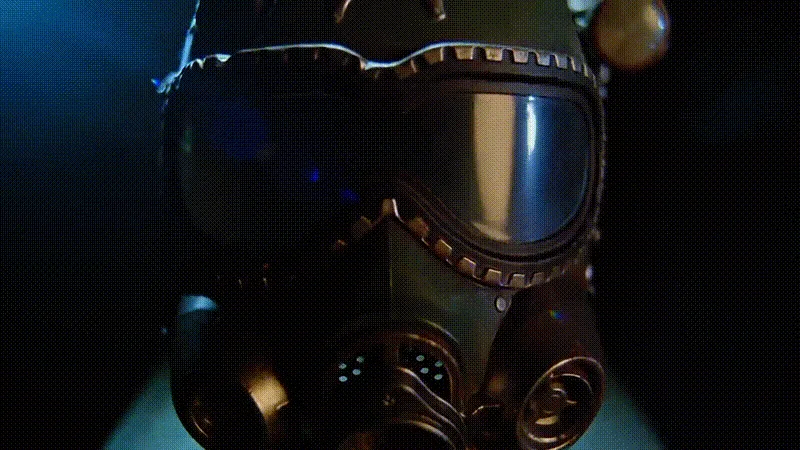
The first major announcement arrived on August 24 with the first official details of the Metro 2039 Collector’s Edition. 4A Games and Deep Silver focused the initial reveal almost entirely on its centrepiece, a full-scale recreation of The Stranger’s battle-scarred Spartan helmet. The replica was created directly from the protagonist’s in-game 3D model rather than being a loosely inspired piece of merchandise. The publisher emphasised the scratches, scuffs, damage and personal modifications incorporated into the design.
The Spartan helmet is closely tied to the visual language of Metro, and 4A Games has treated The Stranger’s version as more than a generic military helmet. Its design incorporates the recognisable Spartan silhouette, a hinged visor, integrated gas-mask elements and extensive wear intended to suggest years of exposure to the Metro’s brutal conditions. The official Collector’s Edition announcement describes its scratches, damage and personal customisation as visual evidence of The Stranger’s history.
4A Games initially described the Collector’s Edition item as a full-scale replica, while subsequent official launch information specifically referred to it as a wearable Replica Spartan Helmet. That makes it especially significant compared with conventional Collector’s Edition statues. The helmet is directly associated with the equipment worn by Metro’s soldiers and with The Stranger’s identity as a figure connected to the Spartans.
The same battered equipment appears repeatedly in Metro 2039’s imagery, while the Renegade trailer emphasises how civilians interpret The Stranger’s Spartan armour. Some may see the armour as a symbol of salvation, although 4A Games has made clear that the protagonist is not intended to function as a conventional hero. The physical replica therefore reflects both the character’s history and the expectations that other people project onto him.
The Collector’s Edition was not made available for immediate purchase during Gamescom. Fans could instead register their interest ahead of pre-orders opening later in 2026, and Deep Silver warned that only a limited number would be produced. The company did not announce the final price, retailer allocations, complete package inventory or exact pre-order date during the Gamescom reveal. The Spartan helmet was the major confirmed physical item, while the remaining contents had not yet been fully disclosed.
Gamescom visitors had an additional advantage because the actual helmet was displayed at the Metro 2039 booth. Attendees could examine the Collector’s Edition centrepiece directly rather than relying exclusively on promotional images.
Since Gamescom, 4A Games has also confirmed that Metro 2039 will launch on February 4, 2027, with February 5 availability in some territories, including parts of Asia, Australia and New Zealand. The game is coming to PlayStation 5, Xbox Series X|S and PC.

Metro 2039 Renegade Trailer, the Stranger, Story and Gameplay Systems
Metro 2039’s biggest Gamescom broadcast moment came on August 25 during Opening Night Live with the premiere of the Renegade gameplay trailer. The approximately two-minute presentation was captured using in-game gameplay and custom camera work. Rather than reintroducing the overall premise, Renegade concentrated on The Stranger and showed how his personal mission collides with the authoritarian world created by Hunter and the Novoreich.
The trailer moved through underground and surface environments, including the occupied Metro, Sevastopolskaya station and sections of irradiated Moscow. The Stranger fought Novoreich forces using gunfire, stealth and violent close-quarters attacks while Hunter’s propaganda continued to echo across the environment.
The trailer also reinforced a major narrative distinction between The Stranger and a traditional heroic protagonist. 4A Games describes him as a man shaped by a complex and violent past who is primarily interested in pursuing his own mission. His Spartan armour may cause people to project heroic expectations onto him, but he is not returning to the Metro simply to liberate everyone suffering under the Novoreich.
Renegade therefore succeeded on two levels. It showed more combat while simultaneously establishing that the protagonist’s psychology will be central to the new game. Metro 2039 is not merely returning geographically to Moscow. It is approaching that world through someone whose relationship with the Metro appears considerably more hostile and personal than Artyom’s.
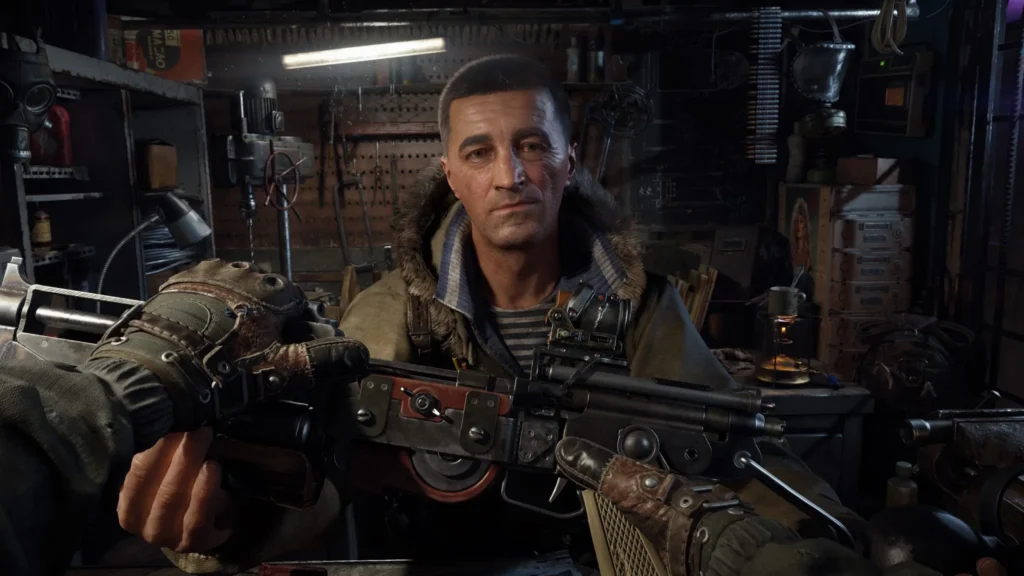
The broad premise establishes The Stranger as a fully voiced protagonist who has lived in isolation beyond Moscow and is plagued by violent waking nightmares. Events connected to his past eventually force him to return to the place he had sworn never to revisit: the Metro. His history is being kept partially concealed, but Gamescom’s Renegade trailer added personality to him. He is not a passive viewpoint character. He speaks, threatens enemies and demonstrates an extremely violent style when necessary. 4A Games describes him as traumatised by his past and completely focused on his own objective.
Information released shortly after Gamescom further confirmed that The Stranger is himself a former Spartan warrior. His armour therefore represents more than scavenged equipment. It ties him directly to the organisation whose history has become entangled with Hunter’s transformation into the ruler of the Novoreich.
By 2039, the political landscape underground has changed dramatically. The surviving factions and communities have been consolidated beneath the Novoreich, an authoritarian regime commanded by Hunter. Once known as a legendary Spartan, Hunter now rules through propaganda, fear and the promise of a new war against an enemy associated with the surface.
One of the most important environments shown during Gamescom was Sevastopolskaya. The station remains proudly independent but is close to being destabilised by the Novoreich. Propaganda, agitators and alcohol are weakening the community internally, while Raiders connected to the regime apply pressure externally. The Stranger travels there because information connected to the target he is pursuing can be found within the station.
The surface sequences established another side of Metro 2039. Moscow remains irradiated and populated by mutants, but the environmental storytelling also focuses on human history. Corpses, abandoned playgrounds and ruined civilian spaces serve as remnants of the catastrophe that destroyed the old world.
One of the trailer’s most intriguing audio details arrives near its conclusion. As Hunter’s repeated message that the enemy must be destroyed continues, voices identified by 4A Games as those of the Dark Ones can be heard joining the broadcast. The studio deliberately declined to explain the meaning of their presence.
Metro 2039 was developed in collaboration with Metro author Dmitry Glukhovsky. 4A Games has also emphasised themes involving tyranny, war, silence and freedom, describing the new chapter as one shaped by the studio’s Ukrainian perspective and its experiences during Russia’s full-scale invasion of Ukraine.
Gamescom also provided the clearest look yet at Metro 2039’s moment-to-moment combat. The Shatun is one of the major new weapons. It is an extremely powerful pneumatic rifle that must be kept pumped to maintain its effectiveness. That design is consistent with the series’ long tradition of making weapons feel like mechanical objects requiring player attention rather than abstract shooting tools.
Hands-on reports also described access to familiar weapon categories, including handguns, shotguns and longer-range rifles. Weapon customisation remains part of the game, although not every Gamescom demo allowed players to experiment fully with all available modifications. Other previews highlighted the return of familiar Metro weapons such as the Bastard Gun.
The combat artificial intelligence also attracted attention during hands-on sessions. One preview reported that human opponents moved between cover and attempted to flank the player instead of remaining fixed in predictable firing positions. Scarce ammunition made poor positioning and wasteful shooting especially dangerous.
Stealth remains equally important. Players can move through dark areas using equipment such as night vision, avoiding mutants instead of spending valuable ammunition. Preview reports also described Nosalises, additional enemy types and a heavier emphasis on confined environments and survival-horror pacing.
Metro 2039 introduces several environmental and survival tools that connect combat, stealth and exploration:
- Breaching equipment: A breaching device can destroy selected weak walls, creating alternate paths or revealing hidden areas.
- Cutting torch: The torch can open certain sealed doors and provide access to otherwise inaccessible locations.
- UV light: The UV light can expose hidden mutants, repel flying Insectalis creatures and reveal information connected to puzzles.
- Shatun pneumatic rifle: A powerful weapon that must be pumped and maintained to preserve its effectiveness.
- Night vision: Equipment that allows players to navigate dark spaces and avoid unnecessary confrontations.
These devices are not presented purely as combat gadgets. Some can create alternate paths, uncover caches or reveal optional environmental stories. That combination suggests Metro 2039’s levels are designed to reward players who interact with the environment rather than simply following the shortest route between combat encounters.
The systems also make combat, stealth and exploration more interconnected. Resources spent during a firefight are unavailable for later encounters, giving practical value to avoiding an enemy, discovering another route or carefully searching an environment before advancing.

Metro 2039 Hands-on Impressions, Public Demo and Hall 9.1 Booth
The first wave of Metro 2039 Gamescom hands-on previews appeared on August 26 as planned, and the overall picture was notably consistent. The reports described a game returning strongly to survival horror and oppressive underground environments without completely abandoning the exploratory ideas introduced through Metro Exodus.
IGN’s early preview was based on several hours of play rather than a brief controlled demonstration. Its impressions emphasised the handcrafted nature of the environments, limited gas-mask filters, scavenging, crafting and the variety of activities available across the preview build.
Other Gamescom sessions were shorter but revealed similar qualities. GamingBoulevard reported playing for around 30 minutes. The session began underground before transitioning to the destroyed surface of Moscow. The player had to monitor radiation, manage gas-mask filters, search buildings for equipment, fight human enemies and use night vision to sneak around mutants in a dark basement.
Another hands-on report described a roughly 25-minute demo centred on tighter, darker spaces, survival-horror pacing and familiar Metro weapons. It noted the return of Nosalises, additional enemy types and an overall structure that felt substantially more claustrophobic than the broad sandbox regions associated with parts of Metro Exodus.
GameStar’s preview similarly reported a build containing two missions from the middle of the game, spanning interior and exterior sections. The publication described Metro 2039 as combining the horror of the original game with some of the exploration philosophy introduced in Exodus.
The most important conclusion from the preview wave was not that Metro 2039 had abandoned exploration. Instead, 4A Games appeared to have changed its scale. Players could still wander away from objectives, enter optional buildings and search for supplies, but the game was again strongly built around authored, story-driven spaces and oppressive underground environments.
The exploratory detours could produce meaningful rewards or additional danger. One Gamescom preview found a stronger shotgun by investigating an optional building, while another detour led into a basement containing mutants. These examples suggested that exploration remained valuable without requiring the large open regions used in parts of Metro Exodus.
Metro 2039’s Gamescom appearance became particularly significant once the show floor opened because the game was not restricted to closed-door demonstrations for journalists. 4A Games confirmed that its hands-on playable demo would be available to Gamescom attendees aged USK 18+, describing it as the first opportunity for the wider public to experience the next Metro game directly.
This separated the Gamescom showing from earlier trailers and presentations. Gameplay footage can be edited, framed or captured under controlled conditions, while a public build allows players to discover how movement, gun handling, stealth, resource management and exploration operate without the same degree of presentation control.
The demo also arrived at a useful development stage. Metro 2039 was still months away from release but sufficiently advanced for 4A Games to expose a playable portion to a large audience. Gamescom attendees could directly test many of the mechanics discussed in the week’s previews, including gas-mask management, exploration, scarce ammunition, firearm handling, underground environments and the mixture of linear progression with optional exploration.
Visitors had more than one opportunity to play Metro 2039. The playable demo was available at the dedicated Metro 2039 show-floor presence and at the Xbox booth. The primary Metro location was:
- Hall: 9.1
- Stand: B 030-C 031
- Public access: August 27 through August 30
- Age restriction: USK 18+
The public access period followed the private preview sessions and press coverage released on August 26. The age restriction was consistent with the violent combat and mature post-apocalyptic subject matter shown in the Renegade trailer and preview build.
For Gamescom attendees primarily interested in Metro 2039, the dedicated Hall 9.1 area offered the broader themed experience. Deep Silver described the location as a dedicated booth equipped with numerous playable stations and photo opportunities. The later roadmap added that the hardware and hands-on stations were supported by NVIDIA, AOC and Turtle Beach, while visitors could also interact with merchandise and other promotional experiences.
The physical Collector’s Edition Spartan helmet was another attraction. After revealing it on August 24, 4A Games explicitly encouraged Gamescom visitors to see the replica at the booth. Following the Renegade trailer premiere, Deep Silver also promoted opportunities to play the game, enter competitions and claim rewards.
The Hall 9.1 presence therefore functioned as more than a line of demo machines. It was the physical centre of Metro 2039’s entire Gamescom campaign. The Collector’s Edition reveal, public demo, competitions and promotional activities all converged there after being announced separately throughout the week.
For 4A Games, it also represented a notable return. The developer said it had been eight years since its previous Gamescom appearance, making the first public Metro 2039 demo part of a larger return to the Cologne event.
The decision to make the game publicly playable supported the wider marketing strategy. The announcements progressed from information to footage, from footage to media impressions and finally from media impressions to direct player experience.
Metro 2039 Platforms, Release Details and Gameplay Changes from Metro Exodus
Metro 2039 is being developed for PlayStation 5, Xbox Series X|S and PC. On PC, the game is confirmed for Steam and the Epic Games Store, while the official Metro website also lists Xbox on PC. Xbox’s product page confirms Xbox Series X|S and Windows support.
During Gamescom, the release window remained February 2027. That information later became more precise when 4A Games and Deep Silver announced that Metro 2039 would launch on February 4, 2027, with February 5 applying in some regions, including parts of Asia, Australia and New Zealand.
The game continues to use 4A Games’ proprietary engine. The studio says Metro 2039 is the first entry in the franchise designed from the ground up around ray tracing rather than receiving ray-tracing features later in development.
4A Games subsequently confirmed a 60 frames-per-second Performance Mode with ray tracing support on Xbox Series X, PlayStation 5 and PlayStation 5 Pro at launch. More detailed platform-specific modes and specifications are expected closer to release.
No PlayStation 4 or Xbox One editions have been announced. Metro 2039 is therefore a current-generation project designed around PlayStation 5, Xbox Series hardware and modern PCs.
Metro Exodus expanded the series dramatically by introducing large outdoor regions that encouraged exploration, but Metro 2039 does not simply repeat that structure. 4A Games has repeatedly characterised the new game as a return to Moscow and to the dense underground environments that defined the earlier Metro games. The initial reveal described the project as a handcrafted, story-driven single-player experience centred on psychological horror and claustrophobic environments.
That does not mean the lessons of Exodus have been rejected. Gamescom interviews made clear that 4A Games wanted to preserve successful ideas from the 2019 game. IGN’s Gamescom discussion with the developers described Metro 2039 as combining aspects of Metro 2033, Last Light and Exodus, including enhanced enemy behaviour, stealth, crafting and weapon customisation.
Hands-on evidence supports that description. Underground spaces are tighter and more deliberately authored, but outdoor areas still provide room for exploration. Players can leave the obvious route, investigate ruined buildings, search for supplies and discover better equipment. One Gamescom preview found a stronger shotgun by exploring an optional building, while another detour led into a basement containing mutants.
Metro 2039 therefore appears to be pursuing a hybrid structure rather than choosing between two extremes. Its core campaign is more focused and claustrophobic than Exodus, but selected areas still allow players to explore. This structure may also strengthen the survival mechanics because open exploration becomes more meaningful when filters, ammunition and other supplies are limited. Every optional building can contain something valuable, but every detour also consumes time and resources.
By the end of Gamescom 2026, Metro 2039 had moved considerably beyond its earlier reveal. The week began with a roadmap announcing several consecutive days of news, including an exclusive Monday reveal, an Opening Night Live gameplay trailer on Tuesday, press impressions on Wednesday and public hands-on access beginning Thursday.
The Monday announcement revealed the Collector’s Edition and its full-scale Spartan helmet modelled directly on The Stranger’s in-game equipment. Pre-orders were confirmed for later in 2026, with limited quantities expected. Opening Night Live then introduced Renegade, showing The Stranger infiltrating Novoreich-controlled territory, expanding Sevastopolskaya’s role in the story, demonstrating brutal combat and revealing equipment such as the Shatun, breaching tool, cutting torch and UV light. The trailer also ended with the mysterious return of the Dark Ones’ voices.
Hands-on previews established that Metro 2039 is returning strongly to survival horror without completely eliminating the exploratory ideas of Exodus. Reports described gas-mask management, scarce ammunition, optional buildings, weapon customisation, improved enemy movement, stealth encounters and claustrophobic environments.
Finally, the game became publicly playable in Hall 9.1 and at the Xbox booth. The primary Metro booth included demo stations, merchandise, photo opportunities and the physical Collector’s Edition helmet.
Taken together, Metro 2039 receiving multiple announcements across Gamescom 2026 week provided the clearest evidence yet that 4A Games is attempting to synthesise two eras of the franchise. The tunnels, darkness and survival pressure of the original games are becoming central again, while the environmental exploration and systemic freedom developed through Metro Exodus remain part of the design.

Frequently Asked Questions (FAQs)
- What did Metro 2039 announce during Gamescom 2026?
Metro 2039 received several announcements across Gamescom week rather than relying on a single presentation. These included a roadmap outlining the week’s reveals, the first details of the Collector’s Edition, the Renegade gameplay trailer during Opening Night Live, new press and creator impressions, and the first public playable Gamescom demo. Together, these announcements provided a much clearer look at the story, The Stranger, combat, exploration, survival systems and the game’s return to Moscow. - Was Metro 2039 playable at Gamescom 2026?
Yes. Metro 2039 had a public hands-on demo during Gamescom 2026, allowing eligible attendees to experience its gameplay directly rather than only watching trailers. 4A Games said the playable build was available to USK 18+ attendees at the dedicated Metro 2039 show-floor presence and at the Xbox booth. The demo included survival mechanics, exploration, combat, stealth and underground environments. - Where was the Metro 2039 booth at Gamescom 2026?
The dedicated Metro 2039 booth was located in Hall 9.1, Stand B 030-C 031. It contained playable stations where attendees could try the public demo, as well as promotional activities, merchandise and photo opportunities. Visitors could also see the physical Spartan helmet revealed as the centrepiece of the Collector’s Edition. - What was shown in the Metro 2039 Renegade trailer?
The Renegade trailer focused on The Stranger, his violent methods and his journey through a Moscow increasingly controlled by Hunter’s authoritarian Novoreich. It showed Sevastopolskaya station, irradiated surface environments, gunfights, stealth encounters and close-quarters attacks. The trailer also introduced the Shatun pneumatic rifle, breaching equipment, a cutting torch and a UV light, while hinting at the mysterious involvement of the Dark Ones. - What is included in the Metro 2039 Collector’s Edition?
The major confirmed physical item revealed during Gamescom is a full-scale wearable replica of The Stranger’s battle-scarred Spartan helmet. The replica is based directly on the protagonist’s in-game equipment and includes visible scratches, damage and personal modifications intended to reflect his history. Deep Silver had not announced the complete contents, final price, retailer availability or exact pre-order date during the Gamescom reveal, although it confirmed that quantities would be limited. - Who is The Stranger in Metro 2039?
The Stranger is Metro 2039’s new fully voiced protagonist and a former Spartan warrior. He has spent years living in isolation beyond Moscow while suffering from violent waking nightmares connected to his past. Circumstances eventually force him to return to the Metro and pursue a deeply personal objective, but 4A Games has made clear that he is not intended to behave like a conventional hero trying to save everyone. - Is Metro 2039 more linear than Metro Exodus?
Metro 2039 places substantially greater emphasis on claustrophobic, authored environments and the underground Metro tunnels that defined the earlier games. However, exploration has not disappeared. Hands-on previews indicate that some surface areas still contain optional buildings, alternative routes, hidden resources and better equipment, combining the focused structure of Metro 2033 and Last Light with selected exploration ideas from Metro Exodus. - What platforms is Metro 2039 coming to?
Metro 2039 is confirmed for PlayStation 5, Xbox Series X|S and PC. The PC version will be available through Steam and the Epic Games Store, while the official Metro website also lists Xbox on PC. No PlayStation 4 or Xbox One versions have been announced, making Metro 2039 a current-generation release. - When does Metro 2039 release?
Metro 2039 launches on February 4, 2027. February 5 availability applies in certain territories, including parts of Asia, Australia and New Zealand, because of regional release timing. The more precise launch date was confirmed shortly after Gamescom 2026, replacing the broader February 2027 window used during the event. - Does Metro 2039 still have survival mechanics such as gas masks and scarce ammunition?
Yes. Gamescom hands-on reports describe active gas-mask and filter management, radiation hazards, limited ammunition, scavenging, crafting, exploration and stealth. Players must decide whether an encounter is worth the resources it may consume, since wasted ammunition or filters can create problems later. These systems remain central to Metro 2039’s survival-focused design and help maintain the tension associated with the earlier games.
Conclusion
Metro 2039’s Gamescom 2026 showing was much larger than a conventional trailer premiere. Deep Silver and 4A Games deliberately spread information across the entire week, beginning with a reveal roadmap and ending with the game being played directly by Gamescom visitors.
The Collector’s Edition established the physical Spartan helmet as one of the game’s major pieces of merchandise. The Renegade trailer deepened the mystery around The Stranger while exposing more of Sevastopolskaya, Hunter’s Novoreich and the tools available during exploration. Hands-on previews then provided the most valuable information of all by demonstrating how Metro 2039 actually plays outside carefully edited promotional footage.
Those impressions consistently point toward a game returning to Metro’s underground identity. Dark tunnels, scarce resources, gas masks, frightening mutants, oppressive human settlements and carefully constructed environmental storytelling are again central. Yet Metro Exodus has not been erased from the design. Optional exploration, larger surface spaces, weapon customization and multiple approaches to encounters continue to shape the experience.
The Stranger is also becoming increasingly important to the game’s identity. He is a fully voiced former Spartan carrying a violent past into a Metro now dominated by Hunter, another figure with deep Spartan connections. That relationship gives Metro 2039 a personal foundation underneath its larger story about authoritarianism, propaganda, war and survival.
Gamescom 2026 ultimately transformed Metro 2039 from a promising announced sequel into a game with a much clearer identity. With its February 4, 2027 launch now confirmed, the biggest unanswered questions concern the full scope of The Stranger’s mission, Hunter’s ultimate objectives, the meaning of the Dark Ones’ return and how successfully 4A Games can sustain the balance between tightly authored horror and the exploratory freedom inherited from Metro Exodus.
Sources and Citations
- Deep Silver Metro 2039 Gamescom Reveals Roadmap
https://www.deepsilver.com/news/gamescom-reveals-roadmap-metro-2039 - Deep Silver Metro 2039 at Gamescom 2026
https://www.deepsilver.com/news/metro-2039-gamescom-2026 - Deep Silver Your First Look at the Metro 2039 Collector’s Edition
https://www.deepsilver.com/news/metro-2039-collectors-edition - 4A Games Metro 2039 Collector’s Edition Announcement
https://www.4a-games.com.mt/metro-2039-collectors-edition - Deep Silver Metro 2039 Renegade Trailer Breakdown
https://www.deepsilver.com/news/metro-2039-renegade-trailer-breakdown - 4A Games Metro 2039 Renegade Gameplay Trailer
https://www.4a-games.com.mt/metro-2039-renegade-gameplay-trailer - PlayStation Blog Metro 2039 Revealed for PS5
https://blog.playstation.com/2026/06/07/metro-2039-revealed-for-ps5/ - GamingBoulevard Metro 2039 Gamescom 2026 Hands On Preview
https://gamingboulevard.com/2026/08/preview-metro-2039-gamescom-2026/ - IGN Metro 2039 Gamescom Developer Interview
https://www.ign.com/articles/metro-2039-developer-interview-gamescom-2026 - IGN Metro 2039 Gamescom Hands On Preview
https://www.ign.com/articles/metro-2039-hands-on-preview-gamescom-2026 - Metro 2039 Official Website
https://www.metrothegame.com/metro-2039/ - 4A Games Metro 2039 Official Game Page
https://www.4a-games.com.mt/metro-2039 - Deep Silver Metro 2039 February 4 2027 Release Date Announcement
https://www.deepsilver.com/news/metro-2039-launches-february-4-2027 - PlayStation Metro 2039 Official Game Page
https://www.playstation.com/games/metro-2039/
Recommendations
- Metro 2039 Announcements
- Metro 2039 Gamescom 2026
- EFootball Kick-Off, Konami’s Offline Spin-Off, Running on Switch 2
- Nearly Done Games’ Roll Together: Everything We Know About the Upcoming Online Co-Op Physics Adventure
- Cronos: Lazarus Leak. Two Images Surface Ahead of Official Announcement, DLC or New Game Teased
- Best 10 Water Simulation Add-ons in Blender: Everything You Need to Know Before You Install
- What is Polygon Flow Dash 1.11 and Why it Matters for UE5 Users
- Probability Mask Unreal Engine 5 Tool for Real-Time Character Grooming: How AVASCOT’s Groom Shader Creates Natural Fur Transitions
- Xbox Layoffs Hit Obsidian, id Software, and More: Every Studio Reportedly Affected
- NoPixel V GTA V Roleplay Closed Beta Starts September 8



































































































