









In This Article (7 sections)
Micron’s Taoyuan Union Begins Limited Strike Over Permanent Profit Sharing
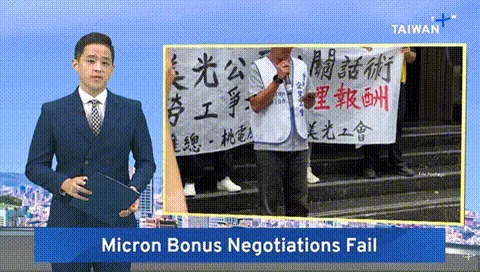
Micron’s Taoyuan union began a limited walkout at 9 a.m. Taiwan time on Thursday, October 22, 2026, after negotiations failed to resolve demands for permanent and transparent profit sharing. Taiwan’s Central News Agency, or CNA, identified eleven union officials as participants, distinguishing the initial action from a stoppage involving Micron’s entire Taiwanese workforce. The protest proceeded despite a separate agreement with the company’s Taichung union the previous day. As of October 23, the Taoyuan dispute remained unresolved, with further negotiations scheduled for October 27 after typhoon related closures disrupted the timetable.
The action followed several rounds of unsuccessful discussions. CNA reported that the first Taoyuan mediation session took place on September 4, while a second ended without agreement on September 21. On October 7, the union announced that 1,994 of the 2,012 members who voted had supported industrial action, approximately 99% of ballots cast. Talks lasting around four hours on October 21 also failed to settle the disagreement. The union maintained that Micron had not presented sufficiently specific commitments on profit sharing, while the company said it had participated constructively and wanted discussions to continue.
The walkout was scheduled to finish at 9 a.m. on Friday, October 23, making it a planned 24 hour action. However, union chairman Jerry Lin said during the evening of October 22 that worsening weather could bring the protest and accompanying employee survey to an earlier conclusion. The reporting establishes the intended timetable without independently confirming precisely when every participant stopped striking. The action should therefore be described as a planned 24 hour walkout, while the end of the protest period should not be confused with resolution of the underlying dispute.
Public Television Service reported that the union regarded the protest as an initial stage of its response. Secretary general Wei Yu-ling said additional employees could be invited to participate if later negotiations failed to produce concrete proposals. The limited action allowed representatives to exercise their strike authorization, communicate dissatisfaction, consult employees about the proposed terms, and preserve the possibility of escalation. Eleven participants did not mean that only eleven employees supported the demands, just as an authorization vote did not establish that every supporter would join a subsequent stoppage.
A separate measure of opposition concerned Micron’s compensation proposal. AFP reporting published by FTV cited the union as saying that approximately 70% of Taoyuan members opposed the offer. That figure should remain attributed to the union and distinguished from the earlier strike authorization vote, which measured a different question among participating voters. It nevertheless reflected the union’s position that the proposal had not secured broad acceptance, even though representatives in Taichung had reached their own agreement.
The disagreement concerned the structure of future compensation as well as the amount available immediately. A discretionary bonus determines a payment for a particular period, while a permanent profit sharing arrangement establishes how future rewards will be calculated. Employees may welcome additional benefits while continuing to question the financial formula, its transparency, and whether it creates lasting commitments. The bargaining process also matters: announcing compensation improvements does not automatically establish that a union has accepted the arrangement or considers negotiations complete.

The Union’s 15% Demand, AI Memory Growth and Incentive Pay Concerns
The Taoyuan union sought a permanent employee bonus pool equal to 15% of company operating profits, with distributions made quarterly. It also pursued a separate one time award connected to the company’s recent profitable period. These demands served different purposes, combining an immediate reward with a predictable system for future compensation. The proposed 15% applied to a collective pool, not an individual entitlement to 15% of company profits or a 15% ownership stake. Eligibility, individual allocations, payment conditions, and the precise financial base would still require agreed rules.
A hypothetical operating profit base of $10 billion illustrates the calculation: a 15% allocation would create a $1.5 billion pool. That is an explanatory example, not Micron’s actual agreed profit base or a forecast of employee payments. Operating profit also differs from revenue, net income, and cash remaining after investment. Choosing the financial measure can therefore be as important as choosing the percentage, while deductions, thresholds, performance requirements, and deferred awards can substantially change the amount employees ultimately receive.
Regional semiconductor agreements provided reference points for the negotiations. Reuters reported that SK Hynix had agreed to allocate 10% of annual operating profit to its bonus programme, while Samsung’s arrangement reserved 10.5% of semiconductor operating profit for special bonuses, subject to profitability targets. Those schemes offered context without establishing directly equivalent terms. A higher headline percentage does not necessarily produce a larger individual payment when the profit base, eligible employees, distribution rules, and conditions differ.
Micron’s financial performance formed the commercial background to the dispute. Its September 30 earnings release described fiscal 2026 as a record year and connected its results and investment plans with expanding demand for artificial intelligence technology. Management also expressed expectations for stronger results in fiscal 2027. These were company statements and forecasts, while workers sought a more clearly defined relationship between business performance and their compensation. Their demand focused on being able to connect published financial results with an understandable bonus calculation.
High bandwidth memory, or HBM, helps explain the importance of AI demand to the memory industry. Micron describes the technology as stacked DRAM that combines multiple memory dies, a wide interface, and compact packaging to transfer data rapidly during demanding computing workloads. Advanced processors need fast access to substantial amounts of data, making memory performance important to keeping them supplied during computation. As those products become more commercially significant, employees may question how the gains are reflected in their rewards.
Stronger demand also creates investment requirements. Expanding production capacity, purchasing manufacturing equipment, and developing technical capabilities compete for resources alongside employee compensation. Micron’s approach incorporated investment spending, strategic targets, and deferred stock awards, creating a different structure from the union’s proposed fixed allocation of operating profits. The disagreement concerned how those priorities should influence rewards and how clearly employees could understand the resulting decisions, rather than whether future investment was necessary.
Workers also criticized Micron’s existing Incentive Pay Plan, known as IPP. According to CommonWealth’s reporting, the union chairman said average Taiwan employee IPP achievement was approximately 93% in 2025, with average payouts equivalent to about 2.3 months of salary despite sharply improved profitability. These were the union’s reported figures, not independently established payroll findings. The criticism reflected concern that employees could see stronger company results without understanding how financial measures, strategic objectives, and individual performance ratings combined to determine their bonuses.
Micron’s announced reform separated a quarterly payment linked to profits from an annual strategic incentive. Reporting also described higher potential IPP multipliers, including a maximum of 500% for the highest performance category. That figure represented a ceiling under specified conditions, not a guaranteed payment to every employee or five times annual salary. The amount would depend on the relevant bonus base and eligibility and performance requirements. Separating the quarterly and annual components could clarify their different purposes, but it did not establish acceptance of the union’s requested 15% operating profit allocation.

The Taichung Agreement and Micron’s Announced Compensation Changes
Micron and its Taichung union jointly announced a labor management accord on October 21, covering multiple issues after sustained discussions. They subsequently withdrew from mediation scheduled for October 22 and acknowledged assistance from Taiwan’s Ministry of Labor and the Central Taiwan Science Park Bureau. Both parties planned to explain the agreement separately to affected employees. The initial announcement did not disclose its complete financial terms, so it did not establish that Taichung representatives had secured the original 15% demand. Micron’s public presentation of benefits the following day also should not be treated as a complete reproduction of every clause in the signed accord.
Jerry Lin said the Taoyuan and Taichung unions had developed common demands but argued that Taoyuan representatives and their views had not been adequately included in the process leading to the agreement. His criticism extended to the government bodies assisting negotiations. Micron offered a different explanation, saying the unions belonged to different legal entities and could not simply be covered by one agreement. Chairman Lu Donghui nevertheless said comparable demands would receive a consistent response across the sites. The disagreement therefore involved both the proposed compensation and the way bargaining had been conducted.
The separate positions are not necessarily resolved by benefits applying across several locations. A company measure can improve compensation for employees while their union continues to question the process or terms, and Taoyuan’s objections do not invalidate Taichung’s agreement. Understanding the settlement requires distinguishing the employees covered, the commitments negotiated, and the broader benefits subsequently announced. Implementation and monitoring also matter because the existence of a signed accord does not, by itself, explain every future payment or eligibility condition.
One major announced reform was a quarterly bonus for eligible employees worldwide beginning in fiscal 2027. Reuters reported that its calculation would use profit after tax, reduced by projected capital spending for the following quarter, with fiscal 2026 serving as a reference point. Micron did not publicly disclose a fixed percentage of profits allocated to the programme. This differs from the union’s proposal in both its financial measure and treatment of investment, so the public description did not establish a fixed 15% share of operating profits.
Including projected investment also means that stronger earnings would not necessarily produce a proportionally larger bonus. In a simplified example, profits could rise while the remaining calculation base declines if projected capital spending increases by more. That illustrates how the calculation could behave rather than predicting Micron’s payments. Some details remained confidential, limiting employees’ and outside observers’ ability to reconstruct the full formula from the public announcement. The union’s transparency concern therefore extended to the relationship between the reported results, investment deductions, and eventual awards.
Mirror Daily reported that the quarterly awards would be split equally between cash and stock. Cash would be paid after quarterly financial results, while the stock component would carry a one year vesting condition. These components have different practical characteristics: cash becomes available when paid, while an unvested award remains subject to future conditions and its value is exposed to changes in the company’s share price. The announced value of a combined award therefore does not necessarily describe immediately available compensation.
Micron also announced changes affecting compensation and benefits in Taiwan. TaiSounds reported higher shift allowances, adjustments to other shift payments, and salary changes intended to address differences between established employees and newer recruits at comparable grades. Its reporting linked the night shift allowance calculation to basic pay. Mirror Daily separately reported increased employer retirement contributions and additional paid leave, with those specified changes expected on December 1, 2026. Structural salary adjustments had a separate timetable in the second quarter of fiscal 2027.
| Compensation or benefit | Reported change |
|---|---|
| Global bonus linked to profits | New quarterly programme for eligible employees worldwide beginning in fiscal 2027 |
| Bonus calculation | Profit after tax less projected capital spending for the following quarter, with fiscal 2026 as a reference |
| Payment structure | 50% cash and 50% stock |
| Stock vesting | One year vesting condition |
| Monthly day shift allowance | NT$1,500 to NT$4,500 |
| Minimum night shift allowance | NT$8,000 to NT$12,000 |
| Employer retirement contribution | 8% to 10% |
| Additional annual paid leave | Four days to seven days |
| Reported benefit implementation | December 1, 2026, for the specified leave and retirement changes |
| Structural salary adjustments | Planned for the second quarter of fiscal 2027 |
These measures affect different parts of the employment package. Shift allowances compensate particular working arrangements, retirement contributions support longer term benefits, additional leave provides more time away from work, and structural salary changes address underlying pay differences. The quarterly bonus creates a separate connection to financial performance. Employees could therefore welcome improvements in allowances, retirement provision, or leave while continuing to seek a clearer and more permanent profit sharing formula. The public benefits announcement represented a substantive company response without establishing that every union had accepted it.

Production Questions, Government Mediation and Further Negotiations
The reporting reviewed did not establish that the October 22 walkout caused a factory shutdown, measurable reduction in chip output, or missed customer deliveries. The action involved eleven union officials rather than a confirmed stoppage across the wider manufacturing workforce. Wei Yu-ling said the initial protest was not intended to interrupt production, indicating an effort to apply bargaining pressure while leaving operations running. That statement describes the union’s intention, however, rather than an independently audited account of manufacturing performance.
TrendForce analyst Ellie Wang told Reuters that the consequences of a strike would depend on the production lines and key personnel involved. Essential functions remaining staffed could allow manufacturing to continue, and a one day action could have limited effects under those conditions. Her assessment offered conditional industry context rather than verification of Micron’s actual output. Participant numbers alone cannot establish a capacity loss percentage because workers’ roles, shift coverage, and the activities affected are more relevant than the headcount by itself.
Claims about supply disruption would require evidence such as changes in output, revised delivery schedules, or updated company guidance. The importance of memory production to AI systems explains why labor action attracts attention, but that commercial significance does not independently prove a shortage or delayed customer deliveries. The evidence supported the existence of a limited industrial action while leaving its precise operational consequences unestablished. That distinction avoids treating either potential risk or the union’s stated intention as a measured production result.
Taiwan’s Ministry of Labor continued supporting negotiations. In an October 23 statement, it welcomed the Taichung agreement after several days of direct discussions and confirmed that Micron and the Taoyuan union had agreed to continue talks. The ministry said it would work with the Taoyuan City Government to assist communication. Liberty Times also reported that the ministry respected the planned 24 hour action and had participated in efforts to advance negotiations, while weather related closures disrupted the original meeting schedule.
Government involvement did not amount to endorsement of the proposed 15% allocation or a decision that the Taichung settlement bound Taoyuan representatives. The ministry’s stated role was to facilitate communication and help the relevant parties reach agreement, leaving the financial terms to their negotiations. It also urged rational discussion and avoidance of threats to personal safety as the public debate became more contentious. As of October 23, further talks were scheduled for October 27, with the Taoyuan union still seeking sufficiently specific commitments on permanent and transparent profit sharing.
Frequently Asked Questions (FAQs)
- What is the Micron Taiwan strike about?
The Micron Taiwan strike centers on employee compensation and demands for a permanent, transparent profit-sharing system. Representatives of the Taoyuan union argue that workers should receive a clearly defined share of operating profits, particularly as AI-driven memory demand contributes to Micron’s financial performance. The dispute includes demands for both a one-time reward and a recurring system governing future payments. - When did the Taoyuan strike begin?
The Taoyuan strike began at 9 a.m. Taiwan time on October 22, 2026. It was initially planned as a 24-hour action ending the following morning. However, union representatives indicated that worsening weather conditions could cause the protest and accompanying employee survey to end earlier than scheduled. - Did all Micron employees in Taiwan go on strike?
No. The initial walkout involved eleven officials from Micron’s Taoyuan union rather than the company’s entire Taiwanese workforce. It was organized as a limited warning strike. Support for industrial action was much broader, however, with the union reporting that 1,994 of 2,012 participating voters had authorized strike action earlier in October. - What does the 15 percent demand mean?
The union wants Micron to allocate 15% of company operating profits to a collective employee bonus pool distributed quarterly. This does not mean each worker would personally receive 15% of Micron’s profits. The percentage would instead determine the total amount available for distribution among eligible employees under an agreed compensation system. - Why did a large one-time bonus fail to settle the dispute?
A one-time bonus provides an immediate payment but does not establish how employees will participate in future profits. Micron reportedly offered Taiwan employees a NT$1 million cash bonus, but the Taoyuan union continued to demand a permanent and transparent profit-sharing mechanism. The disagreement therefore concerns the long-term structure of compensation as well as the size of individual payments. - Has Micron accepted the union’s 15 percent proposal?
No publicly verified agreement shows that Micron has accepted the Taoyuan union’s proposed 15% allocation of operating profits. Instead, Micron announced a quarterly profit-linked bonus program for eligible employees. That program creates a recurring connection between compensation and company performance, but it differs from the union’s demand for a fixed 15% share of operating profits. - What did the Taichung union agree to?
Micron and its Taichung union reached a labor-management agreement on October 21, 2026, after negotiations covering compensation and employment issues. The settlement allowed the two sides to withdraw from mediation scheduled for the following day. However, the complete financial terms were not publicly disclosed, and the agreement did not automatically resolve the separate dispute involving the Taoyuan union. - Does the new quarterly bonus apply outside Taiwan?
Yes. Micron announced that its new quarterly profit-linked bonus program and revised annual incentive arrangements would apply to eligible employees globally. The quarterly system is scheduled to begin in fiscal 2027 and includes cash and stock components. Micron also announced separate Taiwan-specific improvements involving salaries, shift allowances, retirement contributions, and paid leave. - Has the strike caused a confirmed memory-chip shortage?
No. Available reporting does not establish that the limited Taoyuan walkout caused a memory-chip shortage, factory shutdown, measurable production loss, or delayed customer deliveries. Only eleven union officials participated in the initial action, and representatives said the protest was not intended to interrupt production. A confirmed supply disruption would require evidence linking the strike directly to reduced output or delivery problems. - When are the next negotiations expected?
The next negotiations between Micron and the Taoyuan union were scheduled for October 27, 2026, after typhoon-related closures disrupted earlier meeting arrangements. As of the latest updates, the dispute remained unresolved, with both sides expected to continue discussions over permanent profit sharing and Micron’s compensation proposals.
Conclusion
The Micron Taiwan strike highlights the difference between announcing generous rewards and reaching agreement on a durable compensation system. The Taoyuan union wants a defined, transparent share of operating profits. Micron has introduced recurring profit-linked payments and broader benefits, but the published terms do not demonstrate acceptance of the union’s requested formula.
The initial walkout was limited to union officials, and the available evidence does not establish a production shutdown. The dispute nevertheless remains significant because it concerns how a major AI supply-chain employer distributes gains among investment, company performance incentives and employee compensation.
As of October 23, the Taichung agreement had not resolved the separate Taoyuan negotiations. The next reported meeting on October 27 will test whether the parties can turn the announced reforms into terms that the Taoyuan union and its members consider sufficiently clear and acceptable.
Sources and Citations
- Central News Agency, October 7, 2026: Reports the Micron Taoyuan union’s successful strike authorization vote, demands for a transparent profit-sharing system, dissatisfaction with existing incentives and the possibility of further industrial action.
https://focustaiwan.tw/business/202610070021 - Central News Agency, October 20, 2026: Confirms the planned October 22 solidarity strike, the union’s demand for 15 percent of operating profits and the continuing disagreement over Micron’s employee compensation system.
https://focustaiwan.tw/business/202610200021 - Central News Agency, October 21, 2026: Documents the agreement between Micron and its Taichung union, cancellation of scheduled mediation and the unresolved negotiations involving the Taoyuan union.
https://focustaiwan.tw/business/202610210014 - Central News Agency, October 22, 2026: Reports the 24-hour warning strike involving 11 Taoyuan union officials, criticism of the Taichung agreement, employee profit-sharing demands and Micron’s response to the industrial action.
https://focustaiwan.tw/business/202610220016 - Taiwan Public Television Service, October 7, 2026: Covers the union’s strike authorization, employee dissatisfaction with Micron’s incentive system and demands for a permanent mechanism linking bonuses to company operating profits.
https://news.pts.org.tw/article/830380 - Taiwan Public Television Service, October 21, 2026: Reports the Taichung labor agreement and the Taoyuan union’s decision to proceed with a warning strike after negotiations failed to resolve its compensation demands.
https://news.pts.org.tw/article/832377 - Taiwan Public Television Service, October 22, 2026: Examines the differences between the Taichung and Taoyuan negotiations, the proposed one-time compensation demands, the limited strike and the government’s mediation efforts.
https://news.pts.org.tw/article/832461 - Reuters, September 11, 2026: Reports Micron’s proposed compensation package for Taiwan employees, including rewards worth up to 68 months of salary, cash bonuses and stock awards, alongside continuing union demands for profit sharing.
https://www.reuters.com/world/asia-pacific/microns-taiwan-workers-get-rewards-worth-up-68-months-pay-2026-09-11/ - Reuters, October 15, 2026: Covers President Lai Ching-te’s appeal for constructive negotiations between Micron and its Taiwanese employees, the threat of industrial action and the importance of Taiwan’s memory manufacturing operations.
https://www.reuters.com/world/asia-pacific/taiwan-president-calls-micron-workers-negotiate-sincerely-ahead-possible-strike-2026-10-15/ - Reuters, October 20, 2026: Reports the planned Taoyuan strike, the breakdown of earlier mediation, employee demands for transparent bonuses and potential implications for Micron’s Taiwanese semiconductor manufacturing operations.
https://www.reuters.com/business/world-at-work/micron-union-taiwan-launch-strike-bonus-dispute-escalates-2026-10-20/ - Reuters, October 21, 2026: Confirms Micron’s agreement with the Taichung union and the Taoyuan union’s decision to continue with a limited strike while seeking a more specific profit-sharing arrangement.
https://www.reuters.com/business/world-at-work/micron-says-it-has-reached-agreement-with-taiwan-union-2026-10-21/ - Reuters, October 22, 2026: Details Micron’s new global quarterly profit-linked bonus scheme, cash and stock payment structure, annual incentive changes and additional benefits for Taiwan employees.
https://www.reuters.com/technology/micron-introduces-quarterly-employee-bonus-tied-profits-2026-10-22/ - Taipei Times, October 23, 2026: Explains Micron’s new quarterly profit-sharing program, revised Incentive Pay Plan, structural salary increases, shift allowances, additional paid leave and retirement contribution changes.
https://www.taipeitimes.com/News/biz/archives/2026/10/23/2003866445 - Taiwan Ministry of Labor, October 23, 2026: Official government statement welcoming the agreement between Micron and the Taichung union, confirming continued negotiations in Taoyuan and promising assistance from the Ministry of Labor and Taoyuan City Government.
https://www.mol.gov.tw/1607/1632/1633/99723/ - TaiSounds, October 21, 2026: Reports the signed agreement between Micron and the Taichung union, withdrawal of the scheduled mediation process and the continuation of separate negotiations with Taoyuan workers.
https://www.taisounds.com/news/content/78/295330 - TaiSounds, October 22, 2026: Documents the Taoyuan union’s 24-hour strike, unsuccessful negotiations, demands for a concrete profit-sharing proposal and continuing dissatisfaction with management’s compensation offer.
https://www.taisounds.com/news/content/76/295500 - TaiSounds, October 22, 2026: Provides details of Micron’s revised Incentive Pay Plan, quarterly bonuses, employee performance multipliers, structural compensation changes and planned December implementation.
https://www.taisounds.com/news/content/76/295586 - TaiSounds, October 22, 2026: Reports Micron Taiwan Chairman Donghui Lu’s explanation of the revised global incentive system, quarterly profit-sharing arrangements and compensation reforms introduced following union pressure.
https://www.taisounds.com/news/content/78/295623 - TaiSounds, October 23, 2026: Reports the completion of the limited Taoyuan strike, the rejection of Micron’s compensation proposal by 1,633 of 1,637 voting members and the postponement of further negotiations until October 27 because of severe weather.
https://www.taisounds.com/news/content/75/295749 - TaiSounds, October 23, 2026: Covers the Ministry of Labor’s response to the separate Taichung and Taoyuan negotiations, continued government mediation and efforts to resolve the outstanding dispute.
https://www.taisounds.com/news/content/75/295742
Recommendations
- Super Mario Galaxy 2 Surprise Update Adds More Story: Version 1.4.0 Patch Notes, New Storybook Chapter, and How to Unlock It
- Mixtape Review: Best Mixtapes, Ratings, and Music Trends Shaping 2026
- Saros – Official Gameplay Overview Trailer Breakdown: Release Date (April 30, 2026), Eclipse Escalation, and New Gameplay Systems
- Marvel Rivals Characters: Every Hero and Villain Revealed So Far (2026 Update)
- Call of Duty: Black Ops 1 and Black Ops 2 Rated in South Korea, Remaster Rumors, Release Speculation, and What it Means for Activision
- NBA 2K27 Editions Detailed Ahead of September 4 Release
- Pokémon x ESA Collection Brings Astronaut Pikachu to Earth
- Remembering Marcia Lucas: The Oscar-Winning Star Wars Editor Who Helped Shape Cinema
- MSI Claw 8 EX AI+ Review: Big Money for Big Performance, is it Worth the Premium?
- How to Get Red Bull Community Rewards in Assassin’s Creed Black Flag Resynced



































































































