







In This Article (7 sections)
Tesla’s Robotaxi Safety Report Details 3.1 Million Driverless Miles
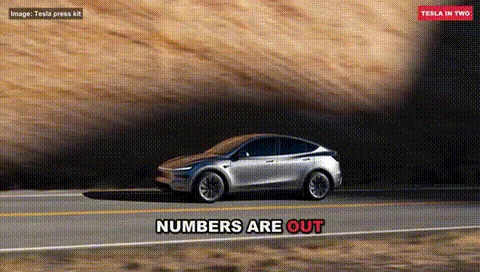
Tesla’s public Robotaxi Vehicle Safety Report covers approximately 3.1 million miles of driverless operations recorded between January 22 and October 18, 2026. It brings together collision records, injury measures, operating conditions and mileage by city, while identifying Las Vegas, Phoenix, Jacksonville and San Antonio as upcoming service locations. The report provides a defined operating history, but interpreting its findings requires attention to which journeys and incidents Tesla includes. Its reported zero injury result applies to a particular category of collisions, while its comparisons with human drivers use inclusion rules that are not fully equivalent.
The report defines driverless operations as those conducted without an onboard safety monitor, excluding mileage and collisions from journeys involving an onboard monitor. However, qualifying operations and incidents remain included when a remote operator provided assistance or took control of the vehicle. Driving without a supervisor inside the car therefore does not establish that every journey occurred without human involvement. Mileage also measures exposure to road conditions rather than passenger numbers, bookings, completed trips or the frequency of remote assistance. Those additional measurements would help explain the reliability of the wider service, but they cannot be calculated from the distance traveled alone.
Tesla’s collision reporting framework refers to the National Highway Traffic Safety Administration’s Standing General Order. Under the relevant requirements for automated driving systems, qualifying crashes must be reported when the system was operating at some point during the 30 seconds preceding the collision. Reportable events extend beyond injury crashes and can include qualifying property damage incidents.
The publication Electric Vehicles reported that Tesla’s downloadable collision file contained 32 crashes, with all but two classified as property damage only. This record demonstrates why collision frequency and injury severity must be considered separately: several minor contacts and a smaller number of severe crashes describe different safety outcomes. Event descriptions also matter, since repeated contact with a particular obstacle raises different questions from an incident in which another driver strikes a stationary vehicle.
Tesla’s zero injury measure covers people inside or outside vehicles who were injured in a collision where the robotaxi made first contact. The company illustrates the significance of that condition through a chain collision in which another vehicle struck an SUV and redirected it into a stopped robotaxi.
Someone in the initiating vehicle was taken to hospital, while nobody in the SUV or robotaxi was injured. Tesla excludes the injury from its headline measure because the robotaxi did not make first contact. The reported zero therefore does not establish that nobody was injured in any collision involving the fleet. First contact is also a classification rule, rather than a complete determination of responsibility, because the order of physical impacts does not independently explain every action contributing to a collision.
The company separately describes a pothole related injury allegation that it says its investigation did not substantiate. This illustrates how records can differ when one preserves an allegation and another reflects a subsequent investigation. Similar differences arise when a dataset counts injuries across an entire collision sequence while another applies a first contact condition. NHTSA explains that initial regulatory submissions may contain incomplete or unverified information and can be updated as investigations produce further evidence. Assessments therefore need to consider the status and scope of the underlying records, rather than assuming every initial description is final or that different classifications necessarily measure the same outcome.
Tesla also reports zero qualifying airbag deployments inside its robotaxis, but airbags do not activate in every collision. NHTSA explains that deployment depends on factors including impact direction, crash characteristics, sensor placement and vehicle system design. A vehicle can sustain damage without meeting the conditions for deployment, and the absence of an activated airbag provides limited information about harm to people outside that vehicle.
Tesla’s pedestrian and cyclist measure likewise reports zero qualifying events and applies the first contact condition. These road users lack the protective structure surrounding vehicle occupants, making the circumstances of their encounters with robotaxis particularly relevant. Two fleets could travel identical distances while encountering very different numbers of pedestrians, cyclists and crossings, so total mileage alone does not fully describe their exposure.
The report’s dated mileage must also be distinguished from its animated mileage counter, which estimates additional travel using the fleet’s current operating pace. The counter may increase beyond the period covered by the published safety analysis without establishing that every corresponding incident has been reviewed and incorporated. Combining a newer mileage estimate with an older collision count could make an apparent rate more favorable simply because the figures cover different periods. A meaningful rate requires incident counts and distance to cover the same timeframe. Publishing these definitions and methodological explanations allows closer scrutiny, but the report remains Tesla’s presentation of its operating record; publication alone does not establish that an independent reviewer has audited every incident, classification or comparison.

Where Tesla’s Robotaxis Operated and How Driving Conditions Were Classified
Tesla reports 3,112,541 driverless miles across six locations, with most of the distance accumulated in Texas. Austin contributed approximately 68% of the total, while Austin, Dallas and Houston together accounted for roughly 95%. Orlando, Tampa and Miami supplied the remaining portion. This distribution matters because a combined safety result reflects the environments in which most driving occurred, rather than representing equal operating experience across every listed city. The published breakdown shows how heavily the dataset is weighted toward Austin and the wider Texas operations.
| City | Reported driverless miles |
|---|---|
| Austin, Texas | 2,118,015 |
| Dallas, Texas | 608,130 |
| Houston, Texas | 225,964 |
| Orlando, Florida | 61,053 |
| Tampa, Florida | 53,117 |
| Miami, Florida | 46,262 |
| Total | 3,112,541 |
More than two million miles in Austin represents substantial experience within that location, but it does not independently establish equivalent performance elsewhere. Results from cities contributing relatively few miles can become difficult to distinguish within a much larger total, particularly where road layouts, traffic patterns and operating conditions differ. Separate mileage and safety outcomes for each city would make those differences easier to assess. The same principle applies as the fleet grows: additional distance on familiar routes provides a different kind of experience from travel within expanded service boundaries or a new city. Alongside its geographic breakdown, Tesla reports the following environmental classifications:
- After dark: Approximately 862,000 miles. Tesla uses local sunset timing to classify this driving. The category does not measure visibility along every route, where street lighting, surrounding buildings and other environmental factors can affect conditions.
- Rain related driving: Approximately 113,000 miles. Tesla uses airport weather observations drawn from NOAA’s hourly dataset, which contains readings from fixed stations on land. These observations are not continuous measurements at each vehicle’s location, so airport weather may differ from conditions along individual routes. The figure does not precisely measure rainfall intensity, standing water or visibility throughout each journey.
- Weekday rush hour: Approximately 575,000 miles. Tesla defines these periods as 7 a.m. to 9 a.m. and 4 p.m. to 7 p.m. This classification identifies when driving occurred, rather than measuring congestion directly. Traffic can vary considerably between cities, routes and individual days within the same time windows.
These categories overlap: a mile driven during a rainy weekday evening after sunset could qualify for all three. Adding the figures together would therefore not produce a valid count of unique miles driven under challenging conditions. The totals describe classified exposure, but they do not show how frequently collisions or injuries occurred within each category. Rates for particular conditions would provide a clearer picture of whether observed performance changes after dark, during rain or in traffic. Likewise, future mileage in different cities will become more informative when it can be connected to local conditions and outcomes rather than absorbed into a combined total dominated by established routes.

How Tesla Compares Robotaxi Safety With Human Drivers
Tesla’s comparison with human drivers focuses on approximately 2.95 million miles traveled in Austin, Dallas and Houston, rather than the full 3.1 million miles reported across all six locations. The company uses 2024 crash records and passenger vehicle travel data from surface streets in those three Texas cities to estimate the collisions expected over an equivalent distance driven by humans. This provides a more geographically relevant reference than a nationwide average, although it does not ensure that the two groups encountered equivalent conditions. Tesla’s injury benchmark also includes an adjustment for collisions absent from police records, introducing assumptions that influence the resulting estimate.
| Measure | Tesla’s expected human driver outcome over approximately 2.95 million miles |
|---|---|
| Injury collisions | 9.1 |
| Collisions involving airbag deployment | 4.1 |
| Pedestrian or cyclist collisions | 0.52 |
These figures are statistical expectations derived from historical rates, rather than records of specific crashes Tesla has demonstrated its vehicles prevented. An estimate of 9.1 injury collisions does not mean nine identifiable crashes would certainly have occurred if humans had driven those miles. The decimal values describe expected outcomes over the specified distance, while an actual sample could experience more or fewer events. They also refer to collision categories, not counts of people injured or lives saved. Their usefulness depends on the underlying rates, assumptions and similarity between the driving populations being compared.
The central methodological difference concerns first contact. Tesla’s injury and pedestrian and cyclist measures apply that condition, while the human benchmark includes qualifying involvement regardless of first contact because the underlying police records do not identify the distinction. An injury associated with a robotaxi struck by another vehicle may therefore be excluded from Tesla’s headline injury measure, while a comparable event involving a human driven vehicle could remain in the historical benchmark. The figures cannot be treated as perfectly matched measurements without acknowledging this difference. Applying consistent inclusion rules where possible, or showing how the results change under alternative definitions, would help clarify how much the classification affects the comparison.
Operating within the same city also does not guarantee equivalent exposure. Human drivers and robotaxis may travel different routes, operate at different times, or encounter different weather and congestion. One group might spend more time in busy commercial areas while another travels primarily along familiar routes. These differences can influence collision exposure independently of the technology controlling the vehicle. NHTSA similarly cautions that its raw crash totals are not adjusted for mileage or operating conditions. Comparing companies by incident counts alone can therefore be misleading when their fleets travel different distances or encounter different environments.
Sample size presents a further limitation when assessing rare outcomes such as serious injuries or fatalities. RAND’s research explains that demonstrating certain improvements through road mileage alone can require extremely large distances, depending on the outcome, desired statistical precision and size of the improvement being tested. This does not establish a universal mileage threshold that declares Tesla’s robotaxis safe or unsafe. It explains why observing zero events during a defined period does not prove that the underlying probability is zero or guarantee the same result in future operations. A stronger assessment would combine comparable incident definitions, relevant exposure information and estimates of uncertainty, while examining whether conclusions remain consistent when important assumptions change.

Expansion Plans for Las Vegas, Phoenix, Jacksonville and San Antonio
Tesla identifies Las Vegas, Phoenix, Jacksonville and San Antonio as upcoming robotaxi markets, but the safety report does not provide confirmed opening dates, complete service boundaries or initial fleet sizes for those locations. Their inclusion establishes an expansion plan rather than confirming unrestricted public bookings throughout each city. Regulatory milestones also differ between states, and permission to test or operate does not by itself establish that vehicles have been deployed, passenger access is available or every destination can be served. The report and associated regulatory information describe the following distinctions.
| City | Reported status or regulatory milestone | Details not confirmed in the report |
|---|---|---|
| Las Vegas, Nevada | Nevada approved Tesla’s autonomous vehicle network application in August 2026, allowing up to 5,000 vehicles during the first 12 months following permit issuance, subject to conditions. | Actual fleet deployment, opening date, full service area and airport access authorization. |
| Phoenix, Arizona | Tesla is listed among companies that have submitted to test autonomous vehicles in Arizona. | Unrestricted commercial launch, passenger booking availability and detailed operating boundaries. |
| Jacksonville, Florida | Named as an upcoming market under a state framework permitting fully autonomous operations. | Firm launch date, service map, vehicle availability and completed operational arrangements. |
| San Antonio, Texas | Named as an upcoming market under Texas’s commercial automated vehicle authorization framework. | Opening date, service coverage, initial fleet size and operating results for the city. |
In Nevada, the Transportation Authority’s approval sets an authorization ceiling rather than confirming an operating fleet. Permission for up to 5,000 vehicles during the first 12 months following permit issuance does not establish that those vehicles have been deployed or indicate how many Tesla intends to introduce initially. The announcement also identifies requirements that must be satisfied before service, including inspection documentation, insurance and other operating conditions. Airport access requires separate authorization from the Clark County Department of Aviation, so approval of the network application does not automatically permit every possible pickup location. For passengers, the eventual service boundary, operating hours and vehicle availability will determine which journeys are supported.
For Phoenix, the Arizona Department of Transportation lists Tesla among companies that have submitted to test autonomous vehicles in the state. The agency says testing and operation must comply with applicable federal requirements, Arizona law and departmental rules. That listing does not independently establish an unrestricted commercial launch or passenger booking availability. Testing, regulatory compliance and public service are separate milestones, each requiring its own evidence. The practical details still concern where vehicles would operate, when rides would become available and how customers could access them, none of which is resolved simply by naming Phoenix as an expansion destination.
Jacksonville would add another Florida market, where state law permits fully autonomous vehicles to operate without a human physically present inside. Florida also places on demand autonomous vehicle networks within its transportation network framework, subject to applicable insurance requirements. These provisions provide a legal basis for certain autonomous operations, but they do not confirm that Tesla has completed preparations for a Jacksonville launch. Fleet availability, charging, maintenance, customer support and service boundaries remain practical considerations. An initial operating area could provide useful experience while leaving common destinations outside its coverage, making a published service map and booking details important to understanding what passengers would actually receive.
San Antonio would extend Tesla’s Texas operations beyond Austin, Dallas and Houston, but mileage accumulated in those cities does not constitute a San Antonio safety record. The Texas Department of Motor Vehicles says commercial automated vehicle authorization requirements became enforceable on May 28, 2026. The framework includes conditions concerning legal compliance, recording equipment, insurance and the ability to reach a minimal risk condition following certain system failures. Applicants must also provide an emergency response interaction plan to the Texas Department of Public Safety, while state and local agencies retain responsibility for enforcing traffic laws. These requirements form part of the operational framework within which a San Antonio service would need to function.
As deployments develop, confirmed launch announcements and published service details will establish when passengers can book rides, where vehicles can travel and which destinations are supported. Safety evaluation will require local driving exposure and recorded outcomes, since the existing Texas and Florida mileage does not establish performance in the four planned markets. Separate information about each new city’s mileage, incidents and operating restrictions would be particularly useful during early deployment, when a small local dataset could be obscured by the larger fleet total. The expansion announcements identify Tesla’s intended direction; the services offered and evidence accumulated after launch will determine how those plans translate into operating experience.

Frequently Asked Questions (FAQs)
- What is the Tesla Robotaxi Safety Report?
The Tesla Robotaxi Safety Report is a public document presenting information about the company’s driverless operations, including mileage, collision records, injury outcomes, operating conditions, and reporting methodology. The report covers operations from January 22 through October 18, 2026, during which Tesla recorded approximately 3.1 million driverless miles. It also explains how incidents are classified and compares results with historical human-driver collision rates. However, the figures represent Tesla’s own published operating record rather than a fully independent safety audit. - Why do reports mention both 3.1 million and 3.3 million miles?
The difference comes from two separate mileage measurements. Tesla’s approximately 3.1 million miles represent the completed reporting period ending October 18, 2026, with the published city totals adding up to 3,112,541 miles. The larger figure of approximately 3.3 million miles appeared on an animated counter estimating additional travel based on the fleet’s operating pace. When calculating collision or injury rates, the mileage and incident counts should cover the same period. - Does Tesla’s zero-injury claim mean no Robotaxi has crashed?
No. Tesla’s zero-injury claim applies to a specific category of collisions and does not mean its robotaxis have never been involved in crashes. A collision can cause vehicle damage without injuring anyone, and Tesla’s injury metric also includes a first-contact rule. Reporting on the company’s downloadable collision records identified 32 crashes, with all but two classified as property damage only. Collision frequency and injury severity should therefore be considered separately. - What does first contact mean in the report?
First contact refers to Tesla’s rule for determining which incidents count toward its reported injury and pedestrian or cyclist safety measures. Under this definition, an injury qualifies for the relevant metric when the Robotaxi makes the initial physical contact in the collision sequence. This classification rule should not be confused with a legal determination of fault or responsibility. - Do zero airbag deployments prove every incident was harmless?
No. Tesla reported zero qualifying airbag deployments inside its robotaxis during the covered period, but airbags are not designed to activate in every collision. Deployment depends on factors such as impact direction, crash severity, sensor information, and vehicle design. A collision can still cause property damage or involve injuries outside the Robotaxi without triggering its airbags. - Which city accounts for most of Tesla’s reported driverless mileage?
Austin, Texas, accounts for the largest share of Tesla’s reported driverless mileage. The city contributed 2,118,015 miles out of the total 3,112,541 miles, representing approximately 68% of the dataset. Dallas and Houston contributed another substantial portion, bringing the combined Texas share to roughly 95%. This means the overall safety results primarily reflect conditions encountered in those locations. - Has Tesla announced dates for all four expansion cities?
No. Tesla’s safety report identifies Las Vegas, Phoenix, Jacksonville, and San Antonio as upcoming Robotaxi service locations, but it does not provide confirmed launch dates for all four cities. Their inclusion shows Tesla’s intention to expand into those markets rather than confirming that public passenger service has already begun. - Does Nevada’s approval mean 5,000 Tesla Robotaxis are already operating?
No. Nevada’s approval permits a fleet of up to 5,000 vehicles during the first 12 months following permit issuance, subject to specified conditions. That figure represents the maximum number authorized, not the number currently deployed. Tesla must still satisfy relevant operating requirements, and separate approvals may be needed for certain locations such as airports. - Does the report prove Tesla is safer than every human driver?
No. Tesla compares its Robotaxi outcomes with expected human-driver collision rates based on historical data from Austin, Dallas, and Houston. The comparison provides useful context, but differences in routes, traffic exposure, reporting definitions, statistical uncertainty, and Tesla’s first-contact rule prevent the headline results from proving that Robotaxis are safer than every individual human driver in every situation. - Does this report make consumer FSD autonomous?
No. Tesla’s Robotaxi Safety Report concerns the company’s driverless service operations and does not change the operating requirements of Full Self-Driving (Supervised) in privately owned Tesla vehicles. Consumer FSD remains a supervised driver-assistance system that requires the driver to stay attentive and be prepared to intervene. Robotaxi fleet results cannot automatically be applied to consumer vehicles because the systems operate under different conditions and supervision requirements.

Conclusion
Tesla’s public Robotaxi report makes its driverless operations easier to examine by connecting mileage with definitions, geographic exposure and selected safety outcomes. The expansion plans also identify the next markets the company intends to serve.
The central finding requires precise wording. Tesla reports favorable outcomes within defined categories, while collision records and comparison rules provide necessary context. A zero under one metric cannot establish the absence of every crash, injury allegation or operational risk.
The next stage of evaluation will depend on consistency as the service grows. Clear reporting periods, comparable human benchmarks, local results and explanations of operating limits would make future updates more informative. The strongest evidence for expansion will come from demonstrated performance in each new environment, supported by transparent and consistently applied measures.
Sources and Citations
- Tesla, Robotaxi Safety Report, October 2026: Official safety report detailing autonomous mileage, injury-related metrics, airbag deployments, pedestrian and cyclist incidents, driving conditions, collision-reporting criteria and human-driver comparison methodology.
https://www.tesla.com/robotaxi/safety - Not a Tesla App, October 21, 2026: Reports Tesla’s Robotaxi safety figures, city-by-city mileage, nighttime and rainy-weather driving, and proposed expansion to Las Vegas, Phoenix, Jacksonville and San Antonio.
https://www.notateslaapp.com/news/4860/tesla-names-next-robotaxi-cities-shares-miles-driven-safety-data - Tesla North, October 21, 2026: Examines Tesla’s Robotaxi Safety Report, autonomous mileage, reported collisions, excluded injury events, weather conditions and the four proposed expansion cities.
https://teslanorth.com/2026/10/21/tesla-robotaxi-safety-report-four-new-cities/ - TAO Media, October 21, 2026: Independent reporting on Tesla’s initial Robotaxi safety figures, Texas human-driver benchmarks, injury definitions, collision reporting and planned geographic expansion.
https://www.tao.media/tesla-publishes-robotaxi-safety-data-for-3-3-million-driverless-miles/ - National Highway Traffic Safety Administration, Standing General Order on Crash Reporting: Official federal requirements for reporting crashes involving automated driving systems and Level 2 driver-assistance systems, including reporting thresholds, public datasets and limitations affecting safety comparisons.
https://www.nhtsa.gov/laws-regulations/standing-general-order-crash-reporting - National Highway Traffic Safety Administration, Vehicle Air Bags and Injury Prevention: Explains airbag deployment thresholds, crash severity, occupant protection and why the absence of airbag deployment does not necessarily mean that no collision occurred.
https://www.nhtsa.gov/vehicle-safety/air-bags - Nevada Transportation Authority, August 21, 2026: Official approval of Tesla Robotaxi’s autonomous vehicle network application, including operating conditions, vehicle limits, insurance, crash reporting and requirements for commercial service in Clark County.
https://www.business.nv.gov/news-media/press-releases/2026/ntata/nevada-transportation-authority-approves-autonomous-vehicle-network-applications-for-tesla-waymo-and-aviari/ - Arizona Department of Transportation, Autonomous Vehicle Testing and Operations: Explains Arizona’s regulatory framework, autonomous vehicle testing requirements, operating conditions and state oversight of companies developing driverless transportation services.
https://azdot.gov/mvd/services/professional-services/autonomous-vehicles-testing-and-operating-state-arizona - Arizona Department of Transportation, Driverless Vehicle Requirements: Details the documentation, law enforcement interaction plans, vehicle safety requirements and minimum-risk operating conditions applicable to autonomous vehicles without onboard safety drivers.
https://azdot.gov/autonomous-vehicles-testing-and-operating-without-driver - Florida Legislature, 2026 Florida Statutes Section 316.85: Establishes Florida’s legal framework for fully autonomous vehicles, including operation without a human driver, automated driving system responsibilities and compliance with traffic laws.
https://www.leg.state.fl.us/Statutes/index.cfm?App_mode=Display_Statute&URL=0300-0399/0316/Sections/0316.85.html - Texas Department of Motor Vehicles, Automated Vehicles Regulatory Program: Explains commercial autonomous vehicle authorization, Senate Bill 2807, safety enforcement, operating requirements and the state’s regulatory responsibilities.
https://www.txdmv.gov/AVprogram - Tesla, Full Self-Driving (Supervised) Support Documentation: Explains consumer FSD capabilities, driver supervision requirements, operating limitations and the distinction between supervised driving assistance and driverless Robotaxi services.
https://www.tesla.com/support/fsd - Tesla, Model Y Owner’s Manual, Full Self-Driving (Supervised): Provides official instructions, system limitations, driver responsibilities and warnings concerning situations requiring human intervention.
https://www.tesla.com/ownersmanual/modely/en_us/GUID-2CB60804-9CEA-4F4B-8B04-09B991368DC5.html - NOAA National Centers for Environmental Information, Global Historical Climatology Network Hourly: Official hourly weather observation dataset providing precipitation and atmospheric measurements used to contextualize Tesla’s reported Robotaxi driving conditions.
https://www.ncei.noaa.gov/products/global-historical-climatology-network-hourly - RAND Corporation, Nidhi Kalra and Susan M. Paddock, 2016: Driving to Safety: How Many Miles of Driving Would It Take to Demonstrate Autonomous Vehicle Reliability? Research explaining the statistical challenges of proving autonomous vehicle safety using limited real-world mileage and rare crash outcomes.
https://doi.org/10.7249/RR1478
Recommendations
- Sprawl Zero: Release Date, Gameplay, Demo, Platforms, and Everything We Know
- Dressmaker: Everything We Know About the Cozy Dressmaking Simulation Game
- Flip-Flop Fury Is a Chaotic Physics Arcade Game About Throwing Shoes
- PokémonXP and 2026 Pokémon World Championships Pokémon Center Merch Reveal
- Light Caustics in Blender, Unreal Engine, V-Ray, and Houdini: Best Techniques for Realistic Water and Glass Lighting
- Everything Announced at Warframe and Soulframe Fan Event TennoCon 2026: Tau, Brysko, Warsongs, and More
- Grow Garden 2 Gear Guide: How to Get and Use All Gear
- Warhammer 40,000 Secret Level: Episode Breakdown, Character Insights, and Community Reactions
- The Division’s free-to-play spinoff finally gets a release date: The Division Resurgence launches March 31, 2026 on iOS and Android
- Storm-0940 ARTEX Attack: Microsoft Details ConnectWise Breach



































































































