










In This Article (16 sections)
Nvidia 2026’s Leadership Transition, Jensen Huang’s Resignation, and the Appointment of Colette Kress as Interim CEO
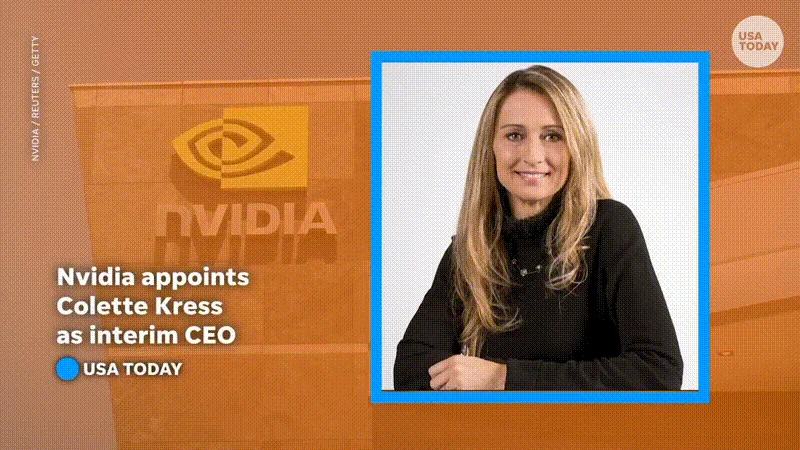
Nvidia named Colette Kress interim CEO and Harvey Jones its first board chair following Jensen Huang’s resignation, marking one of the most consequential leadership transitions in the semiconductor and artificial intelligence industries. The announcement, published on November 12, 2026, unexpectedly interrupted more than three decades of leadership under Nvidia’s founder, raising questions about executive succession, corporate governance, national security, investor confidence, and the future of AI infrastructure. Nvidia’s board formally accepted Huang’s resignation on November 11, effective immediately, with Huang relinquishing his responsibilities as president, chief executive officer, and board director. However, the transition took another dramatic turn when Nvidia publicly announced his reinstatement on November 23.
Huang’s resignation followed developments involving his personal conduct, corporate governance concerns, and questions surrounding potential national security risks. Although Nvidia’s initial announcement did not provide a detailed explanation for his departure, additional information emerged during the November 17 earnings conference call. Harvey Jones explained that Huang had voluntarily resigned following disclosures concerning personal behavior that conflicted with Nvidia’s code of conduct and organizational standards. Media investigations had reported allegations involving Huang’s personal relationships, including a relationship with an Nvidia employee who reported to him. Separate reporting raised questions about a relationship with a businesswoman associated with an organization that had purchased Nvidia technology.
The controversy attracted considerable attention because Nvidia’s advanced graphics processing units and AI accelerators are subject to sensitive international export regulations. Reports concerning potential foreign intelligence targeting introduced additional national security considerations. However, allegations of intelligence activity should not be confused with verified findings of espionage or unauthorized technology transfers. Nvidia established an independent investigation to examine the circumstances, and its complete findings had not been publicly released as of November 26, 2026. The board initially considered a leadership transition necessary, although its subsequent decision to reinstate Huang demonstrated that its assessment changed following further discussions and consultation with government officials.
Kress Appointed Interim CEO
Colette M. Kress was appointed interim chief executive officer on November 11, with the appointment becoming public on November 12 through Nvidia’s official announcement and a Form 8-K filing submitted to the United States Securities and Exchange Commission. Having served as Nvidia’s executive vice president and chief financial officer since September 2013, Kress already possessed extensive knowledge of the company’s financial structure, customer relationships, investment commitments, and commercial strategy. Her familiarity with the organization helped reduce the potential disruption associated with an unexpected leadership change. Nvidia emphasized that its established management team would continue implementing its business strategy and technology development plans.
Before joining Nvidia, Kress accumulated approximately 25 years of financial leadership experience across several major technology companies. Her professional background spans semiconductor manufacturing, enterprise software, networking infrastructure, and accelerated computing. She spent 13 years at Microsoft, where her responsibilities included serving as chief financial officer of its Server and Tools division. She subsequently held a senior financial leadership position within Cisco Systems’ Business Technology and Operations Finance organization, overseeing responsibilities involving financial planning, business development, engineering operations, and corporate reporting. Earlier in her career, she worked at Texas Instruments, gaining experience in the semiconductor industry.
Kress holds a Bachelor of Science degree in finance from the University of Arizona and a Master of Business Administration from Southern Methodist University. Throughout her Nvidia career, she became a prominent representative of the company within the investment community, regularly explaining financial performance, growth opportunities, profit margins, operating expenses, and business risks. Although her professional background differs from Huang’s engineering experience, her knowledge of technology markets and corporate finance made her a suitable choice for maintaining organizational stability during the transition.
Kress’s Interim Leadership and Succession Search
Kress also played an important role in Nvidia’s transformation from a company primarily associated with gaming graphics cards into a leading artificial intelligence infrastructure provider. When she joined in 2013, Nvidia’s CUDA software platform had already established opportunities for using graphics processors beyond conventional rendering. The subsequent expansion of deep learning and generative AI created substantial demand for advanced computing hardware, networking equipment, integrated systems, and supporting software. As CFO, Kress helped manage the financial operations required to support research expenditure, manufacturing commitments, supplier relationships, and infrastructure investment. Her tenure coincided with data center products becoming Nvidia’s principal source of revenue, substantially changing the company’s commercial structure.
During her interim appointment, Kress retained her executive vice president and chief financial officer responsibilities. This arrangement preserved financial leadership continuity while temporarily transferring broader executive management responsibilities to an established member of Nvidia’s leadership team. Maintaining the CFO position was particularly important because the company was approaching its November 17 quarterly earnings announcement while managing considerable commitments involving semiconductor manufacturing, research expenditure, and infrastructure demand. Although combining CEO and CFO responsibilities creates additional management demands, Nvidia’s established executive team continued overseeing its technical and operational functions.
Nvidia’s board also began searching for a permanent chief executive because Kress’s appointment was explicitly temporary. The initial announcement indicated that candidates from both inside and outside the organization would be considered. During the November 17 earnings conference call, Jones confirmed that executive recruitment firm Heidrick & Struggles had been retained to assist with the succession process. A permanent successor would have needed extensive knowledge of semiconductor manufacturing, AI infrastructure, enterprise computing, software ecosystems, financial commitments, and international regulatory relationships. Internal candidates could offer institutional familiarity, while external candidates might introduce different management perspectives and governance practices. However, the search was overtaken by the board’s decision to reinstate Huang.
Principal Developments and SEC Filing Records
The principal developments during Nvidia’s November leadership transition included:
| Date | Leadership Development |
|---|---|
| November 11, 2026 | Nvidia’s board accepts Jensen Huang’s resignation and appoints Colette Kress interim CEO and Harvey Jones board chair. |
| November 12, 2026 | Nvidia publicly announces the leadership transition and submits its Form 8-K filing. |
| November 17, 2026 | Kress presents quarterly financial results, and Jones confirms the permanent CEO search. |
| November 22, 2026 | Nvidia’s board unanimously votes to reinstate Jensen Huang, effective immediately. |
| November 23, 2026 | Nvidia publicly announces Huang’s return, ending Kress’s interim appointment. |
| November 26, 2026 | Huang remains CEO, Kress continues as CFO, and Jones remains board chair. |
Nvidia’s SEC filings provide an authoritative record of these corporate decisions. Both leadership disclosures appeared under Item 5.02, which addresses changes involving directors, executive officers, and associated corporate appointments. The November 12 filing confirmed Huang’s resignation from all three positions, while the November 23 filing established November 22 as the effective date of his reinstatement. However, these documents establish the formal outcomes of board decisions rather than providing comprehensive accounts of every internal discussion, investigative finding, or communication with government officials.

Harvey Jones’s Appointment as Nvidia’s First Board Chair, Governance Reforms, and Jensen Huang’s Reinstatement
Nvidia appointed Harvey C. Jones as its first board chair to establish a formal leadership position within its board of directors during the unexpected executive transition. Although Nvidia had maintained a board throughout its history, it previously operated without a formally designated chair. Establishing the position provided an identifiable representative responsible for coordinating board deliberations, executive oversight, succession planning, and governance responsibilities. While the CEO manages business operations and strategic execution, the chair helps coordinate independent supervision of executive management. This distinction became particularly important following Huang’s resignation because Nvidia needed both an executive capable of maintaining business continuity and a board leader responsible for overseeing the transition.
Harvey Jones is an experienced technology entrepreneur, corporate director, and venture investor who has served on Nvidia’s board since 1993. His November 2026 appointment followed approximately 33 years of involvement with the company, giving him extensive knowledge of its development and commercial evolution. His professional background includes substantial experience in electronic design automation, semiconductor technology, corporate leadership, and investment management. In 1981, he helped establish Daisy Systems Corporation, a business specializing in computer aided engineering, where he served as president and chief executive officer until 1987.
Jones subsequently joined Synopsys, an electronic design automation company whose technologies support semiconductor development and verification. Between 1987 and 1998, he held several executive leadership responsibilities, including serving as chief executive officer and executive chairman. In 1997, he co-founded Tensilica, a technology intellectual property company specializing in embedded processor architectures.
He remained its board chairman until Cadence Design Systems acquired the business in 2013. Since 2004, Jones has served as managing partner of Square Wave Ventures, a private investment organization. He holds a bachelor’s degree in mathematics and computer sciences from Georgetown University and a master’s degree in management from the Massachusetts Institute of Technology. Nvidia’s governance profile also identifies him as a member of its Audit Committee and Nominating and Corporate Governance Committee.
Nvidia’s Prior Board Leadership Structure
Before November 2026, Nvidia relied on an independent lead director rather than a designated board chair. The absence of a chair did not mean that the company lacked independent oversight or formal governance mechanisms. Nvidia’s 2026 proxy statement explained that its previous leadership structure was designed to give directors equal opportunities to participate in corporate governance while maintaining independent supervision of management. Independent directors periodically evaluated whether the arrangement remained appropriate for Nvidia’s evolving needs and shareholders’ interests. The lead director performed several responsibilities commonly associated with board leadership, allowing Nvidia to preserve its established management culture.
However, Nvidia’s growing commercial influence substantially changed the scale of its governance responsibilities. The company increasingly operated at the intersection of global technology competition, national security, international trade regulations, and financial markets. Huang’s longstanding involvement in semiconductor architecture, research investment, software ecosystems, and accelerated computing also concentrated considerable strategic influence within a single executive position. The November leadership crisis provided a practical reason to reconsider Nvidia’s governance arrangement. Establishing a separate chair created a formal position through which directors could coordinate investigations, succession planning, and regulatory oversight. Nevertheless, the effectiveness of this structure depends on board independence, decision quality, and the willingness of directors to challenge management when necessary.
The leadership transition was unexpectedly reversed when Nvidia’s board unanimously voted to reinstate Huang on November 22, 2026. The company publicly announced the decision on November 23, confirming his return as president, chief executive officer, and board director. The reversal attracted considerable attention because Jones had stated during the November 17 earnings conference call that the board did not intend to restore Huang to the CEO position. Less than one week later, directors adopted a different position after conducting additional meetings and discussions with Huang.
Huang’s Reinstatement and Board Justification
Nvidia explained that its directors had developed sufficient confidence in Huang’s candor and ability to resume leadership. The board also received input from senior United States government officials and concluded that his reinstatement did not present a national security risk. Reuters reported that President Donald Trump, industry figures, and investors supported Huang’s return. Supporters could point to his extensive experience, technological vision, customer relationships, and familiarity with Nvidia’s commercial strategy. Critics, however, could question whether the rapid reversal weakened confidence in board independence or the consistent enforcement of corporate conduct standards.
Importantly, Nvidia did not announce that its independent investigation had been completed. The committee examining reports of foreign intelligence targeting remained active following Huang’s reinstatement. His return therefore represented a decision concerning his suitability to resume executive leadership rather than a comprehensive public resolution of every allegation surrounding his departure. Nvidia also continued developing additional national security and corporate compliance mechanisms, demonstrating that Huang’s return did not reverse every organizational change introduced during his absence.
Following the reinstatement, Kress returned to her established responsibilities as executive vice president and chief financial officer. Her departure from the interim CEO position did not represent a demotion because the appointment had always been temporary. Nvidia acknowledged her contribution to maintaining business continuity during the transition. Jones, meanwhile, retained his board chair position, establishing a continuing separation between executive management and formal board leadership. Huang regained his executive responsibilities and board membership, but Nvidia did not return completely to its previous governance arrangement.
Continued Governance and Compliance Measures
Several important governance and compliance developments remained in place following Huang’s return:
- Separate board chairmanship: Harvey Jones continues overseeing board leadership independently of Huang’s CEO responsibilities.
- Independent investigation: Nvidia’s review of reported foreign intelligence targeting remains active.
- National Security and Export Control Oversight Committee: Established on November 17 to strengthen supervision of trade compliance, national security policies, and related corporate risks.
- Dedicated committee leadership: Suzanne Nora Johnson serves as committee chair, alongside members Stephen C. Neal and John O. Dabiri.
- Chief compliance officer recruitment: Nvidia announced plans to appoint an executive responsible for company compliance oversight, reporting to the Nominating and Corporate Governance Committee.
These measures could help Nvidia identify regulatory risks earlier, improve coordination between management and directors, and strengthen accountability concerning sensitive technology transactions. However, introducing new oversight positions does not independently establish effective governance. Directors must demonstrate that they can evaluate management decisions objectively, enforce corporate standards consistently, and address potential conflicts of interest. The effectiveness of Nvidia’s reforms will become clearer through subsequent investigations, regulatory disclosures, and corporate decisions.

Nvidia’s Stock Performance, AI Product Roadmap, Financial Results, and Future Growth Following the Leadership Crisis
Nvidia’s stock experienced considerable volatility following Huang’s resignation, reflecting concerns surrounding the unexpected departure of an executive closely associated with the company’s technological direction, financial growth, and competitive position. Associated Press reported that Nvidia shares declined by more than 4% on November 12 following the leadership announcement. Given Nvidia’s enormous market capitalization, even a relatively modest percentage decline can represent a substantial reduction in shareholder value. Investors also needed to consider whether Huang’s departure could affect relationships with major customers, semiconductor manufacturing partners, cloud computing companies, and government officials responsible for international technology regulations.
Despite these concerns, Nvidia’s underlying commercial performance remained strong. Following its November 17 earnings announcement, Reuters reported that shares gained approximately 4% in extended trading after the company presented a revenue outlook exceeding market expectations. An even more dramatic reaction followed Huang’s reinstatement on November 23, when shares surged approximately 31.5%, restoring nearly $1 trillion in market capitalization. Although the rebound did not completely erase previous losses, it demonstrated the significant influence of executive leadership confidence on Nvidia’s valuation. Broader semiconductor market conditions, economic expectations, and regulatory developments also remained relevant, meaning individual stock movements should not be attributed exclusively to leadership announcements.
During her interim tenure, Kress used Nvidia’s third quarter fiscal 2027 earnings presentation to reassure investors and customers that the company remained committed to its established AI strategy and technology development plans. Nvidia reported quarterly revenue of $115.8 billion, representing a 103% increase compared with the corresponding quarter of the previous fiscal year. Data center revenue reached $107.6 billion, increasing 110% year over year. These results demonstrated the enormous commercial scale of Nvidia’s artificial intelligence infrastructure business, although the reporting period ended on October 25, before Kress became interim CEO.
| Financial and Operational Metric | Reported Performance |
|---|---|
| Third quarter fiscal 2027 revenue | $115.8 billion |
| Annual revenue growth | 103% |
| Data center revenue | $107.6 billion |
| Annual data center revenue growth | 110% |
| Vera Rubin initial production quarter revenue | Nearly $20 billion |
| Fourth quarter fiscal 2027 revenue outlook | $130 billion, plus or minus 3% |
| Previous fiscal 2028 revenue growth expectation | Approximately 70% |
| Updated fiscal 2028 revenue growth expectation | Approximately 75% |
Vera Rubin Platform and Revenue Outlook
Nvidia also confirmed that shipments of its Vera Rubin NVL72 computing platform had commenced. The architecture represents an important stage in the company’s strategy of delivering integrated computing systems for advanced AI training, inference, and other demanding computational applications. Its development requires coordination across semiconductor architecture, networking, memory integration, system design, and software optimization. Kress indicated that Nvidia’s research and development priorities would remain intact, helping reassure customers planning future infrastructure deployments around the availability of its computing platforms. Unexpected delays could otherwise affect hardware procurement, data center construction, and the operational plans of numerous artificial intelligence developers.
Management projected fourth quarter fiscal 2027 revenue of approximately $130 billion, with a variation of 3% in either direction. The outlook excluded data center compute revenue from China, highlighting the continuing importance of international export restrictions to Nvidia’s financial planning. Kress also indicated that Vera Rubin had generated nearly $20 billion during its initial quarter of production shipments. Management increased its fiscal 2028 revenue growth expectation from approximately 70% to 75%. However, these projections remain management expectations rather than guaranteed financial outcomes, with future performance depending on customer spending, manufacturing capacity, regulatory conditions, and the broader economic environment.
Nvidia’s competitive advantages extend beyond the personal influence of its founder. Its CUDA software ecosystem, advanced semiconductor architectures, networking technologies, integrated computing platforms, experienced engineering teams, manufacturing relationships, and developer communities continued supporting its commercial position throughout the leadership transition. These capabilities resulted from decades of research, investment, and collaboration across multiple product generations. Maintaining its roadmap during Kress’s interim tenure demonstrated that Nvidia possesses substantial institutional resources capable of supporting its operations even during an unexpected executive disruption.
Key Person Risk and Future Challenges
Nevertheless, Huang’s significance to Nvidia remains considerable. His longstanding involvement in engineering direction, product strategy, commercial partnerships, and artificial intelligence development has helped shape the company’s identity. The leadership crisis exposed the risks associated with concentrating substantial strategic influence within one individual, commonly described as key person risk. Even a company with strong financial performance and considerable technological advantages can experience significant uncertainty when investors, customers, and employees associate its future success with the continued involvement of a particular executive. Developing credible succession mechanisms remains important despite Huang’s reinstatement resolving the immediate leadership vacancy.
National security and international trade also remain important considerations for Nvidia’s future. Advanced AI chips support scientific research, industrial automation, military technology, and extensive data processing applications, making their international distribution strategically significant. Nvidia must navigate export restrictions, licensing requirements, geopolitical relationships, and supply chain security while maintaining commercial competitiveness. Its new oversight committee and planned chief compliance officer could help strengthen coordination between corporate operations and regulatory responsibilities, although additional compliance requirements may increase administrative costs and scrutiny of potential international customers.
The sustainability of global AI infrastructure spending represents another major consideration. Nvidia’s growth has benefited from considerable investments by cloud computing companies, governments, enterprises, and artificial intelligence developers. However, continued expansion depends on the commercial performance of AI applications, customer access to financing, electricity availability, and data center capacity. Nvidia also faces competition from alternative semiconductor manufacturers and custom AI accelerators developed by major technology companies seeking to reduce their dependence on individual infrastructure suppliers.
Maintaining Confidence and Sustaining Growth
Maintaining customer confidence will therefore require more than restoring Huang’s executive authority. Large technology companies plan infrastructure deployments several years in advance and depend on semiconductor suppliers to deliver compatible hardware, maintain software support, and develop future computing architectures. Nvidia’s ability to preserve its roadmap and financial expectations during Kress’s interim leadership demonstrated organizational resilience, while Huang’s return restored continuity at the executive level. Its future growth will depend on continued technological innovation, financial discipline, effective corporate governance, regulatory compliance, and succession planning capable of protecting the company’s operations beyond the tenure of any individual executive.

Frequently Asked Questions (FAQs)
- Did Jensen Huang resign as Nvidia CEO in November 2026?
Yes. Nvidia’s board formally accepted Jensen Huang’s resignation on November 11, 2026, and publicly announced the decision on November 12. Huang relinquished his positions as president, chief executive officer, and board director. His departure temporarily interrupted more than three decades of leadership before Nvidia’s board unanimously voted to reinstate him on November 22. - Who replaced Jensen Huang as Nvidia CEO?
Colette Kress temporarily replaced Jensen Huang as Nvidia’s interim chief executive officer. She had served as the company’s executive vice president and chief financial officer since September 2013. Her appointment was intended to maintain operational and financial stability while Nvidia’s directors evaluated internal and external candidates for a permanent successor. - Why did Jensen Huang leave Nvidia?
Nvidia’s board explained that Huang voluntarily resigned following disclosures concerning personal conduct that conflicted with the company’s code of conduct and organizational standards. Separate media reports raised national security concerns involving his personal relationships. However, these allegations did not establish espionage or unauthorized technology transfers, and Nvidia’s independent investigation remained ongoing following his reinstatement. - Who is Harvey Jones at Nvidia?
Harvey C. Jones is an experienced technology entrepreneur, venture investor, and corporate director who has served on Nvidia’s board since 1993. He became the company’s first board chair in November 2026. His professional background includes leadership positions at Daisy Systems, Synopsys, and Tensilica, alongside his investment activities through Square Wave Ventures. - Was Colette Kress both Nvidia CEO and CFO?
Yes. During her temporary appointment as interim CEO, Kress retained her responsibilities as executive vice president and chief financial officer. This arrangement allowed Nvidia to maintain financial leadership continuity while transferring broader executive management responsibilities during Huang’s absence. She also presented the company’s November 17 quarterly earnings results before returning exclusively to her established executive responsibilities. - When did Jensen Huang return as Nvidia CEO?
Nvidia’s regulatory filing confirms that its board unanimously voted to reinstate Huang on November 22, 2026, effective immediately. The company publicly announced his return on November 23, restoring his positions as president, chief executive officer, and board director. The distinction between these dates reflects the timing of the corporate decision and its public disclosure. - Did Harvey Jones remain Nvidia board chair after Jensen Huang returned?
Yes. Harvey Jones retained his board chair position following Huang’s reinstatement. This maintained a formal separation between Nvidia’s executive management and board leadership, representing a significant change from the company’s previous independent lead director structure. His continued appointment provides an additional framework for governance, succession planning, and executive oversight. - Did Nvidia change its AI product roadmap after Jensen Huang resigned?
Nvidia did not announce an interruption to its established AI product roadmap during the leadership transition. The company continued developing and commercializing advanced computing technologies, including the Vera Rubin NVL72 platform. Kress emphasized continuity in research priorities, customer commitments, and infrastructure development while presenting strong quarterly results and future revenue expectations. - How much did Nvidia earn during Colette Kress’s interim CEO tenure?
Nvidia announced third quarter fiscal 2027 revenue of $115.8 billion, including $107.6 billion in data center revenue, during Kress’s interim tenure. These figures represented annual increases of 103% and 110%, respectively. However, the financial quarter ended on October 25, 2026, before her interim appointment, meaning these results reflect the preceding reporting period rather than revenue generated exclusively during her leadership. - Who is the current CEO of Nvidia as of November 26, 2026?
Jensen Huang is Nvidia’s president and chief executive officer as of November 26, 2026, following his reinstatement earlier that week. Colette Kress continues serving as executive vice president and chief financial officer, while Harvey Jones remains board chair. Nvidia’s independent investigation and expanded national security and compliance initiatives continue despite the restoration of Huang’s executive leadership.

Conclusion
Nvidia’s appointment of Colette Kress as interim CEO and Harvey Jones as its first board chair marked a significant turning point in the company’s corporate history. Despite the uncertainty surrounding Jensen Huang’s resignation, Nvidia maintained its AI product roadmap, reported strong financial results, and demonstrated its ability to sustain operations without its founding chief executive.
Huang’s reinstatement on November 23, 2026, restored executive leadership continuity while preserving several governance reforms. With Jones remaining board chair, the independent investigation continuing, and additional compliance measures underway, Nvidia’s future success will depend on balancing technological innovation with executive accountability, regulatory compliance, effective governance, and robust succession planning.
Sources and Citations
- NVIDIA Newsroom, November 12, 2026: NVIDIA’s official announcement confirms that Jensen Huang resigned as president, CEO, and a board member, that CFO Colette Kress was appointed interim CEO, and that longtime director Harvey C. Jones became NVIDIA’s first chair of the board. NVIDIA Newsroom
NVIDIA Announces CEO Transition - NVIDIA SEC Form 8-K, November 12, 2026: The filing records the board’s November 11 acceptance of Huang’s resignation, Kress’s appointment as interim CEO while remaining CFO, and Jones’s appointment as chair. It also identifies Kress as 59 and Jones as 73 at the time. SEC
NVIDIA November 12, 2026 Form 8-K - NVIDIA Investor Relations, November 23, 2026: NVIDIA announced that its board reinstated Jensen Huang as president, CEO, and a director. Colette Kress returned to serving solely as executive vice president and CFO, while Harvey Jones remained board chair. The company also said the independent investigation concerning Huang would continue. NVIDIA Investor Relations
NVIDIA Board Reinstates Jensen Huang - NVIDIA SEC Form 8-K, November 23, 2026: The filing confirms that NVIDIA’s board reinstated Huang on November 22, effective immediately, and that Kress would continue as executive vice president and CFO. SEC
NVIDIA November 23, 2026 Form 8-K - NVIDIA Investor Relations, November 17, 2026: NVIDIA reported fiscal Q3 2027 revenue of $115.8 billion, including $107.6 billion in Data Center revenue, and said Vera Rubin NVL72 had begun shipping. Kress, then interim CEO, said the company’s roadmap remained on track. NVIDIA Investor Relations
NVIDIA Q3 Fiscal 2027 Financial Results - NVIDIA, Colette Kress Executive Biography: NVIDIA’s management biography says Kress joined NVIDIA in September 2013 after nearly 25 years in finance roles. She previously worked at Cisco, Microsoft, and Texas Instruments and holds a finance degree from the University of Arizona and an MBA from Southern Methodist University. NVIDIA
NVIDIA: Colette Kress Biography - NVIDIA SEC Filing and CEO Transition Announcement, Harvey Jones Background: NVIDIA identifies Harvey C. Jones as a board member since 1993, managing partner of Square Wave Ventures since 2004, and an entrepreneur, technology executive, and venture investor with more than 30 years of experience. SEC
NVIDIA CEO Transition Announcement - NVIDIA Board Oversight and National Security Reforms, November 2026: NVIDIA said its board created an independent National Security and Export Control Committee to oversee trade compliance and national security risk. The company also began searching for a chief compliance officer and said it would continue cooperating with government investigations and inquiries. NVIDIA Investor Relations
NVIDIA Board Reinstatement and Oversight Announcement - NVIDIA Independent Board Statement, November 10, 2026: Before Huang’s resignation, NVIDIA’s independent directors announced that former acting U.S. Attorney Joon H. Kim and Wachtell, Lipton, Rosen & Katz had been retained to conduct an independent investigation. NVIDIA Newsroom
NVIDIA Newsroom Archive: Independent Board Statement - Reuters, November 25, 2026: Reuters reported on Huang’s reinstatement, investor and employee pressure, involvement from senior U.S. government officials, ongoing congressional and federal scrutiny, and concerns about NVIDIA’s succession planning and board independence. Reuters
Reuters: Jensen Is Back. What’s Next for Nvidia? - Associated Press, November 2026: AP reported that NVIDIA’s board faced governance scrutiny after reversing its earlier decision and reinstating Huang. The report covers questions about board independence, political pressure, export control concerns, congressional demands, and investigations into NVIDIA’s disclosures and compliance. AP News
AP: Nvidia Board Under Scrutiny After Huang Reinstatement
Recommendations
- Paramount Closes $111B to Warner Bros. Deal: WB Games Uncertain
- Final Fantasy X/X-2 HD Remaster Switch 2 Release Guide and New Features
- Blender DLSS (2026 Guide): Enable DLSS Ray Reconstruction for Faster Cycles Viewport Denoising
- Steam Controller Hidden Easter Egg Explained: Why It Screams When Dropped and What It Means
- ANBERNIC RG DDS: 3DS-Inspired Handheld Starts at $299.99
- Anthropic’s $660M Charity Match Bill Could Reach Billions After IPO
- Ghostly Whiskers Faces Haunted Paws Copycat Allegations on Nintendo eShop
- Chaos releases V-Ray 7.4 for Houdini
- Marvel Rivals “Daredevil’s Shadowed Start” Costume Trailer Explained: Release Date, Event Details, Skin Rewards, and Everything We Know
- Horror Romance Visual Novel This Game Is Not Real Gets Rejected By Steam For “Not Meeting Platform Criteria”



































































































