

Square Enix has now announced two separate enforcement outcomes in two consecutive months tied to content it says harmed the social reputation, dignity, or workplace safety of people connected to Final Fantasy XIV. The first public action, dated March 9, 2026, concerned the website Netoge Sokuho, formerly FF14 Sokuho. The second, dated April 20, 2026, concerned a video-sharing-site uploader whose video allegedly lowered the social reputation of Square Enix and Final Fantasy XIV personnel. In both cases, Square Enix said it identified the poster through a sender-information disclosure process and reached a settlement that included an apology, payment of a settlement amount, and restrictions on future similar conduct.
Square Enix crackdown on harassment targeting Final Fantasy XIV developers
The company’s recent posture is not an isolated one-off. It sits inside a wider anti-harassment framework Square Enix formalized on January 10, 2025, when it published its Group Customer Harassment Policy. That policy states the company may stop providing customer support or even refuse to provide group products and services if it determines conduct toward employees or partners exceeds socially acceptable behavior or is harmful. In more serious cases, it says Square Enix may consult police or lawyers and pursue legal or criminal remedies.
That matters for Final Fantasy XIV because Square Enix’s March and April 2026 notices explicitly frame both cases as efforts to protect staff and maintain a workplace where employees can work safely and with peace of mind. In both statements, the company says feedback and requests from players are valuable, but harassment, slander, threats, and similar acts cross a line that it now intends to enforce more aggressively.
Netoge Sokuho shutdown explained: Square Enix response to defamatory FF14 articles
On March 9, 2026, Square Enix said it had filed a sender-information disclosure request regarding the administrator of the website Netoge Sokuho, previously known as FF14 Sokuho. The company said the reason was that the site had published articles containing content that lowered the social reputation of Final Fantasy XIV staff. According to the statement, the service provider used by the site administrator voluntarily disclosed sender information, allowing the administrator to be identified.
Square Enix then said discussions with that administrator resulted in a settlement. The terms it publicly disclosed were the site’s closure, publication of an apology, and payment of settlement money. The company paired that announcement with a warning that it would continue taking strict action, including legal measures, against acts that attack specific individuals or threaten the safety and mental peace of employees.
Square Enix settles with FFXIV content creator: apology, compensation, and future ban
The April 20, 2026 notice shows Square Enix applying the same playbook again, this time to a video creator rather than a blog operator. In that release, Square Enix said it identified a poster who had uploaded a video on a video-sharing site containing content that lowered the social reputation of the company and people related to Final Fantasy XIV. The company said the matter ended in a settlement that included an apology, payment of a settlement amount, and a prohibition on similar future conduct.
Square Enix also said the court approved its application for sender-information disclosure regarding the uploader, after which discussions with that person led to resolution. By the time the company published the notice, it said both the video and the uploader’s account were already no longer public. That is the key reason many reports described the creator as having been “shut down,” even though the formal language is settlement-based rather than a criminal conviction or direct platform ban announced by the platform itself.
“Damaging the social reputation” meaning in Square Enix’s Final Fantasy XIV statements
The phrase Square Enix used in both cases is best understood as more than ordinary negative commentary. In the March notice, the company said the Netoge Sokuho articles included content that lowered the social reputation of Final Fantasy XIV staff. In the April notice, it used similar wording for the video creator, saying the uploaded video lowered the social reputation of Square Enix and Final Fantasy XIV personnel.
In practice, that wording signals something closer to defamatory or reputation-harming allegations than routine criticism of patch design, job balance, story direction, or monetization. Square Enix reinforces that distinction in its harassment policy, which lists defamation, slander, denial of personality, personal attack, and threats among the conduct it treats as harassment. So when the company says content damaged social reputation, it is placing that material in a category much more serious than harsh opinion or fan dissatisfaction.

Square Enix information disclosure request in Japan: how creators get identified
A major part of both cases is the sender-information disclosure procedure. In the March case, Square Enix said it filed a disclosure request regarding the Netoge Sokuho administrator, after which the service provider voluntarily disclosed sender information. In the April case, the company said it pursued disclosure regarding the video uploader, and a court approved the application.
That means these were not cases where anonymity simply protected the publisher indefinitely. Square Enix is showing that if it believes online content crosses into unlawful harassment or defamation, it is prepared to use Japan’s disclosure mechanisms to identify the person behind the account or site. For creators, streamers, bloggers, and anonymous forum-adjacent operators, that is one of the biggest takeaways: online pseudonyms are not an absolute shield when a company decides to litigate around allegedly harmful posts.
Video-sharing site account removed after Square Enix harassment settlement
The April 20 notice is especially notable because it says the video and the uploader’s account were already no longer public by the time Square Enix announced the outcome. The company does not name the platform in the statement, and it does not specify whether removal came from voluntary deletion, platform enforcement, or settlement compliance. But the public result is clear: the content vanished, the account ceased being publicly viewable, and the creator agreed to apologize, pay money, and stop similar conduct.
That expansion from blog-based enforcement in March to video-based enforcement in April suggests Square Enix is not limiting its crackdown to one type of media format. Text summaries, repost-style news aggregation, video commentary, and potentially livestream-adjacent content all fall within the company’s broader anti-harassment framing if it believes they target or endanger staff.
Square Enix customer harassment policy: what actions count as harassment
Square Enix’s policy is unusually explicit. Its English-language version lists violence, abusive language, intimidation, coercion, excessive reprimand, defamation or slander, denial of personality, personal attacks, advance notice of wrongdoing, threats of business obstruction, persistent inquiries, repeated visits, trespassing, unlawful restraint by phone or online contact, discriminatory speech, privacy violations through unauthorized photo or video capture, and sexual harassment or stalking. It also defines “undue demand” to include unreasonable requests for exchanges, compensation, apologies, excessive service provision, or excessive punishment of employees.
The Japanese version says much the same thing and also emphasizes that these examples are illustrative rather than exhaustive. In other words, even if a creator’s exact behavior is not listed word for word, Square Enix reserves room to argue it still falls outside socially acceptable conduct.
Difference between criticism and harassment of Final Fantasy XIV staff
The cleanest dividing line is that criticism addresses a game, system, decision, performance, or output, while harassment targets a person’s dignity, safety, identity, privacy, or livelihood. Saying a patch is poorly paced, a dungeon is underdesigned, or a class rework missed the mark is criticism. Posting allegations or insults that attack an individual developer, attempting to rally others against named staff, sharing private information, making threats, or repeatedly hounding employees across platforms moves into harassment under Square Enix’s policy language.
Square Enix’s own statements repeatedly underline that player feedback remains valuable. The company does not say criticism is forbidden. It says abusive conduct that harms employees or their peace of mind is unacceptable. That distinction is central to understanding why these cases were framed as harassment enforcement rather than an attempt to silence ordinary community disagreement.
Naoki Yoshida (Yoshi-P) on harassment and protecting the FFXIV development team
Naoki Yoshida has publicly drawn the same line in his own comments. In a 2024 interview discussing backlash around Dawntrail, Yoshida said one staff member had received very negative comments that felt like a personal attack, which he said “breaks my heart” because the criticism was not constructive. He added that abuse demoralizes staff and can ultimately damage the game’s quality, and he urged players to bring criticism to him rather than personally attacking staff members.
That does not create the 2026 legal policy by itself, but it fits the same philosophy now being enforced through formal action. Yoshida’s public position has been that criticism is part of making the game better, while personal abuse against the people making it is destructive. Square Enix’s March and April settlements show the company is now willing to back that principle with disclosure requests and legal pressure.
Why Japanese FF14 news aggregators are shutting down after Square Enix action
The immediate reason one aggregator shut down is straightforward: Netoge Sokuho was directly targeted, identified, and settled with Square Enix. But the broader chilling effect became clear almost immediately afterward. Coverage from March 2026 reported that another fan-run aggregation site, Umadori Sokuho, announced its own closure and apologized to Final Fantasy XIV development and operations staff a day after the Netoge Sokuho settlement became public.
That second shutdown appears to have been self-initiated rather than the result of a separate announced Square Enix legal action at the time. Still, the timing strongly suggests that operators of similar matome-style sites saw the Netoge case as a warning that reposting inflammatory claims, or failing to control abusive comment culture around them, had become much riskier.
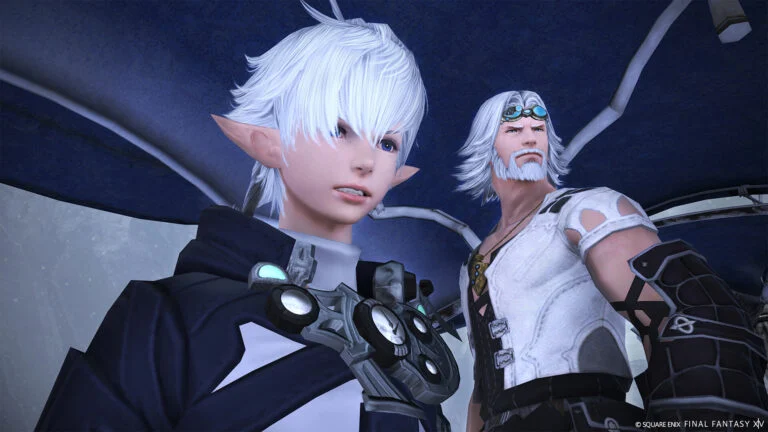
Umadori Sokuho shutdown: “weight of responsibility” and FF14 site closures
Reports on Umadori Sokuho’s closure say the administrator cited the “weight of responsibility” involved in disseminating information online and apologized to FF14 development and operations staff. That wording matters because it frames the shutdown not as a random disappearance, but as an acknowledgement that running a high-traffic community news aggregation site carries editorial and moderation responsibilities.
Even if Square Enix did not publicly announce direct legal action against Umadori Sokuho, the surrounding context was unmistakable. Netoge Sokuho had already been identified through disclosure procedures and settled with. Against that backdrop, other operators had every reason to reassess the legal exposure created by inflammatory summaries, hostile comment sections, and personality-driven anti-staff narratives.
Square Enix legal action against content creators: what happens after a settlement
The two 2026 outcomes show a clear pattern. First, Square Enix identifies content it says harmed the social reputation of its staff or related parties. Second, it pursues sender-information disclosure. Third, after the person is identified, the matter is resolved through discussions and settlement rather than a publicly described courtroom damages ruling. The disclosed settlement terms so far include apology language, settlement payment, content or account disappearance, site closure in the blog case, and promises not to repeat similar conduct.
That approach lets Square Enix achieve several goals quickly: it gets the content offline, creates a deterrent precedent, and avoids a more prolonged public court fight. For other creators, the message is that the company may prefer negotiated resolution, but only after it has pierced anonymity and established leverage.

Harassment vs defamation in gaming communities: what Square Enix is enforcing
In many gaming communities, “harassment” is used loosely to describe everything from rude replies to sustained mobbing. Square Enix’s policy and statements indicate it is using a broader but still structured definition. Harassment includes intimidation, abusive language, stalking-like behavior, privacy violations, and personal attacks. Defamation sits within that framework when the content allegedly lowers someone’s social reputation through slanderous or reputationally harmful claims.
So the company is not only policing threats in the narrow sense. It is also targeting content that it believes undermines named or identifiable employees in ways that exceed ordinary criticism. That is why both the March and April statements emphasize reputation damage as well as mental peace and physical safety.
What this means for Final Fantasy XIV YouTubers, streamers, and fan sites
For creators around Final Fantasy XIV, the practical lesson is that coverage now carries greater legal risk when it becomes staff-targeting rather than game-targeting. Rage-bait framing, repeated personal accusations, defamatory insinuations, dogpiling around individual employees, and comment moderation failures are all more dangerous after these two public settlements.
At the same time, nothing in Square Enix’s published policy suggests that negative reviews, class-balance complaints, story criticism, or monetization criticism are banned as such. The safer path is to keep commentary evidence-based, focused on the product or official decision-making, and free of doxxing, slander, threats, or personal abuse. The company is clearly signaling that it will distinguish sharp criticism from conduct it considers destructive to staff welfare.
How to avoid FFXIV community guideline violations when criticizing Square Enix
The easiest way to stay on the right side of this shift is to criticize systems, not people. Focus on patch design, encounter design, balancing, story execution, UI decisions, localization choices, or communication strategy. Avoid naming lower-level staff unless there is a compelling public-interest reason. Do not encourage audiences to contact employees directly, and do not repeat unverified allegations that could damage someone’s reputation.
It also helps to moderate comments aggressively if you run a site, channel, or fan page. The recent Japanese aggregator closures underline that platform operators can be judged not only by what they write themselves, but by the environment they cultivate. In 2026, that appears to be one of the biggest lessons from the Netoge Sokuho and video-creator cases.
Frequently Asked Questions (FAQs)
- Did Square Enix really act against two FF14-related creators in back-to-back months?
- Yes. Square Enix announced one settlement involving Netoge Sokuho on March 9, 2026, and another involving a video-sharing-site uploader on April 20, 2026.
- Was Netoge Sokuho forced to shut down?
- Square Enix said the settlement with the site administrator included closure of the site, publication of an apology, and payment of settlement money.
- What happened to the video creator in April 2026?
- Square Enix said the uploader was identified, apologized, paid a settlement amount, agreed not to engage in similar conduct, and that the video plus the uploader’s account were already no longer public by announcement time.
- Did Square Enix sue them in open court?
- The company publicly described sender-information disclosure proceedings and then settlements after discussions. It did not describe a final public damages judgment in either notice.
- What does Square Enix count as harassment?
- Its policy lists abusive language, intimidation, defamation, personal attacks, threats, persistent contact, trespassing, discriminatory speech, privacy violations, sexual harassment, stalking, and several forms of unreasonable demand.
- Is all criticism of Final Fantasy XIV now risky?
- No. Square Enix explicitly says player opinions and requests are valuable. The risk rises when criticism turns into personal attacks, reputational harm, threats, or other conduct outside socially acceptable bounds.
- Why are people talking about “social reputation” in these cases?
- Because Square Enix’s March and April notices both say the content at issue lowered the social reputation of staff or related personnel. That is central to how the company framed the harm.
- What was Umadori Sokuho’s role in this story?
- Umadori Sokuho was not publicly announced by Square Enix as a direct settlement target in the March notice, but it shut down right afterward and its operator reportedly apologized while citing the weight of responsibility involved in sharing information online.
- Has Yoshi-P commented on harassment before this crackdown?
- Yes. Naoki Yoshida has publicly said personal attacks against staff are harmful, non-constructive, and demoralizing, while urging players to direct criticism appropriately rather than attacking team members.
- What should creators do differently now?
- Keep criticism focused on the game and verifiable public decisions, avoid personal targeting, remove defamatory or threatening audience comments, and treat anonymous posting as legally discoverable rather than safe.

conclusion
Square Enix’s recent Final Fantasy XIV-related enforcement actions show a company moving from warning language to visible follow-through. March 2026 established that a fan-news aggregator could be identified and settled with over allegedly reputation-damaging articles. April 2026 expanded that precedent to a video creator, again ending with apology, payment, and disappearance of the content. Read together with the 2025 Group Customer Harassment Policy, these events make Square Enix’s position unmistakable: strong criticism of a game may still be part of fan culture, but content that crosses into defamation, personal attacks, or staff-targeting harassment is now something the publisher appears prepared to pursue formally.
sources and citation
- SQUARE ENIX — “動画共有サイトにおける当社役職員等へのハラスメント行為に対する対応について” (April 20, 2026)
https://www.jp.square-enix.com/company/ja/news/files/83f4635a151d571636958b2ffe41517a.pdf - SQUARE ENIX — “当社役職員等へのハラスメント行為に対する対応について” (March 9, 2026)
https://www.jp.square-enix.com/company/ja/news/files/a328c2deb442a2d4342867b0f8d0cb73.pdf - Square Enix Group — “Group Customer Harassment Policy”
https://www.hd.square-enix.com/eng/company/customer_harassment_policy.html - Square Enix Group — “カスタマーハラスメントに対する対応方針” (Japanese version)
https://www.hd.square-enix.com/jpn/company/customer_harassment_policy.html - AUTOMATON WEST — Umadori Sokuho closure report
https://automaton-media.com/en/news/another-final-fantasy-14-news-aggregator-in-japan-announces-closure-and-apologizes-to-square-enix-staff/ - GamesRadar+ — Netoge Sokuho closure fallout
https://www.gamesradar.com/games/final-fantasy/we-sincerely-apologize-final-fantasy-14-news-blog-goes-down-as-square-enix-takes-action-against-its-admin-for-allegedly-defamatory-content-against-the-mmos-devs/ - Inverse — Naoki Yoshida comments on criticism
https://www.inverse.com/gaming/final-fantasy-14-dawntrail-wuk-lamat-criticism-naoki-yoshida - GamesRadar+ — Yoshida on personal attacks vs criticism
https://www.gamesradar.com/games/final-fantasy/after-personal-attack-of-final-fantasy-14-dawntrail-english-va-mmo-boss-yoshi-p-says-if-you-have-any-sort-of-criticism-bring-it-to-me-im-the-one-approving-this-material/
Recommended
- Project Hail Mary Review: A Spoiler-Free Guide to the New Sci-Fi Event
- Nova Roma – Official Early Access Launch Trailer Reveals Roman City Builder Gameplay, Features, and Early Access Details
- Duskbloods is still coming this year, exclusive to Nintendo Switch 2 — 2026 release update + everything we know about The Duskbloods
- How to Make Metahumans Look Realistic in Unreal Engine 5: Complete Guide for Artists and Developers
- Three Namco-Published NES Games Join Switch Online, Including Game Freak’s First Game (Mendel Palace/Quinty)
- High-End Gaming PCs Are More Expensive Than Ever, But You Don’t Actually Need One: Smarter Ways to Game in 2026
- Dead by Daylight Devs Celebrate 10 Years of Eldritch Evil and Hope for Many, Many More
- Resident Evil: Requiem Sold 5 Million Copies in Five Days — Capcom Confirms Record-Breaking Launch
- The Outer Worlds Mods – Best Mods, Installation Guide, and Community Insights
- How to Get the Perfect Hair Roughness for a Realistic Look