







In This Article (9 sections)
Nintendo Switch 2 European Replaceable Battery Model and EU Repairability Rules
Nintendo Switch 2 has already established itself as one of the most important hardware launches of the decade, but a newly confirmed European hardware revision may make the console even more attractive for long-term ownership. In response to upcoming European Union regulations, Nintendo has confirmed that a future version of the Switch 2 sold in Europe will feature a replaceable battery design, aligning the system with new consumer electronics requirements that prioritize repairability, sustainability, and longer product lifespans.
The future European Switch 2 model will comply with upcoming EU battery regulations by incorporating a user-replaceable battery system. This does not necessarily mean the battery will slide out as easily as those found in older handheld devices, but it must be replaceable without specialized tools, excessive disassembly, or procedures that would damage the hardware. While the standard Switch 2 launches globally with a traditional integrated battery design, European buyers may eventually receive a version that offers advantages not immediately available in other regions.
The requirement stems from broader EU sustainability legislation designed to reduce electronic waste and extend the usable lifespan of consumer electronics. The European Union Battery Regulation introduces requirements that significantly impact manufacturers of portable electronic devices, aiming to make batteries easier to replace while reducing environmental waste generated by disposable electronics. Under these rules, consumers should be able to remove and replace batteries using readily available tools and without requiring professional repair services.
Portable gaming systems, smartphones, tablets, and other battery-powered electronics must adapt to these requirements if they are sold within the European market after specific compliance deadlines. For Nintendo, Sony, Microsoft, and other gaming hardware manufacturers, the legislation creates new engineering challenges, as devices must maintain durability, performance, and portability while accommodating battery accessibility requirements.
For gamers, the most obvious benefit is that battery degradation over time becomes significantly less problematic. Instead of sending the console for service or paying for complex repairs, users should be able to replace the battery through a simpler process, potentially lowering long-term maintenance costs and improving device longevity. The change represents one of the most meaningful repairability improvements introduced to a Nintendo handheld in years.
The announcement has sparked discussion across gaming communities regarding repairability, future hardware revisions, consumer rights, and whether Nintendo may eventually standardize the design worldwide. The regulation is expected to influence hardware design across the entire gaming industry over the coming years.
Switch 2 Europe Release Timeline, EU Compliance Deadline, and Model Identification
The initial Nintendo Switch 2 release is not affected by the upcoming battery regulations. Instead, Nintendo has confirmed that the battery-compliant model will arrive ahead of the EU enforcement deadline, with current expectations suggesting that the revised model will be introduced before February 18, 2027. Beginning on this date, applicable portable electronic devices sold within the European Union must meet the new replaceable battery requirements, and manufacturers unable to comply risk losing access to European markets for affected products.
This means European consumers purchasing Switch 2 during the launch period may receive the original design, while later buyers could see revised hardware enter the market. Nintendo has not yet provided an exact release date for the battery-compliant version, but regulatory deadlines make a 2026 or early 2027 transition highly likely. The company has already acknowledged the upcoming requirements through regulatory documentation and compliance planning, giving Nintendo a clear deadline for updating Switch 2 hardware sold in Europe while helping avoid supply disruptions and ensuring continued availability throughout the region. As additional regulatory filings emerge, more precise timing information should become available, and the timeline also gives engineers sufficient opportunity to refine the design before implementation.
Nintendo has historically used different model numbers to distinguish hardware revisions, regional variants, and updated product configurations. The future battery-compliant Switch 2 version is expected to receive a unique model identifier that differentiates it from the original launch hardware, with packaging, regulatory labels, and system information menus likely reflecting these distinctions. Consumers looking specifically for the replaceable battery version should pay close attention to official product descriptions, retail listings, and packaging details once Nintendo formally announces the revised hardware. Retailers within Europe will also likely emphasize the compliance update as a selling point due to growing consumer interest in repairability and sustainability, and model number changes are common for Nintendo hardware revisions, which should make identification relatively straightforward.
One detail that has generated discussion among hardware enthusiasts is the appearance of packaging and regulatory references involving OSM codes. OSM designations generally relate to product identification, manufacturing tracking, regulatory documentation, and packaging compliance rather than gameplay functionality, helping manufacturers manage different regional versions of the same product. For Switch 2, these identifiers may become increasingly important as Nintendo introduces region-specific hardware revisions to satisfy European regulations. Consumers should not interpret OSM markings as indicators of performance differences, as they primarily serve logistical and compliance purposes, though enthusiasts tracking hardware revisions may use these codes to help distinguish between different production runs and regional variants.

Switch 2 Replaceable Battery Rollout Outside Europe and Expected Design Changes
One of the biggest questions surrounding Nintendo’s decision involves whether the replaceable battery design will eventually expand beyond Europe. Historically, manufacturers often standardize hardware when maintaining separate versions becomes inefficient. If Nintendo develops a successful replaceable battery design for Europe, the company may decide to implement it globally during future production cycles.
There are several advantages to a unified approach. Manufacturing complexity decreases, repair processes become more consistent, and consumers worldwide benefit from improved longevity. On the other hand, Nintendo could maintain separate regional versions if the redesign introduces additional costs or engineering compromises. At present, only the European model has been confirmed for compliance purposes, and any broader rollout remains speculative.
Although Nintendo has not revealed the final implementation, several design approaches are possible. The company could create a dedicated battery access panel, simplify rear panel removal, or adopt an internal layout specifically optimized for user replacement. Each option would satisfy regulatory requirements while preserving overall build quality. The challenge involves balancing accessibility with durability, since portable gaming systems experience frequent movement, travel, and handling, meaning structural integrity remains essential. Engineers must also account for cooling systems, motherboard placement, storage components, and wireless hardware when redesigning the interior. Regardless of the final solution, the battery replacement process should be significantly simpler than current handheld repair procedures.
Switch 2 Accessories, Repairability, and Consumer Rights in Europe
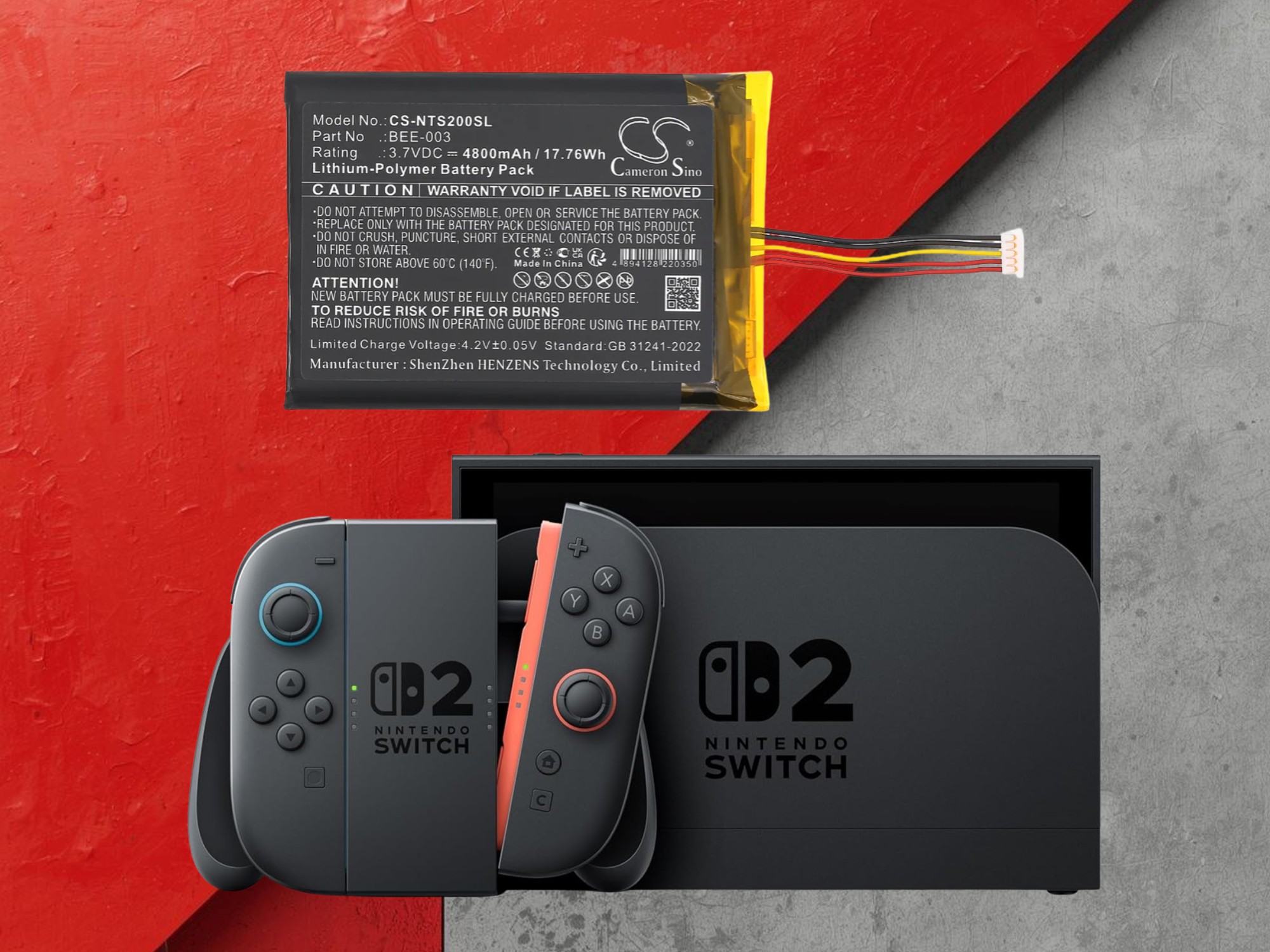
The regulation’s impact on accessories is another topic generating interest, especially because Joy-Con controllers contain rechargeable batteries. This has raised questions regarding compliance requirements for detachable peripherals, though Nintendo has not yet detailed whether future European Joy-Con revisions will include simplified battery access. Because Joy-Cons function as standalone wireless devices, they may fall under separate regulatory interpretations depending on final implementation guidelines. If battery accessibility becomes a requirement for controllers as well, Nintendo could redesign internal layouts or introduce improved repair procedures, while accessory manufacturers may also respond by offering replacement kits, upgraded batteries, and maintenance tools designed specifically for compliant hardware. Additional clarification is expected as implementation deadlines approach.
Comparing Switch 2 to the original Switch highlights how dramatically repairability expectations have evolved. The original Nintendo Switch uses an internal battery replacement process that requires significant disassembly, and while experienced technicians can complete the repair, the average consumer generally relies on professional service. The future European Switch 2 revision aims to reduce this dependency. Beyond battery accessibility, the newer hardware already benefits from improved processing power, enhanced graphics capabilities, faster storage, upgraded controllers, and expanded feature support. When combined with repairability improvements, the European Switch 2 could represent one of Nintendo’s most consumer-friendly handheld designs to date.
The battery regulation reflects a broader movement toward repairability rights across Europe. Consumers increasingly expect ownership to include the ability to maintain and repair products without excessive restrictions, and legislators have responded by introducing requirements that encourage manufacturers to support long-term usability. For Switch 2 owners, this means easier access to replacement parts, clearer repair documentation, and potentially lower ownership costs throughout the console’s lifespan. Repairability can also improve resale value because aging batteries become less of a concern for second-hand buyers. The broader goal is creating a more sustainable electronics ecosystem that reduces waste while empowering consumers, and Nintendo’s compliance efforts place the company within a growing industry-wide trend toward repair-friendly hardware design.
Switch 2 Battery Life, Care, and Future Hardware Revisions
Despite the focus on battery accessibility, portability remains a critical priority. Nintendo must ensure that any redesign preserves the lightweight nature of the console while maintaining battery life comparable to launch models. Switch 2 already benefits from more efficient hardware architecture than its predecessor, with improvements in processing efficiency allowing developers to deliver stronger performance without proportionally increasing power consumption. Battery life will continue varying based on game demands, brightness settings, wireless usage, and performance modes. The replaceable battery design may even improve portability for some users by enabling fresh battery replacements after years of usage rather than requiring expensive repair services.
Regardless of whether a battery is replaceable, proper maintenance remains important. Avoid exposing the console to excessive heat for extended periods, as high temperatures accelerate battery degradation. Maintaining moderate charge levels can also contribute to long-term battery health, while players who primarily use docked mode may benefit from occasionally discharging and recharging the battery rather than leaving it permanently connected to power. Software updates often include charging optimizations and power management improvements, making regular system updates beneficial. Using official chargers and accessories further helps preserve battery performance over time, and even with replaceable batteries, good charging habits remain the most effective way to maximize lifespan.
Battery accessibility may represent only the beginning of future Switch 2 revisions. Nintendo frequently updates hardware throughout a platform’s lifecycle, and previous generations received improvements involving battery efficiency, display quality, storage capacity, thermal performance, and manufacturing optimization. Future Switch 2 revisions could potentially introduce improved displays, larger internal storage options, enhanced cooling solutions, or more energy-efficient components. The battery-compliant European model may therefore become part of a broader hardware evolution rather than an isolated change, as such revisions are common when manufacturers respond to consumer feedback, technological advancements, and regulatory requirements.
Frequently Asked Questions (FAQs)
- Why is Europe getting a different Switch 2 model?
Europe is getting a different Switch 2 model because European Union regulations require applicable portable electronics sold after February 18, 2027 to feature replaceable batteries. Nintendo must update the European version of the hardware to comply with these rules if it wants to continue selling the console in the region after the deadline. - Will the launch Switch 2 have a replaceable battery?
The launch Switch 2 is expected to use the standard integrated battery design rather than the revised replaceable battery system. The battery-compliant model is planned as a later European hardware revision ahead of the EU compliance deadline. - When will the new European model release?
Nintendo has not announced an exact release date for the new European model. However, the company must comply with the EU battery requirements before February 18, 2027, making a 2026 or early 2027 transition likely. - What are the benefits of a replaceable battery?
A replaceable battery can improve long-term console ownership by making battery degradation less problematic over time. Instead of relying on complex repairs or service centers, users should have a simpler path to replacing an aging battery, which can reduce maintenance costs, extend device lifespan, and support sustainability by reducing electronic waste. - Will the redesign affect performance?
No performance differences have been announced. The battery-compliant revision is focused on repairability and regulatory compliance, not changes to processing power, graphics, storage speed, or gameplay features. - Will Joy-Cons also receive replaceable batteries?
Nintendo has not yet confirmed whether Joy-Con designs will change. Because Joy-Cons contain rechargeable batteries and function as standalone wireless devices, they may be affected depending on how the final regulatory requirements are interpreted and implemented. - What is the EU battery regulation?
The EU battery regulation is legislation designed to make batteries in many portable electronic devices easier to remove and replace. Its broader goal is to reduce electronic waste, extend product lifespans, and give consumers better access to repair and maintenance options. - Could the redesign come to North America and other regions?
It is possible that Nintendo could eventually bring the replaceable battery design to North America and other regions, especially if maintaining separate hardware versions becomes inefficient. However, only the European model has been confirmed for compliance purposes, and no global rollout has been announced. - Will the revised model have a different model number?
Nintendo is expected to use a unique model identifier for the updated hardware, as it has done with past hardware revisions and regional variants. Packaging, regulatory labels, retail listings, or system information menus may help consumers distinguish the compliant version from the launch model. - Should EU buyers wait for the revised model?
EU buyers who prioritize repairability, long-term ownership, and easier battery replacement may prefer to wait for the future compliant version. However, those who want the console at launch may still receive the original design before the revised hardware becomes available.

Conclusion
Nintendo’s confirmation of a replaceable battery Switch 2 model for Europe represents a significant shift in handheld hardware design. Driven by upcoming EU regulations, the revised console promises improved repairability, stronger consumer rights, and greater long-term sustainability. While the exact implementation remains unknown, the change could make the European version of Switch 2 one of the most attractive handheld gaming devices on the market. As the February 18, 2027 compliance deadline approaches, additional details regarding model numbers, battery replacement procedures, accessories, and regional availability will likely emerge. Whether Nintendo eventually expands the design worldwide or keeps it exclusive to Europe, the move signals an important evolution in how gaming hardware is built and maintained.
Sources and Citations
- European Union Battery Regulation documentation EUR-Lex: Regulation (EU) 2023/1542 on Batteries and Waste Batteries
- Nintendo regulatory filings and compliance disclosures Nintendo Switch 2 EU Battery Compliance Report (Tom’s Hardware)
- European Commission sustainability and consumer rights guidance European Commission Batteries and Environment Guidance
- Consumer electronics repairability legislation materials European Commission Right to Repair Directive
- Nintendo Switch 2 hardware documentation Nintendo Switch 2 Replaceable Battery Compliance Coverage (The Verge)
- Industry analysis of EU battery replacement requirements European Commission Guidance on Battery Removability Requirements
- Gaming hardware compliance reporting GamesRadar Report on Nintendo Switch 2 EU Compliance Changes
- Consumer rights and right-to-repair policy coverage Current State of EU Right to Repair Report
- Electronics manufacturing and regulatory compliance publications TÜV Rheinland Guide to EU Battery Regulation 2023/1542
- Nintendo platform hardware revision history Nintendo Switch 2 EU Replaceable Battery Revision Analysis (PC Gamer)
Recommended
- Marathon Gets New Experimental Mode: What It Is, How to Play, and What’s Changing
- Blackmagic Design Released DaVinci Resolve 21 In Public Beta: 15 Features, AI Tools, and Photo Workflow Changes
- Invincible Season 4 Review and Fan Reaction: Why Prime Video’s Brutal New Season Has Fans Split but Hooked
- Saros: Carcosan Modifiers Explained (Protections vs Trials, Balance Meter, and Best Builds for Easier Runs)
- Top Gun Celebrates Its 40th Anniversary With New Limited Edition 4K Steelbook Blu-ray, Release Date, Preorder Details, Specs & Special Features
- Rayman Remake Leak: Rayman Legends Retold Reveal and Release Rumors
- Pizza Hut’s Drinkable Pizza Turns Curry Cheese into the Chain’s Weirdest Limited-Time Japan Menu Item
- How to Automate Blender Camera Switching with The View Keeper
- Celeste Co-Creator is Making a Gorgeous New Game Boy-Style Metroidvania: City of None
- Bluey and “Bluey’s Best Day Ever!” Have Arrived at Disneyland, Everything You Need to Know About the New Interactive Experience



































































































