






In This Article (7 sections)
The Mandalorian and Grogu Disney Plus Release Date, Streaming Plans, and Home Entertainment Features
The Mandalorian and Grogu will begin streaming exclusively on Disney+ on September 2, 2026. Disney announced the date on August 14 through Disney+ and Disney+ Press, while the official Star Wars website also confirmed the September 2 premiere. The streaming release arrives a little more than three months after the film’s May 22 domestic theatrical opening.
Before reaching Disney+, the movie moved through additional home entertainment windows, including digital availability and a 4K Ultra HD and Blu ray release scheduled for August 25. Its arrival on Disney+ also brings the feature back to the same platform where The Mandalorian began as a streaming series in 2019, with all three seasons already available for viewers who want to follow the complete television story leading into the movie The Mandalorian and Grogu.
As of September 10, 2026, that premiere has already taken place, and the movie is now streaming rather than awaiting a future Disney+ launch. September 2 remains the confirmed debut date for The Mandalorian and Grogu. The interval between its May 22 domestic theatrical opening and its streaming arrival was 103 days, giving audiences a clear timeline for this particular release without establishing a universal rule for future Disney or Star Wars films.
Disney+ is also offering the film in IMAX Enhanced, allowing subscribers to watch with the expanded IMAX aspect ratio. Viewers with compatible certified equipment can also receive IMAX Enhanced sound using DTS technology. The September 2 launch is being treated as more than a simple addition to the streaming catalogue, with Disney scheduling three related releases for the same day: The Mandalorian and Grogu, the Star Wars: The Mandalorian and Grogu Official Podcast, and an animated LEGO Star Wars: The Mandalorian special.
The podcast will debut with two episodes titled “Growing Up” and “Bigger & Different,” with Jon Favreau, Dave Filoni, Pedro Pascal, Sigourney Weaver, and composer Ludwig Göransson among the participants. Video versions will appear on Disney+ and YouTube, while audio editions will be distributed through major podcast services.
For viewers choosing between presentation options for The Mandalorian and Grogu, Disney explains that IMAX Enhanced uses an expanded 1.90:1 aspect ratio, which can reveal up to 26 percent more of the original image than a conventional widescreen presentation. The benefit is additional picture information, not simply a television zooming in to remove black bars. All supported Disney+ devices can display the expanded framing, so an IMAX certified television is not required just to see the taller image. Selected films provide a Versions tab for switching between IMAX Enhanced and widescreen, with the description explaining whether the expanded frame applies throughout or only during selected sequences.
The sound requirements are separate. Disney’s guidance limits DTS:X playback to supported equipment and eligible plans, with a DTS:X badge identifying compatible content in the Details tab. An ordinary television can therefore show the expanded image without delivering the IMAX Enhanced audio mix. Viewers should check their device and plan support rather than assuming that the IMAX label guarantees every premium feature on every screen.
Resolution and dynamic range are also different from aspect ratio. A larger visible frame does not automatically mean playback is running in 4K or HDR. Disney+ selects the best supported video format according to the viewing setup, while the title’s Details tab identifies available formats. Internet connectivity, device capabilities and platform settings can affect the result. Checking those details before watching The Mandalorian and Grogu is more useful than manually enlarging the picture, which can crop the composition instead of revealing additional footage.
The podcast for The Mandalorian and Grogu had a separate announced launch time of 6:00 p.m. Pacific Time on September 2. That timing applied specifically to the companion programme and should not be mistaken for a confirmed release hour for the movie itself. Filmed on the Adelphi Base Bar set, the conversations bring the production team into one of the film’s environments to discuss the transition from television storytelling to a theatrical adventure.
The LEGO special serves a different purpose. Directed by Chris Buckley and written by Michael Price, it offers a comedic retelling of the three television seasons rather than another live action season. Gavin Hammon voices the Mandalorian, while several performers associated with the wider franchise return in the voice cast. Its playful reconstruction of familiar events makes it a lighter companion to the movie, not a substitute for watching the original dramatic versions of those stories.
The coordinated release gives Disney another opportunity to generate interest around the franchise instead of simply placing the movie into its subscription catalogue. However, Disney has not said that September 2 was chosen because of the film’s theatrical performance. Major Disney releases routinely move through theatrical, digital, physical media, and subscription streaming windows, and The Mandalorian and Grogu has followed that same general sequence.
The Disney+ release of The Mandalorian and Grogu gives subscribers access to the film through the service’s catalogue, rather than requiring a separate digital rental payment for each viewing. That distinction matters when comparing the streaming edition with listings on online movie stores. A subscription provides access under the service’s terms, while a rental or purchase is a separate transaction. Viewers who already have Disney+ should therefore check the film inside their existing account before paying for another version.
Subscription features vary by country. In the United Kingdom, for example, Disney offers Standard with Ads, Standard and Premium. The Standard tiers advertise video up to 1080p, while Premium advertises up to 4K UHD and HDR on compatible setups. Premium also supports more simultaneous streams than Standard. The important choice is therefore the viewing experience, including advertising, picture quality and household usage, rather than purchasing a special Mandalorian subscription. Local plan details should be checked because another country’s pricing or feature table may not apply.
Offline viewing is available through Disney+ on supported mobile devices when the account has an eligible download plan and the title offers a download option. In the United States, Disney’s guidance identifies Premium and qualifying Premium bundles as eligible, while ad-supported plans do not include downloads. The feature does not turn a computer browser, smart television or games console into an offline movie library. It is intended for supported mobile devices, making it more relevant for watching The Mandalorian and Grogu on a phone or tablet during travel.
Disney allows downloads on up to 10 supported mobile devices, subject to available storage and content restrictions. The account must remain subscribed, and the device needs to connect to the internet at least once every 30 days to maintain access under the service’s download rules. Logging out removes downloaded videos from that device. Viewers can also adjust download quality, trading a larger file and longer download time for a higher quality copy. Completing and testing the download before travelling is a practical precaution.
For audiences who prefer a separate home entertainment transaction, Lucasfilm lists digital availability for The Mandalorian and Grogu through Amazon Prime Video, Apple TV and Fandango at Home. These storefront listings should not be confused with inclusion in an Amazon Prime or Apple TV+ subscription. The film’s exclusive Disney+ streaming announcement concerns its subscription destination, while digital retail remains another way to watch. A viewer can therefore choose between paying for access to a wider streaming catalogue and obtaining this particular movie through a participating store.
The retail editions of The Mandalorian and Grogu also offer production material beyond the feature. Lucasfilm lists Jon Favreau’s audio commentary and featurettes covering the overall filmmaking process, the snow and swamp environments, the construction of Shakari, and the transformation of familiar dejarik creatures into full sized screen monsters. Collectible physical options include SteelBook packaging and a Beskar Collector’s Edition. These extras give the retail releases a different appeal, but their inclusion on a disc or digital purchase should not be treated as proof that every bonus is also available in the Disney+ Extras menu.
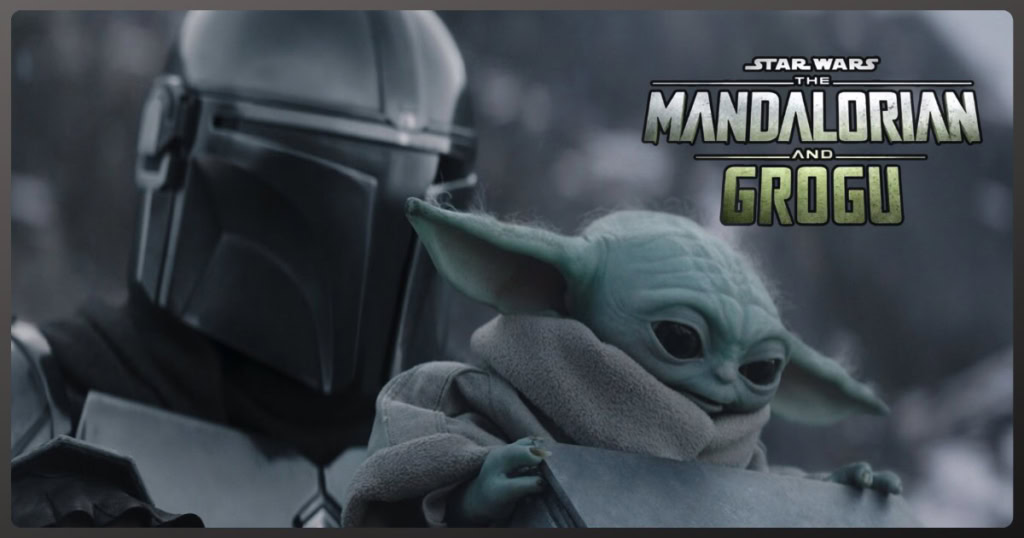
The Mandalorian and Grogu Box Office Performance, Profitability, and Impact on Future Star Wars Movies
Box Office Mojo currently reports a final worldwide theatrical gross of $345,724,060 for The Mandalorian and Grogu. Of that total, $177,730,060 came from the domestic market and $167,994,000 from international territories, meaning North America accounted for about 51.4 percent of worldwide ticket sales. The film opened domestically with $81,670,433 during the standard three day weekend.
Its Memorial Day holiday total was higher, but the three day result still became the weakest domestic opening for a Disney era live action Star Wars theatrical release, falling below Solo: A Star Wars Story. Internationally, the performance was relatively balanced with the domestic market, with the United Kingdom contributing more than $21 million, Germany more than $19 million, and France more than $11 million. Reuters reported an estimated worldwide launch of approximately $165 million for The Mandalorian and Grogu across the Memorial Day period. Those figures show that the movie attracted substantial interest, but its momentum was not strong enough to carry it toward the much larger totals associated with the biggest theatrical Star Wars releases.
Disney itself has acknowledged that the movie did not meet expectations. During the company’s fiscal third quarter 2026 commentary, CEO Josh D’Amaro identified The Mandalorian and Grogu and the live action Moana among franchise films that had fallen short of Disney’s box office expectations. Several factors may have contributed, although assigning an exact amount of responsibility to any one of them would be speculative. The story originated with a television franchise whose previous adventures were already available at home, potentially reducing the sense that audiences needed to see its continuation in cinemas.
Some critics also argued that the film felt structurally closer to an expanded television adventure than a major theatrical event. The movie additionally faced the challenge of returning Star Wars to cinemas after a seven year absence, requiring Lucasfilm to convince an audience accustomed to watching Din Djarin and Grogu on television that their next adventure justified premium theatrical spending. Reuters described the opening as the smallest of Disney’s Star Wars movie era despite positive reactions from many ticket buyers.
Critical and audience responses to The Mandalorian and Grogu were noticeably different. As of August 24, Rotten Tomatoes lists the movie at 60 percent from 325 critic reviews and 86 percent from more than 10,000 verified audience ratings. Reviews commonly praised the action, visuals, and relationship between Din and Grogu while criticising the straightforward narrative, familiar material, and limited dramatic stakes. Opening audiences gave the movie an A minus CinemaScore, while Deadline reported a 71 percent definite recommend result from PostTrak. The evidence therefore points to a film that satisfied much of its core audience but did not attract enough overall theatrical attendance to meet Disney’s commercial expectations.
Variety and Reuters both reported a production budget of approximately $165 million for The Mandalorian and Grogu, excluding the significant marketing expenses associated with a worldwide Disney theatrical release. Compared with its $345.7 million global gross, the movie earned roughly 2.1 times its reported production cost at the box office. That ratio should not be treated as a direct measure of profit because cinema operators retain part of ticket revenue, while marketing and distribution create additional costs that are not included in the production budget.
Box office gross represents the amount consumers spent on cinema tickets rather than the amount Disney ultimately received. The movie can also continue generating value through digital purchases, physical media, Disney+, licensing, merchandise, gaming, and other parts of the wider franchise, making Disney’s own assessment more useful than simplified break even calculations.
D’Amaro also pointed to benefits beyond theatrical revenue, saying The Mandalorian and Grogu contributed to growth in Star Wars retail activity, gaming engagement, and interest in updated Millennium Falcon attractions. The movie can therefore be considered a theatrical underperformer while still creating value across Disney’s broader Star Wars ecosystem. Its performance is nevertheless important for Lucasfilm’s future theatrical strategy because a major franchise release missing Disney’s own box office expectations is likely to influence how later projects are positioned, marketed, and developed.
The streaming release of The Mandalorian and Grogu also creates a different commercial question from the theatrical run. A household watching through an existing subscription does not generate a new cinema ticket sale, and repeated viewing is not equivalent to repeated box office revenue. Strong streaming interest could indicate that the characters remain attractive to audiences who preferred watching at home, but it would not by itself establish the film’s overall profit. Equally, a disappointing theatrical result cannot reveal how many subscribers will later finish the movie, revisit the series or remain interested in another adventure. Those outcomes need their own evidence rather than being assumed from the opening weekend.
There is no evidence that Disney intends to abandon theatrical Star Wars. Lucasfilm has already scheduled Shawn Levy’s Star Wars: Starfighter for May 28, 2027, with Ryan Gosling starring in a standalone story set during a previously unexplored period. The contrast between the two projects may prove important. The Mandalorian and Grogu developed directly from a Disney+ television series and received criticism from some reviewers for feeling like television expanded to feature length, while Starfighter is being positioned from the beginning as an original standalone theatrical adventure. The commercial lesson may therefore be less about whether audiences still want Star Wars in cinemas and more about what kinds of stories they consider essential theatrical experiences.

Din Djarin, Grogu, and How The Mandalorian Movie Continues Their New Republic Story
Pedro Pascal returns as Din Djarin in The Mandalorian and Grogu, continuing the role he has played since The Mandalorian premiered in 2019. The official Star Wars website describes Pascal as the often hidden face of the Mandalorian and confirms that the movie continues Din’s development from reluctant protector into adoptive father and mentor. Din remains a collaborative physical performance, with Lucasfilm crediting Pascal, Brendan Wayne, and Lateef Crowder for their contributions to the character. Pascal also performed physical material himself during the movie, including demanding water sequences while wearing the Mandalorian armour. Grogu, meanwhile, is created through sophisticated puppetry and animatronic work from Legacy Effects and the production’s puppeteering team, with Lucasfilm humorously crediting Grogu as playing himself.
The most important narrative development remains Din’s relationship with Grogu. At the end of The Mandalorian Season 3, Din formally adopted Grogu, established a home on Nevarro, and agreed to take assignments connected with the New Republic. The film continues directly from that situation rather than resetting the characters.
Grogu is now Din’s adopted son and Mandalorian apprentice while still carrying the influence of his earlier Jedi training. Jon Favreau told the official Star Wars website that Grogu had “leveled up” following his time with Luke Skywalker and was ready to gain more field experience with Din. Favreau and Dave Filoni have described apprenticeship and one generation teaching another as fundamental themes of the movie, so Grogu receives more responsibility instead of functioning only as the child Din must repeatedly protect. His powers, judgement, and attachment to Din become active parts of the adventure in The Mandalorian and Grogu.
For a fuller viewing order, there is one important addition between the main series’ second and third seasons: The Book of Boba Fett. The most direct progression is The Mandalorian Season 1, Season 2, The Book of Boba Fett, Season 3 and then The Mandalorian and Grogu. Watching only the three numbered Mandalorian seasons leaves out the intervening material explaining how Din and Grogu came back together after the Season 2 finale. The Book of Boba Fett’s final three episodes are particularly relevant to that transition.
“Chapter 5: Return of the Mandalorian” follows Din after his separation from Grogu, including his struggle with the Darksaber, his exclusion from his covert and the restoration of his N-1 starfighter with Peli Motto. “Chapter 6: From the Desert Comes a Stranger” then spends time with Grogu and Luke, ending with a choice between a Mandalorian gift and continuing along the Jedi path. “Chapter 7: In the Name of Honor” shows Grogu returning and reuniting with Din. Together, those chapters explain why the movie can present Grogu as both someone shaped by Jedi instruction and a child committed to travelling with his Mandalorian father.
Disney nevertheless describes the movie The Mandalorian and Grogu as a standalone adventure for newcomers as well as established fans. Earlier episodes deepen the emotional context, but understanding the immediate mission is different from recognising every reference. A full chronological watch is valuable background, not a requirement to complete the entire Star Wars catalogue.
Major events in the film reinforce that development. Grogu helps save Din after he is badly injured and remains beside him through the conflict involving Rotta the Hutt. The ending leaves the pair together, with Din continuing Grogu’s apprenticeship and beginning to teach him to pilot the Razor Crest. Their relationship remains the emotional centre of the story, but the movie also expands Din’s connection with the New Republic and the wider galaxy through several additional characters.
Sigourney Weaver joins the franchise in The Mandalorian and Grogu as Colonel Ward, a New Republic officer and X wing pilot who works with Din against remaining Imperial forces. Lucasfilm describes Ward as a veteran opponent of the Empire who remains committed to protecting the Republic.
Jeremy Allen White voices Rotta the Hutt, the son of Jabba the Hutt, whose rescue becomes central to the movie’s mission, while Garazeb “Zeb” Orrelios appears and extends the film’s connections with Star Wars Rebels and earlier New Republic era stories. Disney’s official press materials also credit Martin Scorsese and Jeremy Allen White among the film’s voice performers. Jon Favreau directed the movie and wrote it alongside Dave Filoni and Noah Kloor, while Ludwig Göransson composed the score.
Grogu’s greater independence also changes how the action works. The official Star Wars website highlights moments in which he squeezes through tight spaces, opens a door from the other side and climbs inside a much larger droid to disable it. The Anzellans similarly use their small size to avoid detection and reach places that make a rescue possible.
These sequences echo Yoda’s lesson that physical size does not determine what someone can accomplish. They also give Grogu practical responsibilities beyond waiting for Din to resolve every danger. On a repeat viewing, those details make the apprenticeship easier to track through the action itself: Grogu contributes by observing, moving and improvising, rather than only by displaying stronger Force abilities. His progress becomes visible in the way the pair work together, not simply in dialogue describing how much he has learned.
The movie is therefore a direct continuation of The Mandalorian rather than an unrelated spin off using the same characters. Adelphi Base, first introduced during Season 3, returns in The Mandalorian and Grogu as an important New Republic location where pilots regroup between missions. The story also continues the political environment established in the series after Return of the Jedi: the Galactic Empire has fallen, but Imperial warlords and remnants remain active while the younger New Republic struggles to maintain stability. Din and Grogu are increasingly involved with the Republic as it attempts to contain those threats, reflecting Din’s own changing role from wandering bounty hunter to father, mentor, and increasingly useful ally.
Streaming also makes some of the film’s smaller references easier to revisit. Lucasfilm’s official trivia guide identifies the “Weathers Apollo” sign as a tribute to the late Carl Weathers, connecting his Greef Karga role with his portrayal of Apollo Creed. Anthony Daniels supplies the voices of air traffic control droids, while the Hutt Twins connect back to The Book of Boba Fett. Rotta’s earlier appearance can be found in the 2008 animated Star Wars: The Clone Wars film, where he was introduced as Jabba’s infant son. These are optional layers of context rather than requirements for following the central rescue mission.
The production details provide another reason to pair a repeat viewing with the companion material. Lucasfilm confirms that physical Razor Crest models measuring two feet and four feet were created for motion control visual effects shots. Knowing that makes the ship sequences useful examples of the practical model work behind the finished images, rather than assuming every spacecraft shot was created entirely inside a computer.
Disney+ consequently provides a natural home for the movie after its theatrical and home entertainment runs. All three preceding seasons are already available on the platform, allowing viewers to follow Din and Grogu from their first meeting through Grogu’s Jedi training, Din’s adoption of him, their cooperation with the New Republic, and finally the events of the feature film. The Disney+ release of The Mandalorian and Grogu therefore completes the characters’ journey from streaming television into cinemas and then back onto the service where their story began.

Frequently Asked Questions (FAQs)
- When does The Mandalorian and Grogu come to Disney+?
Star Wars: The Mandalorian and Grogu begins streaming exclusively on Disney+ on September 2, 2026. The streaming premiere comes a little more than three months after its May 22 theatrical opening and follows the movie’s digital and physical home entertainment releases. - Is the September 2026 Disney+ release date official?
Yes. September 2, 2026, is the officially confirmed Disney+ release date rather than a rumoured or estimated streaming window. Disney+, Disney+ Press and StarWars.com have all confirmed the date, with Disney announcing it publicly on August 14. - How much did The Mandalorian and Grogu make worldwide?
Box Office Mojo currently reports a worldwide theatrical gross of $345,724,060. That total consists of $177,730,060 from the domestic market and $167,994,000 from international territories, giving the movie a relatively balanced split between North American and overseas ticket sales. - Did The Mandalorian and Grogu flop at the box office?
Disney has publicly acknowledged that the movie did not meet its box office expectations, so describing its theatrical performance as an underperformance is supported by the company’s own comments. However, worldwide ticket sales alone cannot determine whether the entire project ultimately lost money because the film also generates value through digital sales, physical media, Disney+, merchandise, licensing and other parts of the wider Star Wars business. - What was The Mandalorian and Grogu budget?
Trade reporting from Variety and Reuters placed the movie’s production budget at approximately $165 million. That figure does not include the substantial marketing and distribution expenses associated with a worldwide Disney release, so simply subtracting $165 million from the theatrical gross would not provide an accurate calculation of the movie’s profit. - What are The Mandalorian and Grogu Rotten Tomatoes scores?
As of August 24, 2026, Rotten Tomatoes lists The Mandalorian and Grogu at 60% from 325 critic reviews and 86% from more than 10,000 verified audience ratings. The difference reflects a noticeably more positive response from moviegoers than critics, with audiences generally responding well to the action and the relationship between Din and Grogu. - Is Pedro Pascal still the Mandalorian?
Yes. Pedro Pascal returns as Din Djarin and remains the principal actor associated with the character. Lucasfilm describes Din as a collaborative physical performance involving Pascal, Brendan Wayne and Lateef Crowder, continuing the production approach established during The Mandalorian television series. - Who does Sigourney Weaver play?
Sigourney Weaver plays Colonel Ward, a New Republic officer and X wing pilot. She is described as a veteran opponent of the Empire who works with Din and Grogu as the New Republic attempts to deal with surviving Imperial forces and maintain stability following the Empire’s collapse. - Who does Jeremy Allen White play?
Jeremy Allen White voices Rotta the Hutt, the son of Jabba the Hutt. Rotta becomes an important part of the movie’s central mission, connecting Din and Grogu’s latest adventure with the Hutt family and another established part of the wider Star Wars universe. - Will there be another Mandalorian and Grogu movie?
Lucasfilm has left Din and Grogu’s story in a position where further adventures are possible, but as of August 24, 2026, no direct sequel to The Mandalorian and Grogu has been officially announced. The next confirmed theatrical Star Wars movie is Star Wars: Starfighter, which is scheduled to open on May 28, 2027.

Conclusion
The Mandalorian and Grogu officially arrives on Disney+ on September 2, 2026, roughly three months after bringing Star Wars back to theaters. Disney is supporting the streaming premiere with IMAX Enhanced presentation, a behind the scenes podcast and a LEGO Mandalorian special, turning the date into a broader franchise event.
Its theatrical performance remains a more complicated story. The movie earned $345.7 million worldwide against a reported production budget of about $165 million, but Disney publicly acknowledged that the box office did not meet expectations. Critical response was mixed at 60% on Rotten Tomatoes, while the 86% verified audience score and A- CinemaScore indicate considerably stronger enthusiasm among people who actually attended.
That combination helps explain why the film should not be reduced to either “success” or “failure” without qualification. It underperformed against Disney’s theatrical expectations, yet Disney says the property generated value in merchandise, attractions and gaming. Its arrival on Disney+ can further monetise and reinforce a franchise whose core audience was originally created on that platform.
For Din Djarin and Grogu, the movie is not an ending. Grogu remains Din’s apprentice, their relationship with the New Republic remains open, and the final scenes leave them ready for further missions. What Lucasfilm has not done is announce exactly which film or television project will continue that story. Until it does, September 2 marks the clearest next chapter: The Mandalorian and Grogu returning home to Disney+.
Sources and Citations
- Disney+ Official Streaming Page: Provides the film’s official streaming listing, synopsis, runtime, age rating and cast information. Also identifies its IMAX Enhanced presentation and available accessibility features.
Citation: Star Wars: The Mandalorian and Grogu on Disney+ - Disney+ Press Streaming Announcement: Announces the September 2, 2026 Disney+ release, including the IMAX Enhanced presentation. Also introduces the accompanying behind-the-scenes podcast and LEGO special launching on the same day.
Citation: Star Wars: The Mandalorian to Make Big Splash on September 2 With Three New Debuts - StarWars.com Official Film Page: Provides the official synopsis, May 22, 2026 theatrical release date, trailers and promotional material. Includes links to character information, production features and home-release announcements.
Citation: Star Wars: The Mandalorian and Grogu Official Film Page - StarWars.com News and Interviews: Collects official interviews, behind-the-scenes articles, production features and release updates dedicated to the film. This topic page is more specific than the general Star Wars news feed.
Citation: The Mandalorian and Grogu News and Features - Lucasfilm Production Page: Presents the studio’s overview of the film, its connection to The Mandalorian series and its central story. Provides official cast and crew credits, including the director, writers, producers and composer.
Citation: Lucasfilm: Star Wars, The Mandalorian and Grogu - Box Office Mojo: Tracks domestic, international and worldwide theatrical grosses, opening-weekend earnings and results by territory. Useful for checking cumulative box-office performance rather than relying on early release estimates.
Citation: Star Wars: The Mandalorian and Grogu Box Office - Variety Box Office and Budget Coverage: This global box-office roundup, republished by Variety’s Australian edition, includes the film’s international opening and reported $165 million production budget. Its earnings figures describe opening-weekend estimates, not the final theatrical total.
Citation: Box Office: ‘Michael’ Nears $800 Million, ‘Devil Wears Prada 2’ Hits $600 Million Globally - Reuters Box Office and Production Coverage: Reports the projected global opening and places the film’s production budget and commercial expectations in context. Discusses its role in bringing Star Wars back to cinemas and Grogu’s broader merchandising appeal.
Citation: Baby Yoda Re-sets ‘Star Wars’ Films With $165 Million Global Opening - The Walt Disney Company August 2026 Earnings: Disney’s August 5 shareholder letter acknowledges that the film underperformed its box-office expectations while contributing value through merchandise and themed attractions. The document also contains the company’s fiscal third-quarter financial results.
Citation: Fiscal Third-Quarter 2026 Shareholder Letter and Earnings (PDF) - Rotten Tomatoes: Collects professional reviews, the Tomatometer score, verified audience ratings and the critics’ consensus. Also provides cast details, trailers and viewing information, making it useful for separating critical reception from audience response.
Citation: Star Wars: The Mandalorian and Grogu Reviews and Ratings - Deadline Box Office and Audience Coverage: Analyzes the opening weekend, production budget and comparisons with earlier Star Wars releases. Includes the A− CinemaScore and PostTrak’s 71% definite-recommend result; the article was checked through an archived copy.
Citation: The Mandalorian & Grogu Opens to $167 Million Worldwide: Box-Office Analysis - StarWars.com Starfighter Official Announcement: Introduces Shawn Levy’s film starring Ryan Gosling. Establishes its setting approximately five years after The Rise of Skywalker and the originally announced Memorial Day 2027 release window.
Citation: Director Shawn Levy’s Star Wars: Starfighter Film Starts Production This Fall - StarWars.com Starfighter Official News Hub: The supplied standalone film-page address could not be verified. This official alternative collects the film’s announcements, casting updates and release-format news.
Citation: Star Wars: Starfighter Official News and Updates
Recommendations
- Shift up CEO Explains Stellar Blade: Blood Rain Main Character Design, Evie’s Role, Story Changes, and What it Means for the Sequel
- Steam Deck LCD Replacement Battery Price Jumps to Around €180
- Overwatch’s Most Annoying Tank Is Getting Rebalanced in Season 2: Roadhog Nerfs, Perk Changes, and What It Means
- Nintendo’s New Star Fox Game Lets Players Use AR Character Avatars: Full Features, Gameplay Details, and What it Means for AR Gaming
- Freelance and Indie Commercial License
- Palworld Version 1.0 is Here: Massive Changelog, New Features, and Full Update Breakdown
- Stonemachia: Official Release Date Trailer Breakdown and Everything We Know (Release Date, Demo, Gameplay, Story, and Platforms)
- ReStory: Chill Electronic Repair Guide: Release Date, Demo, Gameplay, and Features
- Nintendo Switch 2 Production Increase Explained
- Mario Tennis Fever review: Is it worth buying on Nintendo Switch 2



































































































