







The Witcher 3: Wild Hunt — Remastered is shaping up to be one of the most substantial technical revisions CD Projekt Red has made to its 2015 RPG. Rather than limiting theThe Witcher 3 Remastered PS5 Pro Release, Free Upgrade and Performance Improvements
The Witcher 3: Wild Hunt Remastered goes far beyond sharper textures or a simple resolution increase. CD Projekt Red has reworked lighting, rendering, foliage, character movement, combat systems, progression, accessibility, mod support, and console performance. On PlayStation 5 Pro, the headline upgrades are especially significant. Ray Tracing mode targets 60 frames per second, while Performance mode uses an uncapped frame rate that CD Projekt Red expects to run at around 90 FPS under suitable conditions.
Those targets represent a major departure from the PS5 version introduced with The Witcher 3’s 2022 next generation update. That earlier release required players to choose between ray traced visuals at 30 FPS and a 60 FPS Performance mode. PS5 Pro changes that balance by providing enough additional rendering capability, together with PlayStation Spectral Super Resolution, to target 60 FPS with ray tracing enabled. Performance mode goes further by removing the standard 60 FPS ceiling and taking advantage of Variable Refresh Rate and 120Hz displays.
However, “up to 90 FPS” should not be interpreted as a locked 90 FPS mode. CD Projekt Red describes Performance mode as uncapped, which means the frame rate can fluctuate according to GPU load, CPU load, environmental complexity, and the capabilities of the connected display. That distinction is important when evaluating what The Witcher 3 Remastered actually delivers on PS5 Pro.
Release Date and Free Upgrade Policy
The Witcher 3: Wild Hunt Remastered launches on September 29, 2026 for PlayStation 5, Xbox Series X|S, PC, and Nintendo Switch 2. CD Projekt Red announced the project during Gamescom 2026 and confirmed that owners of The Witcher 3 on PlayStation 5, Xbox Series X|S, Steam, GOG, and the Epic Games Store can move to the Remastered version without buying another edition. Nintendo Switch owners are also eligible to claim the Nintendo Switch 2 Remastered version when moving to Nintendo’s newer hardware.
This approach is important because Remastered is not being positioned simply as a premium rerelease. It effectively replaces and expands the current version of The Witcher 3 on modern hardware, with CD Projekt Red describing the update as covering visuals, performance, gameplay, character progression, and numerous quality of life systems. The free upgrade policy also extends beyond the core remaster. Players who previously owned only the base game receive Hearts of Stone and Blood and Wine at no additional cost, with both expansions incorporated into the Remastered base package. Existing expansion owners retain access as before, while players who never purchased them gain both story campaigns without another payment.
For PS5 Pro owners, September 29 therefore represents both a substantial content update and a major console performance upgrade. The hardware receives dedicated PS5 Pro support, including PlayStation Spectral Super Resolution, Variable Refresh Rate functionality, uncapped frame rate support, a 60 FPS target for Ray Tracing mode, and higher potential frame rates in Performance mode.

In This Article (15 sections)
The Witcher 3 Remastered PS5 Pro Graphics Modes, Ray Tracing and 90 FPS Performance
The Witcher 3 Remastered retains the familiar two mode console structure of Ray Tracing mode and Performance mode, but PS5 Pro substantially raises the performance ceiling of both configurations. Ray Tracing mode targets 60 FPS, while Performance mode removes the conventional 60 FPS cap and can operate around 90 FPS when paired with a suitable VRR and high refresh rate display.
CD Projekt Red discussed these PS5 Pro features during its Gamescom REDstreams presentation, with subsequent reporting from RPG Site and Push Square reflecting the same specifications. PSSR is also used to reconstruct a high quality output image while reducing the amount of native resolution rendering required, allowing more of the PS5 Pro GPU’s resources to be directed toward frame rate and the heavier rendering work associated with the Remastered edition.
The two graphics modes therefore serve different priorities. Ray Tracing mode is designed for players who want the upgraded lighting and richer visual presentation associated with ray tracing while still targeting 60 FPS. Performance mode instead focuses on higher responsiveness by allowing the frame rate to rise beyond 60 FPS on compatible high refresh rate displays. Neither mode changes the underlying story, quests, or core content. The difference lies primarily in how PS5 Pro allocates rendering resources between visual features and performance.
60 FPS Ray Tracing Mode Improvements
The biggest improvement is the new 60 FPS Ray Tracing mode. The previous native PS5 version required players to accept a 30 FPS target when using ray tracing, while The Witcher 3 Remastered on PS5 Pro doubles that target to 60 FPS. RPG Site reported after CD Projekt Red’s Gamescom demonstration that the PS5 Pro version runs Ray Tracing mode at 60 FPS. The studio also clarified that it was not introducing an additional set of PS5 Pro exclusive ray tracing effects at that point. The key improvement is therefore not a completely different lighting system, but the ability to use the existing console ray tracing feature set at a substantially higher frame rate.
That distinction matters because the jump from 30 FPS to 60 FPS cuts theoretical frame time from about 33.3 milliseconds to roughly 16.7 milliseconds. This affects camera movement, input response, and the perceived smoothness of animation. In a game built around sword combat, dodging, target switching, and frequent camera movement, the difference can materially improve responsiveness. RPG Site’s early PS5 Pro impressions also found Ray Tracing mode compelling enough that the reviewer preferred it over Performance mode during testing, with the combination of ray tracing and a 60 FPS target standing out as one of the stronger reasons to consider the Pro version.
Uncapped Performance Mode Around 90 FPS
Performance mode takes a different approach by using an uncapped frame rate rather than targeting a fixed 90 FPS. CD Projekt Red indicated that the mode can operate around 90 FPS under favorable conditions, but that figure should not be treated as a guaranteed lock. Graphics engineer Tim Green explained during the Gamescom technical discussion that Performance mode removes the conventional frame rate cap, allowing performance to rise and fall according to available hardware headroom. Reporting based on the presentation described the game as settling somewhere around 90 FPS when connected to a VRR capable high refresh rate display.
That means 90 FPS is best understood as an approximate operating range rather than a promise that every area and encounter will remain at exactly 90 frames per second. Open world games create highly variable workloads. A quieter rural location may place very different demands on the CPU and GPU than entering Novigrad, moving rapidly through dense foliage, or fighting several characters while effects and shadows are active. The advantage of the uncapped mode is therefore not simply reaching the number 90, but allowing the game to run meaningfully above 60 FPS whenever performance headroom is available.
Variable Refresh Rate becomes particularly important in this situation. VRR allows a compatible television or monitor to adjust its refresh timing so that it more closely matches the frame rate being produced by the console. Instead of the display refreshing at a rigid interval while game performance fluctuates independently, the two can remain better synchronized within the display’s supported VRR range. Without VRR, an unlocked high frame rate can produce uneven pacing or tearing depending on the implementation. RPG Site’s pre release testing specifically recommended enabling the PS5’s 120Hz output when using a VRR compatible display, while suggesting that a 60Hz configuration could feel better on displays without VRR.
Comparing Frame Times and Visual Overhaul
The difference between the two modes can also be expressed through frame times. At 60 FPS, a frame is theoretically displayed every 16.7 milliseconds, while at 90 FPS that interval drops to around 11.1 milliseconds. The improvement is smaller than the jump from 30 FPS to 60 FPS, but it remains measurable and may be noticeable during fast camera movement, combat, and other situations where responsiveness matters. Ray Tracing mode consequently offers the stronger balance for players who want visual enhancements without dropping below 60 FPS, while Performance mode provides a clearer advantage for users with 120Hz VRR displays who prioritize lower frame times and faster response.
The broader Remastered visual overhaul also means that choosing Performance mode does not amount to returning to the appearance of the original 2015 release. Upgraded textures, lighting, foliage, materials, shading, and reconstruction remain part of the wider presentation. The choice is therefore between two enhanced configurations rather than between modern visuals and the original game’s presentation.
The Witcher 3 Remastered PS5 Pro PSSR, Image Quality and Display Requirements
PlayStation Spectral Super Resolution plays a central role in The Witcher 3 Remastered on PS5 Pro. PSSR is Sony’s machine learning based reconstruction technology, designed to produce a higher resolution output image from a lower internal rendering resolution. CD Projekt Red confirmed that the Remastered edition uses PSSR on PS5 Pro, with the goal of preserving image clarity while avoiding the GPU cost of rendering every pixel of the final image natively.
This approach provides additional performance headroom for both graphics modes. It is especially important for the 60 FPS Ray Tracing configuration because ray tracing increases rendering cost through additional calculations involving light, geometry, and scene intersections. Reconstruction technology gives developers another way to balance image quality against those demands, allowing the GPU to devote more resources to maintaining the frame rate and handling advanced visual features.
Performance mode also benefits from the same principle. Instead of aggressively lowering output resolution simply to chase higher frame rates, the game can render at a lower internal resolution and use PSSR to reconstruct a cleaner final image. This makes the relationship between frame rate and image quality less direct than it would be with a simple native resolution reduction.
RPG Site’s hands on impressions described the Remastered presentation on PS5 Pro as notably strong, particularly when the enhanced rendering was combined with the 60 FPS ray tracing target. However, reconstruction quality can vary from one scene to another. Thin geometry, moving foliage, particle effects, and distant detail can all present challenges for temporal reconstruction systems, so final image quality is better judged during extended gameplay than from a single still image.
Display hardware also affects how much value players can get from the Performance mode. The uncapped configuration is most useful when paired with a 120Hz display and VRR support because those features allow the console to present frame rates above 60 FPS more effectively and smooth out normal fluctuations. On a conventional 60Hz screen, the benefit of running substantially above 60 FPS is more limited, while the lack of VRR can make an unstable uncapped output less desirable depending on how the display handles it.
For that reason, the strongest PS5 Pro setup depends on both player preference and display capability. Ray Tracing mode offers a 60 FPS target with the richer ray traced presentation, while Performance mode is better suited to players who own 120Hz VRR displays and want the lowest available frame times. PSSR supports both modes by helping maintain image quality while freeing GPU resources for either additional visual effects or higher frame rates.
The Witcher 3 Remastered PS5 Pro Display Settings, Visual Upgrades and Best Graphics Options
Players intending to use The Witcher 3 Remastered Performance mode on PS5 Pro should pay close attention to their display and console video output settings. A television or monitor capable of 120Hz is necessary to display frame rates above 60 FPS, so the visible benefit of a mode operating around 90 FPS becomes much smaller on a screen limited to 60Hz. VRR is similarly important because Performance mode is uncapped rather than locked, meaning the frame rate can rise and fall depending on rendering load. A compatible display can adjust its refresh timing to better match those fluctuations and present the output more smoothly.
RPG Site’s testing found that enabling the PS5’s 120Hz setting made sense when using a VRR compatible display. On a screen without VRR, however, the reviewer found a 60Hz output configuration preferable. Players should therefore confirm that their television or monitor supports 120Hz input at the intended resolution, that VRR is enabled on both the display and PS5, and that the console correctly recognizes those capabilities. This distinction is particularly relevant for HDMI 2.1 televisions, which commonly combine 4K, 120Hz, and VRR support, while many older 4K televisions remain limited to 60Hz input.
Ray Tracing mode does not require a 120Hz display to deliver its central benefit because it targets 60 FPS. Performance mode is where higher refresh rate hardware becomes substantially more valuable. The choice between modes therefore depends partly on the connected display rather than only on a player’s general preference for graphics or performance.
PS5 Pro Upgrades and Display-Based Recommendations
The standard PS5 remains fully supported by The Witcher 3 Remastered and receives the broader visual, gameplay, and quality of life changes included in the update. PS5 Pro adds more rendering headroom and dedicated enhancement features. The clearest difference is Ray Tracing mode. The earlier PS5 implementation of The Witcher 3 used a 30 FPS cap when ray tracing was selected, whereas PS5 Pro raises that target to 60 FPS. Performance mode provides another distinction, with standard PS5 traditionally targeting 60 FPS while the PS5 Pro version can operate with an uncapped frame rate and reach around 90 FPS under suitable conditions with a compatible VRR display. PS5 Pro also incorporates PSSR reconstruction.
The underlying Remastered visual content extends across both systems. CD Projekt Red’s September 28 change list includes improved shading, revised terrain and material rendering, enhanced foliage lighting, new image based lighting, improved tone mapping, higher quality motion blur, revised subsurface scattering, updated textures and models, GTAO, and other rendering improvements. The PS5 Pro advantage is therefore less about receiving a completely separate visual package and more about running the enhanced presentation at stronger performance levels.
There is no universally correct graphics setting because the ideal choice depends on both the display and the player’s priorities. On a conventional 60Hz television, Ray Tracing mode is a sensible starting point because it already targets 60 FPS, allowing the display to show its intended frame rate while retaining the ray traced presentation. On a 120Hz VRR screen, both options become more meaningful. Ray Tracing mode provides enhanced lighting at 60 FPS, while Performance mode allows the frame rate to rise beyond 60 and move toward the approximate 90 FPS range described by CD Projekt Red.
Player Priorities and the Broader Visual Overhaul
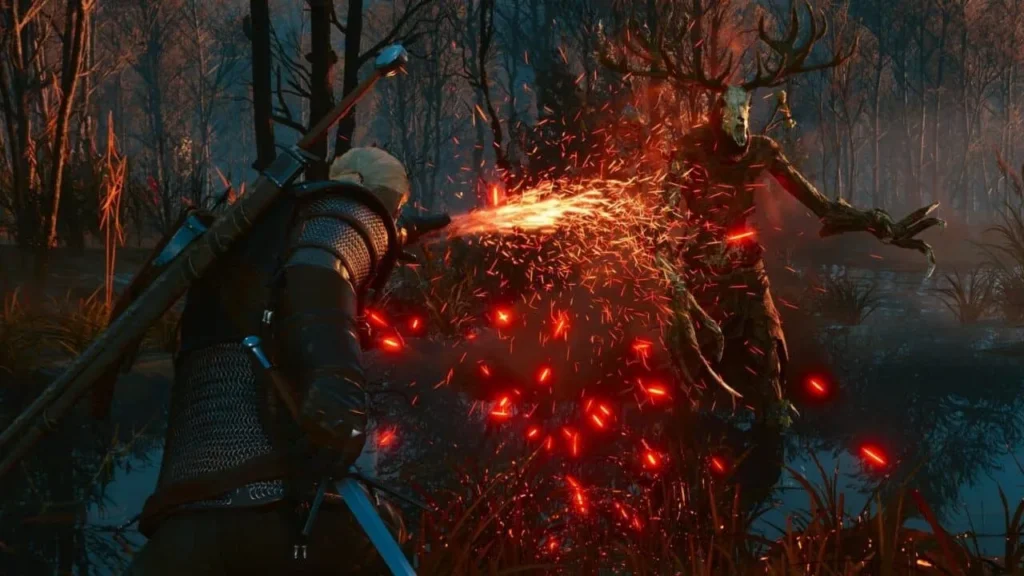
Players who prioritize atmosphere, exploration, cinematic presentation, and lighting consistency may prefer Ray Tracing mode. The Witcher 3 relies heavily on environmental presentation across locations such as Velen’s swamps, Novigrad’s crowded streets, Skellige’s mountains, and Toussaint’s brighter landscapes. Players who focus more heavily on combat responsiveness may prefer Performance mode, particularly when their display can actually present the additional frames. The most useful approach is therefore to test both configurations in representative gameplay areas rather than making a decision from the menu descriptions alone.
The broader visual overhaul also extends well beyond resolution and frame rate. CD Projekt Red says Remastered includes improved environment, NPC, and monster textures, substantial foliage upgrades, and reworked lighting, rendering, and ray tracing. The September 28 change list provides additional detail, including an improved shading model, updated textures and models drawing on assets from The Witcher 3 HD Reworked Project, improved grass and foliage lighting, upgraded Witcher Sign effects, enhanced terrain and material rendering, revised tone mapping, image based lighting, reworked bloom, improved motion blur, and revised subsurface scattering for skin.
Ray Traced HairWorks is another addition, improving the way lighting and shading interact with hair. The PC version goes further with path tracing and newer versions of technologies such as DLSS, but those features should not be confused with the PS5 Pro implementation. The importance of the visual overhaul is that it can affect the appearance of entire environments rather than simply making individual objects sharper. Improved materials, vegetation, shading, and illumination can change the visual character of locations throughout the game.
The Witcher 3 Remastered Combat, Progression, Quality of Life and Free Expansions
The Witcher 3 Remastered is not limited to graphical improvements. CD Projekt Red has also revised combat, character movement, progression, horse controls, and a range of quality of life systems. The official September 28 change list confirms improvements to Geralt’s gap closing animations, target lock switching, finishers, climbing, vaulting, movement, and jumping. Monster behavior has also been refined across non boss enemies, including attack patterns, counterattacks, movement, reactions, flight behavior, and status effects.
The studio’s broader goal is to make combat feel smoother and more precise. An adaptive combat camera changes its framing depending on encounter conditions, moving closer during smaller fights and widening when multiple enemies need to remain visible. These changes affect the feel of combat directly rather than simply altering how it looks.
Character progression has also received a substantial redesign. Skills are now arranged in a more conventional tree structure with prerequisite relationships, while individual skills contain three ranks. Existing bonuses and synergies have been rebalanced, and some abilities have been renamed. Because the progression system has changed, existing saves retain their overall progress but have their skill points reset so that players can redistribute them within the redesigned system.
Roach’s controls have also been adjusted. Cantering and galloping now use button presses rather than requiring players to continuously hold the input, and a horse control sensitivity option has been added. Other quality of life improvements include the ability to loot without dismounting Roach, faster boats, indestructible boats, an option to ignore item weight, toggleable Witcher Sense, and a quicker method of disengaging from combat. Taken together, these changes make Remastered substantially broader than the label of a simple graphics update would suggest.
Expansions Included at No Additional Cost
Hearts of Stone and Blood and Wine are also included as part of the Remastered package, with CD Projekt Red making both expansions available at no additional cost to players who previously owned only the base version of The Witcher 3. The company confirmed the policy alongside the August 25 Remastered announcement, explaining that both expansions are incorporated into the Remastered base package while existing base game owners gain access without purchasing a separate expansion pass.
Players who already own the expansions retain them in their libraries, and CD Projekt Red’s support documentation indicates that their content is effectively integrated into the base game structure. Existing expansion achievements and trophies are unaffected. Hearts of Stone adds a major questline involving Geralt, Olgierd von Everec, and Gaunter O’Dimm, while Blood and Wine introduces the large Toussaint region and an extensive additional campaign.
Including both expansions significantly increases the amount of content available to players who originally bought only the 2015 base game. It also simplifies the overall package by bringing the core game and both major expansions together under the Remastered edition ahead of the planned Songs of the Past expansion announced for 2027.

Frequently Asked Questions[FAQs]
- What frame rate does The Witcher 3 Remastered run at in Ray Tracing mode on PS5 Pro?
The Witcher 3 Remastered targets 60 FPS in Ray Tracing mode on PS5 Pro. CD Projekt Red confirmed that target during its Gamescom technical presentation. This is a substantial improvement over the earlier PS5 Ray Tracing mode, which ran at 30 FPS. In practical terms, the higher target should make camera movement, combat, dodging, and general traversal feel noticeably smoother while still retaining the ray traced visual presentation.
- Does The Witcher 3 Remastered actually run at a locked 90 FPS on PS5 Pro?
No. Performance mode uses an uncapped frame rate rather than a fixed 90 FPS target. CD Projekt Red indicated that the mode can operate around 90 FPS under suitable conditions, but performance can rise or fall depending on the complexity of the scene, CPU and GPU load, and the capabilities of the connected display. The 90 FPS figure should therefore be treated as an approximate operating range rather than a guaranteed frame rate in every area.
- Do I need a 120Hz television for The Witcher 3 Remastered on PS5 Pro?
You do not need a 120Hz display to use the 60 FPS Ray Tracing mode because a standard 60Hz television can display that target correctly. However, a 120Hz television or monitor is necessary if you want to properly see frame rates above 60 FPS from the uncapped Performance mode. VRR is also highly useful because it helps the display stay synchronized with the changing frame rate, making fluctuations feel smoother.
- Does The Witcher 3 Remastered support PSSR on PS5 Pro?
Yes. CD Projekt Red confirmed support for PlayStation Spectral Super Resolution on the PS5 Pro version. PSSR reconstructs a higher quality final image from a lower internal rendering resolution, helping the game preserve image clarity without requiring the GPU to render every pixel natively. This gives the system more performance headroom for demanding features such as ray tracing and higher frame rates.
- Is The Witcher 3 Remastered a free PS5 upgrade?
Yes. Existing owners of qualifying versions of The Witcher 3 can upgrade to the Remastered edition at no additional cost within the supported platform ecosystem. The Remastered version launches on September 29, 2026. The upgrade includes more than visual improvements, with changes also affecting performance, gameplay systems, progression, accessibility, and quality of life features.
- Are Hearts of Stone and Blood and Wine free with The Witcher 3 Remastered?
Yes. CD Projekt Red has made both Hearts of Stone and Blood and Wine available at no additional cost to players who previously owned only the base game. Both expansions are incorporated into The Witcher 3 Remastered package, so eligible players gain access without needing to purchase a separate expansion pass. Existing expansion owners continue to retain access as before.
- Can I use my old Witcher 3 save with Remastered?
Yes. Existing saves remain compatible with The Witcher 3 Remastered, allowing returning players to continue their previous progress instead of starting over. However, because the character progression and skill system have been redesigned, skill allocations and some related settings are reset. Players retain their overall progress and can redistribute their skill points after loading the upgraded version.
- Do Witcher 3 trophies carry over to Remastered?
Yes. CD Projekt Red says Remastered shares achievements and trophies with the existing versions. This means previously earned trophies do not need to be unlocked again simply because the game has been upgraded to the Remastered edition. Players can continue using their existing progress rather than treating the remaster as an entirely separate trophy or achievement set.
- What gameplay changes are included in The Witcher 3 Remastered?
The update includes a broad range of gameplay improvements rather than focusing only on graphics. Changes include redesigned character progression, improved combat animations, new finishers, enhanced enemy behavior, revised targeting, smoother movement and traversal, updated Roach controls, expanded accessibility features, reworked tutorials, equipment reforging, and multiple quality of life improvements. These changes are intended to make combat, exploration, progression, and general interaction feel more modern and responsive.
- Should PS5 Pro players use Ray Tracing or Performance mode?
Ray Tracing mode is the better fit for players who want the enhanced lighting presentation while still targeting 60 FPS. Performance mode is aimed at players who prioritize responsiveness and want frame rates above 60 FPS, especially when using a 120Hz VRR display. Because Performance mode is uncapped rather than locked at 90 FPS, the better choice depends on the connected display and whether the player values visual presentation or the highest available frame rate more.

Conclusion
The Witcher 3 Remastered on PS5 Pro substantially changes the technical balance of CD Projekt Red’s RPG. The most important upgrade is straightforward: Ray Tracing mode now targets 60 FPS instead of requiring players to accept the 30 FPS presentation associated with the earlier PS5 release. For players equipped with high-refresh-rate VRR displays, Performance mode removes the normal frame-rate ceiling and can operate around 90 FPS.
The distinction between “around 90 FPS” and “locked 90 FPS” is important. CD Projekt Red is offering an uncapped mode rather than guaranteeing an exact frame rate, so performance can vary with rendering load. VRR and 120Hz output are consequently important parts of the PS5 Pro experience for anyone planning to use Performance mode.
PSSR provides another major element of the upgrade by helping the console reconstruct a high-quality image while allocating additional GPU resources to performance and advanced rendering.
Yet the PS5 Pro improvements are only one part of The Witcher 3: Wild Hunt — Remastered. CD Projekt Red has revised lighting, shading, textures, foliage, tone mapping, materials, character rendering, motion blur and visual effects. Combat has received new animations and finishers, monster behavior has been polished, character progression has been redesigned, traversal has been refined and Roach controls have been updated.
The remaster also preserves existing saves, cross-progression, achievements and trophies, while granting Hearts of Stone and Blood and Wine to base-game owners at no additional cost.
For PS5 Pro specifically, the significance of the update comes from eliminating one of the most difficult compromises of the previous console version. Players can now pursue ray-traced visuals at 60 FPS or sacrifice some of that visual emphasis for an uncapped Performance mode capable of moving substantially above 60 FPS.
The Witcher 3: Wild Hunt — Remastered launches September 29, 2026. Based on CD Projekt Red’s confirmed specifications and pre-release PS5 Pro testing, it is not simply a higher-resolution version of the existing game. It is a broader technical and gameplay modernization designed to make the decade-old RPG operate more like a contemporary release while preserving the story, world and progression that defined the original.
Sources and Citation
- CD Projekt Red’s official Remastered announcement, August 25, 2026
- This announcement confirms September 29, 2026 as the release date for The Witcher 3: Wild Hunt Remastered and establishes the free upgrade for existing owners on qualifying platforms. It also explicitly confirms that players who own only the base game receive Hearts of Stone and Blood and Wine at no additional cost, with both expansions included in Remastered. The announcement separately explains the upgrade entitlement for original Nintendo Switch owners moving to Switch 2. thewitcher.com
- Citation: CD Projekt Red: Announcing The Witcher 3: Wild Hunt Remastered
- CD Projekt Red’s official feature and update summary, September 28, 2026
- “See what’s new in The Witcher 3: Wild Hunt Remastered!” documents the revised shading model, native DirectX 12 rendering, updated textures, foliage lighting, tone mapping, reflections and other rendering changes. It also covers revised monster behavior, combat animations, traversal, camera options, equipment appearance customization, accessibility and interface improvements. The redesigned skill system uses prerequisite-based progression and resets existing skill allocations. Its PlayStation section explicitly lists PS5 Pro support, PSSR, VRR, a 60 FPS Ray Tracing target and Performance mode reaching up to 90 FPS on VRR-capable displays. The Witcher
- Citation: CD Projekt Red: The Witcher 3 Remastered Features and Update Notes
- The official Witcher 3 Remastered product page
- The product page corroborates the free upgrade and inclusion of both original expansions. Its feature overview identifies improved environment, NPC and monster textures, enhanced foliage, reworked lighting, rendering and ray tracing. It also describes the adaptive combat camera, revised animations and overhauled skill tree. This is the appropriate source for the broad product description, while the dated update notes provide the more detailed implementation information. The Witcher
- Citation: The Witcher: Official Witcher 3 Remastered Product Page
- RPG Site’s Gamescom PS5 Pro report, August 29, 2026
- Mikhail Madnani’s report attributes the PS5 Pro details to CD Projekt Red’s REDstreams: On the Go! Gamescom 2026, Day 3 presentation. It records 60 FPS with ray tracing and an unlocked Performance mode capable of running around 90 FPS. Crucially, it also reports that the developers were not adding further ray-tracing features specifically for Pro at that time, instead running the standard PS5 ray-tracing feature set at a higher frame rate. These are presentation-based developer statements, not independent frame-by-frame benchmark results. RPG Site
- Citation: RPG Site: The Witcher 3 Remastered PS5 Pro Features, Ray Tracing and Unlocked Performance
- Citation: CD Projekt Red: Gamescom REDstreams Day 3, Referenced PS5 Pro Segment
- RPG Site’s firsthand PS5 Pro impressions, September 28, 2026
- Madnani’s hands-on article confirms the presence of Performance and Ray Tracing modes, with the latter targeting 60 FPS on PS5 Pro. He reports that the game engages 120Hz output on a compatible display and recommends enabling that output mode only with VRR, finding 60Hz preferable on a non-VRR setup. These are attributed observations from his testing. A 120Hz output signal should not be presented as evidence that the game consistently renders at 120 FPS. RPG Site
- Citation: RPG Site: The Witcher 3 Remastered on PS5 Pro Is My New Favorite Console Version
- Push Square’s PS5 Pro enhancement report, September 1, 2026
- Robert Ramsey’s report summarizes graphics engineer Tim Green’s Gamescom explanation of the Pro enhancements. It identifies the 60 FPS Ray Tracing mode, uncapped Performance mode expected to operate around 90 FPS, and PSSR upscaling. Push Square links to both the original presentation and RPG Site’s report, so this is corroborating coverage of the same developer disclosure, rather than a separate independent performance test. pushsquare.com
- Citation: Push Square: The Witcher 3 Remastered PS5 Pro Support Brings Significant Performance Boosts
- CD Projekt Red’s official Remastered technical-support FAQ
- The current FAQ confirms that existing Witcher 3 saves are compatible with Remastered, while warning that skills reset because of the redesigned progression system. It also explains that Remastered is an updated version of the same game, with previously earned achievements from the base game and both expansions carrying over. This supports continuity of existing progress, rather than suggesting that players must begin a new campaign or earn their existing achievements again. Wsparcie techniczne — CD PROJEKT RED
- Citation: CD Projekt Red Support: The Witcher 3 Remastered FAQ, Saves and Achievements
- CD Projekt Red’s official expansion-inclusion FAQ
- “Hearts of Stone and Blood and Wine now included in the Base Game” confirms that base-game owners receive both expansions free, with their content incorporated through the relevant update. It explicitly states that existing saves remain compatible, cross-progression continues functioning and achievements and trophies remain unaffected, including expansion achievements. It also distinguishes previous-generation consoles, where the expansions are available as free downloads, from the current-generation Remastered upgrade. Wsparcie techniczne — CD PROJEKT RED
- Citation: CD Projekt Red Support: Hearts of Stone and Blood and Wine Inclusion FAQ
- CD Projekt Red’s corporate press announcement, August 25, 2026
- This separate press release confirms the September 29 Remastered launch and outlines improvements to visuals, combat, traversal, mount handling, monster behavior, skill progression and photo mode. It also establishes an important purchasing distinction: Songs of the Past is a separate paid expansion scheduled for 2027, whereas the Remastered upgrade and the two original expansions are free for eligible existing owners. The release identifies Fool’s Theory as the expansion co-developer and Yigsoft as the Remastered co-developer. CD PROJEKT RED
- Citation: CD Projekt Red: Remastered Announced and Songs of the Past First Look
- Xbox Wire’s developer-authored overview, August 25, 2026
- Written by Marta Piwońska, CD Projekt Red’s Expert PR Manager, this article explains the visual improvements, revised combat animations, new finishers and adaptive camera, which changes framing according to the combat situation. It also describes the rebuilt skill trees and confirms the September 29 free upgrade on Xbox Series X|S, free access to the original expansions and the 2027 Songs of the Past release. Because the author represents CD Projekt Red, this is first-party developer communication published through Xbox Wire, not an independent review. XBOX Wire
- Citation: Xbox Wire: Geralt Returns in The Witcher 3, Songs of the Past and Remastered
- CD Projekt Red’s launch-day press release, September 29, 2026
- This confirms that Remastered actually launched on September 29, supplementing the earlier announcements of its intended release date. It reiterates the included expansions and specifically describes PSSR-supported ray tracing at 60 FPS on PS5 Pro, with Performance mode offering up to 90 FPS with VRR. It also confirms that Remastered replaces the Complete Edition on supported platforms and positions Songs of the Past as an upcoming 2027 expansion, separate from the released upgrade. CD PROJEKT RED
- Citation: CD Projekt Red: The Witcher 3 Remastered Available Now
Recommendations
- Echoes of Aincrad Crafting Guide: Recipes, Materials and Unlock Requirements
- Did Christopher Nolan’s Depiction of the Gods Pay Off in The Odyssey?
- Castlevania: Belmont’s Curse Runs at Only 30 FPS on Nintendo Switch
- EA Sports College Football 27 Preview: Defense Wins Championships
- Jurassic World Evolution 2 Complete Edition Comes to Nintendo Switch 2 on July 30, 2026
- Unity-Based Tool for JRPG Game Development: RetroGig’s Retro JRPG Template for SNES/PSX-Style RPG Systems
- Keanu Reeves & China Miéville BRZRKR: Light Draws Breath — Release Date, Story, Creative Team & Variant Covers
- CD Projekt Raises Profit Goals with Witcher 4, 5, and 6 Coming: 5 Billion PLN Target Explained
- Creepshow Official Announcement Trailer Reveals a New Anthology Horror Game Experience
- GTA 6 Leans Into Vice City’s Influencer Hustle Where Looks Matter



































































































