






In This Article (8 sections)
Tiebreakers Gameplay, Tennis Combat, Release Date, and Platform Availability
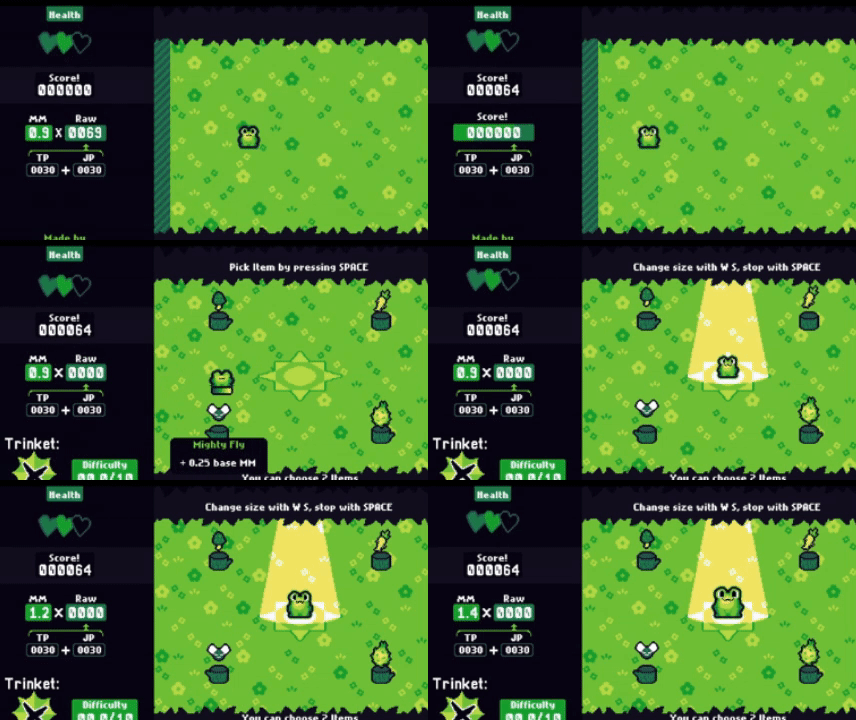
Tiebreakers is a stylized 2D shonen-inspired run-and-gun sports action game that turns tennis into a fast-paced competitive battle. Rather than presenting traditional rallies as a straightforward sports simulation, the game combines arcade tennis mechanics with anime-inspired fighting systems, allowing players to dash across the court, charge shots, use special attacks, and apply combo-based pressure.
Its presentation draws on familiar shonen ideas such as rivalries, signature techniques, power progression, and dramatic momentum shifts, making each match feel more like a duel than a conventional tennis contest. The 2D format supports clear visual feedback and responsive controls, which is especially important when success depends on positioning, timing, and managing offensive resources. This gives Tiebreakers an identity that blends sports, fighting, and run-and-gun movement into one fast gameplay loop.
The tennis combat system is built around more than simply predicting where the ball will land. Players must also manage timing, stamina, movement, and the cooldowns attached to special abilities. A rally may begin like a normal tennis exchange before escalating through charged shots, angled returns, and abilities that change the ball’s speed, curve, or impact. Dash-based movement encourages aggressive positioning, allowing players to close space quickly and pressure opponents instead of waiting passively for mistakes. This creates a faster rhythm than traditional tennis gameplay and makes court control an important part of both offense and defense.
Precision is central to how rallies develop. A well-timed return can trigger a counter state that improves speed and shot power, giving the player an immediate advantage in the exchange. Mistimed hits can have the opposite effect by leaving the player exposed to follow-up attacks or forcing them into a defensive position. Because special techniques and movement options operate alongside ball control, players need to judge when to attack, when to reposition, and when to conserve resources for a stronger response. The result is a system where tennis fundamentals and fighting-game decision-making work together rather than functioning as separate mechanics.
Tiebreakers does not have a universally confirmed global release date in the supplied information. The game is still described as being in an evolving development cycle, meaning testing, balance changes, optimization, and multiplayer features could affect the eventual schedule. PC is presented as the most likely initial platform, while potential console releases could include PlayStation, Xbox, and possibly Nintendo Switch depending on publisher arrangements and optimization. Those console possibilities should not be treated as confirmed until official platform details are announced. For now, the clearest description is that Tiebreakers is an in-development 2D shonen tennis action game with a hybrid combat system and no finalized worldwide release date or complete platform lineup yet.

Tiebreakers Story, Characters, Controls, Combat, and Game Modes
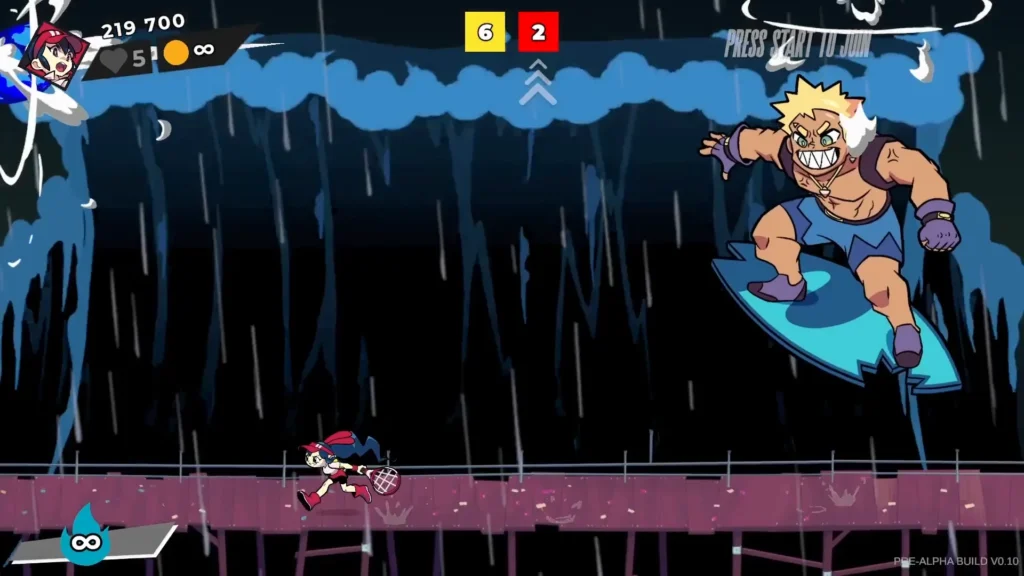
Tiebreakers combines its shonen-inspired sports action with a story mode built around rivalry, personal growth, tournaments, and increasingly difficult opponents. Players follow a rising protagonist who develops new techniques and abilities while progressing through matches that unlock cutscenes, rival encounters, and training sequences. Major opponents are designed around different thematic and gameplay challenges, including speed-focused players, power hitters, and trick-shot specialists. Cinematic transitions during important rallies or special moves reinforce the anime-inspired presentation by briefly emphasizing decisive moments and dramatic shifts in momentum. This structure ties narrative progression directly to performance, making the competition itself part of the character-development arc rather than a separate layer placed around the matches.
The playable roster supports that structure through distinct tennis-combat archetypes rather than characters who differ only cosmetically. Fighters generally fall into categories such as speed specialists, power hitters, technical strategists, and balanced all-rounders, with each character carrying unique abilities, signature shots, and passive traits that affect how matches develop. A speed-oriented fighter may recover more quickly after dashing, while a power-focused character can trade speed for heavier and more destructive returns. Additional fighters can be unlocked through story progression or challenge completion, giving players reasons to experiment beyond their initial choice. Matchups therefore depend on understanding individual strengths, weaknesses, and counterplay rather than relying on one universally effective character.
The defining gameplay idea is the fusion of tennis mechanics with run-and-gun action. Players are rarely stationary because rallies require constant movement, dodging, positioning, and offensive pressure while the ball remains in play. The ball functions as both the central sporting object and a weapon-like projectile whose speed, angle, and behavior can be altered through abilities. Movement skills and projectile manipulation turn traditional court positioning into a more active contest where players rapidly close gaps, escape pressure, and create attacking opportunities. This hybrid design makes every rally a balance between maintaining control of the exchange and managing the action-game systems layered on top of it.
The control scheme is designed to support that pace while remaining approachable. Basic inputs cover movement, standard hits, charged shots, and dashes, giving new players a relatively simple foundation for understanding the game. Advanced techniques add angled shots, aerial returns, recovery-frame cancelling, and transitions that chain movement directly into attacks. Timing is important because delayed or mistimed inputs can produce weak returns, poor positioning, or missed opportunities to punish an opponent. The difference between beginner and high-level play therefore comes from learning how to combine simple controls into more efficient movement, defensive responses, and offensive sequences.
Tiebreakers also includes multiple modes intended to serve both solo and competitive players. Single-player content includes story campaigns, arcade-style ladders, and training challenges that allow players to learn characters and mechanics outside direct competition. Multiplayer is designed around competitive matches, with local or online options depending on the final infrastructure implementation. Ranked systems may also be included to provide longer-term progression and skill-based matchmaking, although those features depend on the finished multiplayer setup. Together, the narrative campaign, varied roster, action-focused tennis system, layered controls, and multiplayer structure position Tiebreakers as a game aimed at both players interested in shonen-style storytelling and those seeking a more competitive arcade experience.
Tiebreakers Combat, Visual Style, Progression, Strategy, and Multiplayer
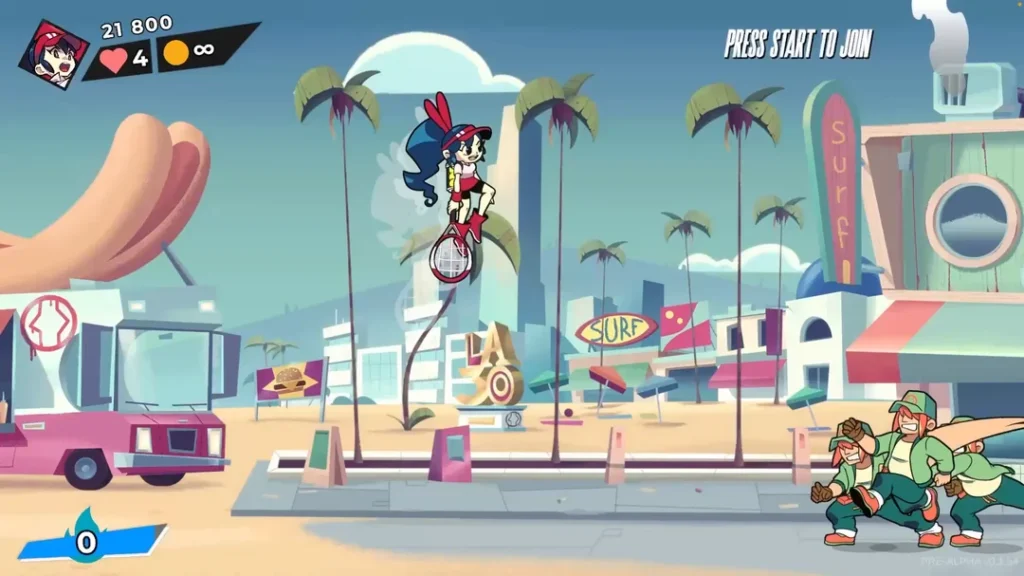
Tiebreakers builds its competitive gameplay around special moves, power shots, combo chains, and resource management. Character-specific special moves can change the flow of a rally by increasing ball speed, creating multiple projectiles, or briefly restricting an opponent’s movement. Power shots require charge time but can break defensive patterns when used at the right moment, while combos let players chain movement and shot inputs together to maintain pressure. Special abilities consume energy, which must be replenished through successful plays or defensive actions, so players cannot rely on them constantly. The combat system therefore rewards timing and restraint as much as aggressive offense, especially during longer rallies where poor energy use can leave a player vulnerable.
The visual presentation reinforces that fast-paced structure through a pixel-art style influenced heavily by anime aesthetics. Character animations emphasize exaggerated movement, dramatic impact effects, and expressive reactions, while courts use stylized backgrounds and visual changes that respond to match intensity. Energy trails, impact flashes, and cinematic zoom-ins make important moments easier to recognize while also supporting the shonen-inspired tone. Readability remains important because players need to understand the ball’s position, incoming attacks, and character movement even when multiple effects appear at once. The combination of expressive animation and clear feedback helps preserve both spectacle and competitive clarity.
Difficulty increases alongside the player’s growing familiarity with the mechanics. Early stages focus on basic timing, positioning, and shot control, while later encounters introduce faster opponents and more complicated offensive patterns. Progression is tied to story advancement and skill development, with new abilities, characters, and cosmetic rewards becoming available over time. Higher difficulty settings provide stronger progression bonuses, giving players an incentive to revisit matches with more demanding opponents. This structure supports replayability by encouraging players to improve execution rather than simply rely on unlocked power.
Winning consistently requires players to combine court control, timing, character knowledge, and energy management. Angled shots can force opponents into poor positions, creating openings for stronger follow-up attacks, while baiting an opponent into committing early can make a charged power shot more effective. Special moves are most valuable when used at moments where they can change the rally rather than being spent immediately. Players also need to adapt to different character archetypes because speed specialists, power hitters, technical fighters, and balanced characters create different matchup problems. Strategic play therefore depends on recognizing the opponent’s strengths, forcing them into uncomfortable situations, and preserving enough resources to respond when momentum changes.
Multiplayer extends those systems into both casual and competitive play. Online matches are designed around responsive controls and latency optimization so that timing-based exchanges remain fair during fast rallies. Competitive features may include ranked play, leaderboards, seasonal progression, and tournament-style events, depending on the final multiplayer implementation. These systems are intended to give players long-term goals beyond the story campaign and provide a space for advanced strategies to develop through repeated competition. Combined with its combat depth, expressive visuals, progression structure, and matchup variety, the multiplayer ecosystem is positioned to support continued community engagement and skill-based play.
Tiebreakers Similar Games, Developer Focus, and Future Update Plans
Players who enjoy Tiebreakers may also be drawn to other anime-inspired sports and action hybrids that combine exaggerated mechanics with competitive gameplay. Games in this broader category often emphasize high-energy matches, character-driven progression, special abilities, and stylized visual presentation rather than realistic sports simulation. Arcade sports titles, fighting games with strong anime influence, and arena-based sports hybrids can therefore appeal to the same audience because they reward speed, timing, and mastery of distinctive character abilities. The common design philosophy is less about reproducing traditional sports rules exactly and more about turning competition into dramatic, personality-driven battles. That overlap makes Tiebreakers part of a wider group of games where spectacle and mechanical depth work together.
The development focus for Tiebreakers centers on refining its core mechanics, improving character balance, and strengthening multiplayer stability. These priorities are important because the game is designed to serve both casual players who enjoy its style and story elements and more competitive players who care about timing, matchups, and responsive online play. Balance work needs to ensure that individual abilities remain distinctive without allowing one character or strategy to dominate every matchup. Multiplayer stability is similarly important because the game’s fast exchanges depend heavily on responsive controls and reliable synchronization. Continued refinement of those systems will influence how well Tiebreakers supports both short-term accessibility and long-term competitive depth.
Future updates are expected to expand the game beyond its initial content through additional characters, new story arcs, more arenas, and balance changes shaped by community feedback. New fighters could introduce additional playstyles and matchup possibilities, while expanded story content could develop rivalries and character progression further. Additional arenas would increase visual and gameplay variety, especially if different environments support distinct match presentations or challenges. Balance adjustments would help the developers respond to strategies that become too strong or too weak once a larger player base begins experimenting with the systems. These additions would give the game room to evolve rather than remain fixed after launch.
Potential roadmap features also include ranked seasons, more training options, and expanded customization systems. Ranked seasons could create recurring competitive goals, while additional training modes would help players practice advanced movement, shot timing, counters, and character-specific techniques. Broader customization could give players more ways to personalize fighters or presentation without changing the core competitive balance. These features remain described as possible future additions rather than guaranteed content in the supplied material. The overall direction is toward a game that continues developing its roster, multiplayer structure, narrative content, and player-expression systems over time.
The long-term appeal of Tiebreakers will therefore depend on how successfully the developers balance expansion with refinement. Additional content can increase variety, but stable mechanics and fair character balance remain important if the competitive community is expected to grow. Community feedback can help identify problems that are difficult to predict before large numbers of players begin testing different strategies. At the same time, new story content and customization can keep the game appealing to players who are less focused on ranked competition. Tiebreakers’ future is therefore tied both to the strength of its initial tennis-combat concept and to how effectively later updates build on that foundation.
Frequently Asked Questions (FAQs)
- What is Tiebreakers?
Tiebreakers is a 2D shonen-inspired tennis run-and-gun action game that combines traditional sports mechanics with combat-style systems. Matches revolve around rallies, positioning, and shot control, but players can also dash, use special abilities, charge powerful attacks, and apply offensive pressure more like a fighting or action game. Its visual presentation and dramatic match flow draw heavily from shonen anime, where rivalries, signature techniques, and sudden momentum shifts are central to the experience. The result is less of a traditional tennis simulation and more of an arcade-style competitive duel. Its core identity comes from blending tennis with fast movement, character abilities, and combo-oriented play. - Is Tiebreakers single-player or multiplayer?
Tiebreakers includes both single-player and multiplayer content. The single-player side includes story-driven progression, arcade-style challenges, and training activities that help players learn characters and mechanics. Multiplayer is designed around competitive matches, with local or online options depending on the final implementation. The competitive side is intended to support players who want repeated matches against human opponents rather than only scripted encounters. This combination gives the game both a narrative path for solo players and a longer-term competitive structure for those interested in multiplayer. - What makes Tiebreakers different from normal tennis games?
Tiebreakers adds action-game and fighting-game systems to the basic structure of tennis. Players can use dashes, special abilities, power shots, angled returns, counters, and combo-like attack sequences rather than relying only on ordinary rally mechanics. The ball can function almost like a projectile, with abilities changing its speed, direction, curve, or impact. Character-specific techniques also make matchups more important because different fighters can approach offense and defense in different ways. This gives each rally a more aggressive and unpredictable rhythm than a conventional tennis game. - Can you play different characters in Tiebreakers?
Yes. Tiebreakers features multiple playable characters built around different combat and tennis archetypes. These can include speed specialists, power hitters, technical strategists, and balanced fighters, with each character using unique abilities, signature shots, and passive traits. A speed-focused character may recover quickly after movement, while a power-focused fighter may trade speed for stronger attacks. Different characters therefore change how players control space, manage resources, and respond to opponents. Unlockable fighters can also encourage replayability by giving players new playstyles to learn. - Is Tiebreakers competitive?
Yes. The game is designed around skill-based mechanics such as timing, positioning, energy management, counters, and matchup knowledge. Players who use special abilities carelessly can run out of resources, while well-timed defensive or offensive actions can shift the momentum of a rally. Multiplayer is intended to support more competitive play, with ranked systems, leaderboards, seasonal progression, or tournament-style features discussed as possible components. These systems depend on the final multiplayer implementation, so not every competitive feature should be treated as guaranteed yet. The core gameplay itself, however, clearly supports competition through mechanical depth and player-versus-player decision-making. - Does Tiebreakers have a story mode?
Yes. Tiebreakers includes a shonen-inspired story campaign centered on rivalry, growth, tournaments, and increasingly difficult opponents. Players follow a rising protagonist who develops new techniques and abilities while progressing through important matches. Winning can unlock cutscenes, rival encounters, training sequences, and new gameplay mechanics. Major opponents are designed around different thematic challenges, such as speed, power, or trick-shot playstyles. The story therefore uses tennis battles as part of the character-development arc rather than treating narrative and gameplay as completely separate. - What platforms will Tiebreakers release on?
The supplied information does not provide a fully confirmed platform list. PC is presented as the most likely initial platform, while PlayStation, Xbox, and possibly Nintendo Switch are mentioned as potential console options depending on publisher agreements and optimization. These console possibilities should not be treated as confirmed until official platform announcements are made. The same caution applies to release timing because the game does not currently have a universally confirmed global release date in the supplied material. For now, PC is the clearest expected platform, with wider console availability still uncertain. - Are there special moves in Tiebreakers?
Yes. Special moves are a major part of the combat system and differ by character. They can alter ball speed, create additional projectile effects, restrict an opponent’s movement, or otherwise change the conditions of a rally. Power shots also play an important role, requiring charge time but delivering stronger effects when used successfully. These abilities usually consume energy, which means players need to decide when a special move is worth using instead of spending resources immediately. Effective use of special techniques is therefore tied to timing, positioning, and resource management. - Is Tiebreakers hard to learn?
The basic controls are designed to be relatively approachable, with movement, standard hits, charged shots, and dashes forming the foundation. The challenge increases when players begin using angled shots, aerial returns, counter timing, recovery cancels, and movement-to-attack chains. Understanding when to conserve energy or use a special move also adds another layer of decision-making. Beginners can learn the basic rally system quickly, but high-level play requires stronger timing, character knowledge, and positioning. The game is therefore accessible at first while leaving room for deeper mastery. - Is Tiebreakers similar to fighting games?
Yes, although tennis remains the foundation of the gameplay. Tiebreakers borrows ideas from fighting games such as character-specific abilities, matchup knowledge, counters, resource meters, combo-like sequences, and pressure management. Players need to read opponents, force mistakes, and capitalize on openings rather than simply return the ball safely. The dash-heavy movement and power attacks also make rallies feel closer to action duels than traditional sports exchanges. Its defining concept is essentially tennis interpreted through fighting-game and shonen-action mechanics.
Conclusion
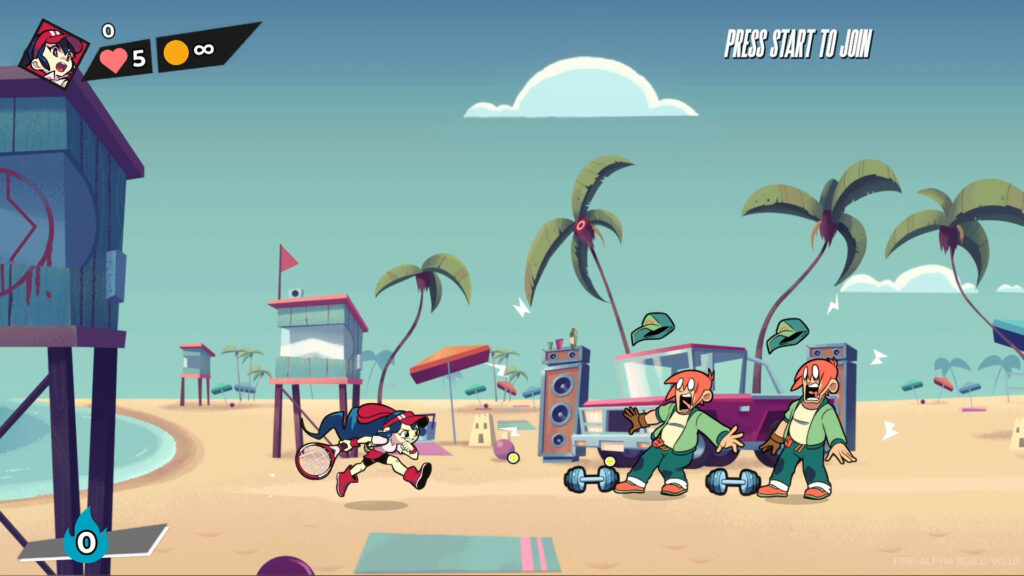
Tiebreakers represents a hybrid evolution of sports and action gameplay, merging tennis mechanics with shonen-inspired combat systems. Its combination of fast-paced rallies, character-driven abilities, and stylized presentation positions it as a unique entry in the 2D action sports genre.
Sources and Citations
- Official developer announcements and indie game previews (general industry references)
https://www.indiedb.com - Game design analysis of sports-action hybrid genres
https://www.gamedeveloper.com - Anime-inspired game design frameworks and shonen narrative structures
https://www.animenewsnetwork.com - Fighting game mechanics and competitive systems research
https://www.gdcvault.com
Recommendations
- Ashes of Creation Director Responds: Steven Sharif Breaks Silence on Allegations, Layoffs, and Studio Collapse
- The Resident Evil franchise climbs to 9th place among the world’s best-selling franchises
- Anime Expo 2026 Schedule and 8 Big Announcements We’re Expecting, From Demon Slayer to Cyberpunk: Edgerunners 2
- Kingdom Come: Deliverance 2 Translator Says He Was Fired as Warhorse Plans “AI for All Translations Going Forward”
- Valve Under Fire After ‘Plantation Simulator’ Slavery Game Appears on Steam Despite NSFW Crackdown
- Paralives Vibes Guide: Complete Guide to Vibes and How Each One Affects Your Para
- Path of Exile 2 1.0 Launches December 11, 2026 on PS5, Xbox Series X|S, and PC After Two Years of Early Access
- Intergalactic: The Heretic Prophet May Be Nearing the End of Development
- The open beta for Mortal Shell II is available now on consoles
- One Piece: Grand Gourmet Review: Fan Service Versus Depth



































































































