









In This Article (8 sections)
Transport Fever 3 Release Date, Platforms, Editions, Pricing, and Loyalty Discount
Transport Fever 3 launches on September 29, 2026, bringing a new generation of transport-network construction, logistics management, and historical simulation to the series. Its central challenge remains immediately recognizable: connect people and industries, develop profitable services, and help settlements grow. The sequel places greater emphasis on how those decisions affect the wider world, including congestion, service quality, maintenance, and the changing needs of cities.
As of September 18, 2026, the game remains a forthcoming release rather than an already-launched product. Official announcements and storefronts establish its release plans, editions, and hardware requirements, while developer presentations explain the systems behind its expanded management and creative modes. These materials support a detailed buying guide, but not conclusions about launch-day stability or performance on every configuration.
Urban Games confirmed the September 29, 2026, release date on August 25, 2026, alongside the opening of pre-orders. This is an announced launch date, not a retailer placeholder or an estimate inferred from a general release window. For readers checking the precise unlock time, the US PlayStation Store currently lists September 29 at 16:00 UTC.
That is useful information for the PlayStation listing, but it should not automatically be treated as a confirmed universal unlock time for every desktop storefront and territory. Pre-ordering should also be distinguished from receiving early playable access. For example, the official Collector’s Edition shop states that its emailed Steam keys become active on the official release date. Receiving a code before launch therefore does not mean the game can be played immediately.
The announced launch platforms are Windows PC, macOS, Linux, PlayStation 5, and Xbox Series X|S. Desktop distribution includes Steam, the Epic Games Store, and GOG. The announcement does not list PlayStation 4, Xbox One, or Nintendo Switch versions. There is an important distinction between the overall platform announcement and an individual store’s supported operating systems. Steam publishes Windows, macOS, and Linux requirements, and GOG explicitly lists all three operating systems. The Epic Games Store listing identifies Windows and Mac. Linux buyers should therefore verify the particular version they are purchasing rather than assume every storefront provides identical operating-system coverage.
On PS5, the store identifies the game as a one-player experience with offline play enabled. These details should not be confused with cross-platform mod sharing: access to community content across platforms does not imply multiplayer, shared ownership between stores, or automatic cross-platform save transfers. The practical purchasing decision is therefore about the complete package: compatible hardware, preferred storefront, account eligibility for discounts, and the edition’s actual contents.
The announced suggested retail prices are US$49.99 or €49.99 for PC Standard, and US$64.99 or €64.99 for PC Deluxe. Console Standard is US$59.99 or €59.99, while console Deluxe is US$74.99 or €74.99. The Collector’s Edition has an announced suggested price of US$119.99 or €119.99. The pre-order pack contains the TS Queen Mary, the Great Pyramid of Giza, and an Asian elephant. These represent an additional vehicle, landmark, and wildlife addition rather than an announced campaign expansion.
The pack is not restricted to the most expensive edition. The PlayStation Store, for example, explicitly includes the Pre-Order Pack with both Standard and Deluxe pre-orders. Paying for Deluxe is therefore a separate decision from securing the pre-order content. Buyers should compare the final checkout total rather than rely solely on the headline suggested price. For the physical Collector’s Edition, the official shop calculates shipping at checkout, making delivery charges another consideration.
The Standard Edition contains the full base game. Its management, sandbox, construction, and scenario content are not presented as features that require the Deluxe upgrade. The Deluxe Edition adds six vehicles: Concorde, London Bus, Trans-Europe Express, Peterbilt 359, Hong Kong Tram, and Sikorsky S-76 Spirit. It also includes the Eiffel Tower and Taj Mahal; orca, Komodo dragon, boar family, and bison wildlife; and three handcrafted maps named Redrock Bends, Northern Gates, and Emerald Shores. Further extras include Tycoon Cars, three Fun Elements, and soundtracks from previous franchise entries.
The Collector’s Edition combines a Deluxe Edition Steam key with physical items. Its contents include a 13-centimetre Hero Statue, a 200-page hardcover artbook, a Quartets card game, vehicle stickers, a train-themed metal keychain, a double-sided poster, a music box with soundtrack access, and a thank-you card signed by the development team.
Crucially, the Collector’s Edition contains a digital game copy, not a physical game disc. Its initial production batch is limited to 10,000 units; that figure describes the first batch rather than a live inventory count. For a gameplay-focused purchase, Standard is the baseline comparison. Deluxe becomes more attractive when its particular vehicles and maps matter to the intended playthrough. Collector’s Edition value depends substantially on interest in memorabilia, rather than access to a different core simulation.
Eligible Transport Fever 2 customers receive a 10% loyalty discount on Transport Fever 3 Standard or Deluxe. The offer applies on the same platform and remains available until 14 days after launch, corresponding to October 13, 2026, subject to the storefront’s precise cutoff. The account and purchase history matter. In a September 9 clarification, Urban Games explained that eligibility requires a direct purchase through the same store and account. Copies obtained through beta rewards, gifted game keys, or third-party key-selling services do not qualify under that clarification. The Collector’s Edition is excluded from the loyalty offer.
Epic provides a useful example of how the promotion appears: its listing says eligible account holders receive the discount at checkout. An undiscounted product-page price is therefore not necessarily the final eligible price. Before paying, check the account, selected edition, and final total. Also keep the two promotions separate: the loyalty offer extends beyond launch, whereas the additional content is advertised specifically as a pre-order pack. Waiting for release can therefore involve a different trade-off from pre-ordering.
Transport Fever 3 System Requirements, Vehicles, Campaign, and Core Gameplay Changes
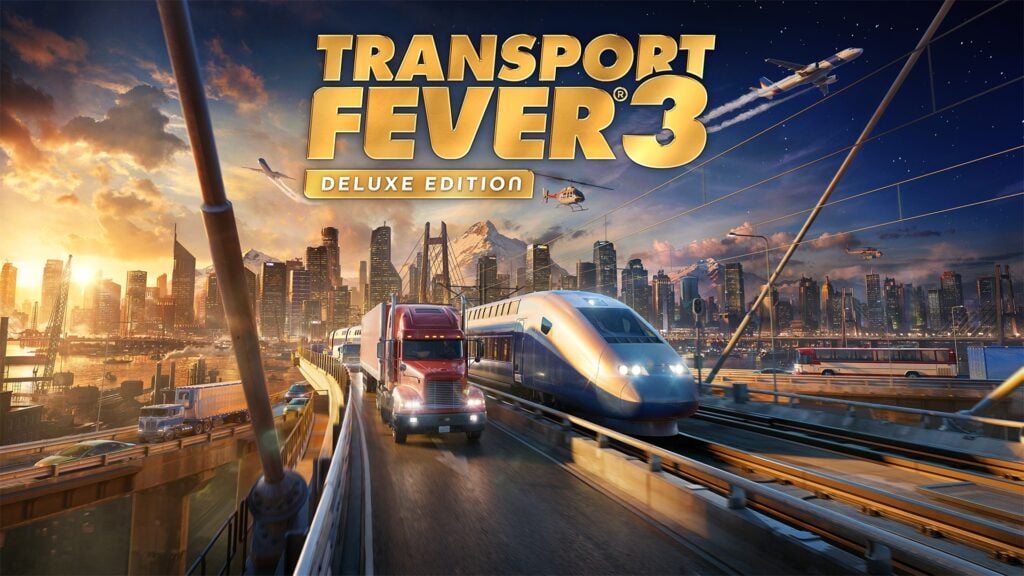
Transport Fever 3 is best understood as an expansion of the series’ transport-management approach rather than a replacement of it. The continuing foundation is the relationship between transport services, operating expenditure, industry demand, and settlement development. Infrastructure must be useful and financially sustainable, not merely impressive to look at. The July 2026 developer overview emphasizes deeper long-term progression, a redesigned interface, broader creative tools, and more control over everyday management. Those changes matter because a transport simulation can become difficult for two different reasons: the network itself may be complicated, or the information needed to manage it may be awkward to access. Better presentation is intended to address the second problem without removing the first.
The September gameplay overview reinforces another change in emphasis: growing cities become increasingly demanding. Meeting cargo needs is only part of the task; congestion, noise, pollution, and passenger satisfaction also require attention. These pressures can be adjusted or disabled rather than imposed identically on every player. The key question for returning players is consequently not whether more objects can be placed. It is whether the new feedback and progression systems make each expansion decision more interesting. That remains an assessment for release builds and extended play, rather than something a feature announcement can prove.
For Windows, the published minimum specification is Windows 10 64-bit or Windows 11, an Intel Core i5-8400 or AMD Ryzen 5 2600X, and 8GB RAM. The graphics options are NVIDIA GeForce GTX 1060, AMD Radeon RX 480, or Intel Arc A380, with the listing specifying 4GB VRAM. Required storage is 90GB. The recommended Windows specification is Windows 11, an Intel Core i7-13700K or AMD Ryzen 7 7800X3D, and 16GB RAM. Recommended graphics are NVIDIA GeForce RTX 3070, AMD Radeon RX 6800, or Intel Arc A770, with 8GB VRAM specified. Storage remains 90GB. Steam adds two important conditions: an SSD is required, and the listed Windows and Linux processors require AVX2 support. These are requirements, not optional upgrade suggestions.
Mac support is Apple Silicon only, with macOS Sequoia 15.7 or later. The minimum is an M2 Pro with 16GB memory; the recommendation is an M4 Pro with 24GB memory. Both specify 90GB of SSD storage. The “Pro” designation matters: the listing should not be rewritten as simply “any M2 or M4 Mac.” Linux requirements specify Ubuntu 24.04 or later, using the same processor, graphics, and memory tiers as Windows. Native Linux support alone does not establish a particular handheld’s performance or verification status.
There is also a source discrepancy worth flagging. Paradox’s purchasing page lists RTX 3060 Ti and RX 6700 XT recommendations, whereas the current Steam, GOG, and Epic listings specify RTX 3070 and RX 6800. The specifications above follow the matching storefront listings. None of these requirements establishes a guaranteed frame rate, resolution, or maximum comfortable map population. Treat minimum compatibility and a preferred late-game experience as different questions.
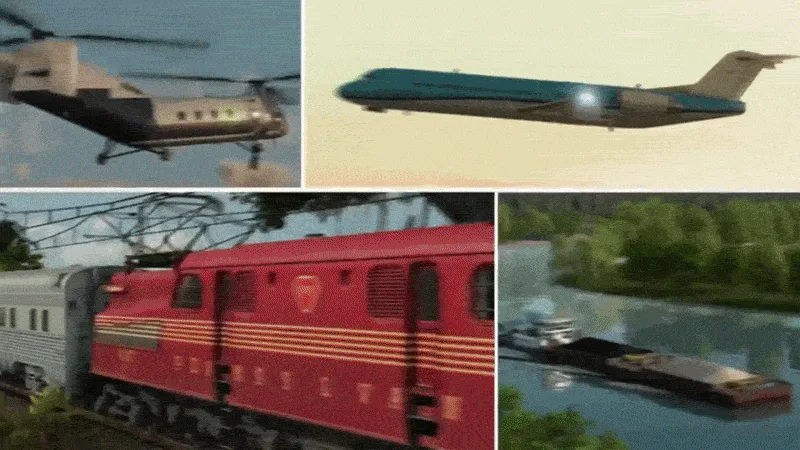
Urban Games’ July 9 overview confirms more than 300 vehicles in the base game. That updated figure is more useful than repeating the lower “275+” wording still visible in some storefront feature summaries. The range covers trains, buses, trams, trucks, ships, aircraft, and helicopters, progressing from early transport technology toward modern high-capacity and high-speed services. The publisher describes a progression that includes horse-drawn wagons, steam trains, paddle steamers, jet aircraft, supertankers, and helicopters.
An especially notable addition is the treatment of trams. The infrastructure developer blog confirms cargo trams and light-rail-capable tram-trains that can transition between tram infrastructure and railway tracks. These are changes to how networks can connect, not simply additional vehicle models. For planning purposes, the most useful comparison is not necessarily “old versus new.” A vehicle should be judged against its intended route. A premium fleet is difficult to justify when the service cannot fill it, while a cheaper service may become unsuitable once demand or delivery expectations increase.
Transport Fever 3 includes eight campaign missions in historical settings. The opening portion also serves as the tutorial, introducing the game’s core mechanics. Urban Games says feedback from the previous campaign informed an approach with greater variety and increasing difficulty as players progress. The wider game covers transport development from 1900 to 2030 and beyond. That span should not be mistaken for a published list of individual campaign dates or locations. A historical setting confirms the campaign’s general approach, not every scenario detail.
The publisher also describes architecture, industries, and vehicles changing with the era. Historical progression therefore affects the surrounding world as well as the available transport technology. For newcomers, the campaign offers a more directed starting point than immediately designing an unrestricted network. A bounded objective makes it easier to understand why a particular connection, vehicle, or service pattern is useful. Returning players also have a reason to revisit the introductory material. The July overview confirms new tutorials and a guide system, which should be relevant when learning how familiar transport concepts interact with the sequel’s revised management systems.
Transport Fever 3 Tycoon Mode, Industries, Logistics, Roads, Traffic, and Environmental Systems
Tycoon progression introduces a company-ranking system that moves the player from junior status toward Tycoon. Advancement is linked to the growth of the world’s population, while higher ranks unlock bonuses. Headquarters placement also matters because it benefits a nearby city, with further expansions available through progression. This changes the meaning of success. Cash remains necessary, but company development is tied to the world the network supports. A profitable operation concentrated in one corner of the map is therefore not the only consideration when pursuing broader progression.
The published feature list also confirms a dynamic loan and contract system. Contracts introduce objectives and risk-versus-reward decisions, but the materials reviewed do not establish a universal interest rate, fixed reward schedule, or a single optimal borrowing strategy. A sensible way to approach such decisions is to separate expansion value from immediate affordability. A contract may look attractive while still requiring infrastructure that has little use afterward. Conversely, an initially modest connection could support several later services. Urban Games’ latest overview stresses that successful cities generate additional problems to solve. Noise, pollution, traffic, and satisfaction can become more difficult to balance as growth continues, while difficulty settings allow players to reduce those pressures.
The storefront feature overview lists more than 35 industries, including offshore activity such as fishing grounds and oil platforms. Industry expansion responds to demand, while workers and optional inputs can increase production. The announced logistics tools include loading and unloading controls, warehouses, and specialized terminals for intermediate storage. These features make the movement between production stages as important as the endpoints. In a hypothetical network, several smaller collection services might feed a central transfer point, with larger vehicles handling the next stage. Such an arrangement only makes sense when its added transfers, infrastructure, and operating costs are justified.
A September 11 developer clarification adds a particularly important economic detail: cargo payment depends on the cargo type rather than the distance travelled, provided delivery occurs within its time limit. That means a longer route should not automatically be assumed to generate a larger cargo payment. Warehousing should similarly be treated as part of a transport plan, not as a substitute for one. Storage capacity has little strategic value when goods cannot leave it at the required rate. The useful questions are therefore operational: where production is constrained, which transfer adds delay, and whether the next investment should increase carrying capacity or remove an existing bottleneck.
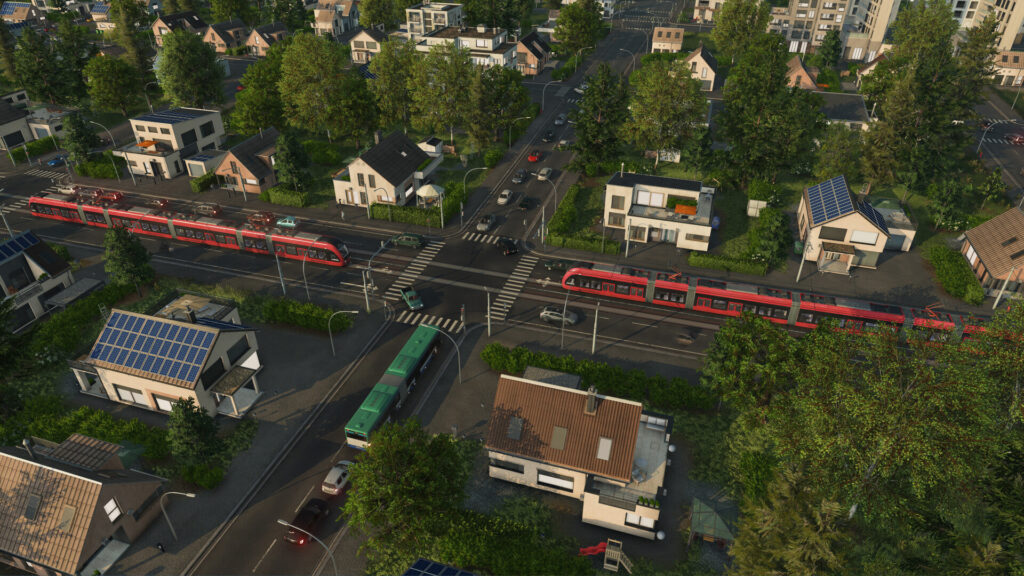
Road construction receives a substantial redesign. Continuous building allows roads and tracks to be extended with fewer interruptions, while the older drag-and-confirm method remains available. Adjustable construction settings and improved snapping support more controlled alignments, and road lanes can split or merge into different configurations. The lane tools go beyond choosing a road width. Players can control connections between lanes, block particular vehicle paths, customize turning arrangements and pedestrian crossings, and adjust traffic-light phases. Irregular intersections also make it possible to build junctions that do not conform to a simple grid.
These controls suggest a more targeted approach to congestion. Widening a road addresses capacity, but it may not solve a poorly organized turning movement. An unsuitable junction can continue to disrupt services even when the roads approaching it are generous. For an illustrative freight corridor, the first diagnostic question would be where vehicles lose time: approaching the junction, waiting to turn, or queuing beyond it. Each problem calls for a different response. The distinction matters for careful builders. More available controls are useful only when they help identify and solve a specific problem, rather than encourage complexity for its own sake.
Transport Fever 3 includes temperate, desert, tropical, and subarctic environments. These provide different geographical settings for networks and settlements rather than a single landscape with interchangeable decoration. The weather system can alternate between sunshine, cloud cover, and rain, or remain fixed at a preferred setting. Time of day can likewise be fixed, cycled, or synchronized with real time. Lighting and ambient sound respond to these conditions and to the surrounding environment.
These controls are particularly relevant to players interested in observing or presenting their networks. A fixed lighting setup can support consistent screenshots, while changing conditions can make the same route feel different over the course of a session. However, visual weather should not be expanded into unsupported mechanical promises. The cited developer explanation does not establish that rain causes road closures, that snow accumulates seasonally, or that storms damage infrastructure. Nor does synchronizing the time of day mean the game imports live weather data. The confirmed features concern controllable weather, lighting, and environmental audio.

Transport Fever 3 Sandbox Mode, Map Editor, Mod Support, and Creative Tools
Sandbox is intended for players who want control over the world rather than constant financial pressure. The developer’s Tycoon blog confirms that costs can be switched off, top-level bonuses can be unlocked immediately, and sandbox tools allow cities and industries to be placed directly. The same presentation describes substantial city controls. Players can change settlement size, configure required cargo, freeze growth, and adjust the distribution of building levels. Sandbox therefore reaches beyond an unlimited-money option: it can shape the appearance and development of the simulation itself.
The in-game map editor provides another route to customization. Published features include terrain sculpting, ground painting, vegetation placement, and map creation, alongside randomly generated worlds. The three Deluxe maps are additional prepared settings, not a requirement for accessing the base game’s creative tools. A useful creative approach is to begin with one geographical constraint. A narrow valley might become a study in rail alignment and interchange placement; a coastal setting could emphasize connections between ports and inland services. These are design examples rather than named campaign scenarios. Creative freedom should not be confused with unlimited technical scale. Larger or more elaborate designs still need to be evaluated against the eventual release build and the hardware running it.
Transport Fever 3 uses an integrated mod.io-powered mod browser across its supported platforms. The current official FAQ explicitly states that Steam Workshop will not be included. This is a settled statement in the current support information, superseding earlier discussion in which implementation details were still being considered. The developer has also introduced a Curated Mods Program. Experienced creators receive early access, direct developer support, and financial grants to help produce content that meets quality and eligibility standards for launch. Its purpose is to support a reliable selection of community additions from the beginning rather than wait for the ecosystem to develop entirely after release.
Behind the browser, unique mod identifiers help the game recognize dependencies and identify missing requirements. This is important when a creation depends on other content: locating a vehicle or building is only one part of making a modded setup work correctly. The July overview describes day-one cross-platform mod support as free. Financial support for participating creators should therefore not be confused with an announcement that players must pay for those mods. Cross-platform distribution also does not prove that every Transport Fever 2 modification will run unchanged. Existing creations should be judged by their authors’ stated Transport Fever 3 compatibility, not merely by a familiar name or appearance.

Frequently Asked Questions (FAQs)
- When does Transport Fever 3 release?
Transport Fever 3 is scheduled to launch on September 29, 2026. Urban Games confirmed that date alongside the opening of pre-orders, so it is not just a placeholder window. As of September 18, 2026, the game remains an upcoming release rather than a product that is already generally available. The US PlayStation Store lists September 29 at 16:00 UTC, but that should not automatically be treated as the unlock time for every platform, storefront, or region. - Can Transport Fever 3 be played offline?
The PS5 listing explicitly supports offline play and identifies Transport Fever 3 as a one-player experience. GOG also describes its version as playable offline without requiring GOG Galaxy, which is useful for players who prefer a DRM-light or launcher-free setup. However, downloading the game, installing patches, accessing store purchases, or browsing additional content are separate matters from offline play. Offline support means the game can be played without an active online session once properly installed, not that every related service works without internet access. - Do Transport Fever 2 owners receive a discount?
Eligible Transport Fever 2 owners receive 10% off Transport Fever 3 Standard or Deluxe. The discount depends on account and storefront conditions: Urban Games clarified that it applies to a direct purchase through the same store and account. Copies obtained through beta rewards, gifted keys, or third-party key-selling services do not qualify under that clarification, and the Collector’s Edition is excluded. Epic specifically says the reduction is applied at checkout, so eligible buyers should check the final total before completing payment rather than relying only on the product-page price. - What are the Transport Fever 3 pre-order bonuses?
The advertised pre-order pack contains the TS Queen Mary, the Great Pyramid of Giza, and an Asian elephant. These are an extra vehicle, landmark, and wildlife addition, not a separate campaign expansion. The pack is also separate from the Deluxe Edition’s added vehicles, maps, landmarks, wildlife, Fun Elements, Tycoon Cars, and soundtrack extras. In other words, pre-order content and Deluxe content are two different categories, and the pre-order pack is not limited only to the most expensive edition. - Does the Collector’s Edition include a console copy?
No. The official shop’s Collector’s Edition includes a Deluxe Edition Steam key, not a PlayStation or Xbox code and not a physical disc. It should therefore not be purchased on the assumption that its game copy can be redeemed on a console. The Collector’s Edition is mainly a Deluxe PC copy bundled with physical memorabilia, including items such as the Hero Statue, hardcover artbook, Quartets card game, stickers, metal keychain, poster, music box with soundtrack access, and signed thank-you card. - Will Transport Fever 3 work on an Intel Mac?
The published Mac requirements specify Apple Silicon only. They begin at an M2 Pro with 16GB memory and macOS Sequoia 15.7 or later, while the recommended Mac specification is an M4 Pro with 24GB memory. That means Intel Mac compatibility is not established by the listing. It is also important not to simplify the requirement to “any M2 Mac,” because the published minimum specifically says M2 Pro. - How many vehicles are included in the base game?
Urban Games’ updated July overview confirms more than 300 vehicles in the base game. That figure covers a broad historical range, including trains, buses, trams, trucks, ships, aircraft, and helicopters. It also means buyers should not assume the Deluxe Edition is required to reach the advertised base-game vehicle count. Deluxe adds its own specific vehicles, but the “more than 300” figure refers to the base game itself. - How many campaign missions are there?
The official FAQ confirms eight campaign missions. The opening portion also serves as a tutorial, introducing the core mechanics before later missions become more varied and demanding. The campaign is set within the wider historical transport span of 1900 to 2030 and beyond, but that does not mean every individual mission date or location has been fully listed publicly. For new players, the campaign should provide a more guided entry point than immediately starting in unrestricted sandbox or tycoon play. - Can the economic restrictions be disabled?
Yes. The developer confirms that costs can be switched off, making it possible to play in a more construction-focused sandbox style rather than under normal financial pressure. Sandbox tools also allow players to place cities and industries directly, adjust city size, configure required cargo, freeze growth, and change building-level distribution. This means the mode is not just “unlimited money”; it offers broader control over how the simulated world is shaped and developed. - Will community mods be available at launch?
Urban Games’ Curated Mods Program is designed to provide a selection of quality-controlled mods on day one. Participating creators receive early access, developer support, and financial grants to help prepare eligible content for launch. Transport Fever 3 uses an integrated mod.io-powered browser across supported platforms, while the official FAQ says Steam Workshop will not be included. Even so, individual mod availability should still be checked in the browser at release, and Transport Fever 2 mods should not be assumed compatible unless their creators confirm support.

Conclusion
Transport Fever 3 launches 29 Sept 2026 with a clear ambition: make the transport network and the world around it more closely connected. Its development presentations emphasize both deeper management and greater freedom to customize the experience, rather than forcing every player into the same level of economic pressure.
The strongest purchasing approach is to start with practical requirements. Confirm the correct platform, examine the hardware specification, check account eligibility for the loyalty offer, and compare edition contents against the intended style of play. Physical collectibles, extra vehicles, and pre-order items answer different purchasing priorities.
The announced features provide substantial reasons for interest. Whether they deliver a consistently satisfying long-term simulation, especially in heavily developed worlds, remains a question for the released game rather than its pre-launch promises.
Sources and Citations
- Urban Games, Release Announcement and Launch Confirmation, August 25 and September 29, 2026 : Official announcements establishing the September 29 release across PC and consoles, the available editions and the loyalty discount for existing Transport Fever 2 owners. The August announcement explains pricing and preorder bonuses, while the September launch post confirms the game’s actual release. Together, they distinguish the original purchasing arrangements from launch confirmation. Transport Fever 3
Citation: Release Date Announced and Preorders Started and Transport Fever 3 Officially Released. (Transport Fever 3) - Urban Games, Transport Fever 3 Official Website : Official game hub introducing transport networks across land, sea and air, alongside the relationship between deliveries, city growth, maintenance costs and reputation. It provides edition comparisons, purchasing links, development news and support resources, making it a central reference for the game’s advertised features and subsequent updates rather than a substitute for individual technical guides. Transport Fever 3
Citation: Transport Fever 3 Official Website. (Urban Games) - Urban Games, Collector’s Edition Official Product Listing : Dedicated merchandise listing detailing the Deluxe Edition, vehicle statue, 200 page hardcover artbook, card game, stickers, keychain, poster and soundtrack access. It confirms that the included Steam key is delivered by email after order confirmation, separately from the physical collection. This direct product page replaces the general merchandise storefront supplied. Transport Fever Merch Store
Citation: Transport Fever 3 Collector’s Edition. (Transport Fever Merchandise Store) - Steam, Transport Fever 3 Official Store Page : Official listing confirming Urban Games as developer, Paradox Interactive as publisher and September 29, 2026 as the release date. It provides edition contents, supported languages and Windows, macOS and Linux requirements, including 90 GB of storage and an SSD. The correct application ID is 3493540; the supplied 2645760 address opens the Bloodbound soundtrack. Steam Store
Citation: Transport Fever 3 on Steam. (Steam) - GOG, Transport Fever 3 Official Store Page : Official product listing documenting Windows, macOS and Linux support, development and publishing credits, language options and the September 29 release. It also explains that the game can be installed using an offline installer and played without mandatory GOG Galaxy use. The page provides a separate reference for GOG’s purchase conditions, features and available Deluxe Upgrade. GOG.COM
Citation: Transport Fever 3 on GOG. (GOG) - Epic Games Store, Transport Fever 3 Official Product Listing : Official Windows and macOS listing providing the release date, Standard and Deluxe purchasing options, achievements, supported languages and hardware requirements. It also explains the loyalty discount for eligible Epic accounts that own Transport Fever 2. The corrected product address below replaces the supplied URL, which returned a missing page. Epic Games Store
Citation: Transport Fever 3 on Epic Games Store. (Epic Games Store) - PlayStation Store, Transport Fever 3 Official PS5 Listing : Dedicated PS5 product page confirming offline single player support and Remote Play, alongside the Standard Edition, Deluxe Edition and separate Deluxe Upgrade. It also lists accessibility options, including adjustable difficulty, game speed, pausing and manual saving. This provides platform specific information and edition comparisons rather than relying on the general PlayStation Store homepage. PlayStation Store
Citation: Transport Fever 3 on PlayStation Store. (PlayStation Store) - Paradox Interactive, Purchasing and Edition Information : Publisher’s purchasing page presenting Steam key options, Deluxe content and compatibility with Windows, macOS and Linux. It identifies Urban Games as developer and supplies minimum and recommended specifications. Its recommended graphics cards differ from Steam’s current listing, so hardware requirements should be attributed to the particular storefront rather than presented as identical across both sources. Paradox Interactive
Citation: Transport Fever 3: Buy and Compare Editions. (Paradox Interactive) - Urban Games, Infrastructure Developer Blog, January 14, 2026 : Detailed developer explanation of continuous road and railway construction, flexible intersections, lane connections and customisable traffic lights. It also covers cargo trams, tram services that continue onto railway tracks, train priorities and easier waypoint placement. The article explains the design behind these systems and distinguishes optional advanced tools from the simpler construction workflow. Transport Fever 3
Citation: Developer Blog, Episode 3: Infrastructure. (Transport Fever 3) - Urban Games, Tycoon Developer Blog, March 27, 2026 : Official breakdown of company ranks, headquarters expansion, regional bonuses and the relationship between transport services and city growth. It explains how passenger journeys and cargo deliveries contribute to development, while municipal boundaries influence strategic decisions. The article also describes adjustable mechanics and difficulty settings, allowing players to balance economic challenges against greater creative freedom. Transport Fever 3
Citation: Developer Blog, Episode 4: Tycoon. (Transport Fever 3) - Urban Games, Highlights Developer Blog, July 30, 2026 : Developer overview of improvements informed by community feedback and beta testing, including clearer cargo overlays, direct editing of routes and stops, automatic line naming and vehicle comparisons. It also explains revised train reservation behaviour and alternative terminal selection, providing specific examples of interface and traffic improvements rather than only a broad promotional feature list. Transport Fever 3
Citation: Developer Blog, Episode 5: Highlights. (Transport Fever 3) - Urban Games, Tycoon Gameplay Overview, September 10, 2026 : Official gameplay presentation explaining how expanding cities create increasingly demanding transport, supply and environmental challenges. It discusses congestion, noise, pollution and population satisfaction, while showing how these pressures interact with network planning. The accompanying article confirms that individual factors can be adjusted or disabled, distinguishing configurable challenges from rules every player must use. Transport Fever 3
Citation: Transport Fever 3: Tycoon Gameplay Overview Revealed. (Transport Fever 3) - Urban Games, Official Support and Frequently Asked Questions : Developer maintained reference covering platforms, editions, campaign structure, loyalty discounts and the focus on single player gameplay. It also explains the integrated mod browser, its use of mod.io and the decision not to support Steam Workshop. The page provides a support contact form and links to known issues and community forums for further troubleshooting. transportfever3.com
Citation: Transport Fever 3 Support and Frequently Asked Questions. (Urban Games) - Urban Games, Curated Mods Program Announcement, April 22, 2026 : Official announcement and program guide explaining how selected community creators receive development support and financial grants while their mods undergo technical and visual review. The FAQ confirms that curated mods are free and that other creators can still publish outside the program. It also distinguishes adapting older mods from direct compatibility with Transport Fever 2 files. Transport Fever 3
Citation: Curated Mods Program Revealed and Program Requirements and FAQ. (Transport Fever 3)
Recommendations
- What Are Speed Skills in Forza Horizon 6?
- “Our Goal Is to Not Have a Huge Gap”: Boss Confirms Harry Potter Series Won’t Be Annual as Season 2 Scripts Remain Unfinished
- Nintendo Switch 2 Games 2026: Nintendo Hints at Major New Releases this Fall and Why the Original Switch Still Matters
- Pentagon Reveals First Wave of UFO Files as the Internet Tries to Make Sense of Them: Full Breakdown of Declassified UAP Documents
- Marathon Open Play Week Starts June 2: How to Join, What to Expect, and What Resets
- Splatoon Raiders Brings the Series Back as a Switch 2 Spin-Off With New Gameplay
- 13 Years After It Was Cancelled, Star Wars: Battlefront III Prequel “Star Wars: First Assault” Is Playable On PC (Here’s What We Know)
- All Actors and Cameos in 007 First Light (2026) – Full Cast List, Voice Actors, Celebrity Cameos, and Hidden Appearances Explained
- Kingdom Hearts 4 Surprise Nintendo Direct 2026 Reveal: Switch 2 Trailer, Gameplay, and Story Details
- Upcoming Folklore-Inspired Hack-and-Slash Game, TSAREVNA. Age of Tales from Watt Studio Slavic-Inspired Game Features a Combat System Based on Ballet Movements



































































































