












In This Article (9 sections)
Apple’s WWDC 2026 Siri AI Keynote Marks a Shift Toward an AI-First Ecosystem
A major focus of the Engadget Podcast’s WWDC 2026 discussion centers on Apple’s next-generation Siri AI overhaul, widely described as the most significant evolution of Apple’s digital assistant since its introduction. The conversation frames the keynote as a turning point where artificial intelligence becomes deeply embedded across the Apple ecosystem, transforming Siri from a reactive assistant into a proactive, context-aware intelligence layer.
The podcast emphasizes how Apple is positioning Siri AI not just as a feature but as a core operating system capability across iOS, iPadOS, macOS, and visionOS. The discussion also highlights competitive pressure from advanced AI systems such as ChatGPT and Gemini and how Apple’s strategy is designed to differentiate through privacy, on-device processing, and seamless hardware integration.
Key voices on the Engadget Podcast describe WWDC 2026 as a defining moment where Apple shifts from incremental updates to a full AI-first ecosystem strategy, with Siri AI as the centerpiece. The analysis focuses heavily on the transformation of Siri into a deeply integrated AI assistant powered by Apple Intelligence infrastructure. Siri is no longer being positioned as a simple voice command tool but as a multi-modal AI system capable of understanding context, intent, and cross-device activity.
The podcast emphasizes three major takeaways:
- Siri AI is now deeply embedded into system-level workflows.
- Apple Intelligence is the backbone of all AI features.
- The assistant is designed to operate across apps without friction.
According to the podcast, the keynote signals Apple’s attempt to reclaim leadership in consumer AI by leveraging its hardware-software integration advantage. Entities such as Apple and Siri are repeatedly referenced as central to this shift.
The WWDC 2026 recap also highlights Siri AI as the defining feature of the newest iOS release, widely believed to be iOS 27. The update introduces system-wide intelligence that allows Siri to operate more like a background reasoning engine rather than a command-based assistant. The Engadget Podcast notes that Apple structured the keynote around AI-first design principles, with Siri appearing in nearly every demo, from messaging and productivity to health tracking and entertainment.
The biggest changes include:
- System-wide contextual awareness.
- Persistent memory across apps, with privacy constraints.
- Real-time task execution across Apple services.
- Deep integration with Apple Intelligence APIs.
Together, these changes mark a fundamental shift in how users interact with devices in the Apple ecosystem.

Siri AI’s WWDC 2026 Rebuild and Apple Intelligence Upgrades
One of the most discussed points on the Engadget Podcast is the claim that Siri AI has been rebuilt from the ground up. While the core branding remains, the underlying architecture has been redesigned to incorporate large language model reasoning and on-device AI processing. Unlike earlier versions of Siri, which relied heavily on scripted responses, the new system is designed to interpret ambiguous requests and execute multi-stage actions without constant user refinement.
The rebuild includes:
- A new hybrid AI architecture, combining device and cloud compute.
- Improved natural language understanding.
- Multi-step reasoning capabilities.
- An enhanced personalization engine.
The podcast also suggests that Apple’s redesign focuses heavily on latency reduction and privacy preservation, ensuring most processing happens locally where possible. Apple Intelligence is described as the foundational layer powering Siri AI and other system features, with the Engadget Podcast breaking down these upgrades as a unified AI framework integrated across Apple devices.
Key Apple Intelligence upgrades include:
- Cross-app intelligence coordination.
- On-device model optimization.
- Private cloud compute enhancements.
- Developer access to AI APIs.
The system is designed so that Siri is not an isolated assistant, but part of a broader intelligence layer that extends across productivity, communication, and creative tools. The podcast highlights that Apple’s approach differs from competitors by prioritizing privacy-first AI computation while still enabling advanced generative capabilities.
The Engadget Podcast also outlines several major Siri AI features introduced during WWDC 2026, describing them as capabilities that redefine how users interact with Apple devices. Notable features include:
- Voice-driven multi-app workflows.
- Context-aware suggestions based on screen content.
- Real-time summarization of documents and messages.
- Adaptive learning from user habits.
- Cross-device task continuation.
Siri AI can now, for example, summarize a meeting on Mac, create follow-up tasks on iPhone, and send reminders on Apple Watch without manual switching. The assistant is also more conversational, allowing users to refine commands naturally without restarting interactions.

Why Siri AI is Central to Apple’s AI Strategy and IOS 27 Ecosystem
The Engadget Podcast strongly argues that Siri AI represents Apple’s most important software evolution in years, primarily because of its role as a foundational layer across the entire ecosystem. The discussion suggests that Siri AI is not just an upgrade but a strategic pivot toward AI-native computing.
The reasons include:
- It redefines user-device interaction models.
- It strengthens Apple’s ecosystem lock-in through intelligence.
- It competes directly with major AI platforms.
- It unlocks new developer opportunities.
Entities such as OpenAI and Google are referenced as key competitive benchmarks in the AI landscape. A major segment of the podcast compares Siri AI with leading AI systems like ChatGPT and Gemini. While acknowledging that Apple’s system is newer, the analysis highlights key differences in philosophy and design.
The comparison points include:
- ChatGPT: strong generative reasoning and conversational depth.
- Gemini: deep integration with Google services and search.
- Siri AI: system-level execution and privacy-first design.
Siri AI’s biggest advantage is its direct integration with device-level functions, enabling real-world actions such as editing files, scheduling, and controlling apps without third-party intermediaries. However, the podcast also notes that Siri AI may initially lag behind in open-ended reasoning compared to more mature LLM systems.
The Engadget Podcast further emphasizes that iOS 27 is designed as an AI-native operating system, with Siri AI embedded deeply into system workflows rather than existing as a standalone feature. Integration highlights include:
- Lock screen AI suggestions.
- Smart notifications prioritization.
- AI-enhanced Spotlight search.
- App-level Siri automation triggers.
The assistant also synchronizes across devices, allowing users to begin tasks on one device and complete them on another seamlessly. This tight integration is central to Apple’s ecosystem strategy and reinforces the role of Siri as a continuous assistant rather than a reactive tool.
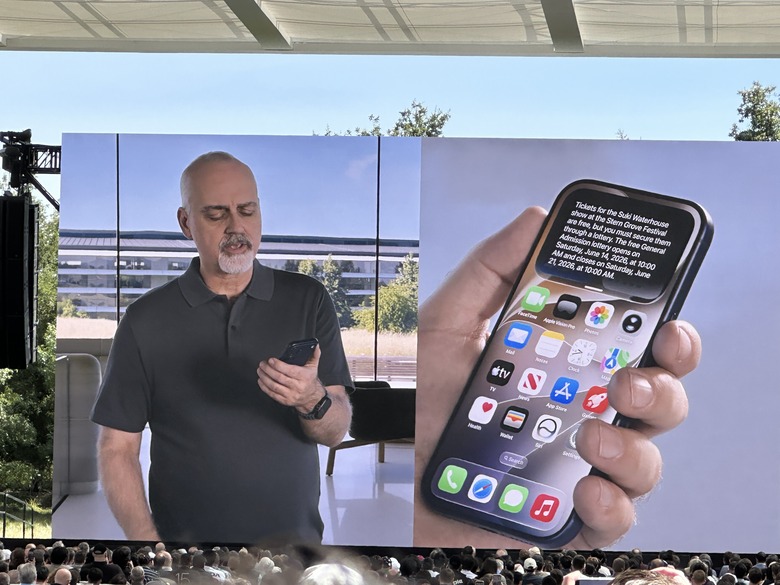
Siri AI Expands Across VisionOS, Standalone Apps, and Hidden System Features
The Engadget Podcast also explores updates to visionOS 27, where Siri AI plays a crucial role in spatial computing experiences. The integration allows users to interact with virtual environments more naturally, blending voice intelligence with spatial awareness in ways that could reshape productivity and immersive media.
Key visionOS 27 enhancements include:
- Voice-controlled spatial navigation.
- AI-assisted object recognition in AR environments.
- Context-aware spatial overlays.
- Gesture and voice hybrid commands.
The podcast suggests this may be one of the most transformative applications of Siri AI, especially as Apple continues to connect artificial intelligence with spatial computing. Rather than functioning only as a voice assistant, Siri AI becomes part of the user’s environment, helping interpret objects, respond to context, and support more fluid interactions inside virtual spaces.
One of the most surprising revelations discussed is the introduction of a standalone Siri app. According to the Engadget podcast, this move signals Apple’s intent to make Siri more accessible beyond system-level interactions. Potential implications include:
- A dedicated conversational interface.
- An advanced AI task management hub.
- Centralized automation control.
- A cross-platform assistant experience.
This shift suggests Apple may be exploring a more flexible AI product strategy, potentially expanding Siri beyond traditional device constraints. The podcast also highlights several lesser-known Siri AI capabilities that were not heavily emphasized in the keynote, including predictive task automation based on routine behavior, AI-generated app shortcuts, contextual email and message drafting, and smart device coordination in smart homes. Together, these features suggest a deeper level of system intelligence that extends beyond visible user interactions.
Apple’s Siri AI Strategy Centers on Privacy, Partnerships, and Long-Term Ecosystem Control
Privacy remains a core theme throughout the Engadget podcast discussion. Apple’s approach to Siri AI is heavily centered on minimizing data exposure and maximizing on-device processing, reinforcing the company’s positioning of privacy as a competitive advantage in the AI race.
Key privacy improvements include:
- On-device AI inference for sensitive tasks.
- Encrypted cloud computation for complex queries.
- User-controlled memory settings.
- Transparent data usage logs.
Siri AI is designed to process as much data locally as possible, reducing reliance on external servers and limiting exposure of personal information. The podcast emphasizes that this privacy-first approach remains central to how Apple differentiates itself from other AI platforms.
The Engadget Podcast also explores Apple’s potential collaboration strategies, including references to integration or support for third-party AI models such as Gemini. Key points include:
- Hybrid AI model support for complex queries.
- Strategic partnerships for cloud-based intelligence.
- Maintaining an Apple-controlled user experience layer.
- Balancing competition and collaboration in AI ecosystems.
The discussion suggests Apple is willing to integrate external AI capabilities while maintaining Siri as the primary interface layer. This allows Apple to benefit from broader AI advances while keeping control over how users experience those systems across its devices.
The podcast briefly touches on speculation surrounding what is described as Tim Cook’s final WWDC keynote. While presented as part of industry discussion rather than a confirmed fact, the narrative focuses on leadership transition and strategic direction. Key implications discussed include long-term AI strategy continuity, expansion of the Apple Intelligence ecosystem, reinforcement of hardware-software synergy, and a focus on privacy-centric AI leadership. The conversation frames Apple’s AI direction as deeply institutional rather than dependent on a single executive figure.

Frequently Asked Questions (FAQs)
- Is Siri AI available globally?
Siri AI availability is expected to roll out gradually across regions and languages. Some features may launch first in select markets, especially where Apple has full language support, cloud infrastructure, and local privacy compliance in place. - What is Siri AI in WWDC 2026?
Siri AI is Apple’s upgraded intelligent assistant powered by Apple Intelligence and integrated across Apple devices. It is presented as a major evolution of Siri, moving beyond simple voice commands into a more context-aware assistant that can understand intent, work across apps, and support system-level tasks. - Is Siri AI completely new?
Yes, Siri AI is described as being rebuilt with a modern AI architecture that combines on-device processing with cloud support for more complex tasks. While it keeps the Siri name and role, the underlying system has been redesigned to support large language model reasoning, faster responses, and stronger personalization. - How does Siri AI differ from old Siri?
The new Siri AI is designed to understand context, perform multi-step tasks, and interact across apps more intelligently. Older versions of Siri often relied on direct commands and scripted responses, while Siri AI can interpret more natural requests and continue tasks across Apple services with less manual input. - Does Siri AI work offline?
Many Siri AI features are designed to operate on-device, especially tasks involving personal data or basic system actions. However, more advanced requests, such as complex reasoning or generative AI tasks, may still require cloud support through Apple’s private cloud compute system. - Is Siri AI better than ChatGPT?
Siri AI is stronger in device-level integration because it can interact directly with Apple apps, settings, files, reminders, and services. However, ChatGPT may still be stronger for open-ended reasoning, long-form conversation, and broader generative tasks, depending on the use case. - What devices support Siri AI?
Siri AI is expected to support newer Apple devices running iOS 27, updated versions of macOS, and visionOS 27. Because many features rely on advanced on-device AI processing, some older devices may not support the full set of Siri AI capabilities. - Is Siri AI private?
Yes, Apple emphasizes privacy through on-device processing, encrypted computation, and user-controlled memory settings. The goal is to process as much personal information locally as possible, reducing reliance on external servers and limiting exposure of sensitive user data. - Can developers use Siri AI?
Yes, developers can use Siri AI through Apple Intelligence APIs and system integrations. This allows apps to connect more deeply with Siri-driven workflows, automation triggers, and cross-app intelligence features while still operating within Apple’s privacy and platform rules. - Does Siri AI replace apps?
No, Siri AI does not replace apps entirely. Instead, it enhances how users interact with apps by helping automate tasks, move information between services, summarize content, and execute actions without requiring users to manually open and manage every app.

Conclusion
The Engadget Podcast’s WWDC 2026 coverage positions Siri AI as a transformative shift in Apple’s ecosystem strategy. By embedding intelligence directly into operating systems, Apple is redefining how users interact with devices, moving toward a model where AI is not an add-on but a foundational layer of computing.
The combination of Apple Intelligence, privacy-first design, and deep hardware integration sets Siri AI apart from competing systems, even as it enters a rapidly evolving AI landscape dominated by advanced conversational models.
Sources and Citations
- Apple WWDC Official Page
https://www.apple.com/apple-events/wwdc/ - Engadget
https://www.engadget.com/ - Siri Overview (Apple Support)
https://support.apple.com/siri - Apple Intelligence Overview
https://www.apple.com/apple-intelligence/ - WWDC Developer Documentation
https://developer.apple.com/wwdc/ - Google AI Overview (Gemini)
https://ai.google/ - OpenAI Overview (ChatGPT)
https://openai.com/
Recommended
- Warhammer 40,000 Secret Level: Episode Breakdown, Character Insights, and Community Reactions
- Blizzard Responds to Overwatch 10Th Anniversary Event Backlash Explained
- Emberville Pixel Fantasy Action RPG with Unique Combat Mechanics – Gameplay, Classes, and World Exploration Guide
- GameStop CEO Evades Questions About Where Money for eBay Acquisition Comes From: Deal Size, Financing Plan, and What’s Next
- Lego Batman: Legacy of the Dark Knight, Complete Vehicle Guide (All Batmobiles, Batcycles & Unlock Methods)
- RealBlend Unity’s Polybrush Alternative For Mesh Painting & Creation – The Ultimate Tool for Vertex & Texture Workflows
- The Whisper Man Netflix Serial Killer Thriller: Release Date, Plot, Cast, and Streaming Details Before Labor Day
- Studio Mir Animation Success Explained
- Nintendo Confirms a Summer Release Date for Rhythm Heaven Groove / Rhythm Paradise Groove (July 2, 2026)
- Persona 6 Leak May Be Real as Reliable Insider Claims Reference Art Isn’t AI Fake



































































































