







Entertainment marketing, celebrity culture, and audience psychology increasingly meet in one short, high-performing social-media prompt: a public thank-you followed by a low-effort question about “favourite roles.” This language is not random. It sits at the intersection of parasocial interaction (the “illusion” of conversational closeness), platform distribution systems that reward engagement, and an industry that increasingly treats visible fandom signals—comments, shares, and even follower counts—as actionable feedback.
“Thanks for Being Here” Meaning: Why Celebrities Use This Phrase to Engage Fans
“Thanks for being here” functions as an appreciation cue that recognises the audience as active participants rather than passive spectators. In classic media theory, parasocial interaction is strengthened when a performer addresses the audience in a direct, conversational way—creating a “seeming face-to-face relationship” (even though the relationship is structurally one-sided). A gratitude opener mimics everyday social etiquette (“I see you” / “I appreciate you”), which can make celebrity communication feel more interpersonal.
In social and relationship research, gratitude and reciprocity norms matter because they shape expectations that social exchange should be acknowledged and (in some way) “returned.” Even when no direct exchange is possible at scale, “thanks” can symbolically activate the same social rule: people feel more comfortable responding when they feel noticed or valued.
On social platforms, this courtesy also doubles as a behavioural prompt. When a message lowers perceived social distance and frames participation as welcomed, it can increase the likelihood that fans will comment—an outcome that matters because platforms treat interactions as signals for ranking and distribution.
What Does “What’s Your Favorite Role I’ve Done So Far?” Really Mean?
On its face, “What’s your favourite role I’ve done so far?” is a question about a filmography. Underneath, it often does several jobs at once:
It is a relationship-maintenance cue. Parasocial interaction research describes how audiences respond to performers who “talk as if conversing personally and privately” and who shape content around anticipated audience responses. Asking fans for a favourite role explicitly invites that response loop.
It is an identity check. Roles are not only performances; they are brand associations. Fan answers map what the audience remembers most strongly, which can reveal whether a public image is anchored to a genre, character type, franchise identity, or a specific “breakout” project.
It is a feedback mechanism that is easy to execute at scale. Instead of asking for detailed critique (high effort), the question prompts name-recall and emotional ranking (low effort), making participation more likely across large audiences.

Why Appreciation Messages Like “Thanks for Being Here” Matter in Entertainment
Entertainment depends on ongoing attention: repeat viewing, word-of-mouth, and sustained fandom. Gratitude has measurable effects in social contexts, including how people express gratitude after observing it and how it can influence aspects of well-being; experimental evidence on social platforms shows that exposure to grateful interactions can change subsequent gratitude expression and is associated with shifts in life-satisfaction measures in the studied setting.
In addition, reciprocity research emphasises that people often feel obligated to return benefits and try to avoid “overbenefiting” in relationships. In entertainment communication, a public “thanks” can reduce the sense that fandom is one-way consumption by framing it as a socially recognised contribution (time, attention, support).
When an actor adds a question after the thank-you, the message becomes both appreciation and invitation—moving from acknowledgement to interaction, which is precisely the psychological bridge that parasocial frameworks describe.
Why Actors Ask Fans About Their Favorite Roles on Social Media
A core reason is that social platforms enable direct audience interaction that traditional broadcast media could not. Parasocial interaction originally described mass media’s ability to simulate “face-to-face” contact; social media extends that simulation by adding visible, measurable audience response—likes, replies, reposts, quote-posts, and comment threads.
Research on celebrities’ social-media disclosure shows that professional and personal self-disclosure can increase fans’ sense of “social presence,” which in turn positively affects parasocial interaction experiences. In that framework, asking a question is not a neutral add-on; it is a mechanism that encourages fan actions (replying, retweeting, commenting) that further reinforce the fan’s feeling of “being in the interaction.”
Social media also makes audience feedback legible. In a large-scale Instagram dataset, researchers analysed hundreds of millions of interactions across organisational posts and treated reactions and comments as meaningful proxies for engagement patterns at scale. This is part of why even seemingly casual questions can be strategically valuable: they shape the most visible forms of engagement that platforms expose publicly.
How Celebrities Build Stronger Fan Connections Through Simple Questions
Simple questions (“favourite role,” “favourite scene,” “which character,” “which era”) work because they combine low effort with high personal relevance. Behaviour-design research (including the Fogg Behavior Model) argues that behaviour occurs when motivation and ability converge with a prompt. A “favourite role” question is a prompt that requires little ability (it is easy to answer) and leverages motivation (fans already have preferences and emotional associations).
This technique also aligns with interpersonal psychology findings on disclosure and interaction dynamics in mediated environments. Communication research on computer-mediated settings shows that channel features can shape self-disclosure patterns, including differences between public and private channels, and that reciprocal disclosure processes can intensify perceived intimacy. While fan–celebrity interaction is not symmetrical, fans may still experience the disclosure-and-response pattern as relationally meaningful.
Finally, simple questions structure the fandom conversation. Instead of unbounded praise or critique, the prompt directs fans to provide specific, categorised feedback (“Role X because…”)—making the comment section easier to scan and more likely to surface recognisable titles, characters, or franchises.
Why “Favorite Role” Questions Drive High Engagement Online
Engagement is not just “attention”; it is an input into ranking and recommendation systems. Platform documentation and engineering descriptions repeatedly point to user interactions as major signals.
On TikTok, official guidance describes recommender systems that rely heavily on user interactions (including likes, comments, shares, and watch behaviour), with user interactions generally weighted more heavily than other factors for many users.
On YouTube, official explanations state that recommendations are driven by what viewers watch and enjoy, including watch history and engagement actions such as likes, shares, comments, and “not interested” feedback; YouTube’s public discussion of its recommendation system also describes signals such as clicks, watch time, surveys, sharing, likes, and dislikes as inputs.
On X, engineering documentation explains that ranking includes models predicting “likelihood of engagement” between users (e.g., “Real Graph”) and uses engagement and relationship signals to decide what to include and rank.
Against that backdrop, “favourite role” questions are effective because they naturally invite responses. A post that generates many comments is not only socially active; it can be algorithmically advantaged because comments are among the clearest engagement signals available across platforms.

How Social Media Changed the Way Actors Interact With Their Audience
Traditional screen media already relied on direct address and carefully staged intimacy. Horton and Wohl described performers who “face the spectator,” use direct address, and create a “simulacrum of conversational give and take.”
Social media increases the visibility and granularity of the audience response. Instead of ratings only (aggregate and delayed), actors can observe real-time replies, quote-posts, duets, stitches, and comment threads. Research into celebrity social media use shows that self-disclosure and fan sharing behaviours (such as retweeting) can increase social presence and parasocial interaction experiences, implying that modern platforms transform the “one-to-many” broadcast into a “one-to-many-with-feedback” loop.
Social media also scales “fan talk” into measurable cultural momentum. Studies using big-data approaches to viewer comments show that audience commentary can express symbolic interactions that form the basis for parasocial relationships—and that parasocial relationship signals can be relevant to measured popularity outcomes in sampled series contexts.
How Fan Feedback Shapes an Actor’s Career Choices and Future Roles
Fan feedback matters because it shapes three overlapping forms of signal: audience demand, marketability, and platform visibility.
First, audience demand becomes legible as engagement and sentiment. Large datasets show how engagement actions (reactions, comments) are gathered and interpreted at scale. Even if any single comment is anecdotal, patterns across thousands of replies can reveal where fan attention concentrates.
Second, the entertainment industry increasingly treats social media presence as part of commercial viability. Reporting on Maya Hawke’s remarks highlights claims that some producers consider follower counts in casting and project funding decisions, suggesting that “social proof” can influence whether projects are financed or greenlit in certain contexts.
Third, discovery and casting can occur on social platforms themselves. A casting professional interview describes how casting directors use social media (including posting casting notices and managing large inflows of submissions), illustrating that platform visibility can affect opportunities and the workflow of casting.
Taken together, fan feedback influences (a) what becomes visible, (b) what is perceived as marketable, and (c) what stakeholders treat as evidence of built-in audience demand—even though the strength of these pathways varies by market segment, production scale, and decision-maker.
Fan-Favorite Roles vs Critically Acclaimed Roles: What’s the Difference?
“Fan-favourite” and “critically acclaimed” often overlap—but they can diverge because critics and general audiences operate with different incentives, exposure patterns, and evaluative norms. A quantitative study comparing review categories across films found that critic score categories tend to be more correlated with each other than with audience score categories, consistent with a form of critic–audience polarisation in review patterns across the analysed sample and time periods.
Research also highlights that crowd-based ratings may contain biases or selection effects that differ from professional critics. A Marketing Science study notes that critics and crowd-based evaluations can incorporate different information because of divergent incentives, and documents how crowd-based ratings can display patterns (including extremely low ratings affecting certain categories) that do not mirror critic assessments.
For actors, this difference matters because “favourite role” answers often reflect what audiences personally enjoyed, re-watched, or identified with, while critical acclaim often reflects professional standards (craft, innovation, thematic depth, historical context) and may reward riskier or less mainstream performances.
Most Popular Actor Fan Questions and Why They Matter
Across entertainment accounts, several question formats recur because they reliably generate participation and usable insight:
“Favourite role / favourite character” questions invite fans to surface the strongest association in an actor’s portfolio, revealing the most emotionally “sticky” performance identity.
“Which project should be next?” questions test demand for sequels, reunions, or genre shifts and can provide social proof for future pitches (even if the signal is noisy).
“Favourite scene / line / moment” questions produce highly shareable, quote-friendly answers that can be repurposed into highlight clips, reposts, or marketing copy—fuel for algorithmic distribution systems that reward engagement and sharing.
These prompts matter because they convert passive admiration into trackable interaction. Platforms treat interactions as ranking signals, and industry stakeholders may interpret visible engagement as evidence of audience retention and community strength.

Why Audiences Feel More Connected When Actors Ask Personal Questions
Parasocial interaction begins with mediated familiarity, then intensifies when communication resembles interpersonal exchange. Horton and Wohl describe how direct address and conversational framing cue audiences to feel as if they are included in a social situation—despite the lack of true reciprocity.
On social media, this effect can be strengthened by self-disclosure and perceived “social presence.” In a study of celebrity disclosure on Twitter, both professional and personal self-disclosure (and fan retweeting behaviour) enhanced social presence and were associated with more favourable parasocial interaction experiences; social presence served as a mediator linking disclosure and sharing to parasocial outcomes.
Questions also invite a form of “micro-participation” that resembles relational turn-taking. Behavioural and communication research on prompts and disclosure reciprocity supports the idea that structured prompts can increase participation, and that disclosure-and-response dynamics in mediated settings can amplify feelings of interpersonal intimacy—even when the interaction is asymmetrical in reality.
The Psychology Behind Fan Engagement in Movies and TV Shows
Fan engagement is not only about liking a performer; it can involve identity, belonging, and meaning-making around narratives. Empirical work on social TV commenting shows that real-time viewer comments can express symbolic interactions that form the basis for parasocial relationships with media characters, and that measures of parasocial relationship and its outcomes can be relevant to popularity indicators in the sampled series context.
More broadly, research on celebrity–fan interaction in social media contexts proposes models where features of celebrity social accounts (interaction frequency, self-disclosure, similarity signals) can cultivate feelings akin to friendship or self-congruity, which then relate to commitment and loyalty outcomes.
There can also be socially beneficial dimensions. Work on the Parasocial Contact Hypothesis proposes that mediated parasocial interaction can replicate some benefits of direct intergroup contact. In tested studies, parasocial contact with minority group representations was associated with lower reported prejudice and shifts in category beliefs, suggesting that media engagement can influence attitudes beyond entertainment preferences.
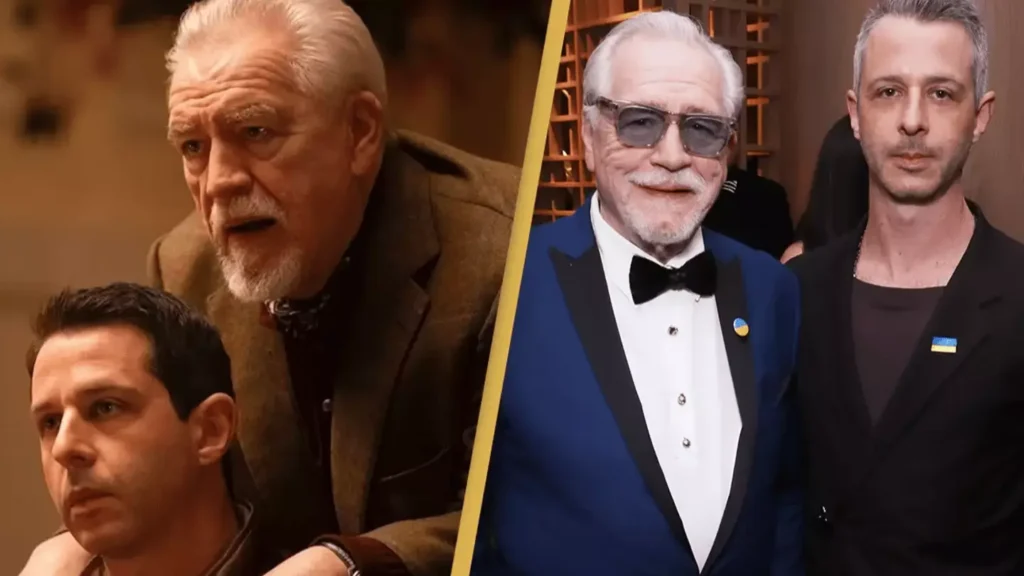
How Viral Actor Quotes Like This Gain Popularity Online
Viral spread is partly cultural (people like quoting and remixing memorable lines) and partly infrastructural: platforms reward content that generates interaction. Official platform explanations and engineering documentation describe how recommender systems learn from signals including viewing behaviour and engagement actions like likes, shares, and comments, and how ranking considers predicted engagement and relationship strength.
A gratitude-plus-question message is a compact, repeatable template: it is short enough for captions and story formats, emotionally positive, and ends with a clear prompt. Under behaviour-design frameworks, that structure is well suited to triggering action because it couples a socially rewarding tone (gratitude) with an easy behavioural task (name a role).
Virality can also be artificially amplified. Reporting on major fan-driven online campaigns notes that inauthentic accounts and bots can contribute to the appearance of large-scale support, complicating how “fan demand” should be interpreted from social metrics alone.
Top Examples of Actors Asking Fans About Their Best Performances
Actors and performers use the “favourite role” question across platforms because it is an easy prompt that generates comments and shares—signals that platforms can use for distribution.
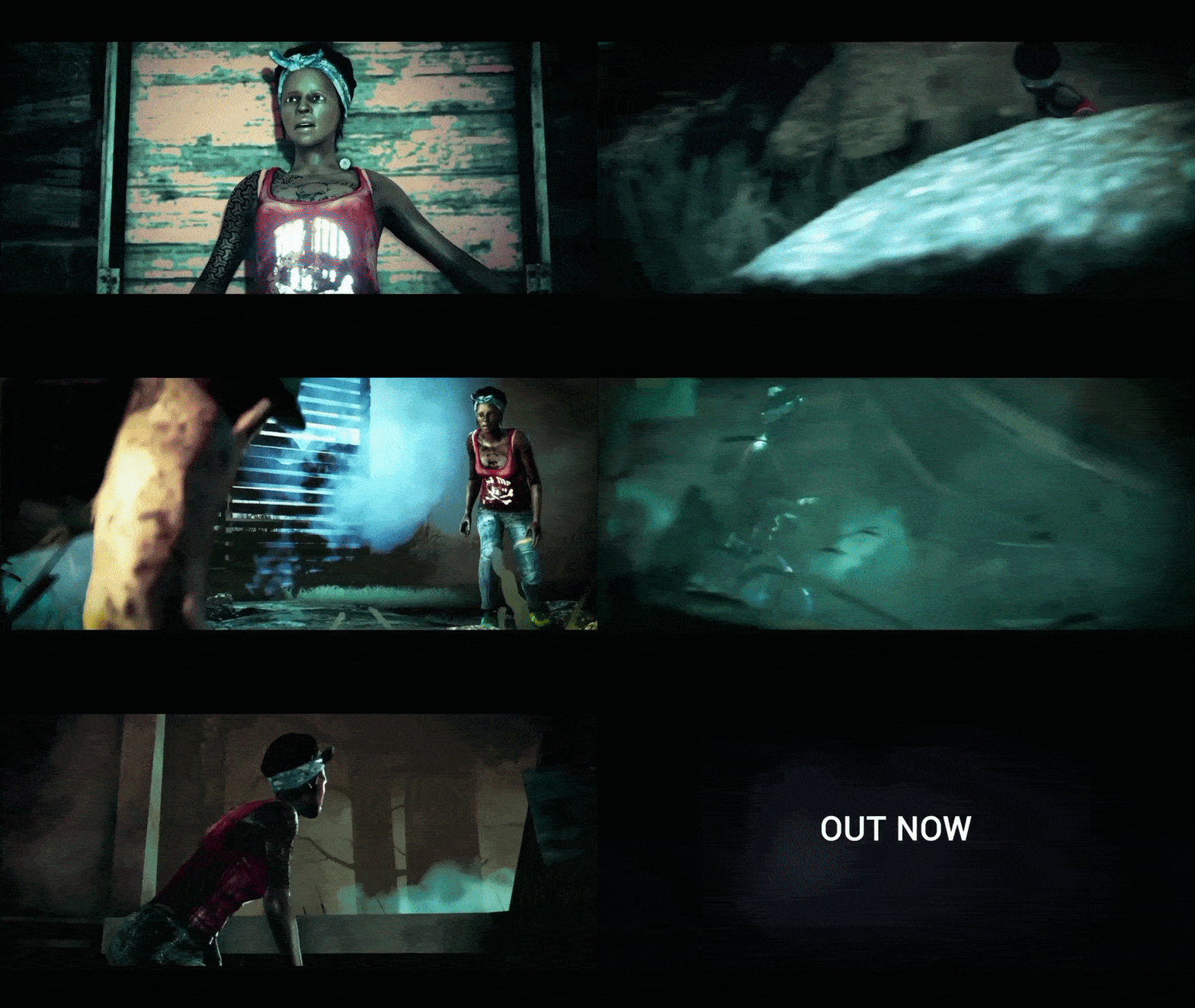
A concrete example appears in the repeated use of the prompt “What’s your favorite role I’ve played?” by Nikiva Dionne in public posts, explicitly inviting followers to name and rank her performances.
Another example of structured fan communication appears in research on celebrity Twitter use, where celebrities use the platform to communicate with fans without giving away personal access information, and where usage varies across celebrities. While not limited to “favourite role” prompts, this work documents that platform affordances support different styles of fan engagement, including question-driven interaction.
Large-scale fan influence can also be seen when online mobilisation becomes part of entertainment decision-making narratives. Coverage of the #ReleaseTheSnyderCut movement details how online fan coordination and sustained attention became associated with a major studio release decision—while separate reporting highlights that bot activity also bolstered the campaign’s apparent scale, illustrating both the power and the measurement risk of social metrics.

Best Ways Fans Can Respond to “What’s Your Favorite Role?” Questions
A high-quality answer typically does three things: it names a role, explains the emotional or craft-based reason, and stays respectful of boundaries.
Name the role and add a reason tied to performance: for example, comedic timing, vulnerability, physical transformation, or how a scene was played. This aligns with research showing that viewers’ comments often connect media experiences to personal meanings and reflective judgements—responses that can be more informative than simple emoji reactions.
Be specific about what made the role “favourite”: a scene, a line delivery, or a character arc. Specificity increases the chance that the comment is useful as feedback and meaningful as acknowledgement.
Keep interaction prosocial: gratitude norms and reciprocity expectations can shape healthy online exchanges, and experimental evidence suggests that exposure to grateful interactions can influence subsequent gratitude expression. In practice, fans can mirror the opening “thanks” tone with respectful appreciation rather than entitlement.
Avoid collapsing the performer into the character: parasocial interaction can feel intimate, but it is still not fully reciprocal. Horton and Wohl emphasise the structural limits of parasocial relationships, including the audience’s awareness that reciprocity is incomplete. Healthy fandom recognises that boundary.
Frequently Asked Question (FAQs)
- Why do actors say “Thanks for being here” on social media?
The phrase functions as a public appreciation cue that acknowledges the audience and encourages participation. Gratitude cues can shape social exchange expectations, and social-platform environments can amplify gratitude-related behaviours through observation and imitation. - Is “What’s your favorite role I’ve done so far?” a marketing tactic or genuine curiosity?
It can be both. Parasocial frameworks explain why direct address and conversational prompts create perceived intimacy, while platform systems treat engagement as a distribution signal—so the same prompt can be relational and strategic at once. - Do questions in captions actually increase engagement?
A prompt increases the likelihood of a behavioural response under behaviour-design models, and platform documentation describes user interactions (comments, likes, shares, watch behaviour) as major inputs into recommendation and ranking systems. - Why is the “favorite role” question so common among actors?
It is low-effort for audiences and yields structured, nameable feedback that can be scanned quickly. It also naturally produces comments—one of the clearest cross-platform engagement signals. - Can fan feedback influence casting or future roles?
Fan feedback can influence perceived marketability and visibility; reporting highlights claims that follower counts and social presence can matter in some producer decisions, and industry interviews describe social media as a tool used in casting workflows. - What is parasocial interaction, and how does it relate to celebrity questions?
Parasocial interaction refers to the “seeming face-to-face relationship” audiences experience with performers through media, often strengthened by direct address and conversational formats. Asking personal questions can intensify that illusion of interaction. - Is a fan-favorite role the same as an award-winning or critically acclaimed role?
Not necessarily. Research comparing critic and audience scores finds patterns consistent with critic–audience divergence, and other work notes that crowd-based ratings can reflect different incentives and biases than professional criticism. - Why do fans feel emotionally connected when actors ask questions?
Self-disclosure and perceived social presence can strengthen parasocial interaction experiences, and behavioural prompts invite participation that can feel like conversational turn-taking even when reciprocity is limited. - Can viral fan campaigns change entertainment outcomes?
Some high-profile cases show that sustained online mobilisation can become associated with studio decisions, but reporting also indicates that bot activity can inflate apparent support—so social metrics are not always clean evidence of organic demand. - What is the best way to answer an actor’s “favorite role” question?
The most constructive responses are specific (naming the role and why), respectful, and mindful of boundaries. Research on audience commenting suggests reflective, referential responses can be especially meaningful in engagement ecosystems.
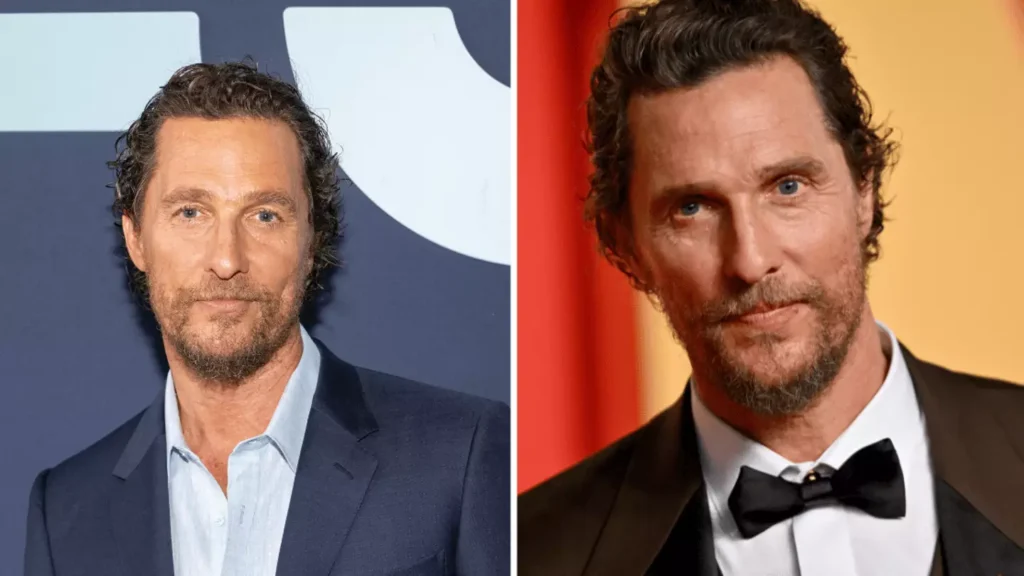
Conclusion
“Thanks for Being Here! What’s Your Favorite Role I’ve Done So Far?” works because it fuses appreciation, a clear behavioural prompt, and the psychology of parasocial connection. Classic media research explains how direct address and conversational framing create intimacy at a distance, while social-media research shows that disclosure and social presence can intensify parasocial experiences.
At the same time, platforms reward engagement: official explanations of recommendation systems emphasise interactions and viewing behaviour as central signals, so question-based posts can gain reach precisely because they generate replies.
Finally, industry realities link engagement to opportunity. Reports and practitioner accounts suggest that social visibility, follower counts, and online response can enter casting and funding conversations in some settings, making the “favourite role” question both a relationship gesture and a strategic probe of audience memory and demand.
Sources and citation
- Donald Horton & R. Richard Wohl, “Mass Communication and Para-Social Interaction: Observations on Intimacy at a Distance” https://doi.org/10.1080/00332747.1956.11023049
- Jihyun Kim & Hayeon Song, “Celebrity’s self-disclosure on Twitter and parasocial relationships: A mediating role of social presence” https://www.sciencedirect.com/science/article/abs/pii/S0747563216302540
- Gayle S. Stever & Kevin Lawson, “Twitter as a Way for Celebrities to Communicate with Fans: Implications for the Study of Parasocial Interaction” https://go.gale.com/ps/i.do?id=GALE%7CA331348549&issn=15277143&it=r&linkaccess=abs&p=AONE&sid=googleScholar&sw=w&v=2.1
- Minseong Kim & Jihye Kim, “How does a celebrity make fans happy? Interaction between celebrities and fans in the social media context” https://www.sciencedirect.com/science/article/abs/pii/S0747563220301722
- Edward Schiappa, Peter B. Gregg, & Dean E. Hewes, “The Parasocial Contact Hypothesis” https://doi.org/10.1080/0363775052000342544
- BJ Fogg, “A Behavior Model for Persuasive Design” https://dl.acm.org/doi/10.1145/1541948.1541999
- TikTok Support / TikTok Newsroom, “How TikTok recommends content” https://newsroom.tiktok.com/en-us/how-tiktok-recommends-videos-for-you
- X Engineering Blog, “Twitter’s Recommendation Algorithm” https://blog.x.com/engineering/en_us/topics/open-source/2023/twitter-recommendation-algorithm
- YouTube Help, “YouTube’s Recommendation System” https://support.google.com/youtube/answer/16533387?hl=en
- YouTube Blog, “On YouTube’s recommendation system”
- https://blog.youtube/inside-youtube/on-youtubes-recommendation-system/
- Kholoud Khalil Aldous et al., “Multiple engagement by an individual on a social media post is rare…” https://www.sciencedirect.com/science/article/pii/S254392512500021X
- Jinju Kim & Jordi López Sintas, “Social TV viewers’ symbolic parasocial interactions with media characters…” https://www.sciencedirect.com/science/article/pii/S2590291121000255
- Simona Sciara et al., “Gratitude and Social Media: A Pilot Experiment…” https://www.frontiersin.org/journals/psychology/articles/10.3389/fpsyg.2021.667052/full
- Edwina S. Uehara, “Reciprocity Reconsidered: Gouldner’s ‘Moral Norm of Reciprocity’ and Social Support” https://journals.sagepub.com/doi/10.1177/0265407595124001
- Entertainment-industry reporting on follower counts as a casting/funding signal (TheWrap, 2025) https://www.thewrap.com/actors-instagram-social-media-promotion-movies-scarlett-johansson/
- Entertainment-industry reporting on follower counts as a casting/funding signal (Rolling Stone / Maya Hawke, 2025) https://www.rollingstone.com/tv-movies/tv-movie-news/maya-hawke-producers-instagram-movie-funding-1235269549/
- Backstage interview on casting directors’ use of social media (2020) https://www.backstage.com/magazine/article/how-casting-directors-use-social-media-70400/
- GQ reporting on the #ReleaseTheSnyderCut movement (2021/2022 follow-up framing) https://www.gq.com/story/zack-snyder-justice-league-snyder-cut-social-media-bots
- Rolling Stone reporting on bot amplification concerns (2022) https://www.rollingstone.com/tv-movies/tv-movie-features/justice-league-the-snyder-cut-bots-fans-1384231/
- Engadget reporting on bot amplification concerns (2022) https://www.engadget.com/demand-for-the-justice-league-snyder-cut-was-reportedly-fueled-by-bots-092019185.html
Recommended
- Trish from Devil May Cry – Complete Character Guide
- How to Animate Metahuman in Unreal Engine 5: The Ultimate Step-by-Step Guide to Bringing Digital Characters to Life
- How Do I Set Up Multiple Cameras in Blender?
- A Beginner’s Guide to The View Keeper Add-on for Blender
- Blender 3D: How to Make a Character from Scratch – The Ultimate Step-by-Step Guide
- Digital Fashion in Blender & Marvelous Designer: A Comprehensive Guide
- Can you render a 360-degree view using Blender cameras
- 28 Years Later: The Bone Temple Is Coming to Netflix on March 31, 2026 in the US: Release Date, Cast, Plot, and Streaming Details?
- Is Blender CPU or GPU Intensive? A Complete Guide to Performance in Blender
- How to Create a Sci-Fi Metahuman in Unreal Engine 5: A Step-by-Step Guide