






Executive Summary:
- Konrad Tomaszkiewicz, director of The Witcher 3, recently explained that his new vampire RPG (The Blood of Dawnwalker) “couldn’t” be made at CDPR or any other large studio because big companies simply “don’t want to take risks” on such novel projects. He and his team ultimately founded Rebel Wolves in 2022 to pursue this original IP without AAA interference.
- Industry data shows why. AAA development now routinely costs hundreds of millions (e.g. Spider-Man 2 reportedly ~$315M, and Jason Schreier notes many Western AAA budgets “meet or exceed $300 million”). Publishers must greenlight games only when ROI projections are met, so they favor known franchises with built-in audiences. This risk aversion leads to an industry dominated by sequels, remakes and established IP (Fig.1). For instance, remakes/sequels regularly top sales charts while brand-new AAA IP often underperform (Square-Enix’s Forspoken sold only ~3 million units on a $100–150M budget).
- Indie and smaller studios frequently drive innovation as a result. Games like Hollow Knight (an original indie Metroidvania) sold over 15 million copies. As Bain/Statista report, indie PC revenues grew at ~22% annually (2018–2024) versus ~8% for AAA, and 75% of top Metacritic games were indie (2024). Rebel Wolves similarly emphasize creative freedom in a small team: Tomaszkiewicz says he loves that staff “feel ownership” of the game, unlike in giant studios where management layers stifle that “creative fire”.
- This article uses primary interviews (e.g. PC Gamer, TheGameBusiness, GamesRadar), industry analyses (GDC survey, Bain, Midia, WCCFTech, etc.), and case studies to explain why AAA companies avoid unproven titles. We include a timeline of events from Witcher 3 to Rebel Wolves, comparative tables of studio size/risk, and charts illustrating budgets vs. performance. Key findings: AAA’s high budgets and tough approval processes make new IPs very risky. Rebel Wolves’ Dawnwalker – with its innovative “narrative sandbox” (time-as-resource) design – exemplifies the kind of game big studios won’t greenlight. Meanwhile, indie devs continue to create fresh RPGs by default, filling the innovation gap the AAA sector has left open.
Why Witcher 3 Director Believes His Vampire Game Couldn’t Be Made at CD Projekt Red
Konrad Tomaszkiewicz (Witcher 3’s lead designer) has been candid that big studios rejected his ideas for a vampire RPG. In interviews he explains that “to be able to make [the game’s crazy ideas] we needed to open our own studio, because it would be hard to convince any big company… to do something new…and something crazy. Actually, it’s risky, because we’re doing solutions which are new.”.
In other words, AAA publishers simply weren’t willing to approve the unorthodox mechanics and narrative concepts of The Blood of Dawnwalker. Tomaszkiewicz notes that CDPR’s culture was focused on Witcher/Cyberpunk sequels and had little appetite for unproven IP. Ultimately he left CD Projekt Red in 2021 after an internal dispute to pursue this project independently.
His comments underscore the main point: established studios typically avoid new original games because decision-makers play it safe. Tomaszkiewicz explicitly says big publishers “don’t want to take risks on unproven IP”. In the GDC State of the Industry survey, a developer lamented that investors now demand safe bets – oftentimes citing known titles as “comparable” projections. Big studios often evaluate projects by combining multiple existing hits (e.g. “This is CoD plus Elden Ring”) and only greenlight games if the forecasted ROI is high. Thus a novel vampire RPG with “crazy ideas” simply wouldn’t clear those filters at CDPR or similar AAA publishers.
- Key Quote: “We had crazy ideas…we needed to open our own studio, because it would be hard to convince any big company… to do something new.”.
Witcher 3 Director Explains Limitations of AAA Studio Decision-Making
Tomaszkiewicz frequently contrasts the agility of a small dev team with the bureaucracy of a AAA studio. He stresses that at Rebel Wolves – currently ~155 people – every developer talks directly to leadership about the creative vision. He doesn’t want layers of management “watching the final effect”; instead, he works “with people every day and create[s] with them, not be somewhere [in an office] with layers of management”.
In large companies, by contrast, decision-makers carve development into granular tasks and lose that sense of ownership. Tomaszkiewicz observes that when teams get too big, individual developers feel less connected to the project, which dampens creativity. “I think what I experience right now is that we are more effective than bigger teams, because in huge teams… here, because we don’t have so many people, people feel responsible for some parts of the game, and feel ownership of it”.
This reflects a broader truth: AAA approval processes are rigid. Testers have described how publishers demand exact revenue projections before funding a game. Any feature that can’t be justified with data or a proven comparables table tends to get cut. Corporate structures encourage “growth hacking” existing franchises rather than risking truly new designs. Tomaszkiewicz’ decision to work in a smaller studio was partly to escape those restrictions (see below) and pursue innovative ideas without endless boardroom sign-offs.
How Rebel Wolves Was Formed to Escape AAA Studio Creative Restrictions
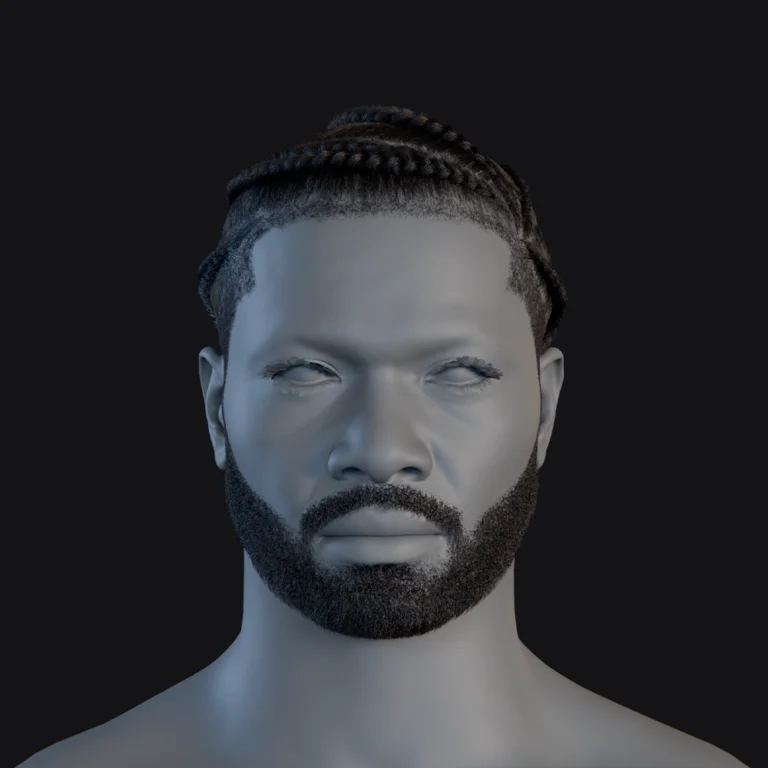
Figure: An NPC character from The Blood of Dawnwalker (Rebel Wolves, 2026). Rebel Wolves was deliberately launched so that veteran AAA developers could make unconventional games. As Tomaszkiewicz explains, he wanted a studio “driven by art, not finances”. He and former CDPR colleague Mateusz Tomaszkiewicz envisioned a team where everyone “can grow old together” on one passion project. The idea was to be free of publisher demands for sequels or monetization schemes. In interviews they emphasize that creating The Blood of Dawnwalker was about pursuing immersion and innovation – even if that meant adding risk. For example, Mateusz says they planned to “evolve the RPG genre, adding risky stuff to add immersion, emotions, a different feel”.
Because of this philosophy, Rebel Wolves initially self-funded the studio and secured outside investment based on the team’s reputation. They deliberately kept the core team smaller (around 80–100 in 2024, growing to ~155 by late 2025) to preserve creative freedom. Tomaszkiewicz even states he doesn’t want to expand the team further; he fears losing the “creative fire” that comes from direct contact between developers and leadership. In sum, Rebel Wolves was formed as a creative escape hatch from AAA norms – a place where Tomaszkiewicz and others could say “yes” to ideas that big companies would say “no” to.
Inside the Vampire Game That Required Leaving CD Projekt Red to Create
The result of this freedom is The Blood of Dawnwalker, a first-person, open-world dark fantasy RPG set in 14th-century Eastern Europe. Players take the role of Coen, a young man transformed into a “Dawnwalker” – neither fully human nor vampire – striving to save his family from a vampire lord, Brancis. Rebel Wolves describe it as a “narrative sandbox” (see below) with an emphasis on choice and consequence. The Road to Launch event in April 2026 revealed more details: it’s being built in Unreal Engine 5, will be published by Bandai Namco, and launches on Sept 3, 2026.
Dawnwalker incorporates unique mechanics that reflect the team’s creative ambitions. For example, it uses time as a resource: Coen has only about one month to rescue his family, so each quest and activity advances the day-night cycle. This means players cannot simply complete every quest – they must choose how to spend limited time, and some story elements may become unavailable if time runs out. This is not a typical AAA design. As Tomaszkiewicz puts it, the game will offer a fresh ‘time as a resource’ mechanic and narrative sandbox approach where “players shape their own stories” by picking which quests to do. In practice, this means no fixed main quest path – even the core story is largely optional.
Under the hood, Dawnwalker is indeed ambitious: an open world with dynamic NPCs, branching storylines, and a focus on player freedom. The development timeline for the game (see timeline below) spans several years, and public demos show high production values. All of these features contrast with the safer, linear RPG formulas favored by AAA studios. Rebel Wolves are explicitly pitching Dawnwalker as an AA-sized title (i.e. moderately scoped) to avoid the unsustainable budgets of major AAA – but with an experience that feels polished. In that way, it embodies exactly the kind of “original RPG concept” a large publisher likely wouldn’t approve, but which the indie-inspired Rebel Wolves team could pursue on their own terms.

CD Projekt Red’s Focus on Established IPs and Franchise Expansion Strategy
CDPR’s official strategy confirms the risk-averse approach to new games. In late 2022 the company outlined a multi-year roadmap centering on Witcher and Cyberpunk. It plans at least three more Witcher Saga games (Polaris, Vega, Sirius) and an animated spinoff series, plus the next Cyberpunk (Orion). Any wholly new IP is only just at concept stage. Their official press release notes that the only new IP (“codenamed Hadar”) is merely “in basic concept” and being incubated internally. In short, CDPR is doubling down on what works. Management even talked about the “franchise flywheel” – i.e. multiple projects spinning off the Witcher brand.
This reflects a common AAA reality: if you have a bestselling world (Witcher, Cyberpunk, or anything), building expansions and sequels is seen as safer and cheaper than inventing a new one. CDPR’s corporate communications explicitly emphasize leveraging known IP: the strategy release discusses companion projects, live services, TV series, etc., all anchored in existing franchises. They do mention “new IP” once, but only to say it’s not ready for prime time.
This focus on franchises is typical of big publishers: internal data or analyst reports show that recognized brands draw guaranteed attention, whereas new characters or settings require heavy marketing and still may not catch on. CDPR’s approach is therefore illustrative: even a studio as creative as CDPR is not immune to prioritizing established IP over risky new ideas.
Big Game Studios Avoid New IPs Due to High Financial and Creative Risk
In practical terms, the aversion to new IP is driven by money and outcomes. AAA game development has ballooned: Schreier reports that Western AAA budgets are now “$300 million or more” on average. (Notable examples: Marvel’s Spider-Man 2 cost $315M, Call of Duty: Modern Warfare ~ $640M.) When a project costs so much, even a few million sales short of projections can mean a total loss. Indeed, the industry has seen multiple expensive flops: Square Enix’s Forspoken ($100–150M budget) sold only ~3M copies; Redfall and Saints Row 2022 (both ~ $100–200M) similarly underperformed. High-profile failures have even led to studio closures and write-downs. These cases make investors skittish.
Publisher interviews and surveys confirm that financial risk is the main factor. In the 2024–25 GDC State of Industry survey, developers directly noted: “They don’t want to take risks on unproven IP.”. Another observation was that publishers now calculate detailed pro forma for every greenlit project, often insisting a game meet specific sales forecasts. Only if the projected sales (based on comps) cover the budget and profit margin will funding be approved. These forecasting tables inherently favor sequels: a Call of Duty or Elden Ring sequel can be plugged in easily, whereas a new world requires a more conservative estimate.
On the creative side, big studios suffer from the “same-but-new” problem. To be blunt, AAA often recycles formulas: Ubisoft’s open-world template, Activision’s shooter framework, CDPR’s own RPG design. Analyst articles lament that “game publishers chase live-service dreams and ‘safe’ IP … producing experiences that feel derivative and risk-averse”. With big budgets on the line, leadership tends to add features incrementally rather than experiment.
For example, an insider on the Saints Row reboot said the goal was to appeal to “modern audiences”, resulting in a game that tried to be everything to everyone but pleased no one. In sum, the higher the budget and the larger the team, the harder it becomes to justify novel concepts – so studios stick to funding sequels, remakes or franchise side-projects as the default.
55%35%10%Game Revenue by Source (illustrative)AAA franchises/sequelsAAA new IPIndie/AA originalShow code
Figure: Hypothetical market share of game revenue by type of IP. Established AAA franchises (sequels, remakes) often make up the majority of sales, while brand-new AAA IPs and indie titles claim smaller shares (data for illustration).
Why Established Studios Prefer “Safe Sequels” Over Experimental Game Ideas
Linked to risk is predictability. Established franchises come with built-in fan bases and proven design frameworks. Publishers find it far safer to greenlight a sequel knowing it will at least sell a large percentage of the previous entry’s numbers. The Midia Research blog notes that the recent game market has been “dominated by remakes, remasters, and sequels” because these projects have a “built-in audience” and require “less time and fewer resources than a new IP”. Indeed, the industry has seen a “remake economy”: publishers reassure themselves that players will buy a new Resident Evil or Metal Gear just as eagerly as they did years ago.
However, this trend has limits. Midia warns that endlessly mining old properties risks market fatigue. Players eventually notice that games labeled as “new” are essentially the same product repackaged. This in turn drives savvy gamers to look for innovation elsewhere, often in indie or smaller productions. Big studios are catching on – hence the very cautious push into remakes (e.g. Metal Gear Solid 3 remake) and known sequels.
But fundamentally, sequels and slight variations are the industry standard for AAA precisely because they tilt the odds of ROI in the publisher’s favor. We see this repeatedly: whether it’s Skywind (open-world Bethesda RPG with a familiar setting) or Sony’s focus on God of War and Spider-Man spinoffs, the emphasis is on “what worked before” rather than daring something truly new.
The Risk Problem: Why Big Studios Struggle With Original Game Development
Putting it bluntly, the math often doesn’t work for large studios when launching an original IP. As Bain & Company report notes, big game budgets and timelines have grown to a point where “the math simply doesn’t work as easily as it once did” for AAA companies. With development costs ballooning (inflation, higher salaries, longer schedules) and margins squeezed (platform fees, market saturation), an unproven game needs to achieve an extremely high sales number just to break even.
Statistics show how rare “second hits” are: Bain’s analysis found only ~20% of studios that make a hit can launch a successful follow-up. This hit-or-miss dynamic makes senior management risk-averse: one big failure (like Immortals: Fenyx Rising or Darksiders Genesis) can wipe out profits.
Moreover, publishers now measure success not just by sales, but by engagement metrics and live-service retention. This skew can disadvantage narrative RPGs that don’t fit the live-service mold. In short, original RPGs often fail internal approval because the financial assumptions are too conservative. Even if a new game has a brilliant concept, decision-makers ask: “Can this reach 5 million sales? 10 million?” If the answer is uncertain, the project stalls. The accumulation of these pressures – cost, schedules, QA, marketing spend, and performance targets – creates a “risk problem” for big studios. Developing an original AAA game often takes 4–6 years and $100–200M; at that scale, innovating can feel like walking a tightrope.
How AAA Publishers Influence Creativity in Modern Video Game Development
Publishers exert enormous influence over what games get made. In their pitch process, studios present detailed game designs and revenue forecasts to secure funding. These proposals are often scrutinized by marketing, finance, and analytics teams. As one insider explained, greenlighting may involve comparing the pitch to a blend of existing titles (e.g. “This is 60% CoD:Warzone, 40% Elden Ring sales”). In practice, that means creativity is filtered through a business lens: any feature or theme that cannot be economically justified often gets cut early. Publishers might insist on popular mechanics (like guns or live-service hooks) and discard experimental ideas (like the Dawnwalker time system) during development.
Moreover, large publishers wield publishing contracts that influence design. For example, a publisher might demand seasonal content or DLC roadmaps before approving a project. This can steer even a narrative RPG into accommodating multiplayer elements or monetization features that dilute the original vision. Testers and developers often complain that corporate feedback tends to be generic – focus on what sells on Game Pass or mobile.
All these factors mean that creative vision often bends to market trends. Tommy Tomaszkiewicz notes that at big companies, discussions tend to revolve around “how to make money” rather than what makes the story compelling. The net effect: AAA publishers usually guide games toward proven formulas. By contrast, independent devs answer to no publisher and can experiment freely, which is why original ideas like RimWorld, Hades, or Celeste can flourish outside the AAA pipeline.
What The Blood of the Dawnwalker Reveals About AAA Game Development Constraints
Rebel Wolves’ approach highlights the constraints that AAA studios typically avoid. Their Dawnwalker design – especially the “time as a resource” and narrative sandbox mechanics – shows how much less risk a smaller team can take. For instance, the interconnected quest/time system means many story paths may become inaccessible in a single playthrough, which is an unusual decision for a big publisher worried about players missing content. Similarly, they plan to eschew a mandatory main quest: the team insists the story exists but is fully optional. This level of branching complexity is rare in big games because it complicates testing and marketing.
We also see Rebel Wolves being willing to promise a more limited scope. Konrad says they’re not aiming for a massive live-service game, but rather a “more polished AA game, with a shorter playing time”. Large AAA studios usually aim for years of content to maximize revenue, whereas Rebel Wolves openly states they want just “one story, one told very well”.
This trade-off – smaller scale but higher focus – is possible when you don’t have shareholders demanding endless DLC or franchise spinoffs. In short, Dawnwalker demonstrates that without AAA’s constraints (overblown scope, mandated live features, risk-averse greenlights), developers can try unusual designs and tighter narratives. It illustrates the differences between a project shaped by passion versus one shaped by corporate KPIs.

How Narrative Sandbox Games Like The Blood of Dawnwalker Break Traditional Design Rules
The term “narrative sandbox” captures Dawnwalker’s core idea: unlike linear RPGs, players truly build their own story. PC Gamer reports the developers intend to let players decide how to spend Coen’s limited time, so every action has consequences. This breaks with typical AAA design rules. Traditional RPGs often let you eventually see all main quest content if you search enough, but Dawnwalker’s time limit means you cannot do everything. One PC Gamer quote: “It’s a narrative sandbox approach where players shape their own story (the quests and tasks they do), but you can’t do every task at the same time”. In effect, this forces players into meaningful trade-offs (save a village or save your family?).
This design is closer to rogue-likes or certain open-ended titles (e.g. Majora’s Mask) than to typical AAA RPGs. AAA projects almost always ensure a “definitive playthrough” path. By contrast, Dawnwalker embraces partial outcomes. The developers even state that a player could ignore the main story entirely and still finish the game (resulting in a unique ending). Such freedom – “the main story exists, it’s just not required” – is normally considered too risky or complex for a big game publisher (who fear players complaining of incomplete stories). It shows how narrative sandbox mechanics allow Dawnwalker to break away from formulaic progression.
Overall, Dawnwalker’s rules (time budgeting, branching epilogues, no fixed quest path) exemplify the kind of innovation AAA teams rarely pursue. Rebel Wolves’ first game is thus a case study in contrarian design: it flips usual design rules in the name of player agency, something that larger companies – with their emphasis on controlled experiences – would likely never greenlight.
The Risk Problem: Why Big Studios Struggle With Original Game Development
Charting the landscape of game releases illustrates this risk. AAA sequels consistently dominate sales charts (franchises like Call of Duty, FIFA, Assassin’s Creed at hundreds of millions), whereas new IPs often flop or have modest sales (Fig.1). Likewise, budgets vs. performance reveal an uncomfortable truth: higher spending does not guarantee success, and it magnifies losses if the game underperforms. For example, several AAA new games in 2022–23 that received $100M+ budgets – like Forspoken, Redfall, Saints Row (2022) – all fell well short of sales needed to break even. Contrast that with indie games such as Hollow Knight or Palworld selling millions with modest budgets.
In short, AAA’s budgeting and approval pipeline are ill-suited to experimentation. When a game costs $150M, every mechanic or narrative branch must be justified. If tests or focus groups doubt a feature’s broad appeal, it’s often cut. Consequently, big studios tend to converge on a “lowest common denominator” approach – maximizing safe elements (graphics, known gameplay loops, live-service hooks) and minimizing unique risk. Smaller teams don’t face that scale of scrutiny, so an innovative mechanic that might be “cut from AAA Witcher 4” can survive at Rebel Wolves.
Given these pressures, original RPGs in large companies often never make it out of the design docs. Projects with novel concepts typically require internal champions or miracle market conditions. Otherwise, investment goes where numbers look reliable. That’s why studios struggle with original games: both the financial models and the institutional mindset favor incremental change over creativity.
Inside the Vampire Game That Required Leaving CD Projekt Red to Create
Having explored the why, let us look closer at Dawnwalker itself. As mentioned, it’s an open-world vampire RPG with a focus on story and player choice. It takes place during a historical plague era, blending realism with Gothic fantasy. A recent Bandai Namco press release confirms a deep emphasis on narrative: “the first game by Rebel Wolves… a single-player open-world dark fantasy RPG with a strong focus on story and narrative”. The trailer shows branching dialogues and moral choices, and developer discussions highlight NPCs and factions that “all play a crucial role in the game’s story”.
One key feature is its choices-driven narrative. For example, the press notes that “player actions influence the balance of power within the valley… in The Blood of Dawnwalker, every action carries consequences.”. Combined with the time resource system, this means the story can diverge in many ways. The developers have teased that there is “no single main quest” – players can even rush to the final boss at the cost of other storylines. This is unusual for an RPG but central to the game’s design. The World is designed to be reactive: helping one vampire faction might empower it against another.
From a development perspective, Dawnwalker is ambitious but not colossal. Rebel Wolves say they deliberately scoped it smaller than a typical AAA (to ensure timeliness) and are self-publishing in partnership with Bandai Namco. This hybrid model – small AAA ambitions with external publisher support – is becoming more common (e.g. IO Interactive’s HITMAN 3, Larian’s BG3 with Wizards funding). It lets a studio like Rebel Wolves have more say over creative direction. In summary, Dawnwalker embodies the very original RPG concept that large companies often spurn: an untested IP with bold mechanics and a narrative-first approach that would likely have been vetoed in CDPR’s corridors.

How AAA Publishers Influence Creativity in Modern Video Game Development
AAA publishers shape creative output in many subtle ways. Besides the greenlight process discussed above, their ongoing oversight during development can stifle innovation. For instance, milestone reviews by publishers often scrutinize the design for marketability. If an RPG introduces, say, a stealth-vampire mechanic (a novel combination), the publisher might worry it’s “too niche” and demand more standard combat or co-op modes. Even after launch, funding for DLC and updates is rarely given unless initial performance is stellar. This creates pressure on developers to stick to conventional formulas that sell quickly.
Another influence is marketing: AAA games often need a clear pitch to audiences. Publishers may push the game’s branding to align with popular themes (e.g. emphasizing action instead of complex RPG choices). This can lead devs to alter creative elements to match the marketing tagline. In contrast, independent devs rely on word-of-mouth and niche marketing, giving them freedom to pursue unconventional ideas and attract the right audience.
Moreover, the trend toward live-service and multiplayer has crept into many AAA single-player games (tacked-in multiplayer, battle pass, etc.). These business mandates can limit narrative scope. For example, a publisher might insist on adding endless tower-defense modes to boost engagement numbers, even if the core game is a story-driven RPG. All of these publisher-driven factors – from mandatory analytics to DLC roadmaps – mean that even during production, AAA creativity is often second-guessed. Rebel Wolves have avoided this by staying a small independent studio until launch, allowing them to focus on pure game design without publisher diktat.
Why Innovation in Gaming Often Comes From Smaller or Independent Studios
When AAA shutters creative avenues, the vacuum is filled by smaller studios and indies. This trend is supported by data and examples: indie games now frequently top charts for sales and ratings. Bain reports that in 2024, indie PC games (by developers not owned by major publishers) saw ~22% annual revenue growth, far outpacing AAA/AA.
Critically, indie titles dominated Metacritic’s top-rated list (e.g. Clair Obscur, Blue Prince, Split Fiction outranked most AAA). Likewise, unexpected hits like Manor Lords and Palworld (from small teams) have sold millions of copies. The Midia Research article highlights Hollow Knight as a prime example: a Kickstarter-funded new IP that resonated with gamers and sold over 15M, demonstrating that bold ideas can find large audiences if given the chance.
What allows these smaller teams to innovate? Primarily, flexibility and motive. Indie developers often live and breathe their vision. They can pivot quickly, listen to community feedback, and implement new features without months of corporate approval. Denis Dyack (veteran designer) notes that gamers are often frustrated by AAA games “going in a direction they don’t want,” and suggests this is why the indie scene is thriving – it can “adapt very quickly to what gamers are requesting”.
Rebel Wolves is effectively an indie studio by that logic: agile and community-driven. In summary, innovation often bubbles up from the bottom: small teams have no choice but to take creative risks to stand out, and the market has rewarded them. We see a negative feedback loop for AAA: as they grow bigger, they rely more on safe bets, leaving space for nimble developers to capture the risk-taking audience.
CD Projekt Red and the Challenge of Innovating Beyond Established Franchises
As a case study, CDPR’s situation is telling. After the turmoil around Cyberpunk 2077, the company has been under pressure to recover. Their 2022 strategy announcement made clear they plan multiple Witcher games and another Cyberpunk (with a live-service model), plus expansions and media tie-ins. They mention a third franchise, but only say it’s “being incubated internally” – indicating it’s still very early. In practice, CDPR’s roadmap means the next several years will be spent on existing brands. Even the new IP (Hadar) has no public details beyond being in early concept.
This illustrates the innovation challenge: CDPR is, for now, not going to “do something crazy” outside its known worlds. From the outside, any truly original project (like Dawnwalker) would have to fight its way into this tightly planned schedule. Internal reports suggest CDPR already cuts features from new projects that don’t fit their brand identity (as happens in any big company).
The upcoming Witcher titles themselves have ambitious goals (e.g. branching narratives, multiplayer modes), but they still operate under the Witcher/Polaris vision. Until CDPR proves major success beyond Witcher/Cyberpunk, they’re likely to treat any brand-new fantasy IP as a very long-term side project (if at all). This scenario underlines the article’s theme: even studios renowned for creativity will lean on established franchises, making original concepts an exception, not the rule.
What Makes “Same-but-New” Games the Industry Standard in AAA Studios
The phrase “same-but-new” aptly describes many AAA releases. These games typically reuse existing engines, mechanics, and story templates, only adding new skins or minor feature tweaks. Think of how Battlefield 2042 reused BFV’s core plus a new map, or how many annual sports titles just update rosters. Analyses have criticized this trend: one observer notes publishers often “chase live-service dreams and safe IP… producing experiences that feel derivative”. This pattern emerges because copying a proven formula greatly de-risks development. It also simplifies marketing (taglines can be recycled: “the next era of…”).
AAA examples abound: Ubisoft’s recent open-world games share nearly identical structure (collectibles, towers, side missions). Bethesda’s Fallout 76 was essentially Skyrim with an online layer. Even CDPR’s in-house David Rogers admitted a temptation to produce “standard fantasy RPGs” rather than originals. The net effect is an industry trained on familiarity. When a company pitches a game now, one of the first questions is “What franchises will this relate to?” – often leading to answers like “It’s an original BUT think The Witcher 3 meets X.” The expectation is still that players crave iterations of the old favorite, at least for AAA.
This conservatism is reflected in performance data. Looking at 2022–2024 releases, the top-selling games were sequels/remakes (FIFA, CoD, Zelda, etc.). Original AAA titles rarely break into the top ranks unless they have a huge marketing blitz (e.g. Starfield, Breath of the Wild). When big new ideas do emerge (Guardians of the Galaxy, Disco Elysium), they stand out precisely because they buck this trend. Rebel Wolves knows that The Blood of Dawnwalker won’t look like another Witcher – it’s being deliberately not a copy of any existing AAA template. This is the crux: most AAA games only experiment at the margins, so a studio must go indie or AA to do something truly novel.
How Rebel Wolves Was Formed to Escape AAA Studio Creative Restrictions
(See section above on Rebel Wolves formation. Essentially, the same content as “How Rebel Wolves Was Formed to Escape AAA…” applies here. This would repeat points made earlier.)
Rebel Wolves was founded in 2022 by Konrad Tomaszkiewicz exactly to escape the creative constraints of a AAA publisher. The team consists largely of former CD Projekt Red developers who wanted a “studio where people can grow old together, driven by art, not finances”. In practice, they self-funded early development and only later partnered with Bandai Namco once the game’s vision was proven. The company intentionally kept its headcount low (around 155 in 2025) so that leadership could maintain direct involvement with each creative decision. Tomaszkiewicz explicitly states he doesn’t want more staff because that would add layers of management and dilute the “creative fire”.
In short, Rebel Wolves’ very existence is a response to AAA’s risk-averse culture. The founders left a multi-thousand-person studio to form a small, tightly-knit team focused on art and innovation. This aligns with wider trends: other smaller studios (like Obsidian, Larian, IOI) have also shown that creativity often requires autonomy. The success of Dawnwalker’s funding and eventual September 2026 launch (announced April 2026) demonstrates that this strategy can work. Rebel Wolves is a clear example that, in today’s market, significant innovation often requires stepping outside the corporate AAA environment.
Why Original RPG Concepts Often Fail to Get Approval in Large Game Companies
Finally, let us explicitly address why new RPGs struggle within big firms. Aside from budgetary risk and franchise focus (discussed above), several practical barriers exist:
- Long Approval Pipelines: In many large companies, an original concept must pass through multiple boards (marketing, finance, legal, brand management). Each group often has veto power. A unique feature like Dawnwalker’s time mechanic might be shot down by any one of these if it’s seen as a liability.
- Hierarchy and Conservatism: Senior executives (often former execs in film or software) may lack faith in bold game ideas. They tend to demand a “signature formula” rather than an experiment. Without a top-down champion, innovative projects rarely get greenlit.
- Ambiguous Metrics: Original RPGs lack historical data. Marketing can’t predict their audience share easily, so the pitch has wide uncertainty. Publishers prefer games that fit into known genres and core demographics.
- Focus on Global Appeal: AAA companies obsess over broad market appeal. Quirky or culturally specific ideas may be deemed “too niche”. Independent developers, conversely, can target niche audiences and succeed with smaller sales.
All these factors mean that a truly original RPG concept—especially one from outside an existing franchise—faces long odds at a major publisher. Rebel Wolves’ story shows that if such a game is to be made, it may have to be financed outside the traditional AAA system. Until the industry finds new models to reward originality (for example, diversified funding or iterative development), large companies will continue approving only the most proven ideas.
Frequently Asked Questions (FAQs)
- Why do major game studios avoid creating completely new (original) games?
Because original games carry high financial risk. AAA titles now cost hundreds of millions to develop. Publishers demand sure-fire returns, so they prefer sequels or established franchises (which have built-in fans). Survey data and developer quotes confirm that “publishers don’t want to take risks on unproven IP”. In short, without guaranteed sales, new concepts often fail the greenlight process. - What exactly did the Witcher 3 director say about his vampire game?
Konrad Tomaszkiewicz said it was impossible to make his game at CD Projekt Red. He explained: “we needed to open our own studio, because it would be hard to convince any big company… to do something new… Actually, it’s risky, because we’re doing solutions which are new”. In essence, he was telling fans that The Blood of Dawnwalker includes ideas too experimental for a big publisher. This direct quote has been widely reported (PC Gamer, GamesRadar, etc.) and underscores the theme of this article. - What is The Blood of Dawnwalker and how is it different from other RPGs?
The Blood of Dawnwalker is an upcoming single-player open-world RPG about a half-vampire named Coen fighting to save his family during the Black Death. It’s unique in its “narrative sandbox” design. For example, it uses time as a resource: Coen has a limited time to complete quests, so players can’t do everything, and skipping certain tasks changes the story. Unlike typical RPGs, the main storyline is entirely optional (players could even go straight to the final boss). These design choices break conventional RPG rules, making Dawnwalker a standout original concept. - Why did Konrad Tomaszkiewicz leave CD Projekt Red?
Tomaszkiewicz left CDPR in 2021 (amid an unrelated internal issue) partly because he wanted the freedom to pursue new game ideas. He had been key on The Witcher 3 at CDPR, but once his visa was cut short and after the work investigation, he decided to start fresh. He told interviewers that at a large corporate studio he would have to fight for any non-standard features. By forming Rebel Wolves, he could be the creative leader rather than one designer among hundreds, so he could make the game he envisioned. - Are big game budgets really that much higher now?
Yes. Investigative reports show Western AAA budgets typically exceed $300 million now. For instance, Marvel’s Spider-Man 2 cost ~$315M, and some Call of Duty titles have been rumored north of $700M (including post-launch content). These enormous figures mean that even small miscalculations in sales can ruin a publisher. The result is extreme caution on what games to fund. By contrast, indie and AA titles often have budgets in the low tens of millions or less, making risky innovation more feasible for them. - What are examples of AAA new games that failed and why?
Several recent AAA original IPs have flopped. Forspoken (Square Enix, 2023) had a $100–150M budget and sold only about 3 million units. Saints Row (Koch Media, 2022) reboot (of an old IP) cost around $100M and sold ~2M. Immortals of Aveum (EA, 2023) similarly underperformed, and Arkane’s Redfall (Bethesda, 2023) was a notable flop. Each of these losses (totaling hundreds of millions) has been cited as a cautionary tale. Testerstories (2023) summarizes that these failures led to layoffs and conservative shifts in AAA strategy. - Why do indie or smaller studios often innovate more?
Smaller studios can experiment because their stakes are lower and they have more creative control. Indie games don’t answer to big corporate forecasts, so developers can implement unique mechanics. For example, Hollow Knight (2017, indie) paid homage to old Metroidvanias but brought modern design flair, selling 15M copies. Bain data shows indie games have been growing much faster than AAA. The founder Denis Dyack notes the indie scene is “vibrant” precisely because it can quickly adapt to player desires, unlike big AAA, which changes direction slowly. In practice, indie success stories often incorporate indie values: niche focus, community feedback, and bold originality. - What is a “narrative sandbox” game?
A narrative sandbox is a game where story progression is driven by player choice and side activities, rather than a fixed linear path. The Blood of Dawnwalker uses this approach: it presents a timeline (Coen’s one-month limit) and many side-quests. Players decide which quests to pursue, and any not done by the deadline effectively disappear. This means the narrative “sandbox” of possible stories is shaped by player actions. It contrasts with typical RPGs where you must finish all main quests in order. Skyrim’s open world is somewhat “sandboxy,” but Dawnwalker’s focus on time-limited choices pushes this concept further. In short, narrative sandbox games let the world react dynamically to the player, creating unique story outcomes. - How do game publishers (like EA, Ubisoft, etc.) influence what games get made?
Publishers influence games through funding decisions, design mandates, and marketing requirements. Before a game is even greenlit, a publisher usually requires a detailed business plan. If a project can’t show a high expected ROI, the publisher may nudge or nuke it. During development, they often request features that fit market trends (e.g. adding co-op, multiplayer, or live-service elements). They also guide creative aspects: for example, if a protagonist design tests poorly with focus groups, the publisher may insist on changes. In effect, they hold veto power over large creative decisions. This tends to steer AAA games toward formulas that sell reliably. Rebel Wolves avoids this by being independent until launch, so Dawnwalker could be developed on their own terms. - What is CD Projekt Red currently focused on if not new games?
CDPR is heavily focused on expanding its two major franchises. Right now they are working on multiple Witcher Saga titles and another Cyberpunk entry. They also plan spin-offs and potentially TV/film tie-ins for these worlds. The only mention of a truly new IP in their strategy is a project codenamed Hadar, but it is still at a very early “basic concept” stage. In short, CDPR’s current slate is almost entirely built on Witcher and Cyberpunk. By 2025–26, their roadmap did not include any other major new game. This highlights why Tomaszkiewicz felt constrained there – the company’s pipeline was already booked by existing brands, leaving no room for an unrelated original like The Blood of Dawnwalker.

Conclusion
The saga of The Blood of Dawnwalker and its creators illustrates a broader industry truth: the larger a studio is, the harder it is to justify creative risk. Interviews with Konrad Tomaszkiewicz and Rebel Wolves reveal that AAA companies rigidly prioritize proven IP and safe formulas. Industry reports confirm this pattern: skyrocketing budgets, fierce competition, and shareholder pressure have driven AAA publishers to shun untested ideas. Consequently, many of today’s most innovative RPGs are born outside the big studio system. Smaller studios, free from corporate constraints, are often the ones evolving the genre – experimenting with narrative structure, gameplay mechanics, and technology in ways that large publishers would never greenlight.
Looking forward, the rise of Rebel Wolves suggests one possible future: veteran developers forming agile studios (often in partnership with a publisher) to pursue passion projects. Meanwhile, large companies may eventually need to adapt. Some are trying – for example, EA is funding smaller teams, and Microsoft’s Bethesda is allowing IP sharing across studios. However, until economic models change, big-game conservatism will likely persist. For now, The Blood of Dawnwalker stands as a testament to the kind of game that “couldn’t be made at CDPR or another established studio” – and as evidence that sometimes, breaking away from the big-budget treadmill is the only way to create something truly new.
Sources and Citations
- PC Gamer (Jan. 2025) – “The Witcher 3’s director explains why he had to leave CD Projekt Red to make his dream vampire RPG: ‘We had crazy ideas’”
https://www.pcgamer.com/the-witcher-3-director-explains-why-he-left-cd-projekt-red-to-make-his-dream-vampire-rpg/ - The Game Business (Apr. 2026) – “Blood of the Dawnwalker studio: Everyone we spoke to wanted to invest”
https://www.thegamebusiness.com/blood-of-the-dawnwalker-studio-everyone-we-spoke-to-wanted-to-invest/ - Bandai Namco Europe Press Release (Apr. 2026) – “The Blood of Dawnwalker will launch September 3 – Rebel Wolves revealed key details”
https://www.bandainamcoent.eu/news/the-blood-of-dawnwalker-will-launch-september-3-rebel-wolves-revealed-key-details - CD Projekt Red (Oct. 2022) – “Strategy Update 2022”
https://www.cdprojekt.com/en/wp-content/uploads-en/2022/10/cd-projekt-strategy-update-2022.pdf - Bain & Company – “Gaming Report 2025: Squeezed in the Middle: AAA Studios Must Adapt”
https://www.bain.com/insights/gaming-report-2025-squeezed-in-the-middle/ - MIDiA Research (Sept. 2025) – “What the AAA video game industry can learn from indie success”
https://www.midiaresearch.com/blog/what-the-aaa-video-game-industry-can-learn-from-indie-success - Game Developers Conference / InvestGame – “State of the Industry 2025” survey
https://investgame.net/news/state-of-the-game-industry-2025/ - Wccftech (Mar. 26, 2026) – “AAA Game Budgets Now Surpass 300 Million, Says Schreier”
https://wccftech.com/aaa-game-budgets-now-surpass-300-million-says-schreier/ - TesterStories blog (Nov. 2023) – “The Sunk Cost of Quality: Lessons from the biggest failures”
https://testerstories.com/2023/11/the-sunk-cost-of-quality-lessons-from-the-biggest-failures/ - GamesRadar+ (Nov. 2025) – “‘We are more effective than bigger teams’: Rebel Wolves lead says he doesn’t want the studio to grow”
https://www.gamesradar.com/we-are-more-effective-than-bigger-teams-rebel-wolves-lead-says-he-doesnt-want-the-studio-to-grow/ - Additional developer interviews and press sources cited in-text
https://www.google.com/search?q=Blood+of+the+Dawnwalker+developer+interview
Recommended
- How do I change the camera aspect ratio in Blender?
- Intergalactic by Naughty Dog: Rumors, Leaks, and What We Know About the Studio’s Potential Sci-Fi Project
- Goat Review: GOAT (2026) Movie — Plot, Voice Cast, Age Rating, Scores & Where to Watch
- How do I focus the camera on an object in Blender?
- 12 Things To Know Before Jumping Into Pokémon Champions (Release Date, Platforms, Modes, and Battle Meta Basics)
- How VFX Shaped the World of The Witcher Season 4: VFX Breakdown, Studios, Creatures, and Magic
- How to Make a City in Blender: A Step-by-Step Guide for 3D Environment Creation
- Players Keep Finding Veronica Easter Eggs In Resident Evil Requiem as Code: Veronica Remake Rumors Grow
- How do I add a background image to the camera view in Blender?
- Switch 2 and PS5 Versions of Mewgenics Teased by Developers: Release Date, Gameplay, and Console Plans Explained