








In This Article (7 sections)
beloFX Mother Mary VFX Breakdown Reveals 156 Shots, CG Crowds and the Red Spirit
The beloFX Mother Mary VFX Breakdown reveals how digital crowds, cloth simulation, and practical effects contribute to the supernatural atmosphere of David Lowery’s film. The visual effects studio reportedly contributed 156 shots, including computer generated stadium audiences and simulation work for the mysterious Red Spirit. These effects serve different storytelling purposes, with the crowds establishing the scale of a pop superstar’s public performances while the apparition introduces an unsettling presence into her private life.
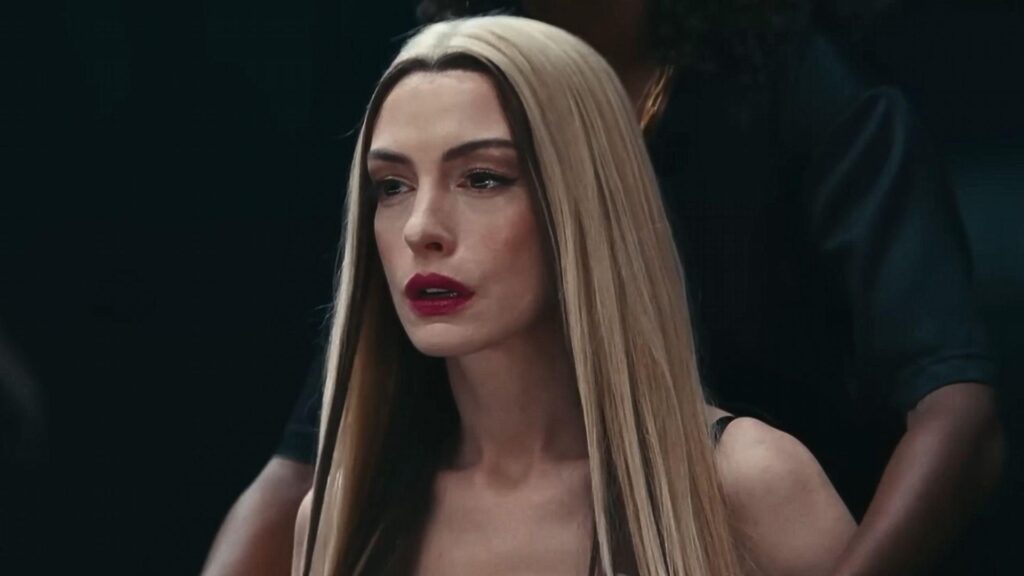
A24’s Mother Mary, written and directed by David Lowery, follows a pop icon played by Anne Hathaway and her complicated reunion with a stylist she previously betrayed, played by Michaela Coel. The film combines music, creative collaboration, damaged relationships, and supernatural imagery to explore the tension between public identity and private emotions. The visual effects reinforce this contrast. The concert sequences present Mary as a major celebrity surrounded by enormous audiences, while the Red Spirit represents something more personal and difficult to understand. Both require convincing integration with the photographed environments, although they create different visual experiences.
Published coverage confirms beloFX’s work on digital crowds and cloth simulation but does not provide a complete technical explanation of every shot. The October 13, 2026, breakdown report also noted that additional production details were unavailable. Consequently, specific software packages, rendering engines, simulation settings, and individual shot techniques should not be treated as confirmed unless disclosed by the studio.
The reported 156 shots represent beloFX’s contribution rather than a verified total for every visual effect in the film. A shot count also does not establish how many artists worked on each sequence, how many revisions were required, or how technically demanding individual effects became. The studio’s official project information identifies Russell Bowen as beloFX VFX Supervisor and Laura Jones as beloFX VFX Producer. Their credits relate specifically to the studio’s work on the production.
Creating a finished visual effects shot can involve several departments. Digital crowd sequences may require character assets, animation, layout, lighting, and compositing, while cloth effects can involve design exploration, simulation, rendering, and integration with practical photography. Consistency across different camera angles and adjacent shots is equally important because the completed sequences must maintain a coherent visual identity. One of beloFX’s major contributions involves expanding the stadium audiences surrounding Mother Mary during her performances. Digital crowds help establish the character’s celebrity status by communicating the size of the venues, the density of spectators, and the collective excitement directed toward the stage.
Creating a convincing audience requires more than filling empty spaces with computer generated people. Spectators must appear sufficiently varied in clothing, movement, positioning, and reactions to avoid obvious repetition. Identical gestures or synchronized animation can make a crowd appear artificial, particularly when viewers can observe large groups simultaneously. Modern crowd animation systems generally use character agents, animation clips, and variation controls to produce differences between individuals. Animation timing can also be adjusted so spectators do not perform the same actions simultaneously. These are established digital crowd techniques, although the available production information does not confirm which tools beloFX used for Mother Mary.
The effectiveness of a crowd depends on its position within the composition. Spectators near the camera may require recognizable movements and more detailed appearances, while distant figures primarily contribute through color, density, and collective motion. For wider stadium views, the arrangement of people is particularly important. Seating rows, aisles, standing areas, and occasional gaps help establish realistic distribution. Filling every visible space uniformly can make an audience look generated rather than naturally assembled. Movement must also support the performance rather than distract from it. Excessive background activity can compete with the central character, while crowds that remain too still may fail to communicate the energy of a concert.
The main considerations involved in convincing digital crowd work include:
- Audience density: Spectators must be distributed naturally across seating areas, standing sections, and the surrounding venue.
- Animation variation: Differences in gestures, timing, and movement reduce the appearance of repeated animation.
- Character diversity: Clothing, poses, and visible physical details help prevent identical figures from becoming noticeable.
- Camera distance: Nearby spectators require more visible detail than figures occupying distant seating sections.
- Lighting consistency: Digital audiences must respond convincingly to stage lighting and the surrounding environment.
- Composition: Crowd activity should establish the scale of the performance without distracting attention from the singer.
Concert visual effects also depend on the relationship between the performer, stage architecture, lighting, and costume design. The audience extends the environment beyond the immediate performance area, helping establish the physical scale of the stadium. Depth plays an important role in this illusion.
Differences in brightness, sharpness, and contrast allow viewers to distinguish the performer from spectators positioned farther away. A distant audience rendered with excessive sharpness or brightness can appear disconnected from the scene, while an audience that is too dark may fail to communicate the intended scale. The camera determines how much crowd detail is necessary. A moving wide shot may depend primarily on overall distribution and collective movement, while a sustained view of the front rows requires more convincing individual behavior.
Costume design provides another important visual element. Costume designer Bina Daigeler developed distinctive stage looks for the film, including Mary’s recurring halo headpieces, while Iris van Herpen created the finale gown. These recognizable silhouettes help establish Mary as the visual center of the performance. Surrounding effects must accommodate those designs. The stadium can appear enormous without diminishing the singer’s prominence, allowing the audience and performance environment to reinforce her celebrity identity.
Digital crowds also provide filmmakers with flexibility when presenting large venues from multiple angles. However, the publicly available material does not establish the exact proportion of photographed and computer generated spectators in each Mother Mary shot. The broader achievement lies in making the expanded concert environments feel consistent with the live action photography. When successful, the visual effects establish scale without drawing unnecessary attention to their digital construction.

How beloFX Created the Red Spirit With Cloth Simulation and Practical Effects
The Red Spirit, also described as the Red Woman, represents the more supernatural side of Mother Mary. Unlike the stadium crowds, which reinforce a recognizable public environment, the apparition introduces an ambiguous presence connected to Mary and Sam’s relationship. David Lowery has described the Red Woman as an element belonging to both characters rather than an unrelated supernatural creature. Its presence is connected to their creative collaboration, emotional history, and complicated relationship. The apparition’s exact nature remains open to interpretation. Lowery has resisted defining it through a single explanation, allowing the experience to hold meaning for the characters without requiring audiences to decide whether it represents a literal supernatural being or an emotional manifestation.
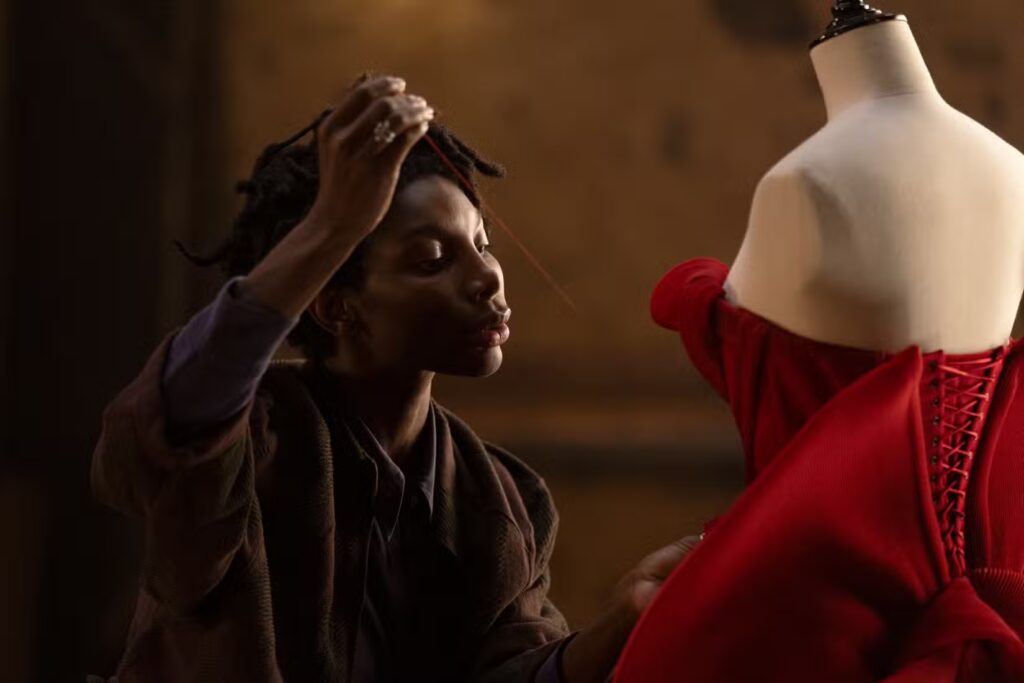
Fabric is particularly appropriate for this imagery because clothing and costume design are central to the film’s story. Sam’s work shapes Mary’s public appearance, while the Red Spirit transforms a familiar creative material into something unsettling and difficult to control. The effect can therefore be interpreted as an outward expression of unresolved emotions, damaged trust, or the connection between the two characters. However, these interpretations should not be treated as definitive explanations of its meaning.
Published breakdown coverage identifies cloth simulation as part of beloFX’s contribution to the Red Spirit. However, the available information does not reveal the specific simulation software, solver, mesh resolution, or technical settings used. Cloth simulation generally calculates how flexible surfaces respond to movement, gravity, forces, and material constraints. Properties such as stiffness, damping, stretching resistance, and bending behavior influence how the fabric changes shape over time.
For supernatural imagery, the objective is not necessarily to reproduce ordinary fabric behavior. A piece of cloth falling naturally under gravity may appear physically convincing but fail to suggest an independent presence. An apparition requires movement that can imply intention while maintaining recognizable material properties. This creates a balance between physical credibility and supernatural behavior. The folds and surface interactions can appear realistic even when the overall movement seems impossible.
Fabric is especially effective for this purpose because its shifting form can suggest recognizable anatomy without establishing a permanent human figure. A fold may resemble a shoulder, an opening can briefly suggest a face, and a billowing surface may create the impression of a torso before changing shape again. The movement itself can communicate personality.
A sudden pause, gradual turn, or unexpected change in direction can suggest awareness without requiring visible eyes or facial animation. Maintaining this ambiguity helps distinguish the Red Spirit from a conventional computer generated creature. If its form becomes too clearly human, the mystery may weaken. If it remains completely abstract, audiences may struggle to perceive it as a presence. The interaction between recognizable shapes and constantly changing fabric creates much of its unsettling appearance.
Practical effects also played an important role in developing the apparition. Lowery discussed experimenting with clay studies, costume designs, and physical puppetry while exploring its appearance. These experiments included a rod puppet constructed by Annell Brodeur for an early manifestation. The production also involved photographing red fabric moved through air. Lowery identified kinetic artist Daniel Wurtzel as a collaborator in developing this approach, drawing on Wurtzel’s experience creating fluid movements with lightweight materials. Photographing real fabric provided the filmmakers with naturally occurring folds, irregular motion, shifting translucency, and the complex interaction between air and physical material.
Lowery also discussed digitally removing strings and mirroring imagery during the production process. These details establish that practical photography and digital manipulation contributed to the apparition’s appearance. The available information therefore does not support describing the Red Spirit as entirely computer generated or exclusively practical. Its development involved a combination of physical experimentation, photographed material, and digital visual effects. The exact balance between practical and simulated elements may differ across individual shots, but the available sources do not provide a complete breakdown of those differences.
The combination of techniques offers several creative advantages:
- Practical fabric movement: Real materials provide complex folds, natural irregularities, and changing translucency that can inform the final appearance.
- Physical puppetry: Puppets and experimental constructions help filmmakers explore recognizable forms and movement.
- Cloth simulation: Digital techniques can create or refine fabric behavior that would be difficult to achieve through practical photography alone.
- Digital cleanup: Postproduction can remove supporting strings or other unwanted elements from photographed material.
- Compositing: Practical and digital contributions can be integrated into the surrounding environment.
- Creative flexibility: Different approaches allow the apparition’s appearance and movement to evolve according to each scene’s dramatic requirements.
Blending these elements with live action requires consistent perspective, lighting, camera movement, and spatial relationships. A digital crowd must remain correctly positioned within the stadium, while the Red Spirit must appear convincingly connected to the environment despite its impossible movement. Occlusion is one important part of this integration. When an apparition passes behind an object or interacts with surrounding architecture, believable overlaps help establish its position in the scene.
Lighting also affects how fabric appears. Thin sections may transmit more light, while overlapping folds can create darker and more opaque areas. Digital additions must maintain these relationships to avoid appearing disconnected from the photography. Color, exposure, and edge quality require similar attention. A supernatural effect can behave impossibly while still appearing to occupy the same photographic space as the actors and their surroundings. These are general visual effects principles rather than confirmed descriptions of beloFX’s exact production workflow.
The relationship between practical and digital imagery also explains the importance of before and after comparisons. A finished effect can conceal how much of its appearance came from original photography, physical experimentation, simulation, or compositing. For crowd sequences, comparisons can reveal changes in audience density, scale, and background activity. For the Red Spirit, they may highlight differences in silhouette, movement, placement, and integration. However, a short VFX breakdown does not necessarily show every production stage.
A starting plate may already include practical effects or preliminary work, while an intermediate render may look substantially different before final lighting and compositing. Without detailed documentation, individual images should not be assigned unverified technical methods. The broader importance of the Red Spirit lies in how it connects supernatural imagery to the film’s emotional themes. Rather than introducing a visually unrelated creature, the apparition transforms a material already associated with the characters’ creative relationship. Its movement gives that familiar material an unfamiliar identity, creating a supernatural presence that feels connected to the story rather than separate from it.
How Mother Mary’s Visual Effects Support Its Story and What Artists Can Learn From the Breakdown
The visual effects in Mother Mary support two contrasting aspects of the film’s narrative. Digital stadium crowds establish the public spectacle surrounding a successful performer, while the Red Spirit gives a more intimate emotional disturbance a visible presence. The concert environments communicate scale, recognition, and control. Costumes, choreography, lighting, and music contribute to the carefully constructed identity presented to an audience.
The supernatural imagery introduces something less predictable, suggesting emotions and relationships that cannot be managed through performance alone. This contrast reflects the film’s central tension between public identity and private experience. Mary can command enormous audiences while struggling with the consequences of her relationship with Sam. The scale of her celebrity does not resolve the personal conflict underlying the story.
Lowery has discussed filmmaking as a way of giving visual form to feelings, providing useful context for the supernatural imagery. The Red Spirit can be understood as an extension of that approach, transforming emotional uncertainty into a physical presence. Fabric creates an important connection between the film’s different visual elements. Onstage, clothing helps establish Mary’s public image through distinctive silhouettes and elaborate designs. As the Red Spirit, the same basic material becomes unstable and difficult to understand. The color red also allows several possible emotional associations, including danger, intimacy, vitality, and exposure. Its meaning depends on the context of each appearance rather than requiring one fixed interpretation.
Concert spectacle and supernatural imagery may initially appear unrelated, but both rely on atmosphere, rhythm, transformation, and audience attention. The concert creates a controlled public experience, while the apparition introduces a presence that resists control. Together, these visual elements reinforce the difference between how Mary is perceived by the public and what she experiences privately.
For visual effects artists, the beloFX breakdown demonstrates the importance of designing effects around the needs of a scene rather than pursuing technical complexity for its own sake. A large digital audience can contain thousands of convincing individual figures but still fail if the overall animation appears repetitive or distracts from the performer. Similarly, a technically accurate cloth simulation may be ineffective if the apparition’s silhouette or movement does not communicate the intended supernatural presence.
The most useful lessons include:
- Prioritize storytelling: Visual effects should reinforce the purpose of a scene, whether establishing scale or creating emotional uncertainty.
- Use convincing movement: Crowds require varied collective behavior, while fabric effects depend on believable folds, momentum, and timing.
- Maintain visual consistency: Lighting, perspective, color, and spatial relationships should remain coherent between photographed and generated elements.
- Study practical references: Real fabric experiments and physical puppetry can reveal unexpected forms and movement that inform digital work.
- Evaluate effects in motion: A convincing still frame does not guarantee that crowd animation or cloth simulation will work throughout a sequence.
- Avoid unnecessary complexity: The effectiveness of an effect depends on its visual purpose, not simply the amount of technical detail involved.
Practical experimentation is especially valuable because it can reveal behaviors that are difficult to anticipate digitally. Air moving through lightweight fabric produces irregular shapes and motion that may inspire a more convincing supernatural design. Digital simulation then provides opportunities to extend, modify, or refine those observations. However, the process should be guided by the desired visual result rather than an assumption that a specific software package is essential. The same principle applies to crowd creation. The important challenge is not simply generating large numbers of characters but arranging their movement, density, and appearance to establish a believable audience. beloFX’s published breakdown provides a useful demonstration of these contrasting visual problems, although it does not reveal a complete production recipe.
The presentation is available through CG Channel’s October 13, 2026, coverage under the title Mother Mary · VFX Breakdown · beloFX. The studio’s official project page also provides production credits, including Russell Bowen and Laura Jones. These materials should be distinguished from the film’s promotional trailers and broader production features. A trailer introduces the film, while a visual effects breakdown highlights selected postproduction contributions.
A24 also provides a separate feature titled The Making of Mother Mary, offering broader production context rather than focusing exclusively on beloFX’s work. Lowery’s interviews about practical fabric, puppetry, and the development of the apparition offer additional insight into the creative process. Considered together, these materials establish that the film’s supernatural imagery emerged through collaboration between practical experimentation and digital effects.
The significance of beloFX’s contribution lies in how the work expands the film’s visual possibilities without separating those images from the underlying narrative. The digital crowds allow the concert sequences to communicate the scale of Mary’s celebrity, while the Red Spirit turns familiar fabric into an ambiguous supernatural presence. Both effects demonstrate how visual techniques can serve distinct purposes within the same film while maintaining a consistent atmosphere. Ultimately, the breakdown illustrates how digital environments, physical materials, animation, and compositing can work together to support storytelling. Its most valuable lesson is that successful visual effects depend on the relationship between technical execution, visual design, and the emotions a scene is intended to communicate.
Frequently Asked Questions (FAQs)
- What does the beloFX Mother Mary VFX breakdown cover?
The breakdown highlights beloFX’s contributions to Mother Mary, particularly its computer generated stadium crowds and cloth simulation work associated with the Red Spirit. These effects support different aspects of the film, with the crowds establishing the scale of Mary’s performances and the apparition introducing supernatural imagery. The presentation showcases selected work rather than documenting every technique used throughout production. - How many VFX shots did beloFX contribute to Mother Mary?
Published coverage reports that beloFX contributed 156 visual effects shots to Mother Mary. These include work involving digital stadium audiences and the Red Spirit. However, the figure represents the studio’s contribution and should not automatically be interpreted as the total number of visual effects shots completed by every studio involved in the film. - Who supervised beloFX’s work on the film?
The studio’s official project page identifies Russell Bowen as beloFX VFX Supervisor and Laura Jones as beloFX VFX Producer. Their responsibilities relate specifically to beloFX’s contribution, including the coordination and delivery of the studio’s visual effects work. These credits should be distinguished from broader production roles associated with the entire film. - Is the Red Spirit entirely computer generated?
No. Available production interviews describe practical techniques involving puppetry and photographed red fabric, while breakdown coverage confirms cloth simulation work. David Lowery also discussed using digital cleanup and image manipulation during production. These details indicate a combination of practical and digital approaches, although the precise balance between them in individual shots has not been fully disclosed. - Why does the apparition resemble fabric?
Fabric connects the Red Spirit to the film’s emphasis on costume design, creative identity, and the relationship between Mary and Sam. Clothing plays an important role in shaping Mary’s public image, while Sam’s work as a stylist makes fabric central to their connection. The apparition transforms that familiar material into an unsettling presence, allowing viewers to interpret it through the characters’ complicated emotional relationship. - What did Daniel Wurtzel contribute to Mother Mary?
Daniel Wurtzel contributed to the development of the apparition’s practical fabric imagery. Lowery described working with him on fabric moved through air, drawing on Wurtzel’s experience with kinetic art and lightweight materials. These experiments helped explore fluid movement and changing fabric shapes, providing practical imagery associated with the Red Spirit’s appearance. - Did beloFX use Houdini for the crowds or cloth simulation?
The available production information does not confirm whether beloFX used Houdini for its crowd animation or cloth simulation. Houdini provides established tools for both types of effects, making its documentation useful for understanding general techniques. However, those capabilities should not be treated as evidence that the studio selected the software for Mother Mary without direct confirmation. - Why are digital crowds useful in concert films?
Digital crowds allow filmmakers to establish the scale of large performances and maintain convincing audience environments across different camera angles. They can increase visible crowd density, provide varied spectator movements, and extend the appearance of a venue. Their effectiveness depends on realistic distribution, animation timing, lighting, and integration with the photographed surroundings rather than simply generating large numbers of people. - Does the Red Spirit have one confirmed meaning?
No. David Lowery has left the apparition open to interpretation rather than assigning it one definitive explanation. The Red Spirit is connected to Mary and Sam’s relationship, but viewers can understand it through several possibilities, including emotional conflict, shared creative identity, or a supernatural presence. This uncertainty is part of what makes the imagery unsettling and meaningful within the story. - Where can the breakdown be watched?
The Mother Mary · VFX Breakdown · beloFX presentation can be watched through CG Channel’s October 13, 2026, coverage of the studio’s work. BeloFX’s official project page provides additional production information and credits, while A24’s film page offers separate promotional and making of material. These resources provide different perspectives on the film’s visual effects and wider production.

Conclusion
The beloFX Mother Mary VFX Breakdown highlights how digital crowds and supernatural imagery support the film’s storytelling. Stadium audiences establish the scale of Mary’s celebrity, while the Red Spirit transforms familiar fabric into an unsettling presence.
The combination of practical puppetry, photographed fabric, and digital simulation demonstrates how different techniques can work together. For VFX artists, the central lesson is that successful effects should serve a scene’s emotional purpose. Both the concert spectacle and supernatural imagery reinforce the contrast between Mary’s public identity and private struggles.
Sources and Citations
- beloFX, Mother Mary Official Project Page and Credits : Studio maintained project page identifying Russell Bowen as beloFX’s visual effects supervisor and Laura Jones as its visual effects producer. It also credits David Lowery as director, provides the film’s premise and presents crew information. This establishes beloFX’s involvement and production responsibilities, while the separate breakdown report describes the specific effects delivered. belofx.com
Citation: Mother Mary: beloFX Project Page and Production Credits. (beloFX) - CG Channel, Visual Effects Breakdown Coverage, October 13, 2026 : Jim Thacker’s report states that beloFX contributed 156 visual effects shots, including digital crowds for the stadium performances and cloth simulation for the recurring red spirit. It embeds the studio’s breakdown and links to its credits. The article does not identify the software used, so it does not establish a particular Houdini or Autodesk workflow. CG Channel
Citation: Watch beloFX’s VFX Breakdown for Mother Mary. (CG Channel) - A24, Mother Mary Official Film Page : Official studio listing confirming David Lowery as writer and director, the April 17, 2026 theatrical release and principal performers including Anne Hathaway and Michaela Coel. It introduces the reunion between a pop star and her estranged stylist, while providing trailers, a making of feature and home viewing links. This supplies film background rather than detailed effects documentation. A24
Citation: Mother Mary: Official Film Information. (A24) - Filmmaker Magazine, David Lowery and Chloé Zhao Interview, April 1, 2026 : Conversation exploring the film’s creative origins, performances and development of the apparition described as the Red Woman. Lowery discusses discarded concept art, clay sculptures, practical rod puppets and experiments with fabric moving through air. He connects these choices to the characters’ emotions and creative identities, providing firsthand context for the effect’s evolving visual design. Filmmaker Magazine
Citation: Facing the Music: David Lowery and Chloé Zhao Dig Into Mother Mary. (Filmmaker Magazine) - Rolling Stone Philippines, Production Interview, April 23, 2026 : David Fear’s interview presents Lowery’s account of the casting, music, costumes and supernatural effects. Its Red Woman section describes Annell Brodeur’s puppets, Daniel Wurtzel’s wind driven fabric work and digital adjustments such as removing strings and mirroring footage. This documents a combination of practical photography and digital manipulation rather than an entirely computer generated apparition. rollingstonephilippines.com
Citation: Inside the Making of David Lowery’s Mother Mary. (Rolling Stone Philippines) - RogerEbert.com, David Lowery Interview, April 27, 2026 : Interview whose indexed introduction identifies friendship, filming locations and the T-1000’s influence on the movie’s strangest element as discussion topics. The article was located, but its full text could not be retrieved during verification. Its detailed comments about creative intentions and production therefore remain unchecked against the complete interview. Roger Ebert
Citation: An Act of Translation: David Lowery on Mother Mary. (RogerEbert.com) - Inverse, Ending and Supernatural Storytelling Interview, April 17, 2026 : Hoai-Tran Bui’s interview explores the dance sequence, influences from Possession and the relationship between the ghost and the characters’ emotional experiences. Lowery explains why their feelings needed a visual form once dialogue became insufficient, while leaving room for different interpretations. The article contains ending spoilers and provides narrative context rather than a technical effects breakdown. Inverse
Citation: Mother Mary Ending Explained: David Lowery Discusses the Ghost. (Inverse) - Vogue, Costume Design Interview, April 15, 2026 : Christian Allaire’s feature includes Bina Daigeler’s explanation of the costumes and signature halo headpieces, alongside Iris van Herpen’s account of designing the final red organza dress. It connects materials, silhouettes and colour with the character’s changing identity, providing direct design commentary rather than an analysis of digital cloth simulation. Vogue
Citation: In Mother Mary, the Pop Star Worthy Costumes Tell a Deeper Story. (Vogue) - Daniel Wurtzel, Official Artist Biography : Official biography describing Wurtzel’s kinetic sculptures and installations using air and lightweight materials, alongside museum exhibitions and theatrical collaborations. It establishes the artistic background behind the wind and fabric approach discussed by Lowery. The page is an artist profile, not a detailed record of individual Mother Mary shots or their digital treatment. danielwurtzel.com
Citation: Daniel Wurtzel: Biography and Selected Work. (Daniel Wurtzel) - SideFX, Houdini Crowd Simulation Basics : Official documentation explaining digital crowd agents, animation clips, behavioural states and transitions triggered by events. It also describes positioning characters, combining movement forces and handling terrain and obstacles. This provides a technical reference for understanding crowd simulation concepts, but does not independently confirm that beloFX used Houdini to create Mother Mary’s stadium audiences. SideFX
Citation: Crowd Basics: Houdini Documentation. (SideFX) - SideFX, Vellum Cloth Tool Documentation : Official guide explaining how geometry becomes simulated cloth and interacts with collision objects. It covers thickness, stiffness, damping, solver iterations and layered fabric behaviour, along with warnings about triangulation differences. These controls provide background for explaining how artists adjust a digital fabric’s movement rather than documenting the actual settings used in the film. SideFX
Citation: Vellum Cloth: Houdini Shelf Tool Documentation. (SideFX) - SideFX, Cloth Simulation and Fabric Dynamics Guide : Detailed documentation covering preparation of draped cloth, simulation substeps, garment tailoring, friction, bending and compression. It also explains how air resistance and gravity affect movement and perceived scale. This complements the introductory Vellum tool page with practical considerations for achieving controlled fabric behaviour and avoiding unstable or unnatural simulation results. SideFX
Citation: Cloth Simulation: Houdini Vellum Documentation. (SideFX) - Autodesk, Randomize Initial Frame Documentation : Historical Softimage 2014 reference describing a CrowdFX function that assigns each particle a random starting frame within an animation cycle. Its output connects to locomotion or stadium crowd initialisation, illustrating how repeated animations can begin at different points. This is a general timing technique, not evidence that beloFX used Softimage for Mother Mary. Autodesk Download
Citation: Randomize Initial Frame: Softimage User Guide. (Autodesk)
Recommendations
- Forsaken Realms: Vahrin’s Call Release Date, Gameplay, and Why Fable Fans Will Love It
- Battlefield 6 Season 3 Brings Reimagined Golmud Railway Map With Major Gameplay Changes and Train Overhaul Explained
- Solarpunk Official Game Pass Reveal Trailer Breakdown: Release Date, Gameplay Features, Platforms, and Everything You Need to Know
- Pokémon Champions Mobile Release on June 17: Launch Time, Crossplay, and What’s New
- Neon Odyssey Becomes the Most-Funded TTRPG Kickstarter of All Time
- The Mandalorian and Grogu Box Office Opening Explained
- Kingdom Come: Deliverance 2 Devs Hope to Be the “New Kings” of the RPG Genre
- Magic: the Gathering Marvel Super Heroes Mechanics Guide (2026)
- How to Retarget Mixamo Animations to Metahuman in Unreal Engine Using the IK Retargeter
- Beast of Reincarnation Cooking Guide: All Recipes, Ingredients, and Meal Buffs



































































































