






In This Article (10 sections)
Who is the Best FIFA Cover Star of All Time?
Ronaldinho ranks as the best FIFA cover star because his personality and playing style matched the qualities most closely associated with the classic games. FIFA rewarded creativity, dribbling, skill moves, improvised finishes, and the confidence to attempt something unexpected. At his peak, Ronaldinho expressed each of those ideas on the pitch.
His principal mainline run began with FIFA Football 2004, where he shared the artwork with Alessandro Del Piero and Thierry Henry. After missing FIFA Football 2005, he returned alongside Wayne Rooney for FIFA 06, FIFA 07, FIFA 08, and FIFA 09. Those releases tied Ronaldinho to the period when FIFA was becoming a dominant global football series and a regular part of couch multiplayer culture.
His association with EA Sports also extends beyond those five best-known annual covers. Guinness World Records credited Ronaldinho with nine FIFA cover appearances when related releases and broader packaging were included. That wider presence helps explain why many players remember him as one of the franchise’s most frequent faces even though Rooney had the longer uninterrupted principal-cover run.
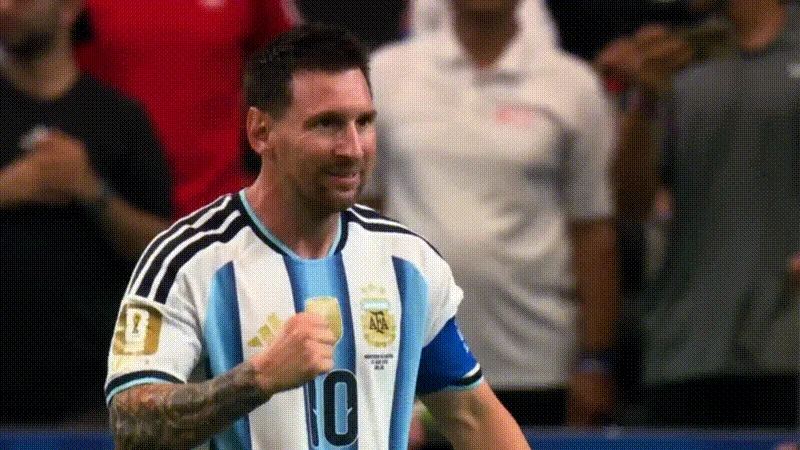
Lionel Messi is the closest rival. EA made him the global face of its football games in 2011, introduced him under the agreement through FIFA Street, and then placed him on four consecutive mainline releases from FIFA 13 through FIFA 16. His run created the most consistent worldwide cover era, with regional players appearing beside him without replacing him as the main star.
Wayne Rooney has the strongest longevity argument after appearing on seven consecutive principal covers from FIFA 06 through FIFA 12. Cristiano Ronaldo delivered one of the most concentrated solo marketing campaigns with FIFA 18, while Kylian Mbappé fronted the final three numbered FIFA releases. Sam Kerr’s appearance on FIFA 23 carries a different kind of weight because it moved women’s representation from regional packaging onto a global FIFA cover.
The ranking is based on cover legacy rather than football achievements. It considers repetition, visual impact, timing, historical meaning, and how closely each player matched the identity of the game. Rooney had greater continuity, Messi had the clearest global reign, and Ronaldo had greater solo branding power, but Ronaldinho created the most natural connection between the athlete and the experience of playing FIFA.

Best FIFA Cover Stars Ranked from Worst to Greatest
This ranking evaluates the players as FIFA cover stars, not as footballers. A short or low placement does not diminish anyone’s career. It reflects how memorable the packaging became, whether the player established an era, and how much historical meaning the appearance gained.
Jack Wilshere
Wilshere joined Wayne Rooney on the British FIFA 12 cover. His inclusion reflected the excitement surrounding a young English midfielder, but the artwork is remembered mainly as the final entry in Rooney’s seven-title run rather than the beginning of a Wilshere era.
Theo Walcott
Walcott appeared with Rooney and Frank Lampard on the British FIFA 10 cover. His speed made him familiar to players, but the three-person design divided attention and never established him as an independent face of the series.
Erik Thorstvedt
Thorstvedt fronted the principal European version of FIFA Soccer 95. Goalkeepers have rarely held the primary cover position, giving his appearance historical value, although it arrived before FIFA covers had developed into yearly global celebrity campaigns.
Sol Campbell
Campbell led the principal British artwork for FIFA 2000. The action photograph reflects the region-focused marketing of that period, but it lacks the distinctive visual identity attached to covers such as FIFA 98, FIFA Football 2004, FIFA 13, and FIFA 18.
Eden Hazard
Hazard first joined Messi on regional FIFA 15 packaging before fronting the FIFA 20 Standard Edition. His solo selection could have started a longer run, but the same release divided its identity between Hazard, Virgil van Dijk, and Zinedine Zidane across three editions.
Kaká
Kaká shared the FIFA 11 cover with Rooney. His technical style and worldwide reputation suited the series, but the artwork remained one chapter of Rooney’s established sequence rather than a separate Kaká-led period.
Marco Reus
Reus became the worldwide FIFA 17 star after defeating James Rodríguez, Anthony Martial, and Eden Hazard in a public vote that received more than 3.1 million selections. The cover is remembered as much for its fan-led selection process as for the finished artwork.
Sam Kerr
Kerr shared the global FIFA 23 Ultimate Edition with Mbappé and appeared alone on Standard Edition packaging in Australia and New Zealand, as well as through a worldwide Amazon release. Her one-title run had more historical meaning than many longer appearances because it placed a woman inside FIFA’s worldwide cover identity.
Thierry Henry
Henry appeared on regional FIFA 2001 packaging, carried the principal FIFA Football 2002 artwork, and joined Del Piero and Ronaldinho on FIFA Football 2004. His pace, technique, and attacking reputation made him an ideal representative during FIFA’s transition toward more recognizable international campaigns.
David Beckham
Beckham’s British FIFA: Road to World Cup 98 cover arrived at the right cultural moment. His status with Manchester United and England, combined with the approach of the 1998 World Cup, gave the artwork an influence extending well beyond ordinary annual packaging.
Kylian Mbappé
Mbappé appeared across the FIFA 21 editions and returned for FIFA 22 and FIFA 23. His three-title sequence made him the final recurring male cover star of the EA Sports FIFA era, while his shared Ultimate Edition with Kerr gave the final release greater historical relevance.
Cristiano Ronaldo
Ronaldo’s FIFA 18 campaign presented him as the undisputed center of the product. EA also captured details of his movement, acceleration, shooting, and skills for use in his digital representation. He returned for FIFA 19, but the earlier cover remains the clearer and more memorable of the two.
Wayne Rooney
Rooney appeared on seven consecutive principal covers from FIFA 06 through FIFA 12. Partners changed from Ronaldinho to Lampard, Walcott, Kaká, and Wilshere, but Rooney remained the constant British figure for an entire gaming generation.
Lionel Messi
Messi fronted FIFA 13, FIFA 14, FIFA 15, and FIFA 16. His run gave EA its most coherent global cover period, with his recognizable dribbling posture and movement supplying a consistent identity even when regional co-stars changed.
Ronaldinho
Ronaldinho takes first place because his football felt inseparable from the pleasure of playing FIFA. His smile, hair, flair, and improvisational style remained visually dominant even on shared covers, connecting him with an era remembered for creative attacks, skill moves, and multiplayer sessions with friends.

Every FIFA Cover Star by Year from 1993 to FIFA 23
The chronology below uses the release year and prioritizes the principal European, British, or international artwork. Regional packaging regularly featured different players, so several releases have more than one valid cover-star answer.
2022, FIFA 23: Mbappé fronted the worldwide Standard Edition and joined Sam Kerr on the Ultimate Edition. Kerr also received a solo Standard Edition in Australia and New Zealand and through a worldwide Amazon release.
1993, FIFA International Soccer: David Platt and Piotr Świerczewski appeared on the best-known international artwork. Alexi Lalas and Lothar Matthäus were connected to alternate early packaging.
1994, FIFA Soccer 95: Erik Thorstvedt led the principal European edition, while Alexi Lalas appeared in North American marketing.
1995, FIFA Soccer 96: Jason McAteer and Frank de Boer appeared in Europe. Andy Legg and Ioan Sabău were used on other versions.
1996, FIFA 97: David Ginola led the European campaign, with Bebeto featured in other markets.
1997, FIFA: Road to World Cup 98: David Beckham appeared in Britain, Paolo Maldini in Italy, Raúl in Spain, David Ginola in France, Andreas Möller in Germany, and Roy Lassiter in North America.
1998, FIFA 99: Dennis Bergkamp fronted the British release. Other regional stars included Fabien Barthez, Olaf Thon, Christian Vieri, Rui Costa, Fernando Morientes, and Hidetoshi Nakata.
1999, FIFA 2000: Sol Campbell led the British artwork. Josep Guardiola, Emmanuel Petit, Vincenzo Montella, Jaap Stam, Eddie Pope, Simão, and Nakata appeared elsewhere.
2000, FIFA 2001: Paul Scholes fronted the principal British packaging. Thierry Henry, Gaizka Mendieta, Filippo Inzaghi, Lothar Matthäus, C.J. Brown, Ricardo Sá Pinto, and Nakata featured regionally.
2001, FIFA Football 2002: Thierry Henry was the main cover figure. Roberto Carlos, Francesco Totti, Ruud van Nistelrooy, Iker Casillas, Nuno Gomes, Zlatan Ibrahimović, and Nakata appeared in selected territories.
2002, FIFA Football 2003: Roberto Carlos, Ryan Giggs, and Edgar Davids shared the main international cover. Landon Donovan and Nakata appeared on regional versions.
2003, FIFA Football 2004: Alessandro Del Piero, Thierry Henry, and Ronaldinho formed one of the series’ most recognizable three-player covers.
2004, FIFA Football 2005: Patrick Vieira, Fernando Morientes, and Andriy Shevchenko formed the principal trio. Oswaldo Sánchez and Freddy Adu appeared regionally.
2005, FIFA 06: Wayne Rooney and Ronaldinho began their four-title partnership. Freddy Adu, Omar Bravo, Lukas Podolski, and Park Chu-young were among the regional athletes.
2006, FIFA 07: Rooney and Ronaldinho returned, while Landon Donovan, Kikín Fonseca, Podolski, David Villa, and Juninho Pernambucano appeared in selected markets.
2007, FIFA 08: Rooney and Ronaldinho remained the main pairing, accompanied or replaced by local players on various editions.
2008, FIFA 09: Rooney and Ronaldinho completed their fourth consecutive shared cover.
2009, FIFA 10: Rooney appeared with Frank Lampard and Theo Walcott on the principal British packaging.
2010, FIFA 11: Kaká and Rooney shared the main artwork.
2011, FIFA 12: Rooney and Jack Wilshere appeared together, completing Rooney’s seven consecutive principal covers.
2012, FIFA 13: Messi became the global centerpiece. Joe Hart and Alex Oxlade-Chamberlain joined him in Britain, Karim Benzema in France, Roberto Soldado in Spain, and Claudio Marchisio in Italy.
2013, FIFA 14: Messi returned globally, with Gareth Bale joining him in Britain, Ireland, and the Middle East. Arturo Vidal and Javier Hernández appeared in other campaigns.
2014, FIFA 15: Messi remained the worldwide star, while Eden Hazard joined him in Britain, France, Belgium, and the Netherlands.
2015, FIFA 16: Messi completed his four-title run. Regional stars included Jordan Henderson, Alex Morgan, Christine Sinclair, Stephanie Catley, Arda Turan, Oscar, David Alaba, Antoine Griezmann, and others.
2016, FIFA 17: Marco Reus won the worldwide fan vote and became the global cover athlete.
2017, FIFA 18: Cristiano Ronaldo fronted the Standard and Ronaldo Editions, while Ronaldo Nazário appeared on the Icon Edition.
2018, FIFA 19: Cristiano Ronaldo returned on the launch artwork. Neymar appeared in premium marketing, and later packaging used Neymar, Kevin De Bruyne, and Paulo Dybala.
2019, FIFA 20: Eden Hazard appeared on the Standard Edition, Virgil van Dijk on the Champions Edition, and Zinedine Zidane on the Ultimate Edition.
2020, FIFA 21: Kylian Mbappé appeared across all editions.
2021, FIFA 22: Mbappé returned for a second consecutive release.

Which Player Has Appeared on the Most FIFA Covers?
There are three valid answers because cover appearances can be counted through principal artwork, consecutive regional appearances, or the wider FIFA product family.
Wayne Rooney holds the longest uninterrupted run on the best-known principal annual covers. He appeared on every release from FIFA 06 through FIFA 12, giving him seven consecutive titles and making him a permanent part of the series’ British identity during that period.
Tim Cahill matched the seven-title record through Australian regional editions. He appeared on the Australian covers from FIFA 10 through FIFA 16. His run receives less attention because many historical lists concentrate on the primary European or worldwide artwork.
Ronaldinho leads through the wider total cited by Guinness World Records, which credited him with nine FIFA covers when related games and broader packaging were counted. His principal mainline appearances consisted of FIFA Football 2004 and FIFA 06 through FIFA 09.
Several releases stand above the rest for reasons beyond appearance totals. Beckham’s FIFA: Road to World Cup 98 captured the relationship between football, celebrity, and the approaching World Cup. FIFA Football 2003 used Roberto Carlos, Ryan Giggs, and Edgar Davids to create one of the strongest ensemble covers, while FIFA Football 2004 followed with Del Piero, Henry, and Ronaldinho.
FIFA 06 introduced the Rooney and Ronaldinho partnership that lasted through FIFA 09. FIFA 13 began Messi’s four-year global reign, while FIFA 17 allowed supporters to select Marco Reus. FIFA 18 connected Cristiano Ronaldo’s image and physical performance closely with the game’s marketing, and FIFA 23 closed the numbered series with Mbappé and Kerr on its global Ultimate Edition.
Messi’s best cover was FIFA 13. It began his mainline run and used a dribbling pose that immediately matched his recognizable movement. FIFA 14 experimented with different artwork across console generations, while FIFA 16 had greater importance for representation because Morgan, Sinclair, and Catley appeared on regional editions.
Ronaldo’s strongest appearance was FIFA 18. The artwork made him the single focal point, while the capture work connected his movement and technique with the game itself. FIFA 19 had a less unified identity after edition changes and later artwork introduced Neymar, De Bruyne, and Dybala.

Wayne Rooney, Ronaldinho, Kylian Mbappé, and Sam Kerr Cover Legacies
Wayne Rooney’s seven-cover sequence began with FIFA 06 and ended with FIFA 12. He shared his first four releases with Ronaldinho, appeared with Lampard and Walcott on FIFA 10, joined Kaká on FIFA 11, and completed the run beside Wilshere on FIFA 12.
His most memorable appearance was FIFA 06 because it established the Rooney and Ronaldinho partnership. FIFA 10 captured a specific Premier League and England period, while FIFA 12 became historically relevant as the final entry in his record-setting sequence.
Ronaldinho’s mainline history started on FIFA Football 2004 before his four shared releases with Rooney. His appearances followed the development of his public image from elite international attacker to the clearest symbol of expressive, skill-focused football.
His cover legacy is emotional as well as numerical. Ronaldinho encouraged the same behaviors players enjoyed in the game: trying tricks, improvising, attacking creatively, and treating football as entertainment. That relationship gives his appearances a character that cannot be measured through annual totals alone.
Kylian Mbappé fronted FIFA 21, FIFA 22, and FIFA 23. EA introduced him as the representative of a new football generation, and his return for two more releases turned that first appearance into the closing cover era of the EA-FIFA partnership.
His strongest cover was FIFA 23 because it completed his run and placed him beside Kerr on the worldwide Ultimate Edition. FIFA 21 was the clearer solo arrival, but the final release has greater historical meaning.
Sam Kerr was not the first woman to appear anywhere on FIFA packaging. Alex Morgan, Christine Sinclair, and Stephanie Catley had already appeared on regional FIFA 16 covers. Kerr was the first woman on a global FIFA cover and the first female footballer to appear alone on a FIFA Standard Edition.
Her presence beside Mbappé showed that women’s football was no longer being confined to separate regional marketing. Even though she appeared on one numbered title, her cover changed the way EA presented the worldwide identity of football.

David Beckham, Thierry Henry, Regional Covers, and the EA Sports FC Era
David Beckham’s most famous appearance came on the British version of FIFA: Road to World Cup 98. Paolo Maldini, Raúl, David Ginola, Andreas Möller, and Roy Lassiter represented other territories, but Beckham’s edition became the most widely recognized version of the game.
The timing gave it unusual cultural reach. Beckham was becoming one of football’s most marketable players, England was preparing for the World Cup, and EA’s series was reaching a larger audience. He later appeared with Jude Bellingham on England’s digital artwork for the FIFA 23 World Cup update, linking two national-team generations.
Thierry Henry had the longer mainline history. He appeared on a regional FIFA 2001 cover, became the principal star of FIFA Football 2002, and joined Del Piero and Ronaldinho on FIFA Football 2004. His 2002 appearance was his clearest solo statement, while the 2004 trio produced the more memorable complete cover.
Marco Reus received his opportunity through FIFA’s most prominent worldwide cover vote. More than 3.1 million selections were cast between Reus, James Rodríguez, Anthony Martial, and Eden Hazard. Reus’s victory made FIFA 17 memorable even though he appeared on only one annual release.
Regional packaging was a regular part of FIFA marketing, not a rare exception. EA used different players to connect the same game with audiences in Britain, France, Germany, Italy, Spain, Portugal, Japan, North America, Australia, and other markets. Even after Messi became the worldwide centerpiece, local stars continued appearing beside him.
Alternate editions later became as influential as regional covers. FIFA 18 separated Cristiano Ronaldo’s Standard artwork from Ronaldo Nazário’s Icon Edition. FIFA 20 used Hazard, Van Dijk, and Zidane across three editions, while FIFA 23 divided its Standard and Ultimate identities between Mbappé and Kerr.
The FIFA naming partnership ended after FIFA 23, but EA continued the annual series as EA Sports FC. Erling Haaland led EA Sports FC 24, while its Ultimate Edition assembled a large cast of active players, women’s football stars, and retired figures. Jude Bellingham fronted EA Sports FC 25, becoming the youngest global cover star in EA’s football-game history.
EA Sports FC 26 paired Bellingham with Jamal Musiala on its principal artwork, while Zlatan Ibrahimović appeared on the Ultimate Edition. The branding changed, but EA retained global ambassadors, premium-edition covers, retired icons, and artwork designed to tell a specific football story.

Frequently Asked Questions (FAQs)
- Who is considered the Best FIFA Cover Star?
Ronaldinho is the strongest choice because his flair, personality, and attacking style reflected the qualities that made FIFA entertaining. He appeared on FIFA Football 2004 and then on four consecutive principal covers from FIFA 06 through FIFA 09. Lionel Messi, Wayne Rooney, and Cristiano Ronaldo are his closest challengers. - Who appeared on the most consecutive FIFA covers?
Wayne Rooney and Tim Cahill share the Guinness-recognized record of seven consecutive annual-title appearances. Rooney appeared on principal covers from FIFA 06 through FIFA 12, while Cahill appeared on Australian regional editions from FIFA 10 through FIFA 16. - How many FIFA covers did Lionel Messi appear on?
Messi appeared on four consecutive principal mainline covers: FIFA 13, FIFA 14, FIFA 15, and FIFA 16. He also appeared on FIFA Street after signing a multiyear agreement to become the global face of the franchise. Regional co-stars were added beside him in many countries. - Which was Lionel Messi’s best FIFA cover?
FIFA 13 was Messi’s best cover because it introduced his mainline era and used a dynamic image that closely matched his recognizable dribbling style. It also established the global-plus-regional approach in which Messi remained the worldwide centerpiece while local stars appeared in selected markets. - How many FIFA covers did Cristiano Ronaldo have?
Cristiano Ronaldo was the principal global cover athlete for FIFA 18 and FIFA 19. FIFA 18 also had an Icon Edition featuring Ronaldo Nazário, while FIFA 19 used Neymar in premium-edition marketing and later introduced artwork featuring Neymar, Kevin De Bruyne, and Paulo Dybala. - Was Sam Kerr the first woman on a FIFA cover?
Kerr was the first woman on a global FIFA cover and the first female footballer to appear alone on a FIFA Standard Edition. She was not the first woman used on any FIFA packaging, since Alex Morgan, Christine Sinclair, and Stephanie Catley appeared on regional FIFA 16 covers. - Who was on the first FIFA cover in 1993?
The best-known FIFA International Soccer cover featured David Platt and Piotr Świerczewski. Early regional packaging varied, which is why some historical lists include additional players or show different artwork for particular countries. - Why was Marco Reus selected for the FIFA 17 cover?
Reus won a global public vote against James Rodríguez, Anthony Martial, and Eden Hazard. EA recorded more than 3.1 million selections, making FIFA 17 one of the clearest examples of supporters directly choosing the worldwide cover athlete. - Who were the FIFA 23 cover stars?
Kylian Mbappé appeared on the worldwide Standard Edition, while Mbappé and Sam Kerr shared the global Ultimate Edition. Kerr also appeared alone on the Standard Edition in Australia and New Zealand and through a worldwide Amazon release. - Who replaced FIFA cover stars after the series became EA Sports FC?
Erling Haaland led EA Sports FC 24, Jude Bellingham fronted EA Sports FC 25, and Bellingham shared the principal EA Sports FC 26 artwork with Jamal Musiala. Zlatan Ibrahimović appeared separately on the EA Sports FC 26 Ultimate Edition.

Conclusion
The Best FIFA Cover Star is not determined solely by career achievements or the number of times a player appeared. A successful cover must capture a football era, complement the identity of the game and remain recognizable years after the release has disappeared from store shelves.
Ronaldinho ranks first because his football and personality expressed the qualities most closely associated with the classic FIFA experience. His appearances on FIFA Football 2004 and FIFA 06 through FIFA 09 connected him with an influential period in the series, while his wider presence across FIFA-related covers deepened that association.
Lionel Messi ranks just behind him after establishing the most coherent global cover era from FIFA 13 to FIFA 16. Wayne Rooney possesses the strongest principal-cover longevity, with seven consecutive appearances. Cristiano Ronaldo’s FIFA 18 campaign produced one of the most powerful solo-star designs, and Kylian Mbappé became the face of the final three EA Sports FIFA releases.
Sam Kerr’s FIFA 23 cover belongs in a separate category of historical importance. By appearing beside Mbappé on the global Ultimate Edition and alone on selected Standard Edition packaging, she moved women’s representation from regional FIFA covers into the worldwide identity of the franchise.
From David Platt and Piotr Świerczewski in 1993 to Mbappé and Kerr on FIFA 23, the covers document changes in football, celebrity, regional marketing, gender representation and video-game branding. The transition to EA Sports FC altered the name on the case, but it preserved the central idea: each cover is a declaration of who represents football at that moment.
Sources and Citations
- Sports Illustrated – History of FIFA Cover Athletes (European & International Covers)
- FIFA Soccer Blog – Complete History of FIFA Game Covers (Regional Variants Archive)
- Guinness World Records – Wayne Rooney
- Guinness World Records – Tim Cahill
- Guinness World Records – Ronaldinho
- Electronic Arts – Lionel Messi Named Global Cover Athlete for FIFA 13
- Electronic Arts – Cristiano Ronaldo Named FIFA 18 Cover Star
- Electronic Arts – FIFA 17 Cover Vote Winner (Marco Reus)
- Electronic Arts – FIFA 17 Cover Vote Details
- Electronic Arts – Kylian Mbappé Revealed as FIFA 21 Cover Star
- Electronic Arts – FIFA 22 Official Reveal and Cover Announcement
- Electronic Arts – FIFA 23 Cover Reveal (Kylian Mbappé & Sam Kerr)
- Electronic Arts – The Future of Interactive Football: EA SPORTS FC
- Electronic Arts – EA SPORTS FC 24 Cover Reveal (Erling Haaland)
- Electronic Arts – EA SPORTS FC 25 Cover Reveal (Jude Bellingham)
- Electronic Arts – EA SPORTS FC 26 Cover Reveal (Jamal Musiala & Zlatan Ibrahimović)
- Additional official references
- Electronic Arts – FIFA News Archive
- Electronic Arts – EA SPORTS FC News Archive
- FIFPlay – FIFA Series Covers Archive
- Guinness World Records – Search Archive
Recommendations
- King’s Quest: Complete Guide to the Games, Characters, Story, and Walkthroughs
- Halo: Campaign Evolved Will Feature a Machinima Mode for Freecam Videos and Creator Content
- Every PS5 Pro Enhanced Game (2026 List) – All Confirmed Titles so Far
- Devil May Cry Vergil: Complete Guide to Dante’s Iconic Rival, Powers, and Storyline
- Dragon Quest 12 Beyond Dreams Protagonist Divides Fans After Reveal
- The Most-Played Game at the June 2026 Steam Next Fest is BOMBANANA: How an Indie Demo Took over Steam
- Mario Galaxy Movie Will Be In Theaters For Longer Than Expected as Universal Extends Theatrical Window
- NEW Control Rig PHYSICS in Unreal Engine 5 (UE5.6): Real‑Time Procedural Physics for Control Rig
- Anime Hack and Slash RPG Neverness to Everness Launches Worldwide: Release Date, Platforms, Cross-Play, and Launch Rewards
- Metro 2039 Takes the Post-Apocalyptic Series to Even Darker, More Claustrophobic Depths: Release Window, Trailer, and Everything We Know



































































































