






In This Article (8 sections)
Why Chinese AI Firms Are Securing Overseas Nvidia Capacity
Chinese artificial intelligence firms are increasingly trying to secure Nvidia-powered computing capacity outside mainland China as access to advanced processors becomes more uncertain. On November 12, 2026, Reuters reported that Chinese AI developers were attempting to reserve overseas capacity amid concerns that Washington could introduce new restrictions on remote access to advanced processors.
According to people familiar with the developments, a major Chinese cloud provider had discussed securing foreign capacity, while smaller AI laboratories had approached overseas data center operators about possible reservations. The identities of every company involved were not disclosed, and discussions about capacity should not be treated as proof that finalized agreements or operational deployments already exist. The urgency nevertheless reflects how access to advanced computing has become a strategic resource for China’s AI industry rather than a routine infrastructure expense.
The primary reason for the demand is the importance of Nvidia GPUs in training and operating sophisticated artificial intelligence systems. Large language models and other advanced AI applications require enormous computational resources, and Nvidia has established a leading position through its GPU architectures, high-bandwidth memory integration, networking technologies, and CUDA software ecosystem.
Access to advanced Nvidia hardware can affect training costs, development timelines, model performance, and commercial competitiveness. American export controls have limited direct availability of many high-performance processors inside China, encouraging developers to investigate international alternatives. Renting computing capacity from hardware located abroad can provide access without requiring the processors to be physically installed in mainland China, although such arrangements remain subject to applicable export controls, sanctions, licensing requirements, and provider policies.
Overseas computing can support several different commercial activities. One is model training, where companies require extensive processing resources to experiment with architectures, datasets, and optimization methods. Another is inference, which can require significant capacity when products serve large user bases or support complex multimodal features. International data centers can also help Chinese companies support ordinary global business requirements involving customer proximity, regional service delivery, data residency, business continuity, and overseas expansion. This distinction matters because not every Chinese investment in international computing infrastructure is primarily intended to overcome export restrictions.
Chinese developers face several disadvantages when relying on foreign facilities. Network latency, data transfer costs, cybersecurity, intellectual property protection, regulatory obligations, and customer verification requirements can complicate remote computing arrangements. Cloud providers may impose restrictions on customer identity, workloads, beneficial ownership, and access to particular processors. Future American rules could narrow the legal advantages of remote infrastructure further by regulating access to advanced computing capacity itself rather than focusing only on physical chip transfers. Companies reserving capacity in advance would also remain subject to new laws or provider compliance changes, meaning a long-term contract could not guarantee continued access if regulatory rules changed.
The wider market is already highly competitive because technology companies across the United States, Europe, the Middle East, and Asia are investing heavily in GPU clusters. AI infrastructure requires substantial spending on processors, networking, storage, electricity, cooling, and specialized facilities. Chinese firms seeking overseas Nvidia resources add another source of demand, although public reporting does not establish exactly how much global capacity has been reserved because of the November 2026 rush. Large companies can sometimes secure capacity through long-term commitments or advance payments, while smaller laboratories may face higher prices or limited availability. Data center providers can benefit from stronger demand, but they also face financial risk if customers later lose the legal ability to use reserved infrastructure.

Southeast Asian Data Centers, Nvidia Hardware Restrictions, and China’s Alternative Computing Strategy
Southeast Asia has become increasingly important to companies seeking advanced AI computing resources. Malaysia has attracted particular attention because of its expanding data center industry, established semiconductor sector, international telecommunications links, and proximity to Singapore. Singapore remains a major regional center for technology, finance, and cloud infrastructure, but high operating costs and limited land can encourage expansion into neighboring markets. Thailand is also attracting data center investment as providers seek additional locations for customers throughout Asia. These countries are therefore becoming strategically important in the broader competition for artificial intelligence infrastructure.
Reuters reported that smaller Chinese AI laboratories had considered approaching rented-computing providers operating in Southeast Asia, but it did not establish that every discussion resulted in a final agreement. Reservations can depend on financing, equipment delivery, electricity availability, provider approval, and export compliance. Data center operators must also evaluate whether particular customers or workloads create legal or geopolitical risks. For governments in the region, AI infrastructure can create economic opportunities in construction, engineering, telecommunications, electricity generation, and high-value technical employment. At the same time, hosting sensitive international workloads can expose local operators to pressure from both commercial partners and foreign governments.
Malaysia has also been connected to large-scale ByteDance-related infrastructure plans. Reuters reported in March 2026 on a Wall Street Journal account describing ByteDance’s work with Southeast Asian cloud provider Aolani Cloud on a large Nvidia Blackwell project in Malaysia. The reported arrangement involved approximately 36,000 B200 processors across hundreds of systems, with potential investment exceeding $2.5 billion. The reporting described a proposed large-scale infrastructure deployment rather than proof that every component had already been installed or activated. It nevertheless illustrates how Chinese technology companies may use overseas infrastructure to support demanding AI workloads.
Other Chinese companies connected through public reporting to demand for overseas resources include Moonshot AI, Alibaba, and Tencent, although the available evidence differs across firms. Moonshot AI has appeared in reporting concerning overseas access to advanced Nvidia computing resources. Alibaba and Tencent both operate major cloud computing and AI businesses and have strong incentives to maintain access to competitive infrastructure. However, the November 12 Reuters report did not identify the major Chinese cloud provider discussing new reservations, so it would be inaccurate to state definitively that Alibaba, Tencent, or another specific company was responsible for those talks. The number of Chinese AI firms exploring international capacity therefore remains uncertain.
Japan also plays an important role in the regional infrastructure landscape. It offers sophisticated industrial infrastructure, major enterprise customers, an established technology sector, and significant research activity in semiconductors and artificial intelligence. However, access to computing resources located in Japan is still subject to domestic law, security policy, and international technology partnerships. Chinese developers may view geographic diversification across Malaysia, Thailand, Singapore, and Japan as a way to reduce dependence on one market. Operating across multiple jurisdictions also increases costs and compliance complexity, while future regulatory alignment among countries could reduce the value of geographic diversification.
The demand for overseas infrastructure is closely connected to restrictions on Nvidia’s H100, H200, and Blackwell processors. The H100 became a widely used accelerator for large-scale AI training and inference, while the H200 expanded memory capabilities under the Hopper architecture. Blackwell represents a newer generation aimed at higher AI performance and efficiency. American restrictions have affected these products differently over time depending on technical specifications, destinations, end users, and licensing policies. In January 2026, the Bureau of Industry and Security adopted a case-by-case licensing approach for specified H200-class exports to China and Macau under qualifying conditions, but this did not create unrestricted approval for every advanced Nvidia processor or every customer.
These restrictions can complicate long-term infrastructure planning because companies often optimize software and training systems around a specific GPU architecture. Switching hardware can require changes to software, networking, memory management, performance optimization, and operational procedures. Nvidia’s mature CUDA ecosystem and extensive developer tooling also create switching costs that go beyond raw processor performance. This helps explain continued Chinese demand for Nvidia hardware even as domestic alternatives improve. Hardware restrictions therefore influence both infrastructure location and software strategy.
Huawei’s Ascend processors represent one of China’s most important domestic alternatives. They are designed for AI training and inference, and Huawei has invested in software intended to reduce dependence on foreign accelerators. However, replacing Nvidia involves more than matching processor specifications because developers must also account for software compatibility, distributed training, memory optimization, mature libraries, and developer experience. Advanced chip production also requires sophisticated manufacturing, packaging, high-bandwidth memory, and reliable supply chains. A more realistic near-term outcome is therefore a mixed computing environment involving domestic accelerators, permitted imports, existing Nvidia installations, and legally available overseas cloud services.
Remote Access Security Act, US Cloud Rules, and the National Security Debate
The central policy question is whether the United States should regulate remote access to advanced processors in addition to controlling their physical export. Traditional semiconductor restrictions focus heavily on the sale, transfer, and shipment of controlled hardware. Cloud services create a different arrangement because customers can benefit from high-performance processors without taking physical possession of them. An overseas provider can own and operate Nvidia servers while a customer accesses the computing resources remotely through software interfaces. This arrangement has become a major focus of American policymakers concerned that remote access could undermine the objectives of chip export restrictions.
The Remote Access Security Act, H.R. 2683, is intended to strengthen government authority over this issue by amending the Export Control Reform Act of 2018. The House of Representatives approved the measure on January 12, 2026, by 369 votes to 22, and it was referred to the Senate Committee on Banking, Housing, and Urban Affairs the following day.
The available congressional record used for this analysis does not establish that the measure had subsequently become law. Its purpose is to provide a clearer legal basis for regulating remote use of controlled American technology when national security or foreign policy risks are involved. For Chinese AI developers, the legislation could become important if it leads to restrictions on accessing advanced Nvidia processors through overseas cloud providers.
A separate policy development emerged in November 2026 when The Information reported that the Commerce Department was preparing a rule aimed at restricting remote access by Chinese AI companies to advanced processors hosted overseas. The reported measures could affect several countries, including Malaysia, Singapore, and Thailand. As reported, the rule had not yet taken effect, so its final scope and requirements remained uncertain. A remote-access framework could involve customer verification, beneficial ownership checks, licensing requirements, end-use screening, or limits on specific processor access. Providers could also be required to identify customers acting on behalf of restricted organizations or to investigate suspicious commercial structures.
Regulating remote computing would be difficult because cloud infrastructure is distributed internationally and can involve multiple intermediaries. Determining who ultimately benefits from computing resources may be more complicated than identifying the purchaser of a physical chip. Regulators would also need clear definitions of controlled access and rules capable of adapting as AI infrastructure changes. Legitimate multinational companies, academic researchers, software developers, and ordinary cloud users could be affected if restrictions are drafted too broadly. Closing the remote-access gap would therefore likely require a combination of legislation, administrative rules, enforcement mechanisms, and international cooperation rather than one regulatory announcement.
The national security rationale behind these controls is broader than ordinary commercial competition. Advanced AI processors can support military research, intelligence analysis, autonomous systems, cybersecurity, simulation, and large-scale data processing in addition to civilian uses. American policymakers argue that limiting access to certain high-performance computing technologies can reduce the risk that strategically important capabilities reach prohibited users or strengthen military and intelligence competitors. Large GPU clusters can accelerate model development by allowing organizations to train larger systems, conduct more experiments, and process greater volumes of data. Restricting access can therefore increase the cost and difficulty of developing highly compute-intensive AI systems.
These policies also involve economic tradeoffs. Nvidia and other American technology companies benefit from international sales, including business connected to China, and restrictions can reduce revenue or encourage customers to invest in alternative hardware ecosystems. Industry participants have argued that maintaining global market access can help preserve American technological leadership. Supporters of stronger controls argue that some commercial opportunities should be limited when national security risks are considered substantial. Washington’s challenge is therefore to protect strategically important technologies without unnecessarily weakening American companies or driving global customers toward competing suppliers.
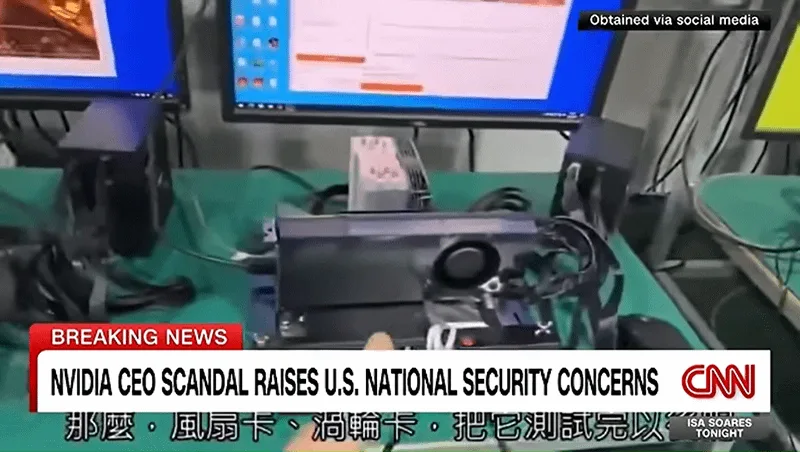
The controversy surrounding Jensen Huang and Megaspeed has added political pressure to the broader debate. Reports concerning Huang’s relationship with Alice Huang, a former Megaspeed executive, triggered scrutiny of Nvidia’s business relationships and questions about possible Chinese intelligence activity. The available reporting does not establish that Jensen Huang personally violated U.S. export-control law, and intelligence allegations should not be treated as proven misconduct. However, the controversy has increased congressional and regulatory attention around Nvidia and overseas computing access. Even before formal regulations change, cloud providers may respond to the political environment by adopting stricter internal compliance procedures for customers associated with China.

Impact of New Restrictions on Chinese AI Firms, Global Data Centers, and the Future of Nvidia Access
If the United States imposes broad restrictions on Chinese access to advanced Nvidia computing resources through foreign cloud providers, the consequences could vary significantly depending on the scope of the rules. Restrictions aimed only at particular processor classes might allow developers to continue using less advanced hardware or permitted cloud services. Broader rules covering remote computing arrangements could disrupt existing training plans and force companies to reorganize infrastructure. Developers relying on overseas clusters could face delays, additional licensing requirements, new contractual restrictions, or the need to migrate workloads. Companies with stronger finances and larger engineering teams would generally have more options for adapting than smaller laboratories.
Major Chinese technology groups could invest more heavily in domestic infrastructure, purchase permitted processors, or fund engineering work required to move workloads to alternative hardware. Smaller firms may face greater pressure because they often lack comparable capital and access to technical resources. More restrictions would also increase the commercial incentive to develop domestic AI accelerators, software frameworks, training optimization techniques, and more compute-efficient model architectures. Techniques such as quantization and improved training efficiency can reduce computing requirements, but they do not eliminate the need for substantial processing capacity. Domestic substitution therefore remains a gradual process rather than an immediate replacement for overseas Nvidia access.
International cloud and data center operators would also face consequences. Providers with significant exposure to Chinese customers might need to rewrite contracts, strengthen customer screening, or seek alternative demand if legal access is reduced. Infrastructure owners could face financial uncertainty if they invested in GPU capacity based on expectations of long-term Chinese demand. Reservations involving minimum commitments or advance payments could become complicated if customers later cannot legally use the resources. At the same time, providers operating in compliant markets could benefit from increased demand from other global AI companies competing for the same clusters.
Reuters reported on November 13, 2026, that its examination of more than 150 Chinese procurement notices and related records identified AI computing projects and equipment agreements worth more than 23 billion yuan, approximately $3.2 billion, involving restricted Nvidia processors. That figure combines projects, infrastructure, and equipment agreements rather than representing confirmed chip spending alone. Some projects were reportedly operating or under development, while the status of others remained uncertain. The findings demonstrate the scale of China’s demand for advanced Nvidia technology without proving that every identified project involved unlawful activity. They also show how changes in semiconductor policy can affect investments far beyond individual AI laboratories.
Global GPU capacity is already becoming an increasingly strategic economic resource. Rising demand can lead providers to require long-term commitments, advance payments, minimum usage levels, or restrictions on cancellation. Chinese AI firms attempting to reserve overseas capacity contribute to this broader competition but cannot be identified as the sole cause of worldwide pricing or availability changes. Electricity supply, hardware delivery schedules, financing costs, cooling requirements, and construction timelines also constrain expansion. Data center investment decisions therefore depend on both market demand and confidence that customers will remain legally able to use the infrastructure.
For Chinese developers, the likely response is diversification rather than reliance on one solution. Companies may combine Huawei Ascend and other domestic processors with existing Nvidia systems, legally permitted imports, overseas infrastructure, and efficiency improvements in training and inference. This approach can reduce dependence on any one hardware source while giving developers time to improve software compatibility and domestic manufacturing capacity. However, maintaining several hardware environments can create additional engineering and operational costs. The overall competitiveness of China’s AI industry will therefore depend partly on how quickly alternative hardware and software ecosystems mature.
For Nvidia, tighter remote-access controls could affect international sales indirectly even when the company sells hardware lawfully to foreign data center operators. Providers may become more cautious about purchasing capacity intended for customers who could later face restrictions. At the same time, strong global demand from non-Chinese customers could offset some lost opportunities. The commercial impact will depend on the details of future regulations, how providers respond, and whether customers can obtain licenses or use permitted processor classes. It is therefore premature to assume a specific financial outcome from rules that have not yet been fully implemented.
The broader conflict illustrates how AI competition is increasingly shifting from individual semiconductor shipments toward control over computing capacity itself. Physical chips, cloud services, international data centers, electricity, networking, software ecosystems, and regulatory access now form a connected strategic system. Chinese AI companies are attempting to secure overseas Nvidia capacity because continued access can affect their ability to train models and compete internationally. American policymakers are considering remote-access restrictions because they increasingly view computing services as another route through which controlled technological capabilities can reach Chinese users. The outcome will depend on future legislation, regulatory implementation, international cooperation, enforcement, and the speed at which alternative Chinese computing technologies become more capable.

Frequently Asked Questions (FAQs)
- Why are Chinese AI firms racing to secure overseas Nvidia capacity in 2026?
Chinese artificial intelligence companies are seeking overseas Nvidia computing capacity because American export restrictions have limited their ability to obtain certain advanced processors directly. Renting GPUs through international cloud providers can offer access to hardware located outside mainland China. The urgency increased in November 2026 following reports that Washington was preparing additional restrictions on remote access to advanced computing resources. Companies are concerned that future regulatory changes could reduce availability, increase costs, or interrupt established computing arrangements. - Can Chinese companies legally rent Nvidia GPUs from foreign data centers?
Some international cloud computing arrangements may be permitted, but legality depends on the specific transaction and applicable regulations. Relevant factors include customer identity, processor specifications, end use, export-control classifications, sanctions, and licensing requirements. Renting hardware located overseas does not automatically make every transaction lawful. American authorities are considering additional measures to regulate remote access when it creates national security concerns. - What is the Remote Access Security Act?
The Remote Access Security Act is proposed American legislation intended to strengthen government authority over foreign access to controlled technology through network connections and cloud computing services. The House of Representatives approved the bill on January 12, 2026, by 369 votes to 22. The measure was referred to the Senate the following day. Its potential impact on Chinese AI developers would depend on enactment and subsequent regulatory implementation. - Which Chinese AI companies have been connected to overseas Nvidia computing resources?
Public reporting has discussed ByteDance, Moonshot AI, Alibaba, Tencent, and other Chinese artificial intelligence developers in connection with international computing demand or operations. ByteDance has been linked to a reported Blackwell infrastructure project in Malaysia. However, individual companies have different business arrangements, and the November 12 Reuters report did not identify every organization involved in the newest reservation discussions. - Why is Malaysia important for Chinese AI computing operations?
Malaysia has attracted significant interest in data center development because of its industrial capabilities, international connectivity, geographical position, and expanding digital infrastructure. Its proximity to Singapore can also provide commercial advantages. These characteristics make Malaysia attractive to operators developing advanced computing facilities. However, access to processors hosted in Malaysia remains subject to relevant export controls and other legal requirements. - Are Nvidia H100 and H200 GPUs completely banned in China?
Their regulatory treatment is more complicated than a universal ban covering every transaction. American export controls restrict access to certain advanced Nvidia processors, but licensing policies and requirements differ by product, destination, end user, and intended use. In January 2026, American authorities introduced case-by-case consideration for qualifying H200-class semiconductor exports to China and Macau. That change did not create unrestricted access to all Nvidia AI processors. - How could the Jensen Huang controversy affect Chinese AI developers?
The controversy has increased scrutiny of Nvidia’s China-related business relationships and renewed political pressure for stronger export-control enforcement. Chinese AI companies are concerned that the resulting attention could accelerate restrictions affecting overseas computing services. However, allegations involving individuals or companies must be distinguished from verified legal findings, and no automatic connection should be assumed between the controversy and every Chinese cloud computing arrangement. - Can Huawei Ascend processors replace Nvidia GPUs for AI training?
Huawei Ascend processors can support important artificial intelligence workloads and represent a major domestic alternative for Chinese developers. However, replacing Nvidia across the industry is challenging because of differences in software ecosystems, hardware availability, training efficiency, networking technologies, and developer experience. Ascend may increasingly replace Nvidia in selected applications, but a complete industry-wide transition would require substantial technological and infrastructure development. - Will overseas Nvidia GPU restrictions increase AI development costs in China?
Stricter restrictions could increase costs by reducing access to efficient computing resources and forcing developers to modify infrastructure arrangements. Companies might need to invest in alternative processors, software migration, domestic data centers, or new training methods. The impact would differ among businesses depending on their financial resources, existing GPU inventories, technical capabilities, and dependence on international cloud providers. - What is the future of China’s AI industry if overseas Nvidia cloud access becomes restricted?
China’s AI industry would likely accelerate domestic semiconductor development, improve computational efficiency, and diversify its infrastructure. Large technology companies may continue investing heavily in alternative hardware and software ecosystems, while smaller developers could face financial and technical pressure. Such restrictions would not necessarily stop Chinese AI development, but they could influence development costs, commercial competition, research timelines, and the industry’s long-term dependence on international technology suppliers.

Conclusion
Chinese AI firms are racing to lock in overseas Nvidia capacity because access to advanced computing resources has become one of the most important factors shaping competitiveness in artificial intelligence. U.S. export restrictions have already made it harder for Chinese developers to acquire some of Nvidia’s most powerful processors for domestic deployment, encouraging greater reliance on foreign data centers and cloud infrastructure.
The reported November 2026 rush to secure overseas capacity shows how seriously companies are treating the possibility that Washington could extend controls beyond physical semiconductor shipments. Remote computing access, cloud leasing, and international data center use are now becoming central parts of the export-control debate. This marks a shift from regulating individual chips toward regulating access to advanced computing capability itself.
The Remote Access Security Act, possible Commerce Department rules, and heightened scrutiny of Nvidia’s international business relationships could significantly reshape the legal environment around overseas GPU leasing. Malaysia, Thailand, Singapore, and Japan have become increasingly relevant because of their expanding AI infrastructure and regional importance, but their role does not guarantee unrestricted access to controlled technology. Cloud providers in these markets may face greater pressure to verify customers, examine beneficial ownership, monitor workloads, and comply with evolving American restrictions. Future rules could therefore affect not only Chinese developers but also international infrastructure operators that depend on cross-border demand. The practical impact will depend on how broadly regulators define controlled access and how consistently those rules are enforced.
For Chinese AI companies, the consequences extend well beyond the purchase of individual processors. Access to advanced Nvidia hardware affects model training speed, research productivity, development costs, infrastructure planning, and the ability to compete with major international AI companies. Losing access to familiar GPU architectures can also create substantial engineering challenges because many teams have built software, networking, and optimization systems around Nvidia’s hardware and CUDA ecosystem. Domestic alternatives such as Huawei Ascend are becoming increasingly important, but replacing Nvidia involves more than matching processor specifications. Software maturity, developer tools, production capacity, memory technology, and large-scale deployment experience all influence whether alternative accelerators can support demanding AI workloads efficiently.
The biggest uncertainty is how far U.S. policymakers will extend future restrictions and how effectively those restrictions can be applied across international cloud markets. Broader controls could accelerate Chinese investment in domestic processors, more efficient AI architectures, and alternative software ecosystems while increasing costs and uncertainty for developers. At the same time, overseas data center operators could face changing customer demand, stricter compliance obligations, and financial risks if previously reserved GPU capacity becomes unusable under new rules. These pressures may encourage both Chinese companies and infrastructure providers to diversify their hardware, customers, and geographic exposure. The result could be a more fragmented global AI computing market shaped as much by regulation and geopolitics as by technical performance.
The broader development demonstrates that global AI competition is increasingly about access to computing infrastructure rather than algorithms alone. Advanced semiconductors, data centers, networking systems, electricity, cloud services, and software ecosystems now function as interconnected strategic resources. Chinese AI firms are seeking overseas Nvidia capacity because continued access to these resources can directly influence how quickly they can develop and deploy new models. American policymakers are considering tighter remote-access controls because they increasingly view overseas computing services as another potential route to restricted technological capability. How this regulatory debate develops could influence not only China’s AI industry, but also the future structure of the international market for advanced computing, cloud infrastructure, and artificial intelligence development.
Sources and Citations
- Reuters, November 12, 2026 — “Chinese AI Firms Rush to Secure Nvidia Chip Capacity as Spy Scandal Stirs Fear of US Curbs”: Reports that Chinese AI companies are trying to reserve Nvidia-powered computing capacity at overseas data centers because they fear Washington may restrict remote access to advanced chips that cannot be freely exported to China. Reuters says a major Chinese cloud provider discussed securing foreign capacity, while smaller AI labs approached providers including operators in Southeast Asia. Reuters
Reuters – Chinese AI Firms Rush to Secure Nvidia Chip Capacity - Reuters, November 13, 2026 — “Huang Exit and US Scrutiny Imperil $3 Billion in Chinese AI Projects Reliant on Nvidia”: Investigates Chinese AI infrastructure projects dependent on restricted Nvidia processors and examines how tighter US scrutiny and uncertainty over access could threaten billions of dollars in planned or existing computing investment. Reuters
Reuters – US Scrutiny Imperils Chinese AI Projects Reliant on Nvidia - Reuters, November 11, 2026 — “How Nvidia’s Jensen Huang Got Entangled in a China Chip and Spy Scandal”: Provides background on the controversy surrounding Jensen Huang, Nvidia’s China relationships, political scrutiny and intelligence-related allegations. It is useful context for explaining why Nvidia’s China operations and overseas compute access came under heightened attention in November 2026. Reuters
Reuters – Jensen Huang China Chip and Spy Scandal - The Information, Leo Schwartz, November 11, 2026 — “Commerce Department Finalizing Long-Awaited AI Remote Access Rule”: Reports that the US Commerce Department is preparing restrictions designed to prevent Chinese AI firms from remotely accessing advanced AI chips hosted in overseas data centers. The reported rule would extend controls to additional countries including Malaysia, Singapore and Thailand and would introduce customer-identification, reporting and monitoring requirements. The Information
The Information – Commerce Department Finalizing AI Remote Access Rule - US House of Representatives, January 12, 2026 — Remote Access Security Act, H.R. 2683, Roll Call 13: Official House record confirming that H.R. 2683 passed by 369 votes to 22, with 39 members not voting. The bill seeks to provide authority for controlling remote access to items covered by the Export Control Reform Act of 2018. Office of the Clerk
US House Clerk – H.R. 2683 Roll Call 13 - US Government Publishing Office, January 13, 2026 — Remote Access Security Act, H.R. 2683: Official legislative record showing that the House-passed bill was received in the Senate, read twice and referred to the Senate Committee on Banking, Housing, and Urban Affairs. Its formal title states that it would provide for control of remote access under the Export Control Reform Act of 2018. GovInfo
GovInfo – Remote Access Security Act H.R. 2683 - US Bureau of Industry and Security, January 13, 2026 — “Department of Commerce Revises License Review Policy for Semiconductors Exported to China”: Official Commerce Department announcement confirming that export-license applications for Nvidia H200, AMD MI325X and comparable processors would be reviewed on a case-by-case basis if specified security and compliance conditions were met. The policy did not create unrestricted access to advanced AI chips in China. bis.gov
BIS – Semiconductor Export Licensing Policy for China - Reuters, March 13, 2026 — “China’s ByteDance Gets Access to Top Nvidia AI Chips, WSJ Reports”: Covers reporting that ByteDance was obtaining access to advanced Nvidia computing infrastructure outside China, including a Malaysia-based project involving a Southeast Asian cloud provider. The report is relevant to the broader trend of Chinese companies using overseas infrastructure for advanced AI workloads. Reuters
Reuters – ByteDance Gets Access to Top Nvidia AI Chips - Reuters, November 11, 2026 — “Chinese University Bought Nvidia H200 Chips Despite US Blacklist”: Investigative reporting on procurement by a blacklisted Chinese university involving Nvidia H200 processors. The article illustrates the enforcement challenges surrounding advanced-chip export controls and the continued demand for high-performance Nvidia hardware in China. Reuters
Reuters – Chinese University Bought Nvidia H200 Chips - Channel News Asia, November 9, 2026 — “From Affair Allegations to Nvidia Probe: How the Jensen Huang Controversy Unfolded”: Provides a timeline of the controversy involving Jensen Huang and Alice Huang, including reported intelligence allegations, Nvidia-related scrutiny and the company’s response and investigation. This source is useful for chronology and context rather than as proof of the underlying intelligence allegations. CNA
CNA – Jensen Huang and Nvidia Investigation Timeline
Recommendations
- Where Winds Meet, Official Imperial Palace Gameplay Trailer Explained: Release Date, Story, Combat Details & Everything We Know
- Diablo 4 3Rd Anniversary Event: Goblins, Massive XP Boost, Free Cosmetics, and Full June 2–9 Celebration Guide
- IO Interactive and Build A Rocket Boy End MindsEye Partnership as Hitman Crossover DLC Is Canceled
- All Anomalies in Animal Hospital Guide: Every Roblox Anomaly Explained
- Every Release Date from Every Event at Summer Game Fest 2026
- First Gameplay Trailer of Silent Hill: Townfall: It’s a First-Person Game and Everything We Know (2026)
- Best New Anime to Watch Right Now: Spring 2026 Picks
- Switch 2 Software Update Adds “Handheld Mode Boost” for Old Games – Performance Upgrade Explained
- We Build LEGO Winnie the Pooh: A 100th Anniversary Set Worth the Hype for Disney and LEGO Fans
- Echoes of Aincrad: Complete Guide to Growth Points (Best Stat Builds & Leveling Tips)



































































































