








In This Article (8 sections)
The Last of Us Online Was a Major Naughty Dog Project, Not a Side Experiment
The cancellation of The Last of Us Online on December 14, 2023, was already one of the most consequential abandoned projects in Naughty Dog’s history. New reporting from Bloomberg journalist Jason Schreier has now provided substantially more context about how important the multiplayer game was within the studio. Contrary to the widespread assumption that it was a smaller parallel project while most employees concentrated on Intergalactic: The Heretic Prophet, Schreier said the situation was effectively the reverse.
During an August 2026 discussion about PlayStation’s troubled live-service strategy, Schreier explained that a large number of Naughty Dog developers were committed to The Last of Us Online. Intergalactic did not receive the majority of the studio’s workforce until after the multiplayer project was cancelled, at which point many employees moved onto the science-fiction game.
That clarification changes how Naughty Dog’s output between 2020 and 2023 should be understood. Intergalactic had been in development since 2020, but beginning development is not the same as assigning most of a large studio to full production. Schreier’s account indicates that the game initially progressed with a smaller team while The Last of Us Online, remakes and remasters consumed much of Naughty Dog’s capacity.
The multiplayer project began with more familiar foundations. Naughty Dog had included the Factions mode in the original The Last of Us and initially worked on an expanded version alongside The Last of Us Part II. Its scope eventually grew beyond something that could reasonably be included as an additional mode.
In September 2019, Naughty Dog announced that The Last of Us Part II would launch without multiplayer because the online team’s plans had become too ambitious to fit within the already extensive single-player production. The studio nevertheless promised that players would eventually experience the results of that work in another form.
The Last of Us Part II launched on June 19, 2020, without an online component. Naughty Dog continued developing the multiplayer project and openly recruited for relevant positions during 2021. By June 2022, the company was no longer describing it as an unspecified multiplayer experience. It formally presented the project as a full-scale standalone game with its own characters, story and world.
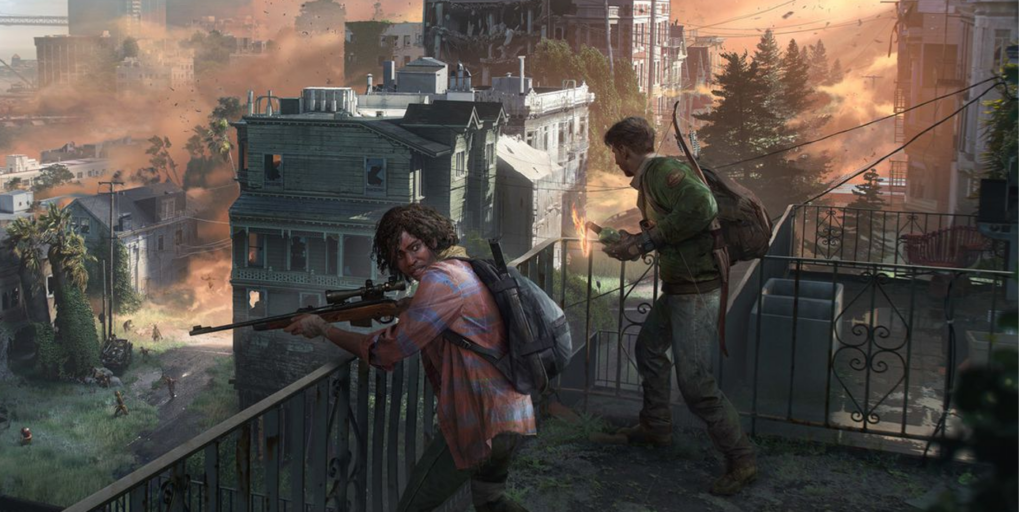
Neil Druckmann said the game was as large as Naughty Dog’s single-player releases and, in some respects, even larger. The studio similarly described it as an extremely ambitious undertaking with a massive scope and immense world. Public concept art suggested that at least part of the game would be set in San Francisco.
The project therefore represented a significant case of scope expansion. What began as an evolution of Factions grew into a separate production requiring its own:
- Characters and narrative
- Locations and environmental content
- Gameplay and progression systems
- Network infrastructure
- Matchmaking and social features
- Long-term content pipeline
- Testing and security support
- Live operations and community management
Former game director Vinit Agarwal later said he spent approximately seven years working on the project. In comments reported in April 2026, he estimated that it was nearly 80% complete when Naughty Dog cancelled it and said it had been performing very well internally.
The 80% figure should be treated as Agarwal’s personal characterization rather than a mathematically precise or independently audited measurement. Even with that qualification, it makes clear that The Last of Us Online was not an early prototype discarded before substantial development. Years of design, programming, artwork, networking, testing and content production had already been invested.
Schreier has also been reported as characterizing the project’s cost as being in the hundreds of millions of dollars. Sony and Naughty Dog have not disclosed a precise budget, so specific claims such as $200 million or $300 million would be unsupported. The reliable conclusion is that the investment was enormous, while the exact amount remains unknown.
The development timeline can be summarized as follows:
- Before September 2019: Naughty Dog developed an evolution of Factions alongside The Last of Us Part II.
- September 2019: The studio confirmed that multiplayer would not be included with Part II because the vision had grown too large.
- June 19, 2020: The Last of Us Part II launched without multiplayer.
- September 2021: Naughty Dog confirmed that multiplayer development continued and advertised additional positions.
- June 2022: The studio revealed standalone concept art and described the game as comparable in scale to its major single-player projects.
- January 2023: New concept art was released, and Naughty Dog promised further information later that year.
- May 2023: The studio said the project needed more development time. Bloomberg subsequently reported that Sony had slowed production while its long-term viability was reassessed following feedback from Bungie.
- October 2023: Reporting described the project as effectively on hold, although it had not been formally cancelled.
- December 14, 2023: Naughty Dog officially ended development.
- February 2025: Former PlayStation executive Shuhei Yoshida discussed Bungie’s role and said he had played the game and thought it was great.
- April 2026: Agarwal described his seven-year involvement and estimated that the game had been nearly 80% complete.
- August 2026: Schreier explained how heavily Naughty Dog’s workforce had been committed to the project.
These details make it increasingly difficult to describe The Last of Us Online as a side experiment. It was one of Naughty Dog’s central productions during the early PlayStation 5 generation and occupied a significant share of the studio’s time, money and personnel.
Why Naughty Dog Cancelled the Last of Us Online Despite Its Advanced Development
Naughty Dog’s official explanation focused less on whether the game could be completed and more on what releasing it would require afterward. As development moved deeper into full production, the studio concluded that launching and supporting the game would require committing substantial resources to post-launch content for years.
A traditional single-player release can still receive patches, downloadable content and technical support after launch, but its principal production team can eventually move onto another project. A large live-service game creates a different organizational model because launch is only the beginning of its long-term obligations.
A successful The Last of Us Online would have required continuing work on:
- New maps and activities
- Progression systems and rewards
- Balance adjustments
- Seasonal or narrative content
- Matchmaking and server maintenance
- Security and anti-cheat systems
- Community management
- Player-retention features
- Technical fixes and platform updates
The more successful the game became, the greater those demands could have grown. A large and active audience would expect a dependable schedule of new content rather than accepting that the development team had moved on after launch.
Naughty Dog said it ultimately faced two possible futures. It could become primarily a live-service studio, dedicating much of its workforce to maintaining The Last of Us Online, or it could preserve its ability to create the single-player narrative games for which it was best known. The company chose the second path.
This distinction is important because the available accounts do not establish that the project was cancelled simply because its gameplay was poor. Yoshida said he had played it and thought it was great. Agarwal similarly described the internal results positively and said the project had been very close to completion.
The fundamental concern was sustainability. Completing the remaining development would not have solved the larger problem if launching the game meant permanently reorganizing Naughty Dog around years of live operations.
Bungie’s involvement is frequently oversimplified. In May 2023, Bloomberg reported that Sony had asked Bungie to evaluate live-service games being developed across PlayStation’s portfolio. Bungie reportedly questioned whether Naughty Dog’s multiplayer project could retain players for an extended period, contributing to Sony and Naughty Dog reassessing its long-term prospects. Development was reduced, and some employees were moved to other work.
That does not mean Bungie directly ordered Naughty Dog to cancel the game. Bungie provided expertise and feedback about operating a continuing online product. Naughty Dog then had to decide whether it was willing to make the staffing and organizational commitment required to address those concerns.
Yoshida later explained that the multiplayer idea originated within Naughty Dog rather than being imposed on the studio by PlayStation executives. Naughty Dog genuinely wanted to make it. Sony’s later live-service strategy created a broader corporate environment in which the game fit, but its roots extended back to development of The Last of Us Part II.
According to Yoshida, Bungie helped Naughty Dog understand what running a major live-service game actually involved. The studio then recognized that maintaining it would interfere with its ability to develop Intergalactic and other single-player projects.
Agarwal described the situation in similar terms. From his perspective, Naughty Dog eventually had to choose between continuing his online game and concentrating on the next major Druckmann-led production. The company selected what he described as its traditional bread and butter.
The decision carried an enormous sunk cost. Naughty Dog had already invested years of work, a large development team and reportedly hundreds of millions of dollars. Yet those past expenses could not remove the future operational commitment that would begin after release.
Finishing a game estimated to be 80% complete might initially appear more rational than cancelling it, but completion percentage does not measure everything required for a live service. The remaining work could have included difficult infrastructure, content-pipeline and retention problems, followed by years of expensive post-launch production.
Naughty Dog therefore abandoned an advanced and reportedly promising project because leadership concluded that releasing it would turn the studio into a different kind of developer. Whether cancellation was the best financial outcome cannot be determined from public information, but the strategic reasoning is clear: the company considered its long-term identity and future single-player output more important than recovering the investment already made.
How the Last of Us Online Affected Intergalactic and Naughty Dog’s PS5 Release Schedule
Naughty Dog announced Intergalactic: The Heretic Prophet at The Game Awards on December 12, 2024. Druckmann said the science-fiction project had been in development since 2020, which initially created the impression that it had been Naughty Dog’s primary focus throughout most of the PlayStation 5 generation.
Schreier’s reporting indicates otherwise. Intergalactic was active, but it did not command most of Naughty Dog’s workforce until after The Last of Us Online was cancelled in December 2023. Both statements can be true because large productions often begin with smaller concept and pre-production teams before staffing increases during full production.
The cancellation appears to have been the event that allowed Intergalactic to scale substantially. Schreier said that many Naughty Dog employees moved onto the science-fiction game after the multiplayer project ended. The studio did not create Intergalactic as a replacement in December 2023, since it already existed, but the newly available workforce allowed it to become the company’s dominant production.
The relationship between the projects is therefore more complex than one simply replacing the other. The Last of Us Online influenced the pace at which Intergalactic could grow, while its cancellation provided personnel, technical knowledge and production capacity that could be redirected.
Naughty Dog said the technology investments and lessons generated during multiplayer development would continue influencing its future work. The cancelled game may therefore contribute indirectly to later projects through reusable tools, networking expertise, production systems, artwork or knowledge gained during its long development.
The staffing information also helps explain Naughty Dog’s unusual PS5-era release history. Its last completely new game was The Last of Us Part II in June 2020. Since then, the studio’s released projects have included:
- Uncharted: Legacy of Thieves Collection
- The Last of Us Part I
- The Last of Us Part II Remastered
- PC versions and related platform work
These were substantial productions requiring real engineering, art, testing and optimization. However, they were remakes, remasters, collections or ports based on existing games rather than new franchises or entirely new sequels.
Schreier connected the long absence of an original release to Naughty Dog’s allocation of personnel. During much of the early 2020s, a large part of the company was working either on The Last of Us Online or on its remakes and remasters. Intergalactic was progressing at the same time, but it had not yet become the full-studio priority many observers assumed.
The cancelled game consequently imposed an opportunity cost in addition to its direct financial cost. Developers assigned to a long-running multiplayer production could not simultaneously contribute full-time to another AAA project. This does not mean that adding those employees to Intergalactic earlier would automatically have caused it to launch several years sooner, since development cannot always be accelerated simply by adding more people. Nevertheless, the project materially affected where Naughty Dog placed its available production capacity.
The gap between new releases therefore does not mean the studio was inactive after 2020. Its work was divided among:
- A large multiplayer project that never reached consumers
- A remake of the original The Last of Us
- Remastered editions and collections
- PC development
- Early and later production on Intergalactic
This creates a rare and frustrating outcome for players. Years of work produced internal technology, experience and potentially reusable assets, but the central multiplayer game itself was never released. From the public’s perspective, Naughty Dog’s visible output remained dominated by familiar titles even while a major unreleased production consumed substantial resources behind the scenes.
As of September 2026, Intergalactic: The Heretic Prophet remains in development for PlayStation 5, with no confirmed release date. PlayStation lists its timing as to be confirmed, while Naughty Dog presents it as the studio’s next game.
Its development should not be understood as six uninterrupted years of full-studio production. Schreier’s reporting suggests that the project spent its earlier period with a smaller team before absorbing many more developers following the cancellation of The Last of Us Online.

What the Last of Us Online Cancellation Means for Naughty Dog’s Future
The emerging history of The Last of Us Online reveals much more than the story of a cancelled multiplayer title. It was an enormous development commitment, reportedly involved a substantial portion of Naughty Dog’s workforce, consumed years of work and reached an advanced state before being abandoned.
Its cancellation marked one of the most important strategic decisions in the studio’s history. Naughty Dog chose not to reorganize itself around maintaining one continuing online game, even though that meant accepting the loss of an expensive project that was reportedly close to completion.
Once the multiplayer game disappeared from the production slate, Naughty Dog redirected much of its workforce toward Intergalactic. The science-fiction game consequently became the clearest expression of the studio’s renewed commitment to major single-player experiences.
Intergalactic introduces a new franchise centered on bounty hunter Jordan A. Mun. Naughty Dog has described it as an emotional, character-driven adventure and says it aims to create the deepest gameplay system in the studio’s history. Its exact release date remains unannounced.
The project will also be one of the clearest tests of whether Naughty Dog’s strategic choice was successful. Cancelling The Last of Us Online was intended to protect the studio’s ability to develop games like Intergalactic. Its eventual quality, scale and release timing will show what the reallocation of staff and resources produced.
The multiplayer cancellation also demonstrates a wider problem with modern AAA live-service development. A game can be technically impressive, internally well regarded and relatively close to release while still representing an unsustainable business and staffing commitment. Immediate gameplay quality is only one part of the calculation. Studios must also determine whether they can produce enough continuing content to retain players without sacrificing every other project.
For Naughty Dog, the cost was particularly visible. Much of the period following The Last of Us Part II was spent on work that never became a commercial release. That helps explain why players have waited so long for a completely new Naughty Dog game during the PlayStation 5 generation.
At the same time, releasing The Last of Us Online could have committed the studio to many additional years of seasonal updates, technical maintenance and player-retention work. Cancelling it ended one enormous investment but prevented that future obligation from consuming even more of the company.
Schreier’s reporting therefore changes the story substantially. Naughty Dog did not cancel a minor online experiment while continuing uninterrupted work on its real priority. It cancelled one of its largest productions, moved much of the studio onto Intergalactic and made a deliberate choice about what kind of developer it wanted to remain.

Frequently Asked Questions (FAQs)
- Was The Last of Us Online really a side project at Naughty Dog?
No. Jason Schreier specifically rejected that description in August 2026, explaining that a substantial number of Naughty Dog developers were assigned to The Last of Us Online. He also said Intergalactic: The Heretic Prophet did not receive the majority of the studio’s workforce until after the multiplayer project was cancelled. This indicates that Online was one of Naughty Dog’s main productions during the early PlayStation 5 generation, not a small experiment operating beside its more important work. - Did the majority of Naughty Dog work exclusively on The Last of Us Online?
Schreier’s wording is more nuanced than that. He said most of the studio’s workforce during this period was divided between The Last of Us Online and Naughty Dog’s remakes and remasters, rather than working exclusively on the multiplayer project. Even so, his account establishes that Online required a major share of the company’s staff and resources. It would be inaccurate to suggest that nearly everyone worked only on it, but equally inaccurate to describe it as a minor side production. - How complete was The Last of Us Online when Naughty Dog cancelled it?
Former game director Vinit Agarwal said in 2026 that the project was approaching 80 percent completion and was very close to being finished. That estimate reflects his personal assessment after spending years on the production rather than an officially audited percentage released by Sony. Completion figures can also be difficult to measure for live-service games because launching the initial version is only part of the work. Even so, his statement indicates that the project had progressed far beyond an early prototype. - How long was The Last of Us Online in development?
Agarwal said he worked on the project for approximately seven years. Naughty Dog has confirmed that its multiplayer team was already in pre-production while The Last of Us Part II was being developed, and the online concept was publicly separated from that game in 2019 after becoming too large to include as a secondary mode. Development then continued through the early PlayStation 5 years until the cancellation in December 2023. - Why did Naughty Dog cancel The Last of Us Online?
Naughty Dog concluded that releasing the game would require the studio to produce new content, balance updates, technical fixes and other live-service support for years. Maintaining that commitment would have consumed staff and resources that the company wanted to use for future single-player games. Naughty Dog therefore chose to preserve its identity as a developer of large narrative adventures rather than reorganize primarily around one continuing multiplayer title. The decision concerned long-term sustainability, not simply whether the initial game could be completed. - Did Bungie cancel The Last of Us Online?
There is no evidence that Bungie independently ordered Naughty Dog to cancel the project. Sony asked Bungie to evaluate several PlayStation live-service games, and Bungie reportedly raised concerns about whether The Last of Us Online could keep players engaged over a long period. Shuhei Yoshida later explained that Bungie helped Naughty Dog understand the continuing staffing and content demands involved in operating such a game. Naughty Dog ultimately made and announced the cancellation decision itself. - Was The Last of Us Online considered a bad game internally?
The public information available does not support that conclusion. Agarwal said the game was performing well internally, while former PlayStation executive Shuhei Yoshida said he played it and thought it was great. These comments do not prove that every part of the game was ready for release, but they suggest that immediate gameplay quality was not the central publicly stated problem. The larger concern was whether Naughty Dog could support the project for years without sacrificing its future single-player work. - Was Intergalactic already being developed before The Last of Us Online was cancelled?
Yes. Naughty Dog says development of Intergalactic: The Heretic Prophet began in 2020, several years before The Last of Us Online was cancelled in December 2023. However, Schreier reported that Intergalactic initially had a smaller portion of the studio and did not receive the majority of Naughty Dog’s workforce until after the cancellation. The multiplayer project’s end therefore allowed many more developers to transfer to Intergalactic and expand its production. - Did The Last of Us Online contribute to Naughty Dog’s long gap between new games?
According to Schreier, yes. A substantial part of Naughty Dog’s workforce spent the early 2020s developing The Last of Us Online, while other employees worked on remakes, remasters and PC versions of existing games. Those projects required considerable development effort but did not produce a completely new Naughty Dog release after The Last of Us Part II. The cancelled multiplayer game therefore created both a major financial cost and an opportunity cost by tying up people who could not simultaneously work full-time on another original project. - When will Intergalactic: The Heretic Prophet be released?
As of September 2026, Sony’s official PlayStation page lists the release date as “to be confirmed.” Intergalactic: The Heretic Prophet is officially being developed for PlayStation 5, but neither Sony nor Naughty Dog has announced a specific launch day or year. Although development began in 2020, Schreier’s reporting indicates that the project did not become Naughty Dog’s main studio-wide production until after The Last of Us Online was cancelled.

Conclusion
Jason Schreier’s reporting provides crucial context for understanding The Last of Us Online and Naughty Dog’s unusually long gap between completely new releases. The multiplayer title was not merely an experimental side project occupying a small corner of the company. It grew from an evolution of Factions into a full-scale standalone production that Naughty Dog itself described as enormous, while Schreier says it commanded substantial studio resources before its cancellation.
The project’s history stretches back into development of The Last of Us Part II. By 2019 its ambitions had already exceeded what Naughty Dog could include as a multiplayer mode in Part II. By 2022, the studio was publicly describing it as comparable in scale to its single-player games. By 2023, however, Bungie’s evaluation and Naughty Dog’s own assessment raised fundamental questions about what would be required to keep such a live-service game operating successfully for years.
Naughty Dog ultimately decided that the post-launch demands were incompatible with simultaneously maintaining the single-player development pipeline that defined the studio. It cancelled The Last of Us Online on December 14, 2023 despite years of work, and Agarwal later estimated that the game was approximately 80 percent complete.
Schreier’s 2026 comments explain what happened next. Intergalactic had existed since 2020, but it reportedly did not command most of Naughty Dog’s workforce while Online remained alive. Once the multiplayer project was cancelled, many developers transitioned to Intergalactic.
The result is a clearer explanation for Naughty Dog’s PlayStation 5-era output. The studio was not simply spending the entire generation slowly developing Intergalactic. Significant resources were tied up in The Last of Us Online and other remake and remaster projects. The cancellation ended one of Naughty Dog’s largest unrealized investments, but it simultaneously allowed the developer to recommit its organization to original single-player games.
The central point behind the statement “Schreier: Last of Us Online was a major Naughty Dog project, not a side project” is therefore well supported. The Last of Us Online was a major production with serious staffing, financial and strategic consequences. Its cancellation reshaped Naughty Dog’s workforce, accelerated the studio-wide transition toward Intergalactic and ultimately determined what kind of developer Naughty Dog chose to remain.
Sources and Citations
1. Naughty Dog — “An Update on The Last of Us Online” — December 14, 2023
This is the primary source for the cancellation and Naughty Dog’s explanation that supporting the game after launch would have required years of post-launch content and substantial studio resources. (Naughty Dog)
Naughty Dog — An Update on The Last of Us Online
2. Naughty Dog — “The Growing Future of The Last of Us” — June 9, 2022
This official post describes the project as a full-scale, standalone game with massive scope and an immense world. (Naughty Dog)
Naughty Dog — The Growing Future of The Last of Us
3. Naughty Dog — “Reflecting on a Big Year to Come for The Last of Us” — January 4, 2023
This confirms Vinit Agarwal, Joe Pettinati and Anthony Newman were leading the ambitious multiplayer project and mentions the additional concept art. (Naughty Dog)
Naughty Dog — Reflecting on a Big Year to Come for The Last of Us
4. Push Square — “Majority of Naughty Dog Was Working on The Last of Us Online Before It Was Cancelled” — August 19, 2026
This reports Jason Schreier’s later account that the majority of Naughty Dog was working on The Last of Us Online and that Intergalactic received most of the staff only after Online was cancelled. (Push Square)
Push Square — Majority of Naughty Dog Was Working on The Last of Us Online
5. IGN via Yahoo Tech — “The Last of Us Online Was Not a ‘Side Project,’ Majority of Intergalactic’s Team Came Over After Multiplayer Game Was Scrapped” — August 19, 2026
The Yahoo page is an IGN article syndicated on Yahoo Tech, by Cade Onder. It covers Schreier’s staffing account and the project’s reported development history. (Yahoo Tech)
Yahoo Tech / IGN — The Last of Us Online Was Not a Side Project
6. Game Developer — “The Last of Us Online was around ‘80%’ complete when Naughty Dog canceled it” — April 2, 2026
This is the source for Vinit Agarwal’s comments that the project was around 80% complete and that he had spent seven years working on it. (Game Developer)
Game Developer — The Last of Us Online was around 80% complete
7. GameSpot — “Canceled Last Of Us Online Game Was ‘Very Close To Done’…” — April 2, 2026
This independently reports Agarwal’s claim that the game was near 80% completion and “very close to done.” (GameSpot)
GameSpot — Canceled Last Of Us Online Game Was Very Close To Done
Recommended
- LumenTale: Memories of Trey Animon Types Explained: Elements, Strengths, and Strategy
- Avatar Ty Lee Voice Actor Comments on Leak: Reacts to Aang Movie Footage Leak and Calls for Theatrical Release
- EA Sports College Football 27 Removes Microtransactions After Player Backlash
- Is Arcane 3D Animated? Unveiling the Secrets Behind Its Revolutionary Style
- Switch 2 Just Got One Of The Most Nostalgic Pokemon Spin-Offs – Pokémon Pokopia Explained, Gameplay, Release Date, and Why Fans Love It
- What is the View Keeper?
- Japanese Theme Park Bomb Collar Escape Room: Why the Alice in Borderland Experience is Going Viral
- Netflix Closes Oxenfree Developer Night School Studio and Moonloot Games
- The Blood of Dawnwalker Puts a Dark Twist on a Typical RPG Prologue: Everything We Know About Its Grim Opening and Story Setup
- Helldivers 2’s First Content Roadmap Reveals New Enemies Are Coming Soon — What to Expect in Updates 6.1–6.3



































































































