







In This Article (9 sections)
Control: Resonant Pre-Order Details and 2026 Release Window
Control: Resonant is positioned as the next major evolution of Remedy Entertainment’s expanding interconnected universe, building directly on the foundations of the original Control. Before committing to a pre-order, players should distinguish between confirmed details, expectations based on official reveals, and features that remain speculative. The sequel is shaping up as a full-scale action RPG expansion of the franchise rather than a straightforward continuation, with substantial changes planned for its gameplay systems, narrative scale, and environmental design. This broader development direction could make pre-order decisions particularly important for players invested in lore continuity, progression advantages, and the evolution of the Federal Bureau of Control universe.
The pre-order campaign is expected to include multiple editions offering different levels of content. Although the exact editions and bonuses have not been confirmed, potential incentives may include cosmetic upgrades, early-access privileges, in-game resources, exclusive outfits, digital artwork, and possible narrative expansions. Players should review the final edition comparison carefully once Remedy officially reveals the contents, especially because some rewards may be cosmetic while others could affect early progression or provide access to additional story material.
Control: Resonant is currently scheduled for a 2026 release window, placing it among the year’s most anticipated current-generation titles. A precise worldwide launch date has not yet been confirmed, although expectations point toward a possible late-2026 release around the holiday season. The extended development period reflects Remedy Entertainment’s work on refining the Northlight Engine and creating more complex environments, with additional optimization and polishing expected across PlayStation 5, Xbox Series X|S, PC, and Mac.
Remedy has historically supported its releases with staged marketing campaigns, so the final launch date may be announced alongside a substantial gameplay presentation or story-focused trailer. Until the studio confirms the exact date, available editions, prices, and pre-order rewards, buyers should treat specific bonus and release-timing details as expectations rather than finalized information.

Control: Resonant Story, Action RPG Gameplay, and Editions Explained
The narrative of Control: Resonant centers heavily on Dylan Faden, one of the most psychologically complex characters introduced in the original Control. His return points toward a deeper exploration of altered states of consciousness, dimensional instability, and the expanding influence of the Hiss. The Federal Bureau of Control remains the central organization responsible for containing paranatural threats, but Resonant appears to shift the conflict toward internal collapse and reality distortion within the Bureau itself, exploring what happens when its containment protocols fail on a systemic level.
Jesse Faden’s influence remains present, although the suggested dual-perspective narrative may allow players to experience events through both her position of leadership and Dylan’s destabilized consciousness. Identity fragmentation, the conflict between control and chaos, and the corruption of memory are expected to become major themes throughout the story.
Control: Resonant also evolves the original game’s third-person action mechanics into a more clearly defined action RPG structure. Combat remains driven by physics and supernatural abilities, but it now incorporates expanded progression systems, customizable ability trees, skill scaling, ability modifiers, and adaptive enemy behavior. These additions are expected to give players greater freedom in deciding how powers are combined, strengthened, and adapted to different encounters. Exploration is also becoming less linear, with a warped version of Manhattan serving as a semi-open-world hub. Missions are expected to branch more substantially than they did in the original game, with certain outcomes influenced by player decisions and faction alignment within the FBC’s internal systems.
Control: Resonant is expected to launch in several editions aimed at different types of players:
- Standard Edition: Includes the base game and access to the complete main story, making it the primary option for players who want the core experience without additional content.
- Deluxe Edition: Expected to include bonus missions, cosmetic upgrades, and possible early access to future DLC expansions. This edition is intended for players more deeply invested in the wider Remedy universe.
- Collector’s Edition: Anticipated to include physical items such as an art book, replicas of FBC documents, collectibles inspired by paranatural objects, and possibly a steelbook case. Expected digital extras may also include soundtrack access and developer commentary.
The final contents of the Deluxe and Collector’s Editions have not been fully confirmed, so specific missions, physical collectibles, DLC access, and digital rewards remain anticipated features rather than finalized inclusions.

Control: Resonant Pre-Order Bonuses, Platforms, and Warped Manhattan Setting
Pre-order incentives for Control: Resonant are expected to follow modern industry standards while incorporating rewards connected to the franchise’s Federal Bureau of Control themes. Although the complete bonus lineup has not been confirmed, likely pre-order rewards include:
- Exclusive outfits inspired by FBC field agents
- Early ability unlocks connected to paranormal enhancements
- Cosmetic weapon modifications
- Possible access to the game several days before its official release
There is also speculation that pre-orders could include lore-focused digital content, such as classified FBC files or interactive narrative logs. These extras could expand the wider universe and provide additional background information without affecting the balance of the main gameplay experience.
Control: Resonant is confirmed for current-generation platforms, including PlayStation 5, Xbox Series X|S, and PC, while a Mac release is also expected as Remedy Entertainment continues supporting multiple gaming ecosystems. The game is being developed with high-end hardware optimization in mind, making support for last-generation consoles unlikely because of the performance requirements associated with physics simulations and real-time environmental deformation. Cross-save functionality and cloud-based progression may also be introduced, potentially allowing players to move between supported platforms without losing their progress.
The primary setting is a distorted version of Manhattan that has been transformed by paranatural forces into a constantly shifting urban environment. This Manhattan is not static, as entire districts may change their layouts, gravity can become distorted, and architecture may reconfigure according to narrative progression or player interaction. These environmental changes reinforce the unstable reality that defines the franchise and expand the supernatural crisis beyond the confined spaces of the Oldest House.
The Paranatural Crisis represents a large-scale containment failure that has spread beyond the Federal Bureau of Control’s headquarters. Instead of remaining restricted to isolated areas, the phenomenon now appears to be affecting major urban environments, suggesting that the threats once contained within the Oldest House have developed into a much broader crisis.

Control: Resonant Combat, Major Sequel Changes, and Returning Characters
Combat in Control: Resonant introduces shapeshifting weapon systems that allow players to change weapon forms dynamically during encounters. This expands the original game’s Service Weapon concept while placing greater emphasis on close-quarters combat. Players can combine telekinetic powers, ranged attacks, and enhanced melee techniques, creating hybrid combat styles that reward adaptation rather than reliance on a single strategy. Boss battles are also expected to emphasize environmental manipulation, requiring players to combine physical attacks with paranormal abilities to expose and exploit enemy weaknesses.
Compared with the original Control, Resonant introduces several substantial structural and gameplay changes:
- The Oldest House’s largely linear mission progression has been expanded into a semi-open-world structure with dynamic environmental shifts.
- The action-adventure foundation has evolved into a more defined action RPG system with progression trees and deeper customization.
- Combat now incorporates shapeshifting weapons and a stronger melee focus alongside ranged and telekinetic abilities.
- Narrative delivery has shifted toward a multi-perspective format intended to increase replay value.
- The psychological and surreal tone remains, but the conflict now affects city-scale environments rather than a single contained facility.
Dylan Faden appears to be central to the sequel’s psychological and narrative complexity, while Jesse Faden remains an important figure within the expanding FBC storyline. She may serve as either a playable character or a guiding presence within the Bureau’s leadership, although her exact role has not been established. Other returning Federal Bureau of Control agents and supervisors are also expected to appear, potentially occupying altered positions as the Paranatural Crisis spreads.
New characters may represent fractured FBC divisions or outside organizations responding to the growing emergency. Together with the returning cast, these additions support the sequel’s broader narrative scope, which moves beyond the Oldest House and explores how the Bureau, its personnel, and external groups react when paranatural threats begin affecting an entire city.

Control: Resonant Trailer, Northlight Engine Graphics, and 2026 Pricing Explained
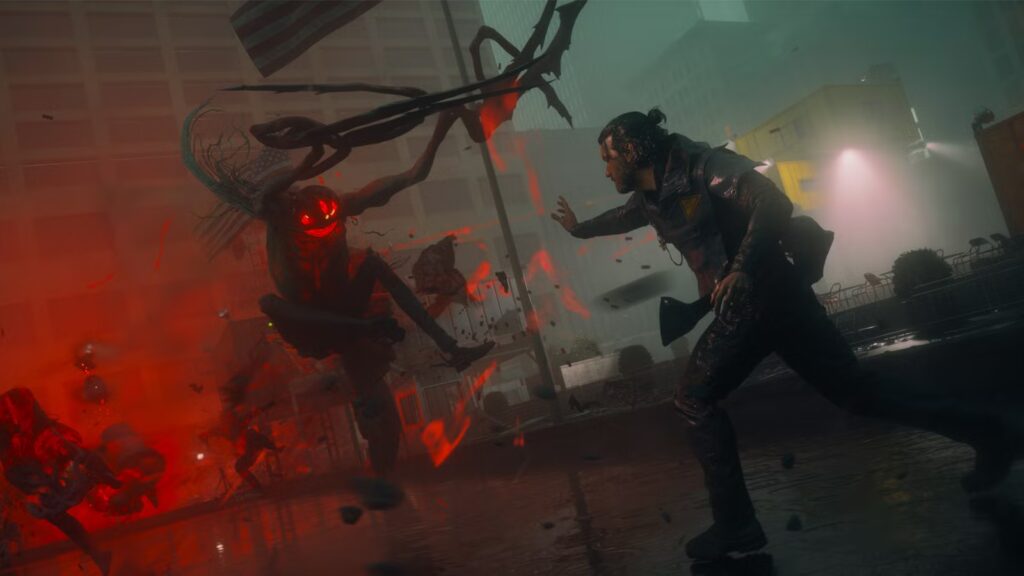
The official reveal trailer for Control: Resonant highlights several important visual and narrative elements, including warped Manhattan skylines, shifting architecture, and intense telekinetic combat sequences. Symbolism plays a major role throughout the footage, with recurring images of fractured glass, distorted radio signals, and overlapping realities suggesting instability in both the surrounding environment and the characters’ perception of events. The trailer also places considerable emphasis on Dylan Faden’s psychological state, hinting at an internal struggle and a possible narrative duality between control and corruption.
Control: Resonant is being developed with the Northlight Engine, which has been further upgraded to support next-generation rendering techniques, advanced ray tracing, and highly dynamic environmental deformation. Its technology allows environments to be destroyed, reshaped, and altered in real time, supporting the paranatural mechanics at the center of the game. Lighting is also expected to contribute directly to the storytelling, with changes in illumination reflecting psychological tension and the instability of the world. Enhanced character models and facial-animation systems are intended to provide more realistic emotional expression during narrative sequences.
The expected pricing structure follows modern AAA release standards, although final prices may vary by platform and region:
- Standard Edition: Anticipated to cost approximately $69.99 in the United States, with regional equivalents determined by the relevant platform and market.
- Deluxe Edition: Expected to range from $89.99 to $109.99, depending on its included content and any early-access features.
- Collector’s Edition: Expected to cost more than $150 because of its physical merchandise and limited production.
These prices remain anticipated rather than finalized until the official editions, regional pricing, included content, and pre-order options are fully announced.
Frequently Asked Questions (FAQs)
- What is Control: Resonant about?
Control: Resonant follows the Federal Bureau of Control as its paranatural crisis expands beyond previously contained locations and begins destabilizing reality across a distorted version of Manhattan. Entire districts, buildings, and environmental conditions can shift under the influence of supernatural forces, forcing the FBC to confront a containment failure on a much larger scale. - Is Control: Resonant a direct sequel?
Yes, Control: Resonant directly continues the story and broader universe established in Control. However, it expands the conflict beyond the Oldest House, introducing a larger setting, wider consequences, and new perspectives on the continuing struggle between the FBC and the paranatural forces threatening reality. - Who is the main character in Control: Resonant?
Dylan Faden is expected to have a central role, with the story exploring his unstable psychological state, altered consciousness, and connection to the expanding crisis. Jesse Faden also remains important, potentially providing another perspective through her leadership position within the Federal Bureau of Control. - What platforms will Control: Resonant release on?
Control: Resonant is planned for PlayStation 5, Xbox Series X|S, PC, and Mac. The focus on current-generation hardware allows the game to support advanced physics simulations, real-time environmental deformation, detailed character animation, and the upgraded visual features of the Northlight Engine. - Will Control: Resonant be open world?
The game is expected to use a semi-open-world structure rather than a completely unrestricted open world. Players will explore a warped version of Manhattan containing interconnected areas, branching missions, and environments that can change according to narrative progression, player interaction, and paranatural activity. - What engine does Control: Resonant use?
Control: Resonant uses an upgraded version of Remedy Entertainment’s Northlight Engine. The technology supports advanced ray tracing, realistic lighting, detailed facial animation, physics-driven destruction, and environments that can reshape themselves in real time as the paranatural crisis develops. - Does Control: Resonant have RPG elements?
Yes, the sequel expands the original game’s action mechanics into a more defined action RPG structure. Its systems include skill trees, character progression, ability modifiers, weapon customization, and greater freedom to combine telekinetic powers, ranged attacks, and melee-focused abilities. - How much will Control: Resonant cost?
The Standard Edition is expected to cost approximately $69.99, although final pricing may vary by platform and region. Deluxe Editions may cost between $89.99 and $109.99 depending on their bonus content, while Collector’s Editions are expected to exceed $150 because of their physical merchandise and limited-production items. - Do I need to play Control first?
Playing the original Control is recommended because it introduces Jesse and Dylan Faden, the Federal Bureau of Control, the Hiss, the Oldest House, and the major events that lead into the sequel. However, Control: Resonant is expected to provide enough context for newcomers to understand its main conflict without completing the first game. - What is the setting of Control: Resonant?
The game takes place primarily in a distorted, paranatural version of Manhattan affected by a large-scale containment failure. Buildings may reconfigure, gravity can become unstable, and entire districts may change as supernatural forces transform the city into a constantly shifting environment.

Conclusion
Control: Resonant represents a major evolution in the Control franchise, expanding its psychological storytelling, action mechanics, and environmental design into a broader action RPG framework. With its focus on Dylan Faden, warped reality systems, and next-generation technology powered by the Northlight Engine, it positions itself as one of the most ambitious releases of 2026. Pre-order decisions will largely depend on edition content preferences, lore investment, and interest in early access incentives.
Sources and Citations
- Remedy Entertainment — Official Website
- Official Remedy site for company announcements, game updates, technology information, and developer communications.
- Remedy Entertainment Official Website
- Remedy Entertainment — Northlight Engine
- Remedy’s official technical overview of Northlight, its proprietary engine and toolset. The page explains that Northlight powers Control, Alan Wake 2, and upcoming Control projects, and discusses its GPU-based geometry rendering, USD adoption, plugin-based tools framework, and game-development pipeline.
- Remedy — Northlight Engine
- IGN — Control
- IGN’s Control game page provides general game information, platform details, trailers, news, reviews, and editorial coverage.
- IGN — Control
- GamesIndustry.biz — Games Industry News and Analysis
- Industry-focused reporting and analysis covering game development, publishing, business trends, technology, employment, and the broader games market.
- GamesIndustry.biz
- Polygon — Gaming
- Useful for broader coverage and analysis of modern games, including action RPGs, game design, industry trends, and genre evolution.
- Polygon — Gaming
- Statista — Video Game Industry Statistics & Facts
- Provides market statistics and industry data covering gaming revenue, platforms, consumer spending, hardware, developers, and market trends. The current page was updated in 2026.
- Statista — Video Game Industry Statistics & Facts
- Statista — Average Video Game Selling Price on Steam
- More directly relevant if your article discusses game pricing. The dataset lists an estimated $16.90 average Steam game selling price for 2026 and forecasts $17.50 for 2027 and $18.10 for 2028.
- Statista — Average Video Game Price on Steam
- PlayStation — PlayStation 5 Official Specifications
- Sony’s official PS5 hardware documentation, covering system specifications, CPU/GPU architecture, storage, video output, connectivity, and other technical characteristics.
- PlayStation — PS5 Specifications
- Xbox — Xbox Series X|S Official Specifications
- Microsoft’s official Xbox documentation covering Series X and Series S hardware, performance capabilities, storage, resolution, frame rates, and backward compatibility.
- Xbox — Xbox Series X|S Specifications
- PC Gamer — PC Gaming
- Useful for independent reporting on PC performance, hardware, graphics settings, optimization, drivers, and technical trends.
- PC Gamer — PC Gaming
- Game Developer — Game Design and Development
- Industry-focused source for professional game-development coverage, including narrative design, production, technology, level design, and developer interviews.
- Game Developer
Recommendations
- Mewgenics: All the Joy of Breeding a Cat Army Without the Food and Kitty Litter Bills
- How do I make the camera follow a character in Blender?
- Romestead: How to Get and Use Clay, Best Locations, Clay Pit Guide & Crafting Tips
- Grand Theft Auto 6 Code In A Box Selling Out On PS5 As Scalpers Target GTA 6 Preorders
- Star Trek: Outposts Unknown – Everything We Know About the New Star Trek Colony Builder
- Low-Budget Repairs: Fun Game Where You Renovate 1990s Flats
- Clayface Teaser Breakdown: DC’s Body Horror Take on the Shapeshifting Villain Explained + Fan Reactions
- Jeff Kaplan on the Reasons for Leaving Blizzard: What He Said About Corporate Pressure, Overwatch League, and His Breaking Point
- Free Maya Character Rigging Toolset mGear 5.3: Download, Features, and Setup Guide
- Crunchyroll Stealth Dropped the Best Romance Anime of the Season



































































































