











In This Article (8 sections)
2026 Governor Election Results, Data Center Opposition, and What the Democratic Wins Actually Change
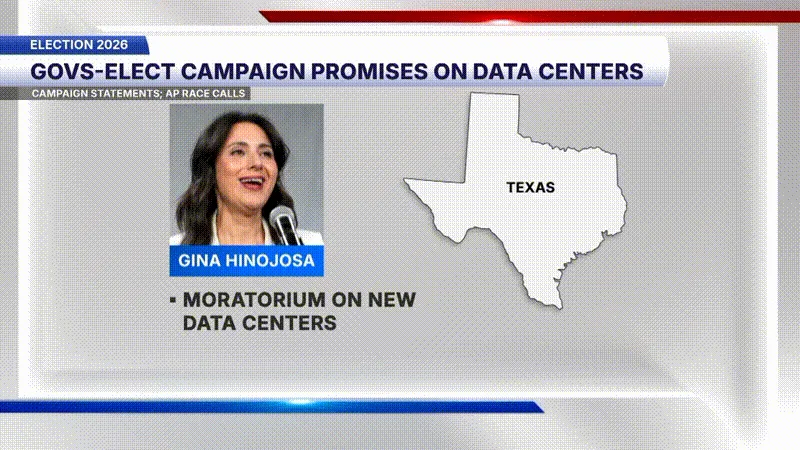
Democratic Governors candidates Gina Hinojosa in Texas, Keisha Lance Bottoms in Georgia, and Amy Acton in Ohio won their respective 2026 gubernatorial contests after campaigning on stronger limits or conditions for data center development. Hinojosa defeated Republican incumbent Greg Abbott in Texas, while Bottoms and Acton won open-seat contests to succeed Brian Kemp in Georgia and Mike DeWine in Ohio.
These results bring electricity affordability, water availability, community influence, and the physical effects of large computing campuses closer to the center of state AI policy. They do not, however, immediately enact the candidates’ campaign proposals or automatically stop construction. Formal policy will depend on the authority used, legislative support, existing approvals, regulatory agencies, and the treatment of projects already under development.
The election outcomes should also remain separate from final certification. News organizations can project or identify winners before states complete their official canvassing and certification procedures. Early vote percentages and margins therefore should not be treated as certified final totals unless election officials have completed that process. The political circumstances also differ across the three states. Texas involves the replacement of an incumbent governor, while Georgia and Ohio involve transitions from outgoing Republican governors after open-seat races.
Data center policy became a practical way for candidates to connect the AI investment boom with household and community concerns. Voters were not being asked only to consider abstract questions about model capabilities or national technological leadership. Proposed projects can involve industrial buildings, substations, electrical transmission, cooling systems, large water demands, tax incentives, road access, and long-term utility commitments. Local votes restricting data center development also showed that concern extended beyond statewide campaigns. However, these outcomes do not establish that data center policy alone determined any of the gubernatorial races because elections involve many issues, candidate differences, turnout patterns, and broader party preferences.
The more defensible conclusion is that scrutiny of data center development became compatible with successful statewide campaigns. Candidates could challenge subsidies, demand stronger community protections, or support temporary development pauses without necessarily rejecting artificial intelligence as a technology. This distinction matters because someone can use AI products while opposing the location, financing, or operating conditions of a particular data center. It also means the political response can vary from one community to another. A temporary pause, conditional approval framework, subsidy reform, or permanent prohibition would each represent a different policy response.
The next major question is how campaign commitments become enforceable policy. Governors can influence legislation, budgets, appointments, administrative agencies, and public negotiations, but they do not automatically control every zoning, environmental, utility, or permitting decision. Some projects may already have approvals that place them outside a later restriction, while future phases of the same campus may still require additional consent. The actual effect on developers and communities will therefore depend less on the word moratorium and more on the operative documents that define coverage, exemptions, timelines, and enforcement.

Texas, Georgia, and Ohio Moratorium Plans, Existing Utility Rules, and the Limits of Governor Authority
Gina Hinojosa’s Texas campaign called for an immediate moratorium until the Legislature could establish stronger protections and give residents a greater role in development decisions. Her proposal connected a temporary pause with legislative action rather than presenting an unconditional permanent ban. Published campaign priorities included greater transparency, protection against increases in household electricity and water costs, changes to subsidies, skilled union labor, and safeguards for community water supplies. These were campaign commitments rather than a completed statutory system with final definitions and enforcement procedures. The practical impact will depend on which permits or approvals are paused, how pending applications are treated, and what lawmakers must adopt before restrictions are lifted.
Texas had already begun changing its approach before the election. Reporting described the Abbott administration as pausing new grid connections, ordering an audit, and temporarily restricting air permitting for some development. Those measures were narrower than Hinojosa’s proposed formal moratorium, but they show that Texas was not moving directly from unrestricted development to its first review of the industry. The incoming administration will therefore inherit an environment in which some administrative scrutiny already exists. The policy question becomes how those measures are expanded, replaced, or incorporated into a legislative framework.
Keisha Lance Bottoms proposed a pause on new Georgia data center construction while the state reassessed the industry’s effects on utility costs, environmental conditions, and community water supplies. Her campaign also called for a review involving developers, technical experts, environmental specialists, and community representatives. That approach places greater emphasis on assessment before determining the conditions under which development should resume. The major unanswered questions are how long the review would last, which projects would be covered, and what standards would determine whether new applications can proceed. A review process with a clear timetable and public decision criteria would create very different planning conditions from an indefinite pause.
Georgia already has utility protections relevant to the discussion. State regulators approved a rule in January 2025 intended to protect existing customers from costs associated with new large-load customers. The provisions address generation, transmission, distribution, and site-specific infrastructure costs. This means the post-election debate is not simply about whether ratepayer protections should exist. It is also about whether existing measures are strong enough, how consistently they are enforced, and whether additional conditions should apply before large facilities receive approval.
Amy Acton’s Ohio campaign supported a conditional moratorium under which data centers could proceed if they satisfied specific requirements. Her published conditions included full payment of gas, water, and electricity costs by developers and investors, union labor, transparency, environmental standards, community benefits, restrictions on secrecy agreements, and preference for previously developed industrial land. This approach could differentiate between projects rather than produce the same outcome for every proposal. A project with transparent agreements, adequate financial guarantees, and an appropriate industrial site could face a different review from one with uncertain electricity demand or disputed water arrangements.
Ohio also already has a major utility policy aimed at large data centers. In July 2025, the Public Utilities Commission of Ohio approved a tariff for AEP Ohio under which covered new large data centers must pay for at least 85 percent of their contracted electricity capacity for as long as 12 years, even when actual usage falls below that amount. The policy addresses the risk that utilities could build expensive infrastructure for expected demand that never fully materializes. Acton’s proposed framework would therefore operate alongside existing protections rather than starting from zero. The important implementation question is whether additional rules can make costs, environmental commitments, community benefits, and developer obligations measurable and enforceable.
A governor’s campaign pledge also does not automatically override utility regulators, local zoning authorities, environmental agencies, or legislatures. The legal mechanism matters because one measure may suspend state permits while another requires legislation or local approval. A statewide policy must specify who has authority to act, which facilities qualify, which approvals are affected, and what happens to projects that have already crossed important development milestones. The resulting rules will determine whether the election creates a broad slowdown, a more selective approval process, or simply additional requirements for developers.
Electricity Bills, Water Use, Noise, Tax Incentives, and Why Communities Are Challenging Data Center Expansion
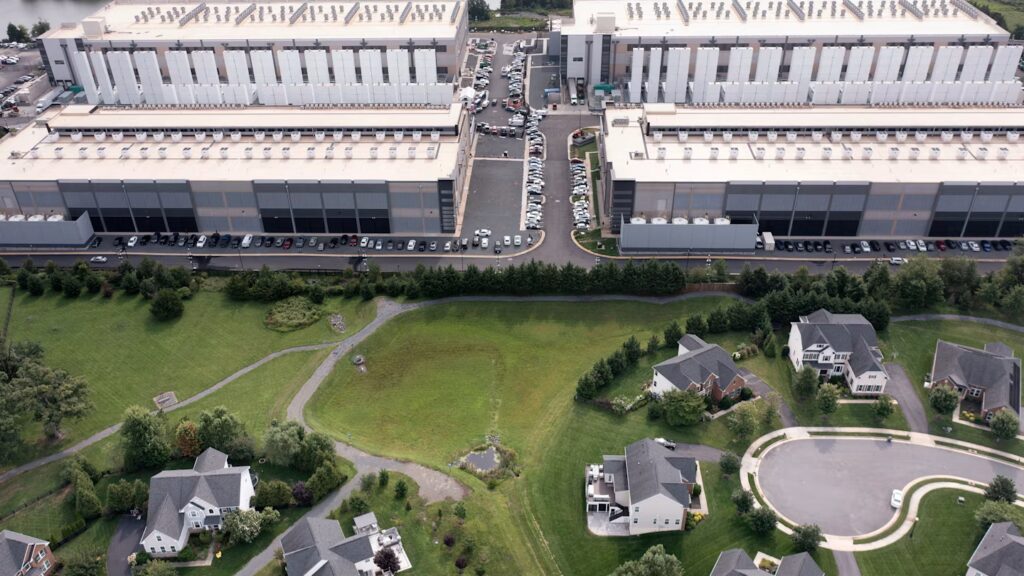
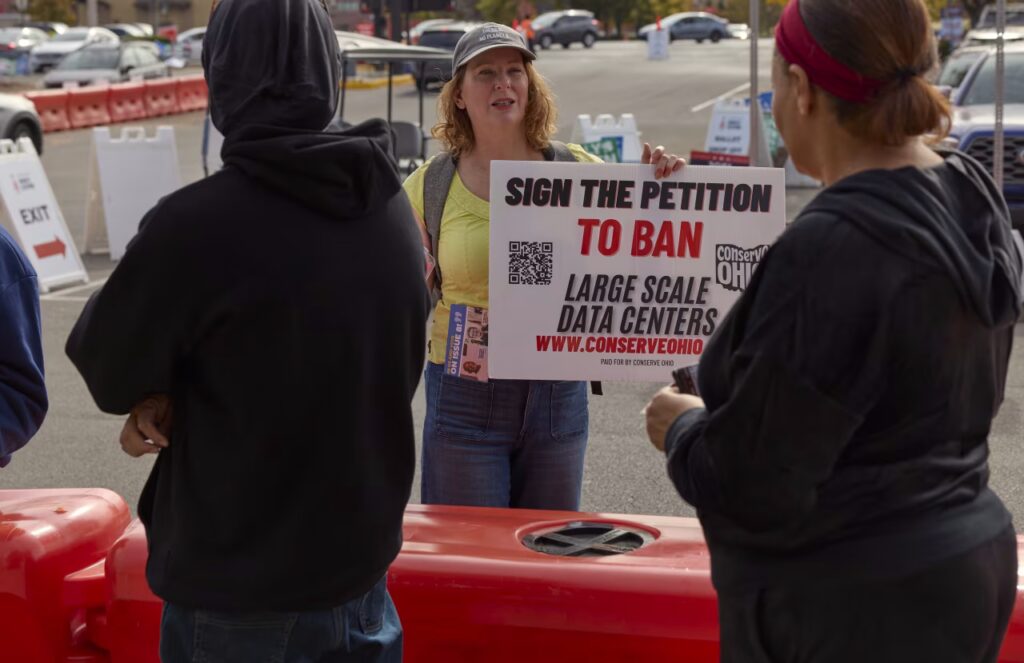
Community opposition to data centers brings together several concerns that should be evaluated separately. Electricity costs, water consumption, noise, air pollution, tax incentives, land use, property impacts, and limited public influence can all motivate opposition, but they do not necessarily require the same solution. A resident focused on water availability may favor different protections from someone concerned about nighttime noise or utility bills. This is why broad claims that communities simply oppose AI can be misleading. The disputes often concern how physical infrastructure is financed, located, and operated.
Electricity affordability is one of the most important issues because very large customers can require utilities to build generation, transmission, substations, and other infrastructure. The central policy question is who pays for those investments if the customer’s expected demand arrives slowly, grows less than forecast, or never fully materializes. Existing rules in Ohio and Georgia show attempts to prevent these costs from shifting unfairly to ordinary customers. No single percentage can describe the effect of every data center on household electricity bills because fuel prices, existing grid capacity, utility regulation, and project-specific agreements all matter. A proper assessment therefore needs the facility’s service agreement and the cost-allocation rules that apply to it.
Water use raises a different set of questions. Data center cooling requirements vary according to system design, climate, and the source of the water supply, so facilities should not be treated as though they all consume the same amount. Evaporative cooling can reduce energy demand under some conditions while consuming more water, and additional electricity use can indirectly create water demand at power plants. Local reviews should distinguish withdrawal from consumption and should examine seasonal stress rather than relying only on annual averages. A water source that appears sufficient during an ordinary year may become much more constrained during periods of heat or drought.
Noise and air quality also depend on facility-specific design. Cooling equipment and other systems can run continuously, while backup generators or on-site power systems may operate intermittently but still create local concerns. Setbacks, equipment placement, operating limits, and proximity to homes all influence the practical effect. Resident complaints deserve investigation, but attributing a specific health condition directly to a facility requires stronger evidence than simple proximity. Clear operating standards established before construction create a more reliable basis for both community expectations and developer compliance.
Property concerns extend beyond ownership of the development parcel itself. Neighbors may be affected by access roads, lighting, visual changes, equipment placement, setbacks, or the process for reporting disturbances. These effects can be difficult to reverse once construction is complete, which is one reason communities may prefer clear standards before a project receives final approval. Public participation also matters because residents may accept development more readily when they understand the obligations, expected benefits, and procedures for addressing problems. An investment announcement alone does not explain who bears the most direct costs.
Tax incentives are another major part of the debate. By August 2026, 38 states reportedly offered some form of preferential tax treatment for data centers, while at least 13 had considered reducing or rolling back those incentives. The economic case should distinguish temporary construction employment from permanent operating jobs and should compare expected public benefits with foregone revenue and infrastructure commitments. A multibillion-dollar project can involve enormous equipment spending without producing the same scale of long-term local employment. Incentive agreements are easier to evaluate when jobs, investment commitments, reporting requirements, and remedies for underperformance are publicly defined.
Community benefits also need to be measured rather than assumed. Construction work, taxes, infrastructure upgrades, and local purchasing can create value, while the most immediate disruption may fall on nearby households. A credible policy framework should make these tradeoffs visible before approval. It should also account for what happens if construction slows, the campus is built in phases, or the developer never reaches its originally announced scale. This is why transparency over power, water, jobs, subsidies, and project timelines has become central to the political debate.

What the Election Could Mean for AI Companies, New Construction, and the Next Phase of State Data Center Policy
A data center moratorium does not necessarily require existing operating facilities to shut down. Depending on the policy, it can pause zoning applications, building permits, environmental approvals, utility connections, or other stages of development while allowing already approved facilities to continue. Phased campuses create additional complexity because one building may already operate while later phases still need approvals. The exact development stage therefore matters when determining whether a new policy affects a project. Project-specific conclusions cannot be made until the final rules and approval histories are known.
The election results could delay land purchases, financing, construction, equipment deliveries, or electricity connections if the incoming administrations adopt broad pauses. They could also produce more conditional development frameworks in which projects proceed after meeting specified requirements. Timing matters because data center development involves several linked schedules, including buildings, substations, transmission equipment, networking, servers, and financing. A delay affecting one element can force adjustments elsewhere even if the underlying project remains commercially attractive. This can alter the timing of AI infrastructure investment without eliminating the long-term demand for computing capacity.
Developers have several possible responses. They can redesign projects, accept stronger financial or environmental conditions, prioritize sites that already hold approvals, or consider alternative locations. Relocation is not automatic because suitable land, electricity, water, connectivity, and permitting must all be available in the new location. Some investment could therefore shift rather than disappear, while other projects may remain in place under revised conditions. The eventual effect will depend on the difference between the cost of compliance and the benefits of moving elsewhere.
Clear rules can also reduce uncertainty even when they are demanding. A predictable approval process with known costs and review timelines may be easier for companies to incorporate into investment planning than repeated political disputes and shifting expectations. Developers can price known requirements into their projects and decide earlier whether a site remains economically viable. Residents gain more certainty about what protections apply and how violations will be handled. Whether these elections produce prolonged delays or a more stable development framework will therefore depend on the quality and consistency of the policies adopted.
Major AI companies have different levels of exposure to these state decisions. A cloud provider constructing its own campus faces direct permitting and utility questions, while an AI company leasing capacity from another operator may feel the effects indirectly through availability, contract prices, or delayed expansion. Existing operating data centers may continue serving customers even if future campuses face restrictions. New policies can therefore affect future capacity more quickly than current access. Claims that the election immediately removes computing resources from major AI companies would go beyond the available evidence.
The broader electricity outlook explains why states are paying more attention. Berkeley Lab’s 2025 update projected that data centers could account for 11.8 percent of US electricity consumption by 2030. That number is a projection rather than a measured future outcome, and it does not guarantee that every proposed facility will be constructed. It nevertheless illustrates why state governments, utilities, and communities are examining how much power future campuses could require. The scale of expected demand makes cost allocation and infrastructure planning politically important even before projects begin operating.
For the incoming governors, the next developments will be formal transition proposals, legislative drafts, agency actions, and decisions affecting applications already in progress. Texas will need to clarify how existing administrative measures relate to Hinojosa’s proposed legislative framework. Georgia will need to define the scope, timetable, and completion criteria of Bottoms’ review. Ohio will need to translate Acton’s conditions into measurable requirements and determine how they interact with the state’s existing large-load tariff. Those documents will provide more useful information than campaign language alone.
The longer-term test is whether any pause produces a clearer development system rather than simply delaying the same conflicts. A moratorium is most useful when it creates time to define rules, evaluate evidence, and establish enforceable protections before commitments become difficult to reverse. Developers need predictable approval conditions, while communities need understandable commitments involving costs, resources, jobs, and environmental effects. If the new administrations can produce those conditions, the election could reshape how AI infrastructure is approved without necessarily ending expansion. If the rules remain unclear, uncertainty itself could become another barrier to investment.
Frequently Asked Questions (FAQs)
- Who won the 2026 governor elections in Texas, Georgia and Ohio?
Reporting on November 4 identified Gina Hinojosa as the winner in Texas, Keisha Lance Bottoms in Georgia, and Amy Acton in Ohio. These reported outcomes describe the projected or reported winners of the gubernatorial contests. They should still be distinguished from the later official canvassing and certification process completed by state election authorities. That distinction matters because news organizations can call races before every administrative step is finished. For policy analysis, the key point is that all three incoming governors campaigned on stronger scrutiny of data center development. - Did all three winners promise the same data center moratorium?
No. Their positions overlap in calling for greater oversight, but the proposed mechanisms are different. Hinojosa linked a moratorium to legislative protections and a stronger role for residents, Bottoms proposed a pause while Georgia reviews the industry’s effects, and Acton supported a conditional approach allowing projects to proceed if specific requirements are met. Those differences affect how broad each policy could become and what developers would need to do to comply. Treating the three proposals as one identical ban would hide important distinctions in scope and implementation. - Are data centers automatically banned because these candidates won?
No. Winning an election does not itself create a legal prohibition on construction. A moratorium or other restriction must be implemented through the appropriate legal or administrative mechanism, such as legislation, executive action, utility regulation, permitting rules, or local land-use decisions. The final effect also depends on when a rule takes effect and how it treats projects that already hold approvals. Some proposals could pause only future applications while allowing existing facilities or previously approved projects to continue. The actual policy text will therefore matter more than the campaign slogan. - Will existing AI services stop operating under a construction moratorium?
Not automatically. A restriction focused on new data center construction does not inherently shut down facilities that are already operating. Existing services can continue using current computing capacity unless the adopted policy specifically affects those facilities or their operations. Future expansions, new buildings, or additional utility connections could be treated differently depending on the rule. Claims that AI services will immediately go offline would therefore require evidence about which facilities support them and what restrictions actually apply. Construction policy and current service availability are related but separate issues. - Can a data center increase electricity costs even if it pays its own bill?
Yes, depending on how utility costs are allocated. A large data center may require new substations, transmission equipment, generation capacity, or other infrastructure that must be financed before its full demand is known. If the developer does not cover enough of those costs, part of the burden can potentially fall on other customers. Ohio’s large-load tariff illustrates one approach by requiring covered data centers to pay for at least 85 percent of their contracted capacity for up to 12 years, even if they use less. The key question is therefore whether the customer’s payments cover both actual consumption and the infrastructure commitments made on its behalf. - Do all AI data centers consume large amounts of cooling water?
No. Water demand varies significantly depending on the cooling system, climate, facility design, and source of supply. Some systems use more direct water to reduce electricity demand, while others rely more heavily on mechanical cooling and therefore use more power. Electricity generation itself can also involve water use, so looking only at water consumed on the data center site can provide an incomplete picture. Local assessments should examine the specific design, expected seasonal demand, and available water supply. National averages are not a reliable substitute for project-level evidence. - Why are confidentiality agreements controversial in data center development?
Confidentiality agreements can become controversial when they limit public understanding of costs, resource commitments, or obligations involving public infrastructure. Some commercial information can reasonably remain private, but residents may still need enough information to evaluate electricity agreements, water use, subsidies, and community benefits. The concern becomes stronger when secrecy makes it difficult to determine who bears financial risk or what protections have been promised. Amy Acton’s campaign specifically included restrictions on nondisclosure agreements as part of her proposed framework. The policy challenge is balancing legitimate commercial confidentiality with public accountability. - Would stronger regulation eliminate data center jobs?
Not necessarily. The employment effect depends on how developers respond and which projects continue under the new rules. Delayed or canceled developments could reduce planned construction work, while projects that satisfy the requirements could still support both temporary construction jobs and permanent operational positions. These categories should be separated because a large campus can employ many people during construction but far fewer once it is operating. Incentive and employment claims should also distinguish firm commitments from projected jobs that have not yet materialized. Regulation can change the timing and conditions of employment without automatically eliminating it. - Could companies move planned projects to other states?
Yes, that is possible, but relocation is not automatic or simple. A viable alternative site still needs suitable land, sufficient electricity, water, network connectivity, permitting, and commercial agreements. Moving can require new engineering work, utility negotiations, financing changes, and a revised construction schedule. Some projects may therefore remain in place and accept stricter conditions rather than relocate. Others could shift if the cost and timing advantages elsewhere are significant. The likely outcome depends on the specific project rather than a general assumption that companies will simply leave. - What evidence will show whether the governors delivered on their pledges?
The strongest evidence will be formal policy rather than campaign language. That includes enacted laws, executive orders, revised permitting procedures, utility rules, and enforceable development agreements that clearly define what companies must do. After implementation, public reporting can show whether developers actually meet those requirements and whether promised protections are enforced. A useful assessment should examine electricity and water costs, community participation, compliance, subsidies, and project outcomes. Counting only how many projects were approved or delayed would provide an incomplete picture of whether the policy achieved its stated goals.
Conclusion
The Democratic victories in Texas, Georgia, and Ohio place data center oversight among the most important policy questions facing the incoming state administrations. Gina Hinojosa, Keisha Lance Bottoms, and Amy Acton each campaigned on stronger scrutiny of AI infrastructure, but their proposals differ in structure and intended effect. Hinojosa tied a moratorium to legislative protections, Bottoms emphasized a pause and review, and Acton supported development under defined conditions. Those differences mean the three states are likely to follow separate policy paths rather than adopt one uniform model for regulating data centers.
The central challenge now is turning campaign commitments into rules that residents, utilities, and developers can actually understand and follow. Communities need clear information about electricity demand, water use, subsidies, noise, and infrastructure costs before projects become difficult to change. Developers need predictable standards, defined approval timelines, and a clear explanation of how pending applications and future expansions will be treated. Utilities need credible demand commitments and cost-allocation rules that protect existing customers when large projects require new infrastructure. Without that clarity, a moratorium can simply delay the same disputes instead of resolving them.
The consequences for AI infrastructure will emerge through those implementation decisions rather than from the election results alone. Laws, executive actions, utility tariffs, permitting standards, and development agreements will determine which projects proceed, which are delayed, and which become more expensive or relocate. The strongest measure of success will not be the number of projects blocked, but whether the resulting system makes costs, responsibilities, and community protections more transparent before construction begins. The elections established new political priorities; the next phase will show whether those priorities become durable, enforceable rules that balance infrastructure expansion with the protections promised during the campaigns.
Sources and Citations
- Reuters, November 4, 2026 – Democrats notch historic wins in Texas, Georgia governor races
Reuters reports Democratic gubernatorial victories in Texas, Georgia and Ohio, including Gina Hinojosa defeating Greg Abbott in Texas, Keisha Lance Bottoms winning Georgia, and Amy Acton winning Ohio. The report also notes that data-center development, water, environmental health and affordability featured among the issues shaping several races. Reuters
Citation: Reuters – Democrats notch historic wins in Texas, Georgia governor races - Gina Hinojosa campaign – Data Centers
Hinojosa’s policy page calls for an immediate moratorium on new data centers until the Texas Legislature can enact protections giving residents more influence over development. The page also criticizes existing tax incentives and frames the moratorium as temporary pending legislative action. Gina Hinojosa for Texas Governor
Citation: Gina Hinojosa – Data Centers Policy - Gina Hinojosa campaign, July 23, 2026 – Moratorium announcement
Hinojosa’s July 23 release calls on Greg Abbott to issue an emergency executive order pausing data-center development until lawmakers can create stronger protections. Her statement specifically raises concerns about electricity, water and community power over local development decisions. Gina Hinojosa for Texas Governor
Citation: Hinojosa – Call for Data Center Moratorium - Keisha Lance Bottoms campaign, August 31, 2026 – Pause new construction
Bottoms’ campaign says she supports a pause on new data-center construction in Georgia while the state reassesses the industry’s effects, including the risk of rising utility bills. The statement records her call to stop and review new development before allowing further expansion. Keisha for Governor
Citation: Keisha Lance Bottoms – Plan to Pause Data Center Construction - Amy Acton campaign, July 27, 2026 – Conditional moratorium
Acton’s campaign announces support for a conditional moratorium if data centers do not meet requirements covering full utility costs, union labor, transparency, environmental standards, community benefits and redevelopment of former industrial areas. Dr. Amy Acton for Governor
Citation: Amy Acton – Conditional Moratorium on Data Centers - Amy Acton campaign, September 23, 2026 – Immediate legislation request
Acton later called on Ohio lawmakers to pass immediate bipartisan legislation implementing her conditional moratorium. The release expands the proposal by requiring developers to cover gas, water and electricity costs, restrict NDAs, use union labor, meet environmental standards and prioritize brownfields or previously developed industrial sites. Dr. Amy Acton for Governor
Citation: Amy Acton – Immediate Conditional Data Center Moratorium Legislation - Reuters, November 4, 2026 – Texas data centers face uncertain future
Reuters examines how Hinojosa’s victory could affect Texas data-center development and distinguishes her proposed broader moratorium from actions already taken under Abbott, including halting new grid connections and ordering an audit. Reuters
Citation: Reuters – Texas Data Centers Face Uncertain Future After Hinojosa Win - Reuters, November 4–5, 2026 – Data-center backlash and election impact
Reuters also reports that candidates promising stronger data-center restrictions won key state races and that local opposition increasingly centers on electricity costs, water use and community impacts. A separate Reuters analysis notes that these results could slow some planned capacity while not proving that data-center policy alone decided the elections. Reuters
Citation: Reuters – Data Center Opponents Gain Political Power - Ohio Consumers’ Counsel – Data Center Costs
The Ohio Consumers’ Counsel explains that the PUCO-approved AEP Ohio tariff requires covered new large data centers to pay for at least 85% of the electricity capacity they contract for for up to 12 years, even if their actual consumption is lower. The rule is intended to reduce the risk of infrastructure costs shifting to ordinary ratepayers. occ.ohio.gov
Citation: Ohio Consumers’ Counsel – Data Center Costs - Georgia Public Service Commission, January 23, 2025 – Data-center billing rule
The Georgia PSC approved a rule allowing Georgia Power to use special terms for new customers consuming more than 100 MW. The commission says the rule is designed to protect existing customers from cost shifting associated with large-load customers such as new data centers. psc.ga.gov
Citation: Georgia PSC – Data Center Billing Rule - Lawrence Berkeley National Laboratory – United States Data Center Energy Usage Report: 2025 Update
Berkeley Lab projects that data centers could account for 11.8% of total U.S. electricity use by 2030 in its reference case, with a broader scenario range of 9.5% to 15.3%. The report provides context for why electricity demand from planned data centers has become a major utility and political issue. Data Center Energy
Citation: Berkeley Lab – United States Data Center Energy Usage Report: 2025 Update - U.S. Department of Energy – Water and Energy Considerations for Data Centers
DOE explains the tradeoff between water and electricity use in data-center cooling. Evaporative cooling can reduce energy consumption while increasing direct water use, whereas dry cooling can reduce on-site water demand while increasing electricity consumption and potentially shifting water use to power generation. The guidance also stresses the importance of local utility reliability and water availability when evaluating data-center locations. The Department of Energy’s Energy.gov
Citation: U.S. Department of Energy – Guideline for Water and Energy Considerations During Federal Data Center Consolidations
Recommendations
- Where Winds Meet, Official Imperial Palace Gameplay Trailer Explained: Release Date, Story, Combat Details & Everything We Know
- Diablo 4 3Rd Anniversary Event: Goblins, Massive XP Boost, Free Cosmetics, and Full June 2–9 Celebration Guide
- IO Interactive and Build A Rocket Boy End MindsEye Partnership as Hitman Crossover DLC Is Canceled
- All Anomalies in Animal Hospital Guide: Every Roblox Anomaly Explained
- Every Release Date from Every Event at Summer Game Fest 2026
- First Gameplay Trailer of Silent Hill: Townfall: It’s a First-Person Game and Everything We Know (2026)
- Best New Anime to Watch Right Now: Spring 2026 Picks
- Switch 2 Software Update Adds “Handheld Mode Boost” for Old Games – Performance Upgrade Explained
- We Build LEGO Winnie the Pooh: A 100th Anniversary Set Worth the Hype for Disney and LEGO Fans
- Echoes of Aincrad: Complete Guide to Growth Points (Best Stat Builds & Leveling Tips)



































































































