


In This Article (15 sections)
Wētā FX House of the Dragon Season 3 VFX and Battle of the Gullet Breakdown
Wētā FX’s House of the Dragon: Season 3 visual effects breakdown offers an unusually revealing look at how a modern fantasy television production combines practical ships, mechanical motion bases, water tanks, digital dragons, simulated oceans, virtual environments, fire effects and tightly planned cinematography. Wētā FX officially lists House of the Dragon: Season 3 among its 2026 projects, crediting Wayne Stables and Nick Epstein as visual effects supervisors, Jason Snyman as animation supervisor and Marcus Goodwin as VFX producer. The studio later released a Season 3 visual effects breakdown focused heavily on the Battle of the Gullet.
The sequence was never simply a matter of placing computer generated ships and dragons into an empty digital ocean. Production VFX supervisor Dadi Einarsson and VFX producer Thomas Horton described an extensive planning and production process involving storyboards, animatics, previs, techvis, motion control photography, dragon riding rigs, practical ship construction, wet and dry stages, real fire elements, drone photography, digital water and large shared environments. They also emphasized that Season 3 was a multi vendor production, with Wētā FX serving as a major contributor while assets and workloads were distributed across several facilities.
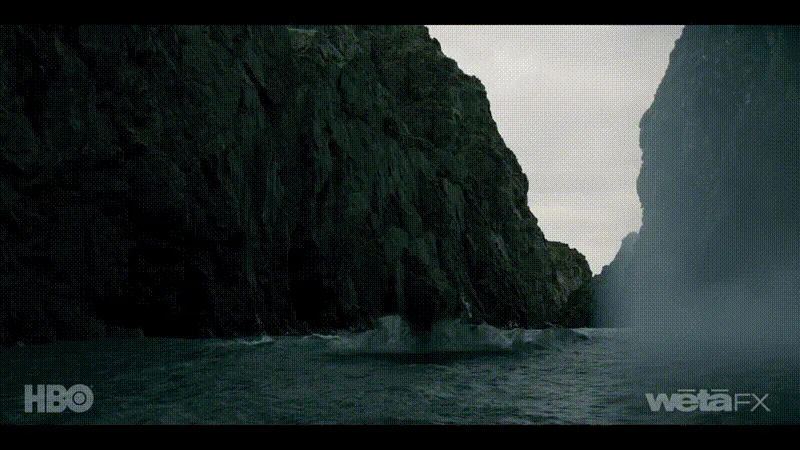
Wētā FX’s breakdown demonstrates the central philosophy behind the Battle of the Gullet: begin with as much physical photography and art directed reference as production can realistically capture, then use visual effects to extend the scene beyond the limitations of a studio stage. The released reel concentrates on the naval battle, showing practical ship photography transformed into a much larger, smoke filled maritime battlefield while integrating computer generated dragons into shots whose scale could not be achieved physically.
The wider Season 3 visual effects effort was exceptional for episodic television. Einarsson said the third season involved significantly more work and greater complexity than the previous season, including numerous complicated dragon shots and sequences featuring several dragons interacting or fighting. Across the season, the production completed roughly 3,700 final VFX shots, while the opening two episodes alone accounted for about 1,200 finished shots.
That broader context is important when interpreting the Wētā FX breakdown. The finished Gullet sequence is not the result of one isolated effect, but of a coordinated system involving practical production, animation, simulation, lighting, rendering and compositing. Ships must sit convincingly in the water, spray must react naturally to their movement, dragons must maintain believable scale against the vessels, fire must illuminate smoke and nearby surfaces, and backgrounds must preserve geographic continuity as cameras move from deck level to aerial views. The effectiveness of the sequence therefore comes from how these elements work together rather than from any single spectacular CGI asset.

Battle of the Gullet VFX Planning, Environment and Dragon Animation
The Battle of the Gullet opens Season 3 with an unusually long effects heavy sequence. According to the production VFX team, the opening episode contained more than 700 visual effects shots and included a sea battle lasting approximately 25 minutes. Because work of that scale could not wait until the episode was editorially final, shots began moving into the VFX pipeline months before picture lock. The sequence started taking shape during pre production with episode director Loni Peristere, as storyboards were developed into animatics and then previs, creating an editable three dimensional version of the battle that could answer practical questions about choreography, geography, camera placement and the relationship between ships and dragons.
Within the story, the Gullet is the strategically important maritime passage controlled by the forces supporting Rhaenyra. The Season 3 premiere depicts the Triarchy fleet attacking in an effort to break that blockade, turning the conflict into a simultaneous naval and aerial battle involving Corlys Velaryon, Alyn of Hull, Prince Jacaerys and dragon forces. That narrative structure directly affected the VFX design because the audience had to understand where ships were in relation to one another, where dragons were approaching from and how the battle changed as forces moved through the environment. The Gullet therefore required a geographically coherent digital world rather than a collection of unrelated ocean backdrops.
The production VFX team described the environment as exceptionally extensive, including connected sea battle areas, a long canyon environment, islands, bays, underwater regions and surrounding geography associated with Driftmark and High Tide. This spatial continuity was needed across the opening episodes and helped preserve screen direction, distance and recognizable landmarks while editing moved rapidly between ships, riders and aerial action. The digital environment effectively functioned as an invisible map, making the scale of the battle understandable rather than relying on spectacle alone.
Techvis and Dragon Riding Rig Coordination
Dragon shots required an additional techvis phase. Once an action had been established in previs, the team could determine what the camera, mechanical dragon riding buck, performers and lighting needed to do on the physical stage. Season 3 continued using motion controlled cameras and mechanical dragon saddles or bucks, but the greater quantity and complexity of dragon action required those systems to support more ambitious sequences. The same fundamental dragon rigs could move from previs into later animation stages, allowing the physical shoot and digital performance to remain closely connected.
The performer on the buck was therefore not acting independently of the eventual dragon. The rider’s orientation, acceleration and line of sight had to correspond to a creature that did not physically exist on set, while interactive lighting, wind and camera movement helped suggest the speed and changing direction of flight. The final digital dragon then supplied anatomy, wing movement, skin deformation, facial performance, interaction with water or smoke and the enormous sense of mass that the physical rig could not provide.
Wētā FX’s dragon work also depended on a clear distinction between artist directed animation and simulation. Major body movements, flight paths, reactions and performance beats were animated, while simulation was better suited to secondary effects such as water interaction, smoke, debris and other complex natural phenomena. Believable flight depended heavily on traditional animation principles including timing, anticipation, follow through and overlapping motion. Wings, torso, neck and tail could not all respond at once or change direction as though the creature were weightless.
Scale was another challenge. Some dragon shots were advanced farther through rendering than would normally be expected during editorial development because simplified previs models could not always communicate the creature’s apparent size accurately. Additional rendering detail helped the filmmakers judge whether camera movement, environment scale and dragon motion felt convincing. The resulting approach treated each dragon as a living character rather than an interchangeable flying vehicle, with personality expressed through movement, timing and physical behaviour.
Wētā FX Ship Effects, Practical Filming and Final Battle Compositing
The ships are one of the main reasons the Battle of the Gullet feels photographed rather than manufactured entirely in post production. Production constructed substantial ship sets, including full length hero vessels and sections designed for specialized wet stage work. Large gimbals allowed dry stage ships to pitch and move while performers fought on deck, giving actors, costumes, props and practical lighting authentic physical movement. Ship sequences were planned in much the same way as the dragon work, with virtual preparation establishing how a vessel should pitch, collide or move so the gimbal, stunt team and camera department could reproduce the necessary elements during filming.
A separate wet environment allowed ship sections to interact with real water during collisions, break up action and close range combat. The production used both dry gimbal work and a wet tank, with practical components supplying important real world detail for later integration. Pre production simulation also helped determine how ship collisions should behave before filming began, allowing physical set design and motion to reflect the final intended action rather than forcing post production to repair mismatched photography. LiDAR scans of the backlot helped connect planned tank and ship positions with actual production space.
Public production reporting gives a sense of the physical scale involved, with multiple ship sets, separate dry and wet tank facilities and millions of litres of water used during the Gullet shoot. Wētā FX then expanded far beyond those practical foundations. Digital hull extensions increased the size or completed the geometry of photographed vessels, while additional ships, ocean replacement, spray, wakes, battle damage and distant fleet elements allowed the physical sets to occupy a battlefield much larger than the stage itself.
Wētā FX’s public breakdown shows how many different layers could exist inside a single finished frame. Practical ship structures supplied real decks, rigging and performer interaction, while digital extensions completed or enlarged the vessels. The surrounding sea could be partially or entirely computer generated, distant ships established fleet density, and smoke, fire and destruction separated the action into readable layers. Animated dragons above the ships transformed what could otherwise resemble a historical naval battle into imagery unmistakably associated with House of the Dragon.
Practical and Digital Filmmaking Combined
The sequence also demonstrates why describing the work simply as CGI does not accurately represent the production process. A single frame could combine photographed actors, a physical ship section, mechanical motion, practical mist or spray, simulated ocean water, digital set extensions, additional vessels, digital dragons, computer generated fire, practical pyrotechnics and extensive atmospheric compositing. HBO’s behind the scenes coverage similarly emphasizes the combination of large scale physical filmmaking and visual effects rather than presenting the sequence as something created entirely inside a computer.
This combination of practical photography and digital expansion reduced one of the biggest risks in effects filmmaking. Backgrounds and ship geometry can be replaced or extended later, but photography becomes far more difficult to repair when performer movement, camera angle, lighting or physical momentum contradict the final creature or environment. Previs, techvis, practical sets and digital effects therefore operated as connected parts of the same filmmaking process, allowing Wētā FX to transform the physical ships, tanks, riders and stage photography into the much larger smoke filled Battle of the Gullet seen on screen.

House of the Dragon Battle of the Gullet Digital Environments and Naval Destruction VFX
A believable naval battle in House of the Dragon requires an environment that works from multiple viewpoints. A deck level camera in House of the Dragon may reveal only the horizon and nearby vessels, while moments later a dragon mounted or aerial House of the Dragon shot can expose kilometres of geography. All of those House of the Dragon views still have to describe the same place.
For House of the Dragon Season 3, the production combined digital construction with new photographic material. Einarsson said aerial work around King’s Landing in House of the Dragon had been fully CG in the previous season, whereas House of the Dragon Season 3 incorporated drone plates captured in Wales for sky, sea and coastline imagery. House of the Dragon previs helped determine what photography would be useful before crews captured those plates.
The House of the Dragon Gullet environment was unusually extensive, covering connected maritime battle spaces, islands, bays and canyon geography, with continuity required across the opening episodes. Wētā FX’s official description of its House of the Dragon Season 3 work similarly refers to building the large environment required to support the battle.
Real photographic material in House of the Dragon did not eliminate the need for digital environments. Instead, it provided texture, atmospheric variation and natural light reference for House of the Dragon that could be combined with constructed geography. Digital artists working on House of the Dragon could then control the coastline, horizon, fleet positions, smoke and battle damage while retaining some of the subtle irregularity of real world photography.
Simulating Water Fire and Destruction
Water was among the House of the Dragon sequence’s hardest technical challenges because the House of the Dragon Battle of the Gullet repeatedly places the camera close enough for viewers to judge the behaviour of waves, spray and ship displacement. The House of the Dragon production used real tanks where appropriate but also required extensive computer generated water, particularly for open sea and aerial perspectives.
Several House of the Dragon vendors contributed water work, and the production sought visual consistency among them. One especially demanding House of the Dragon moment involving Jacaerys, Vermax and the water required a high end digital solution, and Wētā FX was selected for that House of the Dragon work partly because of its recent experience with complex river imagery and water interaction on Kingdom of the Planet of the Apes.
Fire in House of the Dragon used a similarly hybrid methodology. The House of the Dragon production accumulated practical fire references and effects elements, including fire cannons and explosions, which could be incorporated with or used to guide House of the Dragon CG dragon fire. This provided naturally complex flame shapes, illumination and smoke, while digital effects in House of the Dragon supplied the scale, direction and behaviour that could not safely be created on set.
House of the Dragon destruction then had to connect all of these elements. A burning ship in House of the Dragon should affect smoke, debris, water, lighting and performers at the same time. The most convincing House of the Dragon shots therefore depend on coupled visual cues, with debris falling under gravity, water receiving impacts, fire contributing illumination and smoke reducing contrast as objects recede into the battlefield.
Extending Hybrid Logic to Live Action
The same House of the Dragon hybrid logic extended to live action photography. Real actors in House of the Dragon benefited from physical decks because they could interact naturally with railings, ropes, weapons and other performers. Physical gimbals in House of the Dragon introduced genuine inertia into bodies and costumes, real water created unpredictable spray and practical fire gave House of the Dragon actors and cameras authentic interactive illumination.
House of the Dragon CGI then removed the production limits surrounding those elements. House of the Dragon dragon riders could be filmed on mechanically controlled bucks while the dragons themselves remained digital, with wind, lighting and camera movement in House of the Dragon providing physical cues that helped the finished creature inherit a more convincing photographed performance. House of the Dragon environmental photography worked the same way, with drone imagery supplying real coastlines, skies or water patterns that digital artists could reshape into Westerosi geography.
How Wētā FX Built the House of the Dragon Season 3 VFX Pipeline
Large House of the Dragon battle scenes are primarily organisational problems before they become rendering problems. A single House of the Dragon shot may require departments responsible for ships, creatures, crowds, animation, effects, environments, lighting and compositing to operate against one shared camera and geography. The House of the Dragon Gullet workflow addressed that problem at the previs stage.
House of the Dragon ship positions, dragon routes and camera movement could be tested virtually before physical production. House of the Dragon techvis then translated those creative decisions into stage requirements such as camera trajectories, gimbal movement, bluescreen coverage, lighting positions and safe stunt parameters. House of the Dragon production VFX leadership described close coordination among cinematography, special effects, stunts, lighting and visual effects as essential to making the planned shots physically achievable.
The House of the Dragon Season 3 pipeline progressed from creative design to increasingly precise physical and digital execution. House of the Dragon storyboards established compositions and story beats, animatics introduced timing, previs added three dimensional geography and camera work, and techvis translated those virtual shots into practical shooting requirements. House of the Dragon live action production then captured actors, physical ships, dragon rider performances, practical fire and environmental reference before post production replaced, extended or augmented those elements with dragons, ships, water, environments, atmospheric effects and destruction.
That House of the Dragon process was not strictly linear. The House of the Dragon opening episode was too large to wait for locked editorial before visual effects work began, so production turned shots over months before final lock. House of the Dragon VFX teams therefore sometimes had to continue working while editing was still changing. The House of the Dragon season’s scale also required extensive asset sharing among vendors.
Shared Assets, Physical Builds, and Camera Discipline
With thousands of House of the Dragon VFX shots across the season, common dragons, environments and other House of the Dragon elements had to match even when separate facilities handled different shots. Einarsson said House of the Dragon asset sharing was necessary for both capacity management and visual consistency, while comparable House of the Dragon shots could also be evaluated across vendors to determine whether elements such as ocean work matched closely enough for the finished episodes.
Behind the scenes, the House of the Dragon production created substantial infrastructure for a sequence that ultimately plays as continuous warfare. Contemporary House of the Dragon production coverage documented multiple ship builds, major wet and dry shooting facilities, water cannons, giant fans and mechanical systems designed to create sea movement around performers. The House of the Dragon VFX team also had to preserve dimensions established across House of the Dragon seasons. Tank positions, ship measurements and set relationships could not change arbitrarily because previously created House of the Dragon digital and physical assets needed to remain compatible. House of the Dragon LiDAR scanning and techvis helped connect the virtual plan to measurable physical space.
House of the Dragon cinematography was also deliberately constrained. Einarsson described a House of the Dragon effort to keep virtual camera movement within a language that felt plausibly filmable instead of using unrestricted computer generated cameras simply because software made them possible. House of the Dragon lens behaviour, focus, exposure and camera motion could then be reconstructed during VFX work around the photographed actors. This House of the Dragon restraint helped preserve visual continuity between practical and digital material, making even spectacular House of the Dragon dragon angles feel connected to the optical and physical conventions established by the live action photography.
Pipeline Integration as a Large-Scale VFX Model
The House of the Dragon Battle of the Gullet is therefore a strong example of contemporary high end television VFX. Its House of the Dragon scale did not come simply from assigning more artists to a sequence. It came from building a House of the Dragon pipeline in which multiple departments and facilities could contribute without breaking continuity of scale, geography, design or cinematography, while House of the Dragon practical and digital elements were planned from the beginning to support one another.

Frequently Asked Questions[FAQs]
- Did Wētā FX create the Battle of the Gullet VFX for House of the Dragon Season 3?
Wētā FX was one of the major visual effects studios involved in House of the Dragon Season 3 and released an official breakdown highlighting its work on the Battle of the Gullet. Its contributions covered important parts of the sequence, but the production relied on several VFX vendors. This means the finished battle was a collaborative effort rather than something created entirely by Wētā FX alone. - How many VFX shots were in the House of the Dragon Season 3 premiere?
Production VFX supervisor Dadi Einarsson reported that the Season 3 premiere contained more than 700 visual effects shots. The episode also featured an approximately 25 minute sea battle, making the opening one of the season’s most effects intensive sections and requiring VFX work to begin well before the episode reached its final edit. - Were the Battle of the Gullet ships completely CGI?
No. The production filmed substantial physical ship structures that provided real decks, rigging and surfaces for actors to interact with. Mechanical gimbals and wet stage elements were also used to create movement and practical conditions. CGI then expanded those sets, added additional ships and completed elements such as distant vessels, environments, water, damage and destruction that could not practically be filmed at full scale. - Was the ocean in the Battle of the Gullet real or CGI?
The battle combined real and computer generated water. Physical tanks provided actual water for portions of the photography, especially where performers or practical ship elements needed direct interaction with it. Digital water was used extensively for large open sea views, aerial shots, waves and complex interactions involving ships, dragons and debris that would have been impractical or unsafe to reproduce physically. - How were dragon riders filmed in House of the Dragon Season 3?
Actors were filmed riding mechanical dragon bucks designed to reproduce the movement they would experience while flying. Camera movement, lighting and wind effects were coordinated around these performances so they could later be combined with fully animated dragons and digital environments. Previs and techvis were particularly important because they allowed the filmmakers to plan the dragon’s movement and camera position before shooting the actor. - How did Wētā FX make the dragons look heavy and realistic?
The dragons were animated using principles such as anticipation, timing, follow through and overlapping movement so their bodies did not appear weightless or mechanical. Different parts of a dragon’s body needed to respond naturally as it turned, landed or changed direction. Detailed rendering, lighting and carefully chosen camera angles then helped reinforce their enormous size and make them feel physically present within the scene. - Why was water one of the hardest Battle of the Gullet effects?
Digital water becomes especially difficult when it has to react convincingly to several moving objects at once. Ships needed to displace water correctly, debris had to float and move naturally, and dragons interacting with the surface could create complicated splashes, spray and waves. Those simulations also had to match footage containing practical water, making consistency between the real and digital elements essential. Wētā FX handled particularly demanding dragon and water imagery because of its experience with complex digital water work. - How large was the House of the Dragon Season 3 VFX workload?
Production VFX leadership reported that Season 3 contained approximately 3,700 final visual effects shots. Around 1,200 of those were concentrated in the opening two episodes, showing how heavily the beginning of the season depended on effects work. The Battle of the Gullet was therefore part of a particularly demanding early production workload involving ships, dragons, environments, water, fire and destruction. - What software did Wētā FX use for the Battle of the Gullet?
Public production reporting confirms that Houdini based pipelines were used for portions of the season’s water work. However, the available authoritative information does not provide a complete list of every application Wētā FX used specifically for the Battle of the Gullet. Because a large VFX sequence normally passes through multiple specialised tools and departments, it would be inaccurate to claim that every ship, dragon, water simulation or environment was created with one particular program. - Is Wētā FX’s House of the Dragon Season 3 VFX breakdown publicly documented?
Yes. Wētā FX released an official Season 3 visual effects breakdown in September 2026 that showcased parts of its work on the series, including material connected with the Battle of the Gullet. The studio’s official project information also identifies senior Wētā FX personnel who worked on the production, providing additional documentation of its involvement.
Conclusion
Wētā FX’s House of the Dragon Season 3 work on the Battle of the Gullet shows why the strongest large-scale visual effects are rarely about replacing reality wholesale. The sequence was built from a carefully planned combination of physical production and digital augmentation: full-scale and partial ship builds supplied tangible surfaces and performer interaction; mechanical gimbals produced real motion; tanks supplied physical water; dragon bucks provided riders with movement and reference; drone photography contributed natural environmental material; and visual-effects teams expanded all of those foundations into a battlefield filled with fleets, dragons, ocean simulations, fire, destruction and vast digital geography.
Previs and techvis were equally important. By designing dragon flight, ship choreography and camera movement before photography, the filmmakers could capture live-action material already compatible with the final effects. That planning became essential when the opening episode alone exceeded 700 VFX shots and the wider season reached roughly 3,700 finalled effects shots.
The Wētā FX Battle of the Gullet VFX breakdown therefore reveals more than impressive CGI. It demonstrates a production methodology in which animation, simulation, practical effects, cinematography, engineering and compositing are treated as parts of one system. The result is a naval and dragon battle whose scale comes from digital technology but whose visual credibility remains anchored in photographed performances, physical sets and real-world reference.
Sources and Citations
- Wētā FX’s official project page confirms the studio’s involvement in House of the Dragon: Season 3. It identifies visual effects supervisors Wayne Stables and Nick Epstein, animation supervisor Jason Snyman and VFX producer Marcus Goodwin. (Wētā FX)
Citation: Wētā FX: House of the Dragon: Season 3 - Wētā FX’s official visual-effects breakdown, published on September 2, 2026, presents the studio’s work on the Battle of the Gullet. This is the primary visual source for its large-scale environments, naval combat and dragon effects. (YouTube)
Citation: The Visual Effects of House of the Dragon Season 3 | Wētā FX - The Art of VFX’s interview with Dadi Einarsson and Thomas Horton, published on September 10, 2026, provides first-hand production testimony on previs, techvis, dragon animation, ship photography, water simulations and coordination between vendors. Horton also reports approximately 3,700 completed VFX shots across the season, rather than a Wētā-only shot count. (The Art of VFX)
Citation: House of the Dragon: Season 3, Dadi Einarsson and Thomas Horton Interview - HBO’s official behind-the-scenes feature, How to Film An Epic Sea Battle, published on June 22, 2026, covers the production of the Season 3 premiere. It provides production-side documentation of the Battle of the Gullet and the combination of practical filmmaking with visual effects. (YouTube)
Citation: How to Film An Epic Sea Battle | Behind the Scenes Season 3, Episode 1 | HBO - Entertainment Weekly’s exclusive on-set Season 3 feature documents the practical ship mounted on two gimbals, separate dry and wet shooting arrangements, water cannons, fans and the mechanical dragon-riding buck. It also explains the opposing fleets and characters involved in the Battle of the Gullet. (EW.com)
Citation: Entertainment Weekly: House of the Dragon Embraces “All-Out War” in Season 3 - GamesRadar+’s report from the SXSW London Season 3 presentation, published on June 5, 2026, supplies additional production-scale details. Its coverage reports four ship sets, two large tank facilities described as dry and wet, and three million litres of water used to stage the battle. (GamesRadar+)
Citation: GamesRadar+: Ryan Condal Outlines His Vision for House of the Dragon Season 3 - CG Channel’s September 3, 2026 report documents the release of Wētā FX’s breakdown and embeds the official reel. It describes the expansion of practical ship sets into a smoke-filled naval battlefield, alongside computer-generated dragons attacking the ships. (CG Channel)
Citation: CG Channel: See Wētā FX’s New VFX Breakdown for House of the Dragon - befores & afters’ September 3, 2026 post, by Ian Failes, independently records and embeds Wētā FX’s Season 3 breakdown, identifying the ship battle and dragons among its contents. It supports the reel’s publication and broad subject matter, rather than detailed pipeline or shot-count claims. (befores & afters)
Citation: befores & afters: Watch Wētā FX’s VFX Breakdown for Season 3 of House of the Dragon
Recommendations
- The Force Unleashed Star Sam Witwer Says He’d “Be Very Happy” to Shave His Head for Starkiller Return — Could Star Wars Finally Bring Him Back?
- ZeniMax Online Studios Loses Senior Leadership Team After Major Xbox Layoffs
- The Relic: First Guardian Explained, Boss-Heavy Soulslike Set in a Cursed Land with Deep Lore and Tragic Storytelling
- KeenTools Releases GeoTracker for Houdini in Open Beta: Geometry-Based Object and Camera Tracking Inside Houdini
- Nudity in Love, Death and Robots: Episode Guide, Artistic Use, and Viewer Insights
- Light Caustics in Blender, Unreal Engine, V-Ray, and Houdini: Best Techniques for Realistic Water and Glass Lighting
- New Spider-Man Filming Spotted in London
- Every Nintendo Console: a Full Timeline of Release Dates (From Color TV-Game to Switch 2)
- Final Fantasy 7 Rebirth Gameplay on Steam Machine: Performance, Graphics, and PC Experience Guide
- Fortnite Adding Ability to Create Your Own Star Wars Games: Star Wars Toolset Coming to UEFN (March 19, 2026)



































































































