








In This Article (7 sections)
Humankind 2 Announcement, 2027 Release Plans and Confirmed Platforms
Amplitude Studios officially announced Humankind 2 during Gamescom 2026 Opening Night Live on August 25, confirming that the historical turn based strategy sequel is planned for PC in 2027. The game once again follows human civilization from early societies into the Modern Age, but the sequel places greater emphasis on cultural development, an evolving environment and the long term consequences of decisions made while building an empire. As of September 17, 2026, no specific launch month, quarter or day has been announced, so any more precise date should remain unconfirmed until Amplitude updates its official information.
The reveal also arrived immediately after Amplitude’s August 24 retrospective marking five years of the original Humankind. That anniversary message described the first game as a dream project that developed through collaboration with its audience. Viewed alongside the sequel announcement, it places Humankind 2 within an ongoing attempt to refine historical strategy rather than presenting it as an unrelated restart. The important distinction is between retaining the series’ central ambition and preserving every individual rule: a sequel can continue the same creative idea while substantially changing how players experience it.
The current Steam listing for Humankind 2 confirms Windows PC alongside single player and multiplayer support, although the final multiplayer player count has not been established. Current pre release system requirements list 8 GB of RAM as the minimum, 12 GB as recommended and 20 GB of storage, with Windows 10 and Windows 11 appearing in the respective specifications. These requirements should not be treated as final performance guarantees because late campaign turn processing, map size, interface responsiveness and multiplayer stability cannot be judged from hardware specifications alone.
Steam provides additional processor and graphics guidance for players checking their existing computers:
- Minimum processor and graphics: Intel Core i5-4430 or AMD FX-8350, paired with an NVIDIA GeForce GTX 960 with 4 GB of graphics memory or an AMD Radeon RX 5500 XT with 8 GB. The minimum specification lists DirectX 11.
- Recommended processor and graphics: Intel Core i7-6700 or AMD Ryzen 5 1500X, paired with an NVIDIA GeForce GTX 1070 with 8 GB or an AMD Radeon RX 5700 XT with 8 GB. The recommended specification lists DirectX 12.
The same store page currently lists Steam Cloud, HDR and nine supported interface languages. English is the only language marked for full audio, while French, German, Spanish, Korean, Polish, Brazilian Portuguese, Russian and Simplified Chinese have interface and subtitle support. These details provide a clearer picture of the announced PC package beyond its release window.
No PlayStation 5, Xbox Series X|S, Nintendo Switch 2, native macOS or Linux versions have been confirmed in the announcement material. That does not establish permanent PC exclusivity, only that PC is the currently announced platform. Amplitude has also confirmed several opportunities to play Humankind 2 before release so the studio can gather feedback, but there is not yet a complete testing schedule, eligibility system or guarantee that every interested player will receive access. These plans should not be described as a confirmed open beta or commercial Early Access release without a separate announcement.
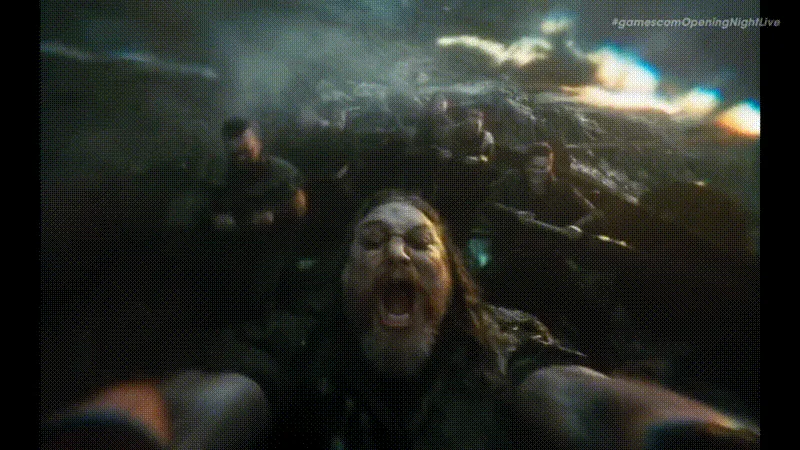
The Gamescom announcement trailer should similarly be understood as a cinematic introduction rather than a full demonstration of the strategy systems. Amplitude’s live action material was filmed at Nu Boyana Film Studios in Sofia with actors, practical scenery, custom props and visual effects. Production involved 25 actors, more than 100 extras and almost 150 crew members, with the film moving through nine historical periods. Those nine cinematic settings do not establish that Humankind 2 contains exactly nine playable eras, and imagery involving disasters or space should not automatically be interpreted as confirmation of corresponding gameplay mechanics.
Amplitude’s September 4 production breakdown explains that the film was created with agency partner BETC and visual effects studio LiveFX. Seven days of preparation preceded three shooting days, while ambitious effects sequences required months of post production. Its creative premise follows history through the eyes of a newborn, emphasizing how each generation inherits an existing world but can still change its future. That perspective gives the trailer a direct thematic connection to cultural inheritance, even though the film itself does not explain how that inheritance functions during play.
Official screenshots of Humankind 2 provide a more useful look at the actual interface. One shows a cultural selection screen called Crossroads, while others depict cities, coastlines, snowy regions and arid environments. However, screenshots cannot demonstrate campaign pacing, artificial intelligence behaviour or how smoothly the different strategy systems interact. A more informative demonstration would show a cultural decision being made, advance the campaign and reveal how that choice affects the empire later.
Amplitude has also emphasized that community feedback influenced the sequel from early development. The original Humankind received 15 major updates covering areas such as Independent People, resources, trade and naval battles, showing that the studio has previously made substantial changes beyond simply adding cultures. For Humankind 2, the meaningful evidence will be whether player feedback produces clearer decisions, stronger explanations and a greater variety of viable strategies.
That development history creates an important opportunity for the sequel: improvements that arrived separately in the first game can inform a more coherent starting point. Trade, diplomacy and cultural progression do not need to be judged only by how many options they contain. Their value also depends on whether one decision creates understandable consequences elsewhere. A trade agreement that helps explain a later cultural opportunity, for example, would connect economic activity with the history of a civilization. This is a design possibility rather than an announced rule, but it illustrates the kind of integration that could distinguish a sequel from another content expansion.

Humankind 2 Cultural Evolution, Climate and Empire Building Systems
Cultural development remains one of the defining ideas behind Humankind 2. The original game launched in 2021 with 60 cultures in its base roster and allowed players to combine cultures across successive eras while pursuing Fame as a measure of historical achievement. Later additions expanded the original game’s overall culture count to 86, but that number should not be confused with the launch roster planned for the sequel.
Humankind 2 retains the idea of an evolving cultural identity while introducing deeper progression and exclusive customs unlocked through cultural progression trees. The objective appears to be making successive cultures feel like chapters in the development of one civilization rather than disconnected replacements. The Crossroads interface provides additional clues by referring to a forthcoming Culture Chapter and grouping choices under categories including Common History, Shared Land and Foreign Heritage. Selecting another culture closes the current chapter at the end of the turn, although the precise requirements, costs and eligibility rules behind those categories have not yet been explained.
The distinction between selecting a culture and developing it is especially important. Choosing a new identity can provide an immediate change in direction, while a progression tree could make commitment within that identity matter over a longer period. As a design possibility, two empires could adopt the same culture yet pursue different customs, producing different strengths without requiring an entirely separate culture for every variation. The interest lies in the decisions within each chapter, not merely the number of available chapters.
There is also a balance to strike between specialization and flexibility. A civilization that has invested heavily in one approach should have reasons to continue developing it, but changing circumstances should make alternatives worth considering. Otherwise, cultural progression risks becoming either a fixed route chosen at the beginning or a series of temporary bonuses selected for immediate advantage. A successful middle ground would let earlier investments shape later choices without dictating every decision that follows.
Saqqaq, Etruscans and Scythians are among the cultures explicitly identified in announcement material for Humankind 2. The Crossroads screenshot additionally displays Scandinavians, Ancient Egyptians and Maya as pre release interface entries. Their presence does not establish the complete roster or confirm particular bonuses. Historical associations should likewise not be converted into assumed gameplay abilities until Amplitude publishes the corresponding mechanics.
For that reason, the eventual culture count will tell only part of the story. A smaller selection with distinct progression paths could offer more meaningful variety than a larger selection whose differences rarely affect decisions. The useful question is what adopting a particular culture asks the player to do differently: reconsider expansion, change economic priorities or approach neighbouring societies in another way. Those are criteria for evaluating the announced progression system, not descriptions of confirmed bonuses for the cultures shown so far.
The climate system in Humankind 2 adds another long term consideration. Amplitude has announced shifting biomes that can change the strategic map and force players to adapt cities and economies as historical ages progress. Official images already show snowy coastal regions and landscapes where greener terrain borders more arid areas, but still images cannot establish how quickly these changes occur or what specifically causes them.
The strategic importance of climate will depend on whether players receive enough information to prepare. A productive region becoming less reliable could theoretically encourage new trade relationships, alternative production or different settlement priorities, but such examples illustrate the potential of the system rather than confirm specific events. Environmental mechanics become strategically meaningful when players understand the danger early enough to make choices rather than simply suffering an unpredictable penalty.
One strategic possibility is that environmental uncertainty could change how players value concentration and diversification. Concentrating development in a highly productive area might deliver stronger immediate returns, while spreading investment across different regions could reduce dependence on any single environment. Neither approach should automatically be superior. The interesting choice would come from comparing current opportunities with the cost of preparing for conditions that may change later.
Resource protection could also become more than a question of military control. In a hypothetical campaign, maintaining access to an important supply might involve preserving dependable relationships or developing an alternative source before the original becomes less useful. Such situations would give diplomacy and economic planning a role in responding to environmental pressure. They would also make adaptation a continuing strategic process rather than a single emergency decision after a warning appears.
City building in Humankind 2 remains connected to the broader historical progression. Official screenshots depict substantial coastal settlements with cultivated areas, waterfront development and varied architectural styles, suggesting cities intended to visually accumulate history. However, those images do not confirm exactly which buildings persist after cultural changes or how older infrastructure interacts with later development.
Visual continuity could contribute to the same sense of accumulated history. A city becomes easier to care about when players can recognize the places where earlier decisions were made, even as its surroundings develop. The challenge is to combine that historical character with practical readability. Players should be able to distinguish important infrastructure, understand what a settlement contributes and identify where further investment would be useful without losing sight of the city as a place rather than a collection of statistics.
Diplomacy, commerce, technological development, alliances and warfare also remain within the sequel’s announced scope. Detailed treaty types, trade calculations, combat rules, reinforcement systems and peace negotiations have not yet been documented sufficiently to assume that the original game’s mechanics return unchanged. The most interesting possibility is stronger interaction between these systems, where environmental pressures, cultural decisions and foreign relationships create overlapping strategic problems instead of operating as isolated menus.
Amplitude is also promoting improved visuals and a modernized interface for Humankind 2. For a strategy game built around cumulative choices, interface quality will be particularly important. Cultural progression, environmental warnings and inherited characteristics need to explain both immediate consequences and longer term commitments clearly. Screenshots can demonstrate presentation, but actual usability, accessibility, text scaling, navigation efficiency and late campaign information management will require playable evidence.
One useful test of the interface would be whether a player returning to an older save can reconstruct the empire’s situation quickly. The immediate questions are practical: which decisions are urgent, what previous cultural investments still matter and where the economy is vulnerable. Presenting those connections clearly would help both experienced players managing complex campaigns and newcomers still learning the systems. The goal should be to make decisions easier to understand, not to remove the tradeoffs that make them interesting.

Humankind 2 vs Civilization 7, Playtests and What Comes Next
Comparisons between Humankind 2 and Civilization 7 are inevitable, particularly because both games now explore cultural continuity in more complicated ways. However, the comparison cannot simply be reduced to the claim that Humankind changes cultures while Civilization keeps one civilization throughout a campaign.
Civilization 7 changed substantially with its May 19, 2026 Test of Time update. Time Tested Civilizations allow players to retain one civilization across a campaign while preserving the option to change at age transitions, while Syncretism provides access to elements associated with other civilizations. The more useful comparison with Humankind 2 therefore concerns how each game handles continuity, inherited characteristics, player freedom and the strategic significance of cultural change.
The comparison is therefore more productive when framed around the decisions a player makes during a campaign. How much can an empire change direction? What remains distinctive after a transition? Does the player feel encouraged to experiment, or pressured to follow a narrow sequence? These questions separate the broad concept of changing civilizations from its practical implementation. Similar themes can produce very different experiences depending on pacing, restrictions and how much earlier choices continue to matter.
For Humankind 2, several questions will determine whether its revised approach succeeds:
- Do earlier cultural choices remain meaningful several chapters later?
- Are players given understandable reasons for why particular cultural transitions become available?
- Do exclusive customs meaningfully alter strategy rather than simply add more bonuses?
- Can environmental changes influence planning without making previous investment feel arbitrarily wasted?
- Do diplomacy, trade, warfare and city development respond meaningfully to cultural and environmental changes?
- Does a completed campaign feel like the history of one evolving society?
Amplitude’s planned pre release play opportunities for Humankind 2 could help answer these questions. Short tests may reveal whether the interface and introductory systems are understandable, while longer sessions would be needed to judge whether cultural progression and changing biomes remain interesting throughout a campaign. Useful feedback will depend on identifying specific problems rather than simply describing a mechanic as good or bad.
Testing the beginning, middle and end of a campaign would also reveal different kinds of problems. Early sessions can show whether players understand the purpose of their choices, but they cannot establish whether an initially attractive custom remains relevant much later. A middle game test could expose an overly dominant combination, while a late campaign session could reveal repetitive administration or decisions whose outcomes have already become predictable. Assessing the full journey requires more than confirming that the opening turns are enjoyable.
The studio’s approach to community feedback will therefore be particularly important. Players may agree that a system feels unsatisfying while disagreeing completely about why. One person may want fewer cultural decisions, while another may want the same number with clearer consequences. Effective iteration requires identifying the underlying problem rather than automatically implementing the most popular proposed solution.
For example, a report that a cultural transition feels confusing becomes more useful when it identifies the missing explanation. Was the player unable to understand why a culture was available, which benefits would remain or when the transition would happen? Likewise, a complaint about climate becomes more actionable when it distinguishes between unclear warnings, limited responses and consequences that arrive too quickly. These observations focus discussion on the experience players actually had rather than on broad preferences about complexity or realism.
For players following development of Humankind 2, Steam currently provides the simplest way to track the PC release through wishlisting, while Amplitude’s community updates remain important for detailed announcements. The most valuable future information will be a confirmed 2027 release date, specific pre release testing details, a complete explanation of cultural progression and extended gameplay showing one empire developing across several historical chapters.
Until those demonstrations arrive, Humankind 2 is best understood as an attempt to deepen the original game’s central idea rather than abandon it. Cultural evolution remains fundamental, but progression trees, exclusive customs, changing biomes and a redesigned presentation are intended to make the history of an empire feel more continuous. Whether those systems successfully turn successive eras into meaningful chapters of the same civilization will be the central question as the sequel approaches its 2027 PC release.

Frequently Asked Questions (FAQs)
- Has Humankind 2 been officially announced?
Yes. Amplitude Studios officially revealed Humankind 2 during Gamescom 2026 Opening Night Live on August 25, 2026. The announcement confirmed that the studio is developing another historical turn based strategy game focused on cultural development, empire building and a changing world, with the sequel currently targeting a PC release in 2027. - What is the Humankind 2 release date?
The confirmed release window is 2027, but Amplitude has not announced a specific month, quarter or day. Until the studio provides a more precise schedule, any exact dates appearing elsewhere should be treated as unverified rather than official release information. - Is Humankind 2 coming to consoles?
PC is currently the only confirmed platform. The available announcement material does not establish PlayStation 5, Xbox Series X|S or Nintendo Switch 2 versions. Console releases could potentially be announced later, but their absence from the current information means players should not assume they are already planned. - Which cultures are confirmed for Humankind 2?
Saqqaq, Etruscans and Scythians are among the cultures specifically named in the reveal information. Official pre release interface material also shows additional cultural names, but Amplitude has not revealed the complete launch roster or fully explained the abilities and progression options associated with every culture. - What are exclusive customs in Humankind 2?
Exclusive customs are part of the new cultural progression trees and are intended to help shape an empire’s identity as it develops through history. They appear to provide another way for cultural choices to influence long term progression, although Amplitude has not yet published a complete list of customs, requirements or numerical effects. - How does climate affect Humankind 2 gameplay?
Climate is designed to change the strategic environment as a campaign progresses, including shifting biomes that can affect the world around established cities. Players will need to consider how their settlements and economies adapt to changing conditions, although the precise causes, transition speeds and complete range of environmental consequences have not yet been detailed. - Does the announcement trailer show actual gameplay?
The announcement trailer is primarily a cinematic production created with live action footage, practical sets and visual effects rather than a complete gameplay demonstration. Official screenshots separately show actual environments and interface elements such as the Crossroads cultural selection screen, but extended gameplay is still needed to demonstrate how the major systems function together. - Will Humankind 2 have multiplayer?
Yes. The official Steam listing currently identifies both single player and multiplayer support. However, Amplitude has not yet established the final multiplayer player count or provided enough information to confirm features such as multiplayer campaign structure or cross platform functionality. - Can players try Humankind 2 before release?
Yes, Amplitude has said that several opportunities to play Humankind 2 are planned before its 2027 release so the studio can gather community feedback. A complete schedule, eligibility requirements and access procedure have not yet been announced, so this should not be interpreted as confirmation of an open beta available to everyone. - Does wishlisting Humankind 2 guarantee playtest access?
No. Adding Humankind 2 to a Steam wishlist helps players track the game and receive applicable availability notifications, but it does not automatically provide access to development tests. Playtest invitations, registrations or eligibility requirements will need to be announced separately by Amplitude.

Conclusion
Humankind 2’s Gamescom announcement establishes a clear development direction: a historical strategy sequel planned for PC in 2027, with cultural progression and adaptation to a changing world among its principal ideas. The reveal provides a foundation for understanding the project, but not enough evidence to judge a finished campaign.
The most promising element is the possibility that culture, geography, and empire development will reinforce one another. A society’s earlier choices could remain meaningful while its surroundings create new problems and opportunities. That is a compelling design goal, provided the resulting decisions are understandable and strategically varied.
The next stage of coverage should therefore focus less on predicting a competition winner and more on examining how the systems work. Extended gameplay, transparent explanations, and productive testing will matter more than the scale of the reveal.
Humankind 2 has an identifiable proposition. Whether it fulfills that proposition will depend on how convincingly it turns the passage of history into decisions worth making.
Sources and Citations
- Amplitude Studios, August 25, 2026 : Official announcement introducing HUMANKIND 2 and its approach to historical strategy, including city development, diplomacy and cultures shaped by heritage and the environment. It also confirms plans to let players try the game before release so their feedback can help guide development. AMPLIFIERS – powered by Games2Gether
Citation: HUMANKIND™ 2 Revealed. (Amplitude Studios) - Amplitude Studios, August 24, 2026 : Fifth anniversary retrospective reviewing the original HUMANKIND’s development, including 15 major updates and an expanded roster of 86 cultures. It explains how community feedback influenced improvements to trade, resources, independent peoples and naval battles, providing background on the experience Amplitude brings to the sequel. AMPLIFIERS – powered by Games2Gether
Citation: Celebrating 5 Years of Humankind: Past, Present and Future. (Amplitude Studios) - Amplitude Studios, September 4, 2026 : Behind the scenes account explaining how the announcement trailer combined live action filming at Nu Boyana Film Studios with visual effects, in collaboration with BETC and LiveFX. The article describes the actors, physical sets, specially created props and post production work used to recreate different historical eras. AMPLIFIERS – powered by Games2Gether
Citation: Behind The Scenes: Making HUMANKIND™ 2 Trailer. (Amplitude Studios) - Amplitude Studios / Steam, HUMANKIND 2 Official Listing : Dedicated store page listing the planned 2027 release and describing the game’s evolving cultures, empire development and changing climate. It also provides developer and publisher information, language support, listed features and a wishlist option, making it a direct reference for the game’s announced specifications and availability. Steam Store
Citation: HUMANKIND™ 2 on Steam. (Steam) - Steamworks, Wishlists Documentation : Valve’s official guidance explaining how players use wishlists to track games and receive notifications about releases, Early Access launches and qualifying discounts. It also describes notification requirements and preferences, helping explain what adding HUMANKIND 2 to a Steam wishlist does and which announcements can trigger alerts. Steamworks
Citation: Wishlists. (Steamworks) - National Museum of Denmark, The Viking Age : Historical reference covering Viking society through topics such as maritime travel, trade, clothing, weapons, religious beliefs and archaeological discoveries. Its supporting articles provide context for discussing Viking imagery and everyday life, helping explain the historical background behind scenes associated with this period. National Museum of Denmark
Citation: The Viking Age. (National Museum of Denmark) - The Metropolitan Museum of Art, Ancient West Asian Art : Official collection overview for the department previously known as Ancient Near Eastern Art, featuring objects from cultures including the Sumerians and Assyrians. Its collection highlights, research and educational material provide historical context for discussing ancient civilizations, artistic traditions and the objects those societies produced. The Metropolitan Museum of Art
Citation: Ancient West Asian Art. (The Metropolitan Museum of Art) - British Museum, Mesopotamia : Museum reference highlighting Mesopotamian material culture through archaeological objects such as jewellery, pottery and musical instruments. It provides background for discussing ancient societies and their artistic traditions, serving as a historical companion to the game coverage rather than a source of announcements about HUMANKIND 2. British Museum
Citation: Mesopotamia, 6000 to 1500 BC. (British Museum) - 2K / Firaxis Games, May 19, 2026 : Official announcement explaining Civilization VII’s Test of Time update, including the option to keep one civilization throughout a campaign, a revised victory system and the introduction of Triumphs. It provides a documented comparison point for discussing cultural progression and changing design approaches within historical strategy games. 2K Newsroom
Citation: Sid Meier’s Civilization VII Test of Time Update Now Available. (2K Newsroom) - GamesRadar+, Amplitude Studios Interview : Interview examining Amplitude’s early involvement with Early Access and how player expectations have changed as the model became more established. It also discusses the challenges of experimentation, community feedback and competition with Civilization VII, providing context for the studio’s approach to Endless Legend and HUMANKIND. GamesRadar+
Citation: How the 4X Devs Behind Endless Legend and Humankind Went from Early Access Pioneers to Civ 7 Challengers. (GamesRadar+) - PC Gamer, August 25, 2026 : Reports the audience speculation that HUMANKIND 2’s announcement trailer used AI generated imagery and includes Amplitude’s response describing its live action production. The article also notes that PC Gamer viewed production photographs showing actors and partial sets, adding supporting context to the studio’s explanation. PC Gamer
Citation: Humankind 2 Trailer Accused of Being “AI Slop,” Studio Says Nope: “Real Actors, Practical Sets, and Custom Made Props”. (PC Gamer)
Recommendations
- Teenage Mutant Ninja Turtles Fans Can Score Hundreds Of Comic Issues in This Massive $25 Bundle (What You Get + How to Redeem)
- How to Increase Your Backpacks Inventory Size in Marathon: Best Ways to Get More Slots Fast
- Game of Thrones: War for Westeros Gameplay Coming to Gamescom 2026 Opening Night Live
- Palworld 1.0 Pal Breeding Combinations
- Hunter’s Moon Release Date: Eerie Fantasy Indie Arrives October 26
- Edenfall: Legacy of the First Wardens, Play As Human, Wolf, Raccoon & Raven in a Shapeshifting Action Adventure Game Releasing in 2026
- How To Upgrade All Moonlight Peaks Tools
- Sony Gives More Details on the MARVEL Tōkon: Fighting Souls Open Beta: Dates, Characters, Modes, and How to Join
- Cairn On the Trail: Deep Water DLC Delayed Indefinitely
- Marvel’s Spider-Man 2 Is Getting the Brand New Day Suit for Free



































































































