








In This Article (9 sections)
What is New in QuadSpinner Gaea 2.3 Update and Release Overview
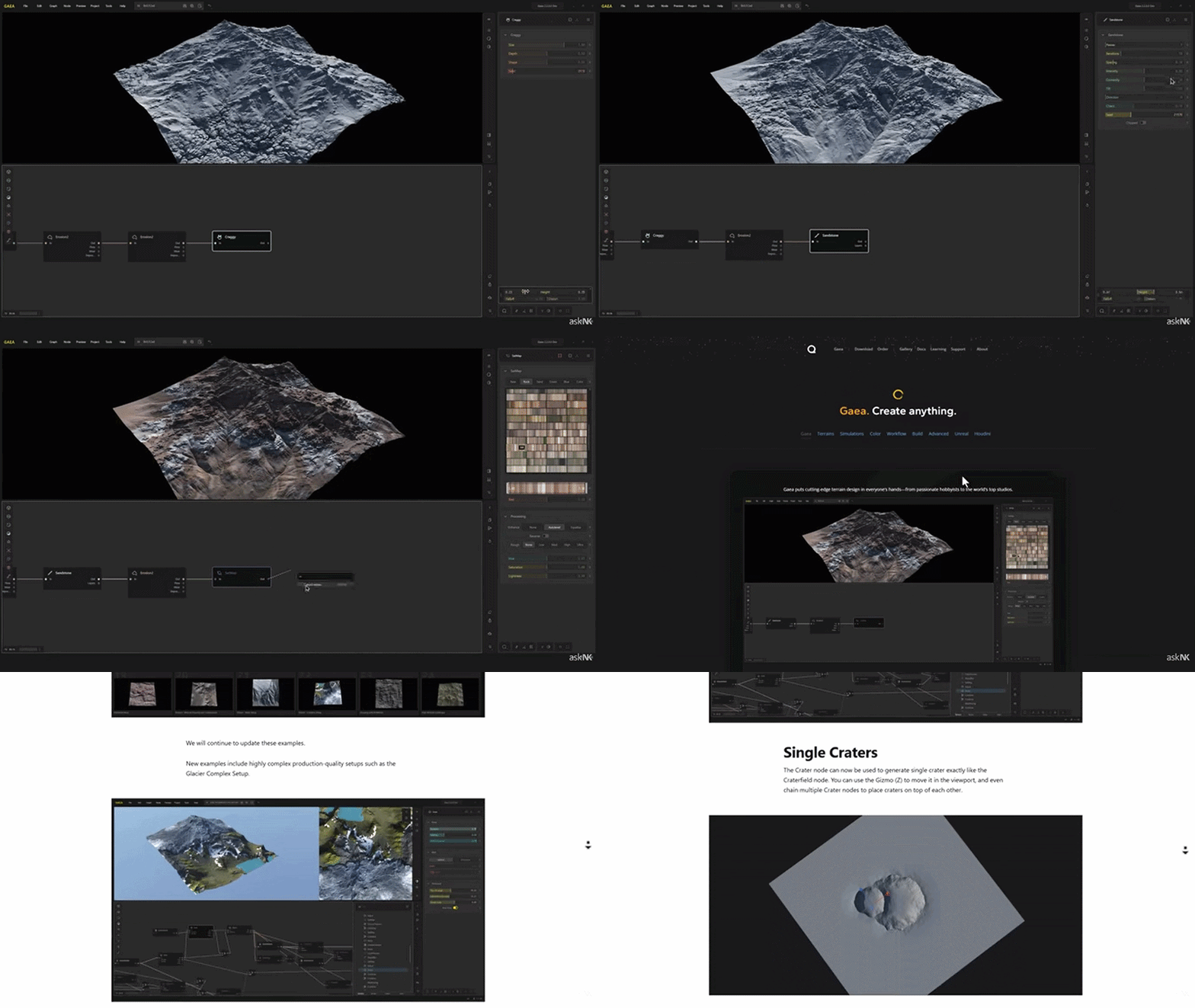
The release of QuadSpinner Gaea 2.3 marks one of the most significant updates to the procedural terrain generation ecosystem developed by QuadSpinner. This version of the Gaea terrain generator introduces a combination of performance upgrades, simulation refinements, and entirely new workflow systems designed to streamline large-scale world creation for artists, studios, and environment designers.
At its core, Gaea 2.3 focuses on three major pillars: automation, realism, and scalability. The update improves how terrain is generated procedurally through better erosion systems, introduces macros for faster node-based workflows, and enhances rendering and baking capabilities for high-resolution outputs. For digital artists working in games, film, or simulation environments, this update significantly reduces iteration time while increasing control over terrain fidelity. The emphasis is not just on adding features, but on improving how efficiently complex terrain graphs can be built, modified, and reused.
The Gaea 2.3 release continues the evolution of the Gaea 2 generation, which has steadily shifted toward a more production-ready procedural terrain pipeline. It is positioned as a refinement release rather than a complete overhaul, enhancing existing systems such as erosion, node-based workflows, and region-based terrain processing without introducing disruptive changes.
Key highlights of the version include:
- Introduction of macros for node graph automation
- Major improvements to Erosion2 simulation
- Expanded region system capabilities
- New Lake node enhancements
- Performance optimizations for large terrain builds
- Stability improvements across heavy node graphs
- 16K terrain baking support
This update continues to reinforce Gaea as one of the most powerful terrain tools in modern procedural content creation pipelines.

Macros, Automation, and Erosion Improvements in Gaea 2.3
One of the most impactful additions in QuadSpinner Gaea 2.3 is the introduction of the Macros System. This feature allows users to group multiple nodes into reusable procedural blocks, significantly reducing complexity in large graphs. Macros function as encapsulated logic units that can be reused across multiple projects or terrain stages, so instead of rebuilding repetitive node structures, artists can package them into a single macro node.
Benefits of the Macros System include:
- Reusable procedural terrain logic
- Reduced node graph clutter
- Faster iteration across multiple terrains
- Easier collaboration in team environments
- Standardization of terrain workflows
This system is particularly useful in production environments where consistency and speed are essential. Studios can create standardized terrain-building modules and deploy them across multiple projects without rebuilding logic from scratch.
Automation is also a central theme in the Gaea 2.3 update, extending beyond macros into more intelligent procedural handling across node chains. These improvements allow terrain systems to respond dynamically to input changes while reducing the need for constant manual intervention, letting artists focus more on creative decisions rather than technical maintenance.
Automation improvements include:
- Smarter node dependency resolution
- Reduced manual recalculation requirements
- Improved caching for heavy graphs
- Faster preview updates during editing
- Better handling of multi-region terrain systems
In production pipelines, this automation translates directly into faster world-building cycles and more predictable terrain outputs.
Erosion remains one of the defining features of Gaea, and in version 2.3 it receives substantial upgrades through the Erosion2 system. The improvements focus on realism, control, and performance, producing more natural terrain formations while offering greater flexibility to artists.
Key erosion improvements include:
- More realistic sediment transport behavior
- Improved hydraulic erosion accuracy
- Faster simulation times on complex terrains
- Better integration with region-based workflows
- Enhanced stability for large-scale simulations
These refinements make terrain generation feel more physically grounded, especially when simulating mountain ranges, river valleys, and coastal landscapes. The system now better mimics natural geological processes, allowing for more believable world-building in both games and cinematic environments.

Large-Scale World Building, Region Systems, and Node Workflow Enhancements
Large-scale terrain generation is one of the most demanding tasks in procedural design, and Gaea 2.3 introduces several optimizations that make this significantly more manageable. The update improves memory efficiency during large graph evaluation, multi-region terrain processing, seamless blending between terrain zones, optimized caching for high-resolution outputs, and faster preview rendering for large worlds. These improvements allow creators to build entire continents or planetary surfaces with fewer performance bottlenecks, helping game studios developing open-world environments bridge the gap between procedural generation and production-ready assets.
The Region System in Gaea, which allows artists to isolate and control specific terrain areas, has also been significantly refined for both usability and performance. These updates make it easier to manage complex terrain compositions where multiple biomes or geological zones need to coexist within a single world.
Region System enhancements include:
- Faster region evaluation
- Improved masking precision
- Better blending between adjacent regions
- Reduced computation overhead in complex graphs
- Enhanced support for layered region workflows
Node-based workflows are at the heart of Gaea, and version 2.3 introduces multiple enhancements that improve usability and simulation accuracy. These changes help ensure that even highly complex node graphs remain responsive and manageable, especially for advanced users working with demanding terrain systems.
Key node workflow updates include:
- Improved node evaluation speed
- Cleaner dependency handling
- More stable graph execution under heavy loads
- Better preview consistency
- Enhanced compatibility between simulation nodes
For advanced users, this means fewer crashes, more predictable outputs, and smoother iterative design workflows.
Lake Node, Erosion2 Modes, and ColorThreshold Enhancements in Gaea 2.3
The Lake Node receives new functionality in Gaea 2.3, improving how water bodies are generated and integrated into terrain systems. These enhancements allow lakes to integrate more naturally into terrain environments, especially in mountainous or valley-based landscapes, resulting in more believable hydrological systems within procedural worlds.
Lake Node enhancements include:
- More natural shoreline blending
- Improved depth gradient control
- Better interaction with erosion systems
- Enhanced procedural lake shaping
- Increased realism in water distribution
One of the most technically important upgrades in Gaea 2.3 is the enhancement of Erosion2, which now includes new simulation modes and deposition behaviors. Two key additions stand out: Extra Deposits and No Erosion Mode.
Extra Deposits allows erosion to deposit more material in targeted areas, creating richer sediment accumulation patterns. It improves realism in river deltas, valleys, and floodplains. No Erosion Mode allows terrain to bypass erosion while still using parts of the system, making it useful for stylized terrains or controlled procedural designs where erosion would otherwise distort intended shapes. Together, these features give artists greater control over how terrain evolves during simulation.
The new ColorThreshold Node introduces advanced control over terrain masking and color-based filtering. It allows artists to isolate terrain features based on color values, create procedural masks from height or slope data, refine biome transitions, and control material blending with higher precision. It is especially useful in workflows involving texturing, biome generation, and environment layering, expanding Gaea 2.3’s procedural toolkit for both technical artists and environment designers.

16K Baking, Stability Fixes, and UI Improvements in Gaea 2.3
High-resolution terrain output is essential for modern production pipelines, and Gaea 2.3 introduces native support for 16K terrain baking. This upgrade enables extremely detailed heightmap exports, cinematic-quality terrain rendering, improved displacement mapping for film pipelines, and high-resolution game world preparation. Despite the increase in resolution, performance optimizations ensure that baking remains efficient and stable, making this feature particularly valuable for AAA game studios and VFX pipelines requiring ultra-detailed terrain assets.
Stability has also been a major focus in this update. The development team at QuadSpinner has addressed multiple long-standing issues to improve reliability across complex production workflows.
Stability fixes include:
- Reduced crash frequency in heavy graphs
- Improved memory handling
- Better error recovery in node chains
- Fixed inconsistencies in simulation outputs
- Enhanced compatibility across complex workflows
These fixes ensure that production environments can rely on Gaea 2.3 for long-term projects without unexpected interruptions.
User experience improvements in Gaea 2.3 focus on making the software more intuitive and efficient for daily use. Enhancements include cleaner node interface organization, improved zoom and navigation controls, faster access to commonly used tools, better visual feedback during simulations, and streamlined workflow shortcuts. These improvements reduce friction in the creative process and make it easier for both beginners and advanced users to navigate complex terrain graphs.

Frequently Asked Questions (FAQs)
- Who is Gaea 2.3 for?
Gaea 2.3 is designed for environment artists, VFX studios, game developers, and technical artists who need procedural terrain generation tools. It is especially useful for teams building large-scale worlds, cinematic landscapes, realistic terrain simulations, or reusable terrain workflows. - What is QuadSpinner Gaea 2.3?
QuadSpinner Gaea 2.3 is a major update to the Gaea procedural terrain generation software. It introduces new features, performance optimizations, simulation improvements, and workflow refinements designed to help artists, studios, and environment designers create complex terrains more efficiently. - What is the Macros System in Gaea 2.3?
The Macros System allows users to group node networks into reusable procedural components. This helps reduce clutter in large graphs, speeds up repetitive workflows, and makes it easier to standardize terrain-building logic across multiple projects or production teams. - Does Gaea 2.3 improve erosion?
Yes, Gaea 2.3 significantly enhances Erosion2 with better realism, control, and performance. The update improves sediment behavior, hydraulic erosion accuracy, stability in large simulations, and integration with region-based workflows, making terrain formations feel more natural and physically grounded. - Can Gaea 2.3 handle large worlds?
Yes, Gaea 2.3 improves large-scale terrain processing through better memory efficiency, multi-region handling, optimized caching, and faster preview rendering. These improvements make it easier to work on large environments such as open worlds, continents, or complex multi-zone terrain systems. - What is the ColorThreshold Node?
The ColorThreshold Node is a new node used for filtering terrain based on color and data values. It helps artists create procedural masks, isolate terrain features, refine biome transitions, and control material blending with greater precision in texturing and environment-layering workflows. - Does Gaea 2.3 support high-resolution output?
Yes, Gaea 2.3 supports up to 16K terrain baking. This allows users to export extremely detailed heightmaps and prepare high-resolution terrain assets for cinematic rendering, displacement workflows, and demanding game production pipelines. - What is No Erosion Mode?
No Erosion Mode is a feature in Erosion2 that allows terrain to bypass erosion effects while still using parts of the erosion system. It is useful for stylized terrains or controlled procedural designs where erosion might otherwise distort the intended terrain shape. - Is Gaea 2.3 better for game development?
Yes, Gaea 2.3 improves workflows for game development, especially for open-world and AAA environments. Its performance optimizations, region system improvements, large-world support, reusable macros, and high-resolution baking features all help teams create production-ready terrain assets more efficiently. - Does Gaea 2.3 improve performance?
Yes, Gaea 2.3 includes multiple performance and caching optimizations. These include faster graph evaluation, improved node dependency handling, better memory efficiency, faster previews, and more stable execution in heavy node graphs.

Conclusion
The QuadSpinner Gaea 2.3 update represents a major step forward in procedural terrain technology. With its introduction of macros, improved erosion systems, expanded region controls, and high-resolution output capabilities, it strengthens Gaea’s position as a leading tool in digital world creation.
By focusing on automation, realism, and scalability, this version provides both technical and creative enhancements that benefit solo artists and large production teams alike. It is not just an incremental update but a meaningful evolution in how procedural landscapes are designed and deployed.
Sources and Citations
- QuadSpinner Official Website
https://quadspinner.com/ - Gaea Terrain Generator Documentation
https://quadspinner.com/gaea/ - QuadSpinner Gaea Product Information
https://quadspinner.com/gaea/features/ - Procedural Terrain Generation Overview
https://en.wikipedia.org/wiki/Procedural_generation
Recommended
- Paralives: How to Install and Use Mods, Complete Beginner’s Guide, Setup, Files, and Troubleshooting
- Analyst: Premium Games Are Becoming a Hobby for Wealthy Individuals as AAA Prices Rise
- A Petri Dish Full Of Human Brain Cells Just Learned How To Play Doom: DishBrain, Cortical Labs CL1, and What It Means for Biocomputers
- Everything at PlayStation’s Big Summer State of Play Showcase 2026: Full Game List and Highlights
- New Invincible Season 4 Trailer Teases the Debut of Ultimate Viltrumite Villain Thragg
- PC Gaming Revenue Outside the Top 20: Why Cyberpunk 2077, Elden Ring, and Skyrim Keep Selling
- How to Make Gen Z Slang Meme Videos with MetaHuman: Brainrot, Sigma, and Gooning-Style Content for Social Media
- Where to Find and How to Make 3D Hair Assets for Games and Anime Characters Using Blender and Unity
- InKONBINI: One Store. Many Stories Has Launched on PC and Console, Feel the Vibes of 1990s Japan in this Cozy Slice-of-Life Sim
- World Creator 2026.4 Released: New Free Community Edition, Features, Performance Boosts & What’s New



































































































