








In This Article (8 sections)
Deep Rock Galactic: Rogue Core Enhancements, Expenite Upgrades, and Best Early Choices
Enhancements in Deep Rock Galactic: Rogue Core function as long-term progression modifiers that shape how effectively a player performs across runs. They influence build identity, combat efficiency, and the balance between survivability, damage, and utility. Unlike temporary mission buffs, enhancements are tied to broader progression and are intended to provide lasting improvements. Survivability-focused options can improve health regeneration, shield capacity, armor toughness, or damage mitigation, while offensive enhancements can increase weapon damage, elemental effects, critical hit chance, or weakpoint multipliers. Utility upgrades in Rogue Core can improve mobility, resource efficiency, ammo economy, and interaction speed with objectives. Because Rogue Core is built around incremental progression, early enhancement choices can strongly affect how smoothly later missions unfold.
The Expenite system in Rogue Core is the main currency-based method for unlocking these enhancements. Expenite is earned through mission completion, objectives, and bonus performance rewards such as enemy kills, exploration milestones, and team contributions. Players then spend it across different enhancement categories, with higher tiers generally costing more and requiring more deliberate choices. Since the system is designed around trade-offs, players cannot optimize every area at once and must decide whether to specialize in a particular strength or maintain a more balanced build.
Early Expenite spending in Rogue Core is especially important because lower-tier upgrades often provide a stronger cost-to-impact ratio than later improvements. This makes careful investment valuable for accelerating progression, particularly because stronger enhancements can make higher-difficulty missions more manageable and improve future Expenite earnings.
For beginners in Rogue Core, the strongest early enhancements are those that improve consistency and reduce the consequences of mistakes. Passive health regeneration can reduce downtime and lower dependence on healing resources, while faster shield recharge provides extra protection during unexpected encounters. Basic weapon upgrades such as improved damage, reduced recoil, better accuracy, and faster reload speeds can make combat more reliable without increasing mechanical complexity. Resource-focused enhancements are also valuable early, especially increased ammo capacity and reduced tool consumption, because they extend mission uptime and reduce the risk of failing due to depleted supplies. Prioritizing these stable, broadly useful upgrades before more specialized options can create a smoother progression path and make later build decisions easier to manage.
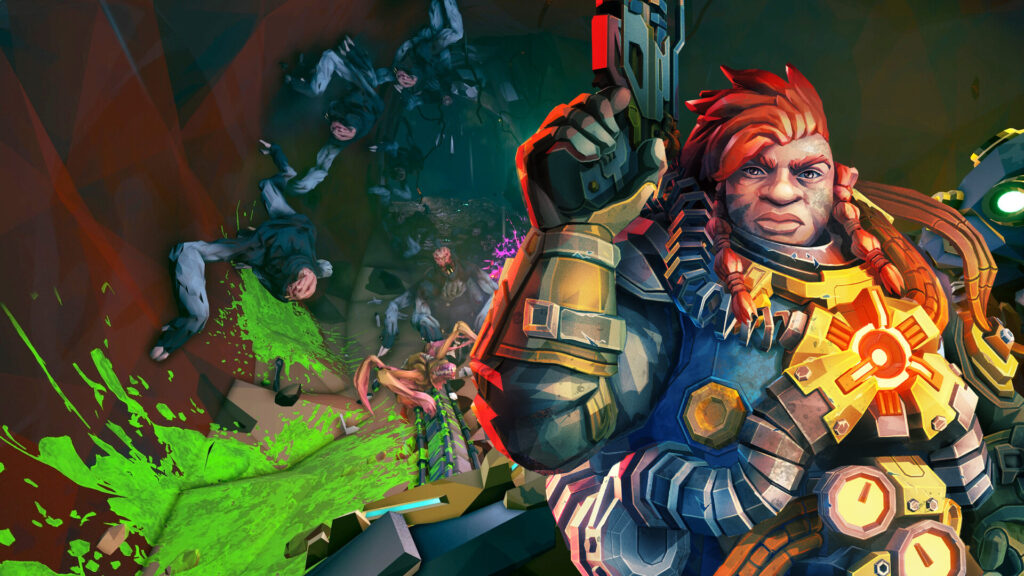
Deep Rock Galactic: Rogue Core Best Defensive, Damage, and Early Meta Enhancements
Defensive enhancements are among the strongest early investments in Deep Rock Galactic: Rogue Core because they improve survival consistency and reduce the likelihood of mission failure. Increased armor rating provides broad protection against incoming damage, while faster shield regeneration and greater shield capacity help players recover more effectively after taking hits. Environmental resistance becomes increasingly valuable in deeper cave systems where explosions, terrain hazards, and toxic conditions create additional threats. Damage mitigation after taking a hit can also prevent enemies from quickly overwhelming a weakened player. For beginners, solo players, or inexperienced teams in Rogue Core, these defensive upgrades create a reliable foundation before more aggressive scaling becomes necessary.
Once basic survivability is established, damage enhancements in Rogue Core become important for improving mission speed and overall efficiency. Flat weapon damage increases are especially useful because they provide consistent benefits across different loadouts, while elemental damage scaling can add fire, ice, or electrical effects that become stronger when combined with status-based synergies. Bonuses against specific enemy types, including armored targets or swarms, can also provide strong value when those threats appear frequently. Rather than relying on a single large offensive upgrade, fast-scaling builds often combine several smaller damage bonuses to improve total DPS through stacking effects.
Critical hit and weakpoint enhancements offer some of the highest offensive potential for precision-focused builds in Rogue Core. Critical hit chance increases how often amplified damage occurs, while critical hit damage improves the multiplier when those hits trigger. Weakpoint bonuses reward accurate targeting by increasing damage against vulnerable enemy areas. When combined, these systems can significantly reduce boss kill times and improve performance in more demanding missions. They are particularly effective with precision weapons such as rifles, precision cannons, and sniper-style tools, where accurate aim allows players to take full advantage of the bonuses.
Choosing between survival and damage in Rogue Core depends on experience, playstyle, and team composition. Beginners generally benefit more from defensive upgrades first because staying alive supports more consistent Expenite gains and reduces failed runs. After reaching a comfortable level of survivability, shifting toward offensive enhancements can improve progression speed. More experienced players may use a hybrid approach, taking only enough defense to remain stable before investing heavily in damage. Cooperative teams can also change the balance, since players supported by healing or defensive teammates may be able to prioritize offense earlier.
Several enhancements in Rogue Core can feel especially powerful during early access because of their scaling and current balance. Passive regeneration stacking can provide continuous health recovery, cooldown reduction increases access to high-impact abilities, and ammo efficiency extends mission duration without sacrificing damage output. Movement speed can also provide substantial value by improving positioning, exploration, and escape options. These upgrades may become central to early meta strategies, although their relative strength can change as balance adjustments are introduced.

Deep Rock Galactic: Rogue Core Enhancement Synergies, Co-Op Builds, and Early Upgrade Priorities
R.E.P.D. upgrade selection should guide enhancement choices because the two systems work best when they support the same build direction. R.E.P.D. paths can push a character toward offense, defense, or utility, with defensive choices potentially strengthening shield-focused enhancements while offensive paths may improve critical hit or elemental damage scaling. Enhancements should therefore be selected with long-term R.E.P.D. goals in mind rather than treated as isolated upgrades. Aligning both systems helps avoid wasting Expenite on bonuses that do not contribute to the intended build and can create a higher overall performance ceiling.
For early progression, the most broadly useful enhancements can be grouped by consistency. S-tier options include health regeneration, shield recharge improvements, flat damage boosts, and ammo efficiency because they benefit most builds regardless of mission type. A-tier choices such as elemental damage scaling, reload speed, and movement improvements remain highly effective but depend more on specific loadouts or situations. B-tier upgrades include niche resistances, smaller utility bonuses, and enemy-specific damage effects that may not provide value in every mission. Situational enhancements are not necessarily weak, but their usefulness depends heavily on team composition, mission conditions, or particular enemies.
Co-op play changes these priorities by increasing the value of support, crowd control, and shared survivability. Healing amplification can improve team sustainability, while shield-sharing and damage reduction effects help groups survive high-pressure fights. Crowd control enhancements that slow or stagger enemies reduce pressure during swarm events and benefit the entire team rather than a single player. Resource-sharing effects, including improved ammo distribution efficiency, can also strengthen team coordination. Hybrid builds that combine moderate damage with useful support effects generally provide more value in cooperative runs than builds focused entirely on individual output.
Several common mistakes can weaken early progression. Over-investing in niche bonuses too soon reduces consistency across different missions, while pursuing pure damage without enough survivability can increase failure rates and interrupt Expenite gains. Fragmented enhancement choices also limit scaling when individual bonuses do not support one another. Resource efficiency is another area players can overlook, even though ammo and tool consumption become increasingly important during longer missions. Avoiding these mistakes creates a more stable build and makes later specialization easier.
Weapon-focused builds benefit most from combinations that improve damage, uptime, and precision together. Stacking flat damage with critical hit bonuses increases offensive potential, while reload speed and ammo efficiency improve sustained DPS by reducing interruptions. Elemental builds become stronger when status effects are combined with damage-over-time enhancements, allowing layered damage to build during longer fights. Precision setups gain the most from pairing weakpoint damage with critical hit chance, creating high burst potential when accurate shots consistently reach vulnerable enemy areas.

How to Optimize Expenite Spending in Early Rogue Core Runs
Efficient Expenite spending in Deep Rock Galactic: Rogue Core depends on balancing immediate survivability with long-term build growth. Early investments should focus on broadly useful enhancements that provide reliable value across different mission types rather than highly specialized bonuses. Spreading Expenite across too many upgrade paths can weaken overall progression, so committing to one primary build direction usually creates stronger synergy and allows important upgrades to come online faster.
It can also be worthwhile to save Expenite for milestone enhancements that provide a noticeable increase in performance instead of spending everything on small incremental improvements. Prioritizing upgrades with the strongest impact helps players move from early-game stability into more powerful mid-game builds without wasting resources. Careful Expenite management therefore plays a major role in determining how quickly a build becomes consistent, efficient, and capable of handling more demanding missions.
Frequently Asked Questions (FAQs)
- What are the best first enhancements in Rogue Core?
The best first enhancements are those that improve survivability, consistent damage, and resource efficiency. Health regeneration and shield-related upgrades can make early runs more forgiving, while flat damage increases provide reliable offensive value across different loadouts. Ammo efficiency is also useful because it allows players to stay effective for longer without running into resource problems during extended missions. - How does Expenite work in Rogue Core?
Expenite is a progression currency used to unlock and improve enhancements that strengthen combat performance over time. Because players cannot maximize every upgrade path immediately, spending decisions should support a clear build direction rather than spreading resources across too many unrelated bonuses. Early investments are especially important because they can improve both survival and future progression efficiency. - Should I focus on damage or survival first?
Survival is generally the better priority during early progression because staying alive consistently helps prevent failed runs and protects Expenite gains. Once health, shields, or other defensive systems feel reliable, shifting into damage upgrades becomes more valuable because faster kills improve mission efficiency. More experienced players can use a hybrid approach and invest only enough in defense to remain stable. - What are the strongest early game enhancements?
Health regeneration, shield improvements, flat damage bonuses, and ammo efficiency are among the strongest early choices because they provide benefits across many builds and mission types. Regeneration and shield upgrades reduce the consequences of mistakes, while flat damage helps clear enemies more quickly. Ammo-related enhancements also reduce the risk of becoming ineffective during longer encounters. - Are critical hit builds viable early?
Yes, but they work best when supported by weakpoint and accuracy enhancements. Critical hit chance alone can be inconsistent, while combining it with bonuses that reward precise targeting improves both reliability and burst damage. These builds are especially effective with precision-focused weapons that can regularly hit vulnerable enemy areas. - What is the Expenite system used for?
The Expenite system supports long-term progression by allowing players to purchase and upgrade enhancements. These improvements can strengthen survivability, weapon performance, mobility, resource management, or other parts of a build. Since stronger tiers can become more expensive, careful spending helps players reach important upgrades without wasting currency on bonuses that do not support their intended playstyle. - Do enhancements affect co-op gameplay?
Yes. Some enhancements provide individual benefits, while others become especially valuable in team-based runs because they improve shared survivability, crowd control, or resource efficiency. Healing amplification, damage reduction effects, and crowd control bonuses can reduce pressure on the entire group. Coordinating enhancement choices with teammates can also prevent unnecessary overlap between roles. - What is the best co-op enhancement type?
Support and healing enhancements are particularly effective in co-op because their benefits can improve the team’s overall sustainability rather than helping only one player. Shield-sharing, healing amplification, and damage reduction effects can make difficult fights more manageable. Crowd control and resource-sharing improvements are also valuable when the team needs better swarm management or more efficient ammo use. - How do I avoid bad enhancement choices?
Avoid spending too much Expenite on niche bonuses during the early game, especially upgrades that only work against specific enemies or under limited conditions. Prioritize broadly useful improvements such as survivability, flat damage, ammo efficiency, and other bonuses that support your main build direction. It is also important to consider synergy so that your enhancements strengthen one another instead of creating a fragmented build. - What is the fastest way to progress in Rogue Core?
Start by building enough survivability to complete missions consistently, then add damage and efficiency upgrades to improve clear speed and resource use. Focus Expenite on one main progression path rather than spreading it across too many unrelated upgrades. As your build becomes more stable, stronger offensive and synergistic enhancements can help you transition into more demanding missions more efficiently.

Conclusion
Deep Rock Galactic: Rogue Core enhancement progression is built around strategic decision-making, where early investments determine long-term performance. Understanding Expenite allocation, synergy optimization, and build specialization allows players to maximize efficiency across all mission types. Prioritizing survivability, followed by scalable damage enhancements, ensures stable progression and faster advancement through early and mid-game content. Proper synergy between weapon builds, R.E.P.D. upgrades, and cooperative strategies further enhances overall effectiveness and mission success rates.
Sources and Citations
- Official Deep Rock Galactic Wiki
- Ghost Ship Games Official Website
- Reddit: Deep Rock Galactic Community Guides and Discussions
- Game Developer: The Fundamentals of Game Progression
- GDC Vault: Slay the Spire Metrics Driven Design and Balance
Recommendations
- Frozen 3 First Footage Reveals New Villain and Olaf’s Love Interest
- Hair Cards vs Strands: Performance, Quality, and Workflow for 3D Hair in Unreal Engine 5, Unity HDRP, and Blender
- Anya Taylor-Joy Joins The Lord of the Rings: The Hunt for Gollum as New Elf Seren – Everything We Know
- Miris WebXR Car Configurator Streams HDR-Grade Fidelity Across Devices Using a Single 1.2GB Asset With No Cloud GPU Per Viewer
- Soft Body Physics Simulation: Techniques, Algorithms, and Real-Time Workflows
- Zero Parades: for Dead Spies, Official PC Launch Trailer Explained, Story Details, Gameplay Features, Release Date & Everything You Need to Know
- Tom Clancy Studio No Longer Making Games As It Lays Off 105 Developers: Ubisoft Ends Red Storm Game Development
- Meta Is Shutting Down Horizon Worlds on Quest and Separating Worlds in the Mobile Store: What It Means for VR Users and Creators
- Steam Frame Could Be VR Gaming’s Swan Song Moment
- Machine Learning That Powers Enemy AI in Arc Raiders: How Next-Gen Game AI Creates Smarter Enemies



































































































