





In This Article (7 sections)
Marvel’s Wolverine 60 FPS Performance Mode and Ray Tracing on Base PS5
Marvel’s Wolverine targets 60 FPS with ray tracing enabled on the standard PS5, and Insomniac established that combination early in development rather than adding it after the game’s visual design was largely complete. Developer comments indicate that 60 FPS was treated as a foundational performance target, allowing the studio to build content, effects, animation, environments and rendering budgets around that frame time from the beginning. Mike Fitzgerald explained that earlier Insomniac games often developed separate graphics configurations before additional ray traced performance options became possible later, whereas Wolverine was deliberately built around a 60 FPS ray traced presentation that serves as the default experience.
The base PS5 support is particularly important because players do not need a PS5 Pro to access the headline 60 FPS mode. Wolverine is being developed specifically for PS5 generation hardware and has no PS4 version, allowing Insomniac to design around the standard console’s Zen 2 CPU, RDNA 2 based GPU with hardware ray tracing acceleration, 16 GB of GDDR6 memory and high speed SSD. PlayStation also highlights support for DualSense features and Tempest 3D Audio. Avoiding PS4 requirements gives the studio more freedom to construct its world, streaming systems and visual features around current generation hardware.
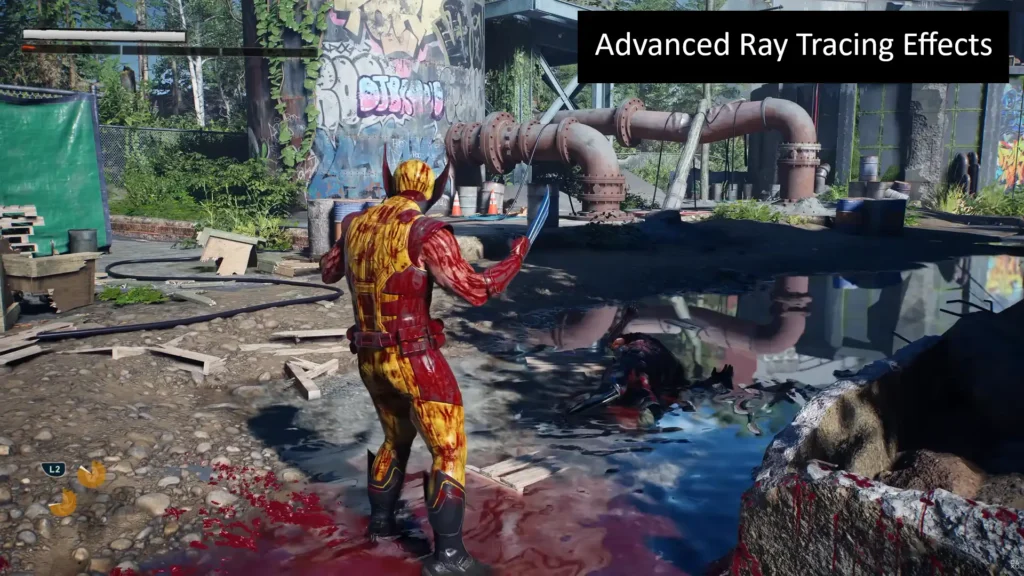
Running at 60 FPS leaves approximately 16.67 milliseconds to prepare each frame, compared with about 33.33 milliseconds at 30 FPS. Ray tracing adds another demanding workload because the renderer must calculate rays and their interactions with scene geometry and materials. Sony’s PS5 hardware can accelerate ray traced effects involving reflections, shadows, refraction, surfaces and lighting, but Insomniac has not yet published a complete list of which effects Wolverine uses. The confirmed point is that ray tracing remains active within the 60 FPS default mode on the original PS5.
The game’s design helps explain why Insomniac prioritised frame rate. Wolverine centres on rapid close range combat involving claws, lunges, dodges, parries, takedowns and Rage based aggression. PlayStation describes Logan’s attacks as fast and fluid, while hands on material highlights stealth, brutal melee combat and bosses. At 60 FPS, animations receive twice as many displayed frames each second as they would at 30 FPS, making rapid movements easier to follow and potentially improving the responsiveness of directional attacks, dodges and reactions. Total input latency still depends on the full simulation, controller and display pipeline, but the shorter frame interval provides a stronger foundation for responsive combat.
That priority also extends into production. Designing around 60 FPS lets artists judge attack readability at the intended refresh rate, encounter designers tune enemy reactions and parry windows around it and engineers manage effects within a known frame time budget. Insomniac has also discussed responsive foliage and environmental destruction suitable for Wolverine’s varied locations and forceful combat, meaning the studio is balancing those systems against the same performance target.
What remains unknown is the exact image quality required to reach that target. Insomniac has not publicly detailed the internal resolution, dynamic resolution limits, reconstruction method, ray tracing resolution or how image quality may change during especially demanding scenes. A claim that base PS5 delivers native 4K at 60 FPS with ray tracing would therefore go beyond the confirmed information.
Marvel’s Wolverine Graphics Modes, PS5 Pro Enhancements, and Fidelity Mode
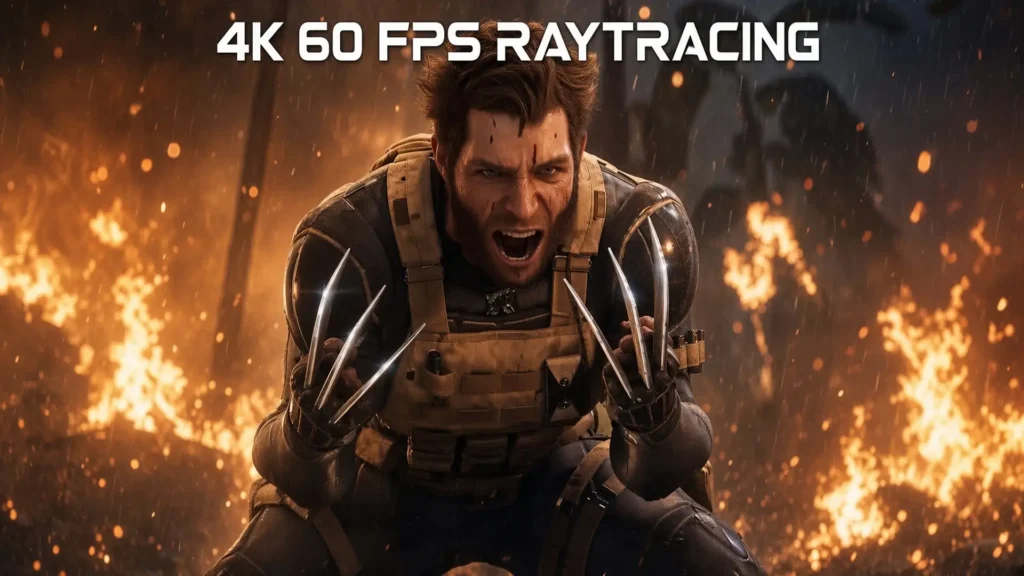
The known graphics configuration is the default Performance Mode targeting 60 FPS with ray tracing on base PS5. Insomniac has not yet provided a complete technical breakdown of Wolverine’s alternative Fidelity configuration, so specific claims about a 30 FPS target, native 4K output, additional ray tracing effects or higher visual settings should remain unconfirmed until the studio publishes the final graphics menu.
Earlier Insomniac games provide useful context without establishing Wolverine’s exact settings. In Marvel’s Spider Man Remastered, Fidelity Mode traditionally targeted 30 FPS with additional graphical features, while Performance Mode pursued 60 FPS from a lower rendering resolution. Wolverine already changes part of that relationship because its Performance Mode retains ray tracing. The safest comparison at present is therefore that Performance is the confirmed 60 FPS ray traced default, while the exact benefits and frame rate of Fidelity remain to be detailed.
Wolverine is also officially PS5 Pro Enhanced. PlayStation confirms that the Pro version uses PlayStation Spectral Super Resolution, or PSSR, to improve image quality and frame rate presentation. Sony designed PSSR as a machine learning reconstruction system that can produce a sharper final image from a lower internal rendering resolution, potentially allowing developers to spend more performance on other visual features.
The PS5 Pro also provides additional rendering resources. Sony says the system contains 67 percent more GPU compute units than the standard PS5, 28 percent faster memory and rendering performance that can be up to 45 percent faster. Its upgraded ray tracing hardware can perform some ray calculations at roughly two or even three times the speed of the original console depending on the workload. These improvements give Insomniac room to increase image quality, ray tracing quality or performance, although Wolverine’s exact Pro settings have not yet been announced.
Insomniac’s previous PS5 Pro work shows how those resources can be used. Marvel’s Spider Man 2 and Ratchet & Clank: Rift Apart received Performance Pro configurations designed to combine 60 FPS with image quality and ray tracing characteristics associated with their Fidelity presentations. A similar philosophy could influence Wolverine, but exact resolutions, maximum frame rates and ray tracing differences should remain expectations rather than confirmed specifications until Insomniac provides them.
The studio has likewise not explained the exact technical recipe that allows the base PS5 to maintain ray tracing while targeting 60 FPS. Modern console rendering commonly combines dynamic resolution, temporal reconstruction, varying asset detail and carefully selected ray tracing workloads rather than rendering every effect at maximum quality, but Insomniac has not said which specific combination Wolverine uses. The more important confirmed engineering decision is that the performance target existed early enough to influence the entire production instead of being imposed near completion.
Wolverine’s world structure may also help Insomniac allocate resources differently. Unlike Spider Man 2, Wolverine is officially not open world. Its narrative driven campaign moves through directed locations including Canada, Tokyo and Madripoor rather than requiring continuous high speed traversal across a massive city. A more controlled structure can potentially give developers tighter control over scene complexity and rendering budgets, although Insomniac has not explicitly identified this as the reason 60 FPS with ray tracing is possible.

How Marvel’s Wolverine Performance Compares With Spider Man 2 and Ratchet & Clank
Marvel’s Spider Man 2 represents the closest technical foundation for Wolverine because it already demonstrates Insomniac’s ability to combine high speed gameplay, detailed environments and extensive ray tracing. Its New York presentation uses ray traced reflections prominently, while the studio later expanded its ray tracing options on other platforms. That experience shows that Insomniac’s engine and graphics teams have spent years improving ray traced rendering during the PS5 generation, although it does not prove that Wolverine uses every effect seen in Spider Man.
The major difference is how the performance target was established. Previous Insomniac titles generally maintained a clearer distinction between fidelity and performance configurations before additional ray traced high frame rate modes emerged as optimisation progressed. According to Fitzgerald, Wolverine was instead conceived around 60 FPS plus ray tracing from the outset, making that combination part of its baseline presentation rather than an optional compromise introduced later.
The two games also place very different demands on the hardware. Spider Man 2 requires extremely rapid traversal across an open New York while constantly streaming buildings, traffic and environmental detail. Wolverine uses directed environments spread across several international locations and focuses more heavily on close range physical encounters. Its rendering budget can therefore be allocated around different priorities, including detailed melee animation, responsive environments and destruction rather than maintaining Spider Man’s continuous city traversal.
Ratchet & Clank: Rift Apart provides another useful comparison because it was one of Insomniac’s earliest demonstrations of PS5 specific technology. The game used the high speed SSD to move rapidly between dramatically different environments and later received increasingly sophisticated graphics configurations. Its PS5 Pro Performance Pro mode was designed to preserve a 60 FPS target while approaching Fidelity level image quality and ray tracing.
Wolverine effectively brings part of that ambition down to the standard PS5 by making ray tracing and 60 FPS the default target without requiring upgraded hardware. Across Insomniac’s PS5 releases, the progression has therefore moved from stronger traditional compromises between image quality and frame rate toward increasingly capable ray traced performance modes, culminating in Wolverine being designed around that balance from early production.
The studio’s experience does not remove all uncertainty. A 60 FPS target does not guarantee that every scene will remain perfectly locked at launch, nor does it reveal Wolverine’s internal resolution or the visual compromises required in its most demanding moments. Those details will require final specifications or technical analysis. What is already clear is that Insomniac is treating 60 FPS and ray tracing as central parts of Wolverine’s intended PS5 experience rather than asking base console owners to choose between them.
Frequently Asked Questions (FAQs)
- Does Marvel’s Wolverine run at 60 FPS on the base PS5?
Yes. Insomniac has confirmed that Marvel’s Wolverine targets 60 FPS on the standard PS5, so players do not need a PS5 Pro to access the higher frame rate. The studio established this target early in development, meaning the base console version was built around 60 FPS rather than receiving it as a late performance option. - Does Marvel’s Wolverine use ray tracing at 60 FPS?
Yes. Ray tracing remains enabled in the confirmed 60 FPS Performance Mode on the base PS5. That is particularly notable because ray tracing can be demanding on console hardware, yet Insomniac designed Wolverine around keeping those effects active while still targeting the smoother frame rate. - Is 60 FPS the default Marvel’s Wolverine graphics mode?
Yes. Insomniac has said the 60 FPS ray traced configuration is the default presentation on the standard PS5. This differs from the studio’s earlier games, where players often had to choose more clearly between higher frame rates and maximum visual quality. Wolverine was instead designed around combining both from the beginning. - Is Marvel’s Wolverine 4K at 60 FPS on PS5?
A confirmed native or internal rendering resolution for the base PS5 Performance Mode has not yet been published. The game could use dynamic resolution or reconstruction techniques while outputting to a 4K display, but Insomniac has not provided enough technical information to state that it runs at native 4K and 60 FPS. That claim should therefore remain unconfirmed. - Does Marvel’s Wolverine have a Fidelity Mode?
Insomniac has discussed Wolverine within the context of its usual performance and fidelity approach, but the final specifications of the Fidelity configuration have not yet been fully detailed. Its exact frame rate, resolution, ray tracing quality and other visual advantages remain unknown. Players should wait for Insomniac’s complete graphics mode breakdown before making direct technical comparisons. - Is Marvel’s Wolverine PS5 Pro Enhanced?
Yes. PlayStation officially lists Marvel’s Wolverine as PS5 Pro Enhanced. The Pro version uses PlayStation Spectral Super Resolution, or PSSR, to improve image quality and frame rate presentation, while the stronger PS5 Pro hardware also gives Insomniac more processing power for graphics and ray tracing. Exact mode by mode improvements have not yet been fully disclosed. - Will Marvel’s Wolverine release on PS4?
No. Marvel’s Wolverine is being developed specifically for the PS5 generation and will not release on PS4. This allows Insomniac to design around newer hardware features such as the faster SSD, hardware accelerated ray tracing, DualSense functionality and the greater CPU and GPU capabilities of the PS5. - Is Marvel’s Wolverine an open-world game?
No. PlayStation describes Marvel’s Wolverine as a single player, narrative driven action adventure rather than an open world game. The campaign takes Logan through several locations, including Canada, Japan and Madripoor, but these areas are part of a more directed story structure rather than one continuously explorable open world. - When is Marvel’s Wolverine released?
Marvel’s Wolverine is scheduled to launch for PlayStation 5 on September 15, 2026. The game is being released as a PS5 generation title, with both the standard PS5 and PS5 Pro supported at launch. - Which Marvel’s Wolverine graphics mode should most players use?
Performance Mode currently looks like the strongest general recommendation because it is Insomniac’s default and targets 60 FPS while retaining ray tracing. That should suit players who value smooth combat and responsive movement. Those who prioritise maximum image quality should compare the final Fidelity Mode specifications once Insomniac provides its full technical breakdown.
Conclusion
Marvel’s Wolverine Performance Mode represents a notable evolution of Insomniac Games’ PS5 technology. Rather than forcing standard PS5 owners to choose completely between ray tracing and smooth 60 FPS gameplay, Insomniac established 60 FPS with ray tracing as the game’s baseline Performance Mode and made it the default presentation.
The decision fits Wolverine’s design. Logan’s combat revolves around speed, violent close range attacks, Rage, aggressive momentum and rapid reactions, while the campaign takes him through detailed environments across Canada, Tokyo and Madripoor.
Important questions remain unanswered, particularly the base PS5 rendering resolution, the complete Fidelity Mode specification and the precise visual advantages offered by PS5 Pro. What is already confirmed, however, is substantial: players buying Marvel’s Wolverine for a standard PS5 are being targeted with a 60 FPS ray-traced experience without needing Sony’s upgraded console.
Sources and Citations
- PlayStation, Marvel’s Wolverine Official Game Page: September 15, 2026 release, PlayStation 5 exclusivity, single-player campaign, mission-based structure, PS5 Pro Enhanced support, PlayStation Spectral Super Resolution and Wolverine’s combat and exploration features.
https://www.playstation.com/en-us/games/marvels-wolverine/ - IGN, Marvel’s Wolverine Performance Announcement, 2026: Insomniac Games’ reported confirmation that 60 FPS with ray tracing is the default graphics configuration on the standard PlayStation 5, rather than a feature exclusive to PS5 Pro.
https://www.ign.com/games/marvels-wolverine - IGN, Jess Reiner-Reed and Mike Fitzgerald Developer Interview, 2026: Developer comments on establishing a 60 FPS performance target early in production, integrating hardware-accelerated ray tracing and designing Wolverine’s rendering pipeline around responsive combat and high visual fidelity.
https://www.ign.com/games/marvels-wolverine - PlayStation Blog, August 13, 2026: Firsthand Marvel’s Wolverine gameplay preview covering the September 15 launch, Team X storyline, Madripoor exploration, close-range combat, Special Techniques, Rage Tiers, Adaptations, stealth mechanics and Nightmare Trials.
https://blog.playstation.com/2026/08/13/hands-on-report-marvels-wolverine - Sony Interactive Entertainment, PlayStation 5 Technical Specifications: Standard PS5 hardware architecture, eight-core AMD Zen 2 CPU, RDNA 2-based graphics processor, 16GB GDDR6 memory, custom SSD and hardware-accelerated ray tracing capabilities.
https://blog.playstation.com/2020/03/18/unveiling-new-details-of-playstation-5-hardware-technical-specs/ - PlayStation Blog, September 10, 2024: Official PS5 Pro technical presentation detailing the upgraded GPU, advanced ray tracing hardware, PlayStation Spectral Super Resolution technology and performance improvements over the standard PS5.
https://blog.playstation.com/2024/09/10/playstation-5-pro-revealed/ - PlayStation Blog, September 24, 2024: Insomniac Games technology director Mike Fitzgerald explains Performance Pro mode for Marvel’s Spider-Man 2, Ratchet & Clank: Rift Apart and earlier Spider-Man releases, combining 60 FPS gameplay with ray-traced effects and enhanced image quality.
https://blog.playstation.com/2024/09/24/ps5-pro-developers-share-how-theyre-using-new-tech-to-enhance-their-games/ - PlayStation Blog, September 25, 2024: Firsthand PS5 Pro demonstrations examining Marvel’s Spider-Man 2’s high-frame-rate rendering, ray-traced reflections, improved image clarity and the performance advantages of Sony’s upgraded console.
https://blog.playstation.com/2024/09/25/first-look-report-ps5-pro-games/ - PlayStation Blog, March 16, 2026: Upgraded PSSR image reconstruction technology, improved visual stability, sharper fine details, motion clarity and additional graphics optimization options for supported PS5 Pro games.
https://blog.playstation.com/2026/03/16/upgraded-pssr-rolling-out-to-silent-hill-f-monster-hunter-wilds-final-fantasy-vii-rebirth-crimson-desert-and-more - Insomniac Games, Official Support Center: Technical guidance for Marvel’s Spider-Man and Ratchet & Clank releases, including Fidelity and Performance graphics modes, frame-rate options, ray tracing, display compatibility and game configuration.
https://support.insomniac.games/
Recommendations
- Which Weapon to Pick First in Mina the Hollower – Best Starter Weapon Choice
- Orbitals Two-Player Space Adventure on Switch 2: Release Date, Co-Op Modes, Gameplay, and Friend’s Pass
- Far Far West Sales Surpass One Million Copies: Full Breakdown, Success Factors, and Industry Impact
- Control Resonant Physical Edition Delayed to October 15, Digital Still September 24
- Over 1,000 Mario Maker Levels Have Been Deleted, And It May Be Just One Person’s Fault
- Kingdom Hearts IV Targets Late 2027: Voice Acting Update and 25th Anniversary Exhibition
- Neon Genesis Evangelion Gets Brand New Anime Penned by Nier Automata’s Yoko Taro: What We Know So Far
- Pokemon TCG Printing Boom Explained – 12% Printed Last Year, 40% in Three Years, and Why Scalpers Still Win
- Nvidia Launches Open Secure AI Alliance With More Than 40 Companies
- How to Create Large Scale Water FX in Houdini: a Complete Guide for Realistic Simulations



































































































