









In This Article (8 sections)
Mass Effect Revival: Why BioWare Founders Estimate a $200 Million Development Budget
The possibility of reviving the Mass Effect franchise has sparked a debate over whether another major installment would require a development budget exceeding $200 million. BioWare cofounders Greg Zeschuk and Trent Oster have approached that question from different perspectives. Zeschuk wants to know who would invest such a substantial amount in a new game, while Oster considers $200 million or more a reasonable estimate for a modern blockbuster capable of meeting fans’ expectations.
However, Oster also believes an experienced team could produce a successful installment for less. Former series designer Christina Norman suggested a smaller alternative of approximately $50 million, drawing on the development budget of Clair Obscur: Expedition 33. These estimates concern hypothetical future projects rather than the game Electronic Arts canceled when it announced BioWare’s closure on October 21, 2026.
The disagreement reflects the complicated requirements of developing a modern role-playing game. The science-fiction series is known for cinematic presentation, memorable companions, extensive dialogue, and player decisions that influence later events. The final mission of Mass Effect 2 demonstrates how those features increase production complexity. Shepard’s decisions, Normandy upgrades, squadmate loyalty, and specialist assignments can determine which characters survive. Developers must write, animate, record, implement, and test multiple outcomes even when individual players experience only some of them. A smaller production could reduce the number of locations or shorten its campaign, but meaningful consequences would still require careful planning. Decisions about how long the story remembers a player’s choices directly affect the amount of additional content required.
In an interview with 80 Level, Zeschuk questioned who would provide the money needed to develop another major entry in the series. His concern involved the investor’s perspective rather than whether the franchise still had an enthusiastic audience. A financial backer could recognize its popularity and still consider another project less risky. Zeschuk also emphasized that the challenge becomes greater when developers have limited experience working together. Building a game requires years of investment before its commercial outcome becomes clear, and a project can encounter expensive delays even when experienced developers are involved.
The closure of Humanoid Origin provides a relevant example. Casey Hudson, who directed the original trilogy, founded the studio after leaving BioWare and began developing an ambitious science-fiction game. Despite his experience, Humanoid Origin closed in November 2024 after encountering a funding shortfall. The studio never released its planned project. The example illustrates why securing money for a prototype differs from obtaining enough financing to complete several years of production. Investors must also consider whether additional funding would remain available if development takes longer than expected.
On November 5, 2026, Oster described a development budget exceeding $200 million as a rough estimate based on comparable contemporary games. He was considering what it might cost to satisfy expectations surrounding a premium release rather than reporting an internal EA budget. He also argued that experienced developers and disciplined production decisions could substantially reduce those costs. Oster continued examining financial possibilities and reported reaching the 51st revision of his Excel calculations by November 10. He has not published those calculations, identified a committed investor, or announced an agreed purchase or licensing price for any BioWare property.
Industry analyst Joost van Dreunen provided another estimate, suggesting that a contemporary installment could require 200 to 300 developers over five to six years, supported by substantial external production work. Under those assumptions, he estimated development costs of approximately $150 million to $250 million before marketing. The size of the permanent development team does not capture everyone contributing to a game. Actors, animation specialists, contractors, and external studios may work on different parts of production without remaining on the core payroll throughout development.
Long development schedules also create financial exposure when unexpected problems arise. Van Dreunen estimated that retaining 50 developers for another year could cost approximately $4.5 million to $5.6 million in Canadian examples. Keeping 250 people employed for the same additional period could cost approximately $22 million to $28 million. A major redesign, delayed release, or unfinished story sequence can therefore increase expenses considerably. Investors evaluating a potential return must consider both the original production budget and the resources required if development extends beyond its planned completion date.
Marketing would introduce another expense, although no marketing budget has been announced for a potential new installment. Van Dreunen suggested that a game costing $200 million to develop, alongside a marketing campaign, might need approximately seven million sales to recover its investment. His illustrative calculation used an average return of $40 per copy. At that rate, seven million copies would generate $280 million, leaving $80 million beyond development spending for marketing and other costs. This is not an announced advertising budget. If the average return fell to $35 per copy, those seven million sales would generate $245 million, leaving only $45 million above development costs.
The distinction between copies sold, players reached, and revenue retained is essential when evaluating these estimates. Discounted purchases may contribute less revenue than launch sales, while subscription players cannot automatically be counted as full-price buyers. Former BioWare executive producer Mark Darrah said Dragon Age: Inquisition sold more than 12 million copies over its lifetime. EA separately reported that Dragon Age: The Veilguard reached approximately 1.5 million players during its launch quarter, around half its expectations.
These figures measure different periods and activities, so they cannot be compared directly. Inquisition demonstrates that a BioWare role-playing game has previously attracted an audience exceeding the proposed seven-million sales target, but neither result predicts the performance of a future entry in the science-fiction franchise.
A further consideration is whether investors would finance one game or support a longer franchise strategy. Developers establishing a new studio may spend years creating combat systems, dialogue tools, animation pipelines, and mechanisms for tracking player decisions. Some of that investment could support later releases if the studio retained appropriate development rights. A license limited to one game would create a different financial proposition because the initial project might need to recover more of the investment independently. This explains why Oster has connected the feasibility of bringing the series back with obtaining a longer-term arrangement for the franchise.

BioWare Closure, Mass Effect Rights, and Plans to Reunite Former Developers
Electronic Arts officially ended development of its next Mass Effect game on October 21, 2026, when it announced the closure of BioWare and its Edmonton workspace. According to EA, a small team had been working on Mass Effect during early development, but the publisher decideElectronic Arts officially ended development of its next installment on October 21, 2026, when it announced the closure of BioWare and its Edmonton workspace.
According to EA, a small team had been working on the project during early development, but the publisher decided to cancel it while concentrating resources on fewer games. The announcement did not disclose the canceled project’s budget, completion percentage, or planned release date. Although the game had first been publicly teased in 2020, EA’s description established that it remained in early development when work stopped.
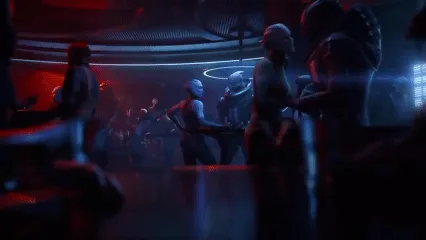
A leaked trailer surfaced the day after the closure announcement, showing footage associated with a project titled Mass Effect: Universe. The presentation featured an N7-clad former military officer speaking with an asari in a bar. It identified itself as an in-engine demonstration assembled using preproduction assets. The footage offered a glimpse of the project’s possible narrative direction, character presentation, and cinematic style, but it did not establish how much of the complete game existed. Any attempt to continue Universe would therefore require information about the surviving project files, their usability, and whether EA would authorize another developer to access them.
Electronic Arts continues to own the franchise, the BioWare name, and Dragon Age. When 80 Level asked whether the publisher would consider selling or licensing those properties, EA spokesperson Justin Higgs provided no additional information beyond the closure announcement. The company has not disclosed an asking price or announced a process for receiving bids. Consequently, former BioWare developers could establish a new studio and create an original science-fiction role-playing game without automatically obtaining permission to produce an official installment.
Several possible approaches have emerged during discussions about preserving the franchise:
- EA resumes development: The publisher could authorize another project and provide the necessary funding, staff, and development time.
- Franchise sale: EA could sell the rights included in an agreed transaction to another company or ownership group.
- Licensing arrangement: EA could retain ownership while allowing another studio to develop a particular game.
- Continuation of Universe: A new team could potentially resume the canceled project if EA granted the necessary rights and access to usable development materials.
- Original successor project: Former BioWare employees could create a new studio and develop an original role-playing game inspired by their experience without using the existing intellectual property.
Each option involves different financial and legal requirements. Purchasing the franchise would provide a different level of control from obtaining permission to develop one installment. Continuing Universe would introduce additional questions about ownership of project materials and the availability of developers familiar with its systems. Jennifer Hale, the voice of female Commander Shepard, suggested that EA sell the property to a fan collective that could make the license available to creators. She argued that such a move could generate considerable goodwill. However, EA has not publicly indicated that it intends to pursue that proposal.
BioWare’s history provides an example of how former developers can return to an established franchise when the relevant rights holders cooperate. The enhanced editions of Baldur’s Gate and Baldur’s Gate II involved Atari, Wizards of the Coast, and Overhaul Games, with developers from the original projects participating. Those releases became possible through agreements involving the companies responsible for the intellectual property and production. A new project based on the science-fiction series would require its own negotiations, whether it involved a new story or the continuation of an existing concept.
Oster has also explored the possibility of reuniting experienced BioWare developers. He publicly invited former creative director James Ohlen to participate in a potential project, identifying him as the first person he would recruit. Ohlen responded enthusiastically on November 8, although the franchise he specifically expressed a desire to revisit was Dragon Age. His BioWare credits include the first two Baldur’s Gate games, Star Wars: Knights of the Old Republic, and Dragon Age: Origins. Their exchange demonstrated mutual interest in working together again but did not establish a funded project, a new studio, or a confirmed leadership appointment.
The discussion also involves preserving the professional experience accumulated by BioWare’s former employees. Zeschuk has emphasized the value of teams that spend years solving creative and technical problems together. Established colleagues understand which ideas failed in previous projects, how production systems developed, and how to coordinate complicated work. Closing a studio disperses that collective knowledge even when individual employees remain talented. For a newly assembled team, rebuilding those relationships could influence production efficiency and the ability to maintain a consistent creative direction.
Zeschuk has nevertheless ruled out personally leading a BioWare buyout. He left the gaming industry in 2012 and later established Blind Enthusiasm Brewing Company in Edmonton. Although he continues playing games and wants the studio’s legacy to survive, he has said that taking responsibility for another major game production would require more than he wants to undertake. His interest is primarily in supporting the developers and preserving the experience associated with the studio’s history.

Could a Smaller Mass Effect Follow the Clair Obscur: Expedition 33 Development Model?
Former series designer Christina Norman has argued that a new installment might be possible with a substantially smaller budget than the $200 million estimates associated with blockbuster production. Norman worked on cinematics programming for the original game before becoming a lead gameplay and systems designer on its sequels. Her alternative draws on Clair Obscur: Expedition 33, developed by Sandfall Interactive. She suggested that approximately five times Expedition 33’s reported development budget could provide substantial resources for another project. With Sandfall’s budget reported at under $10 million, that comparison places her estimate around $50 million.
Norman’s argument concerns what an efficient and experienced team might achieve rather than the cost of a project already in development. She recalled that Mass Effect 2 came together in approximately 18 months because its core team remained from the first game, understood the technology, and had learned important production lessons. The developers could use player feedback to prioritize improvements and make difficult content decisions earlier. Substantial work had been removed from the original title before release, while the sequel’s team was better prepared to decide which ideas deserved continued investment.
The importance of early production decisions is central to the lower-budget argument. Removing an unnecessary mission during planning costs far less than cutting it after environments have been built, dialogue recorded, and gameplay systems implemented. A smaller project could preserve the franchise’s defining characteristics by concentrating resources on companions, meaningful decisions, and a limited number of memorable destinations rather than attempting to match every feature associated with contemporary blockbuster games.
Clair Obscur: Expedition 33 provides a relevant example of a smaller production achieving considerable commercial success. Sandfall Interactive developed the game with a core team of approximately 30 people supported by external partners. Its reported development budget was under $10 million, and the studio announced eight million copies sold by its first anniversary in April 2026. The project demonstrated that an ambitious role-playing game with distinctive visuals, performances, and an original world could reach a substantial audience without requiring a permanent development team numbering in the hundreds.
Sandfall made deliberate decisions about how to use its resources. An overworld map gave the adventure geographical scale while allowing developers to concentrate detailed environmental work in locations players would actually explore. External specialists contributed battle animation, and French public funding helped support preproduction and the creation of a playable demonstration. That early work helped the team attract publisher Kepler Interactive. The example shows that smaller productions can still depend on outside expertise and financing, but careful planning can reduce the resources required to achieve a distinctive result.
A comparable approach could use a galaxy map to establish the setting’s scale while concentrating detailed production on fewer important destinations. Meaningful companion relationships and player choices could remain central even with a smaller campaign. However, Expedition 33’s budget does not establish how much branching dialogue a future entry could afford or what EA would charge for licensing its intellectual property. Its commercial success demonstrates one possible production model rather than proving that every established franchise can be recreated at the same cost.
The strongest point of agreement between Norman and Oster is that a disciplined development process could lower the financial requirements of bringing the series back. An experienced team could prioritize its defining features while reducing unnecessary production complexity. However, those decisions would still need to account for player expectations, the cost of licensing the franchise, external development support, and the financial risks of delays.

Save Mass Effect Petition, Canadian Government Support, and the Franchise’s Future
Public interest in bringing the franchise back has grown since BioWare’s closure. The Save Mass Effect petition exceeded 330,000 verified signatures by November 20, 2026. Its organizers asked EA either to continue development with adequate staffing, funding, and time or to sell or license the property to another studio. They also requested opportunities for former BioWare developers to participate and emphasized preserving meaningful player choice. The petition therefore does not insist that EA must sell the series. Continued development under EA or a licensed project involving another studio could satisfy its central demands.
Fans organized additional activities around November 7, the annual N7 Day celebration, including a coordinated effort to play Mass Effect Legendary Edition. These activities demonstrate that the franchise retains an engaged community, but petition signatures and participation in fan events do not automatically translate into future sales. An investor would still need evidence about how many people would purchase a new game, what they would pay, and whether the project could reach audiences beyond existing enthusiasts.
Canadian politicians have also become involved because of BioWare’s importance to Edmonton’s gaming industry. New Democratic Party leader Avi Lewis called for federal support that would give former BioWare employees the first opportunity to purchase the studio and operate it independently. Member of Parliament Don Davies sponsored House of Commons petition e-7898, asking the federal government to provide capital so the developer and its intellectual property could become independent of EA. The parliamentary petition opened on November 4, 2026, and is scheduled to close on March 4, 2027. It is separate from the international fan campaign directed at the publisher.
Supporters of Canadian intervention have emphasized both the cultural and economic importance of BioWare. Davies presented the studio as a Canadian success whose closure affects skilled employment and the country’s creative industries. Government assistance could potentially support a purchase offer or provide funding for former employees to establish a new development operation. However, the proposals have not established how much money the government would provide, which assets EA might sell, or whether the publisher would consider an employee-led acquisition.
Public support could also take a different form. Sandfall’s experience demonstrates how early funding can help developers create a playable project capable of attracting private investment. A comparable Canadian initiative could give former BioWare employees an opportunity to develop an original game or establish a studio before seeking additional financial backing. This would not automatically provide access to the franchise or Dragon Age, but it could preserve employment and development expertise in Edmonton.
The central challenge remains the combination of rights, funding, and an experienced development team. Oster’s calculations address potential production costs, Norman’s comparison suggests that a smaller approach could be possible, and fan campaigns demonstrate continued interest. Canadian political involvement adds another possible source of support. Yet none of these developments establishes that EA has agreed to sell or license the property or that a new team has obtained financing. Until those commitments exist, discussions about bringing the series back remain proposals rather than confirmed development plans.

Frequently Asked Questions (FAQs)
- Is $200 million the price to buy Mass Effect from EA?
No. The $200 million figure is a rough estimate of what developing a modern blockbuster Mass Effect game might cost. It does not represent the franchise’s sale price or an amount requested by Electronic Arts. EA has not publicly announced a valuation or licensing price. Any potential buyer would need to account separately for acquiring the necessary rights and financing development, marketing, and release. - Did EA spend $200 million on the canceled Mass Effect game?
No such expenditure has been disclosed. EA’s October 21, 2026 announcement described the canceled Mass Effect project as being in early development with a relatively small team. The $200 million estimates from Greg Zeschuk and Trent Oster concern the possible cost of producing a future major installment, not confirmed spending on the canceled game. - Why do reports use the title Mass Effect: Universe?
The name Mass Effect: Universe appeared in a leaked trailer that surfaced shortly after BioWare’s closure announcement. The footage showed an N7 clad former military officer speaking with an asari and was described as an in engine presentation using preproduction assets. EA referred to the canceled project simply as Mass Effect, so the leaked title should not be treated as confirmation of a completed or officially announced release. - Does the seven million copy estimate assume every buyer pays full price?
No. The estimate uses an illustrative average return of $40 per copy rather than assuming every customer pays the full retail price. Seven million sales at that average would generate approximately $280 million, potentially covering a $200 million development budget and additional expenses. Discounts, distribution arrangements, and other factors could change the average amount retained from each sale and therefore affect the number of copies needed. - Did Christina Norman say she is developing a $50 million Mass Effect?
No. Norman suggested that a smaller, experienced team could potentially develop a successful Mass Effect using a budget closer to $50 million. Her comparison was based on approximately five times the reported development cost of Clair Obscur: Expedition 33. She did not announce a funded project, a licensing agreement with EA, or her own involvement in a new Mass Effect production. - Did 30 people make all of Clair Obscur: Expedition 33?
No. Sandfall Interactive had a core development team of approximately 30 people, but external partners also contributed to the project. Specialist support included work such as battle animation. The distinction matters because the core team’s size does not represent everyone involved in creating the game. Any comparison with a potential Mass Effect revival must account for outsourced work and other production costs. - Has James Ohlen agreed to direct a new Mass Effect?
No. Ohlen responded positively when Trent Oster expressed interest in reuniting former BioWare developers, but he specifically mentioned wanting to work on Dragon Age again. Their exchange demonstrated enthusiasm for collaborating, not a formal agreement to develop either franchise. No studio leadership appointment, financing arrangement, or official project announcement resulted from the conversation. - Does the Save Mass Effect campaign require EA to sell the series?
No. The petition presents two possible outcomes. It asks EA to continue developing Mass Effect with sufficient resources or, alternatively, sell or license the franchise to another developer. The organizers also want former BioWare employees to have opportunities to participate. A properly funded continuation under EA could therefore satisfy the campaign without requiring a change in ownership. - Has Canada approved money for a BioWare employee buyout?
No government funding commitment has been announced. Canadian political figures have proposed supporting an employee led acquisition, and House of Commons petition e 7898 requests federal capital for that purpose. The petition is scheduled to close on March 4, 2027. Even if funding became available, any acquisition would still require negotiations with Electronic Arts over the assets and rights included. - Is there a release date for the next Mass Effect?
No. Electronic Arts canceled the Mass Effect project that was in development when BioWare closed on October 21, 2026. Former developers have discussed possible revival arrangements, but no replacement project has been formally announced or confirmed as funded. The leaked Mass Effect: Universe footage originated from the canceled project and does not establish a future release date.

Conclusion
The strongest point of agreement between Trent Oster and Christina Norman is that a Mass Effect revival could become more affordable through careful planning and a clearly defined development scope. For a series built around memorable companions, meaningful decisions, and their consequences, that could mean creating fewer destinations while investing more resources in character relationships and choices that determine who survives. The original Mass Effect trilogy demonstrates why those elements are central to the franchise, while Clair Obscur: Expedition 33 provides a commercial example of what an experienced team can achieve with a focused production strategy and a comparatively modest budget.
Greg Zeschuk’s concerns about investment remain important regardless of whether a future Mass Effect costs $50 million or more than $200 million. A development team would need permission to use the franchise, experienced people capable of delivering the project, and sufficient financing to support production when unexpected challenges extend the schedule. Fan campaigns, former developer discussions, and Canadian political interest demonstrate continuing support for BioWare’s legacy, but none establishes a funded revival. Electronic Arts retains control of Mass Effect, making its willingness to resume development, sell the franchise, or authorize a licensing arrangement the most consequential outstanding decision.
Sources and Citations
- 80 Level, November 12, 2026: Brian Crecente’s interview with Greg Zeschuk covers the financial challenges of reviving Mass Effect, EA’s position on franchise rights, and analyst Joost van Dreunen’s estimates for staffing, development costs and required sales.
- Citation: 80 Level
- Electronic Arts, October 21, 2026: Official announcement confirming the cancellation of the next Mass Effect project and the closure of BioWare and its Edmonton workspace.
- Citation: Electronic Arts – Official Website
- Video Games Chronicle, November 10, 2026: Reporting on Trent Oster’s financing calculations, his interest in reuniting former BioWare developers, and James Ohlen’s response concerning Dragon Age.
- Citation: Video Games Chronicle
- 80 Level and GamesRadar+, Former BioWare Developer Interviews: Greg Zeschuk and Christina Norman discuss the value of experienced teams, development costs, production efficiency and the importance of controlling project scope.
- Citation: 80 Level | GamesRadar+
- Ars Technica and GameSpot: Reporting on the leaked Mass Effect: Universe presentation and the financing difficulties that led to Casey Hudson’s Humanoid Origin closure.
- GamesRadar+, Sandfall Interactive, and France’s National Centre for Cinema and the Moving Image: Information about Clair Obscur: Expedition 33, its development budget, core team, external partners, public funding and sales milestone.
- Electronic Arts, SEC Filings, and Push Square: Historical information about Dragon Age: The Veilguard player numbers and Dragon Age: Inquisition lifetime sales, providing context for the franchise’s commercial performance.
- Change.org and Save Mass Effect: Documentation of the fan petition, its requests to Electronic Arts and community activities organized around N7 Day.
- Citation: Change.org – #SaveMassEffect Petition | Save Mass Effect – N7 Day 2026 Change.org+2
- House of Commons of Canada and PC Gamer, November 2026: Parliamentary petition e-7898 and reporting on proposals for federal support and employee ownership of BioWare.
- Citation: House of Commons of Canada – Petitions | PC Gamer – Petition to Save BioWare PC Gamer+1
- Game Informer, Beamdog, and GamesRadar+: Background on Mass Effect’s branching narrative design, previous franchise revivals involving original developers and Jennifer Hale’s proposal for community ownership.
- Citation: Game Informer | Beamdog – Official Website | GamesRadar+
Recommendations
- The Ranchers Offers Four-Player Open-World Farming and Rural Life Simulation
- Star Wars Viewing Figures Reveal a Surprising Lack of Interest in the Sequel Trilogy Era
- Castlevania: Grimoire of Souls Leaving Apple Arcade Before September 3 Shutdown
- Zelda: Ocarina of Time remake full English voice cast revealed
- Sony Makes 59% More Revenue Per PlayStation User Than in the PS4 Era
- Grand Theft Auto 6 Confirmed Weapon List: All Guns, Melee Weapons, Explosives & Gear Revealed so Far
- Fortnite Striker Sprite Location Guide: Where to Find the Soccer Pitch
- 50 Best Stardew Valley Mods in 2026 (Ultimate PC Mod List + Gameplay Overhauls & QoL Picks)
- The Life and Suffering of Sir Brante: Chapter Two, Adolescence Walkthrough
- World of Warcraft: Midnight Review So Far (2026) — Early Access Impressions, Housing, Prey System, and What’s Next



































































































