









In This Article (8 sections)
Mistfall Hunter Release, PvPvE Gameplay, Setting, and Extraction Loop
Mistfall Hunter is a third-person action extraction RPG developed by Bellring Games and published by Skystone Games. It combines close-range combat with the pressure of carrying valuable equipment through a battlefield occupied by hostile creatures and rival players. Bellring describes the game as a PvPvE experience, meaning player-versus-player-versus-environment. Players become Gyldhunters, resurrected warriors sent into a corrupted dark fantasy world to recover resources and equipment while surviving both monsters and competing hunters.
The popular description of Mistfall Hunter as “Dark Souls meets Arc Raiders” is useful for setting expectations, but it should not be taken literally. The game is not a crossover between those franchises. Its weighty melee combat, ruined environments, and dangerous enemies invite comparisons with Dark Souls, while its repeated expeditions, contested loot, and emphasis on returning safely resemble the extraction structure associated with ARC Raiders. The similarities help explain its basic appeal without making the games mechanically interchangeable.
Mistfall Hunter launched on July 29, 2026 at 6:00 p.m. Pacific Time, corresponding to July 30 at 01:00 UTC. That time-zone difference explains why legitimate listings can show either July 29 or July 30 as the launch date. The confirmed platforms are Windows PC, PlayStation 5, and Xbox Series X|S. Older announcements that mention only Xbox and PC no longer represent the complete platform lineup.
The standard edition carries a US list price of $24.99, while the PlayStation storefront lists a Deluxe Edition at $39.99. Regional pricing and temporary discounts can affect the actual amount paid. The game also launched through Game Pass Ultimate and PC Game Pass, with Xbox identifying cloud, Xbox Series X|S, and PC access. Subscription availability is separate from purchasing an edition permanently.
Mistfall Hunter requires online play. On PlayStation, the storefront specifies a PlayStation Plus requirement. Although players can enter supported modes without a full team, solo participation should therefore not be confused with an offline single-player campaign.
The setting is an original Nordic-inspired dark fantasy world rather than a direct adaptation of Norse mythology. Bellring explicitly references Nordic inspiration and Ragnarok, while its own story revolves around a catastrophic conflict between gods and Outer Gods. Their spilled blood becomes the Gyldenmist, which spreads corruption and madness across a devastated world.
The launch-era story names that world Weavereach. Its Web of Fate, once responsible for connecting the destinies of living beings, has been shattered. Dew, a surviving fragment of the Fate Goddess, revives fallen heroes and sends them into the corrupted world. Recovering Gyldenblood contributes to the attempt to restore this broken order, connecting repeated expeditions with a larger narrative purpose rather than making them purely treasure-hunting exercises.
That premise also creates tension between the world’s larger goal and the immediate behavior of individual hunters. Players may be participating in a broader struggle to repair Weavereach, yet the same resources needed for that recovery give hunters reasons to ambush, betray, or compete with one another. Dew’s ability to resurrect warriors explains why characters can return narratively, but it does not remove the gameplay consequences of failing an expedition.
The core loop connects preparation, combat, looting, extraction, and further preparation. Players choose equipment, class skills, talents, and other resources before entering an expedition. Once inside, they fight enemies, search for valuable items, encounter other players, and eventually decide whether the potential value of continuing is worth the increased risk.
This makes surviving a run more important than simply winning individual fights. A player can defeat several opponents, collect valuable gear, and still lose much of the benefit through one reckless final decision. A smaller expedition that ends safely may contribute more to long-term progression than an ambitious hunt that collapses near extraction.
The camp provides longer-term direction for those runs. Facilities such as the Warehouse support storage, while other upgrades affect healing, equipment access, and related progression. Materials therefore have value beyond their immediate sale price. A resource may be worth preserving because it contributes to a future camp improvement.
One useful approach is to give each expedition a primary purpose. A run might focus on learning a route, acquiring specific materials, testing a build, or attempting a difficult encounter. Trying to complete every possible objective in the same expedition can make it harder to recognize when the sensible moment to extract has arrived.
Progress also includes learning from unsuccessful runs. A failed attempt may reveal that a route is unsafe, a build lacks a defensive answer, or an extraction plan exposes the player for too long. Conversely, a successful run may still include avoidable mistakes that simply went unpunished. Becoming more deliberate and repeatable is therefore part of progression alongside collecting stronger equipment.

Mistfall Hunter Combat, Classes, Builds, Weapons, and Soulslike Comparisons
The Dark Souls comparison is most useful when describing combat awareness rather than the overall structure of Mistfall Hunter. Positioning, enemy reach, defensive timing, and commitment to attacks remain important, particularly with heavier melee weapons. Bellring describes the Withered Knight’s greatsword style as calculated, emphasizing reach and parrying instead of uncontrolled aggression.
Mistfall Hunter is not a recreation of Dark Souls combat. Bellring also emphasizes fast-paced action, weapon changes, coordinated abilities, and different class interactions. Encounters can therefore be shaped by movement abilities, overlapping attacks, multiplayer interference, and build combinations rather than the relatively controlled rhythm associated with some one-on-one Souls encounters.
Dark Souls also has its own multiplayer systems, including summoning and invasions, so the distinction is not that one game has multiplayer and the other does not. The larger structural difference is that Mistfall Hunter is organized around extraction expeditions where equipment, loot, rival hunters, and returning safely are central to the entire run.
Players familiar with Souls games can still carry over useful habits such as observing before attacking, learning reach, respecting recovery windows, and avoiding panic inputs. What they should not assume is that every encounter has a stable rhythm, that no third party will intervene, or that familiar defensive tools function exactly like their equivalents in another game.
ARC Raiders offers the stronger comparison for the extraction side. Both games ask players to enter dangerous spaces, compete with environmental threats and other players, recover useful supplies, and attempt to return safely. Valuable loot can also change how danger should be evaluated. A fight that looks worthwhile early in a run may become unnecessary once the inventory contains materials needed for a major upgrade.
The immediate combat problems remain different. ARC Raiders uses a science-fiction setting with hostile machines, while Mistfall Hunter focuses on dark fantasy, corrupted creatures, melee weapons, magic, and class abilities. Those differences affect distance management, pursuit, escape, and how quickly an encounter can change.
Mistfall Hunter’s launch-era roster contains six classes, each supporting different combinations of offense, defense, mobility, control, and support.
- Mercenary: Uses an armored fighter style. Sword-and-shield options provide blocking and counterattack opportunities, while the hammer offers heavier offense. Its flexibility makes it suitable for learning defensive engagements without requiring purely passive play.
- Withered Knight: Focuses on heavier melee combat, including greatsword pressure and systems involving Wither and Execution. A polearm-and-shield configuration provides a more defensive alternative. The class rewards understanding setup and timing rather than simply relying on the size of its weapons.
- Shadowstrix: Emphasizes mobility, pressure, and choosing when to enter or leave combat. Dual Blades favor sustained close-range aggression, while Dagger-related tools can support stealth, scouting, and repositioning.
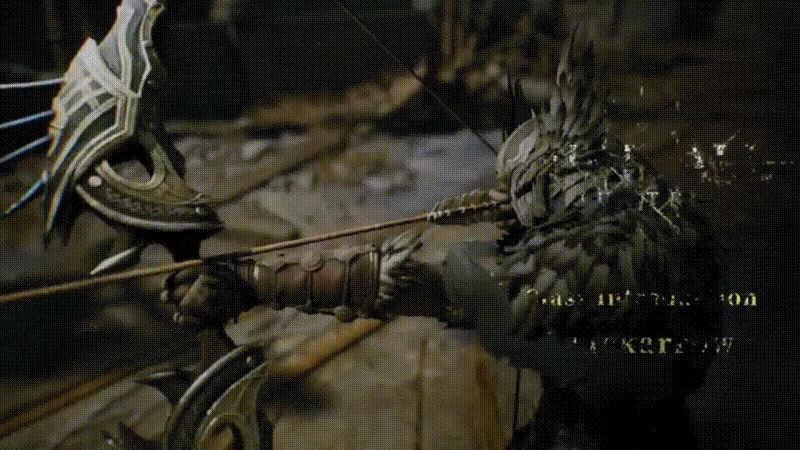
- Blackarrow: Serves as the precision ranged specialist. Charged bow attacks, specialist arrows, and control options reward maintaining advantageous firing angles and preventing enemies from dictating distance.
- Sorcerer: Uses staff-based spellcasting with Elemental and Stardust approaches that provide different offensive patterns. Damage, control, and defensive responses all matter because casting opportunities can disappear quickly under close-range pressure.
- Seer: Offers a Reverent approach focused on healing, protection, and support, while the Blasphemer path provides a more aggressive melee style. Players select between these approaches before a run rather than freely switching between them during an expedition.
These descriptions should not be treated as a permanent class ranking. A good beginner class is one whose mistakes the player can identify and correct, not necessarily one that appears at the top of a guide written for an older balance version.
Builds work best when weapons, active skills, talents, and equipment effects are treated as connected systems. A weapon establishes the basic fighting pattern. Skills provide active options, while talents and equipment can strengthen particular sequences or compensate for weaknesses. Selecting several individually powerful effects does not automatically create a coherent build.
Mercenary illustrates this with tools such as Shield Dash and Stonebreaker Slash, which can support different defensive and counterattack sequences. The important question is which action creates the opening for the next. Withered Knight offers another example by applying Wither before following with Execution-related pressure, rewarding setup before payoff.
Sorcerer configurations also demonstrate that build freedom has limits. Common Magic can be combined with either Elemental or Stardust Inheritance Magic, but the two inheritance paths are not freely mixed together in the same configuration. Promotional descriptions of build flexibility should therefore not be interpreted as permission to combine every available ability without restrictions.
Balance updates can change how individual builds function. A September 3 update changed Shadowstrix’s charged Flurry Strike by adding continuous Energy consumption, addressing the ability to maintain charging pressure without the ongoing cost. Older guides may remain useful for understanding the class while offering combat routines that no longer reflect the current balance.
A more durable build principle is to cover three needs: creating pressure, surviving retaliation, and regaining enough control to continue fighting or disengage. A setup focused exclusively on maximum offense can appear powerful until an opponent survives the opening sequence and begins applying pressure in return.

Loot, Death Penalties, Extraction, Co-op, Maps, and Beginner Survival
Death in Mistfall Hunter can result in serious equipment loss, but describing it simply as “losing everything” is too broad. Pip’s Pouch and the Keychain are identified as protected exceptions to the loss of carried items. A failed expedition also does not delete the character or empty the entire Warehouse.
Players should distinguish equipment from camp construction resources. Materials used for facilities can improve future runs, so immediately selling every unfamiliar item can interfere with planned upgrades. Loot is better evaluated according to purpose: it may belong in the current build, in storage for a future requirement, or among items that can be safely converted into something more useful.
The same principle applies to equipment brought into an expedition. An extremely powerful kit that cannot be comfortably replaced can encourage hesitant play, while repeatedly risking the entire reserve makes the learning process expensive. Early progression is easier to manage when each run has a replacement cost the player can tolerate.
Run-based loss should also be distinguished from seasonal progression rules. Protection from an ordinary death does not necessarily establish that every form of progress will remain untouched through all future seasonal changes.
Extraction centers on Returner Woodlings and the Soul of Return. Bellring identifies the Soul of Return obtained through the Woodling as the means of opening a route back to Windrest. Escaping is therefore an objective that players must actively secure rather than an automatic reward for surviving enough battles.
The detailed process differs by map. In Hallowgrove, the Returning Chime leads to the Woodling encounter. Defeating it creates a Soul Tree, with extraction remaining tied to that location. Brandrgarde instead provides a portable Soul of Return, allowing the hunter to move before summoning the exit.
Those differences change how a run should be planned. A location-bound exit forces players to consider the route toward it and the surrounding exposure. A portable return resource offers greater flexibility, but that flexibility only matters if the player chooses a suitable place and time to use it. Squad members should also verify their own extraction requirements instead of assuming that one hunter’s preparation automatically covers everyone.
Extraction is best treated as another encounter rather than the moment when danger is over. Players can finish unnecessary inventory management before beginning the process, identify a retreat direction, and avoid starting optional fights simply because the previous encounter went well. Knowing how to obtain the return resource is only half the problem. The other half is reaching the extraction stage with enough control to leave safely.
Mistfall Hunter supports solo hunters and squads of three players in total, meaning one player plus two companions rather than four players. Group play allows classes and abilities to complement one another, while solo play provides greater freedom to make immediate decisions without coordinating with teammates.
A September 3, 2026 update added Solo Mode for Brandrgarde on Normal and Cataclysm difficulties, making older claims that the map cannot be played through solo matchmaking outdated. Solo still takes place within an online game and should not be confused with an offline campaign.
A lone player must personally manage damage, defense, routing, and retreat. A trio can divide attention and combine abilities, but communication becomes another skill. Three capable individuals can still perform poorly if they attack different targets, separate at the wrong moment, or disagree about whether to continue or extract.
For new groups, a shared objective can matter more than a complicated team composition. Decide why the squad is entering the run, who makes the retreat call, and whether the priority is learning or protecting expensive equipment. Those expectations reduce avoidable losses caused by different players pursuing incompatible goals.
Two key environments are Brandrgarde and Hallowgrove. Hallowgrove is presented as a bleached forest with vertical exploration, sacred remains, and dangerous locations, while Brandrgarde provides a contrasting fortress environment. These areas are meant to be learned as spaces, not merely crossed between combat encounters.
Official promotional material has shown bosses including Harald, the Fallen General, Otto, the Flesheater, and Salmar, the Cursed Moonwane. These names are confirmed, but they should not be treated as a permanent or exhaustive catalogue of every boss in a changing live game.
The extraction structure makes boss preparation more complicated than simply memorizing attack patterns. Starting a boss encounter consumes time, resources, and attention while the player may already be carrying valuable equipment. A sensible first attempt can therefore prioritize observation, including where movement becomes restricted, which attacks leave genuine openings, and when control of the fight begins to collapse.
Map knowledge and boss knowledge should develop together. Learning how to defeat an enemy without understanding the safest way to reach and leave the encounter provides only partial preparation.
For beginners, separating practice runs from profit-focused runs makes mistakes easier to understand. An inexpensive learning expedition provides room to experiment, while a run carrying materials for an important upgrade may justify more conservative decisions.
Class choice should also have a clear purpose. Mercenary can appeal to players interested in blocking and counterattacking, while Blackarrow rewards precision and managing distance. Neither is automatically safe. Each simply creates a specific set of skills to practice.
Players should preserve an answer to pressure rather than dedicating every ability to offense. Sorcerer’s defensive and control options help create casting opportunities, while Shadowstrix’s movement and Dagger-related abilities can help reposition instead of being spent entirely on the opening attack.
Before committing to a fight, consider more than the opponent directly ahead. Check whether movement is restricted, whether an escape route remains available, and what happens if the opening sequence fails. A plan that works only when the first attack succeeds is inherently fragile.
Inventory discipline also contributes to survival. Organizing equipment between runs, tracking materials needed for camp upgrades, and understanding what can safely be sold reduce the number of important decisions that have to be made under pressure.
After a failed run, identify one specific mistake rather than replacing an entire build immediately. “The escape skill was unavailable when the opponent closed the distance” provides a more useful lesson than concluding that the whole class is ineffective. Repeated specific corrections can improve future expeditions more reliably than constantly changing everything after each defeat.

PC Requirements, Performance, and What Dark Souls or ARC Raiders Fans Should Expect
On PC, Mistfall Hunter requires a 64-bit processor and operating system. The minimum configuration lists Windows 10, an Intel Core i7-4770 or AMD Ryzen 5 1400, 12 GB of RAM, and an NVIDIA GTX 1060 or AMD Radeon RX 580. DirectX 12, broadband internet, and 45 GB of available storage are required, with an SSD strongly recommended.
The recommended configuration increases the processor requirement to an Intel Core i7-9700 or AMD Ryzen 5 3600, raises memory to 16 GB, and calls for an NVIDIA RTX 2070 or AMD Radeon RX 5700 XT. Storage remains at 45 GB.
These specifications should be treated as compatibility guidance rather than guarantees of a particular resolution or frame rate. They do not establish that every demanding battle, crowded area, or zone transition will perform identically on hardware matching the published requirements.
Performance has remained an active maintenance area. The September 23 update included optimization work intended to reduce micro-stutters that could occur when characters repeatedly crossed boundaries between dynamically loaded zones. This is a specific improvement rather than evidence that every possible performance issue has been eliminated.
Players diagnosing technical problems should distinguish rendering performance from connection behavior. Lowering visual settings may improve frame delivery when the hardware is struggling to render the game, but it will not automatically solve a network problem. Similarly, a stable frame-rate counter does not prove that an online encounter is free from latency or connection delay.
Performance is best evaluated under realistic conditions. A quiet location, a crowded PvPvE battle, a boss encounter, and a transition between loaded areas can place very different demands on the system.
For players coming from Dark Souls, Mistfall Hunter is most relevant if they enjoy deliberate combat decisions but are comfortable with the uncertainty of extraction play and interference from other players. Someone primarily looking for a carefully paced solo adventure should not assume that similar dark fantasy imagery guarantees a comparable overall structure.
For ARC Raiders players, the extraction comparison may be more immediately useful. Mistfall Hunter similarly revolves around contested objectives, valuable loot, and deciding whether another encounter is worth risking the current haul. The combat, setting, movement tools, and moment-to-moment handling remain substantially different.
The central question is whether the combination itself sounds appealing: fantasy classes, direct action combat, dangerous expeditions, PvP encounters, and meaningful decisions about when to leave. Players who dislike losing carried equipment to other hunters may find the extraction structure frustrating even if they enjoy dark fantasy combat.
Reception should also be considered in context. On the Steam listing checked on September 23, 2026, the overall English-language review category was Mixed, while recent reviews were Mostly Negative. Those labels represent a snapshot rather than a permanent assessment, but they show why the game should not be presented as an uncomplicated recommendation.
Game Pass Ultimate and PC Game Pass provide another access route for eligible subscribers, allowing players to check current catalog availability rather than necessarily purchasing an edition immediately. Mistfall Hunter is therefore best approached as its own dark fantasy extraction RPG rather than as a guaranteed replacement for Dark Souls or ARC Raiders. Its appeal depends on whether the player wants the specific combination of class-based fantasy combat, contested PvPvE expeditions, loot risk, and extraction pressure.

Frequently Asked Questions (FAQs)
- What is Mistfall Hunter?
Mistfall Hunter is Bellring Games’ third-person dark fantasy extraction RPG built around PvPvE expeditions. Players choose a class, equip weapons and gear, fight corrupted creatures and other human-controlled hunters, collect valuable resources, and then try to extract safely. Success is therefore not just about winning fights, but also about deciding when the rewards already collected are worth protecting rather than risking in another encounter. - When did Mistfall Hunter release?
It launched on July 29, 2026, at 6:00 p.m. Pacific Time. That same moment was July 30 at 01:00 UTC, which explains why different regional listings can legitimately show either July 29 or July 30. The difference reflects time zones rather than separate release dates. - Is Mistfall Hunter free to play?
No. The standard edition has a US list price of $24.99, so Mistfall Hunter is sold as a paid game rather than a free-to-play release. It also launched through Game Pass Ultimate and PC Game Pass, but that access is tied to an eligible subscription and should not be confused with the game being permanently free for everyone. - Which platforms support Mistfall Hunter?
Confirmed versions are available for Windows PC, PlayStation 5, and Xbox Series X|S. Earlier announcements did not always include every eventual platform, so current storefront listings are more reliable than older coverage when checking where the game can be played. The PlayStation version also requires online play rather than functioning as a completely offline release. - Can Mistfall Hunter be played solo?
Yes. Players can enter the game without a full squad, and Brandrgarde’s Normal and Cataclysm difficulties received a dedicated Solo Mode on September 3, 2026. However, solo play still takes place within Mistfall Hunter’s online structure. It does not mean the game has an offline single-player campaign, and the PlayStation version requires an internet connection. - How many players can join a Mistfall Hunter squad?
The advertised squad size is three players total. That means one player can join with two additional companions rather than forming a four-player party. Group play allows different classes and abilities to complement each other, although successful runs still depend on coordinating targets, routes, equipment, and decisions about when to extract. - Which Mistfall Hunter class provides healing and support?
The Reverent Seer specializes in healing, protection, and support abilities, making it the clearest support-focused option among the available class paths. Seer also has a Blasphemer path that takes a more aggressive melee-oriented approach, so choosing Seer does not automatically lock every player into the same healing-focused playstyle. - Do players lose all their items when they die?
Carried items are generally at risk when a player dies during an expedition, which is a major part of Mistfall Hunter’s extraction-game tension. However, Pip’s Pouch and the Keychain provide protected exceptions. Death also does not mean that everything stored back at camp or in the Warehouse is deleted, so describing the penalty simply as losing absolutely everything would be inaccurate. - Is Mistfall Hunter combat identical to Dark Souls?
No. The comparison is useful because Mistfall Hunter can reward careful positioning, awareness of enemy reach, defensive timing, and avoiding reckless attack commitments. However, it also emphasizes class abilities, weapon flexibility, faster multiplayer encounters, and the possibility of interference from other hunters. Its extraction structure makes the overall combat experience substantially different from a traditional Dark Souls journey. - Does meeting the PC requirements guarantee smooth performance?
No. The listed minimum and recommended PC requirements provide a general hardware baseline rather than guaranteeing a particular resolution, frame rate, or level of stability. Actual performance can vary with graphics settings, drivers, hardware combinations, busy combat situations, and dynamically loaded areas, so a system meeting the requirements may still perform differently depending on the conditions in which the game is played.

Conclusion
Mistfall Hunter’s identity is clearest when the Dark Souls and Arc Raiders comparisons are separated rather than blended into an unconditional promise. The first helps explain the appeal of dangerous fantasy combat. The second helps explain why surviving a fight does not necessarily mean an expedition has succeeded.
Its central challenge is judgment. Players must decide which encounters to take, how much equipment to risk, what their build can realistically accomplish, and when continuing becomes less sensible than leaving. That combination can make even a modest reward feel significant.
The best reason to approach Mistfall Hunter is an interest in that specific form of play. Dark fantasy atmosphere alone will not remove the frustration of losing a valuable loadout, and familiarity with another extraction game will not replace learning its combat.
For players who enjoy improving both their execution and their decisions, the concept has a clear attraction. For those who primarily want uninterrupted exploration or predictable progress, the same design may be a poor fit.
Sources and Citations
- Xbox Wire, July 30, 2026: Extract From the Gyldenmist, Dark Fantasy Extraction ARPG Mistfall Hunter Arrives on Xbox, Official Launch Announcement by Bellring Games
https://news.xbox.com/en-us/2026/07/30/mistfall-hunter-available-now/ - Xbox Wire, June 15, 2026: The Hunt Awaits, Everything You Need to Know About the Mistfall Hunter Open Beta on Xbox, Classes, Nordic-Inspired World, Combat and Extraction Mechanics
https://news.xbox.com/en-us/2026/06/15/mistfall-hunter-june-playtest-xbox/ - Steam: Mistfall Hunter Official PC Store Listing, Bellring Games, Skystone Games, July 29, 2026 Release, Gameplay Features, Editions and System Requirements
https://store.steampowered.com/app/3282300/Mistfall_Hunter/ - PlayStation: Mistfall Hunter Official PS5 Game Page, PS5 Pro Enhancements, DualSense Support, Pricing and Regional Server Restrictions
https://www.playstation.com/en-us/games/mistfall-hunter/ - PlayStation Store: Mistfall Hunter, Online Multiplayer Requirements, PlayStation Plus Subscription, Editions and Console Compatibility
https://store.playstation.com/en-us/concept/10017212/ - Xbox Store: Mistfall Hunter, Xbox Series X|S Features, Xbox Play Anywhere, Game Pass and Online Multiplayer Requirements
https://www.xbox.com/en-US/games/store/mistfall-hunter/9P8X6TVW9ZW8/0010 - Steam Community: Mistfall Hunter Official Announcements, Developer Communications, Balance Changes and Post-Launch Updates
https://steamcommunity.com/app/3282300/allnews/ - Mistfall Hunter Patch Notes Archive: September 3, 2026 Brandrgarde Solo Mode Update, Normal and Cataclysm Difficulties and Gameplay Balance Changes
https://mistfallhunters.com/patch-notes - Mistfall Hunter Patch Notes Archive: September 24, 2026 DevNote 9, Developer Communication and Gameplay Updates
https://mistfallhunters.com/patch-notes/devnote-9 - Mobalytics: Mistfall Hunter Guides and Walkthroughs, Classes, Progression, Equipment, Builds and Gameplay Strategies
https://mobalytics.gg/gamebase/mistfall-hunter - Mobalytics: Mistfall Hunter Class Builds, Blackarrow, Mercenary, Seer, Shadowstrix, Sorcerer and Withered Knight Loadouts
https://mobalytics.gg/gamebase/guides/mistfall-hunter-builds - Bandai Namco Entertainment: Dark Souls Trilogy Official Game Information, Dark Fantasy Combat, Character Builds and World Design
https://www.bandainamcoent.com/games/dark-souls-trilogy - KeenGamer, August 3, 2026: Mistfall Hunter Beginner Guide, 11 Essential Tips for New Players, Combat, Camp Upgrades, Looting and Extraction Routes
https://www.keengamer.com/articles/guides/mistfall-hunter-beginner-guide-11-essential-tips-for-new-players/ - KeenGamer, July 30, 2026: Mistfall Hunter Best Class Tier List, Six Playable Classes, PvP Strengths and Launch-Build Comparisons
https://www.keengamer.com/articles/guides/mistfall-hunter-best-class-tier-list/ - KeenGamer, August 7, 2026: Best Starter Class in Mistfall Hunter, Mercenary Gameplay, Sword and Shield Combat and Beginner Survival Strategies
https://www.keengamer.com/articles/guides/best-starter-class-in-mistfall-hunter/ - Embark Studios: Official ARC Raiders Overview, Extraction Adventure Gameplay, Studio Information and Multiplayer Survival Mechanics
https://www.embark-studios.com/ - ARC Raiders: Official Game Website, PvPvE Extraction Mechanics, Looting, Exploration and Multiplayer Features
https://arcraiders.com/en - Xbox Wire, September 22, 2025: ARC Raiders, Extraction Gameplay, Risk and Reward, Developer Commentary and Embark Studios Design Philosophy
https://news.xbox.com/en-us/2025/09/22/arc-raiders-pre-order-server-slam-test/
Recommendations
- Phasmophobia: How To Identify A Deildegast – Evidence, Behavior, And Weakness Guide
- Persona Developer Atlus To Increase Salaries & Reduce Fixed Overtime (April 2026 Update)
- Custom Skyboxes with Blender: Create Equirectangular HDRIs, Fix Seams, and Export to Unity & Unreal
- Persona 5 Royal: Complete Confidant Gift Guide
- Brandon Sanderson Ranks The Lord of the Rings as the Best Movie Trilogy of All Time, What He Said on Intentionally Blank
- Avatar Ty Lee Voice Actor Comments on Leak: Reacts to Aang Movie Footage Leak and Calls for Theatrical Release
- Onimusha: Way of the Sword PS5 vs Switch 2: Nearly Identical?
- Create Procedural Materials With Material Maker, Now on Steam: Version 1.7 Features and Guide
- Free 3D Cloth Software is Here: Clothy3D Studio (auto-Fit & Rig Clothing for Any 3D Character)
- BioEden PC Release: September 3, 2026 Launch, Gameplay, Demo, and Console Plans



































































































