











In This Article (9 sections)
Palworld 30 Million Sales Milestone and Worldwide Sales Explained
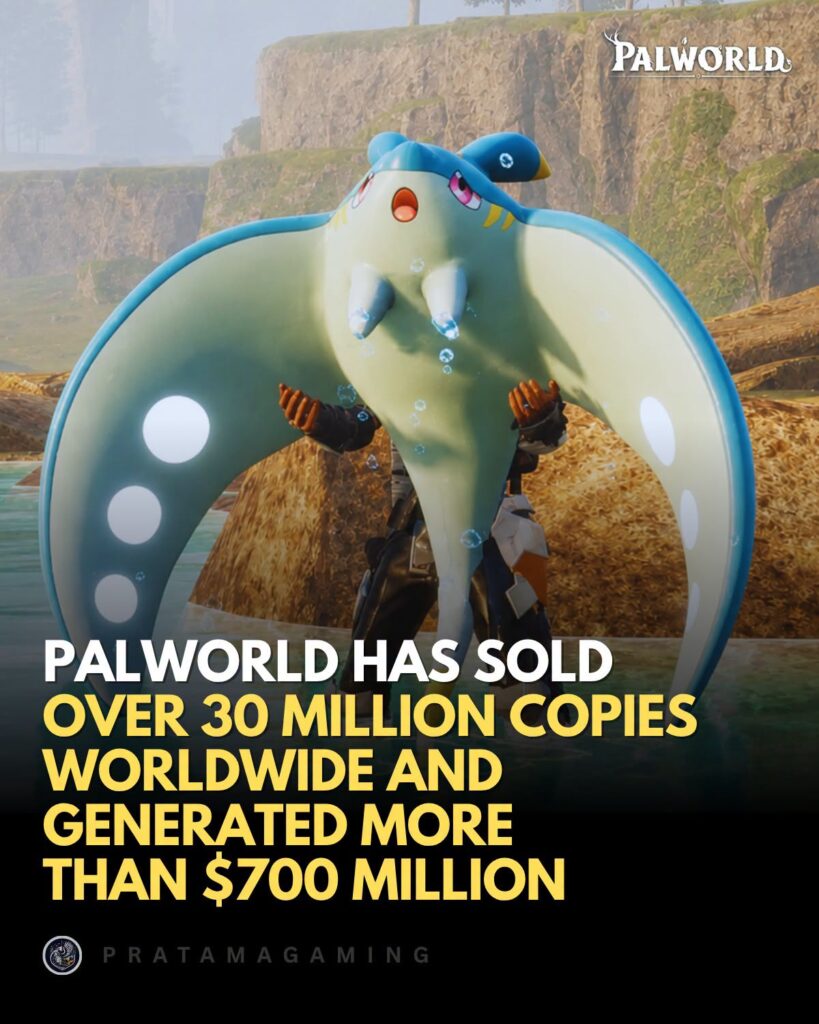
The Palworld 30 million sales milestone comes from Alinea Analytics’ estimate that the game had sold approximately 30.5 million premium copies by July 2026. Alinea published the estimate shortly after Palworld 1.0 launched, describing the full release as the event that pushed the game beyond 30 million lifetime units. The company also estimated that Steam accounted for the overwhelming majority of those sales.
This milestone should be interpreted as a modeled worldwide estimate rather than an official sales announcement from Pocketpair. The developer has publicly confirmed several player milestones, including 25 million players in February 2024, 32 million players in February 2025 and 40 million players in July 2026. However, Pocketpair had not publicly verified the 30.5 million premium-sales figure at the time of the Alinea report.
The phrase “after 1.0 launch” refers to when Palworld was reported to have crossed the 30 million threshold, not that all 30.5 million copies were purchased after the July 10 full release. Most of the estimated sales had already accumulated during the game’s early-access period. Alinea estimated that Steam contributed nearly 1.5 million additional sales after version 1.0 launched, while PlayStation added roughly 300,000 copies and Xbox contributed slightly fewer than 70,000.
These platform estimates suggest that the full-release period generated approximately 1.8 million to 1.9 million additional premium units. However, the figures were rounded and created through analytics modeling, meaning they should not be treated as exact sales records. The more important takeaway is that the 1.0 launch created a significant second sales wave for a game that had already been available for more than two years.
Alinea also linked the renewed sales momentum to a 30 percent launch promotion, which it described as Palworld’s lowest price at the time. The Steam discount began on June 25, before the official full release, while the PlayStation discount started on July 16. This means some purchases influenced by the version 1.0 promotion may have technically occurred while the Steam version was still considered an early-access release.
The best available public estimate places Palworld at approximately 30.5 million premium copies sold worldwide as of July 2026. That figure represents paid units across Steam, PlayStation and Xbox, but it should not be confused with Pocketpair’s officially announced player totals. There is currently no publicly available, independently audited Pocketpair financial statement confirming exactly 30.5 million paid copies, so the figure is most accurately described as an estimate rather than a confirmed sales number.
Official announcements from Pocketpair still show that Palworld reached a massive audience. The developer announced two million sales within the first 24 hours of its January 2024 early-access launch and five million copies within three days. Around one month later, Pocketpair reported 25 million players across Steam and Xbox, although the Xbox figure represented players rather than necessarily purchased copies.
Following additional updates and the PlayStation 5 release, Pocketpair announced that Palworld had surpassed 32 million players by February 2025. On July 8, 2026, the company increased that figure to more than 40 million players worldwide shortly before the launch of version 1.0.
The difference between the estimated premium sales figure and the official player count does not mean either figure is inaccurate. They measure different forms of engagement. A copy sold represents a paid transaction, while a player count can include users accessing the game through subscriptions, multiple accounts belonging to one person or shared-device usage.
The clearest conclusion is that Palworld is estimated to have sold approximately 30.5 million paid copies worldwide, while Pocketpair has officially confirmed that the game has reached an audience of more than 40 million players.

Palworld’s 30.5 Million Sales Milestone, 1.0 Launch Growth, and Worldwide Performance
According to Alinea Analytics’ model, Palworld surpassed 30 million premium copies sold, reaching an estimated 30.5 million units by July 2026. However, Pocketpair’s official public statements have not confirmed the exact paid-sales figure, meaning the milestone should be described as an external market estimate rather than a verified company-reported sales number.
Alinea operates a games-market intelligence platform that produces estimates for sales, revenue, active users, engagement and other commercial data. While these reports can provide insight when publishers do not release complete financial information, they should not be treated as equivalent to audited company records.
There is also a minor inconsistency within the rounded figures from Alinea’s report. The analysis stated that nearly 86 percent of Palworld’s estimated sales came from Steam, while also placing Steam lifetime sales at 27.1 million out of the total 30.5 million. That calculation would equal approximately 88.9 percent rather than 86 percent. The difference could be caused by rounded figures, different data cutoffs or changes within the underlying model, but it does not alter the broader conclusion that Steam accounts for the majority of estimated Palworld purchases.
The 30.5 million estimate is supported by Palworld’s documented launch performance, enormous Steam player counts, official player milestones and renewed interest surrounding version 1.0. However, the figure has not been officially verified by Pocketpair, so terms such as “estimated,” “reported” and “according to Alinea Analytics” remain the most accurate descriptions.
This distinction is important because headlines can create different impressions. Saying “Palworld sold 30.5 million copies” presents the number as confirmed, while saying “Palworld reportedly surpassed 30 million copies sold after 1.0” accurately explains that the figure comes from external analysis.
Palworld’s path toward the estimated 30.5 million sales began with one of the biggest early-access launches in recent gaming history. The game released on Steam, Windows PC and Xbox on January 19, 2024, with Xbox Game Pass availability on day one. Pocketpair announced two million copies sold within the first 24 hours and five million copies within three days.
The game’s popularity was driven by its combination of survival crafting, open-world exploration, automation, multiplayer features and creature collecting. Players could capture Pals, construct bases, automate resource gathering, explore dungeons, battle bosses and create multiplayer settlements. This combination gave Palworld several overlapping gameplay systems rather than relying only on its creature-collection concept.
Steam performance highlighted the scale of the launch. SteamDB recorded an all-time peak of more than 2.1 million simultaneous Steam players in January 2024, placing Palworld among the limited number of games that have exceeded two million concurrent users on Valve’s platform.
Xbox Game Pass also contributed significantly to Palworld’s reach. Microsoft reported that more than seven million Xbox players accessed the game within its first ten days, making it the largest third-party Game Pass launch at that time. Xbox also recorded a peak of nearly three million daily active users across console and Windows PC.
After the initial viral launch, Palworld transitioned into a long-term product. Pocketpair released new islands, bosses, Pals, multiplayer features, raids, building improvements and collaborations throughout early access. The game later expanded to PlayStation 5 in September 2024, giving it access to another major console audience.
Version 1.0 created another major commercial moment rather than simply removing the early-access label. Pocketpair supported the full release with substantial new content, renewed marketing and a discount campaign. Alinea estimated that this period added nearly 1.5 million Steam copies, approximately 300,000 PlayStation copies and slightly fewer than 70,000 Xbox purchases.
Palworld therefore reached its estimated 30.5 million premium copies through several growth stages: its explosive early-access launch, Game Pass audience expansion, continued updates, PlayStation availability and the renewed attention surrounding the version 1.0 release.
Palworld had already generated most of its estimated lifetime sales before leaving early access. Based on Alinea’s platform estimates, approximately 1.8 million to 1.9 million additional premium purchases came during the initial version 1.0 period. This suggests that Palworld may have already reached around 28.6 million to 28.7 million paid units before the full-release sales surge.
That calculation remains an approximation because Alinea’s figures are rounded estimates, and the promotional period did not perfectly match the July 10 launch date. Steam’s 30 percent discount began on June 25, meaning version 1.0-related interest was already influencing purchases before the game officially left early access. PlayStation’s promotion began on July 16.
The broader conclusion is that version 1.0 did not create Palworld’s success from the beginning. Instead, it revived an already successful game and pushed its lifetime performance to another milestone. The early-access period allowed Pocketpair to improve the game, respond to player feedback and build a community before the official launch.
The full release then converted renewed attention into new purchases while bringing existing players back. Increased activity, livestreams, reviews, guides and social-media discussions helped improve storefront visibility, making it easier for new players to discover the game.
The version 1.0 update also contributed to major player growth. Released on July 10, 2026, it ended the early-access period that began in January 2024 and introduced a large amount of new content rather than acting as a simple version update.
The update added Sunreach, floating islands with new environments and activities, while the World Tree became part of the expanded story. Version 1.0 also added 72 Pals, bringing the total to 287, alongside Awakening and Mutation systems, Pal balance changes, improvements to base building, multiplayer features and graphical upgrades.
The level cap increased from 65 to 80, while new settlements, bosses, resources, exploration areas and improvements to communication, servers, stability and presentation helped create a more complete experience for both returning and new players.
The launch produced a major increase in activity. Pocketpair announced that Steam concurrency exceeded 850,000 players shortly after version 1.0 released, while public Steam trackers recorded a peak of approximately 962,000 simultaneous users during the following weekend. Although this was below the early-access record of more than 2.1 million players, it represented one of the strongest revivals for a game that had already been available for years.
Alinea estimated that Palworld averaged around 3.7 million daily active users across platforms during the launch weekend and projected that monthly active users were above 10 million across PC and consoles in July 2026. These figures are modeled estimates rather than official Pocketpair statistics, but they support the idea that version 1.0 created sustained interest rather than a short-term spike.
Palworld Platform Sales Breakdown and Why Steam Dominates
Steam is estimated to be Palworld’s largest sales platform by a significant margin. Alinea placed lifetime Steam sales at approximately 27.1 million copies and estimated that Steam added nearly 1.5 million purchases after the version 1.0 launch, generating roughly $25 million in gross revenue during that period.
PlayStation was the second-largest contributor to the initial full-release sales wave. Alinea estimated around 300,000 additional PlayStation purchases and approximately $7 million in gross revenue. The smaller figure is partly explained by Palworld arriving on PlayStation later than Steam and Xbox.
Xbox recorded the smallest premium-sales estimate following version 1.0, with slightly fewer than 70,000 additional copies and around $1 million in gross revenue. However, this does not mean Palworld had a small Xbox audience. Xbox Game Pass allowed many players to access the game without purchasing a separate copy, changing the relationship between player numbers and direct sales.
Alinea noted that PlayStation and Xbox generated more gross revenue per purchased copy than Steam because of regional sales patterns. Steam had especially strong demand in China, where regional pricing lowered the cost compared with the United States. The report estimated that China and the United States each represented roughly 27 percent of Steam sales.
The platform performance shows three different types of success. Steam appears to dominate premium ownership and lifetime sales because most users needed to purchase the game directly. Xbox built a large audience through Game Pass despite fewer direct purchases, while PlayStation provided another source of sales after receiving the game later.
No official Pocketpair platform-by-platform paid-sales breakdown has confirmed these estimates. However, the differences align with how Palworld was distributed. Steam players generally purchased the game outright, Xbox users had access through Game Pass, and PlayStation players joined after the game had already established a large audience.
Steam’s dominance can be explained by several advantages, including timing, pricing, platform culture and purchasing habits. Steam had Palworld from the beginning of its viral January 2024 launch, meaning its largest early explosion, streaming coverage and player milestones occurred while Steam was the primary platform.
PlayStation users did not receive the game until September 2024, giving Steam an eight-month advantage in building its paid audience. Xbox was available at launch, but Game Pass reduced the need for many users to purchase a copy. Steam did not have a comparable subscription option offering Palworld as part of an existing membership.
Palworld also matched several genres with strong PC audiences. Survival crafting, base building, automation, multiplayer servers and customizable worlds have traditionally performed well on PC, where community discussions, guides and user-created content can extend a game’s lifespan.
Pricing also supported Steam’s performance. Palworld maintained a lower price than many major releases, while regional pricing made it more affordable in some territories. Alinea compared pricing at approximately $11 in China and $21 in the United States during the relevant discounted period and estimated that both countries contributed about 27 percent of Steam sales.
Strong user sentiment provided another advantage. Palworld maintained highly positive Steam reviews around the version 1.0 launch, giving potential buyers additional confidence when considering the purchase.
Steam’s position was therefore created through multiple factors: the longest sales period, the largest viral launch, a purchase-based access model, strong regional demand, competitive pricing and an audience already interested in survival games. After millions of copies were sold, the size of the Steam community created additional momentum through multiplayer activity, reviews and online content.

Palworld Player Growth, Sales Milestones and Revenue Explained
Xbox Game Pass played a major role in expanding Palworld’s audience and helping the game reach its enormous player count. Microsoft reported that more than seven million Xbox players accessed Palworld during its first ten days, making it the largest third-party Game Pass launch at the time and the most-played third-party day-one release through Xbox Cloud Gaming. Microsoft also reported a peak of nearly three million daily active users across Xbox console and Windows PC.
The impact of Game Pass shows why Palworld’s player count and sales figures should not be treated as the same measurement. Millions of players could access the game through a subscription without purchasing a separate copy. This increased the game’s reach, encouraged multiplayer activity and helped Palworld become one of the most discussed releases of 2024, while also meaning Xbox contributed a large audience without necessarily producing equivalent premium sales.
Alinea’s engagement estimates also reflect the different behaviors created by subscription access. The company reported that nearly half of Xbox players stopped before reaching five hours, compared with approximately 12 percent of Steam players and 23 percent of PlayStation players. Only around eight percent of Xbox users reportedly exceeded 100 hours, compared with approximately 20 percent of Steam owners. These differences do not necessarily indicate a weaker Xbox experience, as subscription services naturally attract more experimental users who can try games without the same purchase commitment.
This distinction explains how Palworld could officially surpass 40 million players while external analysis estimated around 30.5 million premium copies sold. Pocketpair announced the 40 million player milestone on July 8, 2026, while Alinea later estimated lifetime paid sales across Steam, PlayStation and Xbox. The two figures measure different things: sales represent purchased software licenses, while player counts can include subscribers, multiple accounts, shared access and other forms of participation.
The difference between the figures should not be interpreted as a simple calculation of Game Pass users. The dates and definitions are not identical, and one person may appear in different platform datasets. The most accurate summary is that Palworld officially surpassed 40 million players, while Alinea estimated that the game sold approximately 30.5 million premium copies.
Alinea also estimated that Palworld generated approximately $700 million in gross revenue from direct software sales by July 2026. Dividing that estimate by 30.5 million copies produces an average of around $22.95 per copy, which aligns with the game’s pricing history, discounts and regional differences. However, gross revenue does not represent Pocketpair’s profit because expenses such as platform fees, taxes, refunds, development costs, marketing, infrastructure and employee compensation reduce the final amount retained.
The reported revenue figure also only covers direct software sales. Other sources of value, including licensing, merchandise, partnerships and future projects, may be separate depending on how those agreements are structured. Pocketpair’s exact profit cannot be calculated from public information because the company has not disclosed every cost or revenue arrangement.
Even with those limitations, an estimated $700 million in gross software revenue would represent an exceptional commercial achievement. It shows that Palworld’s success was not driven only by temporary attention or subscription access but also translated into significant direct sales.
Palworld’s Sales Compared With Other Games and Pocketpair’s Future
Palworld’s estimated 30.5 million sales have naturally led to comparisons with Pokémon because both games feature collectible creatures. However, those comparisons require context because the titles differ in platforms, pricing, business models and reporting methods.
Nintendo’s official figures listed Pokémon Scarlet and Violet at 28.28 million units and Pokémon Sword and Shield at 27.16 million units as of March 31, 2026. If Alinea’s Palworld estimate is accurate, Palworld would be ahead of both Switch generations by approximately 2.22 million and 3.34 million copies respectively. However, it would still be below the original Pokémon Red, Green and Blue generation, which Guinness World Records lists at 31.38 million units.
Because of these differences, it would be inaccurate to claim that Palworld has outsold every Pokémon game. A more precise statement is that its estimated sales place it above the two best-selling mainline Pokémon releases on Nintendo Switch while remaining slightly below the original generation. Palworld has also benefited from being available on Steam, PlayStation and Xbox, while Pokémon’s mainline titles are limited to Nintendo hardware. Additionally, Pokémon sales often combine paired releases, whereas Palworld is sold as a single title.
Palworld’s position as one of the biggest survival games comes from more than its sales total. The game retained a large audience after its initial viral launch and created another major activity spike with version 1.0. The original Steam peak exceeded 2.1 million concurrent players, while version 1.0 pushed Steam concurrency above 850,000 players, with public trackers recording approximately 962,000 during the second launch weekend.
The game’s structure helped support long-term engagement. Palworld combines creature collecting, exploration, combat, breeding, crafting, automation, base building and multiplayer systems. Players can capture Pals, use them in battles, assign them to resource production and optimize their settlements. Alinea estimated that around 20 percent of Steam owners exceeded 100 hours played and approximately 0.7 percent surpassed 500 hours, although those figures were modeled estimates rather than official Valve statistics.
Version 1.0 strengthened this foundation by adding major content and systems. The update introduced Sunreach, the World Tree, 72 additional Pals, new bosses, resources, settlements and progression improvements. It also raised the level cap to 80 while improving multiplayer, building systems and visual presentation. Combined with competitive pricing and discounts, these updates gave both returning players and new buyers a stronger reason to engage with the game.
For Pocketpair, an estimated 30.5 million premium sales represent a major shift in the company’s position. Before Palworld, the Japanese studio was mainly known for smaller projects such as Craftopia. The success of Palworld provided a globally recognized property, a large audience and the financial flexibility to invest in servers, development, localization, quality assurance and future projects.
Pocketpair has already expanded beyond the original game. The company created Palworld Entertainment with Sony Music Entertainment Japan and Aniplex to support licensing and merchandising opportunities. It also announced Palworld: Palfarm, a farming-focused spin-off, an official trading card game and Pocketpair Publishing, a division designed to support other independent studios.
The milestone also creates new responsibilities. A game reaching this scale requires continued support, reliable infrastructure and careful management of player expectations. Pocketpair must balance expanding the Palworld brand with maintaining the game that created the opportunity.
The reported sales milestone gives the studio the resources to continue developing Palworld while building a broader publishing and entertainment business around its success.
Frequently Asked Question (FAQs)
- Will Palworld reach 35 million copies sold?
It is possible, but there is no official forecast confirming that Palworld will reach 35 million sales. The game has a large existing audience, continued update support and opportunities for additional purchases through discounts and future content releases. However, sales momentum usually slows after a major launch period, and Xbox Game Pass access may limit direct premium purchases. Reaching that milestone will depend on long-term player interest, future updates, pricing strategies and continued expansion across platforms.platform expansion and community engagement. - Has Pocketpair officially confirmed that Palworld sold 30.5 million copies?
No. Pocketpair has officially confirmed that Palworld surpassed 40 million players worldwide, but the 30.5 million premium-sales figure comes from Alinea Analytics’ market analysis. Because the figure was created through external estimates rather than a direct sales announcement or audited financial report from Pocketpair, it should be described as a reported or estimated milestone instead of an officially confirmed sales total. - Did Palworld sell 30 million copies after the 1.0 launch?
No. The 30.5 million figure represents Palworld’s estimated lifetime premium sales since its early-access release in January 2024. The version 1.0 launch did contribute a new wave of purchases, with Alinea estimating approximately 1.8 million to 1.9 million additional sales across Steam, PlayStation and Xbox. However, the majority of the estimated sales had already been achieved before the game left early access. - When did Palworld version 1.0 launch?
Palworld version 1.0 officially launched on July 10, 2026, ending the game’s early-access period that began in January 2024. The update was a major release rather than a simple version change, adding new areas such as Sunreach, expanding the story around the World Tree, introducing new Pals, increasing progression limits and improving systems including building, multiplayer and overall gameplay features. - How many Palworld copies were sold on Steam?
Alinea Analytics estimated that Steam accounted for approximately 27.1 million of Palworld’s lifetime premium purchases, making it the dominant sales platform by a large margin. The company also estimated that Steam generated nearly 1.5 million additional sales during the early version 1.0 period. These numbers remain estimates, as neither Pocketpair nor Valve has publicly confirmed an official platform-by-platform sales breakdown. - Why does Palworld have 40 million players but only 30.5 million estimated sales?
The difference exists because player counts and sales numbers measure different things. The 40 million player milestone includes people who accessed Palworld through services such as Xbox Game Pass, where a separate purchase was not required. Sales figures count paid copies instead, meaning one copy does not always equal one unique person because multiple accounts, shared access and different platform records can affect player totals. - How much revenue has Palworld generated?
Alinea estimated that Palworld generated approximately $700 million in gross revenue from direct software sales. This figure represents money earned from game purchases before expenses are deducted, meaning it is not the same as Pocketpair’s actual profit. Platform fees, taxes, refunds, development costs, employee expenses, infrastructure and ongoing support costs would all reduce the amount ultimately retained by the company. - How did Xbox Game Pass help Palworld?
Xbox Game Pass helped Palworld reach a much larger audience by allowing millions of subscribers to access the game without buying it separately. Microsoft reported that more than seven million Xbox players accessed Palworld within its first ten days, making it the largest third-party Game Pass launch at that time. While this increased visibility and multiplayer activity, it also meant that many Xbox users contributed to the player count without increasing premium sales. - Has Palworld outsold Pokémon Scarlet and Violet?
According to Alinea’s estimate and Nintendo’s official March 2026 sales data, Palworld’s estimated 30.5 million copies would place it above Pokémon Scarlet and Violet’s 28.28 million units. However, the comparison should be made carefully because Palworld’s number is an external estimate, while Pokémon’s sales figure comes from Nintendo’s official reporting. The games were also released on different platforms and had different pricing models. - Has Palworld become the best-selling creature-collection game?
Not conclusively. Although Palworld’s estimated 30.5 million sales put it among the most successful creature-collection games ever released, the original Pokémon Red, Green and Blue releases are listed at 31.38 million units. This leaves Palworld approximately 880,000 copies behind that milestone. A definitive record claim would require additional sales and official confirmation of Palworld’s total.

Conclusion
Palworld Reportedly Surpasses 30 Million Copies Sold After 1.0 Launch because Alinea Analytics estimates that Pocketpair’s survival game reached approximately 30.5 million lifetime premium sales following the July 2026 full release. The report also places gross direct software revenue near $700 million and attributes most estimated purchases to Steam.
The headline requires careful interpretation. Pocketpair has officially confirmed more than 40 million players, but it has not publicly verified the 30.5 million sales estimate. The 40 million figure includes a broader audience, particularly users who accessed Palworld through Xbox Game Pass, while the 30.5 million figure attempts to measure paid units.
Version 1.0 did not produce all 30 million purchases. Instead, it created a strong secondary sales wave that reportedly added close to two million copies and carried Palworld beyond the threshold. The update also brought hundreds of thousands of players back to Steam, expanded the game with 72 new Pals and established a stronger foundation for long-term support.
If the estimate is accurate, Palworld has sold more copies than Pokémon Scarlet and Violet and Pokémon Sword and Shield, although it remains slightly below the original Pokémon generation. That comparison must account for Palworld’s multiplatform availability, lower price and unofficial sales estimate.
Regardless of whether Pocketpair eventually confirms the precise total, Palworld’s commercial scale is undeniable. Its official 40 million players, documented launch records, enormous Steam concurrency and renewed version 1.0 activity establish it as one of the biggest new gaming properties of the decade.
Sources and Citation
- Alinea Analytics, July 21, 2026, Palworld 1.0 Pushes the Hit Over 30M Copies Sold: The primary market analysis behind the estimated 30.5 million premium copies sold, $700 million in gross direct software revenue, platform distribution, regional sales, post-launch performance, player engagement, and retention statistics. These figures represent independent market estimates rather than audited Pocketpair financial results.
https://alineaanalytics.substack.com/p/palworld-10-pushes-the-hit-over-30m - Pocketpair, July 8, 2026, Palworld Reaches 40 Million Total Players: Officially confirms that Palworld surpassed 40 million players worldwide ahead of its July 10, 2026, version 1.0 release.
https://www.pocketpair.jp/en/game-news/palworld-reaches-40-million-total-players-special-video-released-ahead-of-1-0-release-on-july-10/ - Pocketpair, July 10, 2026, Palworld 1.0 Is Out Now: Official announcement confirming Palworld’s departure from Early Access and the commercial release of version 1.0.
https://www.pocketpair.jp/en/game-news/%E3%80%8A%E5%B9%BB%E5%85%BD%E5%B8%95%E9%B2%81%E3%80%8B1-0%E6%AD%A3%E5%BC%8F%E7%89%88%E7%8E%B0%E5%B7%B2%E4%B8%8A%E7%BA%BF%EF%BC%81/ - Pocketpair, Steam, July 10, 2026, Palworld Version 1.0 Official Update: The official update announcement and changelog linked directly by Pocketpair, covering new content, gameplay improvements, expanded environments, progression changes, and version 1.0 features.
https://store.steampowered.com/news/app/1623730/view/686383649529010623 - Pocketpair, February 19, 2025, Palworld Blasts Past 32 Million Players: Official developer confirmation that Palworld surpassed 32 million players worldwide approximately one year after its Early Access launch.
https://www.pocketpair.jp/en/news/palworld-blasts-past-32-million-players/ - Sony Music Entertainment, Aniplex and Pocketpair, July 10, 2024, Palworld Entertainment Joint Venture Announcement: Official corporate press release confirming that Palworld attracted more than 25 million players during its first month and announcing the establishment of Palworld Entertainment.
https://www.sme.co.jp/en/pressrelease/news/pdf/20240710_ENG.pdf - Game World Observer, February 19, 2025, Palworld Hits 32 Million Players Across PC and Consoles: Documents historical commercial milestones, including two million copies in 24 hours, five million copies in three days, eight million Steam sales in six days, and 25 million players during its first month.
https://gameworldobserver.com/2025/02/19/palworld-32-million-players-first-year-indie-games - Xbox Wire, January 31, 2024, Palworld Becomes the Biggest 3rd Party Game Pass Launch Ever: Microsoft’s official announcement confirming more than seven million players across its console and Windows PC ecosystem during the first ten days, nearly three million daily active Xbox users at peak, and the game’s third-party Game Pass launch record.
https://news.xbox.com/en-us/2024/01/31/palworld-biggest-3rd-party-game-pass-launch-ever/ - Nintendo Investor Relations, Top Selling Title Sales Units, Nintendo Switch Software: Official worldwide software sales figures for Pokémon Scarlet and Violet, Pokémon Sword and Shield, and other major Nintendo Switch releases. This continuously updated page currently reflects September 30, 2026, rather than the original March 31, 2026, reporting period.
https://www.nintendo.co.jp/ir/en/finance/software/switch.html - Guinness World Records, Best-Selling RPG: Confirms combined lifetime sales of 31.38 million copies for Pokémon Red, Green and Blue, providing historical context for comparisons with Palworld’s estimated premium sales.
https://www.guinnessworldrecords.com/world-records/99111-best-selling-rpg-role-playing-game - Guinness World Records, Best-Selling Pokémon Videogame: Independently documents the original Pokémon games’ commercial record of 31.38 million units as of March 2024.
https://www.guinnessworldrecords.com/world-records/111903-best-selling-pokemon-videogame - GamesRadar+, July 21, 2026, Palworld 1.0 Has Already Moved Over 1.8 Million Copies for Pocketpair: Provides secondary reporting on Alinea Analytics’ estimated lifetime sales, post-release purchases, revenue, platform distribution, and commercial performance.
https://www.gamesradar.com/games/survival/palworld-1-0-has-already-moved-over-1-8-million-copies-for-pocketpair-analyst-estimates-with-65-of-players-on-steam/ - Niche Gamer, July 22, 2026, Palworld Reportedly Tops 30.5 Million Copies Sold: Further corroborates the estimated premium sales, gross revenue, platform-specific performance, concurrent player resurgence, and distinction between purchased copies and subscription-based players.
https://nichegamer.com/palworld-reportedly-tops-30-5-million-copies-sold/ - Video Games Chronicle, February 19, 2025, Over 32 Million Players Have Played Palworld in Its First Year: Provides independent reporting on Pocketpair’s first-year player milestone, historical launch performance, platform availability, and continued development.
https://www.videogameschronicle.com/news/over-32-million-players-have-played-palworld-in-its-first-year-developer-says/
Recommendations
- How to Make a 3D Character for Unreal Engine: Step-by-Step Guide with PixelHair Integration
- TANUKI: Pon’s Summer Release Date, Gameplay, Platforms, Demo, and Everything We Know
- Steam Reviewer Logs 30,000 Hours in Cities: Skylines, Then Calls It “The Most Frustrating Game of My Life”
- Laid-off id Software developers form employee-owned studio Hidden Horses, whose debut Kickstarter FPS is Danger Pay
- Microsoft Rejects Option to More Than Double Nscale’s Texas AI Data Center Deal
- How Baki-Dou: The Invincible Samurai Will Continue in a “Very Scary” Part 2 – Musashi Miyamoto’s Dark Evolution Explained
- Actor Sam Neill, “One of the Good Ones,” Has Died Aged 78
- How The View Keeper Simplifies Multi-Camera Animations in Blender
- Monster Hunter Outlanders Cinematic Trailer: Mobile Game Details
- Marvel Tōkon: Fighting Souls Guide: Roster, Gameplay, Modes, and DLC



































































































