










In This Article (9 sections)
Why the PlayStation 6 Is Expected in 2028 and Could Mark Sony’s Shift Toward Digital-Only Gaming
The gaming industry is once again turning its attention to Sony’s future hardware strategy after analysts suggested that the PlayStation 6 is “almost guaranteed” to launch in 2028. The discussion has intensified amid reports of Sony’s growing focus on digital-only gaming, subscription services, cloud integration, and a reduced emphasis on physical media. As the PlayStation 5 enters the later stages of its lifecycle, speculation surrounding the PlayStation 6 has become one of the most widely searched topics in gaming technology.
Sony has not officially revealed the PlayStation 6, but analysts, industry insiders, and technology experts believe the company is already laying the foundation for its next generation of gaming hardware. The increasing popularity of digital downloads, the release of slimmer consoles with optional disc drives, and changes in consumer behavior all point toward a major transformation in how future PlayStation systems could operate.
The gaming market has evolved dramatically over the past decade, with physical discs once dominating console gaming but digital storefronts now accounting for a significant percentage of software sales. Subscription ecosystems such as PlayStation Plus have also changed how users access games, as many players now download titles directly or stream content through online platforms instead of purchasing physical copies.
The prediction that the PlayStation 6 could launch in 2028 is largely based on Sony’s historical hardware cycle and broader gaming-market trends. Since the original PlayStation launched in 1994, the company has maintained relatively consistent intervals between its major console generations. The PlayStation 2 arrived in 2000, followed by the PlayStation 3 in 2006, the PlayStation 4 in 2013, and the PlayStation 5 in 2020. This pattern indicates that Sony generally refreshes its primary console hardware every six to seven years. Although a 2028 release would represent a slightly longer gap, it would still broadly follow the company’s established timeline while giving Sony additional time to transition toward a more digitally focused gaming ecosystem.
Analysts also note that the PlayStation 5 is entering the mature stage of its lifecycle. Hardware sales remain strong, but Sony has already introduced the PS5 Slim and PS5 Pro, indicating that the generation’s major mid-cycle revisions are underway. Historically, once the company begins releasing smaller or upgraded versions of an existing console, its internal focus gradually shifts toward developing the next generation. Financial planning supports this prediction as well, since major gaming corporations operate according to long-term product roadmaps that can span nearly a decade. Internal reports and court documents connected to industry acquisitions have suggested that Sony did not expect the PS6 to arrive before 2027, making 2028 a realistic estimate.
Technological readiness is another reason experts expect the PlayStation 6 around the end of the decade. Semiconductor manufacturing, artificial intelligence integration, cloud-gaming infrastructure, and graphics-processing technology are all expected to advance considerably by then. Sony will likely want to use these developments to create a substantial improvement over the PS5 generation. By 2028, players may expect major advances in ray tracing, AI-assisted rendering, immersive audio, cloud connectivity, and potentially deeper virtual-reality integration. Meeting those expectations would require a powerful new platform rather than another incremental PS5 revision.
Competition within the gaming market could also influence Sony’s launch plans. Microsoft continues to invest heavily in cloud gaming, digital subscriptions, and cross-platform ecosystems through Xbox Game Pass, while Nintendo is expected to develop its hybrid-gaming strategy further. Analysts believe Sony cannot delay its next-generation hardware for too long without risking its competitive position in the console market.
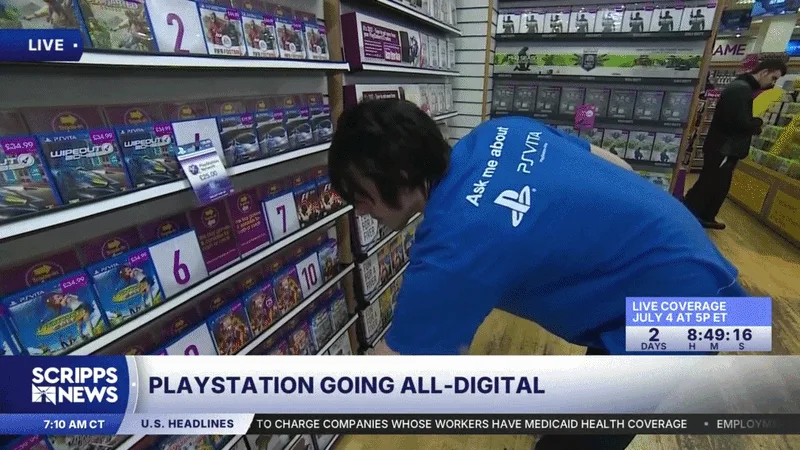
At the center of the discussion is one critical question: will Sony completely abandon physical game discs with the PlayStation 6? Some analysts consider the transition inevitable because of manufacturing costs, changing consumer habits, and the increasing dominance of online gaming infrastructure. Others argue that physical media remains important to collectors, game-preservation advocates, and players who have slower or less reliable internet connections. The PlayStation 6 discussion is therefore no longer limited to fan speculation. Industry trends, hardware revisions, financial strategy, technological development, and market competition all suggest that Sony’s next console could redefine PlayStation gaming as a predominantly—or even entirely—digital experience.

Sony’s Digital-First PS6 Strategy, the Future of Physical Games, and the Expected 2028 Release
Sony’s increasing emphasis on digital gaming may reveal the company’s broader strategy for the PlayStation 6. Over the last several years, Sony has steadily encouraged players to move away from physical media and toward digital ecosystems. The PlayStation Store has become central to its business model, as digital purchases allow the company to avoid the manufacturing costs, retail distribution fees, and supply-chain complications associated with physical discs.
Digital sales can also offer higher profit margins because Sony controls the transaction process directly. The release of digital-only PS5 models represented a major turning point, effectively testing consumers’ willingness to embrace gaming without a disc drive. Their sales performance reportedly exceeded expectations, suggesting that millions of players are comfortable abandoning physical media entirely.
Sony’s subscription strategy further reinforces this direction. PlayStation Plus now operates as a broader ecosystem that includes downloadable games, cloud streaming, online multiplayer access, and classic titles, all of which align naturally with digital-first hardware. Cloud gaming is another important factor. Although streaming still faces limitations related to latency, connection quality, and internet infrastructure, Sony continues to invest in the technology. A future PlayStation ecosystem could combine downloaded games with cloud-based access, reducing its dependence on physical media and, potentially, local storage. Digital storefronts would also give Sony stronger control over its ecosystem by allowing it to manage pricing, maintain consistent content delivery, reduce piracy, and encourage user retention through connected accounts and subscription services.
The potential decline of physical PlayStation discs is closely tied to changing consumer behavior and industry economics. Analysts believe 2028 could become a tipping point at which digital sales overwhelmingly dominate the gaming market. Producing physical games involves disc manufacturing, packaging materials, shipping, warehouse storage, and retail distribution partnerships. Digital downloads eliminate most of those expenses while allowing publishers to retain a larger portion of each sale. Consumer habits have also changed considerably over the last decade, with many players choosing online storefronts for their convenience, instant access, automatic updates, and account-linked game libraries. Younger gamers, in particular, increasingly view digital ownership as normal, while the influence of traditional gaming retailers has weakened as physical sales have declined.
Environmental considerations could also contribute to a move away from discs. Reducing plastic packaging, manufacturing, and shipping emissions would align with the sustainability goals adopted by many technology companies. The design of modern games has weakened the practical value of physical releases as well. Many titles require enormous updates, online connectivity, downloadable content, and continuous live-service support. In some cases, the disc functions primarily as an installation or authentication key rather than containing a complete game that can be played offline.
Despite these advantages, a fully digital strategy would create significant challenges. Many players continue to prefer physical copies because of their resale value, long-term ownership security, collectability, and importance to game preservation. Collectors also value tangible products such as artwork, special packaging, and limited editions. Preservation advocates warn that digital-only gaming creates long-term ownership risks because purchased content could become inaccessible if servers close, storefronts shut down, or licensing agreements expire. Internet accessibility also remains inconsistent across global markets, and players in some regions still face slow download speeds, unreliable connections, or restrictive data caps. A fully digital PlayStation 6 could therefore alienate consumers who depend on physical discs.
Although Sony has not confirmed whether the PlayStation 6 will be digital-only, several developments make that possibility increasingly plausible. Digital PS5 models have performed well commercially, subscription services continue to expand, and cloud infrastructure is improving. Removing the disc drive could reduce manufacturing costs, allow Sony to create a smaller console, and give the company tighter control over software distribution and pricing. It could also simplify the user experience by bringing game downloads, cloud saves, account synchronization, streaming, and subscription access together within one unified ecosystem.
There are still strong reasons for Sony to retain some form of physical compatibility. In addition to uneven internet access, backward compatibility presents a major concern because millions of players own physical PS4 and PS5 game libraries. Eliminating disc support completely could provoke a backlash unless Sony provides a practical alternative. One possible compromise would be a digital-first console with a modular disc drive, following the approach used with newer PS5 hardware. This would allow Sony to sell a lower-cost digital model while giving players the option to add physical support. The PlayStation 6 may therefore launch primarily as a digital platform without eliminating discs entirely.
Predictions about the PlayStation 6 release date are based on Sony’s historical console cycles, corporate timelines, and the pace of hardware development. Most analysts consider 2028 the strongest estimate. Sony usually launches its major consoles during the holiday season to maximize early sales, making late 2028 a plausible window. Such a release would also give the PS5 an eight-year lifecycle. Because the PS5 experienced severe supply shortages during its early years, delaying widespread adoption, Sony may keep the generation active slightly longer than usual to compensate for those disruptions.
Technological progress also supports a 2028 launch. By then, gaming hardware is expected to offer significant improvements in artificial intelligence processing, graphical rendering, SSD performance, machine learning, and cloud infrastructure. Software-development schedules are equally important, as major studios often need several years to create flagship games for a new console. Sony’s internal teams are likely already experimenting with technologies intended for next-generation hardware. Economic conditions could still affect the final schedule, since the company must ensure that consumers are prepared to purchase an expensive new system and may monitor global market stability before announcing a release window. Delays remain possible, but current industry expectations continue to position 2028 as the most probable launch year for a digital-first PlayStation 6.

How Digital Gaming, Backward Compatibility, and the PS5 Pro Could Shape the PlayStation 6
The gradual disappearance of physical games could fundamentally reshape the PlayStation ecosystem, with Sony relying more heavily on services, subscriptions, and digital infrastructure rather than traditional game-ownership models. Digital distribution allows publishers to release games globally without waiting for physical production and shipping cycles, while also enabling faster content delivery and continuous platform updates. It strengthens Sony’s recurring-revenue model as well, since subscription services such as PlayStation Plus generate ongoing income rather than relying entirely on one-time software purchases. This provides the company with more predictable financial performance and encourages players to remain within its digital ecosystem.
A digital-first approach could also improve convenience and accessibility through instant downloads, cloud saves, and synchronized game libraries across multiple devices. However, the disappearance of physical media would introduce serious concerns surrounding game preservation and consumer ownership. Physical discs have historically served as long-term archives of gaming history, but preservation in a digital-only ecosystem would depend on corporate servers, platform support, and licensing agreements. Digital purchases also commonly operate under licensing terms rather than guaranteeing permanent ownership, a distinction that has become increasingly controversial among players concerned about losing access to content they have purchased. The secondary market could disappear almost entirely as well, removing the ability to resell games or purchase used copies at lower prices.
The future of PlayStation will therefore depend on Sony’s ability to balance digital convenience with consumer trust. The company would need to convince players that its digital ecosystem can provide the reliability, ownership security, and long-term access traditionally associated with physical media. This challenge will become particularly important when Sony determines whether the PlayStation 6 will support physical games and disc drives.
Although the PS6’s physical-media support remains uncertain, Sony could offer multiple hardware configurations similar to the PS5 lineup. A standard model might operate entirely digitally, while another could provide disc support through an included or attachable drive. This approach would accommodate both digital consumers and traditional collectors while allowing Sony to phase out physical media gradually rather than eliminating it abruptly. Physical gaming could eventually become a premium or niche feature supported through external drives, specialized console variants, or limited collector’s editions instead of being included as a standard feature in every system.
Internet accessibility remains another important consideration. Not every market can support enormous digital downloads efficiently, and some players continue to deal with slow connections, restrictive data limits, or unreliable service. Physical discs still provide practical benefits in these regions. Sony’s final decision will likely depend heavily on consumer adoption trends, digital-sales growth, and improvements in global internet infrastructure over the next several years.
Backward compatibility will also play a central role in determining how players respond to the PlayStation 6. Many PlayStation users own extensive physical and digital libraries from the PS4 and PS5 generations, and removing disc support entirely could frustrate loyal customers who want continued access to those collections. The PS5 already supports most PS4 games, creating a strong precedent that analysts believe Sony may continue with its next console. Maintaining compatibility would strengthen consumer trust and make players more willing to invest in digital games if they believe those purchases will remain available across future hardware generations.
Digital backward compatibility would likely be easier to manage than physical compatibility. Games purchased through the PlayStation Store could theoretically remain linked to players’ accounts and transfer across generations through Sony’s licensing system. Physical games would present a greater challenge if the PS6 does not contain a built-in disc drive, potentially requiring external drives, specialized hardware, or a digital-conversion program. Technical difficulties could also arise if the PS6 uses an architecture that differs substantially from the PS5, requiring advanced emulation or additional compatibility engineering. Sony could initially prioritize major first-party franchises and popular titles before expanding support through later software updates.
The PS5 Pro may provide further insight into Sony’s next-generation plans because mid-generation upgrades often serve as testing grounds for technologies that later become standard in new consoles. Its focus on advanced graphical performance, AI-enhanced rendering, improved ray tracing, and higher frame rates likely reflects some of Sony’s priorities for the PlayStation 6. Artificial intelligence appears especially important, as AI-assisted upscaling can improve visual quality while reducing the amount of raw processing power required to render games at higher resolutions.
The PS5 Pro also demonstrates Sony’s emphasis on premium gaming experiences and smarter performance efficiency rather than relying exclusively on increases in raw hardware power. Improvements in storage technology provide another clue, as faster SSDs support shorter loading times and more seamless open-world environments. The PlayStation 6 will likely build significantly upon these capabilities. Sony’s evolving hardware design also suggests continued movement toward a modular ecosystem in which optional accessories, detachable disc drives, and expanded digital services play increasingly important roles.
In this sense, the PS5 Pro acts as a bridge between the current generation and Sony’s broader ambitions for the PlayStation 6, offering an early indication of how AI processing, graphical efficiency, backward compatibility, and digital-first distribution could shape the company’s next console.

How a Digital-Only PlayStation 6 Could Affect Collectors, Pricing, and Sony’s Competition With Xbox
Game collectors may face major changes if the PlayStation 6 embraces a digital-only future. Physical collecting has remained an important part of gaming culture for decades, with many players valuing boxed editions, steelbooks, art books, and carefully preserved libraries. A digital-only PlayStation ecosystem could dramatically reduce the availability of physical collector’s editions, turning limited-run releases into niche premium products rather than standard retail offerings. Sony could attempt to compromise by selling premium collector’s boxes containing digital download codes instead of discs, although many traditional collectors would likely consider this insufficient.
The permanence of ownership is one of collectors’ greatest concerns. Physical discs provide tangible proof of ownership that does not depend entirely on an online account, while digital licensing models raise questions about server shutdowns, revoked access, and disappearing storefronts. Preservation advocates share these concerns because physical copies can serve as historical archives, preserving games beyond the commercial lifecycles of their original platforms. At the same time, collectors may adapt by focusing more heavily on retro gaming markets. Older physical PlayStation titles could become even more valuable if future generations abandon physical formats altogether. The PlayStation 6 could therefore mark the beginning of a major cultural shift away from traditional game ownership.
A digital-only PlayStation 6 could have one immediate financial advantage: a lower hardware price. Removing the disc drive would reduce manufacturing expenses, simplify the console’s internal design, and streamline assembly. Smaller hardware could also lower shipping and storage costs. Sony has already demonstrated this approach with the digital PS5, which launched at a lower price than the standard disc-based model. A fully digital PS6 could similarly offer a more accessible entry price than a version equipped with an optical drive.
Digital distribution could also improve Sony’s long-term profitability. Because digital purchases avoid retailer commissions and physical production expenses, the company could recover any hardware subsidies more effectively through software sales. However, the overall affordability of a digital-only console would be more complicated than its initial price suggests. Consumers could spend more over time because they would lose access to used games, resale options, and many retailer discounts.
Digital storefront prices often remain higher for longer than physical retail prices, and the disappearance of secondhand competition would remove another source of cheaper games. Subscription services could offset some of these costs by providing access to large libraries for monthly fees, but players who prefer permanent ownership might ultimately spend more. The true affordability of a digital-only PS6 would therefore depend heavily on Sony’s software pricing and subscription policies.
Sony and Microsoft are both preparing for major changes heading into the next console generation, although their long-term strategies differ in important ways. Microsoft has aggressively expanded cloud gaming and subscription services through Xbox Game Pass, increasingly presenting Xbox as a broader platform ecosystem rather than only a traditional hardware business. Sony has adopted some similar strategies but remains more focused on premium exclusive experiences and a distinct console identity. PlayStation exclusives continue to support hardware sales and brand loyalty, while both companies have moved further into digital distribution through products such as the disc-free Xbox Series S and Sony’s digital PS5 models.
Cloud-gaming competition will likely intensify by 2028. Microsoft’s investment in Azure infrastructure may give it advantages in game-streaming technology, while Sony’s position in the global console market and its exclusive-content production remain central strengths. The companies also differ in their approach to hardware. Microsoft increasingly promotes flexibility by making games available across consoles, PCs, and cloud services, whereas Sony continues to emphasize dedicated PlayStation hardware experiences. The PlayStation 6 and Microsoft’s next Xbox generation may ultimately represent two competing visions for gaming’s future: a premium, console-centered ecosystem and a broadly accessible platform built around multiple devices, subscriptions, and cloud connectivity.

Gamer Reactions to a Digital-Only PlayStation 6, Sony’s Biggest Questions, and Whether to Buy a PS5 Now
Gamers remain deeply divided over rumors that the PlayStation 6 could be a digital-only console. Online discussions reveal strong opinions from both supporters and critics. Many players welcome the convenience of digital gaming, including instant downloads, reduced physical clutter, automatic updates, and seamless synchronization across account-linked devices. Younger gamers, in particular, appear increasingly comfortable with fully digital ecosystems and may view the absence of a disc drive as a natural step in the industry’s evolution.
Others strongly oppose the abandonment of physical media. Collectors, game-preservation advocates, and budget-conscious players are concerned about losing ownership rights, resale opportunities, and reliable long-term access to their libraries. Internet accessibility is another major issue, as players in regions with slow, unreliable, or expensive connections argue that digital-only gaming would place them at an unfair disadvantage. Pricing concerns also dominate the discussion. Without competition from physical retailers and the used-game market, some players fear Sony could gain excessive control over software prices.
Dependence on servers and digital licenses creates further uncertainty. Players worry that licensing changes, account problems, or future storefront shutdowns could permanently remove access to games they have purchased. Despite these concerns, many fans acknowledge that the industry is increasingly moving toward digital distribution, regardless of individual preferences. Sony will likely monitor community reactions closely before finalizing and announcing its next-generation hardware strategy.
Before officially unveiling the PlayStation 6, Sony must address several major questions that are shaping consumer expectations. One of the most important is whether the console will support physical media. Players want clear information about disc compatibility, digital ownership policies, and the long-term availability of purchased games. Backward compatibility will be equally important, especially for users who have built extensive PS4 and PS5 libraries. As digital purchases become more common, consumers increasingly expect their existing games to remain accessible when they upgrade to new hardware.
Pricing will also be critical. Rising production costs, inflation, and the integration of more advanced technology could make the PlayStation 6 more expensive than previous consoles. At the same time, gamers will expect substantial performance improvements, including 4K resolution, frame rates of up to 120 FPS, advanced ray tracing, AI-enhanced rendering, and near-instant loading. Sony must therefore balance technological ambition with a price that consumers are willing to pay.
Cloud gaming and subscription services raise additional questions. Sony must decide whether the PS6 will place greater emphasis on game streaming or continue to prioritize powerful local hardware. The company will also need to explain how PlayStation Plus will evolve alongside the new console and whether subscriptions will become more central to accessing games. Its approach to game preservation, account dependency, and consumer ownership rights could ultimately determine how much trust players place in an increasingly digital PlayStation ecosystem. Sony’s answers to these questions may play a major role in the commercial success of the PlayStation 6.
For gamers deciding whether to purchase a PS5 now or wait for the PlayStation 6, the best choice depends on individual priorities. The PS5 continues to offer a powerful gaming experience, strong exclusive titles, fast SSD performance, and a growing library of current-generation games. With the PlayStation 6 potentially still several years away, waiting may not be practical for players who want immediate access to modern games. The PS5 Pro also extends the relevance of the current ecosystem by offering improved graphical capabilities and performance enhancements.
However, players focused on future-proofing may prefer to wait, particularly if they are concerned about investing heavily in hardware during the later part of its lifecycle. Sony’s possible transition toward a more digital ecosystem could also influence the decision, especially for gamers with large physical collections who want clarity about future disc and backward-compatibility support. Budget is another consideration: PS5 prices may decline over time, while the PlayStation 6 could launch at a premium price. Ultimately, the decision depends on whether the immediate benefits of owning a PS5 outweigh the uncertainty of waiting several years for Sony’s next console.
Frequently Asked Questions ( FAQ )
- What is the expected release date for the PlayStation 6?
Most analysts expect the PlayStation 6 to launch around 2028, based on Sony’s previous console release cycles and current industry predictions. However, Sony has not officially announced a release date, so the timing could change depending on hardware development, market conditions, and the lifespan of the PS5 generation. - Will the PlayStation 6 be digital-only?
Sony has not confirmed whether the PlayStation 6 will be entirely digital. A more likely possibility is that Sony will strongly emphasize digital gaming while offering both a digital-only model and another version that supports discs, possibly through an optional external drive. - Why are physical PlayStation discs declining?
More players are buying games through digital storefronts because downloads provide immediate access without requiring a physical copy. Subscription services, cloud gaming, and lower distribution costs also encourage publishers and console manufacturers to focus more heavily on digital releases. - Will PS4 and PS5 games work on the PlayStation 6?
Backward compatibility is widely expected, particularly for PS5 games and digital purchases connected to PlayStation accounts. However, Sony has not confirmed which generations will be supported, and compatibility may vary depending on the game, licensing agreements, and the PS6 hardware design. - Could the PS6 cost less without a disc drive?
Removing the built-in disc drive could reduce manufacturing and shipping costs, allowing Sony to offer a cheaper digital-only model. However, the final price would also depend on other expensive components, including the processor, graphics hardware, storage, cooling system, and memory. - What role will cloud gaming play in the PS6 generation?
Cloud gaming will likely become more closely integrated with PlayStation subscriptions, allowing players to stream selected games without downloading them. Even so, powerful local hardware should remain important because it provides better responsiveness, image quality, and reliability for players with limited or unstable internet connections. - How does the PS5 Pro connect to the PlayStation 6?
The PS5 Pro introduces technologies such as AI-assisted image upscaling, improved ray tracing, and stronger graphical performance. These features may act as an early indication of the technologies Sony could expand in the PS6, particularly its use of machine learning to improve visuals and performance. - Will physical collectors still have options with the PS6?
Physical collectors may still have access to disc-based games through a PS6 model with a drive or an optional external disc-drive accessory. Collector’s editions could also continue, although some may include physical merchandise with a digital game code instead of a traditional game disc. - Is Sony competing directly with Xbox’s cloud strategy?
Yes, Sony is expanding its cloud gaming, subscription, and digital services in response to changes across the industry. However, Sony also continues to place strong emphasis on premium console hardware and major PlayStation games, meaning its strategy is not based entirely on cloud gaming. - Should gamers wait for the PlayStation 6 instead of buying a PS5?
Players who want access to current PlayStation games should consider buying a PS5 rather than waiting for an unannounced console. Waiting may make sense for people who are satisfied with their existing system and mainly want next-generation hardware, but the PS6 release date, price, and features have not yet been officially confirmed.

conclusion
The PlayStation 6 has quickly become one of the gaming industry’s most discussed future technologies, especially following reports suggesting a 2028 launch is “almost guaranteed.” While Sony has not officially revealed the console, industry analysts believe the company is steadily moving toward a more digital-focused gaming ecosystem driven by online storefronts, subscription services, cloud infrastructure, and evolving consumer behavior.
The possibility of a digital-only PlayStation 6 represents a major shift in gaming culture. For some players, the convenience of instant downloads, seamless updates, and subscription access makes digital gaming the obvious future. For others, the potential loss of physical ownership, resale markets, and preservation raises serious concerns.
Sony faces a delicate balancing act. The company must continue innovating technologically while maintaining consumer trust regarding backward compatibility, ownership rights, affordability, and accessibility. The decisions Sony makes over the next several years could redefine not only the PlayStation brand but the broader future of console gaming itself.
Whether the PS6 launches as a fully digital console or adopts a hybrid approach, one thing appears increasingly clear: the next generation of PlayStation will likely look very different from the gaming industry consumers have known for decades.
sources and citation
- Sony Corporate Reports (hardware lifecycle, PlayStation strategy, financial performance)
- Corporate reports archive and annual reports.
- Sony Interactive Entertainment – Business Data & Sales
- https://sonyinteractive.com/en/our-company/business-data-sales/
- Official PlayStation hardware sales, software sales, monthly active users, and digital business metrics.
- Sony Interactive Entertainment – Company Timeline
- https://sonyinteractive.com/en/our-company/expanded-company-timeline/
- Official PlayStation release timeline from the original PlayStation through current hardware.
- Sony Investor Relations
- https://www.sony.com/en/SonyInfo/IR/
- Industry analyst commentary regarding next-generation console timelines
- TechRadar – “If not PS6, then PS7”: Analyst says PlayStation ending physical discs was bound to happen
- https://www.techradar.com/gaming/if-not-ps6-then-ps7-analyst-says-playstation-ending-physical-discs-was-bound-to-happen-as-the-console-ecosystem-is-nearly-entirely-digital-at-this-point
- Gaming market trend reports on digital software sales and subscription growth
- Sony Interactive Entertainment Business Data & Sales
- https://sonyinteractive.com/en/our-company/business-data-sales/
- Sony Corporate Report
- https://www.sony.com/en/SonyInfo/IR/library/corporatereport/
- Public discussions surrounding PS5 Digital Edition adoption trends
- GamesRadar – PlayStation ending physical games is “like Apple removing the CD Drive”
- https://www.gamesradar.com/games/playstation-ending-physical-games-is-like-apple-removing-the-cd-drive-from-its-laptops-says-analyst-not-a-single-person-is-complaining-about-it-today/
- TechRadar analyst discussion
- https://www.techradar.com/gaming/if-not-ps6-then-ps7-analyst-says-playstation-ending-physical-discs-was-bound-to-happen-as-the-console-ecosystem-is-nearly-entirely-digital-at-this-point
- Technology industry projections related to cloud gaming and AI-assisted rendering
- A Network Analysis on Cloud Gaming: Stadia, GeForce Now and PS Now (arXiv)
- https://arxiv.org/abs/2012.06774
- Historical PlayStation console release timeline data
- Sony Interactive Entertainment – Expanded Company Timeline
- https://sonyinteractive.com/en/our-company/expanded-company-timeline/
- Consumer gaming behavior studies regarding physical versus digital ownership
- https://www.theguardian.com/games/2026/jul/07/playstation-sony-ending-physical-game-production
- Financial Times – The death of physical games – and why it matters
- https://www.ft.com/content/2f404678-1d62-4c10-91e8-ffb8130b23f5
- The Guardian – PlayStation says it will stop making physical games – and that should worry us all
- https://www.theguardian.com/games/2026/jul/07/playstation-sony-ending-physical-game-production
Recommendations
- Uri Tupka and the Gods Is the New Mike Mignola Sequel Graphic Novel Expanding Lands Unknown
- Hokubu Evolving World Car Meet Location in Forza Horizon 6: Where to Find it Fast
- Forza Horizon 6’s Xbox Series X|S Quality and Performance Modes Explained: 4K/30 vs Dynamic 4K/60 (and Series S 1440p/30 vs 1080p/60)
- Reinforcement hairLearning for Dynamic Hair Simulation: Advanced Techniques and Industry Applications
- How to Add Colored Shadow Penumbra in Unreal Engine 5 (UE5 Guide)
- Dave The Diver In The Jungle The Walking Catfish In The Mud Mission Walkthrough
- New Tencent Studio Working On AAA Open-World Games Closes TiMi Montreal Studio: What Happened and Why It Matters
- Willy Wonka Animated Movie Announced: Netflix’s Charlie vs the Chocolate Factory Release Date, Cast, Plot & Latest News
- Dreamlight Valley Treasure Hunt Event Guide: How Treasure Trove Clues Work and How to Finish
- Subnautica 2 Early Access Release on May 14, 2026: Full Details, Gameplay Features, Platforms, and Everything Survival Game Fans Need to Know



































































































