








In This Article (8 sections)
RimWorld 1.7 Waylith Engine, Unity Replacement, and the 2-4x Performance Claims
RimWorld update 1.7 introduces Waylith, Ludeon Studios’ new in-house engine that replaces Unity while aiming to preserve the colony simulator’s familiar appearance and gameplay. Ludeon also credits RocketWerkz’s Brutal framework with helping make the engine possible, so Waylith should be understood as internally developed technology built with an acknowledged external foundation rather than something created entirely from scratch. The engine change is technical rather than a new expansion, setting, or separate edition of RimWorld. Its importance comes from improving how the existing game loads, renders, processes input, and advances its increasingly demanding simulation.
The strongest publicly demonstrated reason for the transition is performance. Ludeon reports improvements to startup, large mod-list loading, world and map generation, and general ticks per second, with testing showing results around two to four times better depending on the computer and modifications involved. That range should not be treated as a universal multiplier applied equally to every part of the game. Starting RimWorld, loading 1,500 mods, generating a world, and advancing a large late-game colony are different workloads, so each can improve by a different amount. The announcement is best understood as targeting several separate bottlenecks rather than promising that every player will see exactly four times the performance everywhere.
Ludeon has not presented the move as a response to one particular Unity policy, licensing dispute, pricing change, or breakdown in relations. Claims assigning the migration to those motives would therefore go beyond the published explanation. From a broader engineering perspective, an in-house engine allows a studio to focus technical decisions more narrowly on the needs of its own software instead of supporting the broad range of projects required by a general-purpose engine. That specialization can be valuable for a long-running simulation game, although custom technology also means Ludeon assumes greater responsibility for tools, compatibility, platform behavior, and maintenance.
The distinction between visual performance and simulation performance is especially important in RimWorld. Frames per second describe how often images are presented, while ticks per second describe how quickly the underlying colony simulation advances. A colony can appear visually simple while requiring substantial processing for colonists, events, relationships, jobs, pathing, and other systems. Likewise, a smooth interface does not necessarily mean the simulation is maintaining its desired speed. Waylith’s benefits therefore need to be judged through simulation responsiveness as well as ordinary visual smoothness.
Ludeon has not published a detailed technical breakdown attributing the tick-rate improvement to a particular threading model, pathfinding rewrite, allocation strategy, or other specific optimization. The safe conclusion is that the migration reduces the processing cost of important workloads, allowing more simulation work to occur within the same amount of real time. That extra capacity is most noticeable when a colony was previously constrained. A small settlement already maintaining its intended speed may show less obvious improvement, while a large colony struggling to advance can benefit substantially from additional performance headroom.
The clearest late-game comparison in the announcement is a colony stress test in which RimWorld 1.7 performed 2.2 times better than version 1.6. That result demonstrates a significant improvement under Ludeon’s test conditions but is not enough to predict the exact result for every colony. Population, events, installed mods, save state, and other active systems can change the workload dramatically. Two settlements containing the same number of colonists may therefore produce very different performance profiles.
A useful personal comparison would use the same save, settings, and equivalent mod configuration under versions 1.6 and 1.7. It would also examine normal play and busier periods rather than measuring only a quiet moment. If one workload increased from 100 units of simulation work per second to 220, that would illustrate a 2.2-times improvement, but those numbers are only an explanation of the multiplier rather than additional Ludeon benchmark data. The practical value is that colonies previously unable to sustain comfortable simulation speeds may gain enough headroom to feel considerably more responsive.
Ludeon also reports faster world and map generation, although it does not publish separate timing comparisons for those processes. World generation prepares the broader campaign environment, while map generation creates a particular local area, so the two should not be treated as one benchmark. Players who frequently begin new colonies or experiment with different setups may notice reduced waiting before play begins. Faster generation does not itself mean larger maps, additional terrain systems, more world content, or altered generation rules unless those changes are separately announced.
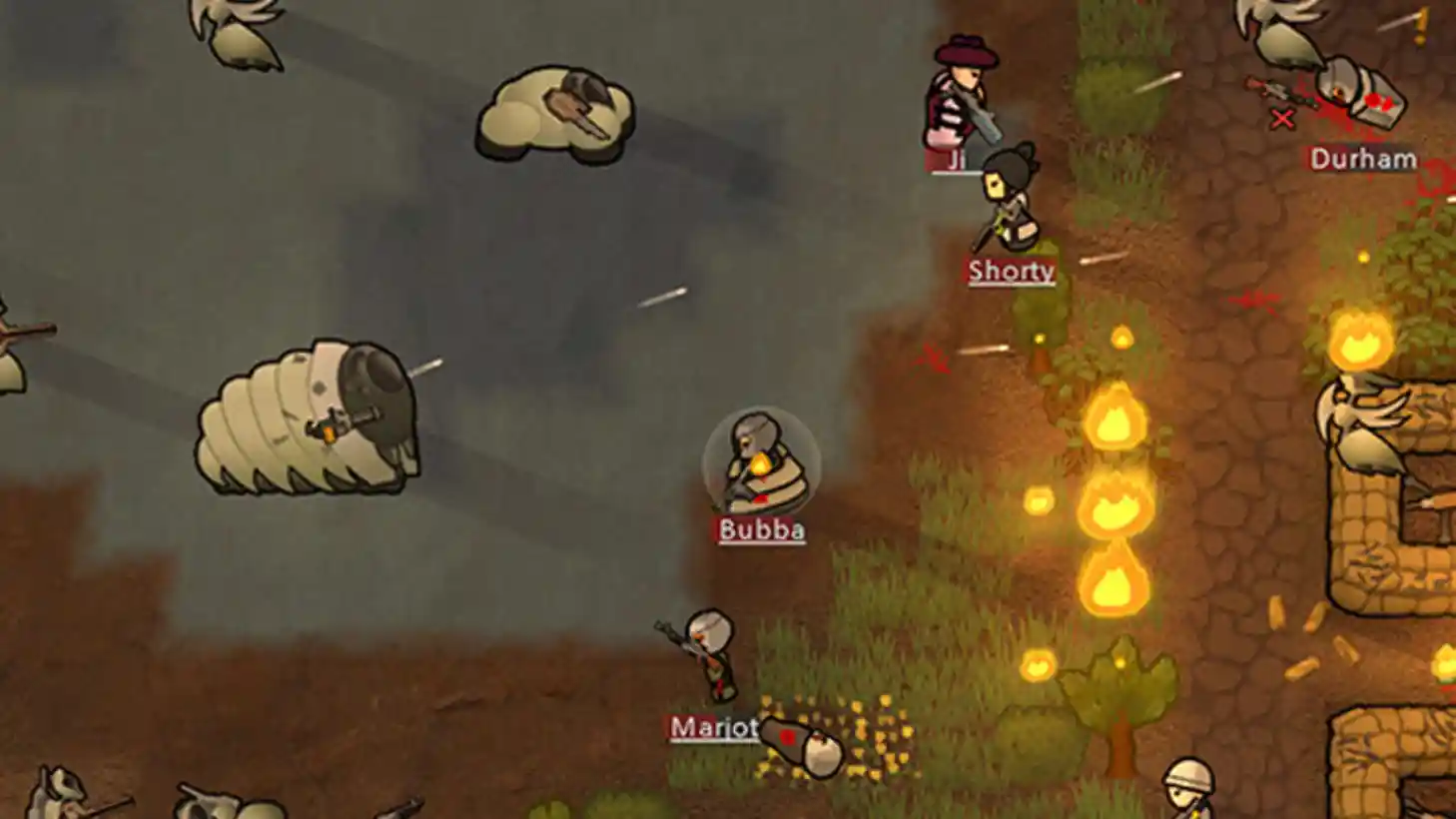
The engine migration is also intended to remain largely invisible in terms of RimWorld’s artistic and gameplay identity. Ludeon says the game should look and play the same following the transition, making Waylith a change to the machinery underneath the experience rather than a redesign of the experience itself. Better technical performance can still affect how the game feels because familiar systems resolve more quickly and demanding colonies remain more responsive. It should not, however, be interpreted as confirmation of new combat mechanics, progression systems, lighting, higher-resolution artwork, or other features that have not been separately documented.

RimWorld Mod Loading, Save Compatibility, Mod Support, and Older PC Requirements
One of Ludeon’s most concrete Waylith benchmarks involves an installation containing 1,500 mods. In the developer’s test, loading time fell from 14 minutes under the previous setup to six minutes. That represents eight minutes saved each time the game loads, a reduction of approximately 57 percent in duration and an effective improvement of about 2.33 times. These figures describe the same benchmark in different ways rather than separate performance tests.
The practical benefit extends beyond the initial wait to begin playing. Heavily modded users may restart RimWorld repeatedly while testing a new mod, changing load order, reproducing an issue, or troubleshooting interactions. When every restart requires a lengthy wait, experimentation becomes costly in real time. Reducing that delay can make maintaining a large mod configuration significantly less frustrating even if the running colony itself was already performing acceptably.
Mod count alone is still a poor predictor of load time. A collection containing many lightweight modifications can behave very differently from another with the same number of entries but much larger assets or more complicated initialization. The 1,500-mod example demonstrates a substantial improvement for one particularly demanding configuration rather than establishing six minutes as the expected load time for every large collection. Individual machines, storage devices, and the particular mods installed will continue to matter.
Ludeon has tried to preserve compatibility during the engine transition. The studio explicitly states that saves created in version 1.6 can load in 1.7 and that 1.7 saves can also be returned to version 1.6. That two-way compatibility is particularly important because established RimWorld colonies can represent many hours of construction, relationships, equipment, and player decisions. Moving to Waylith therefore does not inherently require starting a new campaign.
Save compatibility should still be separated from mod compatibility. A save file may be structurally supported by both game versions while also depending on objects, mechanics, or data supplied by specific mods. Removing one of those dependencies or using a mod that behaves differently under 1.7 can create a separate problem unrelated to the base save format. Players experimenting with the unstable branch should therefore preserve backups of important saves and record their active mod configuration before making major changes.
Ludeon says the vast majority of mods should continue to function without requiring changes from their authors. That is an encouraging compatibility statement but deliberately leaves room for exceptions. A mod can load successfully while still having a feature that behaves incorrectly later, and two independently functional mods can produce a conflict when used together. General compatibility guidance cannot replace testing of the exact combination a player uses.
Some mods may appear with a yellow “potentially unsupported” warning simply because their declared supported version has not yet been updated for RimWorld 1.7. Ludeon explains that the warning can appear even when the mod works and asks authors to test their releases before marking them as compatible. A version declaration and actual functional behavior therefore provide different information. The warning is not proof that a mod is broken, while removing the warning does not repair a genuine incompatibility.
Players should evaluate warned mods by checking author notes and observing the features they actually use. Successfully reaching the main menu does not necessarily verify systems that appear only during combat, world generation, recurring events, or long simulation periods. Similarly, a mod built to improve performance should not automatically be considered obsolete or harmful simply because the underlying engine has become faster. Whether such a mod remains useful depends on what it changes and how it interacts with Waylith.
For mod authors, Waylith also introduces opportunities beyond compatibility maintenance. Ludeon highlights newer C# language features, more room for complex modifications, and easier creation of custom visual effects, while crediting more than two dozen modders with helping prepare for the engine’s introduction. Developers may initially choose to verify their existing features before taking advantage of new capabilities. A user-interface mod, content mod, simulation mod, or visual-effects project will each require different forms of testing.
Newer language features should not automatically be described as performance improvements. They can improve how code is written or structured without necessarily reducing the workload of the resulting mod. Likewise, additional engine capacity does not remove the need to measure expensive operations under realistic conditions. A feature that appears inexpensive in a nearly empty development save may become much more demanding when repeated hundreds of times in a mature colony.
Hardware compatibility introduces another qualification. Ludeon warns that computers more than ten years old may be unable to run RimWorld 1.7 and asks affected players to report their problems through the development Discord. The age reference should be treated as a broad warning rather than a precise hardware cutoff because two computers purchased in the same year can have very different processors, graphics capabilities, operating systems, and drivers. The announcement does not identify one confirmed processor instruction, GPU feature, or other component as the universal cause.
Performance and compatibility are also separate concepts. Waylith can execute RimWorld more efficiently on supported hardware while simultaneously requiring capabilities that some older machines lack. A large benchmark improvement after the game launches therefore does not guarantee that every computer capable of running version 1.6 can start version 1.7. A useful compatibility report should include the hardware, operating system, exact behavior, and error information rather than simply stating the age of the computer.
How to Test RimWorld 1.7 on Steam’s Unstable Branch and Evaluate the Performance Gains
RimWorld 1.7 is initially being distributed through Steam’s unstable testing branch rather than replacing the main version immediately. Ludeon instructs players to open their Steam library, right-click RimWorld, select Properties, open Betas, and choose the branch labeled unstable. If the download does not start, the studio recommends restarting Steam. When launching the game afterward, players should select Play 1.7 Unstable.
At the time of the announcement, the normal branch remained on version 1.6, so opting into 1.7 is a deliberate testing decision. Players should verify that the branch has finished downloading and that the running game reports the expected version before drawing conclusions about performance or compatibility. Merely selecting the beta menu entry does not mean all required files have already been installed. This is particularly relevant when comparing versions because a mistaken branch state can undermine the entire comparison.
The unstable designation reflects the purpose of the release. It gives Ludeon and the community an opportunity to find problems before wider deployment rather than indicating that every session is expected to fail. Even though save compatibility is an explicit goal, individual beta issues may still occur. Players with especially important colonies or large mod collections should therefore approach the branch as testing software rather than assuming it is identical in reliability to the established release.
A useful test begins with familiar conditions. Loading a well-known save with a recorded mod list makes it easier to recognize shorter loading times, improved simulation speed, or unexpected behavior. Changing the game version, mod collection, graphics settings, and save simultaneously makes any result much harder to interpret. When possible, players should isolate variables so that an improvement or failure can be connected to a specific change.
The same principle applies to performance benchmarking. Startup time, mod loading, world generation, map generation, ticks per second, and displayed frame rate are separate metrics. Measuring only one and then describing the entire game as a certain number of times faster can obscure where Waylith is actually helping. A player with 1,500 mods may care heavily about launch time, while someone running relatively few mods but an enormous late-game colony may care much more about simulation ticks.
The developer’s headline claim of two to four times better performance should therefore be understood as a range across its tests rather than a guarantee for each measurement. The 2.2-times late-game simulation comparison and the reduction from 14 to six minutes for a 1,500-mod load are much more useful because they identify what was being measured. World and map generation are described as faster without separately quantified results. Keeping those distinctions intact produces a more accurate picture of Waylith than applying the largest multiplier to every activity.
Testing should also examine sustained behavior rather than only a short benchmark. A late-game colony may perform well while nothing unusual is happening but become constrained during raids, fires, large construction projects, or other periods of increased simulation work. Likewise, a mod can appear compatible for several minutes before a particular mechanic activates. Representative testing therefore matters more than achieving the most impressive isolated number.
When an issue does appear, detailed bug reports can make unstable-branch testing useful to Ludeon. The important information includes the version, hardware, active mods, relevant save state, steps that reproduce the behavior, and any visible errors. A report stating only that version 1.7 feels slower or a mod is broken provides much less information for investigation. Clear reproduction details help separate engine regressions from existing mod conflicts or configuration-specific problems.
For many players, the most meaningful test will simply be whether the same colony feels more responsive and requires less waiting. Technical measurements are useful for understanding why, but the practical benefit comes from spending more time managing a settlement and less time waiting for the game to initialize, generate content, or process a demanding simulation. If Waylith preserves expected gameplay while removing those bottlenecks, the engine migration can have a substantial effect without visually transforming RimWorld.
What Waylith Means for RimWorld’s Future, Mod Developers, and Ludeon’s Unannounced New Game
Waylith is significant not only because it improves an existing game but because Ludeon confirms that RimWorld is not the only project using the engine. The studio says it is developing another game with Waylith, although no title, genre, release date, platform list, or relationship to RimWorld’s fictional setting has been announced. The shared engine therefore establishes a technological connection between projects without establishing a creative one. It would be unsupported to describe the mystery title as a RimWorld sequel, expansion, colony simulator, or game set in the same universe.
Using one engine across multiple projects can allow engineering work to benefit more than one product. Tools, fixes, platform expertise, rendering systems, and other technical improvements may become reusable rather than being created separately each time. That general advantage helps explain why Waylith is strategically important to Ludeon beyond the immediate RimWorld migration. It does not mean features developed for the new game will automatically appear in RimWorld or that updates to both projects will occur simultaneously.
For RimWorld itself, the migration creates more technical headroom without requiring the studio to discard the game players already know. Existing saves remain central to the transition, the broad mod ecosystem is being preserved where possible, and the visual and gameplay identity is intended to remain familiar. That combination makes the project unusual because the underlying technology is changing substantially while the player-facing design is deliberately being kept recognizable. Success depends partly on making the engine replacement feel uneventful outside the areas where performance improves.
The modding community could benefit considerably if the new engine provides a stronger foundation for future projects. Ludeon’s references to newer C# features, more complex mods, and more accessible custom effects suggest that Waylith is intended to expand what creators can build rather than simply reproduce Unity-era capabilities. The participation of more than two dozen modders in preparation for the engine’s debut also indicates that ecosystem continuity has been considered during development. Immediate compatibility remains the priority, but longer-term opportunities may emerge as authors learn the new environment.
That does not mean every modification will become more ambitious or that greater complexity is automatically desirable. Large RimWorld installations already demonstrate how interactions between many systems can create compatibility and performance challenges. More powerful tools still require careful testing, optimization, and documentation. Waylith may expand what is technically possible while leaving creators responsible for deciding which possibilities improve the game.
For ordinary players, the future implications are simpler. A faster technical foundation can allow existing colonies and mod configurations to operate with more headroom, potentially extending the point at which simulation complexity becomes uncomfortable. It may also make experimentation with large mod collections less frustrating because restarts and loading take less time. Those advantages do not require new mechanics to be valuable. Improving the machinery underneath a long-running simulation can change its practical limits while leaving its fundamental design intact.
The unannounced Waylith project remains separate from those benefits. Its existence confirms that Ludeon views the engine as technology for future development rather than a one-off RimWorld optimization project. Beyond that, the available evidence is intentionally limited. Until the studio reveals more, RimWorld 1.7 should be judged on its own compatibility, stability, loading improvements, and simulation performance rather than speculation about what Waylith might power next.
Frequently Asked Questions (FAQs)
- What is the Waylith Engine in RimWorld?
Waylith is Ludeon Studios’ in-house engine introduced with RimWorld update 1.7. It replaces Unity as the underlying technology used to run the game while aiming to preserve RimWorld’s existing visual style and gameplay. Ludeon also credits RocketWerkz’s Brutal framework with helping make Waylith possible, so the engine is internally developed with an acknowledged external foundation. For players, the important effects are improved loading, simulation performance, and technical flexibility rather than a completely different-looking game. Waylith is therefore a new technological foundation for RimWorld rather than a separate expansion or edition. - Does RimWorld 1.7 run four times faster on every PC?
No. Ludeon’s reported two to four times performance range comes from its own testing across different workloads and should not be treated as a guaranteed multiplier for every computer. Performance can vary according to processor, storage, installed mods, colony size, active events, and the specific task being measured. Startup, mod loading, world generation, map generation, and simulation ticks are also different workloads and may improve by different amounts. A machine already handling a small colony comfortably may show less noticeable benefit than one struggling with a large late-game settlement. The most useful comparison is therefore the same save and mod setup tested under both versions. - What late game performance improvement did Ludeon report?
Ludeon reported a 2.2 times improvement in one late-game colony stress test comparing RimWorld 1.7 with version 1.6. This is one of the more useful figures because it identifies the type of workload being tested rather than applying a general performance claim to the whole game. A 2.2 times result means the tested simulation handled substantially more work in the same amount of time under those conditions. However, the announcement does not provide enough benchmark methodology to predict the exact result for every colony. Population, mods, events, and save complexity can all change how demanding a settlement is. - How much faster did the tested large mod collection load?
Ludeon tested a configuration containing 1,500 mods and reported that loading time fell from 14 minutes to six minutes. That saves eight minutes on each load and represents a reduction of roughly 57 percent in the waiting time. Another way to describe the same result is that the tested load completed about 2.33 times as fast. The improvement can be especially valuable for heavily modded players who restart repeatedly while changing configurations or troubleshooting problems. However, mod count alone does not determine loading time, so other collections may produce different results depending on their assets and initialization work. - Can a RimWorld 1.6 save load in version 1.7?
Yes. Ludeon states that saves created in RimWorld 1.6 can be loaded in 1.7 and that saves from 1.7 can also be opened again after returning to 1.6. That two-way compatibility makes it possible to test the new engine without automatically abandoning an established colony. However, base-game save compatibility should be distinguished from mod compatibility because a save may depend on content or systems supplied by particular modifications. A mod that changes behavior or fails under 1.7 could still affect the save even when the underlying format is supported. Keeping a backup and recording the active mod list remains sensible when testing the unstable branch. - Does every existing RimWorld mod work with Waylith?
No guarantee covers every mod. Ludeon says the vast majority should work without requiring changes from their authors, which suggests the transition was designed to preserve the existing ecosystem as much as possible. However, an individual mod may still contain code or dependencies that behave differently under the new engine. Large mod collections can also contain interactions that do not appear when each modification is tested separately. Players should therefore check author compatibility notes and test the exact combination they use rather than assuming the general statement applies perfectly to every setup. - Does a yellow unsupported warning prove a mod is broken?
No. Ludeon explains that some mods can appear with a yellow “potentially unsupported” warning simply because their declared supported version has not yet been updated for RimWorld 1.7. That warning tells the game what versions the author has officially marked as supported, but it does not directly test whether the mod actually functions. A modification can work correctly despite the warning, while another can be marked compatible and still contain a problem that appears only under specific conditions. Authors are encouraged to test their mods before changing the version declaration. Players should therefore use the warning as a reason to check compatibility rather than as proof of failure. - Will RimWorld 1.7 run on very old computers?
Not necessarily. Ludeon warns that computers more than ten years old may encounter compatibility problems with version 1.7 and invites affected users to report their hardware and symptoms. The age reference is only a broad warning because two PCs of the same age can have very different processors, graphics capabilities, operating systems, and drivers. The announcement does not identify one specific hardware feature as the confirmed cause of all potential failures. It is also possible for Waylith to run faster on supported hardware while no longer working on some older systems. Players with aging machines should therefore test the unstable build before assuming their current setup will transition without problems. - Where can players test RimWorld 1.7?
Players can access it through Steam’s unstable beta branch. Ludeon instructs users to open RimWorld in their Steam library, right-click the game, choose Properties, open the Betas section, and select the branch named unstable. If the update does not begin, restarting Steam is recommended, and players should confirm that they are launching Play 1.7 Unstable afterward. The main branch remained on version 1.6 when the announcement was made, so joining 1.7 is an opt-in test rather than an automatic upgrade. Because the branch is specifically intended for testing, important saves and mod setups should be backed up before experimenting. - Has Ludeon announced a RimWorld sequel?
No. Ludeon has confirmed that another game is being developed using the Waylith engine, but the studio has not identified it as a RimWorld sequel. No title, genre, setting, release date, platform list, or relationship to RimWorld’s universe has been revealed. Sharing an engine only means the projects use the same underlying technology and does not establish that they share gameplay systems or story continuity. Waylith may support more than one Ludeon project without those games being directly connected. Until the studio provides additional information, the accurate conclusion is simply that an unannounced second game is using the same engine.

Conclusion
RimWorld’s move to the Waylith engine is significant because it targets the waiting and simulation slowdowns that become more noticeable in heavily modded games and large late-game colonies. Ludeon’s tests show substantial gains, including faster loading and improved simulation performance, but the exact benefit will still depend on hardware, mods, and the workload being measured.
Just as important is continuity. Update 1.7 is designed to preserve familiar gameplay, existing saves, and most of the mod ecosystem while replacing the technology underneath. With the build still on the unstable testing branch, the clearest measure of Waylith’s success will be how reliably those reported gains translate to players’ own established colonies and configurations.
Sources and Citations
- Ludeon Studios, October 12, 2026: The primary official announcement confirms that RimWorld 1.7 moves from Unity to Ludeon’s in-house Waylith Engine. Ludeon reports performance gains of roughly 2x to 4x across tested workloads, including a 2.2x improvement in a late-game colony and a reduction from 14 minutes to six minutes when loading a 1,500-mod setup. The post also confirms save compatibility between versions 1.6 and 1.7, broad mod compatibility, warnings for very old PCs, newer modding capabilities, and another unannounced game using Waylith. Ludeon Studios
Announcing the Waylith Engine and Update 1.7 | Ludeon Studios - Steam Community, October 12, 2026: Ludeon’s official Steam publication repeats the Waylith announcement and provides the clearest instructions for testing RimWorld 1.7 through Steam’s unstable branch. Players are told to open RimWorld’s Properties, select Betas, choose the
unstablebranch, and launch “Play 1.7 Unstable.” It also confirms that the main branch remained on version 1.6 at the time of publication. Steam Community
Announcing the Waylith Engine and Update 1.7 | Steam Community - Ludeon Official on Reddit, October 12, 2026: The official community post confirms the same core migration and benchmark information, including the move from Unity to Waylith, the 2x to 4x performance claim, the 2.2x late-game test, and the 1,500-mod load-time reduction. It also explicitly credits RocketWerkz’s Brutal framework with helping make Waylith possible and confirms that Ludeon is developing another game with the engine. Reddit
Announcing the Waylith Engine and Update 1.7 | Reddit
Recommendations
- Vivian Kubrick Debunks Eyes Wide Shut Deleted Scenes Theory
- Battlefield 6 2026 Roadmap: More Maps, “Legendary” Battlefield 4 & Battlefield 3 Remakes, and Wake Island’s Return
- Apple TV’s Widow’s Bay is the First Breakout TV Hit of 2026: Why Everyone is Talking About the Horror Comedy
- Pitchify Launches New Service to Connect Developers and Publishers: How Pitch Direct Works
- Pokémon Pokopia Bubbly Basin DLC Release: Date, New Pokémon, and Everything You Need to Know
- Nordic Game 2026 (NG26 Spring): Dates, Venue, Passes, Speakers, Expo & Awards in Malmö
- Subnautica 2 Early Access Roadmap: Co-Op Updates, Sprinting, and More
- Virtua Fighter 6 Leak Explained
- The Future of 3D Modeling: Insights on AI Advancements
- GTA 6 is Already Outselling Everything Else: Why Pre-Orders Are Dominating Gaming



































































































