







On May 5, 2026, Rebellion CEO Jason Kingsley laid out one of the clearest middle-ground positions on generative AI currently coming from a major independent game studio. The company behind Sniper Elite: Resistance and Atomfall is ruling out generative AI in player-facing shipped content, while still entertaining the idea that AI might have narrowly useful roles inside the production pipeline. That stance carries unusual weight because Rebellion, founded in 1992 by brothers Jason and Chris Kingsley, describes itself as one of Europe’s biggest independent multimedia studios, and its next announced game, Alien Deathstorm, is slated for 2027.
The practical takeaway is that Rebellion is not presenting a blanket anti-technology manifesto. Instead, the studio is drawing a hard line between AI that players would directly see and AI that might help designers, artists, and QA teams iterate faster behind the scenes. That distinction closely mirrors how the wider PC games ecosystem has started to think about the issue: internal development uses are increasingly separated from live or player-facing uses, even as industry sentiment around generative AI has grown more negative.
Rebellion CEO Jason Kingsley Generative AI Comments (Sniper Elite Studio)
Kingsley’s comments were notable because they rejected the most controversial form of generative AI use in games without claiming that every AI-assisted workflow is automatically illegitimate. In the interview, he said Rebellion does not expect to use generative AI in what players actually see in its games, while also warning that discussion around AI has become unhelpfully absolutist. The result is a studio position that is neither full adoption nor total prohibition, but a selective policy centered on player-facing authenticity and human authorship.
Will Rebellion Use Generative AI in Future Sniper Elite Games
Based on Kingsley’s current wording, future Sniper Elite games are not being positioned as showcases for AI-generated visuals, art, or other player-visible content. At the same time, he did not completely rule out internal experimentation with generative AI if it stays inside the toolchain and helps teams explore ideas or speed up repetitive tasks. The safest reading, therefore, is that any future Sniper Elite title may use AI-assisted workflows behind the curtain, but not as a substitute for the crafted material players experience on screen.
“No Plans to Ever Use Gen AI on the Screen” Meaning for Game Development
In development terms, that line should be read as a boundary around shipped, player-facing output rather than a promise to reject all automation. Kingsley immediately contrasted visible AI use with possible backstage uses such as idea exploration, technical setup, and QA assistance, which suggests the studio’s policy is really about preserving authored final content. Put differently, Rebellion is drawing a line between AI as a rough internal aid and AI as a visible creative replacement inside the finished game.

Sniper Elite Studio Stance on AI-Generated Art and Assets
Rebellion’s stance on AI-generated art and assets is currently conservative. Kingsley linked the studio’s no-onscreen policy to what it believes it should and should not be doing creatively, and GameSpot’s follow-up reporting said players should not expect AI-generated artwork in Alien Deathstorm either. That makes Rebellion’s present position clearer than the hedged language often used elsewhere in the industry: AI-generated images and other customer-facing assets are not part of the studio’s announced shipping philosophy.
Generative AI in Game Development Tools Pipeline vs In-Game Content
This is the distinction at the heart of Kingsley’s argument. He described generative AI as potentially useful inside a tools chain when it helps teams iterate, but not as something meant to appear in the finished player experience. That separation is increasingly reflected in platform governance too. Valve’s Steamworks documentation asks developers to disclose both pre-generated AI content made during development and live-generated AI content created while a game is running, with additional guardrail requirements for live systems. In other words, the broader industry is already treating backstage use and in-game use as materially different categories.
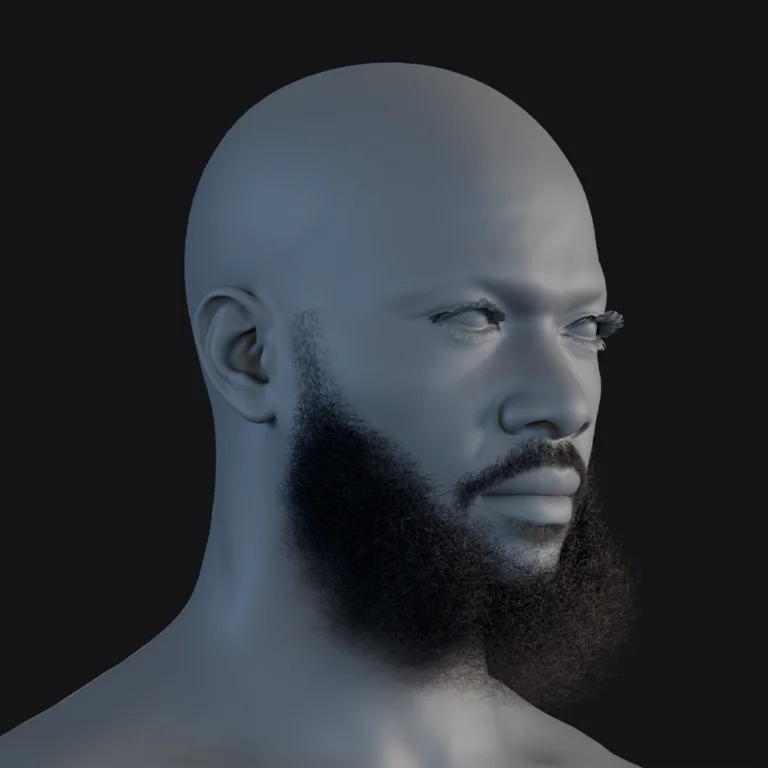
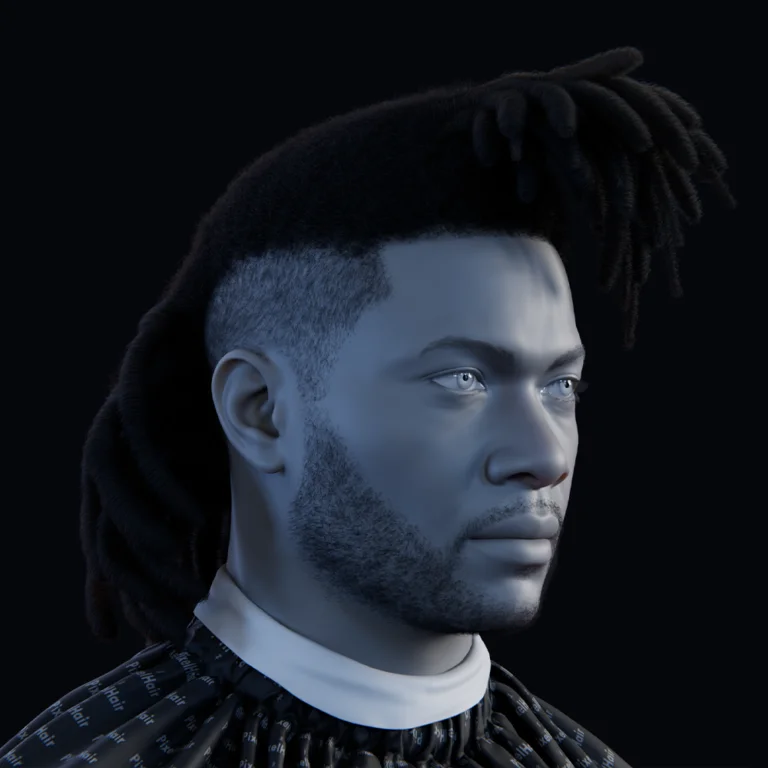
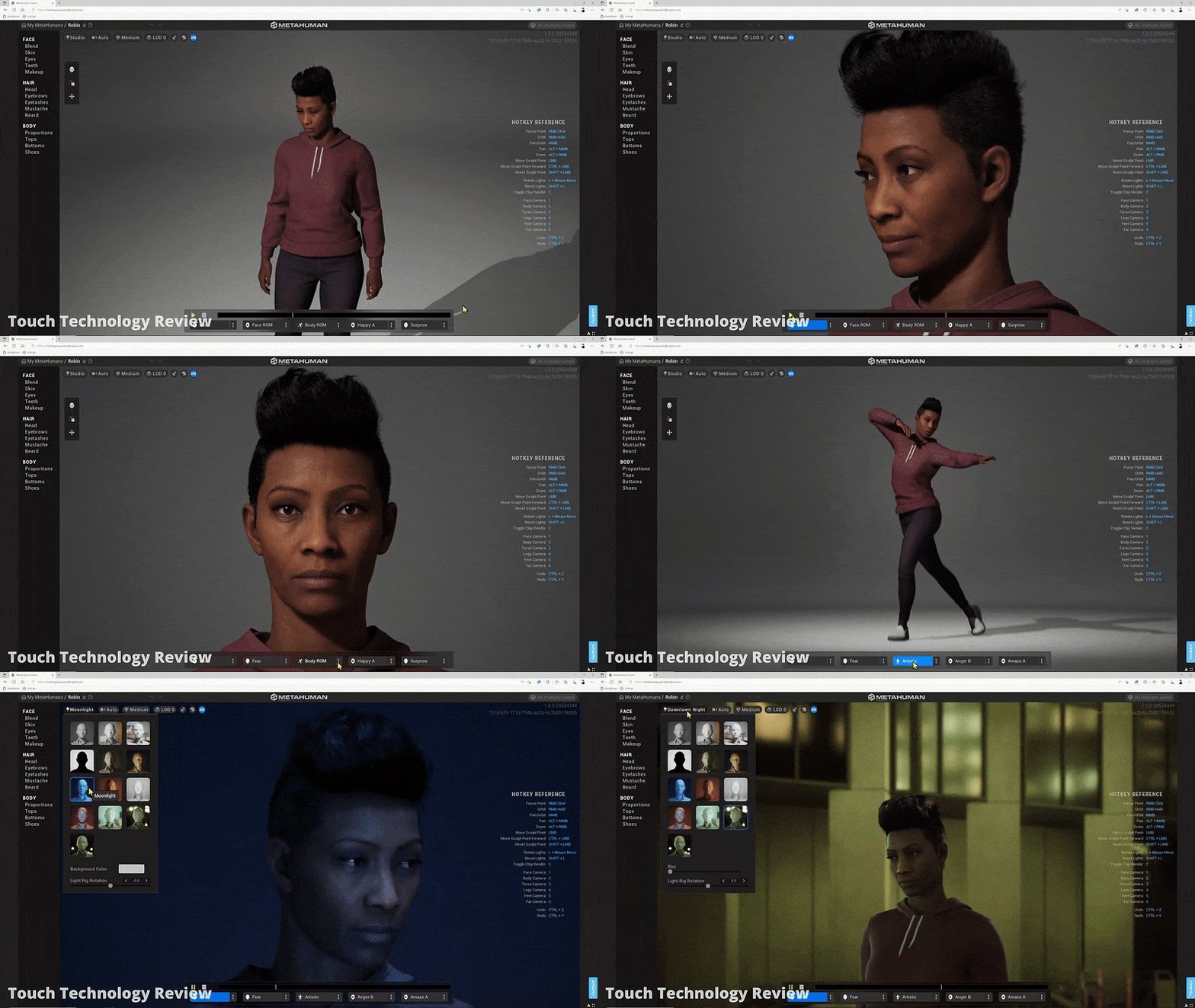
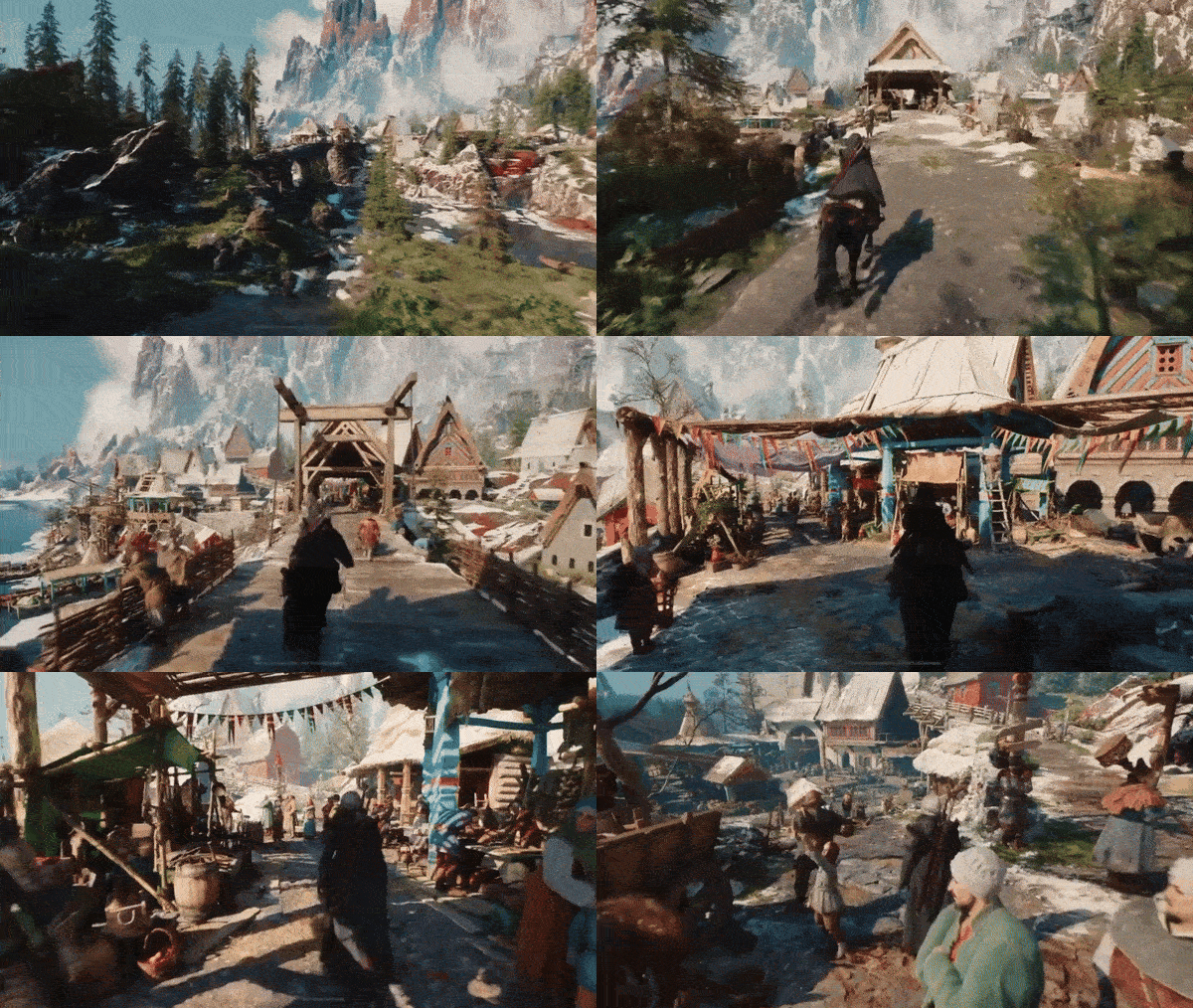
How Generative AI Could Help Level Design Iteration (snow Version, Night Version)
Kingsley’s most concrete design example was hypothetical but easy to understand: take a screenshot from an existing level and use a generative model to preview how it might read in snow or at night before assigning a team to build the real version. The value is not that the AI output becomes the shippable level, but that it can help a designer cheaply test whether a variant might change visibility, routing, mood, or pacing enough to justify further human work. Framed that way, generative AI becomes an ideation shortcut rather than a replacement for final level craft.
Using AI for Environment Blockouts and Concept Exploration in Games
That same logic maps cleanly onto environment blockouts. Epic defines greyboxing or blockout work as a playable rough draft of a level used to understand gameplay before visual polish, and its Unreal Engine learning materials emphasize simple shapes and fast iteration at this stage. Kingsley’s snow-and-night example can be read as an even earlier pre-blockout step: a way to stress-test world ideas before full production begins. In that narrow role, generative AI could help environment teams compare multiple visual or structural directions quickly, while human designers still own pacing, composition, traversal, and final implementation.

AI for Collision Boxes and Technical Setup in Open-World Games Like Atomfall
Kingsley also pointed to collision setup as a plausible AI-assisted task for a large landscape game like Atomfall. That is a telling example because collision work is technical, necessary, and time-consuming, but not usually where a game’s distinctive artistic voice lives. Unity’s documentation describes colliders as invisible shapes used for physical collisions, often rough approximations rather than exact mesh matches. If a machine-learning tool can help place or validate that invisible technical layer across a huge world, Rebellion’s argument is that artists and designers could spend more time on objects, encounters, and authored details instead of repetitive setup.
AI Agents for Game QA Testing: Can Bots Find Bugs Faster
For narrowly defined testing goals, the answer appears to be yes. Kingsley floated the idea of massively increasing test coverage by letting AI agents hammer a build to expose edge cases more quickly. Academic work points in the same direction.
A 2022 experience report on the iv4xr agent-based testing framework argued that intelligent, reactive agents suit games better than brittle record-and-replay methods because games are non-deterministic and layouts change frequently during development. A 2023 master’s thesis on Unreal Engine 5 found that a curiosity-driven agent achieved full-level exploration and outperformed both a random policy and a human tester at discovering missing collision bugs in the test environment. What the evidence does not yet support is the claim that bots can replace the full breadth of human QA judgment.
Will AI Replace QA Jobs in Game Studios: Rebellion CEO Perspective
Kingsley’s position was explicit: he does not see AI-driven QA as grounds to eliminate human QA teams. His argument is that automated agents could expand the volume of testing and reduce some cost, while human testers remain better at deliberately breaking systems, improvising strange behaviors, and identifying the kinds of experiential failures players actually notice. That view matters because it pushes back against a broader climate of labor anxiety. The 2026 survey published by the Game Developers Conference found that 36% of respondents use generative AI at work, but 52% now think it is bad for the industry, and students surveyed specifically cited AI-led displacement as part of their fear about entering games.
Ethical vs Unethical Uses of AI in Games: What Developers Should Consider
The ethical line in games is increasingly converging around a few concrete questions: where the training data came from, whether performers and creators consented, whether players are told what AI is doing, whether live systems have guardrails, and whether studios are using AI to augment workers or simply replace them.
Valve’s Steamworks documentation requires disclosures for both development-time and live-generated AI uses, with extra scrutiny on live systems and their safeguards. Meanwhile, the ratified 2025 video game performers contract reported by the AP says employers must obtain written permission to create digital replicas, compensate performers for the work, and provide usage reports. Unity’s public discussion of ethical AI similarly emphasizes transparency, fairness, and accountability. In practice, that means the most defensible uses are repetitive, bounded, and consent-based, while the least defensible are opaque, unconsented, and substitution-driven.
Why the Generative AI Debate in Games is “too Polarized”
Kingsley’s complaint about polarization is strongly supported by current industry data. GDC’s 2026 survey found broad use of generative AI tools, but also the most negative sentiment yet recorded, with only 7% of respondents saying AI is having a positive impact on the game industry and more than half saying it is harmful.
That split helps explain why conversation often collapses into slogans. One camp sees AI as a practical set of tools for brainstorming, coding help, prototyping, and repetitive tasks; the other sees it as a vector for labor displacement, IP abuse, and degraded craft. The nuance Kingsley is asking for is not moral relativism. It is recognition that internal augmentation, live content generation, concept iteration, performer replicas, and AI-generated final art are different use cases with different ethical stakes.
How Privately Owned Studios Approach AI Differently than Public Companies
Kingsley argued that Rebellion’s structure gives it more freedom to think about AI in human rather than purely financial terms. He said the company is owned by him and his brother, Chris Kingsley, with no investors or venture capital, and that Rebellion largely self-funds its games.
That does not automatically make every private studio more ethical than every public one, but it does reduce short-term market pressure to justify AI primarily as a labor-cutting tool. By contrast, public publishers often discuss AI with investors as a production accelerator. In a July 2024 earnings call, Electronic Arts said AI and machine learning helped build workflows for 11,000 player likenesses in College Football 25 and that the game could not have shipped at that level without those tools. The contrast is not private-versus-public morality so much as private-versus-public incentive structure.

Sniper Elite: Resistance Development Approach and Studio Philosophy
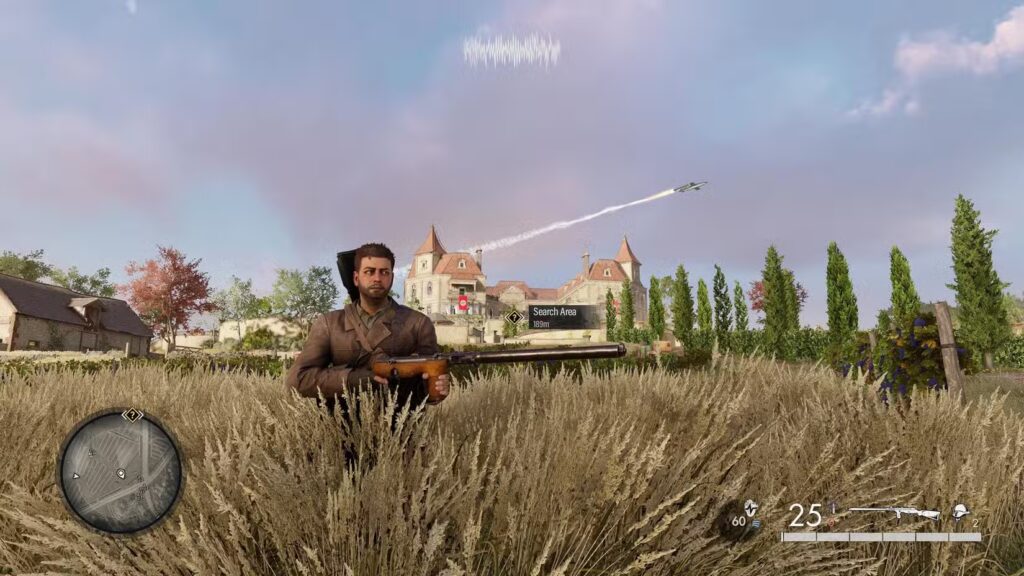
The development approach behind Sniper Elite: Resistance lines up with the same philosophy that shapes Rebellion’s AI stance: clarity of premise, controlled ambition, distinctive identity, and a reluctance to chase trends for their own sake. Officially, Sniper Elite: Resistance puts a new lead operative in occupied France fighting alongside the French Resistance, and Rebellion announced its January 30, 2025 launch in late 2024. In broader interviews,
Kingsley has said Rebellion likes games that can be understood from a screenshot, tries to deliver the central fantasy quickly, avoids doing much market research, and keeps budgets in a “middle ground” that protects staff stability. That strategy has produced durable brand clarity for Sniper Elite and, more recently, critical validation for Atomfall, which won British Game at BAFTA in April 2026. The through-line is obvious: Rebellion wants authored games with recognizable identity, not anonymous content optimized by trend pressure.
Rebellion Upcoming Games and Whether AI Will Be Used Behind the Scenes
As of May 6, 2026, the publicly visible Rebellion roadmap points to continued support for Sniper Elite: Resistance and Atomfall, plus the newly announced Alien Deathstorm for 2027. Official posts and support pages show Sniper Elite: Resistance received post-launch DLC in 2025,
while Atomfall added the Wicked Isle and Red Strain story expansions in 2025. What has not changed is the studio’s public line on player-facing generative AI: Kingsley still frames onscreen use as outside Rebellion’s plans. That leaves a narrow but important possibility open for behind-the-scenes uses in ideation, technical setup, and test automation. The likely future, if Kingsley’s comments are taken seriously, is a studio that experiments with AI where players will not notice it and avoids it where players absolutely will.
Frequently Asked Questions (FAQs)
- Did Jason Kingsley ban all AI use at Rebellion?
No. His comments drew a line against player-facing generative AI in shipped games, but left room for tightly scoped internal uses such as ideation, technical setup, or testing assistance. - Will future Sniper Elite games include AI-generated art or assets?
On current evidence, that does not appear to be the plan. Kingsley’s public position rejects onscreen generative AI, and follow-up reporting said players should not expect AI-generated artwork in Alien Deathstorm either. - What is the difference between AI in the pipeline and AI in the game itself?
Pipeline use means development-time assistance such as concept previews or repetitive setup; in-game use means AI systems generating content during play or producing final player-facing material. Steamworks formally separates pre-generated and live-generated AI in its documentation. - Why did Kingsley mention snow and night versions of old levels?
He was describing a cheap way to test whether an environment variant might be worth real production time. The AI output would function as fast visual exploration, not as the final shipped level. - Could AI really help with blockouts and greyboxing?
Potentially, yes. Epic describes blockout or greyboxing as a rough playable draft used for gameplay testing before visual polish, so AI-assisted concept generation could accelerate the stage before or alongside that work, while human designers still control final layout and playability. - Can AI agents find bugs faster than human QA?
For specific tasks, sometimes yes. Research on agent-based game testing and curiosity-driven QA agents shows promising results for exploration and collision-bug discovery, but that is not the same as replacing human QA across all test types and experiential judgment. - Does Kingsley think AI will replace QA jobs at Rebellion?
No. He argued that automated testing could expand coverage, while human QA remains essential for strange edge cases and the kinds of failures that emerge from real player behavior. - Why does Rebellion’s private ownership matter in this debate?
Kingsley says the company is family-owned and self-funded, which can make it easier to frame AI around long-term craft and staff responsibility instead of short-term shareholder expectations. - What is the biggest ethical issue around AI in games right now?
There is no single issue, but the most persistent concerns are consent, data provenance, performer likeness rights, disclosure, and guardrails for live-generated systems. Steamworks policy and the SAG-AFTRA contract both reflect those concerns directly. - What is the clearest conclusion from Kingsley’s comments?
Rebellion currently appears committed to human-made, player-facing game content while remaining open to carefully bounded AI assistance behind the scenes. That is a selective adoption model, not an anti-AI absolutist stance.

Conclusion
Jason Kingsley’s comments matter because they offer a practical framework that many studios may eventually adopt: reject generative AI where it dilutes authorship, consent, or trust in the finished game, but remain open to narrowly bounded uses that speed up iteration, automate invisible technical work, or widen test coverage.
Rebellion’s independence gives it unusual freedom to take that position, and its recent track record with Sniper Elite: Resistance, Atomfall, and the announced Alien Deathstorm suggests the studio believes recognizable identity and human craft are still competitive advantages. In a games industry where AI use is increasing even as skepticism hardens, Rebellion is not making the case for less thinking about AI. It is making the case for more careful thinking about where AI belongs and where it does not.
Sources and Citations
- GameSpot interview by Mark Delaney, May 5, 2026 — Kingsley on no player-facing generative AI, internal toolchain use, QA agents, ownership structure
- GameSpot feature on Rebellion’s studio strategy, May 5, 2026 — focused premises, player fantasy, standing out without huge marketing
- The Game Business interview, May 20, 2025 — avoiding trend-chasing, budget control, staff stability, sequel/IP balance
- Rebellion official site and game pages — company background, Sniper Elite: Resistance, Atomfall, Alien Deathstorm
- Rebellion corporate site: https://rebellion.com/
- Sniper Elite: Resistance: https://sniperelite.com/games/sniper-elite-resistance/
- Atomfall: https://atomfall.com/
- Alien Deathstorm: https://rebellion.com/games/alien-deathstorm/
- Steamworks documentation — pre-generated vs live-generated AI content, disclosure requirements
- Steamworks Documentation (AI policy): https://partner.steamgames.com/doc/store/ai
- GDC 2026 State of the Game Industry coverage — AI adoption and sentiment data
- Game Developer coverage: https://www.gamedeveloper.com/business/gdc-2026-state-of-the-game-industry-report
- EA Q1 FY2025 earnings call transcript — AI/ML as production accelerator
- EA Investor Relations (Quarterly earnings): https://ir.ea.com/financial-information/quarterly-results
- Research on automated game testing — agent-based QA strengths and limits
- iv4XR experience report (Springer): https://link.springer.com/chapter/10.1007/978-3-031-12345-6_10
- Curiosity-driven Unreal Engine testing thesis: https://repository.tudelft.nl/islandora/object/uuid:curiosity-driven-unreal-testing
- AP reporting on ratified SAG-AFTRA video game contract — AI protections, consent, compensation
- Unity and Epic documentation — ethical AI principles, blockout, greyboxing, collision terminology
- Unity Responsible AI: https://unity.com/legal/responsible-ai
- Unity Manual (Level design basics): https://docs.unity3d.com/Manual/LevelDesign.html
- Epic Games Unreal Engine documentation (Level design): https://docs.unrealengine.com/5.0/en-US/level-design-in-unreal-engine/
Recommendations
- Everwind Early Access Launch Explained: Why This Minecraft-Like Voxel Sandbox RPG With Flying Islands Is Getting Attention
- Gears Of War Movie on Netflix: Everything We Know So Far
- Whispers of the Tallgrass, a Creepy First-Person Survival Horror Game, Announced for PC — Everything We Know
- Pokémon Pokopia Event Announced: Dates, Rewards, and How to Join the Latest Limited-Time Event
- How do I set a camera as the active camera in Blender?
- Disney Lorcana TCG: Stitch Edition Starter Set Guide – Coolest Card, Contents, Price & Why It’s Perfect for Beginners
- Super Mario Bros. Speedrunner Claims He’s Being Sabotaged Amid Input Swapping Ban
- Crimson Desert Reveals Console Specs, Some Compromises on PS5 Explained
- Marathon Update 1.0.6.2 Adds One Free Cryo Archive Sponsored Kit each Week: How it Works and Where to Claim It
- Jazzy Stealth Action Game Thick as Thieves Hits PC on May 20: Release Date, Gameplay, and What to Expect