






In This Article (9 sections)
Why Star Wars: Galactic Racer Feels Like Burnout in Space
Star Wars: Galactic Racer has become a Burnout game in the eyes of many fans not because it carries the Burnout name, but because it appears to restore the arcade racing priorities that made that series distinctive: dangerous speed, aggressive contact, spectacular takedowns, dramatic crashes, and an almost reckless love of momentum. Officially, it is a runs-based, high-stakes racing game developed by Fuse Games and published by Secret Mode, set in the lawless Outer Rim after the fall of the Empire. Unofficially, much of the discussion surrounding it asks whether this is the closest modern players have come to a true Burnout revival.
The game is not an official Burnout sequel and is not branded as part of that franchise. It is an officially licensed Star Wars racer with its own setting, vehicles, story, and campaign structure. Even so, the Burnout-style comparison is grounded in visible design choices. Galactic Racer prioritizes high-speed action over simulation realism, encourages slams, shunts, and takedowns, treats crashes as part of the spectacle rather than merely as mistakes, and presents racing as a dangerous contest instead of a clean professional sport. Those qualities recall the defining approach of Burnout 3: Takedown, Burnout Revenge, and Burnout Paradise.
Fuse Games can adapt those ideas without simply copying a road racer because Star Wars offers a very different range of machines. Official descriptions identify landspeeders, speeder bikes, skim speeders, and podracers, along with broader classes of repulsorcraft. These vehicles can hover, skim, boost, drift, overheat, and collide with alien terrain in ways ordinary cars cannot. The result is best understood as a spiritual successor rather than a direct continuation, using the Star Wars galaxy to rebuild the sensation of dangerous arcade racing for a new generation.
The setting reinforces that identity. Galactic Racer takes place within the Galactic League, an unsanctioned racing circuit that emerges in the Outer Rim after the Empire’s fall. It is an underworld driven by gambling, syndicate money, glory, rivalry, and survival rather than Jedi ideals or military duty. In this kind of competition, contact is expected and rewarded. A rival is not simply another vehicle to pass, but a moving threat that can be slammed, shunted, or taken down on the way to the finish.
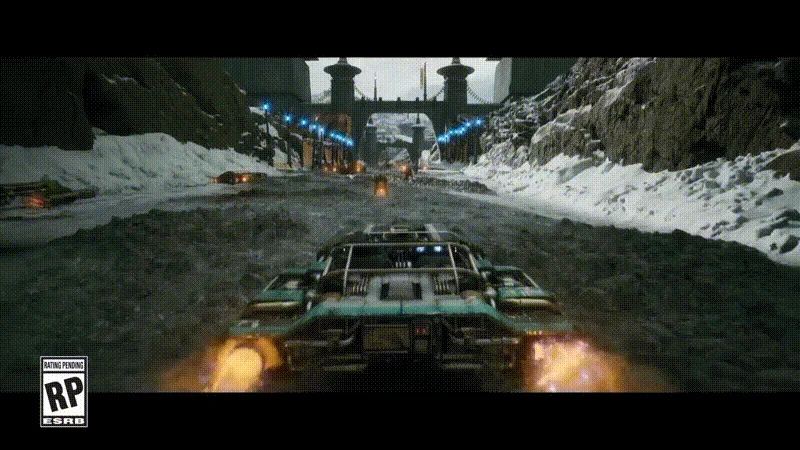
The Star Wars environment also expands what a Burnout-style race can do. Takedowns can unfold among speeder bikes, podracing machines, desert wreckage, frozen terrain, water, and lava worlds. TechRadar’s reporting on planetary status effects says lava can overheat vehicles while water can cool them, adding strategy without removing the chaos.
Early hands-on impressions have consequently compared the game with Burnout, WipEout, MotorStorm, Star Wars: Episode I Racer, and modern roguelike design. VGC described it as a Star Wars version of Burnout with a racing roguelike structure, emphasizing both the sensation of speed and the game’s apparent fascination with vehicles smashing into obstacles. That combination of development history, aggressive mechanics, and physical sensation is why the phrase “Burnout in space” has gained so much traction.

Fuse Games, Criterion Veterans, and the Burnout Legacy
The Burnout comparison rests on four connected factors: development history, gameplay design, visual language, and player expectation. Fuse Games includes veterans associated with Criterion’s arcade racing work, as well as developers with Burnout and Need for Speed experience. Since Criterion is the studio most closely associated with Burnout, a new high-speed racer from people who worked within that tradition naturally attracts attention. The comparison becomes stronger because Galactic Racer is built around aggressive movement, high-risk boosts, takedowns, vehicle classes, customization, and a campaign where survival and progression are closely linked.
Burnout’s influence is not limited to collisions. The series made impacts cinematic through dramatic camera cuts, slow-motion crash moments, and exaggerated choreography, turning what would normally be a frustrating interruption into a moment of reward and intensity. VGC reported that Lucasfilm Games’ Craig Derrick and Fuse Games’ Matt Webster discussed how the podracing crashes in Star Wars: Episode I influenced Burnout’s own crash presentation. Galactic Racer therefore completes an unusual creative circle: Star Wars helped inspire Burnout’s visual approach, and former Burnout talent is now applying lessons from that series to a new Star Wars racer.
That relationship connects two established arcade traditions. Star Wars: Episode I Racer remains one of the most beloved science fiction racing games, while Burnout became one of the defining crash-focused arcade series. Galactic Racer combines the fantasy of alien worlds and impossible vehicles with the thrill of speed, danger, and impact. It should still not be reduced to Burnout with Star Wars imagery, however. Its runs-based campaign, planetary effects, vehicle synergies, upgrade choices, and roguelike structure make it broader and more system-driven than a straightforward continuation of the older series.
Fuse Games is developing the title, Secret Mode is publishing it, and the project’s official presentation includes Lucasfilm Games branding and approval. It is not a fan concept or an unlicensed tribute. It has a structured campaign, multiple planets and vehicle classes, official trailers, platform listings, pre-order options, and Standard and Deluxe editions. Secret Mode’s involvement and the full marketing rollout position it as a substantial commercial racing release rather than a small experimental project.
The former Burnout developers behind Fuse Games are important because effective arcade racing depends on controlled chaos rather than randomness. Burnout balanced danger and mastery through responsive handling, readable traffic, explosive crashes, boost rewards, and takedowns that felt dramatic without becoming arbitrary. Galactic Racer appears to pursue a similar balance through hover vehicles, planetary hazards, build decisions, and aggressive rivals. Fans are therefore judging it not only as a licensed Star Wars game, but also as a possible answer to a long-dormant form of arcade racing.
That expectation creates both pressure and opportunity. Racing games continue to thrive through simulations, kart racers, open-world driving games, and licensed motorsport series, but the specific Burnout-style crash racer has been far less common. Galactic Racer has a chance to occupy that underserved space by combining speed, destruction, replayability, and Star Wars spectacle. Its success will depend on whether Fuse Games can reproduce the feeling of being on the edge of disaster while still giving players enough control to master the system.
Gameplay, Vehicle Classes, and the Runs-Based Campaign
Galactic Racer’s core gameplay is built around advancing through the Galactic League, an underground circuit where choices affect the course of each run. Official descriptions and previews point to a mixture of high-speed arcade racing, physical contact, takedowns, class-based craft, upgrades, campaign decisions, and PvP competition. The Steam page describes the game as a runs-based, high-stakes reinvention of racing, distinguishing it from a conventional campaign made up of a fixed list of events.
Winning appears to require more than following the cleanest racing line. Players are expected to manage positioning, timing, boosts, vehicle choice, and deliberate contact while deciding when a rival should be passed, pressured, or used as part of a takedown. That makes each opponent a potential weapon, obstacle, opportunity, or direct threat. The emphasis on slamming and shunting suggests that aggressive racecraft is not an optional flourish, but part of the fundamental language of the game.
Planetary status effects add a system-driven layer to that action. TechRadar’s interview coverage says different environments can alter vehicle performance, with lava causing overheating, water providing cooling, icy locations creating freezing effects, and desert conditions introducing other hazards. The surroundings therefore do more than decorate a track. They can influence handling, survival, build choices, and moment-to-moment strategy, while environmental synergies may reward players who understand how their craft responds to each world.
Vehicle choice is central to that strategy. Official material confirms landspeeders, speeder bikes, skim speeders, and podracers, while the Steam listing refers more broadly to classes of repulsorcraft with distinct physics and playstyles. Landspeeders may offer a balanced combination of stability and durability. Speeder bikes may favor agility, narrow lines, and riskier maneuvering. Skim speeders could emphasize a different kind of hovering control or interaction with surfaces, while podracers are likely to represent extreme speed, danger, and precision. These expected distinctions have not all been fully detailed, but the stated class-based design indicates that the vehicles are intended to change how a race is approached rather than serve as cosmetic variations.
Customization is similarly positioned as both personal expression and a possible competitive tool. The Steam page says players can build and customize their craft to display their style and gain an advantage. The depth of that system remains an important question. In a simple arcade racer, customization might focus mainly on paint, liveries, and decals. Galactic Racer’s runs-based structure suggests that upgrades may also affect performance, synergies, and survival strategies, especially when combined with planetary effects and class-specific behavior.
The campaign develops these systems through run-based progression. Instead of moving through a completely fixed sequence, players appear to choose events, collect upgrades, shape a build, and attempt to survive long enough to advance through the Galactic League. An early risk may create a stronger craft later in the run, but it can also increase the possibility of failure. That structure gives individual races more consequence and discourages progression from becoming a simple climb toward one dominant vehicle.
GamesRadar’s preview argued that roguelike design and racing are a strong match because the format gives failure meaning beyond a restart screen. Losing can alter the build, the available path, and the decisions that follow, requiring players to adapt, experiment, and recover. The underground Star Wars setting supports that instability through syndicates, rivals, gambling, and shifting alliances. If the systems work together, Galactic Racer may do more than revive Burnout-style action. It could offer a new model for arcade racing campaigns in which every event contributes to a larger survival story.

Crashes, Podracers, and the Galactic League Story
The crash system and the sensation of speed sit at the center of Galactic Racer’s appeal. VGC highlighted the game’s apparent obsession with vehicles striking walls and obstacles at extreme speed, while Traxion’s hands-on preview compared its mixture of influences with Burnout, WipEout, and MotorStorm. Those comparisons point toward a racer where impacts are not incidental. They are expected to carry visual weight, tactical consequences, and much of the game’s entertainment value.
A successful crash system must balance punishment with momentum. If impacts are too severe, players become cautious and the arcade energy disappears. If they are too harmless, takedowns stop feeling meaningful. Burnout’s strongest entries found a middle ground by making crashes spectacular while connecting them to boosts, positioning, and race strategy. Galactic Racer appears to be pursuing the same principle in a science fiction setting, where repulsorcraft can spin, bounce, skim, flip, explode, and collide with alien terrain in ways that differ from conventional car wrecks.
Track design will determine how fully that system develops. Confirmed locations include Tatooine, Jakku, Ando Prime, Lantaana, and Sentinel I, creating room for deserts, wreckage fields, ice, lava, water, industrial areas, and other hazards. Because environmental conditions can affect vehicle temperature and performance, crashes may become part of a track’s tactical rhythm rather than isolated cinematic set pieces. Podracing already established that Star Wars racing can be loud, dangerous, and mechanically fragile, and Galactic Racer can build on that history with modern physics, cinematic presentation, and online competition.
The vehicle roster broadens the Star Wars fantasy beyond podracing alone. Podracers carry the strongest nostalgic connection because Star Wars: Episode I Racer captured speed, alien worlds, danger, and mechanical personality in a way few licensed racers had managed. Galactic Racer is not presented as a remake of that game, but the presence of podracers immediately links the new project with its legacy. Speeder bikes bring a different kind of agility and danger, drawing on their iconic use on Endor and in other high-speed Star Wars chases. Landspeeders create a more grounded racing fantasy, while skim speeders offer another form of hovercraft-style control.
Mixing those classes could create the kind of multi-vehicle chaos associated with MotorStorm, but replayability will depend on meaningful differences. A podracer should not feel like a faster landspeeder, and a speeder bike should not behave like a smaller skim speeder. Each class needs its own relationship with risk, control, collisions, boosts, and planetary hazards. The runs-based campaign gives Fuse Games a structure that can encourage different builds and repeated experimentation, provided the craft remain mechanically distinct.
The story places those races after Star Wars: Episode VI: Return of the Jedi, when the Empire’s control has broken and the New Republic is struggling to rebuild. In the resulting instability, gambling, entertainment, and glory fuel a new obsession with speed. Syndicates sponsor pilots in the unsanctioned Galactic League, where fortunes can be won or lost in seconds. The player controls Shade, a lone racer pursuing revenge and glory. Dot Esports reports that Shade enters the League with a personal grudge against the Bool family, while Kestar Bool is the reigning League Champion and a major rival.
This setup deliberately avoids the most familiar Star Wars narrative devices. The official tagline emphasizes no Force and no prophecy, only skill, strategy, and the will to rise. That gives the campaign room to focus on ambition, criminal entertainment, mechanical culture, rivalry, and postwar instability rather than galaxy-saving destiny. VGC reported that the background draws inspiration from the period after World War II, when former soldiers and mechanics returned to civilian life and helped build car culture. Galactic Racer adapts that idea by imagining former Rebel and Imperial personnel using their wartime skills to race, repair, and maintain vehicles after the galactic conflict ends.

Multiplayer, Release Editions, and Latest Updates
Star Wars: Galactic Racer includes a solo campaign as well as multiplayer racing. The Steam page lists multiplayer, PvP, online interactivity, and strategic PvP grudge matches in which reputation follows the player. Dot Esports reports support for up to 12 players in a race within a cross-platform setup. Human competition is a natural match for the design because takedowns, boost battles, crashes, and last-second overtakes can become more unpredictable and memorable when every rival is controlled by another player.
The phrase “PvP grudge matches” also supports the fiction of the Galactic League. Online competition is presented less as sterile matchmaking and more as reputation-driven rivalry within an illegal racing circuit. Balance will be a major issue, particularly if campaign builds or roguelike upgrades carry into competitive play. Fuse Games will need to prevent experienced players from overwhelming newcomers while still preserving customization and vehicle identity. Standardized competitive rules and more chaotic custom-build modes could provide one solution, although the final structure has not been fully detailed.
The game is scheduled for release on October 6, 2026. The official site and Steam listing display the same date. Confirmed platforms are PlayStation 5, Xbox Series X|S, and PC, with the PC version listed for Steam and the Epic Games Store in published platform information. A Nintendo Switch 2 edition has not been officially confirmed in the available store and guide material, so the safest platform list remains PS5, Xbox Series X|S, and PC.
At the time reflected in the storefront information, the Standard pre-purchase option is priced at $59.99 and the Deluxe Edition at $79.99. The Deluxe package includes the base game, a Deluxe Upgrade, the pre-order bonus, and a digital art book. Its listed additional content consists of three exclusive vehicles, an exclusive livery inspired by the Naboo N-1 starfighter, three Arcade events, a Deluxe player banner, and the digital art book. Pre-order bonuses include an exclusive livery for a repulsorcraft and an exclusive multiplayer player banner. Steam also notes that the pre-order content may be offered for separate purchase later.
Public updates from June 2026 include hands-on previews, gameplay impressions, developer interviews, release date coverage, and several official videos. The game’s site lists an Official Release Date Reveal Trailer, an Official Gameplay Trailer, an Official Trailer, and a Story Trailer shown during Summer Game Fest. Coverage has centered on three points: the Burnout connection created by the developers and the crash-heavy handling, the runs-based campaign that adds consequence and replayability, and the post-Empire Star Wars setting built around Outer Rim lawlessness, syndicate sponsorship, and Shade’s pursuit of revenge.
Recent preview coverage has added detail to those themes. TechRadar highlighted the planetary effects involving overheating, cooling, freezing, and environmental synergies. Push Square emphasized the developers’ goal of making every decision matter, including the player’s build, position, racing style, and approach to individual corners. VGC framed the project as the Burnout revival many fans have waited decades to see. Galactic Racer is therefore no longer only a rumor or a wishful comparison. It has a confirmed release date, official storefronts, public gameplay descriptions, hands-on impressions, trailers, editions, and a defined creative identity, even though its ultimate success will depend on how those systems perform at launch.

Frequently Asked Questions (FAQs)
- Will Star Wars Galactic Racer be canon?
The available public information does not clearly confirm that Star Wars: Galactic Racer is part of official Star Wars canon. Until Lucasfilm Games or the developers clarify its status, it is safest to describe it as an officially licensed Star Wars game rather than a confirmed canon story. - Is Star Wars Galactic Racer A Burnout Game?
Star Wars: Galactic Racer is not officially a Burnout game or a sequel within that series. It is an officially licensed Star Wars racer, but its focus on high speed, takedowns, aggressive contact, cinematic crashes, and developers with Criterion and Burnout experience makes the spiritual comparison well supported. - Who is developing Star Wars Galactic Racer?
Star Wars: Galactic Racer is being developed by Fuse Games and published by Secret Mode. Fuse Games includes developers with Burnout and Need for Speed experience, while the project carries official Lucasfilm Games branding and approval as a licensed Star Wars release. - When is Star Wars Galactic Racer coming out?
Star Wars: Galactic Racer is scheduled to release on October 6, 2026. That date appears on both the official game site and its Steam listing. - What platforms will Star Wars Galactic Racer be on?
The confirmed platforms are PlayStation 5, Xbox Series X|S, and PC. The PC version is listed for Steam and the Epic Games Store, while a Nintendo Switch 2 version has not been officially confirmed in the available information. - Does Star Wars Galactic Racer have multiplayer?
Yes. The game includes multiplayer, PvP racing, online interactivity, and reputation-driven grudge matches alongside its solo campaign. Reports state that cross-platform races can support up to 12 players, although the exact relationship between campaign builds and competitive balancing has not been fully explained. - Is Star Wars Galactic Racer a roguelike racing game?
Yes. The game is described as runs-based, with players choosing events, collecting upgrades, shaping vehicle builds, and managing risks as they progress through the Galactic League. Failure can affect the direction of a run rather than functioning only as a simple restart. - Can players use podracers in Star Wars Galactic Racer?
Yes. Podracers are confirmed alongside landspeeders, speeder bikes, and skim speeders. The vehicle classes are intended to have distinct physics and playstyles, giving players different approaches to speed, handling, collisions, and environmental hazards. - Is Star Wars Galactic Racer connected to Star Wars Episode I Racer?
Star Wars: Galactic Racer is not a direct remake or announced continuation of Star Wars: Episode I Racer. It shares clear creative DNA through podracers, alien planets, dangerous science fiction racing, and a focus on mechanical speed, while discussions from the developers have also noted that Episode I’s crash imagery helped influence Burnout in the past. - Why are fans calling Star Wars Galactic Racer a Burnout revival?
Fans are using that description because the game combines Burnout-style speed, takedowns, crash spectacle, and aggressive racecraft with a team that includes veterans of Burnout and Criterion racing projects. It also enters an arcade racing market where this specific high-impact style has been underserved. The Star Wars license, multiple vehicle classes, online competition, story campaign, and roguelike replayability give it a strong opportunity, but a genuine genre revival would require strong handling, crash physics, campaign depth, online stability, balanced progression, positive reviews, lasting community support, and influence beyond a single release.

Conclusion
Star Wars Galactic Racer Is A Burnout Game in spirit, even if it is not a Burnout sequel in name. Its identity comes from the collision between Star Wars spectacle and arcade racing aggression. The confirmed features point to a game about speed, danger, takedowns, vehicle classes, customization, planetary hazards, campaign choices, and online rivalry. That is exactly why fans see it as more than another licensed Star Wars project.
The most exciting part is that Galactic Racer does not appear to be relying only on nostalgia. It is not simply trying to remake Star Wars: Episode I Racer, and it is not merely copying Burnout’s crash formula. Instead, Fuse Games is building a runs-based racing structure where choices matter, vehicles behave differently, planets affect strategy, and crashes remain part of the thrill. That gives the game a chance to modernize arcade racing rather than just imitate its past.
The Burnout comparison will continue because it is useful and emotionally powerful. Burnout fans have waited a long time for another game that treats speed and destruction with the same confidence. Star Wars fans have also waited for a new racing game that understands how exciting the galaxy’s vehicles can be outside of space combat. Star Wars: Galactic Racer sits directly at the intersection of those hopes.
Whether it truly revives the arcade racing genre will depend on the final game. Handling must feel sharp. Crashes must feel spectacular but fair. The campaign must offer meaningful replayability. Multiplayer must be stable and rewarding. Customization must affect both style and strategy. If those elements come together, Star Wars: Galactic Racer could become one of the most important racing games of 2026 and the closest thing to a Burnout revival the industry has produced in years.
Sources and Citations
Official Star Wars: Galactic Racer website (release window, Galactic League, post-Empire setting, planets, trailers, gameplay)
https://www.starwars.com/games-apps/star-wars-galactic-racer (StarWars.com)
Steam Store – STAR WARS: Galactic Racer (release date, editions, pricing, pre-orders, vehicles, customization, gameplay)
https://store.steampowered.com/app/4078430/STAR_WARS_Galactic_Racer/ (Steam Store)
Traxion (hands-on preview, Burnout inspiration, Fuse Games background, campaign structure)
https://traxion.gg/
Video Games Chronicle (VGC) (preview and developer interviews)
https://www.videogameschronicle.com/
GamesRadar+ (hands-on preview and gameplay impressions)
https://www.gamesradar.com/
Insider Gaming (developer interviews, gameplay features, preview coverage)
https://insider-gaming.com/
Dot Esports (release, gameplay, and racing mechanics coverage)
https://dotesports.com/
Recommended
- 007 First Light Gameplay Released Early Explained
- Kingdom Hearts 3 Multiplayer Mod Lets Sora, Riku, Kairi, and Aqua Fight Together
- ARC Raiders: How to Find and Defeat the ARC Turbine (Locations, Weak Spots, and Turbine Compressor Drops)
- PlayStation Pricing Is On Trial Again: Why Sony Is Fighting to Keep 30‑Percent PlayStation Store Fees
- The Boys Returns for Season 5: Release Date, Cast, Trailer, Episode Schedule, and Final Season Story Details
- How To Fast Travel In Windrose And Get More Fast Travel Bells (Complete Beginner Guide)
- Cape Fear Review: Complete Breakdown of the Classic Thriller, 1991 Remake, and Modern Legacy
- How Do I Add a Camera to My Blender Scene?
- PlayStation State of Play June 2, 2026: Full 60+ Minute Showcase, Gameplay Reveals, and Everything You Need to Know



































































































