












In This Article (7 sections)
How to Unlock, Scan, and Build Metal Farms in Subnautica 2
Metal Farms are one of the most important mid to late game automation systems in Subnautica 2 because they reduce the need for constant manual mining. Instead of repeatedly searching caves, outcrops, wreckage fields, and mineral deposits for basic metals, players can eventually establish passive production systems that support larger bases, vehicles, and advanced crafting. Unlocking them is designed as a progression reward, so players generally need experience with oxygen management, scanning, crafting, base construction, power generation, and deeper biome exploration before gaining access.
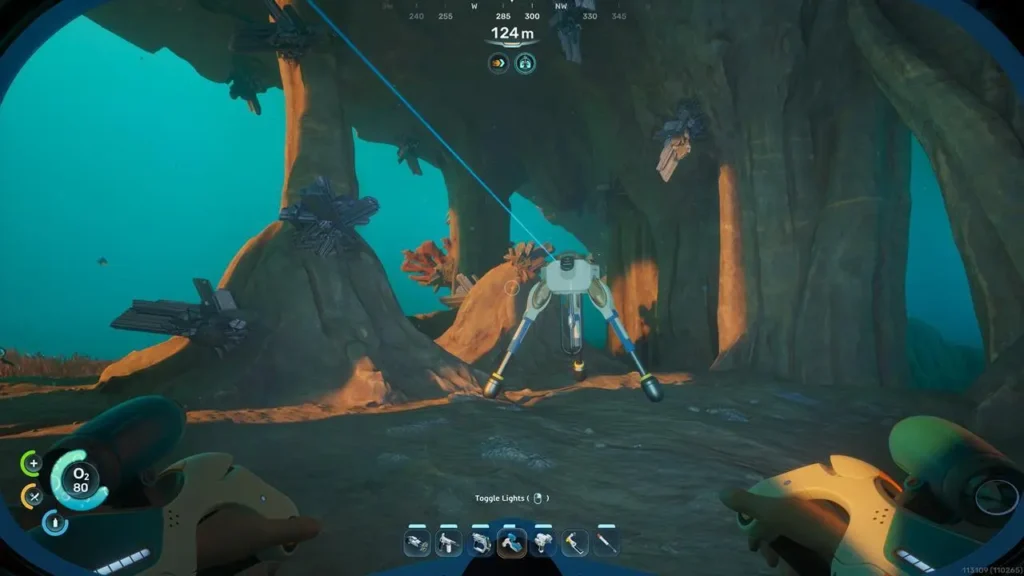
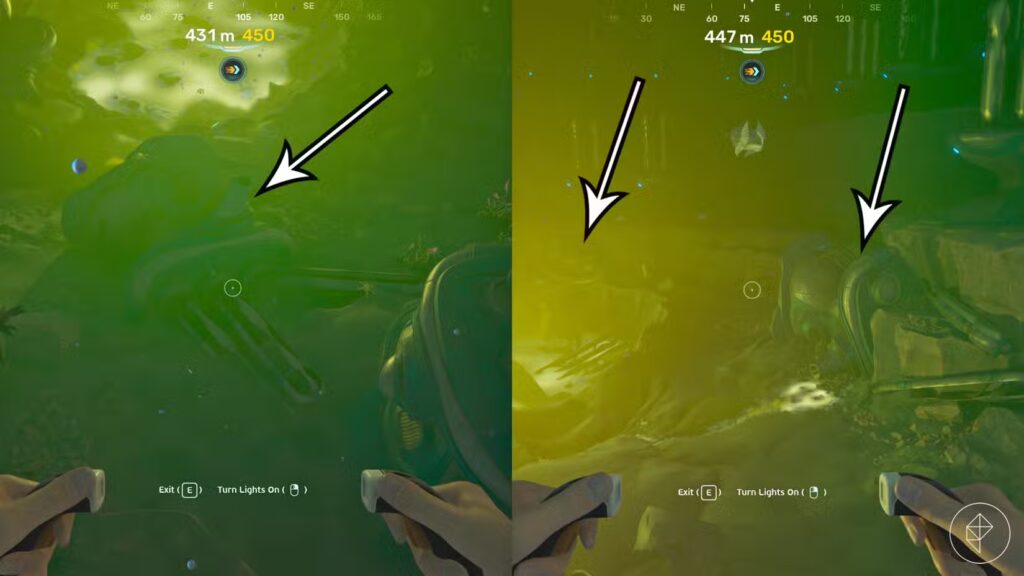
The Metal Farm blueprint is discovered through environmental exploration rather than a simple early game crafting unlock. Players should search abandoned research outposts, submerged industrial wrecks, damaged mining stations, data terminals, and resource extraction zones. Blueprint fragments are often divided across multiple locations, requiring players to scan several damaged Metal Farm modules or related industrial components before the PDA assembles the complete design. These locations can include aggressive fauna, low visibility, radiation pockets, unstable terrain, and deeper water, so upgraded oxygen tanks, spare batteries, food, water, repair equipment, and propulsion tools are useful during longer searches.
Metal Farm sub zones are particularly important because they combine industrial technology with strong mineral concentrations. Useful areas commonly feature:
- Dense metallic deposits embedded in rock formations
- High electromagnetic activity
- Abandoned industrial structures
- Reduced organic flora compared with shallow biomes
Scanning these environments carefully is essential. Metal Farm structures can be partially destroyed, buried under sediment, hidden inside wreckage, or obstructed by broken machinery. Players should approach potential fragments from multiple angles, clear debris with propulsion equipment when necessary, monitor hostile creatures, and make sure they have sufficient oxygen before entering enclosed wrecks or deep scanning areas. Each successful scan contributes toward blueprint completion until the full design becomes available through the PDA.
Once unlocked, Metal Farms require a combination of structural, mechanical, and electrical components. A standard structure generally uses materials such as:
- Titanium ingots: Provide the heavy structural framework required for an industrial extraction system.
- Lubricant: Supports moving extraction components and other mechanical systems.
- Advanced Wiring Kits: Control automation, resource detection, extraction cycles, and power regulation.
- Quartz composites: Provide pressure resistance and structural durability in deeper environments.
- Power coupling units: Connect the farm to the wider base energy network.
Higher tier Metal Farms may also require lithium alloys or ion power cells, particularly when upgrading extraction speed, storage capacity, energy efficiency, or access to rarer materials. Construction is handled through the habitat building system, and players should plan placement carefully because relocating a farm later can interfere with production and require changes to nearby power and storage infrastructure.
Once operational, a Metal Farm works through three main stages:
- Resource detection through environmental scanning: The system analyzes surrounding terrain to identify nearby mineral concentrations.
- Extraction of metallic compounds: The farm automatically gathers available raw resources from the surrounding area.
- Refinement and storage: Extracted materials are converted into usable resources and transferred into internal or connected storage systems.
Placement directly affects this process. Farms positioned near dense deposits, geothermal activity, mineral caves, or former industrial sites generally have greater resource potential than those placed in weak zones. Depth, biome characteristics, power availability, installed upgrades, and surrounding mineral density all influence production.
The Sonic Resonator can further improve this system by revealing hidden mineral clusters and helping players identify stronger extraction locations. When integrated with Metal Farm planning, it can increase scanning accuracy, improve extraction efficiency, reduce resource waste, and highlight nearby locations suitable for additional farms. Using the Sonic Resonator before construction is particularly useful because it reduces the risk of spending valuable materials on a poorly positioned farm.

Best Metal Farm Resources, Locations, and Power Setups
The most effective Metal Farm locations combine strong mineral density, dependable power access, manageable hazards, and enough room for future expansion. Deep mineral caves, biome transition areas, and regions near geothermal activity are especially useful because they can support both extraction and long term energy infrastructure. Players should avoid choosing a location based entirely on mineral availability if constant predator activity, unstable terrain, or difficult access makes the farm dangerous to maintain.
Strong base locations generally provide:
- Proximity to deep mineral caves
- Access to geothermal energy
- Manageable environmental hazards
- Stable terrain for additional modules
- Space for storage, fabrication, vehicles, and future farms
Transitional biome edges can be particularly effective because they combine relatively safe travel routes with access to deeper resource concentrations. These locations allow players to establish an industrial base without placing every structure directly inside the most dangerous biome.
Power is essential because production stops when the base cannot provide enough energy. Several generation methods can support Metal Farms:
- Thermal generators: Particularly effective near geothermal vents and deep industrial areas because they provide continuous energy without requiring fuel replacement.
- Solar Panels: Suitable for shallow farms but increasingly ineffective as bases move into deeper and darker environments.
- Bioreactors: Provide flexible power using organic material and work well where sunlight and geothermal energy are unavailable.
- Nuclear reactors: Provide substantial late game energy for large bases operating multiple automated systems.
Hybrid power systems provide the greatest reliability. Combining thermal and nuclear generation, for example, allows large industrial bases to continue functioning even when demand increases. Energy efficiency upgrades can further reduce the amount of power consumed during individual production cycles.
Metal Farms are most useful for resources that remain in constant demand throughout progression. The primary targets include titanium for structural construction, copper for wiring and electronics, gold for advanced circuitry, silver for electrical components, and lithium for reinforcement and high tier upgrades.
Titanium remains especially important because large bases can consume enormous amounts of it. Metal Farms provide a passive supply, but active collection methods remain useful during major construction projects. Additional titanium can be obtained by harvesting limestone outcrops, recycling Metal Salvage, deconstructing abandoned structures, and using advanced extraction drones. Combining passive production with active salvage prevents construction from being delayed when demand suddenly increases.
Silver and lithium benefit even more from careful placement because they are less common. Silver focused farms work best near cave systems with high sandstone density and suitable mid depth reef structures. Lithium production benefits from deeper crystalline formations and thermal vent adjacent areas where advanced mineral deposits are more concentrated. Precision extraction upgrades can improve the likelihood of obtaining these rarer materials.
Players may therefore benefit from specialized farms rather than expecting one structure to provide every resource efficiently. A farm near a safer biome can focus on titanium and copper, while another deeper installation targets silver, lithium, and other advanced materials.
Production occurs in timed cycles, with output affected by several conditions:
- Power stability: Insufficient energy slows or completely interrupts production.
- Placement depth: Deeper regions can provide richer mineral concentrations but require stronger infrastructure.
- Efficiency modules: Upgrades can improve extraction speed, storage, resource targeting, and energy consumption.
- Environmental mineral density: Resource rich environments generally support better production than weak biomes.
Optimized late game farms can approach continuous resource production when supported by strong power infrastructure, appropriate upgrades, and sufficient storage. At that stage, manual mining becomes less central to ordinary progression.

Metal Farm Automation, Expansion, and Mistakes to Avoid
Metal Farms become most valuable when integrated into a wider industrial base rather than treated as isolated resource generators. Late game progression increasingly revolves around connecting extraction, power, storage, transportation, and fabrication systems so resources move efficiently through the base economy.
Centralized storage hubs are particularly useful when operating multiple farms. Instead of visiting every extraction site separately, players can organize resources in one location connected to fabrication and upgrade systems. Drones can further improve this arrangement by transporting materials between farms, storage rooms, fabrication stations, and vehicle areas.
Base layouts should minimize unnecessary travel. Farms, storage, power infrastructure, and crafting facilities should be positioned so resources move through a clear production chain. Thermal and nuclear hybrid power systems are especially effective for large industrial bases because they provide enough redundancy to support several automated structures simultaneously.
Players should also leave room for expansion. A location that works for one Metal Farm may become restrictive once additional farms, storage systems, generators, fabrication rooms, vehicle docks, and transport infrastructure are added. Planning these systems before construction helps avoid expensive rebuilding later.
Several common mistakes can significantly reduce efficiency:
- Placing farms in low resource biomes: Weak mineral concentrations can result in poor output despite continued power consumption.
- Ignoring power redundancy: Depending on one inadequate generator can repeatedly interrupt production.
- Failing to upgrade extraction systems: Basic farms remain useful, but advanced modules improve speed, efficiency, and access to rarer resources.
- Overcrowding the base: Poor layouts make storage, power systems, farms, and transportation harder to manage.
- Ignoring environmental hazards: Predators, radiation, unstable terrain, and other threats can make otherwise productive locations difficult to maintain.
- Building before scanning the surrounding area: Mineral detection should come before construction so valuable materials are not wasted on an inefficient location.
The Sonic Resonator can reduce many of these problems by helping identify mineral concentrations before construction. Players can scan an area, compare potential extraction zones, and establish farms only where the surrounding resource density justifies the investment.
A strong late game setup can use multiple farms for different purposes. Common resource farms can provide titanium and copper for continuous construction, while deeper specialized installations focus on silver, lithium, gold, and other valuable materials. Drones can transport those resources to centralized storage, where fabrication systems can use them without requiring repeated manual collection.
Power should scale alongside this expansion. A single generator may support the first farm, but several extraction structures, storage systems, charging stations, and fabrication modules can quickly overwhelm a small grid. Thermal and nuclear systems provide the stability required for larger industrial networks.
Once these systems are established, the progression loop changes considerably. Instead of repeatedly leaving the base to search for basic metals, players can rely on passive production for many routine materials and reserve manual expeditions for exploration, rare resources, blueprints, and discoveries.
Metal Farms therefore represent more than a faster method of gathering resources. They mark the transition from basic survival into industrial automation, where efficient placement, reliable power, specialized extraction, organized storage, and automated transportation work together to support increasingly ambitious base construction and advanced technology.
Frequently Asked Questions (FAQs)
- What are Metal Farms in Subnautica 2?
Metal Farms are automated resource structures that gradually generate metal materials without requiring players to mine every deposit manually. They become especially useful during mid and late game progression, when larger bases, vehicle construction, upgrades, and advanced crafting begin consuming significant quantities of metals. - How do I unlock Metal Farms?
Metal Farms are unlocked through progression, fragment scanning, and access to more advanced fabrication technology. Players need to explore industrial locations and other technology rich areas, scan the required Metal Farm components, and complete the blueprint before the structure becomes available for construction. - Where can I find Metal Farm blueprints?
Metal Farm blueprint fragments can be found around submerged wrecks, abandoned research outposts, damaged mining stations, and data terminals in deeper biomes. Searching industrial areas and resource rich transition zones is particularly useful because these locations can contain several pieces of advanced technology. - Do Metal Farms require power?
Yes, Metal Farms require a continuous supply of energy to scan for minerals, extract resources, and complete production cycles. Solar Panels can support shallower installations, while thermal generators, Bioreactors, and nuclear reactors become more practical for deeper or larger automation networks. - Can Metal Farms produce rare materials?
Yes, upgraded Metal Farms can produce less common materials such as silver and lithium when positioned in suitable resource rich biomes. Placement and extraction upgrades are important because farms located near stronger concentrations of specific minerals have a better chance of providing the resources players actually need. - What is the best biome for Metal Farms?
Deep mineral rich zones with reliable energy sources are generally the most efficient locations. Areas near mineral caves, crystalline formations, geothermal activity, and biome transition zones can provide strong resource concentrations while also offering opportunities to support farms with dependable power infrastructure. - Do Metal Farms work without upgrades?
Yes, basic Metal Farms can produce resources without additional upgrades, but their extraction speed, efficiency, storage, and ability to target valuable materials are more limited. Installing improved extraction and efficiency modules makes farms considerably more useful as resource demands increase later in progression. - Can I build multiple Metal Farms?
Yes, players can operate multiple Metal Farms to create larger automated resource networks. Different farms can also be positioned in separate mineral rich areas, allowing one installation to focus on common construction materials while deeper farms target silver, lithium, and other advanced resources. - How long do Metal Farms take to produce resources?
Production cycles vary depending on mineral density, power stability, biome placement, and installed upgrades, but basic farms typically produce resources every few minutes of game time. Better locations and efficiency upgrades can shorten production cycles and create a more consistent flow of materials. - Are Metal Farms necessary for endgame progression?
Metal Farms are highly valuable for endgame resource scaling because advanced bases, vehicles, upgrades, and industrial systems can require large quantities of materials. Their passive production reduces repeated mining trips and allows players to spend more time on exploration, construction, and advanced crafting.
Conclusion
Metal Farms in Subnautica 2 represent a core shift from manual survival gathering to automated industrial resource management. By understanding blueprint acquisition, optimal placement, power systems, and upgrade mechanics, players can transform their underwater bases into fully self sustaining production networks.
Efficient use of Metal Farms reduces exploration risk, accelerates base expansion, and supports advanced crafting systems required for late game progression. Mastery of these systems is essential for long term survival efficiency and strategic dominance in deeper biomes.
Sources and Citation
- Unknown Worlds Entertainment, May 15, 2026, “Subnautica 2 Early Access Roadmap”: Unknown Worlds explains that Subnautica 2 will receive regular updates ranging from focused system improvements to larger expansions adding new biomes, creatures, resources, tools, vehicles, and story content. This is a strong first-party source for the game’s ongoing Early Access development model, but it does not specifically document the Metal Farm unlock process described in the article. Unknown Worlds
Subnautica 2 Early Access Roadmap - Unknown Worlds Entertainment, August 19, 2026, “Subnautica 2 Buddy System Update”: This is the strongest official source I found confirming that Metal Farms are an actual Subnautica 2 system. The patch notes mention several Metal Farm fixes, including resource-swapping exploits, farms producing while the UI reported no power, farms connected in series losing power, farms remaining functional outside power range, and Metal Farm voice-over triggering at the Axum Metal Farms in Root Canyon instead of when the structure was scanned. This supports the existence of Metal Farms, their dependence on power, resource production, scanning, and their presence around Axum Metal Farms in Root Canyon. Unknown Worlds
Subnautica 2 Buddy System Update - Unknown Worlds Entertainment, July 8, 2026, “Subnautica 2 Adaptive Measures Update”: The official Early Access 1.1 notes document changes to resources, base building, storage, placement systems, and Silver discovery. Unknown Worlds says several of these changes came directly from player feedback. This is useful for supporting broader statements about resource gathering, base-building iteration, and community-driven balancing, but it does not describe automated Metal Farm extraction rules or rare-resource targeting. Unknown Worlds
Subnautica 2 Adaptive Measures Update - Unknown Worlds Entertainment, March 12, 2026, “Building Bases”: This official developer vlog focuses on Subnautica 2’s redesigned base-building system. Unknown Worlds says the development team demonstrates the new procedural approach to designing and constructing bases, making it a useful source for broader base-construction claims. It does not, however, substantiate the specific Metal Farm recipes, power-coupling units, storage networks, drones, or extraction-module mechanics in the article. Unknown Worlds
Subnautica 2 Building Bases Dev Vlog - Unknown Worlds Entertainment, July 9, 2025, “An Update on Subnautica 2 Early Access”: Unknown Worlds explicitly describes its development philosophy as an open development process involving community playtests and feedback. The studio says community responses influenced areas it wanted to improve before Early Access. This is a valid public source for development philosophy and community-driven iteration. Unknown Worlds
Unknown Worlds, Subnautica 2 Early Access Development Update - Unknown Worlds Entertainment, “A Letter to the Community From the Subnautica 2 Team”: The studio states that Early Access is intended as a collaboration with players and that feedback is actively shaping the game. It also reiterates longstanding Subnautica principles centered on vulnerability, exploration, and survival rather than traditional weapon-focused combat. This is a much stronger public substitute for the vague source label “Unknown Worlds Entertainment internal design principles.” Unknown Worlds
Subnautica 2 Community Feedback Letter - Unknown Worlds Entertainment, July 3, 2025, “A Letter to Our Community”: Unknown Worlds identifies exploration and discovery as core values that have defined the Subnautica series and says those values continue to guide Subnautica 2. This is useful for supporting high-level design commentary, but it should not be used as evidence for specific Metal Farm mechanics. Unknown Worlds
Unknown Worlds, A Letter to Our Community - Unknown Worlds Entertainment, July 7, 2026, “Update Vlog – Adaptive Measures”: Creative Director Anthony Gallegos discusses Early Access 1.1 and previews upcoming updates. Unknown Worlds also directs players to its Discord and Nolt feedback system, reinforcing that community experimentation and feedback are part of the Early Access process. Unknown Worlds
Subnautica 2 Adaptive Measures Update Vlog
Recommendations
- Vivian Kubrick Debunks Eyes Wide Shut Deleted Scenes Theory
- Battlefield 6 2026 Roadmap: More Maps, “Legendary” Battlefield 4 & Battlefield 3 Remakes, and Wake Island’s Return
- Apple TV’s Widow’s Bay is the First Breakout TV Hit of 2026: Why Everyone is Talking About the Horror Comedy
- Pitchify Launches New Service to Connect Developers and Publishers: How Pitch Direct Works
- Pokémon Pokopia Bubbly Basin DLC Release: Date, New Pokémon, and Everything You Need to Know
- Nordic Game 2026 (NG26 Spring): Dates, Venue, Passes, Speakers, Expo & Awards in Malmö
- Subnautica 2 Early Access Roadmap: Co-Op Updates, Sprinting, and More
- Virtua Fighter 6 Leak Explained
- The Future of 3D Modeling: Insights on AI Advancements
- GTA 6 is Already Outselling Everything Else: Why Pre-Orders Are Dominating Gaming



































































































