





In This Article (12 sections)
Supergirl Lobo AI Concept Art Controversy and What Fans Spotted
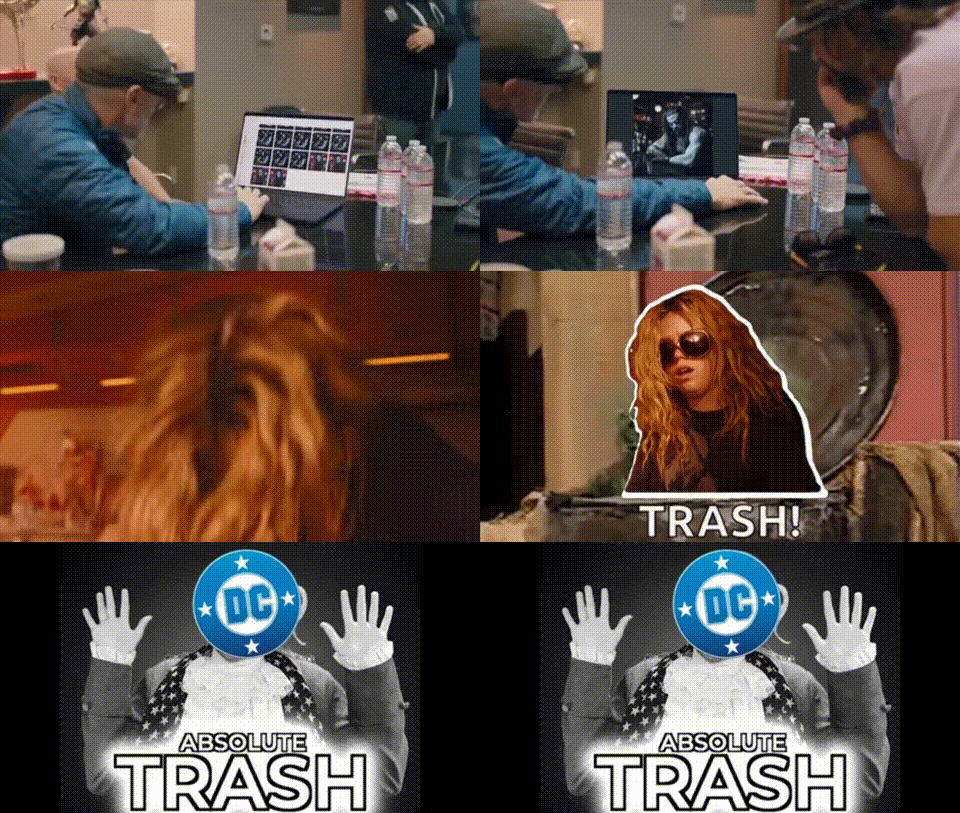
The controversy centres on a Warner Bros. Entertainment behind the scenes video relating to Jason Momoa’s transformation into Lobo in Supergirl. ComicsBeat reported that the video was titled “Jason Momoa as Lobo/DC Dream Behind The Scenes,” with Internet Archive records indicating it was uploaded to Warner Bros. Entertainment’s YouTube channel on August 11, 2026. A brief sequence showed director Craig Gillespie and Momoa examining multiple Lobo images on a laptop. Screenshots and clips quickly circulated online, with viewers claiming that some of the images appeared to be AI generated. Critics pointed to unusually smooth or inconsistent details and the large number of variations visible on screen as reasons for their suspicion.
Fans focused particularly on several images displayed on Gillespie’s laptop, which appeared to show numerous versions of Lobo resembling Momoa with different costumes, armour configurations and visual treatments. Film Stories described the disputed portion as roughly four seconds of footage and reported that approximately a dozen Lobo images could be seen at one point, with one later shown more prominently. However, the publication cautioned that it could not determine with certainty whether the imagery was AI generated and acknowledged that human digital manipulation was another possibility.
That uncertainty is important because professional film concept art is often created rapidly using combinations of photography, digital painting, 3D assets, textures, temporary references and photomanipulation. As a result, unusual details or an uncanny appearance do not by themselves prove that generative AI was involved. Commenters interpreted smooth textures and certain irregularities as signs of AI, and some media reports repeated those observations, but appearance alone cannot establish an image’s origin. A rushed digital concept, compositing process or photomanipulation can look synthetic, while sophisticated generative imagery may lack the stereotypical defects associated with AI.
What the Available Evidence Actually Supports
The most defensible conclusion is therefore that the footage appeared to show potentially AI generated Lobo concept imagery, which triggered an AI controversy, rather than that generative AI has been proven to have designed Lobo. As of August 24, 2026, multiple entertainment outlets had characterised the imagery as apparently or allegedly AI generated, but ComicsBeat explicitly acknowledged that the art might not have been generated by AI, while GamesRadar framed the claim as an allegation. Without production files, metadata, artist testimony or studio confirmation identifying the software and workflow used, the exact origin of the disputed images remains unverified.
There is also evidence that human concept artists worked on Lobo. Analysis published after the controversy noted commissioned early Lobo costume illustrations attributed to concept artist Andrei Riabovitchev. The existence of credited human concept artwork does not establish who or what produced every image displayed on Gillespie’s laptop, but it demonstrates why the broader claim that “AI designed Lobo” goes beyond the available evidence.

Why the Supergirl Lobo Featurette Went Private and How Jason Momoa’s Design Was Developed
Warner Bros. has not publicly provided a detailed explanation confirming why the Supergirl Lobo featurette was made private. What is established is the sequence of events: the video was publicly available, viewers circulated screenshots and allegations about possible AI generated imagery, and the original YouTube upload later became private. GamesRadar reported the removal and said it had contacted Warner Bros. to ask whether the imagery was AI generated and why the video had been removed, but the studio had not supplied an answer at the time.
The timing naturally encouraged audiences to connect the controversy with the privacy change, but that remains an inference rather than a confirmed motive. Without an official explanation, it is not possible to state definitively that Warner Bros. made the featurette private because AI use had been exposed, and the removal itself does not prove how any of the images were created.
Making the video private also did little to end the discussion because screenshots, clips and commentary had already spread across social platforms. ComicsBeat warned that the decision could produce a Streisand effect, in which an attempt to reduce visibility instead increases public interest. The lack of substantive clarification remained the central problem.
Reports from ComicsBeat, GamesRadar and Film Stories said Warner Bros. had not publicly answered whether the questioned imagery was AI generated, and there was no evidence in the cited reporting of an official DC Studios investigation result, disciplinary announcement or statement declaring that Supergirl had violated a studio wide AI policy. Identifying the artist, software and production workflow behind the exact files would provide much stronger evidence than analysing compressed screenshots from a few seconds of promotional footage.
Unanswered Questions After Lobo Featurette Goes Private
The featurette itself showed director Craig Gillespie and Jason Momoa reviewing possible visual directions for Lobo together. Separate reporting indicates that the design process involved many visual references and numerous possible variations before the filmmakers settled on the character’s final look. Reviewing large amounts of concept material during preproduction and costume development is not unusual. The controversy centred specifically on allegations that some of the displayed images may have been produced using generative AI rather than entirely through conventional human led concept development.
Momoa’s involvement also fits his long standing interest in the character. DC Studios cohead Peter Safran said Momoa had talked about wanting to play Lobo for years, including while he was portraying Aquaman. According to Safran, Momoa repeatedly discussed the character during the Aquaman films and enthusiastically contacted DC leadership after James Gunn and Safran took control of DC Studios.
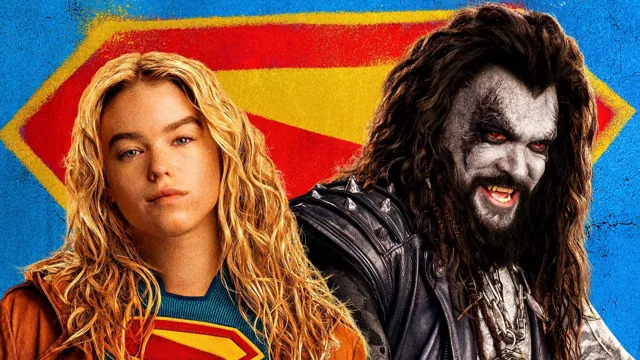
finished version of Lobo involved much more than any preliminary image shown on a laptop, combining Momoa’s physical performance with costume, makeup, hair, props, cinematography, production design and visual effects. Official DC material credits costume designers Anna B. Sheppard and Michael Mooney among the film’s principal creative team, while promotional imagery shows Lobo with pale makeup, dramatic black markings around his eyes, long hair, leather and metallic accessories.
That final appearance is recognisably rooted in Lobo’s established comic book identity. DC has pointed fans toward the influential work associated with Keith Giffen and Alan Grant, describing their 1990s stories as the gold standard that established the template for later interpretations. Simon Bisley’s artwork was also especially influential in shaping Lobo’s muscular heavy metal appearance. The character is traditionally presented as an exaggerated cosmic biker with immense physicality, long dark hair, violence, irreverence and an aggressively antiheroic personality. Momoa was therefore already a natural visual match because of his long hair, imposing build, biker aesthetic and personal enthusiasm for the role.
Lobo’s Comic Book Design Roots and Momoa’s Look
That resemblance also explains why some fans considered the alleged use of AI concept imagery ironic, since Momoa already closely matched the popular conception of Lobo and decades of comic artwork provided extensive reference material. Those reactions remain fan opinion rather than evidence about the production workflow. Whatever the provenance of the disputed images shown in the featurette, the finished onscreen Lobo remains clearly grounded in the character’s established comic book design and identity.
Why the Lobo AI Backlash Matters for DC Studios and Its Generative AI Position
The backlash surrounding the alleged Lobo AI imagery extended beyond the few seconds of footage that triggered the controversy. Concept artists have historically played an important role in designing film costumes, creatures, environments and characters, while critics of generative AI worry that automated image generation could reduce paid opportunities for those artists or rely on existing creative work without meaningful consent. At the same time, incorrectly accusing a human artist of using generative AI can also be damaging, which is why the origin of the disputed Lobo images should not be treated as established without stronger evidence about who created them and how.
The DC connection made the allegations especially sensitive because prominent figures associated with the brand had already spoken critically about certain uses of generative AI. James Gunn rejected the idea of using AI generated versions of actors’ voices for DCU animated characters in 2023, responding “No way” when the possibility was raised. He has also publicly mocked obvious AI generated DC imagery and expressed broader scepticism toward generative AI.
However, those comments should not be treated as proof of a comprehensive written DC Studios policy banning every generative tool at every stage of production. Gunn’s response concerned a specific use involving voice replacement, while no source cited in the available material establishes a studio wide prohibition covering concept development, writing, visual effects, marketing and other production areas.
Jim Lee’s DC Comics Policy and Production Distinctions
Jim Lee’s position is more explicit but applies specifically to DC Comics publishing. At New York Comic Con in October 2025, Lee said DC Comics “will not support AI generated storytelling or artwork” and indicated that this position would remain while he and senior vice president and general manager Anne DePies were in charge.
He emphasised authenticity, emotion and artistic intention while arguing for the qualities of human creativity. The organisational distinction matters because DC Comics and DC Studios are connected Warner Bros. Discovery businesses but do not operate identically. Lee’s publishing policy should therefore not automatically be presented as a rule governing every production process at DC Studios, and there is no confirmed evidence in the supplied material that the alleged Lobo imagery violated a documented studio wide policy.
The controversy nevertheless created genuine tension at the brand level. Audiences naturally associate Lobo, Supergirl, Superman and Batman with DC regardless of which internal division oversees a particular project. A strong public rejection of AI generated artwork from DC Comics can therefore shape expectations about how the wider franchise should approach generative tools.
A counterargument also emerged from people who distinguished between internal experimentation and material that appears in a finished production. Some argued that using generative AI for rapid internal visual exploration is meaningfully different from replacing credited final artwork or inserting generated assets into the released film. That debate demonstrates why identifying exactly where and how AI enters the production process is important when evaluating its effects on creative labour and authorship.
Provenance Gaps and the Need for Clear Studio Policy
The Supergirl incident also shows how intensely behind the scenes promotional material can now be scrutinised. A laptop visible for only a few seconds became the centre of a broader discussion about AI ethics, artistic authenticity, corporate policy and creative labour. It also demonstrates the difficulty of identifying generative AI from appearance alone, particularly because concept development can already involve digital painting, photography, 3D assets, compositing, photobashing and other techniques capable of producing visual irregularities that viewers might associate with generated imagery.
For studios, this creates a growing need for clear provenance records. If concept material combines commissioned artwork, licensed references, photobashing, digital paintovers and generative tools, documenting how individual assets were created can make disputes easier to resolve. Without that information, audiences and journalists are left trying to determine the origin of disputed images from compressed screenshots and brief promotional footage. Making controversial material private without explaining its provenance can also create the impression that removal confirms wrongdoing even though it does not. Once screenshots and clips have already spread online, removing the original may instead intensify speculation.
For DC Studios specifically, the episode highlights the difference between individual public comments and a clearly defined production policy. Jim Lee’s position regarding DC Comics publishing is explicit, while Gunn has publicly rejected or criticised certain applications of generative AI. However, the material examined here does not establish a comprehensive DC Studios framework governing concept art, writing, voice work, visual effects, marketing and finished assets. A more precise policy separating those uses would make future controversies easier to evaluate and clarify where DC Studios draws its boundaries around generative AI.

Frequently Asked Questions (FAQs)
- Did Supergirl definitely use AI to design Lobo?
No. Based on the publicly confirmed evidence reviewed here, it cannot be stated as fact that Supergirl used generative AI to design Lobo. Many viewers believed the disputed concept images looked AI generated, but Warner Bros. and DC Studios have not publicly confirmed how those specific images were created. Several reports also treated the claim as an allegation rather than an established fact. - What caused the Supergirl AI controversy?
The controversy began after an official behind the scenes featurette showed director Craig Gillespie and Jason Momoa looking through numerous Lobo images on a laptop. Viewers noticed that some of the images had visual characteristics they associated with generative AI, leading screenshots and clips to spread online. The lack of confirmation about where the images came from then fuelled further speculation. - Did Warner Bros. delete the Lobo featurette?
The original featurette uploaded to Warner Bros. Entertainment’s YouTube channel became private after the AI controversy emerged. Some reports described the video as having been removed or pulled, while ComicsBeat specifically documented that its status had changed to private. This meant the original public upload was no longer freely viewable on the channel. - Why did Warner Bros. make the video private?
Warner Bros. has not publicly given a definitive explanation for why the featurette became private in the sources reviewed for this article. The change happened after viewers began circulating the alleged AI imagery, which naturally led people to connect the two events. However, without an official explanation from Warner Bros., the timing alone cannot prove that the AI allegations were the reason. - Has Craig Gillespie admitted using generative AI for Lobo?
No. There is no documented public admission from Craig Gillespie in the sources reviewed confirming that generative AI was used to create the disputed Lobo images. The featurette showed Gillespie reviewing the images with Jason Momoa, but simply viewing or discussing concept imagery does not establish how those files were originally produced. - Did Jason Momoa use AI to design his Lobo costume?
There is no evidence showing that Jason Momoa personally used AI to create his Lobo costume designs. The footage showed him participating in a visual design review with Gillespie, which is different from creating the images himself. Lobo’s finished appearance also involved human contributions across costume, makeup, hair, props, production design, cinematography and visual effects. - Does DC Comics allow AI-generated artwork?
Jim Lee stated in October 2025 that DC Comics would not support AI generated storytelling or artwork while he and Anne DePies were in charge. His comments presented a clear position in favour of human creativity within DC’s comic publishing operation, particularly when it comes to the stories and artwork produced for its comics. - Does Jim Lee’s statement automatically apply to DC Studios movies?
Not necessarily. Jim Lee’s statement specifically addressed DC Comics and its publishing operations, while DC Studios handles film and television productions. Although both businesses are connected under the broader DC and Warner Bros. Discovery structure, the available evidence does not establish Lee’s comments as a formal rule governing every production process or internal workflow at DC Studios. - Has James Gunn spoken against AI?
Yes. James Gunn has publicly expressed opposition to certain uses of generative AI. In 2023, he rejected the suggestion that AI generated versions of actors’ voices could eventually replace their performances in DCU animation, and he has also expressed broader scepticism about generative AI. However, those comments do not by themselves establish a comprehensive DC Studios policy banning every possible use of the technology. - Was Jason Momoa’s final Lobo appearance AI-generated?
No evidence supports describing Jason Momoa’s finished Lobo appearance as AI generated. Momoa physically portrayed the character, while costume, makeup, production design, visual effects and other human production departments contributed to the final appearance seen in the film. The controversy specifically concerns disputed development imagery briefly visible in behind the scenes footage, not the claim that Momoa’s complete onscreen performance was synthetically generated.

Conclusion
The Supergirl AI Lobo concept-art controversy is a useful example of how quickly an allegation can become treated as settled fact online. The Warner Bros. footage was genuine. The Lobo design images were genuinely visible. Viewers genuinely suspected generative AI, and Warner Bros. genuinely made the featurette private. What remains unverified is the most important technical question: exactly how the disputed images were created.
That uncertainty does not make the controversy meaningless. DC Comics had already taken a highly public stance in favour of human created storytelling and artwork, while James Gunn had expressed opposition to particular AI applications in DCU production. Against that background, even the appearance of undisclosed AI assisted concept development was inevitably going to attract scrutiny.
At the same time, accuracy requires separating DC Comics from DC Studios and separating preliminary concept imagery from the finished Lobo character. Jim Lee’s “not now, not ever” position concerned DC Comics publishing. Gunn’s earlier “No way” response concerned AI generated voice work. Neither statement, by itself, establishes a publicly documented universal ban on every form of AI assisted internal imagery across every DC Studios production.
The best resolution would therefore be provenance rather than speculation. Warner Bros. or DC Studios could identify who created the questioned images, what tools were used and how those assets contributed to the final costume. Until such evidence is made public, the responsible conclusion is that Supergirl faced a serious and plausible AI concept art allegation, not that generative AI’s role in designing Jason Momoa’s Lobo has been conclusively proven.
Sources and Citations
- ComicsBeat — “Official SUPERGIRL Video Made Private After AI Allegations”, August 14, 2026.
This is one of the strongest direct reports on the controversy. ComicsBeat documents the circulation of footage showing Craig Gillespie and Jason Momoa examining apparently AI-generated Lobo artwork. It identifies the source as Warner Bros.’ “Jason Momoa as Lobo/DC Dream Behind The Scenes” video, says the video had been made private, and reports that the Internet Archive recorded its upload to Warner Bros. Entertainment’s YouTube channel on August 11. Importantly, the article acknowledges that the art may not have been AI-generated and says no one involved had publicly commented when it was published. (The Beat) - GamesRadar+ — “Supergirl Faces Generative AI Backlash as Deleted Video Seems to Show Use in Pre-Production on the DC Movie”, August 14, 2026.
GamesRadar+ reports the allegations surrounding the Lobo design images, the online response, and Warner Bros.’ removal of the featurette from YouTube. The outlet also states that it contacted Warner Bros. to ask whether the imagery was AI-generated and why the video was removed. This is useful for documenting the controversy and request for comment, but it does not independently verify how the disputed images were created. (GamesRadar+) - Film Stories — “Supergirl | Warner Pulls Featurette That Appears to Show Director Looking at AI Concept Art”, August 14, 2026.
Film Stories provides a detailed description of the disputed sequence. It says the relevant moment lasts approximately four seconds and shows Gillespie and Momoa looking at a laptop containing about a dozen Lobo images. This is an especially important source for cautious wording because it explicitly says the outlet cannot determine with certainty whether the isolated image was generated by AI and notes that it could have been a photograph digitally manipulated by a human. Warner Bros. had not responded when the article was published. (Film Stories) - The Verge — “DC Comics Won’t Support Generative AI: ‘Not Now, Not Ever’”, October 9, 2025.
The Verge reports Jim Lee’s New York Comic Con statement that DC Comics would not support AI-generated storytelling or artwork while he and senior vice president and general manager Anne DePies remained in charge. Lee presented DC’s future as being rooted in human creativity and said the publisher already required original, authentically produced artwork. This is the strongest source for DC Comics’ position, but it should not be converted without qualification into a comprehensive policy statement governing every DC Studios film workflow. (The Verge) - DC — Official Supergirl Film Page.
DC’s official page confirms that Craig Gillespie directed Supergirl and that Jason Momoa appears in the cast. It also identifies key credited production personnel, including production designer Neil Lamont, costume designers Anna B. Sheppard and Michael Mooney, and visual-effects supervisor Geoffrey Baumann. This is the most authoritative source for the film’s credited leadership and major creative departments. It does not address the AI allegations. (DC) - DC — “What’s Next for DC Studios”, August 11, 2025.
This official editorial confirms Gillespie’s involvement, Momoa’s casting as Lobo, and Supergirl’s adaptation of Tom King and Bilquis Evely’s Supergirl: Woman of Tomorrow. For readers seeking background on Lobo, DC recommends Alan Grant and Keith Giffen’s 1990s stories, calling them the character’s gold standard and the template for later interpretations. It specifically recommends beginning with the Lobo: Portrait of a Bastich collection. (DC) - Entertainment Weekly — “Supergirl Team Recalls How Jason Momoa Lobbied for Lobo Role: ‘He’s Been Talking About It Forever’”, December 11, 2025.
Entertainment Weekly reports Peter Safran’s account of Momoa’s longstanding desire to portray Lobo. Safran said Momoa had discussed the character while working on the Aquaman films and later sent Safran and James Gunn an enthusiastic all-caps “LOBO” message after they took control of DC Studios. This source is appropriate for establishing Momoa’s personal enthusiasm for the role, not the origin of the disputed concept images. (EW.com) - Bleeding Cool — “DC Studios: DCU Voice Acting Replaced by AI? ‘No Way’: James Gunn”, June 11, 2023.
Bleeding Cool reports that Gunn was asked whether DC Studios’ animated performances could eventually be generated from licensed recordings of live-action actors’ voices. Gunn answered, “No way.” This establishes his opposition to replacing voice performers with AI-generated voice material in that specific context. It does not establish a general prohibition covering concept images, previsualisation, visual effects, development references, or all generative-AI tools. (Bleeding Cool News) - Mike Staniforth — “Supergirl’s AI Dispute Is a Production-Record Failure”, August 19, 2026.
Staniforth separates what is established from what remains alleged: the featurette was official, the images produced a plausible AI-use allegation, and the allegation alone is not verified production history. He explains that compression artefacts, photobashing, rough compositing, paint-over work, and generation can resemble one another, so visual appearance cannot provide a reliable chain of custody. (Mike Staniforth)The analysis also documents reported human work connected to Lobo. Concept artist Andrei Riabovitchev published commissioned early costume illustrations, demonstrating that human concept-art labour was involved. Staniforth correctly notes that those credited illustrations do not establish the origin of every image on Gillespie’s laptop, just as the disputed laptop frames do not invalidate the work of the film’s costume, makeup, production-design, performance, and visual-effects teams. (Mike Staniforth) - TechTimes — “Warner Pulled Supergirl’s Lobo Featurette: AI Concept Art Bypassed Policy”, August 14, 2026.
TechTimes reports that the featurette was removed from YouTube on August 13 and that Warner Bros., DC Studios, and Gillespie had not issued an explanation by that evening. It also reports that the featurette remained available in the film’s premium-video-on-demand extras at the time. Those points can be cited as contemporaneous reporting about the video’s availability and the absence of an immediate response. (Tech Times)Its stronger conclusions—that AI use had been established, that a formal production policy had been bypassed, or that contractor pipelines caused the incident—should be identified as the writer’s analysis rather than confirmed Warner Bros. findings. The article does not provide an authenticated source file, asset record, named creator, tool disclosure, or official studio confirmation proving that the questioned images were generated by AI. (Tech Times)
Recommendations
- Unity Terrain Shaders in Shader Graph: Build a Terrain Lit Shader for URP & HDRP (Unity 6.3)
- Netflix Playground Reports a 600% Increase in Children’s Game Engagement
- GTA V Free PS5 and Xbox Series Upgrade for PS4 and Xbox One Players
- Camera Switching in Blender Animations: Mastering The View Keeper
- Rumor: Nintendo Is Working on an Ocarina of Time Remake and a New Star Fox for Switch 2
- Capcom Showcase March 2026: Start Time, Where to Watch the Capcom Spotlight, and What to Expect (Pragmata, Monster Hunter Stories 3, Mega Man, Street Fighter 6)
- Why Call of Duty: Modern Warfare (2019) Is Blowing Up on Steam Again in 2026
- Latest Dress to Impress Codes For Free Outfits And Accessories (Working Codes — March 2026)
- Marvel Shares First Look at X-Men ’97 Season 2, Now with Apocalypse: Everything We Know so Far About Release, Story, and Disney+ Plans
- Unity Launches AI Beta Tools to Accelerate Game Development with Smart In-Editor Assistant and Automation Features



































































































