









In This Article (7 sections)
The Diplomat Season 4 Review: Story, Netflix Release, Cast and Character Performances
The Diplomat Season 4 arrived on Netflix on October 15, 2026, with eight episodes that push Kate Wyler’s professional responsibilities and personal loyalties into increasingly uncomfortable territory. The fourth season continues the political thriller’s fascination with what happens when intelligent, influential people convince themselves that their judgment matters more than the safeguards surrounding them. The result is a tense continuation of the series, combining international crises, political ambition, damaged relationships, and increasingly difficult questions about responsibility.
While enthusiastic critics have praised the performances, sharp dialogue, and escalating stakes, others have questioned whether the emphasis on domestic conflict sometimes overshadows the international politics that initially defined the show. The overall recommendation remains strong for existing fans because Season 4 develops the series’ established strengths while challenging the belief that powerful officials can always correct wrongdoing by remaining inside government.
Its political conflicts are closely connected to personal relationships, creating situations in which professional competence does not necessarily translate into sound judgment. However, viewers seeking restrained procedural realism may find the concentration of political authority, marital turmoil, and dramatic reversals increasingly heightened.
The Diplomat Season 4 follows US Ambassador Kate Wyler as a secret operation threatens the fragile relationship between Washington and London. President Grace Penn and Vice President Hal Wyler have taken Russia’s powerful Poseidon weapon, undermining the diplomatic settlement Kate believed she had secured. Netflix presents the season through the interconnected pressures of two marriages: Kate and Hal’s relationship, and the marriage between Grace and First Gentleman Todd Penn.
This creates a complicated political situation because Kate is no longer dealing exclusively with difficult foreign governments or unpredictable negotiating partners. The people responsible for creating the crisis include her husband and the president she serves, making her proximity to power inseparable from the reasons she struggles to challenge it.
The conflict raises questions about complicity, particularly when officials privately oppose decisions but continue supporting the institutions responsible for them. A diplomatic explanation may prevent immediate confrontation while concealing conduct that deserves scrutiny, and professional cooperation can gradually become an endorsement of decisions someone originally rejected. Rather than presenting political competence as an automatic solution, the story explores how ambition, personal attachment, and self deception can influence even experienced officials.
The Diplomat Season 4 premiered on Netflix on Thursday, October 15, 2026, with all eight episodes released simultaneously rather than through a weekly schedule. The complete season is available to stream, allowing viewers to follow its political developments and personal conflicts without waiting for additional installments. This release structure suits a thriller built around accumulating information, shifting loyalties, and increasingly complicated explanations.
Viewers can move directly from one revelation to its consequences while retaining the details of which characters possess particular information and what each government believes. However, watching at a slower pace also has advantages because rapid plot developments sometimes leave difficult ethical questions unresolved before another crisis emerges. Pausing between episodes provides an opportunity to consider whether the characters’ explanations genuinely justify their decisions, particularly as professional responsibilities become increasingly difficult to separate from personal loyalties.
Understanding the fourth season requires remembering the breakdown of trust surrounding the Russian submarine crisis. Kate previously believed that the United States and Britain would cooperate to neutralize the Poseidon weapon, but Grace and Hal secretly arranged its recovery instead. Their decision undermined the diplomatic settlement Kate thought she had helped secured, leaving her professional credibility dependent on an understanding that her own government had already compromised. Season 3 also ended with Kate and Hal attempting to repair their marriage after a period of separation, making the new political deception especially damaging.
Their disagreement over the weapon becomes a broader dispute about honesty, judgment, consultation, and respect. Kate’s ability to negotiate depends on other officials believing she speaks with knowledge and authority, while Hal’s independent maneuvering threatens both her credibility and their personal reconciliation. International alliances depend on institutions, but those institutions function through relationships between individuals who must decide whether to trust one another. Kate has been professionally exposed by someone she is attempting to trust personally, and her diplomatic experience cannot automatically repair relationships damaged by decisions she did not authorize or fully understand.
The principal cast returns with several familiar characters taking on greater responsibilities. Keri Russell reprises her role as Kate Wyler, while Rufus Sewell returns as Hal Wyler, Allison Janney portrays President Grace Penn, and Bradley Whitford plays First Gentleman Todd Penn. The established ensemble also includes Ato Essandoh as Stuart Heyford, Ali Ahn as Eidra Park, Nana Mensah as Billie Appiah, David Gyasi as Austin Dennison, and Rory Kinnear as Nicol Trowbridge. Netflix also confirmed expanded regular roles for Janney, Whitford, and Mensah, reflecting the season’s increased attention to presidential authority and the people working closest to the White House.
Their greater prominence allows the story to examine how decisions made at the highest levels of government affect advisers, intelligence officials, diplomatic representatives, and political relationships. A major addition is Jodie Whittaker as Bethan Vaughn, who becomes British prime minister following Trowbridge’s resignation. Her arrival changes Kate’s negotiating environment because established working relationships cannot simply be transferred to a new leader.
The supporting cast represents different forms of authority, including elected leadership, intelligence access, diplomatic experience, and administrative influence. Their priorities do not always align, and the strongest political conflicts emerge when the person issuing an instruction, the adviser interpreting it, and the official expected to carry it out understand its consequences differently. This distribution of responsibility prevents the wider ensemble from functioning merely as a source of information for Kate and allows the season to approach its central crisis from several perspectives.
Keri Russell remains one of the season’s strongest attractions, with published reviews highlighting the increasingly difficult emotional and professional demands placed on Kate. Her performance preserves the character’s established intelligence and diplomatic competence while revealing growing uncertainty about the institutions and relationships she depends on.
Kate cannot simply become overwhelmed by events because her professional abilities remain essential to the premise, but portraying her as completely certain would undermine the season’s moral complexity. The tension comes from watching someone who understands government machinery increasingly question the purposes it serves and the compromises required to remain effective within it.
Political thrillers often suggest that an intelligent central character can identify the correct strategy and prevent disaster, but The Diplomat Season 4 repeatedly questions whether an effective immediate solution is necessarily the responsible choice. Kate may understand how to contain a crisis without being able to justify the decisions that created it. Russell’s performance therefore requires more than delivering rapid dialogue convincingly, as her arguments must communicate the weight of professional obligations, personal attachments, and uncomfortable truths she cannot easily acknowledge about herself or her marriage. Her intelligence matters most when it cannot provide an easy escape from responsibility, making her a compelling protagonist whose abilities remain impressive despite her limitations and blind spots.
Rufus Sewell’s Hal Wyler remains equally important to the show’s appeal because his intelligence and charm are inseparable from his questionable judgment. Season 4 increases the consequences of that combination by placing him in the vice presidency. Hal can anticipate political reactions, understand complicated negotiations, and identify opportunities that other officials overlook, but his effectiveness does not necessarily make his decisions defensible. His willingness to act independently becomes more troubling when those choices carry the authority of national office rather than the influence of an experienced political outsider. The same improvisational confidence that previously made him entertaining now carries greater institutional consequences, forcing viewers to consider whether his ability to achieve results has encouraged him to disregard necessary limits.
Sewell’s performance maintains the distinction between persuasive reasoning and trustworthy conduct, showing how Hal can present a strategically convincing argument while overlooking the concerns of people affected by his actions. His relationship with Kate makes these contradictions personal because she recognizes his abilities while resenting how he exercises them. The season consequently tests whether Hal believes there are boundaries that political success cannot justify crossing, while demonstrating why influential people continue listening to him even after learning how costly his decisions can become.
Allison Janney’s Grace Penn becomes the central figure in the season’s examination of presidential power and the dangers of unchecked authority. Her storyline has attracted both praise and criticism, with some reviewers highlighting Janney’s commanding performance and the political questions surrounding Grace’s leadership.
Decider interprets the fourth season as an exploration of tyranny and excessive authority, while Vulture critic Kathryn VanArendonk questions whether Grace’s increasingly antagonistic direction receives sufficient motivation. These contrasting assessments illustrate the difference between a forceful performance and a fully convincing character arc. An actor can portray an intimidating or emotionally volatile leader effectively, but the writing must still establish why that character makes particular decisions. Grace’s storyline is especially relevant because political authority frequently presents itself through reasonable sounding explanations.
National security, institutional continuity, and strategic necessity can appear persuasive until their practical consequences are examined. The people surrounding Grace must determine whether remaining close to her provides meaningful influence or simply encourages them to believe they can moderate decisions already beyond their control. However, this dilemma becomes less complicated if the president’s behavior is portrayed as too obviously indefensible, making sufficient complexity important to the storyline and helping explain the differing critical responses.
The relationship between Kate and Hal remains one of the show’s most effective ways of examining political power through personal conflict. Their marriage works because professional admiration can survive personal distrust. Kate understands Hal’s abilities while questioning how he uses them, and Hal values Kate’s judgment while sometimes treating consultation as optional.
These contradictions cannot be resolved through an honest conversation alone because their decisions affect institutions, diplomatic agreements, and other people. Their disagreements also raise a broader question about whether understanding someone creates an obligation to keep accommodating behavior that would be unacceptable from anyone else.
Familiarity can help someone interpret another person’s motivations, but it can also become an excuse for repeated misconduct. This gives the Wyler marriage particular importance when personal disagreements have professional consequences. An argument about exclusion becomes more serious when the excluded spouse is responsible for explaining government policy to a foreign ally. The risk is that repeated marital grievances can overwhelm the political storyline if every dispute returns to the same emotional disagreement. When personal and professional conflicts genuinely influence one another, however, the relationship gives abstract questions about trust, authority, and accountability an immediate human cost.
The fourth season also uses Grace and Todd Penn’s marriage to broaden its examination of relationships surrounding political authority. Their presence reinforces the idea that private loyalties can influence decisions made in public office, particularly when spouses possess different expectations about honesty, responsibility, and personal sacrifice.
By connecting the two marriages to the larger diplomatic crisis, the series explores how political leaders and their closest partners can become entangled in decisions whose consequences extend far beyond their households. This emphasis on relationships gives the fourth season much of its dramatic intensity, although it also creates the possibility that domestic disagreements will receive more attention than the international political environment. The strongest moments are therefore those in which personal conflict changes the political situation rather than simply interrupting it.

The Diplomat Season 4 Political Twists, Writing, Filming Locations, Ending and Critical Reception
The Diplomat Season 4 transforms an already unstable diplomatic situation into a broader crisis involving presidential authority, assassination, political succession, and deteriorating international relationships. An assassination attempt against Grace Penn creates an immediate emergency, while the consequences of the secret Poseidon operation continue damaging relations between Washington and London.
Hal becomes acting president during the immediate aftermath of the shooting, dramatically increasing his responsibility at a moment when his judgment is already central to the controversy. Grace survives the attempt, but the incident intensifies the season’s concerns about presidential decision making and the direction of the administration. Further disruption follows the death of Austin Dennison in a helicopter crash and Nicol Trowbridge’s subsequent departure from office.
These developments remove established relationships that previously helped Kate navigate British politics. Dennison’s death is particularly consequential because he represented an important connection within Kate’s professional world, while Trowbridge’s resignation changes the leadership structure she must negotiate with. Bethan Vaughn’s arrival as prime minister introduces another adjustment, requiring Kate to operate without assuming that earlier understandings and personal relationships will continue to provide the same influence.
The importance of these twists lies in their consequences rather than their immediate shock value. A dramatic death, attempted assassination, or leadership change can create an effective episode ending, but its lasting significance depends on whether it changes how surviving characters behave. The loss of familiar counterparts challenges Kate’s professional identity because diplomatic experience does not automatically preserve influence when the people who trusted that experience are no longer in office. Her ability to maintain cooperation must adapt to different personalities, priorities, and political circumstances.
The international conflict also becomes more compelling when objections raised by American allies have legitimate foundations. A foreign government’s position should not automatically become unreasonable simply because it complicates the protagonist’s objectives. Kate increasingly confronts the possibility that criticism of American conduct is justified, particularly when decisions taken by Washington have undermined diplomatic agreements. The resulting dilemma asks whether repairing an alliance requires restoring normal cooperation or changing the behavior that made cooperation difficult in the first place.
The political storyline gains additional depth from the tension between immediate crisis management and institutional responsibility. Characters may believe that preventing a confrontation justifies concealing information or accepting a questionable compromise, but those choices can create further problems when their consequences become apparent. Season 4 repeatedly examines whether experienced officials are protecting the institutions they serve or protecting their own ability to remain influential within them.
This question gives the major twists a purpose beyond spectacle, connecting the escalating emergencies to the show’s larger examination of authority and accountability. It also challenges the assumption that maintaining access to political power is inherently beneficial, particularly when officials become increasingly involved in explaining or defending actions they privately oppose. Political responsibility becomes more complicated when professional loyalty requires individuals to participate in decisions whose legitimacy they question.
Dialogue remains one of the fourth season’s most consistently praised strengths. Radio Times awarded the season five stars and highlighted the sharpness of its writing, while TV Insider emphasized its wit, rapid reversals, and sustained suspense. The series uses conversation as a form of political action, allowing characters to exchange information, protect relationships, conceal intentions, and test another person’s knowledge within the same discussion. The literal subject of an exchange is frequently only part of what matters, making the dialogue entertaining because viewers must consider what each participant is attempting to achieve.
Humor strengthens this approach by revealing intimacy, asserting superiority, or making an uncomfortable proposal easier to introduce. In a political thriller populated by experienced negotiators and ambitious officials, verbal agility becomes an important expression of power. A carefully phrased remark can change the direction of a conversation without requiring an explicit confrontation, while a joke can conceal a warning or expose weaknesses in another character’s argument. These interactions help distinguish The Diplomat from thrillers that depend primarily on physical action or extended procedural explanations.
The pacing presents a more complicated balance. Rapid developments communicate urgency and allow the eight episodes to maintain momentum, but they can also reduce the space available for characters and viewers to absorb the consequences of major events. A political reversal becomes more meaningful when the audience understands which relationships, obligations, and assumptions it changes before the next crisis arrives. The positive critical response suggests that many reviewers found the balance effective, particularly those who enjoy dense dialogue and continual shifts in power.
However, viewers who prefer slower investigations, detailed diplomatic procedures, or extended consideration of political consequences may find the same approach less satisfying. Several critics have argued that Season 4 improves on its predecessor, with Tom’s Guide describing it as the series’ best season and Radio Times similarly placing it above earlier installments. These assessments support a strong recommendation, although they remain individual critical judgments rather than a universal ranking. Greater stakes can create stronger suspense without necessarily improving plausibility, while expanded roles for prominent political figures can enrich the central conflict while reducing attention given to everyday embassy operations.
Season 4’s principal advantage is the concentration of its themes. Personal loyalty, professional responsibility, and presidential authority directly influence one another, making the political escalation more meaningful than simply introducing a larger external threat. The danger becomes especially compelling because the officials responsible for managing it are implicated in creating it. However, concentrating so much power and conflict around the Wylers and Penns can also make the international setting feel smaller, even when the consequences extend across governments.
Viewers who appreciate the central relationships may consider this greater concentration an improvement, while those who prefer the embassy’s wider professional environment may find it less convincing. The comparison with Season 3 consequently depends on what each viewer values most, particularly whether the expansion toward presidential power represents a natural development of the series or reduces the emphasis on diplomatic procedures and the wider professional ensemble.
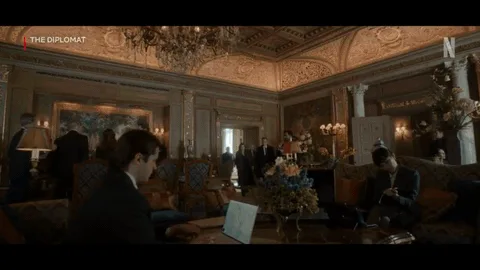
The season’s filming locations contribute substantially to its political atmosphere, particularly through settings associated with Windsor Castle and the G7 gathering. Rather than filming the entire Windsor setting at the actual castle, the production combined several British properties to create a convincing screen environment. Creator Debora Cahn explained that Belvoir Castle provided Hal’s office, Burghley House supplied exterior material, and Lancaster House contributed interior spaces.
The resulting setting brings together multiple real locations to represent a single environment within the story. The Italian material includes Viesca Toscana, a historic estate in Tuscany used for scenes connected with the season’s G7 setting. The property was formerly associated with Salvatore and Wanda Ferragamo and now operates as a luxury hotel. Its inclusion provides a contrasting visual environment for diplomatic discussions, placing dangerous political decisions against attractive and apparently peaceful surroundings.
These locations serve more than a decorative purpose. Political dramas frequently use grand buildings and ceremonial environments to suggest institutional continuity, stability, and authority. Yet the people occupying those spaces may be uncertain, improvising, or struggling to maintain control. The contrast between imposing architecture and vulnerable institutions becomes particularly effective when formal events give way to emergency decision making. Similarly, the Tuscany setting presents an orderly and elegant environment in which officials confront increasingly dangerous choices.
The distinction between fictional locations and actual filming properties is therefore important, especially because the production combines different spaces to create settings that appear continuous on screen. The impressive surroundings also reinforce the season’s central contradiction between the appearance of political stability and the uncertainty surrounding decisions made by those in power.
The season’s finale brings its central political argument to a decisive confrontation during the G7 gathering. Kate publicly resigns rather than continue supporting Grace Penn’s administration and its direction. Billie Appiah and Secretary of State Ganon follow her example, and Hal ultimately joins them. Netflix’s official explanation presents these resignations as the defining rupture within Grace’s administration, transforming the characters’ private concerns into an unmistakable public rejection of the president’s leadership. The importance of Kate’s decision lies in the change of strategy it represents.
Throughout much of the series, access to political authority is treated as valuable because it allows experienced officials to influence decisions, prevent mistakes, and reduce the consequences of questionable policies. Resignation requires Kate to surrender that access, rejecting the assumption that remaining close to power is always the most responsible choice. Her decision recognizes that continued service can become a form of endorsement even when an official privately disagrees with the actions being taken.
The sequence also changes the meaning of Kate and Hal’s relationship. Their marriage has repeatedly been strained by conflicting tactics, disagreements about consultation, and different attitudes toward political power. Hal’s decision to join the resignations establishes a shared public boundary after a season in which their judgments have frequently diverged. Their agreement does not erase the earlier damage to their relationship, but it gives the finale additional emotional significance because they finally take the same public position on a matter with serious consequences.
However, the resignations do not automatically resolve the broader crisis. Leaving office expresses a refusal to remain complicit, but it does not independently correct presidential decisions, repair international relationships, or determine what happens next. Kate and the other officials achieve greater clarity about their responsibilities while sacrificing their ability to shape events from within the administration. Their actions can be ethically meaningful without providing a comfortable or predictable strategic outcome.
The finale consequently functions as both a conclusion to the season’s central argument and an opening into uncertain circumstances. The characters have spent much of the story attempting to manage the consequences of decisions made by powerful people, often believing that their continued involvement was necessary to prevent further damage. Their eventual resignations challenge that belief and suggest that maintaining access can become less defensible than publicly withdrawing support.
The resolution therefore rests less on eliminating the international threat than on determining what responsibility requires when influence is no longer enough. This gives the ending greater significance than a conventional political victory because the characters must accept uncertainty rather than rely on their established positions to control what happens next. Their departure represents a clear decision about their own conduct, even though the consequences for the administration and international relations remain unresolved.
Critical reaction to The Diplomat Season 4 has been strongly favorable overall, particularly regarding its performances, dialogue, and sustained dramatic energy. TV Insider’s Matt Roush awarded the season five stars, Radio Times’ Jack Seale also gave it five stars, and Tom’s Guide’s Kelly Woo rated it 4.5 out of five. These reviews emphasize the central cast, sharp exchanges, and the series’ ability to maintain suspense across the eight episodes.
Their enthusiasm supports describing the fourth season as critically well received, although each rating remains the judgment of its respective publication. Nevertheless, the response has not been entirely unanimous. RIOTUS critic Sherin Nicole argues that domestic relationships sometimes overshadow the political intrigue and wider ensemble that originally made the series compelling. Her review still acknowledges the contributions of supporting characters and later developments, but questions the balance between intimate conflict and international politics. Vulture’s criticism of Grace Penn’s character development raises a related concern about whether the escalation always feels sufficiently motivated.
These assessments highlight the season’s central tradeoff: the emphasis on personal relationships gives some viewers an emotional connection to the political conflicts, while others feel that the wider diplomatic world receives insufficient attention. The disagreement is meaningful because it concerns the identity of the series rather than simply whether individual episodes are entertaining. Some viewers see the marriage between Kate and Hal as the show’s most distinctive dramatic feature, while others value the broader professional environment and procedural complexity.
Season 4 brings these elements into direct conflict by concentrating more attention on the Wylers, the Penns, and the exercise of presidential power. Its reception therefore depends partly on whether viewers consider that concentration a natural development of the series or a departure from the balance that initially attracted them.

Is The Diplomat Season 4 Worth Watching on Netflix?
The Diplomat Season 4 is worth watching, particularly for viewers already invested in Kate Wyler and the series’ combination of political suspense, sharp dialogue, and complicated personal relationships.
Its eight episodes provide substantial developments for established characters while expanding the consequences of decisions made by the people closest to presidential authority.
Published reviews offer strong support for its performances, verbal energy, and ability to sustain interest, with Keri Russell, Rufus Sewell, and Allison Janney remaining central to its appeal. The season builds on established conflicts while introducing new political responsibilities, shifting alliances, and personal consequences that give familiar characters difficult choices. Its central strength is the way political decisions become inseparable from the relationships between those responsible for making, defending, or challenging them.
The recommendation is more conditional for viewers unfamiliar with the previous seasons. Season 4 begins with the consequences of earlier political decisions and damaged relationships, meaning newcomers who start here may struggle to appreciate the significance of Hal’s secrecy, Kate’s compromised credibility, and Grace’s growing authority.
Watching the series in order provides the necessary background for understanding why seemingly ordinary disagreements carry serious professional and personal consequences. The development of trust between characters matters because much of the fourth season concerns what happens when that trust breaks down. The season is also best approached as heightened political drama rather than a strictly procedural depiction of diplomacy. Its storytelling concentrates major decisions within a relatively small group of influential people, repeatedly connecting international disputes with personal loyalties and marital disagreements.
Viewers who enjoy that approach are likely to appreciate the escalating tension and rapid reversals, while those primarily interested in detailed negotiations, institutional procedures, and a broader examination of diplomatic operations may find the later concentration on presidential power less persuasive.
The strongest reason to watch is the season’s central question about responsibility. Kate and the other officials repeatedly confront situations in which remaining close to power appears necessary to prevent further damage, even when their continued participation risks legitimizing decisions they oppose. The finale gives this conflict a decisive expression through public resignations, suggesting that professional influence is not always sufficient justification for continued service. This theme provides a meaningful connection between the political twists, character relationships, and institutional conflicts. The season challenges the assumption that competence and good intentions automatically protect officials from complicity, particularly when their desire to influence events encourages them to remain involved in decisions they increasingly recognize as unacceptable.
The fourth season’s strengths ultimately rest on its ability to make personal loyalty and professional responsibility inseparable. Its performances and dialogue provide much of the immediate entertainment, while its examination of authority gives the dramatic developments wider significance.
Although the concentration on marital conflict and presidential decision making will not satisfy every viewer, the season offers a compelling continuation for those interested in how capable officials respond when their judgment, relationships, and institutions can no longer be trusted to produce the right outcome. For established fans, The Diplomat Season 4 delivers a worthwhile continuation that takes familiar questions about trust, ambition, and accountability to a consequential conclusion, examining the moment when the responsibility to serve becomes the responsibility to leave.

Frequently Asked Questions (FAQs)
- When was The Diplomat Season 4 released on Netflix?
The Diplomat Season 4 premiered on Netflix on Thursday, October 15, 2026. All eight episodes were released simultaneously, allowing subscribers to watch the complete season without waiting for weekly installments. The release continues Kate Wyler’s story following the political and personal complications established in Season 3, including the controversy surrounding the Poseidon weapon. Viewers can watch the entire season through its G7 finale at their preferred pace. - How many episodes are in The Diplomat Season 4?
The Diplomat Season 4 contains eight episodes, all of which became available on Netflix when the season premiered on October 15, 2026. Unlike television series that release episodes weekly, the fourth season follows Netflix’s complete season release format. This allows viewers to follow the developing political crisis, changing alliances, and major character developments without interruptions. The eight episodes cover the conflict surrounding Grace Penn’s administration through the dramatic events of the finale. - Does Keri Russell return as Kate Wyler?
Yes. Keri Russell returns as Kate Wyler, the United States ambassador to the United Kingdom and the central character of The Diplomat. Season 4 places Kate in an increasingly difficult position as she attempts to manage an international crisis created partly by decisions made by her husband and the president. Her storyline explores the conflict between diplomatic responsibility, professional credibility, and personal loyalty. Russell’s performance remains one of the season’s most widely praised elements, particularly as Kate confronts the limits of influencing government decisions from within the administration. - What is Hal Wyler’s position in Season 4?
Hal Wyler, played by Rufus Sewell, serves as vice president of the United States in The Diplomat Season 4. His position gives him considerably greater political authority, making his independent decisions and questionable methods more consequential than before. Following the assassination attempt against President Grace Penn, Hal temporarily becomes acting president during the immediate aftermath. His increased responsibilities intensify his disagreements with Kate, particularly concerning the secret Poseidon operation and the limits of executive power. His actions also remain central to the season’s examination of political ambition and personal trust. - Does Grace Penn survive the assassination attempt?
Yes. President Grace Penn, portrayed by Allison Janney, survives the assassination attempt that occurs during Season 4. The shooting creates a major political emergency and temporarily places Vice President Hal Wyler in the position of acting president. Although Grace survives, the incident increases uncertainty surrounding the administration and contributes to the season’s escalating political conflict. Her subsequent decisions remain central to the storyline, particularly as Kate and other officials begin questioning whether continued cooperation with her leadership is justified. - Who plays the new British prime minister?
Jodie Whittaker plays Bethan Vaughn, the new British prime minister introduced in The Diplomat Season 4. Vaughn succeeds Nicol Trowbridge following his resignation, bringing a significant change to the British political leadership. Her arrival complicates Kate Wyler’s diplomatic responsibilities because existing relationships and negotiating arrangements cannot automatically be transferred to a new prime minister. Whittaker’s character introduces a different leadership dynamic at a moment when relations between the United States and Britain are already under pressure. - Does Austin Dennison die in The Diplomat Season 4?
Yes. Austin Dennison, portrayed by David Gyasi, dies in a helicopter crash during The Diplomat Season 4. His death is one of the season’s major developments because Dennison had been an important figure in Kate Wyler’s professional life and her efforts to navigate British politics. Losing him removes a familiar diplomatic relationship at a time when international cooperation is already unstable. The tragedy also contributes to the wider political disruption that eventually leads to changes in British leadership, including Nicol Trowbridge’s resignation. - Was Season 4 filmed at Windsor Castle?
The Diplomat Season 4 features a Windsor Castle setting, but the production did not film the entire environment at the actual castle. Instead, several historic British properties were combined to create the setting seen on screen. Belvoir Castle was used for Hal’s office, Burghley House provided exterior material, and Lancaster House supplied interior spaces. This approach allowed the production to create a convincing royal environment while using different locations for particular scenes. The season also filmed material associated with its G7 storyline at Viesca Toscana, a historic estate in Tuscany, Italy. - What happens at the end of The Diplomat Season 4?
The Diplomat Season 4 concludes with a major political confrontation during the G7 gathering. Kate Wyler publicly resigns from President Grace Penn’s administration because she can no longer justify supporting its direction. Billie Appiah and Secretary of State Ganon follow her example, while Hal Wyler ultimately joins the resignations. Their actions represent a public rejection of Grace’s leadership and mark a significant change in how they respond to the administration’s decisions. However, the resignations do not resolve the broader international crisis, leaving the political consequences and future relationships uncertain. - Should the earlier seasons be watched before Season 4?
Yes. Watching the earlier seasons of The Diplomat is strongly recommended before beginning Season 4 because its central conflicts depend on events and relationships developed throughout the series. The fourth season continues the consequences of the Poseidon weapon controversy, Kate and Hal’s complicated marriage, and the political decisions made by Grace Penn. Without that background, viewers may struggle to understand why particular betrayals, diplomatic disagreements, and leadership changes carry such serious consequences. Watching in order provides the context needed to appreciate the character developments and the significance of the finale.

Conclusion
The Diplomat Season 4 earns a strong recommendation based on its positive critical reception, ambitious political conflict, and exploration of the relationship between personal loyalty and public responsibility. Its greatest strength lies in questioning whether remaining inside a troubled administration genuinely allows officials to influence decisions or eventually makes them complicit in those decisions. The season brings this dilemma to a decisive conclusion through its examination of trust, ambition, and accountability.
However, the balance between political intrigue and marital conflict remains divisive, particularly regarding Grace Penn’s character development. Despite these reservations, Season 4 offers established fans a compelling continuation that challenges its characters to recognize when the responsibility to serve becomes the responsibility to leave.
Sources and Citations
- Netflix Tudum, October 20, 2026, Season 4 Overview : Confirms that all eight episodes are streaming and outlines the political conflict involving Kate, Hal, Grace and Todd. Includes creator Debora Cahn’s comments and confirms Allison Janney, Bradley Whitford and Nana Mensah’s promotion to series regulars. Netflix Tudum
The Diplomat Season 4: The Drama Is Back with More Power Plays and Politics. - Netflix Tudum, October 15, 2026, Finale Explained : Explains the G7 confrontation, Grace Penn’s escalating threats, Kate’s resignation and the officials who follow her departure. Includes cast and creative team commentary on Hal’s final decision and the unresolved statement he prepares to deliver to the press. Netflix Tudum
What Happens in The Diplomat Season 4 Finale? That Shocking G7 Ending Explained. - Netflix Media Center, Official Production Information : Provides the official Season 4 synopsis, principal cast and production credits. Identifies Debora Cahn as creator, showrunner and executive producer, lists the other executive producers, and outlines the opposing alliances involving Grace, Hal, Kate and Todd. Netflix Media Center
The Diplomat, Netflix Media Center. - TVLine, August 17, 2026, Premiere Announcement : Reports the October 15 premiere date and confirms that all eight episodes would arrive together. Introduces the official teaser, discusses Kate and Hal’s troubled marriage, and summarizes the political consequences of Hal and Grace’s secret alliance. tvline.com
The Diplomat Lands Season 4 Premiere Date at Netflix. - Netflix Tudum, August 17, 2026, Teaser Trailer : Announces the October 15 premiere and introduces the season’s central tensions through its teaser. Includes Cahn’s explanation of the two marriages, Grace and Hal’s growing alliance, and the uneasy partnership that develops between Kate and Todd. Netflix Tudum
The Diplomat Season 4 Teaser Trailer and Release Date. - Town & Country, October 15, 2026, Windsor Castle Episodes : Interviews Debora Cahn about the opening Windsor Castle storyline, its political consequences and Kate and Hal’s relationship. Explains how filming across multiple locations recreated the royal setting and how the opening crisis influences Grace Penn’s subsequent decisions. townandcountrymag.com
Inside The Diplomat’s Shocking Windsor Castle Episodes. - Elle, October 19, 2026, Italian Filming Locations : Identifies Viesca Toscana as a filming location for the season’s Italian G7 storyline. Describes the historic estate’s connections to the Ferragamo family, its architecture and interiors, and the villa, terrace and gardens featured in the production. elle.com
Take a Look at the Stunning Italian Estate That Plays a Role on The Diplomat. - Netflix Tudum, October 15, 2026, Official Filming Locations Guide : Identifies the estates, embassy settings and other locations used across the series. Explains how several locations recreated Windsor Castle and details the Tuscan estates and villas used for Season 4’s G7 summit, with commentary from the production team. Netflix Tudum
Where Did They Film The Diplomat Season 4? Your Guide to the Drama’s Locations. - TV Insider, October 15, 2026, Season 4 Review : Matt Roush reviews the season’s political suspense, rapid reversals and sharp dialogue, alongside the strain on Kate and Hal’s marriage and other relationships. His five star review discusses how the eight episodes build toward the G7 finale. tvinsider.com
Roush Review: Dizzying Twists Make The Diplomat Season 4 Edge-of-the-Seat TV. - Radio Times, October 15, 2026, Season 4 Review : Jack Seale awards the season five stars, examining its political storytelling, performances and dialogue. Discusses how Kate and Hal’s marriage and the shifting relationships among the central characters connect personal disputes with the wider diplomatic crisis. radiotimes.com
The Diplomat Season 4 Review: Sharp, Smart and This Drama’s Best Series Yet. - Tom’s Guide, October 15, 2026, Season 4 Review : Kelly Woo reviews all eight episodes and awards the season 4.5 out of 5 stars. Praises the political plotting, complicated relationships and central performances, particularly the expanded involvement of Allison Janney’s Grace Penn and Bradley Whitford’s Todd Penn. Tom’s Guide
The Diplomat Season 4 Review: Netflix’s Best Drama Delivers Its Best Season Yet. - TV Insider, October 16, 2026, Debora Cahn Finale Interview : Interviews Cahn about the G7 resignations, Kate and Hal’s decisions, and the writing choices behind the season’s major developments. Discusses the consequences of the ending and its implications for future storylines, including the characters’ political and personal relationships. tvinsider.com
The Diplomat Boss Breaks Down the Finale Fallout and What’s Next. - TV Insider, October 17, 2026, Ali Ahn Interview : Features Ahn discussing Eidra Park’s deepening relationship with Stuart Hayford, her damaged trust in Kate Wyler and the consequences of Grace Penn’s retaliation against Stuart. Examines how the finale tests Eidra’s personal loyalties and professional priorities. tvinsider.com
The Diplomat: Ali Ahn Unpacks the Finale Turning Point for Eidra and Kate. - Radio Times, October 15, 2026, Ending Explained : Explains the season’s major departures, Stuart’s removal from his London posting and the confrontation at the G7 summit. Recaps the resignations from Grace Penn’s administration and the closing moment that leaves Hal preparing to address the press. radiotimes.com
The Diplomat Season 4 Ending Explained: What Happened at the G7?.
Recommendations
- Halo: Campaign Evolved Cross-Play and Cross-Saves Explained: Complete Guide for PC, Xbox, and PS5
- Lanterns HBO TV Series Cast and Characters: Who’s Confirmed for the DC Show
- Valor Mortis Recoups Launch Costs, One More Level Reports
- Mixtape and the Awkward First Kiss Scene Explained: the Story Behind One of the Grossest Video Game Moments of 2026
- The First Tintin LEGO Set Celebrates the Boy Reporter’s Legendary Trip to the Moon (Set 21367)
- GTA 6 Leans Into Vice City’s Influencer Hustle Where Looks Matter
- Tomodachi Life: Living the Dream Was In Development For Almost A Decade (9 Year Timeline Explained)
- Planet Zoo 2 Achievement and Trophy Guide: 100% Completion
- Roblox Introduces Mandatory Age-Gated Account Tiers: Roblox Kids vs Roblox Select and What Changes in 2026
- Final Fantasy 14 PvP Series 12 Rewards Guide for Patch 7.56



































































































