








In This Article (19 sections)
The Sinking City 2 Preview
The Sinking City 2 marks the return of Frogwares to the Lovecraftian horror genre, building on the foundation of its predecessor while shifting toward a more survival-focused and action-heavy experience. Unlike the first game, which emphasized detective work within an open-world mystery structure, this sequel leans more aggressively into atmospheric survival horror, psychological tension, and environmental storytelling.
Set in a decaying, flooded version of Arkham, the game presents a world consumed by supernatural forces and cosmic dread. The preview footage and developer insights suggest a stronger emphasis on player vulnerability, resource scarcity, and combat encounters that feel more desperate and grounded. The tone is intentionally heavier, darker, and more oppressive, reinforcing the idea that survival, not just investigation, is the core pillar of the experience.
The Sinking City 2 Story and Main Character
The story of The Sinking City 2 takes place in Arkham, a city already infamous in Lovecraftian mythos for its occult history and psychological decay. The protagonist is a new character distinct from the first game’s detective, stepping into a city where reality itself is unstable and the boundaries between sanity and madness are constantly eroding.
The narrative centers on a growing supernatural flood that has reshaped the city into a partially submerged nightmare. Citizens have either fled, gone insane, or become something else entirely. The protagonist is drawn into the city through a personal connection to the unfolding chaos, though much of the story is designed to be uncovered through environmental clues, fragmented dialogue, and investigative discovery rather than direct exposition.
Frogwares emphasizes player-driven interpretation, meaning the story will often be pieced together in non-linear ways. This approach strengthens replayability while reinforcing the Lovecraftian theme that truth is fragmented and often incomprehensible.

The Sinking City 2: Lovecraft Horror Inspirations
The sequel draws heavily from the broader Lovecraft mythos, especially themes of cosmic insignificance, forbidden knowledge, and psychological breakdown. Rather than relying only on visible monsters, The Sinking City 2 appears to build its horror around the idea that something ancient, vast, and unknowable is pressing against reality. Arkham itself serves as a central symbol of decay and forbidden history, with its architecture and environmental design reflecting an unnatural fusion of Victorian buildings, flooded streets, and corrupted organic structures.
Unlike traditional horror games that rely on jump scares, The Sinking City 2 focuses on slow-building dread. Players encounter unsettling environmental anomalies, distorted sound design, and narrative implications that suggest reality is being influenced by forces beyond human understanding. The city becomes more than a setting; it feels like a place infected by its own past, where every ruined building or strange detail hints at something that should have remained buried.
The influence of Lovecraft is not only thematic but structural. The game encourages curiosity, but punishes overconfidence, reinforcing the idea that knowledge comes at a cost. Investigation may reveal useful answers, but it can also pull the player deeper into danger and madness. This philosophical underpinning shapes both gameplay and story progression, making discovery feel necessary, unsettling, and potentially destructive.
The Sinking City 2: Gameplay Reveal Breakdown
The gameplay reveal shows a significant shift from the original game’s detective-heavy structure toward a hybrid of survival horror and investigative exploration. Players still gather clues, examine environments, and reconstruct events, but these mechanics are now embedded within a more dangerous and reactive world. Investigation is no longer just about solving a case; it is also about surviving long enough to understand what is happening.
Exploration is no longer safe. Every area may contain threats, environmental hazards, or psychological distortions that affect perception. Movement through flooded streets, collapsing buildings, and claustrophobic interiors introduces constant tension, forcing players to stay alert even during quieter moments. The environment itself becomes part of the threat, limiting visibility, restricting movement, and making every new location feel unstable.
The gameplay loop now alternates between investigation phases and survival segments. Players must carefully manage resources while solving environmental puzzles and uncovering narrative threads. This creates a more tense rhythm than the original game, as clues, combat, and exploration all feed into one another. The player is encouraged to investigate, but each step forward may cost ammunition, health, or safety.
The Sinking City 2: Combat System Explained
Combat in The Sinking City 2 has been redesigned to feel more grounded and survival-oriented. Instead of empowering the player as a traditional action hero, the system emphasizes desperation and limited resources. The goal is not to make players feel dominant, but to make every encounter feel risky and costly.
Weapons are scarce and often improvised, and ammunition management plays a critical role in survival. Encounters are designed to be unpredictable, with enemies requiring different approaches depending on their type and behavior. Some threats may be better avoided entirely, while others may force players to use the environment, conserve ammunition, or rely on quick decision-making under pressure.
Melee combat exists but is risky and situational. Firearms provide distance but are not always reliable solutions due to scarcity and environmental constraints. This forces players to make strategic decisions about when to fight and when to flee, turning combat into a survival calculation rather than a simple action sequence.
The overall combat philosophy prioritizes tension over empowerment, aligning with the game’s horror-driven identity. By making resources limited, enemies dangerous, and escape a valid option, The Sinking City 2 keeps combat tied closely to fear, vulnerability, and survival.

The Sinking City 2: Survival Horror Changes
One of the most significant changes in The Sinking City 2 is its stronger commitment to survival horror mechanics. The sequel places more pressure on the player by making survival depend on several overlapping systems rather than simple health management. Players must now pay attention to physical condition, mental stability, environmental exposure, and the constant shortage of useful supplies. This makes each journey through Arkham feel more dangerous, as poor preparation or reckless exploration can quickly create serious consequences.
Flooded environments introduce navigation challenges, limiting movement and creating natural choke points. Waterlogged streets, blocked routes, and unstable structures force players to think carefully about how they move through the city. Darkness and weather conditions further complicate exploration, reducing visibility and making it harder to identify threats before they are close. These elements help make the environment feel hostile, not just visually unsettling.
Inventory management plays a more critical role, with limited space forcing players to make meaningful choices about what to carry. Healing items, ammunition, and investigative tools must be balanced carefully, since carrying too much of one type of resource may leave the player vulnerable in another situation. This creates a constant sense of risk, especially when players must decide whether to prepare for combat, exploration, or puzzle-solving.
This shift positions the game closer to modern survival horror titles while retaining its narrative-driven structure. The Sinking City 2 does not appear to abandon its investigative identity, but it places that identity inside a harsher and more threatening framework. The result is a game where discovery, survival, and psychological pressure are closely connected.
The Sinking City 2: Investigation Mechanics Return
Despite the shift in tone, investigation mechanics remain central to the experience. Players still collect clues, analyze environments, and reconstruct events to progress the story. These mechanics preserve the identity of the series, ensuring that The Sinking City 2 is not simply a combat-focused horror game. The player is still expected to observe carefully, connect details, and interpret the meaning behind strange events.
However, these systems have been streamlined to integrate more naturally with exploration and survival. Instead of feeling like separate gameplay segments, investigation now occurs organically during movement through the world. A clue might be discovered while escaping danger, searching a ruined building, or navigating a flooded district. This makes investigation feel more immediate and less detached from the rest of the gameplay.
Evidence collection often requires players to enter dangerous areas, adding tension to discovery. Some clues may be hidden in unstable or hostile environments, forcing risk-reward decisions. Players may need to decide whether a piece of evidence is worth spending ammunition, risking injury, or entering an area affected by supernatural distortions. This approach makes each discovery feel earned rather than routine.
The system continues Frogwares’ tradition of player interpretation, allowing multiple possible conclusions based on gathered evidence. Instead of simply handing players one obvious answer, the game encourages them to form their own understanding of events. This fits well with the Lovecraftian tone, where truth is often incomplete, disturbing, and shaped by how much the player is willing to uncover.
The Sinking City 2: Arkham City Setting Details
Arkham in The Sinking City 2 is not a traditional city but a partially submerged, decaying environment shaped by supernatural flooding. Streets are replaced with waterways, rooftops serve as navigation paths, and entire districts are inaccessible without traversal tools or environmental manipulation. This gives the city a broken, maze-like structure, where familiar urban spaces have been transformed into something dangerous and unnatural.
The city is divided into zones, each with distinct atmospheric and narrative identities. Some areas are densely urban and claustrophobic, filled with narrow interiors, flooded alleys, and collapsing buildings. Others are more open and eerily silent, using emptiness and distance to create unease. This variety helps Arkham feel like a place with history, where each district has suffered in a different way.
Environmental storytelling is a major focus, with abandoned homes, corrupted institutions, and altered landscapes revealing fragments of the city’s collapse. Players can learn about Arkham not only through dialogue or documents, but through the condition of the world itself. A ruined hospital, a deserted neighborhood, or a building overtaken by unnatural growth can suggest what happened before the player arrived.
The setting reinforces isolation, making the player feel like an intruder in a world that has already ended in all but name. Arkham is not just a location to explore; it is a hostile remnant of a city consumed by forces beyond human control. Its flooded streets, empty rooms, and distorted architecture constantly remind the player that survival here is temporary, uncertain, and deeply unnatural.
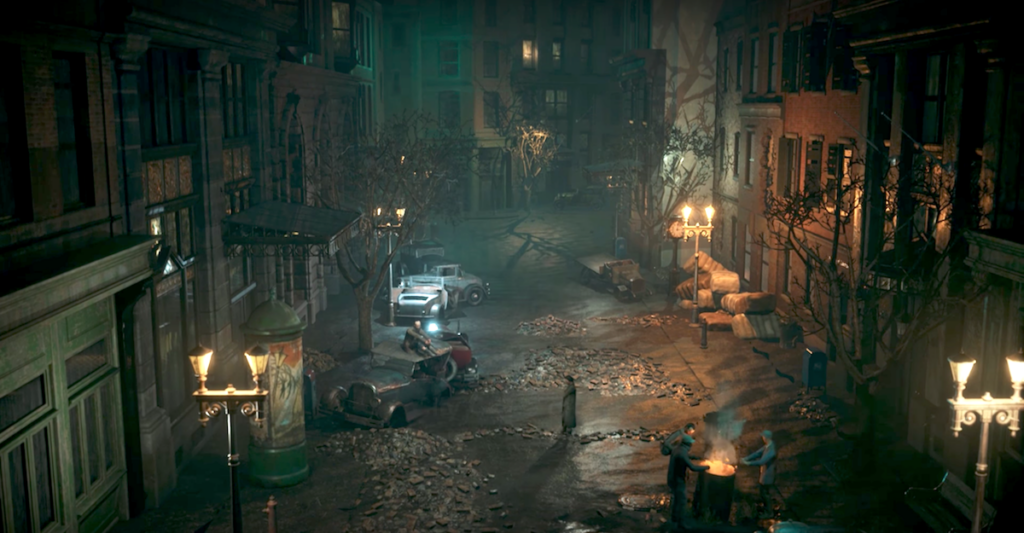
The Sinking City 2: Unreal Engine 5 Graphics Analysis
Built on Unreal Engine 5, The Sinking City 2 takes advantage of advanced rendering technologies to deliver more detailed environments, stronger atmosphere, and more dynamic lighting effects than the original game. Water simulation is one of the key visual features, with flooded streets reflecting light, movement, and surrounding architecture in realistic ways. Since water is such a major part of Arkham’s design, its visual quality directly affects the mood of exploration and the sense that the city is being consumed.
Lumen global illumination enhances atmospheric depth by allowing light to behave more naturally across complex indoor and outdoor environments. Dim interiors, broken windows, lantern-lit corridors, and wet surfaces can all react to light in ways that make each space feel more believable and oppressive. This contributes significantly to the game’s horror tone, as lighting is used not only for visual realism but also to create uncertainty, hide threats, and guide the player’s attention.
Character models and environmental textures are also more detailed than in the original game, with increased emphasis on decay, corrosion, and organic corruption. Walls, streets, clothing, and creature designs appear marked by rot and supernatural contamination, reinforcing the idea that Arkham is physically and spiritually deteriorating. These details help make the world feel less like a static backdrop and more like a place actively being transformed.
The visual design is not just aesthetic but functional. Environmental details can help players interpret danger, identify navigation paths, and notice important clues. Lighting, texture changes, water levels, and structural damage may all communicate where the player can go, what areas are unsafe, or where something significant happened. In this way, Unreal Engine 5 supports both the game’s atmosphere and its survival-focused gameplay.
The Sinking City 2: Enemy Types and Eldritch Creatures
Enemies in The Sinking City 2 reflect the game’s Lovecraftian inspiration. They are not presented as traditional monsters with simple origins, but as manifestations of corruption, transformation, and cosmic horror. Their designs suggest that the threat in Arkham is not limited to physical violence; it is also biological, psychological, and supernatural. This makes encounters feel unsettling even before combat begins.
Some enemies appear humanoid but heavily distorted, suggesting former citizens of Arkham who have been changed by exposure to supernatural forces. These designs can be especially disturbing because they retain traces of humanity while clearly no longer being human. Others are more abstract, defying conventional anatomy and behavior patterns. Their movements, shapes, and attacks may feel unfamiliar, reinforcing the idea that the player is facing something outside normal understanding.
Combat encounters vary in structure, with some enemies hunting the player actively while others function more like environmental hazards or scripted threats. A creature that stalks the player through a flooded building creates a different kind of tension than one that blocks a route or appears during a specific story moment. This variety helps prevent encounters from becoming predictable and encourages players to stay alert.
The unpredictability of enemy behavior reinforces the game’s tension, ensuring players remain cautious even in seemingly safe areas. Since enemies may not always behave like standard horror-game creatures, players cannot rely only on familiar combat habits. Observation, movement, and resource management become just as important as accuracy, making each encounter feel risky and uncertain.
The Sinking City 2 vs the Sinking City Comparison
Compared to the original The Sinking City, the sequel represents a clear tonal and mechanical shift. The first game emphasized detective work within a semi-open world, giving players room to investigate cases, collect evidence, and draw conclusions through structured mystery-solving. The Sinking City 2 keeps investigation as part of its identity, but integrates survival horror more deeply into exploration, combat, and progression.
Investigation remains present but is no longer the sole focus. Players still examine environments and uncover clues, but these actions now take place in a world that is more dangerous and reactive. Combat is more refined and dangerous, while exploration is significantly more hostile due to limited resources, environmental hazards, and stronger horror pacing. This makes the sequel feel less like a detective adventure with horror elements and more like a survival horror game with investigative depth.
The sequel also appears more cinematic, with stronger narrative direction and environmental storytelling. Instead of relying only on dialogue or case files, the game uses ruined locations, lighting, creature design, and world details to communicate what has happened to Arkham. This approach makes the city feel more immersive and gives the story a heavier sense of atmosphere.
While the original leaned toward structured mystery-solving, The Sinking City 2 embraces ambiguity and tension as core design principles. The sequel seems more focused on uncertainty, vulnerability, and the fear of uncovering truths that may be impossible to fully understand. This change gives it a stronger horror identity while still preserving the investigative foundation that defines the series.

The Sinking City 2: Hands-on Preview Impressions
Early preview impressions suggest a game that is more immersive, intense, and atmospheric than its predecessor. The increased focus on survival mechanics creates constant pressure, making exploration feel risky and meaningful rather than routine. Every movement through Arkham seems designed to carry some level of danger, whether through limited resources, environmental threats, or the possibility of encountering something unexpected.
The world design stands out as one of the strongest aspects, with Arkham’s flooded streets creating a visually striking and emotionally oppressive environment. The city feels damaged, unstable, and hostile, with waterlogged roads, ruined buildings, and dark interiors reinforcing the sense that civilization has already collapsed. This makes exploration feel less like traveling through an open world and more like pushing deeper into a place that does not want to be understood.
Combat, while still evolving, appears deliberately weighty and constrained, reinforcing vulnerability rather than power. Weapons do not seem designed to make players feel dominant, but to give them just enough control to survive. This makes each encounter more tense, especially when ammunition and healing supplies are limited.
Overall, the hands-on impressions highlight a game that prioritizes mood and tension over traditional action or accessibility. The Sinking City 2 seems focused on creating a slower, more oppressive horror experience where atmosphere, uncertainty, and survival pressure define the moment-to-moment gameplay.
The Sinking City 2: Release Date and Platforms
The Sinking City 2 has been announced for PC and next-generation consoles, though a specific release date has not been firmly established at the time of preview coverage. Development is ongoing, and Frogwares has indicated that additional updates will be shared as production milestones are reached. This suggests the studio is still refining core systems, presentation, and technical performance before committing to a final launch window.
The game is expected to target current-generation hardware to fully utilize Unreal Engine 5 capabilities, particularly in lighting, water simulation, and environmental density. These features are important to the sequel’s identity, since the flooded city, dynamic shadows, and detailed interiors play a major role in building atmosphere. Focusing on newer platforms should allow the game to deliver a more visually complex and immersive version of Arkham than was possible in the original.
The lack of a firm release date may also help manage expectations, especially for a game with a stronger horror focus and more ambitious technical goals. Survival horror depends heavily on pacing, atmosphere, and polish, so giving the project enough development time could be important to ensuring that its mechanics and world design feel cohesive.
The Sinking City 2: Community Reactions and Early Feedback
Community reactions to early reveals have been largely positive, especially among fans of Lovecraftian horror and narrative-driven survival games. Many players have praised the darker tone, improved visuals, and stronger sense of atmosphere. The shift to Unreal Engine 5 has also drawn attention, with fans noting that the lighting, flooded environments, and creature designs appear more detailed and cinematic than before.
However, some discussion has focused on the shift away from pure detective gameplay, with long-time fans of the original expressing curiosity about how investigation mechanics will evolve. The first game built much of its identity around clue gathering, deduction, and player interpretation, so some fans are watching closely to see whether those elements remain meaningful in the sequel’s more survival-focused structure.
Overall sentiment suggests strong anticipation, particularly around how Frogwares balances survival horror with narrative complexity. If the sequel can keep the investigative depth of the original while making exploration and combat more tense, it may appeal to both returning fans and new players interested in atmospheric horror.
Why the Sinking City 2: Could Be Frogwares’ Best Horror Game Yet
The Sinking City 2 has the potential to become Frogwares’ most ambitious horror project due to its combination of atmospheric storytelling, survival mechanics, and Lovecraftian themes. The sequel appears to have a clearer horror identity than the original, leaning further into dread, vulnerability, and the feeling of confronting forces beyond human understanding.
The move toward Unreal Engine 5 allows for unprecedented environmental immersion, while the refined gameplay systems suggest a more cohesive and intense experience. Arkham’s flooded streets, decaying buildings, and corrupted spaces can now be presented with greater visual detail, helping the setting feel more oppressive and alive. At the same time, the stronger survival mechanics give players more immediate reasons to fear the world around them.
If the game successfully balances investigation with survival horror, it could surpass its predecessor in both critical reception and player engagement. The key will be maintaining the series’ detective-driven identity while making combat, exploration, and resource management feel tense without becoming frustrating.
The foundation is strong: a compelling setting, a rich mythological influence, and a clear design direction focused on tension and immersion. If Frogwares can bring these elements together effectively, The Sinking City 2 could stand as the studio’s strongest horror title and one of its most distinctive games to date.

Frequently Asked Questions (FAQs)
- What is The Sinking City 2 about?
The Sinking City 2 follows a new protagonist as they explore a flooded and decaying version of Arkham. The city is filled with strange creatures, disturbing visions, and Lovecraftian threats that blur the line between reality and madness. The story focuses on survival, mystery, and uncovering what has corrupted the city. - Is The Sinking City 2 open world?
The game is not expected to be a fully traditional open-world experience like the first game. Instead, it features a semi-open structure with interconnected areas that players can explore. This approach allows for exploration and discovery while keeping the horror more focused and intense. - Does The Sinking City 2 have combat?
Yes, The Sinking City 2 includes combat, but it is designed around survival rather than action. Resources are expected to be limited, enemies are dangerous, and players will need to think carefully before engaging. The goal is to make each encounter feel tense instead of making combat feel routine. - Is investigation still important in The Sinking City 2?
Yes, investigation is still an important part of the experience, but it appears to be more closely tied to the survival horror elements. Players will still uncover clues, solve mysteries, and piece together information, but the game places more pressure on exploration, danger, and atmosphere than the first game did. - What engine does The Sinking City 2 use?
The Sinking City 2 is being developed with Unreal Engine 5. This should allow for improved lighting, more detailed environments, better visual effects, and a stronger horror atmosphere. The flooded city, creature designs, and environmental decay are likely to benefit from the engine’s modern graphical features. - Is The Sinking City 2 connected to the first game?
The Sinking City 2 shares the same Lovecraftian themes and general style as the first game, but it tells a new story with a new protagonist. This means players familiar with the original may recognize the tone and ideas, but newcomers should still be able to understand the sequel without needing to play the first game. - What kind of horror is in The Sinking City 2?
The horror is mainly psychological, cosmic, and Lovecraftian. Rather than relying only on jump scares, the game focuses on fear of the unknown, disturbing creatures, madness, and the feeling that something far beyond human understanding is influencing the world. The flooded setting also adds isolation and unease. - Will The Sinking City 2 be on console?
Yes, The Sinking City 2 is expected to release on current-generation consoles and PC. This likely includes platforms such as PlayStation 5, Xbox Series X/S, and PC. Since it is being built with modern hardware in mind, the game should take advantage of stronger performance and visual capabilities. - How is the setting different from the first game?
The sequel moves the focus to Arkham, which is now flooded, ruined, and much more dangerous. Compared to the first game’s city of Oakmont, this version of Arkham appears more hostile and horror-focused. The environment is designed to feel oppressive, with water, decay, and supernatural corruption shaping the atmosphere. - What makes The Sinking City 2 different from the first game?
The biggest difference is the shift toward survival horror. While the first game leaned heavily into detective work and open-world investigation, the sequel places more emphasis on tension, limited resources, dangerous encounters, and atmospheric horror. Investigation still matters, but survival now plays a much larger role.

Conclusion
The Sinking City 2 represents a bold evolution of Frogwares’ Lovecraftian formula, transforming the series from a detective-focused experience into a more immersive survival horror journey. With its flooded Arkham setting, Unreal Engine 5 visuals, and heightened tension-driven gameplay systems, it aims to deliver a deeper sense of dread and vulnerability.
While still in development, the game shows strong promise as a darker, more ambitious sequel that expands both narrative depth and gameplay intensity. If executed successfully, it could stand as one of the most compelling modern interpretations of Lovecraft-inspired horror in gaming.
Sources and Citations
- Frogwares Official Website
https://frogwares.com - The Sinking City Official Game Page
https://www.thesinkingcity.com - IGN Gaming Coverage (General Game Previews)
https://www.ign.com - GameSpot News and Preview Coverage
https://www.gamespot.com - Unreal Engine 5 Technology Overview
https://www.unrealengine.com
Recommended
- Slay the Spire 2 Removes the Doormaker Boss in Latest Update: Patch Notes, Community Reaction, and What Replaced It
- Closure of Midsummer Studios: What Happened to Jake Solomon’s Burbank Life Sim
- Sparseal Launched New 3D Texturing App For iPad: Wafer Brings Stylized PBR Texture Painting to iPad
- Live Link Face with Metahuman: How to Capture Real-Time Facial Animation in Unreal Engine 5
- Law & Order: Organized Crime Cancelled After 5 Seasons
- Google Play will let you try a game before you buy it: Game Trials explained (release, supported games, and how it works)
- Smooth Obstacle Avoidance System Set Up in Unreal Engine: RVO vs Detour Crowd, NavMesh Settings, and Best Practices
- Gears Of War Movie on Netflix: Everything We Know So Far
- Genki Covert Dock 3 Solves the Switch 2’s Clutter Problem in One Plug
- Rockstar Confirms New Data Breach After Hacker Group Threatens “Pay or Leak” – What Was Stolen and What It Means



































































































