







In This Article (8 sections)
To Every Creature Gameplay, Light Mechanics and Contemplative Design
To Every Creature is an in-development contemplative indie game from filmmaker, CG artist and game creator Federico “Fede” Breser. Rather than centering its interaction on combat, conquest or defeating monsters, the project asks the player to carry light through an atmospheric world and help that light reach forgotten places and unusual creatures.
Its first public experiments drew wider attention in August 2026 because of their cinematic presentation and unusual premise, while Breser’s own descriptions frame the project as a short narrative journey built around presence, care, observation and the idea that light does not need to function as a weapon. The game remains early in development, with no confirmed full release date or final platform list, and the first playable encounter is still being assembled. Pasted text
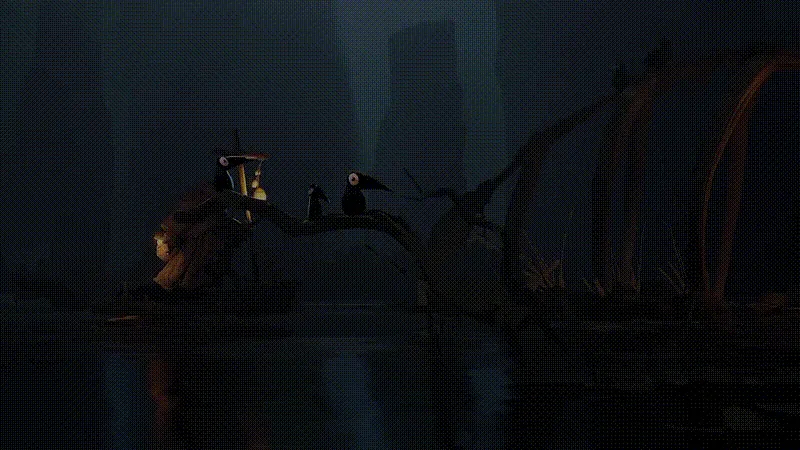
The player takes the role of a solitary traveler crossing a mist-covered landscape shaped by wind, water, abandoned vessels, forgotten places and mysterious creatures. The lights carried on the traveler’s staff are not simply decorative. They are described as being entrusted to the player and can be carried, raised and released. Carrying is the default state, while raising the staff can illuminate or awaken elements of the environment. Releasing a light is especially important because it lets the player relinquish it and send it somewhere the character cannot physically go. One example described by Breser involves placing a light into water so the current carries it toward an otherwise inaccessible location.
That interaction suggests that navigation and environmental problem-solving will depend on understanding how light behaves rather than relying on combat or conventional puzzle machinery. A blocked route may be solved by observing water flow, noticing how a creature reacts or deciding where a light should be placed. The official site also frames the concept around carrying, protecting and sharing light, while noting that light can reveal, awaken, unsettle or restore. Its effects are therefore not presented as universally positive or identical, and players may need to pay attention to context rather than repeatedly applying one obvious solution.
The creatures themselves are central to the project’s emotional identity, although Breser has deliberately revealed relatively little about them. Some exist in places the traveler cannot reach directly, allowing light to act as the connecting element. Breser has also emphasized that helping does not always mean fixing. Sometimes the appropriate action may be waiting, remaining present or simply allowing light to arrive. That gives encounters a different rhythm from action-adventure games built around domination or rescue objectives.
Combat is explicitly absent from the currently announced design. The official itch.io description says there are no enemies to defeat and that darkness is not something the player conquers by force. This is tied directly to the project’s central theme of asking whether bringing light into darkness can be understood as care rather than conquest. The traveler is not framed as a warrior cleansing a hostile world, and the creatures are not positioned as default enemies. Instead, movement, observation and small acts of attention appear to form the game’s main vocabulary.
The story itself is intentionally restrained. There is no announced kingdom, villain, war, extensive supporting cast or detailed canonical mythology explaining exactly what the lights represent. Environmental storytelling and minimal dialogue are identified as central characteristics, so the landscape is expected to carry much of the narrative weight. The lights provide the clearest story framework because they have been entrusted to the traveler and must be carried into places they cannot reach alone. Themes of uncertainty, restoration, sacrifice and giving away something that was never meant to be kept permanently are present, but Breser has not assigned one fixed allegorical or religious interpretation to them.

Fede Breser, Quill VR and Unreal Engine Development Workflow
Federico Moreno Breser is a filmmaker, animation director, CG artist, real-time artist, instructor and game creator with a long background in animation and visual effects. His professional website identifies him as a Montreal-based director and CG artist and lists work as a VFX supervisor at Reel FX, along with experience in filmmaking, animation, Unreal Engine, virtual reality and a range of commercial and entertainment projects. He studied filmmaking at Palermo University in Buenos Aires before moving further into animation, later founding Mcfly Studio in Argentina and working with companies and organizations including Disney, Netflix, Legendary Pictures, Fox, Ubisoft and UNICEF.
His relationship with Quill predates To Every Creature by several years. In a 2023 discussion of Bogdan’s Cross, Breser explained that he began experimenting with Quill after obtaining an Oculus Rift and gradually made the software a major part of his creative process. Quill allows him to sketch, sculpt, stage and explore ideas directly in three-dimensional space without first moving through every conventional CG stage in the usual order. That does not mean modelling, rigging, texturing or animation disappear entirely, but it allows form, silhouette, colour, volume and composition to be established quickly in an immersive workspace.
Breser has also taught VR animation with Quill, including a Domestika course covering planning, storyboarding, VR creation, character animation, effects, sound and integration between Quill and Unreal Engine. That background helps explain why To Every Creature can resemble a hand-built animated film while still being designed as an interactive experience. Much of the project’s world, creatures and visual language are being created by hand in Quill before being transferred into Unreal Engine.
Quill acts as the art-first foundation of the workflow, while Unreal Engine provides the real-time environment where that artwork becomes interactive. Breser has previously described a similar pipeline in which Quill is used for look development, spatial sketching and previsualization, then Unreal adds lighting, atmosphere, cinematic presentation, interaction and game logic. Characters, props and environments can originate in Quill and then be moved into the engine through formats such as FBX, Alembic or USD. Unreal’s Blueprint system also gives an artist-oriented developer a way to create interaction without depending exclusively on traditional programming.
This means To Every Creature should not be described as simply “VR artwork imported into a game.” Its development demonstrates a broader art-first production method in which the act of drawing and designing inside virtual three-dimensional space directly influences geometry, composition, atmosphere and the playable world. The distinction is important because Quill is a VR creation tool, not proof that the final game itself is a VR title.
To Every Creature Visual Style, Cinematic Atmosphere and VR Clarification
The visual presentation is one of the main reasons To Every Creature attracted attention before becoming publicly playable. 80 Level highlighted its cinematic quality, colourful stylization and cozy atmosphere after Breser shared early footage. That look is closely tied to his background in filmmaking, CG art, animation and real-time cinematic production, as well as to Quill’s ability to preserve a hand-drawn quality inside three-dimensional scenes.
Quill is built around expressive creation rather than strict photorealism. Its own descriptions emphasize styles that can evoke watercolor, pencil, oil painting and other handmade media even though the work exists in 3D space. For To Every Creature, this helps produce environments that sit between animated illustration and real-time game space. Mist, moving water, strange architecture, stylized creatures and luminous focal points can be staged in a way that resembles carefully composed animated-film shots while still remaining interactive once transferred into Unreal Engine.
Breser’s earlier workflow descriptions help explain how that look is achieved. Characters can begin as spatial dioramas inside Quill, where he adjusts volume, pose, silhouette and the relationship between a figure and its surroundings before later technical preparation. Environments can be developed the same way, allowing large visual ideas to be built in context rather than first designed as flat concept art. That workflow makes composition central from the beginning.
Music also contributes to the atmospheric direction. The official itch.io page credits Santiago Walsh with the original score and includes a development log focused on the project’s main theme. This reinforces the sense that emotional pacing, atmosphere and audiovisual tone are intended to matter as much as mechanical complexity.
Despite the use of Quill, To Every Creature is not currently confirmed as a VR game. Breser works in VR while creating art because Quill itself is a VR illustration and animation tool, but that does not mean the finished player experience requires a headset. Breser has made this distinction in earlier discussions of his broader workflow, explaining that he uses Quill and Unreal Engine for many non-VR projects.
The official project pages currently describe To Every Creature simply as a playable narrative experience made with Quill and Unreal Engine. There is no announced requirement for Meta Quest, SteamVR, PlayStation VR2 or another VR platform. The accurate description is therefore that it is a game being created partly with VR tools, not a confirmed VR game. Pasted text

To Every Creature Release Status, First Playable Encounter and Development Updates
To Every Creature does not currently have a confirmed full release date. The official itch.io page remains marked “In development,” and the first playable encounter is still taking shape rather than being offered as an open public download. The project page was published on August 26, 2026 and updated on August 28, while the standalone website continues to ask interested players to register for an invitation instead of presenting a release button or commercial launch date.
No final platform list has been announced either. There is an itch.io project page, but the official materials reviewed do not confirm a Steam release, PlayStation version, Xbox version, Nintendo version, Meta Quest edition or another dedicated console or VR platform. 80 Level also reported in August that the project did not yet have a Steam page and that Breser was preparing a playable experience rather than announcing a commercial launch.
The first public opportunity to try the project is expected to be what Breser calls the “first playable encounter.” Interested players can register through the official website by providing a name and email address, and Breser says people on the list will receive an invitation when the experience is ready. The same registration also provides occasional “Creature Notes” about development. The itch.io page points to that same process and does not provide a separate public release date.
There is also no published limit for how many people will be invited or when the invitation round will begin. Breser has emphasized a quieter communication style rather than an aggressive marketing schedule, so the project’s rollout appears intentionally gradual. For anyone whose main interest is actually playing rather than simply following clips, joining the official invitation list is currently the clearest announced path.
Development footage is already available through the project website and Breser’s social channels. The official site embeds short videos showing the world and its light interactions, while Breser has shared experiments publicly as the project’s identity developed. 80 Level’s August coverage drew additional attention to footage showing the colourful environments and the idea of sending light toward difficult-to-reach places and creatures.
Those videos should still be treated as development material. Interfaces, controls, animation, camera work, environmental layouts and individual mechanics may change before the playable encounter or any later release. The same caution applies to release databases or speculative storefront listings because the project is still evolving and the first-party materials remain the most reliable source for its status.
The official standalone site and itch.io page currently provide the most useful information. The standalone site presents the themes of carrying, protecting and sharing light, embeds development footage and hosts the invitation form. The itch.io page contains the narrative premise, gameplay description, tags, development status, invitation information and development log, identifying the project as atmospheric, exploration-focused, indie, short, relaxing and built with Unreal Engine. It also states that no generative AI was used in the project’s content. Pasted text

Frequently Asked Questions (FAQs)
- What is To Every Creature?
To Every Creature is an in-development contemplative narrative game by Federico “Fede” Breser. The player takes the role of a solitary traveler moving through a mist-covered world while carrying lights on a staff and bringing them to forgotten places and unusual creatures. The project emphasizes exploration, observation, environmental storytelling and care rather than combat or conquest, with light functioning as the main interactive idea. - Who is making To Every Creature?
The project is being created by Federico Moreno Breser, also known as Fede Breser. He is a filmmaker, director, CG artist, VFX professional, real-time artist, instructor and game creator with extensive experience in animation and Unreal Engine production. His background also includes long-term work with Quill, which helps explain why the game combines a hand-crafted animated look with an interactive real-time presentation. - Is To Every Creature a VR game?
A VR release has not been announced. Quill, one of the main tools Breser uses to create the project’s characters, environments and visual language, is a VR illustration and animation application, but using a VR creation tool does not mean the finished game itself requires a headset. Breser has previously explained that he regularly uses Quill as part of non-VR production workflows, while To Every Creature is currently described simply as a playable experience being brought into Unreal Engine. - What do players do in To Every Creature?
Players explore the environment while carrying lights on a staff and deciding how to use them. The light can be raised to affect or illuminate the surrounding world, and it can also be released into places the traveler cannot physically reach. One described example involves releasing a light into water so that the current carries it toward an inaccessible location, suggesting that movement, observation and environmental problem-solving are closely connected. - Does To Every Creature have combat?
No combat has been announced, and the official description explicitly says there are no enemies to defeat. Progress is instead built around movement, observation and small acts of care, with the player encouraged to notice how places and creatures respond to light. Darkness is not presented as an enemy that must be destroyed, which gives the game a more contemplative structure than a conventional action-adventure title. - What engine is To Every Creature using?
The playable project is being developed in Unreal Engine. Much of its visual content is first created by hand in Quill, where Breser can design characters, environments, shapes and compositions directly in three-dimensional space. Those assets are then brought into Unreal Engine, where lighting, atmosphere, interaction, cinematic presentation and gameplay logic can be added. - What is Quill VR?
Quill by Smoothstep is a VR illustration and animation tool that lets artists draw, design and animate directly inside three-dimensional virtual space. It can be used for finished immersive artwork, but it can also serve as a production tool for concept design, storyboarding, set design, animation and asset creation. In To Every Creature, Quill provides much of the project’s handmade visual foundation before the work is transferred into Unreal Engine. - When is To Every Creature coming out?
No full release date has been confirmed as of September 21, 2026. The project is officially listed as in development, and its first playable encounter is still being assembled. The official pages do not provide a calendar date for either that first playable experience or a later commercial release, so any more specific launch claim would be premature. - How can players try To Every Creature?
Players can register through the official To Every Creature website by submitting their name and email address. Breser says people on the list will receive an invitation when the first playable encounter is ready, along with occasional development updates called Creature Notes. There is not currently an open public download, making the invitation list the clearest announced route for anyone who wants to try the project. - Is To Every Creature coming to Steam, PS5, Xbox, or Nintendo platforms?
No final platform lineup has been announced. The project currently has an official website and an itch.io page, but the reviewed material does not confirm a Steam release, PlayStation version, Xbox version, Nintendo edition or dedicated VR platform. Until Breser publishes a formal platform announcement, those storefronts and systems should be treated as unconfirmed rather than assumed from the use of Unreal Engine.

Conclusion
To Every Creature is still an early project, but its emerging identity is unusually clear. Fede Breser is building a short contemplative journey around one central interaction: carrying light somewhere it could not otherwise go.
From that idea comes almost everything else. Exploration replaces combat. Creatures are approached through observation rather than aggression. Light is something to carry, protect, raise, and eventually relinquish instead of a weapon used to eliminate darkness. Progress is tied to attention and care.
The production method reinforces that identity. Breser creates much of the game’s visual world by hand inside Quill, a VR illustration and animation environment that has been part of his professional workflow for years, then brings that material into Unreal Engine where lighting, atmosphere, movement, interaction, and game logic can turn the artwork into a playable environment. His previous experience with Quill and Unreal Engine helps explain the project’s hybrid appearance: part animated illustration, part cinematic CG scene, and part interactive game world.
Just as important is what has not been confirmed. To Every Creature does not currently have a final release date or announced platform lineup, and it should not be described as a VR game simply because Quill is created and operated in VR. The public project remains in development, with Breser concentrating first on a small playable encounter that interested players can request access to through the official site.
For now, To Every Creature is best understood as an evolving experiment in contemplative game design: a game in which giving light away may be more important than keeping it, helping may sometimes mean remaining present rather than fixing something, and reaching a creature may matter even when the traveler can never physically stand beside it.
Sources and Citations
- Federico Moreno Breser, To Every Creature Official itch.io Page: Game premise, solitary traveler, light-based interactions, mist-covered environments, environmental storytelling, absence of combat, Santiago Walsh’s original soundtrack, Unreal Engine development and Creature Notes invitations for the first playable encounter.
https://fbreser.itch.io/to-every-creature - Federico Moreno Breser, August 26, 2026: Original developer announcement introducing To Every Creature, its contemplative gameplay, Quill and Unreal Engine production, light-sharing mechanics, early development status and plans for a playable preview.
https://itch.io/t/6847499/to-every-creature-a-journey-about-carrying-and-sharing-light - Federico Moreno Breser, September 2026 Development Update: Firsthand account of To Every Creature beginning as a smaller personal project during Bogdan’s Cross development, hand-created environments and characters in Quill, Unreal Engine integration, community response and progress toward the first playable encounter.
https://www.linkedin.com/posts/federicomorenobreser_indiegame-gamedevelopment-unrealengine-activity-7498212841544372224-BW-L - 80 Level, Stephanie Almogabar, August 25, 2026: Early cinematic footage of To Every Creature, its light-carrying gameplay, atmospheric environments, creature interactions and Breser’s use of Quill to create the game’s distinctive visual presentation.
https://80.lv/articles/in-this-beautiful-cinematic-game-you-ll-have-to-be-a-bearer-of-light - 80 Level, Arti Sergeev, October 5, 2023: In-depth interview with Federico Moreno Breser examining his Quill and Unreal Engine workflow, character creation, environmental design, previsualization, animation, lighting, Blueprints and development experience with Bogdan’s Cross.
https://80.lv/articles/developing-games-with-unreal-engine-vr-app-quill - Quill by Smoothstep, Official Features Documentation: VR illustration and animation tools, expressive 3D painting, layered environments, frame-by-frame animation, production pipeline integration and compatibility with external applications including Unreal Engine.
https://quill.art/features.html - Quill by Smoothstep, Official Export Documentation: Technical instructions for exporting Quill projects through FBX, Alembic, USD and USDZ, including geometry conversion, animation data, vertex colors, material settings and command-line export workflows.
https://quill.art/developers_export_projects.html - Federico Moreno Breser, Official Portfolio: Professional background in animation, visual effects, real-time production, Unreal Engine, VR storytelling, Quill artwork, Bogdan’s Cross and earlier projects including Rebels and El Paraiso.
https://www.fedebreser.com/ - Federico Moreno Breser, ArtStation Portfolio: Character designs, 3D environments, Quill illustrations, virtual reality projects, cinematic experiments and examples of the creator’s established visual development techniques.
https://jackmcfly.artstation.com/projects - Domestika, Federico Moreno Breser, VR Design and Modeling With Quill: Professional training course covering VR illustration, character modeling, environmental composition, layer management, scene creation, animation preparation and exporting Quill artwork into external rendering workflows.
https://www.domestika.org/en/courses/939-vr-design-and-modeling-with-quill
Recommendations
- ZeroSpace Early Access Guide: Release Date, Campaign, Factions, and Gameplay
- Ocean Shader Unity: How to Create Realistic Water, Waves, Foam, and Shorelines
- Like or Die: NC’s Survival FPS Where Streamers Reshape the Map With Blocks
- Control Resonant Releases September 24, 2026: Story Trailer, Gameplay Expectations, and Editions
- Devil May Cry Anime: Original Series and Netflix Adaptation Guide
- The Four-Player Co-Op Mode for Gears of War: E-Day Required “A Huge Investment” as the Coalition Revives Classic Squad Gameplay
- PS5 Pro Upgraded PSSR Update Rolls Out Today: First Supported Games, Patch Notes, and How to Enable It
- Fallout Gameplay: Caravan, Power Armor Repair, Settlers, Mods, and Fallout: London Installation Guide
- How Do I Switch Between Cameras During an Animation in Blender?
- Gungrave G.O.R.E. Blood Heat Looks to Refine a Solid Action-Game Foundation with Unreal Engine 5



































































































