





In This Article (7 sections)
TSMC’s C.C. Wei Makes Manufacturing Control a Condition of Terafab Participation
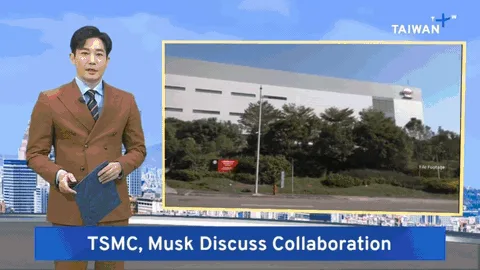
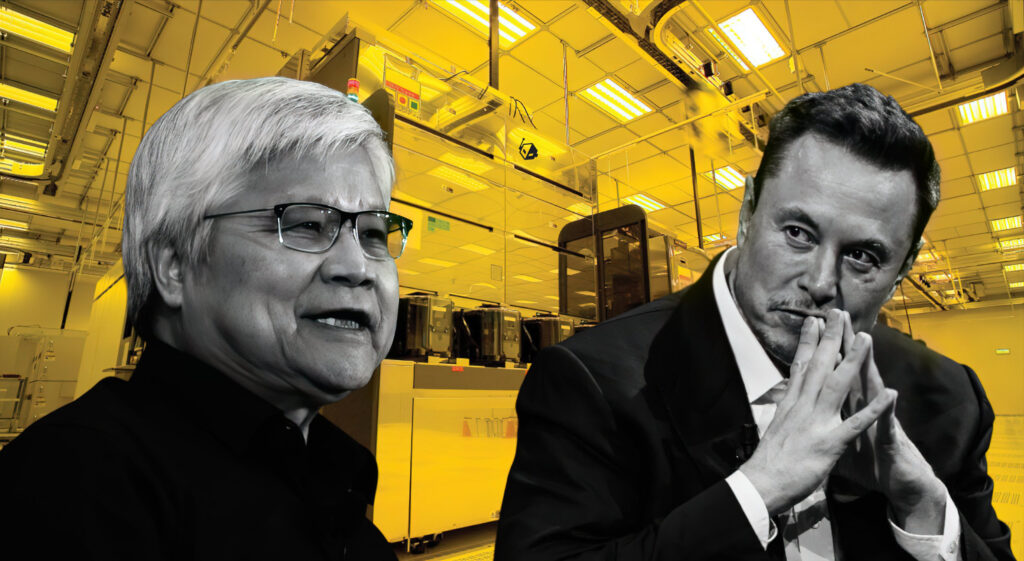
TSMC chairman and chief executive C.C. Wei has said that any role in Elon Musk’s proposed Terafab semiconductor complex in Texas would require TSMC to run the fabrication operation associated with its participation. His condition places manufacturing authority at the center of discussions, while Musk has maintained that his companies intend to build and operate the wider development. As of October 21, 2026, the public record supports ongoing talks but does not establish a completed agreement for TSMC to build, own, finance, or operate the project.
Terafab is a proposed semiconductor initiative associated with Tesla, SpaceX, and xAI, intended to combine logic chip production, memory manufacturing, and advanced packaging for computing applications on Earth and in space. Reuters reported that Musk said on October 7 that his companies would build and operate the complex while allowing for the possibility that TSMC could sublease part of it. That statement came before Wei’s October 15 remarks and should not be presented as a response to him. Musk’s comments left open how control of the wider development might be separated from responsibility for individual manufacturing facilities.
During TSMC’s third quarter earnings call on October 15, Wei discussed potential manufacturing expansion beyond Arizona. He confirmed that TSMC teams had visited Texas to evaluate opportunities and that the company was speaking with a customer associated with Terafab. Discussions remained open, but he emphasized that “the fab got to be run by TSMC.” This established site evaluations and an operating condition without announcing a final investment decision, ownership structure, or division of financial and management responsibilities. Operating a fabrication facility means directing its manufacturing processes; it does not automatically mean owning the land, controlling every building, or managing every company within the surrounding complex.
The potential compatibility of the two positions depends on those boundaries. If Musk intends his companies to control all semiconductor manufacturing throughout Terafab, that would be difficult to reconcile with TSMC independently operating a participating fab. If he means control of the overall development while TSMC runs a separate facility within it, the positions could potentially coexist. Neither interpretation describes an agreed arrangement. South China Morning Post reported that discussions had not produced a firm conclusion, with ownership and the scope of participation still unclear. The absence of published terms does not prove negotiations have failed, while confirmation of talks does not establish a takeover, completed joint venture, finalized investment, or guaranteed manufacturing capacity.
A sublease generally provides the right to use property or facilities under an existing lease arrangement, but it does not determine who controls manufacturing conducted there. A company can lease industrial space and independently operate its equipment, while a property owner can allow another business to manage facilities within a larger development. Leasing premises also differs from purchasing foundry services. A foundry customer generally buys production output under agreed commercial terms, whereas a business leasing part of a development obtains premises for its own operations. Sharing a location does not make those arrangements identical, and a property agreement alone would not settle manufacturing authority, financial obligations, or access to shared services.
Under a hypothetical arrangement, TSMC could sublease a defined area and use a separate agreement to establish responsibility for equipment installation, production staff, and manufacturing processes. That could allow it to operate its own fab within a complex controlled by Musk’s companies. Alternatively, an agreement might provide a building without granting the independence TSMC requires. Calling either arrangement a sublease would not resolve the difference, because the relevant terms would still need to define technical authority and the responsibilities of each participant.
The principal unresolved terms include:
- Sites and participating entities: The facilities and legal entities covered by an agreement, together with ownership or use rights attached to land and buildings.
- Manufacturing authority: Operational boundaries, responsibility for equipment and personnel, and authority to investigate problems, approve process changes, or interrupt production.
- Production technology: The manufacturing processes associated with TSMC’s participation and the technical responsibilities assigned to each party.
- Investment commitments: The amount and structure of financial contributions, the division of obligations, and responsibility for supporting operations over time.
- Capacity arrangements: How production capacity would be funded, reserved, allocated, and used, including the commercial terms connecting output with customer demand.
- Shared infrastructure: Access to services supporting multiple facilities and responsibility for interruptions, technical intervention, and restoration of operations.
Shared infrastructure could create dependencies even if participants maintain separate production facilities. If a common service becomes unavailable, agreements would need to establish who responds, who authorizes corrective work, and who carries the resulting obligations. A technically credible factory plan could still face commercial uncertainty if those responsibilities remain unresolved. A formal announcement identifying the companies, facilities, financial arrangements, and scope of manufacturing authority would provide a firmer basis for assessing participation than the label applied to the property agreement.
Terafab’s Chip Strategy, Manufacturing Requirements and Industry Partners
Terafab’s official website identifies AI5 as a chip intended for Tesla’s driving systems and Optimus humanoid robots, AI6 as another processor associated with Optimus, and D3 as hardware intended for space applications. These descriptions establish planned products and markets without confirming that Terafab is producing the chips or that its facilities are operational. The project’s strategy centers on vertical integration, bringing design and manufacturing closer together while reducing exclusive reliance on outside semiconductor producers. SpaceX’s June 2026 prospectus describes integrating advanced logic and memory development, fabrication, and deployment, with mask design, manufacturing, and packaging connected in a closed production loop.
That arrangement could improve coordination between hardware designs and manufacturing requirements, but the prospectus describes an intended strategy rather than an independently demonstrated advantage. Dedicated manufacturing could give the participating businesses greater influence over production priorities and chip availability while making them responsible for equipment investment, process development, factory utilization, and the financial consequences of production problems. Anticipated demand alone does not establish that internal manufacturing would be economical. Construction and operating costs must be supported by reliable output and sustained use of the facilities, and the resulting products must meet customer requirements.
Reuters’ March 2026 reporting described plans for advanced factories supplying chips for vehicles and humanoid robots alongside hardware for AI data centers in space. These applications could provide several sources of demand, but they introduce different technical and commercial requirements. Coordinating them could strengthen cooperation between the participating businesses while complicating product planning and factory operations. For Tesla, the attraction is a closer connection between future computing needs and available processors, provided the operation can deliver suitable hardware consistently and economically.
The manufacturing work spans several connected responsibilities:
- Chip design and fabrication: Develop processors for their intended applications and produce the required logic and memory components. ASML’s manufacturing overview identifies deposition, photoresist application, lithography, etching, and ion implantation among the interconnected fabrication stages.
- Equipment installation and maintenance: Establish and maintain the machinery supporting production, with technical oversight that keeps individual tools functioning within the wider system.
- Process control: Manage production conditions, equipment adjustments, and manufacturing decisions that affect consistency, recognizing that changes at one stage can influence results elsewhere.
- Inspection and testing: Measure results and identify defects or inconsistencies. ASML describes measuring pattern alignment and other parameters, then feeding those measurements into manufacturing adjustments to maintain precision.
- Advanced packaging: Bring manufactured components together after wafer processing, coordinating packaging with the other stages required to produce completed semiconductor products.
- Operational and commercial responsibility: Establish who can investigate problems, approve changes, and manage production, alongside how capacity will be funded, used, and supported.
These responsibilities explain why factory management involves more than installing equipment. Extremely small defects can make components unusable, requiring continuous coordination of measurements, process adjustments, and quality requirements. If a line begins producing inconsistent results, its operator may need to inspect equipment, change a process, or temporarily suspend manufacturing. Pressure to maintain output can conflict with those technical needs, making it necessary to establish who authorizes corrections and decides when production can resume. Wei did not publicly explain every reason for TSMC’s condition, but these requirements provide context for interpreting it as an effort to align manufacturing responsibility with decision making authority.
That interpretation does not disclose TSMC’s private demands concerning staffing, intellectual property, contractual liability, or precise facility ownership. Those details remain undisclosed. Automotive production also requires reliability beyond an initial successful chip demonstration. TSMC’s automotive service documentation describes quality systems, process technology, design support, and reliability testing, illustrating the work involved in supplying vehicle components without establishing that Terafab has adopted that program. Integrating design, fabrication, memory, and packaging must ultimately produce dependable hardware through reliable manufacturing and sustained utilization.
Advanced packaging is particularly relevant to the proposed AI hardware strategy because processors, memory, and their connections must function as an integrated system. TSMC’s Chip on Wafer on Substrate, or CoWoS, documentation describes integrating computing chips with high bandwidth memory for AI and high performance computing. It illustrates why packaging matters to demanding workloads but does not confirm that Terafab will use CoWoS. The benefits of combining logic, memory, and packaging within the project remain to be demonstrated through production and product performance.
Requirements also vary across Tesla’s vehicles, Optimus robots, and SpaceX’s proposed computing systems. Software needs, energy use, physical limitations, reliability, performance, and manufacturing costs can all affect whether a processor is suitable. Hardware that works well for one application may not meet another’s requirements, so computing capability alone is insufficient to establish its value. Terafab’s official ambition for annual computing output at terawatt scale expresses the intended magnitude of the project, but it is not a conventional measure of wafer production or a verified count of finished processors. Translating that ambition into semiconductor supply would require chip designs, power characteristics, manufacturing yields, and completed product output.
Intel announced in April 2026 that it would join the Terafab initiative involving SpaceX and Tesla, with Reuters reporting the announcement on April 7. Its public comments connected its semiconductor capabilities with the project’s AI and robotics ambitions, establishing it as an announced participant without providing a complete breakdown of operating duties, financial commitments, or contractual obligations. Technology support, manufacturing services, equipment integration, and packaging assistance are possible forms of cooperation, but they should not be presented as confirmed Intel assignments. TSMC’s separate discussions do not establish that Intel has been replaced or withdrawn. Several companies could perform different functions, although the actual division remains unclear, and the number of participants does not by itself establish a reliable manufacturing operation.
TSMC’s Texas Expansion and Terafab’s 2027 to 2028 Production Targets
TSMC’s Texas discussions form part of a broader evaluation of manufacturing opportunities in the United States. Focus Taiwan reported that Wei linked American expansion to requests from major US customers for additional capacity, while possible cooperation involving Terafab remained under discussion. Terafab could therefore represent one opportunity within that strategy. Interest in Texas does not establish that every site TSMC has evaluated belongs to the project, that a particular Terafab location has been selected, or that a final investment decision has been made. Expansion requires a suitable site, a credible operating plan, and sufficient demand to justify the investment.
A customer relationship and an acceptable manufacturing agreement remain separate questions. Production requirements, construction schedules, and organizational arrangements differ between projects, so a location suitable for one facility may not suit another. TSMC could value a major customer’s business while still requiring a factory structure that meets its operating standards. Clear authority also matters when process changes, equipment decisions, or production priorities affect several customers relying on the same facilities. These considerations explain the significance of operating control without establishing particular contractual terms TSMC might seek in Texas.
Terafab’s proposed Texas locations serve different purposes. Early announcements associated the project with Austin, while later reporting identified a larger manufacturing development in Grimes County. Manufacturing Dive’s May 6, 2026, update, citing a public notice, placed that proposed facility at Gibbons Creek Reservoir and described the possibility of construction in phases. Subsequent reporting distinguished the Austin research facility from the main manufacturing development planned for Gibbons Creek, making a description of Terafab solely as an Austin factory incomplete.
Research facilities support experiments, early process development, and technical evaluation. A larger manufacturing campus also requires construction, infrastructure, equipment installation, and preparation for sustained commercial output. Progress at Austin would not automatically establish equivalent progress at Gibbons Creek, and a functioning experimental component would not prove that a separate facility is ready for volume production. These distinctions provide criteria for evaluating the sites’ roles rather than establishing that particular construction or manufacturing milestones have been completed.
Musk outlined a more specific development schedule on October 20, 2026, while acknowledging substantial uncertainty. His targets included a functioning SRAM test chip at the Austin research facility before an eventual move to volume production. The reported milestones and unresolved arrangements are:
| Period | Reported target or development | Important qualification |
|---|---|---|
| October 20, 2026 | Musk discussed updated manufacturing targets. | The comments describe planned milestones, not completed production. |
| May to June 2027 | Internal target for a functioning SRAM test chip at the Austin research facility. | A working test chip would not establish readiness for commercial volume manufacturing. |
| Third quarter of 2028 | Publicly stated aspiration for volume production. | The target remains subject to substantial technical uncertainty. |
| Fourth quarter of 2028 | Discussed as an alternative volume production window. | This is another possibility rather than a guaranteed schedule. |
| Undisclosed | ASML extreme ultraviolet lithography equipment orders. | Musk did not directly confirm whether orders had been placed. |
| Undisclosed | Final TSMC participation and Texas manufacturing arrangements. | Discussions and site evaluations do not establish completed agreements. |
A functioning SRAM test chip could demonstrate that a particular circuit and manufacturing process can produce usable results. It would not establish that complex commercial processors can be manufactured repeatedly at the required quality, cost, and volume. Development must progress from a useful experimental result to consistent repeatability, then to sufficient quantities of completed products meeting customer requirements. Each stage introduces different challenges, and success with a limited test component does not automatically establish readiness for the next stage.
Equipment readiness remains unresolved. Reuters reported that Musk did not directly confirm whether Terafab had ordered ASML’s extreme ultraviolet lithography systems when asked. That absence of confirmation proves neither that orders have been placed nor that they have not. Acquiring machines would also represent only part of the preparation. ASML’s technical materials describe repeated patterning, material processing, and inspection that must work together reliably, with the complete production sequence integrated, tested, and controlled. Facility construction, infrastructure, equipment installation, process development, inspection, and product qualification all contribute to manufacturing readiness.
Commercial readiness ultimately depends on sustained usable output, quality, and reliability across the full operation. Problems in one stage can affect later results, while nominal capacity or wafer counts can overstate practical value if too few finished products meet application requirements. The relationship between TSMC’s potential participation and Terafab’s timetable also remains unresolved: the announced targets do not establish that TSMC has committed capacity needed to meet them, and operating discussions have not produced a publicly confirmed manufacturing agreement. The schedule provides milestones against which to assess progress, while qualified products, integrated equipment, repeatable processes, and sustained commercial output will determine whether Terafab achieves its ambitions.

Frequently Asked Questions (FAQs)
- What did TSMC CEO C.C. Wei say about Terafab?
During TSMC’s third-quarter earnings call on October 15, 2026, CEO C.C. Wei confirmed that the company was discussing potential involvement in Elon Musk’s Terafab project. He also revealed that TSMC teams had visited Texas to evaluate manufacturing opportunities. Most importantly, Wei stated that any semiconductor fabrication facility associated with TSMC’s participation would need to be operated by TSMC. His comments established the company’s position on operational responsibility but did not confirm a finalized partnership, investment commitment, or ownership arrangement. The distinction matters because participating in discussions does not mean the companies have agreed on how the facility would be managed. - Has TSMC officially agreed to join Terafab?
No finalized participation agreement has been established in the reviewed public statements. TSMC has confirmed discussions concerning Terafab and acknowledged evaluating potential opportunities in Texas, but those developments do not constitute a completed manufacturing partnership. Important questions remain unresolved, including which facilities TSMC might operate, how investment responsibilities would be divided, and what ownership structure the companies might adopt. TSMC has also emphasized that it would need operational control over any fabrication facility associated with its involvement. Until a formal agreement is announced, its participation should be described as under discussion rather than officially finalized. - Does TSMC want to control the entire Terafab complex?
TSMC has not publicly established that it wants to control the entire Terafab development. CEO C.C. Wei specifically emphasized that a semiconductor fabrication facility involving TSMC would need to be operated by the company. Running a fab means directing manufacturing operations and making important technical decisions, but it does not necessarily involve owning surrounding property, controlling unrelated facilities, or managing every business participating in the project. A larger industrial complex could contain separate operations with different responsibilities. However, the public statements do not establish whether such an arrangement has been negotiated or accepted by the parties. - What has Elon Musk said about operating Terafab?
On October 7, 2026, Elon Musk stated that his companies intended to build and operate the Terafab complex. He also suggested that TSMC could potentially sublease part of the development. These remarks came before Wei’s October 15 statement about TSMC needing control over any participating fabrication facility, so Musk’s comments should not automatically be described as a direct response. The apparent difference concerns how operating authority would be divided. Musk’s companies could potentially manage the wider project while TSMC operates a separate manufacturing facility, but no final agreement establishing that structure has been publicly confirmed. - Could TSMC lease space and still operate its own fab?
Yes, such an arrangement is possible in principle because leasing industrial space and controlling manufacturing operations are separate matters. TSMC could theoretically lease a defined area within a larger Terafab development while retaining authority over its manufacturing equipment, personnel, production processes, and technical decisions. However, the actual agreement would need to specify those responsibilities clearly, including how shared infrastructure and operational problems would be handled. Simply describing the arrangement as a sublease would not guarantee that TSMC receives the independence it requires. No finalized Terafab agreement confirming this structure has been disclosed. - What is Intel’s confirmed connection to Terafab?
Intel announced in April 2026 that it would participate in the Terafab initiative involving SpaceX and Tesla. The announcement connected Intel’s semiconductor capabilities with the project’s ambitions in artificial intelligence, robotics, and advanced computing. However, it did not provide a complete breakdown of Intel’s manufacturing responsibilities, financial commitments, or operational authority. Semiconductor partnerships can involve different forms of assistance, including technology development, fabrication services, and packaging, but those should not be presented as Intel’s confirmed duties without supporting evidence. TSMC’s separate discussions also do not establish that Intel has been replaced or withdrawn from the project. - Where is Terafab planned in Texas?
Terafab has been associated with two distinct locations in Texas. Austin is connected to the project’s research and early technical development activities, while reporting has identified Gibbons Creek Reservoir in Grimes County as the proposed location for a larger semiconductor manufacturing development. The Gibbons Creek project has also been described as potentially involving construction in phases. These locations serve different purposes, meaning progress at the Austin research facility does not automatically establish readiness at the larger manufacturing site. TSMC’s broader evaluation of Texas opportunities should also not be interpreted as confirmation that it has selected either location for a finalized investment. - When is Terafab expected to begin volume production?
Elon Musk identified the third quarter of 2028 as Terafab’s target for beginning volume production during comments made on October 20, 2026. He also discussed the fourth quarter of 2028 as a possible alternative and acknowledged substantial uncertainty surrounding the schedule. Before that stage, the project has an internal target of approximately May or June 2027 for producing a functioning SRAM test chip at its Austin research facility. These dates describe planned milestones rather than guaranteed achievements. Actual volume production will depend on successful process development, equipment installation, product qualification, and the ability to manufacture usable chips consistently. - Would a successful SRAM test chip prove Terafab is ready?
No. Producing a functioning SRAM test chip would represent an important technical achievement because it could demonstrate that an experimental manufacturing process can produce a working circuit. However, this is different from manufacturing complex commercial processors in large quantities. Terafab would still need to demonstrate that its processes produce reliable results repeatedly, that finished products meet their intended requirements, and that production can operate at economically sustainable costs. Equipment integration, inspection, testing, and manufacturing consistency would remain important challenges. A successful SRAM demonstration would therefore indicate progress toward manufacturing readiness rather than confirm that commercial operations are complete. - What would confirm that a TSMC–Terafab deal is complete?
A formal announcement confirming an agreement between TSMC and the relevant Terafab participants would provide the clearest evidence of a completed partnership. Such an announcement would ideally identify the companies involved, the facilities covered, the division of manufacturing responsibilities, and whether TSMC would operate its own fabrication facility within the development. Information about ownership, investment commitments, and production arrangements would also help clarify the agreement’s scope. Until those details are established, discussions, site evaluations, and public statements about possible cooperation should not be treated as confirmation that TSMC has committed to a specific investment or manufacturing operation.

Conclusion:
TSMC’s condition makes operational authority a central issue in any potential Terafab collaboration. The significance extends beyond who owns a building: it concerns who directs manufacturing and takes responsibility for production decisions.
The public positions leave an unresolved question about boundaries. TSMC wants to operate the fab associated with its participation, while Musk has emphasized that his companies will run Terafab. Separate facilities or clearly divided responsibilities could theoretically accommodate both positions, but that remains an analytical possibility.
The production schedule requires similar discipline. Terafab has stated ambitious targets, yet targets must be distinguished from qualified manufacturing capability.
The project’s next decisive developments will therefore be concrete ones: an agreed operating structure, demonstrated technical milestones and evidence of repeatable production. Until those emerge, the accurate description is an ambitious semiconductor program with confirmed discussions and substantial execution questions.
Sources and Citations
- Source: TSMC’s Q3 2026 earnings-call transcript — The primary record of C.C. Wei’s October 15 comments on Texas evaluations, Terafab discussions, and TSMC’s requirement to operate any fab it participates in.
Citation: TSMC, “3Q26 Earnings Call Transcript,” October 15, 2026. Official TSMC Investor Relations PDF - Source: South China Morning Post — TSMC confirms talks with Elon Musk over Texas ‘Terafab’ but insists on operational control — Reports the October 15 discussions and the uncertainty over TSMC’s ownership, participation, and operational role. Focus Taiwan provides additional reporting on TSMC’s expansion considerations.
Citation: Howard Liu, “TSMC confirms talks with Elon Musk over Texas ‘Terafab’ but insists on operational control,” South China Morning Post, October 15, 2026. SCMP Additional citation: “TSMC evaluating Texas production, cooperation with Terafab,” Focus Taiwan, October 15, 2026. Focus Taiwan - Source: Reuters — Musk says TSMC won’t run Terafab AI chip complex — Covers Musk’s October 7 position that his companies would build and run Terafab, while TSMC might sublease part of the facility. Reuters’ April 7 report documents Intel’s participation announcement.
Citation: Reuters, “Musk says TSMC won’t run Terafab AI chip complex,” October 7, 2026. Reuters
Additional citation: Reuters, “Intel joins Musk’s Terafab AI chip project to power humanoid, data center goals,” April 7, 2026. Reuters - Source: Reuters — SpaceX and Tesla’s Terafab targets 2028 for volume chip production, Musk says — Provides the October 20 production target, SRAM test-chip milestone, and discussion of equipment procurement and schedule uncertainty.
Citation: Reuters, “SpaceX and Tesla’s Terafab targets 2028 for volume chip production, Musk says,” October 20, 2026. Reuters - Source: Terafab’s official website — Describes the project’s stated goal of combining logic, memory, and advanced packaging, as well as its intended applications in Tesla robotics, vehicles, and space-based computing. SpaceX’s prospectus supplies additional corporate context.
Citation: Terafab, official project website. terafab.ai
Additional citation: SpaceX, “Prospectus,” June 11, 2026. SEC filing - Source: Manufacturing Dive — Musk’s SpaceX to invest up to $119B on Terafab project — Its May 6 update identifies the proposed Grimes County development and the initial investment estimate. ASML’s and TSMC’s technical materials provide background on semiconductor manufacturing and advanced lithography.
Citation: Nathan Owens, “Musk’s SpaceX to invest up to $119B on Terafab project,” Manufacturing Dive, published March 24, 2026; updated May 6, 2026. Manufacturing Dive
Additional citation: ASML, “ASML and TSMC Announce Initiative to Pioneer Industry Transition to Large-Format Photomasks for High NA EUV,” September 8, 2026. ASML
Recommendations
- 2XKO Welcomes Thresh on June 9: Release Details, Moves, and Roster Impact
- Mastering Massive Crowd Animation in Unreal Engine: Techniques, Tools, and Optimization Strategies
- Fortnite Chapter 7 Season 3 Sprite Guide: All Sprites, Locations, Abilities, and Extraction Tips
- Tomb Raider: Legacy of Atlantis Gen AI Controversy Explained and Amazon Games’ Position
- 25 Years Later, Atlantis: the Lost Empire Has Become One of Disney’s Most Important Movies
- SpaceXAI Debuts a New Top-Tier Image Generation Model
- Prelude Dark Pain: Official Steam Early Launch Trailer Breakdown
- NeXus for Blender is Now Free in Beta: Download Guide, Features, Requirements, and What Artists Need to Know
- Emil J’s Godot Water Shader Tutorial: Gerstner Waves and Dynamic Jacobian Foam
- Hyperdrop: Devolver’s Peggle-Like Pachinko Roguelite Launches in 2027



































































































