










In This Article (9 sections)
Larry Sanger’s 2026 Wikipedia Editing Ban and the Social Media Canvassing Dispute
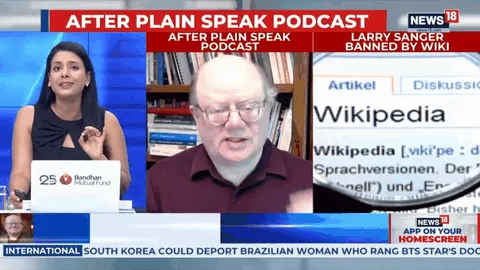
In 2026, reports that Wikipedia co-founder Larry Sanger had been indefinitely restricted from editing the platform he helped create sparked a major debate across the online knowledge ecosystem. The case quickly became about more than one editor’s access to Wikipedia. It raised broader questions about governance, neutrality, and whether foundational figures in open collaborative systems should be subject to the same rules as ordinary contributors.
According to community discussions and internal arbitration summaries circulated within Wikipedia governance spaces, the action was linked to alleged violations of policies concerning off-wiki coordination and perceived attempts to influence editorial consensus through external campaigning. Supporters of Sanger described his activity as advocacy for intellectual diversity and improved editorial balance, while several Wikipedia editors viewed the same actions as coordinated canvassing that could undermine the platform’s neutral point of view standards.
A central catalyst was Sanger’s increased use of social media to promote discussions and proposals related to Wikipedia content reform. Reports from editorial administrators suggested that coordinated posting patterns and external outreach may have encouraged groups of users to participate in specific Wikipedia debates with a shared agenda. Wikipedia’s canvassing policy prohibits off-wiki coordination intended to sway editorial consensus, even though advocacy for policy change is not inherently forbidden.
The controversy turned on the blurred line between openness and manipulation. Critics argued that Sanger’s online messaging created the appearance of organized mobilization rather than neutral commentary, while supporters insisted that he was exercising his right to critique systemic bias and encourage broader participation in governance discussions. The ban itself was framed not as punishment for his historical role as co-founder, but as procedural enforcement of long-standing editorial policies that apply uniformly to all contributors.

Off-Wiki Canvassing, Community Voting, and Wikipedia’s Enforcement Structure
The concept of off-wiki canvassing is central to understanding the enforcement action reported against Sanger. Within Wikipedia’s governance framework, canvassing refers to efforts to influence editorial decisions by recruiting participants or shaping opinions outside the platform’s internal discussion pages. In this case, the allegations centered on whether Sanger’s external communications were sufficiently neutral or whether they encouraged coordinated voting behavior in ongoing disputes.
Wikipedia administrators typically assess canvassing by considering intent, messaging tone, and the pattern of participation that follows external outreach. This made the case difficult to evaluate because the boundary between legitimate advocacy and improper coordination can be unclear in decentralized online systems. Wikipedia relies on volunteer administrators to interpret policy contextually, which can produce different outcomes depending on community consensus and the specific circumstances of each dispute.
Wikipedia does not operate through a centralized judicial system. Disputes are often resolved through community consensus, discussions, administrative closures, and, in high-profile cases, arbitration bodies or equivalent governance mechanisms. In the case involving Sanger, discussions reportedly escalated into structured evaluations of policy violations, including neutrality concerns and behavioral enforcement.
The final decision to impose an indefinite restriction reflected the reported consensus that repeated concerns about external influence had undermined trust in Sanger’s participation as an editor. The indefinite nature of the ban does not necessarily mean permanent removal. Rather, it means the restriction has no predefined expiration date, while still leaving open the possibility of appeal or reconsideration if behavioral conditions are met and community trust is rebuilt.
Wikipedia’s administrator power structure also became part of the controversy. Although Wikipedia is often described as open and decentralized, it includes administrators, policy enforcement tools, and arbitration mechanisms. Administrators are trusted users with technical abilities to block accounts, protect pages, and close discussions. In enforcement cases like this one, they act as interpreters of policy rather than independent judges, deriving authority from community trust instead of formal institutional hierarchy.
External Influence Rules, Founder Status, and the Neutrality Conflict Behind the Ban
One of the most significant principles reinforced by the Sanger case is that Wikipedia’s policies apply equally to all contributors, regardless of historical status. The platform’s neutrality guidelines and behavioral rules are designed to prevent any individual, including a co-founder, from having privileged influence over content disputes. External influence rules exist to preserve editorial independence from coordinated lobbying or ideological shaping.
These rules are especially important in politically or culturally sensitive topics, where outside pressure can distort consensus. The reported enforcement against a co-founder underscored Wikipedia’s evolution from a founder-led project into a decentralized knowledge system governed by community processes. It also highlighted the philosophical tension between origin authority and community governance, especially when a person closely associated with the platform’s founding challenges its current norms.
At the heart of the dispute was a long-standing ideological divide between Sanger and segments of the Wikipedia editing community over neutrality and systemic bias. Sanger has historically advocated for stricter enforcement of epistemic neutrality and broader ideological representation in content curation. Some editors, however, have argued that his interventions frame neutrality concerns in ways that implicitly favor certain interpretive frameworks.
The debate surrounding WikiProject Intellectual Diversity reflected this larger conflict. The initiative, associated in public discourse with Sanger’s advocacy efforts, was framed as a way to improve representation of diverse viewpoints across Wikipedia articles and encourage editors to correct perceived ideological imbalances. Critics argued that its framing could blur the line between constructive editing guidance and coordinated editorial influence, while supporters countered that Wikipedia already contains systemic biases due to demographic imbalances among contributors.
This conflict was not merely procedural. It reflected deeper questions about what neutrality means in practice and whether any large-scale knowledge system can fully escape structural bias. The controversy showed how disputes over governance rules can become intertwined with philosophical disagreements about knowledge, representation, and the meaning of editorial balance.

Intellectual Diversity, Legacy Influence, and Public Reaction to Sanger’s Restriction
The decision to restrict Sanger’s editing privileges was reportedly linked to the cumulative effect of concerns surrounding his intellectual diversity campaign and related off-wiki engagement. While no single action was universally cited as decisive, the overall pattern was interpreted by some administrators as inconsistent with expected editor conduct. The enforcement rationale emphasized behavioral policy rather than content disagreement.
Wikipedia’s governance system distinguishes between disagreement over article content and violations of conduct rules. In the Sanger case, this distinction became a focal point because critics questioned whether behavioral interpretations were influenced by deeper disagreements over editorial philosophy. Supporters of the restriction viewed it as policy enforcement, while skeptics saw it as inseparable from the platform’s internal disputes over neutrality and ideological diversity.
The case also raised questions about whether Wikipedia co-founders can still influence the platform after leaving formal involvement. Co-founders and early contributors may continue to shape public debate through commentary, academic writing, and broader discussions about knowledge governance. However, their ability to directly shape Wikipedia content is no greater than that of any other editor once they are no longer active contributors with community authority.
Wikipedia’s structure intentionally limits hierarchical influence. Historical status does not translate into ongoing editorial authority, and influence is distributed through consensus participation and adherence to policy. The Sanger case highlighted that legacy status does not exempt individuals from enforcement mechanisms, reinforcing the platform’s commitment to procedural equality.
Public reaction to the reported ban was sharply divided. Some observers viewed it as a necessary affirmation of Wikipedia’s independence from individual authority, regardless of historical significance. Others saw it as a symbolic break between the platform and one of its intellectual architects. Online discussions focused not only on Sanger himself, but also on what the case revealed about transparency, governance, ideological diversity, and internal decision-making in digital knowledge systems.
Social Media, Bias Debates, and the Future of Wikipedia Governance After the Ban
Sanger’s increased use of social media was a key catalyst in the canvassing allegations. Reports from editorial administrators suggested that coordinated posting patterns and external outreach efforts may have encouraged groups of users to join specific Wikipedia debates with a shared agenda. Wikipedia’s policy on canvassing prohibits off-wiki coordination intended to sway consensus, even though broader advocacy for policy reform is not automatically prohibited.
The line between permitted advocacy and improper influence became one of the defining tensions of the case. Critics argued that Sanger’s online messaging created the appearance of organized mobilization rather than neutral commentary. Supporters maintained that he was critiquing systemic bias and encouraging wider participation in editorial governance discussions. This disagreement reflected the platform’s broader struggle to remain open while preventing external campaigns from shaping internal outcomes.
The controversy also reignited broader debates about bias within Wikipedia’s editorial ecosystem. Critics argue that systemic bias can emerge from demographic imbalances among editors, concentrations of interest in particular topics, and uneven global representation. Supporters of Wikipedia’s model maintain that transparency, revision history, and open editing help reduce long-term bias risks more effectively than centralized editorial control.
The Sanger incident became a focal point for these discussions because it symbolized the tension between idealized neutrality and practical governance constraints. It showed how questions about editor conduct can overlap with concerns about representation, ideology, and the limits of collaborative neutrality. The dispute also demonstrated how high-profile enforcement actions can expose unresolved debates within Wikipedia’s community structure.
The long-term implications extend beyond any individual enforcement action. The case raises questions about how Wikipedia will handle future conflicts involving high-profile contributors or ideological disputes that intersect with governance policies. As the platform continues to grow, maintaining consistency in enforcement while preserving openness remains a central challenge. Future reforms may focus on clarifying canvassing definitions, improving transparency in administrative decisions, and strengthening community understanding of enforcement thresholds.

Frequently Asked Questions (FAQs)
- What led to Wikipedia co-founder Larry Sanger being banned from editing the site in 2026?
The reported ban stemmed from allegations of off-wiki canvassing and external influence activities. Wikipedia administrators and editors reportedly interpreted some of Sanger’s outside communications as attempts to shape participation in internal editorial disputes, which raised concerns under Wikipedia’s behavioral policies. - Was Larry Sanger permanently banned from Wikipedia?
The restriction was described as indefinite, not necessarily permanent. An indefinite ban has no fixed end date, but it can potentially be reviewed, appealed, or lifted if the community determines that the underlying concerns have been resolved and trust has been restored. - What is off-wiki canvassing on Wikipedia?
Off-wiki canvassing refers to attempts to influence Wikipedia discussions, votes, or consensus processes through external communication channels. These channels can include social media, blogs, messaging platforms, or other spaces outside Wikipedia where people may be encouraged to participate in a specific dispute or outcome. - Did Wikipedia ban Larry Sanger because of his opinions on neutrality?
The enforcement action was framed around behavioral policy concerns rather than direct disagreement with his views on neutrality or intellectual diversity. The central issue was whether his external engagement crossed into improper coordination, not whether he was allowed to criticize Wikipedia’s editorial culture. - What is WikiProject Intellectual Diversity?
WikiProject Intellectual Diversity is an initiative associated in public discourse with efforts to promote broader ideological representation and address perceived bias in Wikipedia content. Supporters viewed it as a way to improve balance, while critics questioned whether it could encourage coordinated editorial influence through a particular ideological framework. - Can Wikipedia co-founders override editorial decisions?
No. Wikipedia’s governance model does not give co-founders special authority to override editorial consensus once they are no longer operating in an active administrative role. They may participate like other users, but their influence depends on policy compliance, consensus, and community trust. - How does Wikipedia decide to ban an editor?
Bans are typically decided through community discussion, administrator action, or arbitration processes. These decisions are usually based on patterns of behavior, policy violations, disruption, or loss of trust rather than a contributor’s identity or historical importance to the project. - Why is canvassing considered a violation on Wikipedia?
Canvassing is considered a violation because it can distort consensus. Wikipedia’s decision-making process depends on organic participation from editors who assess issues based on policy and evidence, while coordinated outside influence can create the appearance of consensus without reflecting the wider community’s judgment. - How did the public react to Sanger’s ban?
Public reaction was divided. Some observers supported the decision as evidence that Wikipedia applies its rules equally, even to a co-founder. Others criticized it as a sign of deeper governance tensions and renewed concerns about transparency, neutrality, and ideological diversity within the platform. - Can Larry Sanger return to editing Wikipedia?
In theory, yes. Because the restriction was described as indefinite rather than automatically permanent, it could potentially be appealed. Any return would depend on whether the community believes prior concerns have been addressed and whether trust in his participation can be rebuilt.

Conclusion
The controversy surrounding Larry Sanger’s reported ban from Wikipedia highlights the complex intersection of governance, neutrality, and authority within one of the world’s largest collaborative knowledge platforms. It illustrates how decentralized systems enforce rules uniformly, even against foundational figures, while also exposing ongoing debates about bias, influence, and editorial power. As Wikipedia continues to evolve, the tension between openness and regulation will remain central to its identity, shaping how digital knowledge is created, managed, and contested.
Sources and Citations
- Wikipedia, “Canvassing”: Wikipedia’s guideline explains that notifying editors about discussions can be appropriate when done neutrally, but campaigning, votestacking, stealth canvassing, and selectively recruiting participants to influence an outcome are considered inappropriate forms of consensus-building. This is the strongest primary source for the article’s discussion of off-wiki coordination and canvassing. Wikipedia
Wikipedia: Canvassing - Wikipedia, “Neutral Point of View”: NPOV is one of English Wikipedia’s core content policies. It requires articles to represent significant viewpoints fairly, proportionately, and without editorial bias, while relying on published reliable sources rather than editors advocating their own preferred conclusions. Wikipedia
Wikipedia: Neutral Point of View - Wikipedia, “Consensus”: Wikipedia states that its editorial decisions are generally made through consensus, developed through editing and discussion rather than simple majority voting. The policy also addresses outside opinions, administrative intervention, and pitfalls that can distort consensus-building. Wikipedia
Wikipedia: Consensus - Wikipedia, “Administrators”: Wikipedia explains that administrators are experienced editors given additional technical abilities through community processes. Their tools include blocking users, protecting pages, and deleting pages, but administrator status does not give someone special authority over editorial content, and misuse of those tools can be reviewed. Wikipedia
Wikipedia: Administrators - Wikipedia, “Banning Policy”: The policy distinguishes site bans, topic bans, page bans, and interaction bans, explains who has authority to impose restrictions, and describes appeal and review procedures. It also distinguishes a ban from a technical block, which is important when describing an editor as “banned” or “restricted.” Wikipedia
Wikipedia: Banning Policy - Wikipedia, “Arbitration Committee”: English Wikipedia’s Arbitration Committee handles some of the project’s most serious conduct disputes. It functions as a community dispute-resolution body rather than a conventional court and can impose remedies involving editor conduct and administrative privileges. Wikipedia
Wikipedia: Arbitration Committee - Wikimedia Movement Charter: The charter states that Wikimedia project communities have editorial control over their own content and substantial autonomy to establish local policies within the framework of global Wikimedia rules. It also emphasizes openness in governance and notes that most project-level decisions are made by volunteer contributors. Meta-Wiki
Wikimedia Movement Charter - Wikimedia Universal Code of Conduct: The UCoC establishes baseline standards of acceptable behavior across Wikimedia projects and provides an enforcement framework for handling reported violations. Its enforcement guidance includes processes for reporting, reviewing, and responding to conduct problems. Meta-Wiki
Wikimedia Universal Code of Conduct
Recommendations
- Where Winds Meet, Official Imperial Palace Gameplay Trailer Explained: Release Date, Story, Combat Details & Everything We Know
- Diablo 4 3Rd Anniversary Event: Goblins, Massive XP Boost, Free Cosmetics, and Full June 2–9 Celebration Guide
- IO Interactive and Build A Rocket Boy End MindsEye Partnership as Hitman Crossover DLC Is Canceled
- All Anomalies in Animal Hospital Guide: Every Roblox Anomaly Explained
- Every Release Date from Every Event at Summer Game Fest 2026
- First Gameplay Trailer of Silent Hill: Townfall: It’s a First-Person Game and Everything We Know (2026)
- Best New Anime to Watch Right Now: Spring 2026 Picks
- Switch 2 Software Update Adds “Handheld Mode Boost” for Old Games – Performance Upgrade Explained
- We Build LEGO Winnie the Pooh: A 100th Anniversary Set Worth the Hype for Disney and LEGO Fans
- Echoes of Aincrad: Complete Guide to Growth Points (Best Stat Builds & Leveling Tips)



































































































