







In This Article (8 sections)
Aggelos 2 Release Date, Platforms, Pricing, Physical Editions, and PC Support
Aggelos 2 launched on August 27, 2026, bringing the retro action-platformer series back across PlayStation 4, PlayStation 5, Xbox One, Xbox Series X|S, Nintendo Switch, and PC through Steam. WONDERBOY BOBI developed the sequel, while PQube and PixelHeart handled publishing. Digital versions became available across every announced platform, while physical editions were released only for PlayStation 5 and Nintendo Switch.
Console editions unlocked at midnight local time on August 27. Steam used a simultaneous global release scheduled for 4:00 p.m. BST, which corresponded to 5:00 p.m. CEST and 8:00 a.m. PDT. The launch covered both previous-generation and current-generation PlayStation and Xbox hardware rather than restricting the game to newer systems. Nintendo received a standard Switch release, but PQube did not announce a dedicated Nintendo Switch 2 Edition as part of the August launch.
The PlayStation Store lists separate PS4 and PS5 editions at a standard United States price of $19.99. Both contain the same complete campaign, Light and Dark realms, Angel and Demon transformations, bosses, enemies, puzzles, and progression systems. The PS5 version supports offline single-player gameplay, Remote Play, and DualSense vibration. Only the PS5 edition received a physical PlayStation release, so PS4 owners are limited to the digital version.
Xbox One and Xbox Series X|S versions also launched digitally for $19.99. Microsoft identifies the game as optimized for Xbox Series X|S while retaining Xbox One support through Smart Delivery, which provides the appropriate version for the console being used. Xbox achievements, cloud saves, and Xbox Play Anywhere are supported, allowing qualifying digital owners to play across Xbox and compatible Windows PC devices. No physical Xbox edition was announced.
Nintendo Switch received both digital and physical editions. The game supports TV, tabletop, and handheld modes, along with the Nintendo Switch Pro Controller and Save Data Cloud through the applicable Nintendo Switch Online service. Nintendo lists a download size of approximately 236 MB, although the required storage may change through patches. Its compact pixel-art presentation and controller-focused design make it well suited to portable play.
The Steam edition includes:
- Single-player support
- Steam Achievements
- Steam Cloud
- Family Sharing
- Steam Deck Verified compatibility
- Interface and subtitles in 11 languages
Steam lists WONDERBOY BOBI as the developer and PQube and PixelHeart as publishers. The published minimum requirements are unusually modest:
- Windows 10
- 200 MHz Pentium processor or better
- 256 MB RAM
- Graphics hardware supporting DirectX 11 or Vulkan
- DirectX 11
These are the official specifications provided by the developer and publisher rather than unofficial performance estimates. Steam Deck compatibility testing confirms that the default controller layout provides access to the game’s features, interface text remains readable, controller icons are appropriate, and the default graphics configuration performs satisfactorily. Some external Bluetooth or USB controllers may occasionally need to be manually selected through Steam Deck’s Quick Access Menu.
The standard price is $19.99 in the United States, £16.99 in the United Kingdom, and €19.99 across much of Europe. PQube also published regional launch prices including ₩21,400, HK$135, NT$550, and R$97.95. Steam and PlayStation offered a 20 percent introductory promotion that reduced the U.S. price to $15.99 through September 10, 2026. That launch discount has ended, so current buyers should check their regional storefront for the latest price.
The physical PS5 and Switch releases arrived alongside the digital versions rather than through a later retail launch. PQube did not announce a separate collector’s edition or physical-exclusive gameplay content, so players should not expect additional levels, bosses, or abilities unless a retailer explicitly lists a special package. The physical release is primarily for buyers who prefer a boxed copy.
PQube estimates that a standard playthrough takes approximately 10 to 15 hours. Players attempting to uncover every secret, collect upgrades, defeat all bosses, and complete the wider map may spend approximately 25 to 30 hours.

Aggelos 2 Story, Kingdom of Lumen, and Light and Dark Realms
Aggelos 2 returns to the Kingdom of Lumen, but the realm now exists across overlapping Light and Dark versions that shape the story, exploration, puzzles, and combat. The player controls an Aggelos, described as belonging to the highest order of angels. Balro chooses the hero to travel through Lumen, the domain of the supreme God of Light, as the Army of Darkness pushes the kingdom toward defeat.
The Gods of Light are losing the war, forcing the hero to awaken and embrace a shadowy Demon form despite his angelic nature. This transformation creates the central conflict of the sequel. Light and Darkness are not presented only as environmental themes or opposing factions. The player must actively use both powers to progress, survive, and protect the kingdom.
Although Aggelos 2 directly follows the original game, completing the first adventure is not required. PQube designed the sequel to accommodate both returning players and newcomers. Existing fans return to a familiar kingdom with knowledge of its history, while new players are introduced through a fresh crisis centered on the Light and Dark realms.
The two worlds overlap geographically but contain different enemies, secrets, pathways, traps, and environmental obstacles. Portals allow the player to move between them, and a route blocked in one version of an area may be accessible in the other. Familiar locations must therefore be reconsidered whenever the player gains access to the corresponding alternate realm.
This system gives the map several layers of exploration. Progress may depend on:
- Entering the alternate version of a location
- Using a newly acquired movement ability
- Switching to the appropriate combat form
- Activating a mechanism in one realm that affects another route
- Returning to an earlier area after unlocking new powers
- Discovering a portal that exposes a hidden path
PQube describes the complete adventure as almost twice the size of the original Aggelos. The larger scale comes not only from adding more rooms but also from layering Light and Dark interpretations over the wider structure of Lumen. Players repeatedly revisit earlier regions with a new form, ability, or understanding of how the realms connect.
The dual-world design also makes backtracking more involved than in a conventional Metroidvania. The question is not simply whether a new dash, wall grab, or flight ability can open a route. The solution may instead require entering the Dark version of the area, switching forms, manipulating a realm-specific mechanism, or combining several of those actions.
This makes duality the defining idea behind the sequel. The hero is both Angel and Demon, the kingdom exists in Light and Darkness, and enemies can possess opposing elemental alignments. Story, exploration, and combat all reinforce the same central structure rather than treating the transformation system as an isolated feature.
Angel and Demon Forms, Combat, Precision Platforming, and Boss Battles
Angel and Demon forms are the most important mechanical additions in Aggelos 2. Once the Demon transformation has been unlocked, players can switch between the two states whenever required during exploration and combat. Each form changes the hero’s fighting style, available powers, and interaction with enemies or environmental challenges.
The Angel form emphasizes controlled, disciplined combat and precise defense. It is suited to situations where careful positioning, timing, and measured attacks are more valuable than constant aggression. The Demon form is faster, more mobile, and built around offensive pressure and dark abilities. Its speed can help players close distance, maintain attack momentum, or move through demanding platforming sequences.
Elemental polarity gives form switching additional tactical importance. Light attacks deal increased damage to dark-aligned enemies, while dark attacks are especially effective against light-aligned opponents. Players are encouraged to identify the target’s alignment and change forms rather than relying exclusively on one preferred moveset.
The transformations also affect puzzles and traversal. Certain environmental challenges, paths, and mechanisms require abilities associated with one form. Switching is therefore necessary outside combat and cannot be treated as a cosmetic animation or optional damage bonus.
Combat is designed around speed, timing, form selection, and elemental advantage. Players face groups of enemies while combining melee attacks, special abilities, transformations, and movement skills. The hero’s growing arsenal allows later battles to become more elaborate without abandoning the responsive sword-based foundation of the original.
The main combat considerations include:
- Choosing the correct elemental form
- Switching between disciplined and aggressive play
- Learning enemy attack timing
- Using movement abilities during fights
- Combining melee attacks with special powers
- Managing health and magic
- Positioning carefully during crowded encounters
Precision platforming remains equally important. The player must navigate traps, moving hazards, mechanisms, vertical spaces, and routes requiring increasingly advanced control. New abilities such as dashes, wall grabs, and flight create more complicated sequences as the adventure progresses.
Environmental puzzles can require players to memorize routes, avoid hazards, activate mechanisms, and determine which combination of form, realm, and movement ability fits the situation. Combat strength alone is therefore insufficient. Consistent progress requires understanding how all of the systems interact.
The game contains more than 75 enemy types distributed across the Light and Dark realms. Returning creatures appear alongside new threats, while elemental alignment changes how efficiently they can be defeated. Overlapping regions can contain substantially different enemy placements and hazards depending on the active realm.
There are 13 major bosses. These encounters are designed to test the player’s accumulated knowledge of:
- Form switching
- Light and Dark damage relationships
- Attack timing
- Movement abilities
- Positioning
- Defensive discipline
- Aggressive counterpressure
- Platforming under combat conditions
Bosses later in the game may require more than increased statistics. Players need to recognize patterns, exploit elemental weaknesses, switch forms at the appropriate moment, and use traversal abilities to survive attacks or reach safe positions.
Normal and Hard difficulty options are available when beginning a new game. Hard mode doubles incoming damage, leaving far less room for errors and placing greater emphasis on learning enemy patterns, avoiding hazards, and selecting the appropriate form. It is intended for experienced players who want the combat and bosses to be considerably more punishing.

Metroidvania Progression, Upgrades, Fast Travel, and Changes from the Original
Aggelos 2 expands the action-RPG structure of the original into a much larger Metroidvania. The world is interconnected, and many routes are deliberately inaccessible during the first visit. New abilities gradually change how the player moves through Lumen, encouraging repeated exploration of earlier locations.
Confirmed traversal upgrades include:
- Dashes
- Wall grabs
- Flight
These powers open previously unreachable platforms, passages, secrets, and alternate routes. They also improve combat mobility, allowing the player to avoid attacks, reposition quickly, and approach enemies from new directions. Upgrades therefore serve both exploration and fighting rather than existing only as keys for specific doors.
Orbs provide another form of progression. Collecting them can unlock special attacks, increase offensive strength, and improve survivability. Health and magic can also be upgraded, helping the player prepare for the increasingly difficult enemies and bosses found deeper within both realms.
The game combines several forms of progression:
- New movement abilities
- Angel and Demon powers
- Special attacks
- Health improvements
- Magic improvements
- Orb collection
- Hidden upgrades
- Realm access
- Fast-travel activation
Discovered Totems function as fast-travel points. Once activated, they reduce the time needed to cross the expanded map and make backtracking for secrets or newly accessible routes more manageable. This is particularly important because the Light and Dark versions of the kingdom nearly double the areas players need to consider.
The original Aggelos, released on PC in 2018, was a retro action RPG influenced by non-linear classics such as Wonder Boy in Monster World. It featured interconnected exploration, dungeons, side quests, secrets, upgrades, and melee combat across the Kingdom of Lumen.
The sequel retains those foundations but expands them significantly. Its major changes include:
- Two overlapping versions of the world
- Instant switching between Angel and Demon forms
- Elemental Light and Dark combat advantages
- More detailed 16-bit-inspired pixel art
- A map described as almost twice as large
- More than 75 enemy types
- 13 major bosses
- Expanded precision platforming
- Flight, wall grabs, and dashes
- Orbs and additional special attacks
- Fast-travel Totems
- More layered backtracking and puzzle design
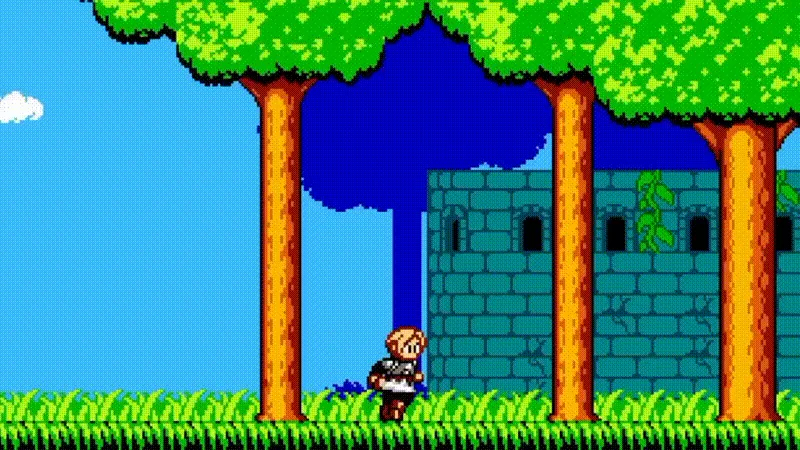
PQube describes the visual direction as moving beyond the first game’s simpler 8-bit-styled presentation into more detailed 16-bit-inspired pixel art. Characters, environments, and effects use larger and more elaborate sprites while retaining the retro identity of the series.
The largest change is the way the realms and forms operate together. The original game did not revolve around constant transformation or parallel Light and Dark versions of the same kingdom. In Aggelos 2, these ideas influence almost every part of the experience, including damage types, exploration routes, puzzles, story themes, and boss design.
The sequel is therefore more than another campaign using the original formula. Its larger world, dual-realm structure, transformation mechanics, expanded movement, broader enemy roster, and layered progression create a substantially more ambitious Metroidvania while preserving the direct combat and platforming that defined the first game.

Frequently Asked Questions (FAQs)
- When did Aggelos 2 release?
Aggelos 2 released on August 27, 2026. Digital editions launched simultaneously for PlayStation 4, PlayStation 5, Xbox One, Xbox Series X|S, Nintendo Switch and Windows PC through Steam. Physical copies were released only for PlayStation 5 and Nintendo Switch, while the other platforms remained digital-only at launch. - Is Aggelos 2 available on PS4?
Yes. Aggelos 2 is available digitally for PlayStation 4, and the U.S. PlayStation Store lists the standard price at $19.99. PS4 players receive the complete adventure, including the Light and Dark realms, Angel and Demon forms, all 13 major bosses and the full Metroidvania progression system. However, the boxed PlayStation edition was released only for PS5. - Is Aggelos 2 on Xbox One as well as Xbox Series X|S?
Yes. The Xbox release supports both Xbox One and Xbox Series X|S rather than being restricted to current-generation hardware. Microsoft also lists Smart Delivery, which provides the appropriate version for the console being used. Other supported Xbox features include achievements, cloud saves and Xbox Play Anywhere for compatible Xbox and Windows devices. - Does Aggelos 2 have a physical edition?
Yes. Official physical editions are available for PlayStation 5 and Nintendo Switch, and they launched on the same date as the digital versions. PQube did not announce boxed releases for PS4, Xbox One, Xbox Series X|S or PC. Players using those platforms must therefore purchase the game through their respective digital storefronts. - How much does Aggelos 2 cost?
PQube announced a standard price of $19.99 in the United States, £16.99 in the United Kingdom and €19.99 across much of Europe. Regional pricing can vary according to currency, taxes and storefront policies. The game also received a temporary 20% digital launch discount, but that introductory promotion ended on September 10, 2026. - Is Aggelos 2 Steam Deck Verified?
Yes. Aggelos 2 is officially Steam Deck Verified, meaning Valve found that the default controls, interface readability and performance were suitable for the handheld. The game displays appropriate Steam Deck controller icons and runs satisfactorily using its default configuration. Some external Bluetooth or USB controllers may occasionally need to be selected manually through Steam Deck’s Quick Access Menu. - How long does Aggelos 2 take to complete?
PQube estimates that an ordinary playthrough takes approximately 10 to 15 hours. Players who search both realms thoroughly, collect upgrades, uncover hidden paths and pursue more complete progression may spend around 25 to 30 hours. The exact duration depends on difficulty, platforming skill, exploration habits and how often the player revisits earlier areas after unlocking new abilities. - How many bosses are in Aggelos 2?
The game contains 13 major bosses distributed across the interconnected Light and Dark realms. These encounters test form switching, elemental weaknesses, attack timing, movement abilities and positioning. In addition to the bosses, players face more than 75 regular enemy types, including returning creatures and new Light or Dark-aligned threats. - Do I need to play the original Aggelos before Aggelos 2?
No. Although Aggelos 2 is a direct sequel that returns to the Kingdom of Lumen, PQube designed the story so newcomers can understand its central conflict without completing the first game. Returning players will recognize the setting and appreciate additional context, but the struggle between the Gods of Light, the Army of Darkness and the hero’s new Demon form is explained within the sequel. - What are the biggest new features in Aggelos 2?
The largest additions are the overlapping Light and Dark realms and the ability to switch between Angel and Demon forms. Each form changes combat, elemental effectiveness and environmental interactions. The sequel also introduces a world almost twice the size of the original, new traversal skills such as flight, dashes and wall grabs, fast-travel Totems, more than 75 enemy types, 13 major bosses and more detailed 16-bit-inspired pixel artwork.

Conclusion
Aggelos 2 launched August 27, 2026 on PS4, PS5, Xbox One, Xbox Series X|S, Nintendo Switch and PC, giving the sequel unusually broad support across both previous-generation and current-generation console hardware. Physical editions are available on PS5 and Nintendo Switch, while all announced platforms have digital versions. Steam Deck Verified support further expands the game’s portable options.
More importantly, Aggelos 2 is not merely a graphical continuation of the first game. Its design is built around a new relationship between Angel and Demon forms and between the Kingdom of Lumen’s Light and Dark realms. These mechanics influence combat, exploration, puzzles and progression throughout an adventure that PQube says is almost twice as large as the original.
With 13 bosses, more than 75 enemy types, collectible upgrades, fast-travel Totems, flight, wall grabs, dashes, special attacks and detailed 16-bit-inspired pixel art, the sequel substantially broadens the framework of Aggelos while maintaining its retro action-platforming identity.
The August 27 launch therefore represents more than the return of a dormant series. Aggelos 2 takes the original game’s exploration-focused action formula and reorganizes it around polarity, transformation and parallel-world navigation, giving returning players a distinctly larger sequel while remaining accessible to players discovering the Kingdom of Lumen for the first time.
Sources and Citations
- PQube — “Aggelos 2 Launches on 27th August 2026!”
May 27, 2026 announcement covering the August 27 release, digital and physical platforms, dual-realm system, Angel/Demon forms, bosses, abilities and 16-bit presentation. - PQube — “Aggelos 2 Launch FAQ”
August 20 FAQ covering launch times, pricing, playtime, difficulty, Steam Deck Verified, fast travel, PC requirements and languages. - PQube — “Aggelos 2 is out now on PC and Consoles”
August 27 launch announcement covering availability, launch discount, larger world, two realms, physical editions and progression. - PQube — “Aggelos 2”
Official product page with details on the Kingdom of Lumen, Balro, the Army of Darkness, Light/Demon forms, overlapping realms, puzzles, orbs, movement abilities and visual style. - Steam — “Aggelos 2”
Official PC listing confirming the August 27, 2026 release, WONDERBOY BOBI as developer, PQube/PixelHeart as publishers, languages, Steam features and system requirements. - Steam Community — “Now Steam Deck Verified!”
Official Steam announcement confirming Steam Deck Verified status and compatibility. - SteamDB — “Aggelos 2”
Steam compatibility data documenting Verified status, controller functionality, interface readability and performance on Steam Deck/SteamOS. - Xbox — “Aggelos 2”
Official Xbox Store listing confirming Xbox One/Xbox Series X|S support, $19.99 pricing, Smart Delivery, Xbox Play Anywhere, achievements and cloud saves. - PlayStation Store — “Aggelos 2”
Official listing confirming separate PS4 and PS5 editions at $19.99, offline play and Remote Play. - Nintendo — “Aggelos 2”
Official Nintendo listing confirming the August 27, 2026 release, single-player support, TV/Tabletop/Handheld modes, Pro Controller compatibility, languages and 236 MB download size. - Nintendo — “Aggelos 2 for Nintendo Switch”
Nintendo’s regional product page also confirms the 236 MB file size and Switch/Switch 2 listings. - Steam — “Aggelos”
Original game listing used for comparison with the 2018 release, action-RPG structure and retro-inspired Kingdom of Lumen setting.
Recommendations
- RapidPipeline plug-in Substance 3D Painter: CAD Import, One‑Click Data Prep, and Automatic UV Workflows
- Scopely Invests in Studio AuKnow, New Studio from Final Fantasy VII Rebirth and Umamusume Veterans
- The Gnomon Workshop Maya Physics Tutorial by Wolfgang Haas Explained
- Marvel Rivals’ Cyclops Looks Like an Absolute Menace
- Best Blender Render Settings: Ultimate Guide to High-Quality Renders Without Wasting Time
- Grim Fandango Remastered: Complete Walkthrough, Review, Puzzle Guide, and Gameplay Tips
- How to Add Realistic Dust, Hair, and Surface Imperfections in Blender to Increase Scene Realism
- How do I lock a camera to an object in Blender?
- Blender Camera Management for Creative Studios and Production Pipelines: Best Add-Ons and Workflows for Advertising, Interactive Media, and Virtual Production
- GTA Online Adds Trippy 4/20 Mode With Hallucinations, Clown Enemies, and Massive Rewards



































































































